Tag: journalism

  • NewsX launches ‘Decode India with MJ Akbar’

    NewsX launches ‘Decode India with MJ Akbar’

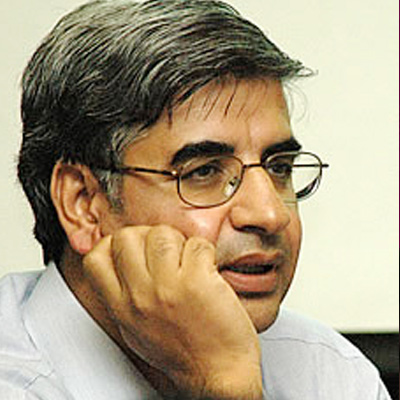
    MUMBAI: NewsX, India’s New News leader has launched a unique show ‘Decode India with MJ Akbar’. The show will be the first of its kind where the guest will lead the questions and discussions. The show will see MJ Akbar taking up current issues of national significance and demystifying them for the viewer with an investigative and informative show that is backed by the expertise, knowledge and journalistic experience of the host.


    The weekly show will be aired on NewsX on Sundays at 10:00 am and 10:00 pm. Each episode will feature an illustrious, well experienced and high profile guest along with Akbar who plays the role of a well-informed viewer. The guest will question, argue, give his opinion and probe MJ Akbar on the topic. The inaugural episode of the 30 minute weekly show featured Indian lawyer and politician Ram Jethmalani who discussed if there should be a referendum in Kashmir on the Indian Army.


    MJ Akbar, a top notch journalist and author, comes with an experience of more than 40 years. Currently the Editorial Director of The Sunday Guardian newspaper, Akbar is the Founder Editor of The Asian Age and The Telegraph newspapers. Besides being the Editorial Director of India Today magazine and The Deccan Chronicle newspaper in the past, he has written several non fictional best sellers in own rights.


    About NewsX


    NewsX is India’s New English News Leader. With ‘News Not Noise’ as its positioning, the channel’s editorial philosophy is to present news in an un-biased, non-partisan manner, with an emphasis on facts, not opinions. NewsX brings to viewers hard core news and stays away from hysteria and sensationalism. The channel’s constant endeavor to engage viewers, not enrage them has been the hallmark of the emergence of NewsX in recent times as India’s # 1 English news channel. As per TAM ratings, NewsX emerged as the # 1 choice of the young, aspiring and the urbane in 2013. The leadership story continues with NewsX emerging as the # 1 English news channel with a whopping market share of 34 percent across six metros as per the latest TAM week 2’14 ratings in the 25-44 age group.

  • Is Ashutosh going to pursue politics?

    Is Ashutosh going to pursue politics?

    MUMBAI: Indian journalism has had few very popular names to boast of when it comes to journalists. One such name is Ashutosh. He just didn’t contribute to the growth of Hindi channels of two of the biggest networks in the country when they were launched, he also became their face during the time he was working for them.  The first one was Aaj Tak from the TV Today group which was launched in 2000, and the second was IBN7, a joint venture between Global Broadcast News and Jagran TV in 2006.


    In 2006, when Ashutosh left the position as deputy executive producer at Aaj Tak to join IBN7 as managing editor, he created a commotion. Once again, he repeated history today when the news of his resignation broke out. The journalist decided to end his eight year relationship with IBN7 as well without notifying anybody about his future plans.


    While there’s a possibility that he could join/open another news channel, rumours are afloat that he is all set to end his more than two decade long journalistic career and join the much talked about newbie political party, the Aam Aadmi Party (AAP).


    And as the rumours are reaching far and wide, one wonders if it is possible for someone who was so committed to his work for such a long time can finally change course at the age of 49 and serve the country is another way! When quizzed about his next course of action he says, “I am open to all options.”


    When probed further and quizzed if he is actually taking the political route, Ashutosh chose to give an ambiguous response that too twice, “Let’s see.”


    While we were still wondering what to make out of his response, a tweet from Ashutosh gave us a slight glimpse of what is going on in his mind. He wrote, “Eight years back I changed my course, now there is another time, another call of destiny, have to swim- have to swim.”


    So, is there a change of course for the journalist who started his broadcasting career in 1996 as a correspondent with Aaj Tak, which at that time was just a 20 minute news bulletin on the pubcaster – Doordarshan Metro. Aaj Tak was just a year old then. When the channel was launched in 2000, Ashutosh became a known face in many Hindi-speaking households with his primetime anchoring.


    In a 2008 interview with indiantelevision.com, reminiscing about his initial days in the field, he had said, “In early 1996 I was working as a correspondent with Aaj Tak I was getting ready to give my PTC for a story on a lonely bumpy road in Ganderbal when suddenly a 10 year old boy appeared from nowhere and shouted…Ashutosh, Delhi, Aaj Tak. I was stunned. I could not comprehend that in a place so removed from civilisation, someone could recognise me. That was the power of TV. Those words still ring in my ears and I cannot forget that small boy’s face.”


    Wonder if he would be able to leave the profession that he so fondly rejoiced once, or is it “country calling” for him!

  • Washington post sold off to Amazon CEO for $250mn

    Washington post sold off to Amazon CEO for $250mn

    MUMBAI: The iconic American newspaper has shifted hands. An astounding $250mn in cash was paid by Amazon founder and CEO Jeff Bezos, to buy the newspaper from the Graham family. The newspaper clarified that it will not be owned by Amazon in any way but is being paid for by Bezos from his own account.


    Bezos is worth $25.2billion. The Washington Post’s online and print editions, the daily free paper Express, weekly Spanish newspaper El Tiempo Latino, the Gazette community newspapers in Maryland and some specialty publications are included in the sale. The Slate website however isn’t included.


    According to a website, the newspaper will also get a fresh name, putting an end to an era of good journalism, including the infamous Watergate Scandal. The newspaper had been reporting losses for the seventh year in a row.


    Bezos has promised stability of the paper to the employees and also said that he won’t be running the day to day business of the paper. The sale process will be completed in the next 60 days.


    Recently, another iconic newspaper, The Boston Globe was sold to the owner of the baseball team Boston Red Sox, John W. Henry for $70mn.

  • Rediscovering Excellence in Journalism: Journalism Mentor

    Rediscovering Excellence in Journalism: Journalism Mentor

    "In journalism, there has always been a tension between getting it first and getting it right," so said veteran American journalist & Pulitzer Prize winning syndicated columnist Ellen Goodman.

    In today‘s highly commercialised world, this conflict has become even more crucial. The very profession of journalism is being looked at through a cynical lens. It is hence, imperative that young aspiring journalists receive the right guidance and training so that they uphold the highest principles of journalism without compromising on newsworthiness and immediacy.

    Journalism Mentor (JM) (www.journalismmentor.in) is a-one-of-its-kind mentorship based programme for post graduate journalism in India which promises to provide that guidance to aspirants. The institute, located in Mumbai, was founded four years ago by veteran journalist Shishir Joshi and Dr. Aloke Thakore as a not-for-profit organisation.

    The institute was recently featured in a New York Times‘ article on journalism education in India. It is perhaps the only institute in India which places no age or no language barrier.

    Interestingly, both founders do not take any salary and are working for the sheer passion that drives them for this cause. While there are some students who pay the entire fees (in three installments), there are others who pay fees once they start earning their salaries. In some cases fees have been waived off in entirety, on humanitarian grounds.

    Shishir Joshi

    Speaking exclusively toindiantelevision.com, Journalism Mentor programme director Shishir Joshi says: "Both Aloke and I felt that the gap between what is taught and what skills are needed is wide. Those entering the profession, whether in print or television, or multimedia, flounder. The need for proper education is more than ever. Senior journalists have shared this need and some of them are supporting this initiative as mentors. For me teaching has been an abiding interest and we have ensured that this programme delivers the best in journalism education."

    JM has an impressive line-up of visiting faculty which is paid even more than existing standards Joshi revealed. Shillong Times editor & Padamshree Patricia Mukhim, Outlook editor Krishna Prasad, Mumbai BBC bureau chief Zubair Ahmed, Divya Marathi chief editor Kumar Ketkar, former NDTV bureau chief South & currently The South Reports editor TS Sudhir are some of the reputed personalities associated with it.

    JM Foundation partners Martin Luther University to reach Shillong for a workshop on Journalism, citizens role, Media ethics and practice.

    The institute is an off-spring of the JM Foundation for Excellence in Journalism which is engaged in journalism education, archiving and journalism research. The foundation has trained more than 600 citizen journalists across five states and will soon be announcing its expansion to the North East.

    In addition to this, JM programme has now partnered with Martin Luther Christian University in Shillong, India, which will accept Journalism Mentor credits from students who wish to pursue a postgraduate diploma or masters in journalism.

    Joshi admits it has been a struggle at times. He elaborates: "It is not easy to sustain an organisation like this. When we started, we dipped into our pockets. We do have our limitations if we have to invite a guest speaker from outside of Mumbai as we cannot afford to bear their travel or stay costs at times."

    Joshi added that their dependence on fees from students is high. Sometimes other not-for-profit projects of the foundation help make ends meet for JM.

    "We are now a registered charitable institution and are approaching CSR (Corporate Social Responsibility) divisions of various institutions to come forward and support us, through endowments or even sponsoring the education of students. Many of our books have been donated by well wishers."

    Apart from total fee waiver for genuinely needy students, JM offers two other scholarships; one for the North Eastern states and one for Jammu and Kashmir.

    The institute maintains a clear and transparent approach for donation and has it displayed as a wishlist on its websitehttp://journalism.org.in/support/

    JM is gaining prominence and recognition gradually. The official Facebook page has a commendable twenty thousand likes. Besides, students from well informed backgrounds like young graduate Parth MN, son of renowned journalist Nikhil Wagle, are opting for this over other popular institutes.

    Joshi reasons: "What sets us apart from the hordes of other institutes is our approach. We will not induct more than 25 students a year and we give special attention to the skills and needs of each student. Besides, the faculty is well connected with the industry. As a result, after the programme, our students get placed in reputed organisations."

    JM has had 22 graduates over a span of three years and with the exception of three, all students have been employed in news organisations like NDTV, Times Now, Mumbai Mirror, The Telegraph, Careers 360, Hindustan Times, Mid-Day, The Afternoon Despatch & Courier, Deccan Chronicle, Lokmat Times, Dainik Bhaskar, Saamna and Mahanagar.

    The 14-month programme also includes 15 day project of conflict reporting which gives students a real insight into the practical and challenging demands of this profession. "We do not guarantee jobs but we definitely guarantee valuable education", Joshi concludes.

  • News channels failed to balance between news and bombast

    In times of crisis, news television is the most vital link between the event/happening and the people at large. Many have been been going to town talking about how great the coverage of the news channels was during the recent terrorist attacks in Mumbai. I beg to disagree. The reportage by news channels was inept and at times embarrassing. Anchors and editors use their channels to lampoon politicians, and criticise (and rightly so) all and sundry. It is time for TV news professionals to rewind and watch their own performance.

    In this information age, where even terrorism seems to be manufactured for TV, it is judicious to strike a balance between news and bombast
    _____****_____

    Granted, most reporters and anchors are young and inexperienced; the lack of professionalism was evident. News reportage, especially of a cataclysmic event like the Mumbai terror strike, requires adequately trained professional broadcasters. In this information age, where even terrorism seems to be manufactured for TV, it is judicious to strike a balance between news and bombast.

    I was appalled to see PYTs on a business channel which loves to have its women presenters in multicoloured eyeshadow ask the most inane questions. Hindi channels as usual were full of bluster, rhetoric, and the kind of high pitched reporting which they seemed to specialise in their crime shows. Even more seasoned and veteran anchors seemed wanting.

    Sensationalism seemed to be the driving force of most channels, whether Hindi or English. It was as if a hyper-ventilated team on high octane was working on a new Bollywood blockbuster based on terror.

    Every report the reporters filed was being made out to be cathartic. They have to understand that there is no exclusivity at times like this. On one channel I heard a well-dressed editor claiming 40 times that he had the exclusive story, about the dastardly terrorists.

    People had been brutally murdered. Where was the propriety that the occasion demanded? Where was the sobriety?

    TV news channels have trivialised politics and reportage on politics. The terrorist strike in Mumbai gave them a chance to correct that. And sad to say, they did not rise to the occasion
    _____****_____

    Having many cameras on the scene is not news television journalism. Reporters who looked jaded, tired and asked the most inane questions don‘t make for good news journalism. Even the empathy seemed synthetic and the unruly way which reporters and camera persons jostled to grab a morsel of news was despicable.

    What was also sad was the way some of the studio anchors were proselytising.You have to report. You have to analyse. Not pontificate. The studio guests were relics of the past. Please get rid of them. In this situation, you needed counter insurgency experts, psychologists, thought leaders to go beyond the news. I am tired of seeing the obsession of news channels with the page 3 crowd who seem to crop up with alacrity, no matter what the situation. These “quote-hangers” need to be mothballed as quickly as the vote hungry politicos who kept popping up on our screens.

    The TV news channels have trivialised politics and reportage on politics. The terrorist strike in Mumbai gave them a chance to correct that. And sad to say, they did not rise to the occasion. While one can compliment the long hours and trauma which the reporters and crews put in, the absence of adequate preparedness showed. We have seen on television several individuals, institutions, and ideologies being ripped apart.

    It‘s time for broadcast news professionals to pause and think about their own inadequacies. Hopefully, they will take corrective action in the days ahead.

    (Amit Khanna is chairman of Reliance Big Entertainment)

  • Stress 24×7?

    On a typical day, you could see Sujay Gupta juggling three phones, hurriedly taking notes and issuing advisories to his team of reporters. The chief of Mumbai bureau’s job in a premier news channel like NDTV 24×7 is much sought after but not so for 38-year-old Gupta. One day, on a drive back home, he took a considered view and gave it all up. He ended the lease of his cosy apartment in Bandra, and took the first flight to Goa.


    “The nature of the news television market in India is such that there is very little scope of decreasing stress levels,” rues Gupta. “Pressures to perform are a part of newsrooms across the globe, but in India it’s different given the number of channels we have. The demand is no more on doing big or better researched stories; it’s all about breaking stories.”


    It is indeed

    There was a time when viewers were left with no choice but to watch national channel Doordarshan. But with Indian television going through a revolution and given the arrival of as many as 80 news channels it’s a very different story now.


    While there are no specific recruitment forecasts available for the sector, global staffing services firm Manpower says the media and entertainment industry has the highest employment potential in the country, with 58 per cent employers intending to hire more people in the third quarter this year.


    So while viewers are flooded with a variety of options when it comes to watching news on the small screen, the rise of so many channels has also given birth to greater stress in the newsrooms.


    Every channel is under pressure to deliver something new, that little extra which is more relevant to its viewers… a story that is perhaps the first of its kind!


    Says Gupta, “We have more news channels than whole of Europe put together. The trouble is that the competition is not just between offerings of the same genre. National channels compete with even regional news channels. For instance, in Mumbai, NDTV not only locks horns with CNN-IBN but also with a Marathi channel like Star Majha.”


    Evidently, the concept of a straightforward story doesn’t exist any more. The objective is to look at every conceivable angle and generate at least three stories from what would be just one. Plus, the pressure to break news.


    Veteran journalist and media educator Paranjoy Guha Thakurta puts the blame on media owners. “These days, proprietors do not want to invest in human resources. Consequently, a person is forced to multitask. The technology too ensures that a person can easily do the tasks that two or three people would do earlier. So with media owners not investing enough in experienced manpower, even though the younger lot of people are intelligent, hardworking and very talented, they do not necessarily have a good judgment of the important news. This leads to an increase in stress levels.”


    Some media professionals who are currently sailing in the same boat too corroborate the view that young journalists are impatient and this attitude also often leads to stress.


    Says CNN-IBN deputy foreign editor Suhasini Haider, “There is no single reason behind the rise in stress levels. One of the major factors is a huge increase in competition. Apart from this, people today have no personal opinion about a particular subject or topic. There are no niches. So journalists are made to do stories on a wide range of issues. Also, newsrooms these days are younger than ever. Young journalists do not prepare themselves mentally before joining. They just want to report as soon as they join.”


    IBN7 executive editor Sanjeev Paliwal believes that the stress is caused by the demands of the job. “We are living in a very competitive and challenging environment and the entire country relies on us to bring news to them in an accurate and timely manner. With expectations soaring, it is obvious that pressure in a newsroom is bound to be high. New channels ask for newer ways of gathering market intelligence being devised. This is good for the industry but is also leading to a lot of extra pressure.”


    What’s more, this greater stress has also at times directed to loss of life. Senior journalists Appan Menon and S P Singh, who were stars in the early days of non-Doordarshan-run news programming, lost their lives at an early age. And one of the reasons cited was mounting newsroom pressure.


    Thakurta, 52, feels that though stress is escalating it also depends on individuals and their way of dealing with stress. “Late S P Singh and Appan Menon were brilliant journalists. Yes, it is true that they died at a young age. Both of them worked at a time when Indian news television industry was at a nascent stage and I presume that both of them faced stress. I too suffered a heart attack last year. Having said this I would like to emphasise that though stress is prevalent in this industry, it’s also a state of mind. And it depends on individuals on how they cope with stress.”


    But there are many in the profession who feel that media is all about stress, and those who do not have the capacity to endure the pressure, should not enter the profession. “I do not agree that stress is increasing,” says Times Now editor-in-chief Arnab Goswami. “In fact it is wrong to use the word stress,’’ he adds. Television newsrooms, says Goswami, are now “buzzing with excitement”. “A newsroom does not operate like a bank… it’s more animated. There is more action, a zeal to do something exciting. Therefore, people who cannot face the heat should not enter the kitchen.”


    According to NewsX newsroom head Arup Ghosh, stress is not a new entrant to the newsroom, “I don’t think that stress is something new for journalists; it was always there. The longer hours of work also impacts personal life. One reason for this is increase in competition because of presence of so many channels. Another fact leading to rise is stress is dearth of talent. The established and the experienced management is under pressure to nurture fresh talent; at the same time retaining talent is also stressful because the moment the young talent pool that comes in learns the technique, the tendency to switch jobs increases.”


    Just chill!

    Some medical practitioners feel that its about time that news channels take the responsibility towards providing an opportunity to destress. Dr Sanjay Pattanayak, a psychiatrist at Delhi’s Vidyasagar Institute of Mental Health and Neuro-Sciences (Vimhans), says work and peer pressure are the two basic reasons for stress levels going north. “Journalists now have less time to relax. Thus, it is important for them to have a good social support, good diet and exercise regularly to unwind.”


    Leading psychiatrist Dr Sanjay Chug explains, “These days’ news channels give greater focus on TRPs than the actual job. Also this has led to much competition which in turn has erased the concept of fixed working hours. Moreover, it should not be forgotten that, the nature of the work in journalism is stressful enough and all these factors have added to increase in stress.”


    And what is the solution to beat stress? Says Dr Chug, “Ideally, there’s need for a change in the work culture of our channels, but since that is a long-term task, there are smaller steps that can be taken to cut down pressures and prevent breakdowns.”


    He advises the mandatory and routine drug tests for all, mandatory and routine psychological assessments covering anxiety like depression levels, suicide risk assessment, adjustment problems. “It would also help if a counseling cell is provided to employees. Also, news channels can have 10 minutes of destressing every few hours which can be applicable uniformly to the entire workforce wherein people can do on-desk exercises, power naps, guided relaxations etc.”


    Even as there are conflicting views from practitioners on stress levels in the profession, many newsroom HR heads seem to be aware of the problems on hand. Says India Today group corporate head – human resource Geetanjali Pandit Gupta, “In this business, the performance is reviewed daily. Hence it increases stress levels. Destressing has to begin with correct manning and solving the external factors.”


    At some organisations, the first step has already been taken towards ensuring employees have few reasons to complain.


    Network 18 Group head – HR Rajneesh Singh elucidates, “At Network18, we understand the pressures. So at the basic level, we provide our employees with facilities like cr?che, shuttle service, cabs and 24-hour availability of food, water and security. At the next level, we have a gym and offer facilities for games so that employees can unwind. We also organise workshops, celebrate birthdays, have monthly parties and off-sites that gives everyone a chance to enjoy together, have fun and relax.”


    But INX media head – human resources Dhruva Sen believes that parties or get togethers need not be the right prescription for bringing down stress levels. “They only divert attention for a bit.” So what’s his solution? “Possibly establish a recreation room where people can enter and read or sit simply loosen up.”


    The onus of destressing employees, India Today’s Gupta hastens to add, should not fall only on the HR of a company as employees are aware of what they are getting into. “There is only one way of getting rid of stress. And that is to provide employees enough resources to do their work,” she says.


    Thakurta says tensions are an inherent part of any news channel as one can never know what is going to happen next. Also the fact that media owners do not wish to invest in experienced people leads to increase in stress as young people might be intelligent, hardworking and talented but they are not better judge of importance of news. Experienced people know which piece of news is more important to cover. This has further lead to dilution of standards including ethical standards.”


    And while some in this profession have learnt to cope with stress, there are others like Gupta who have succumbed to the mounting pressure and have either left or are continuing with much difficulty. Gupta chose to opt out, and is chronicling the Scarlett Keeling saga for a leading London daily, advising a corporate group on starting a local channel and an assorted number of things to achieve nirvana. “It’s important to enjoy what you are doing,” he says while revealing plans to promote the Goan feni. Nirvana, surely.

    The story first appeared in Indiantelevision.com‘s The NT Magazine. The PDF of the magazine can be accessed at http://www.ntawards.tv/y2k8/nt_mag.pdf.

  • A Question of Balance

    The public have an insatiable curiosity to know everything. Except what is worth knowing. Journalism, conscious of this, and having tradesman-like habits, supplies their demands.

    – Oscar Wilde (1854 – 1900)


    The great playwright passed away over a hundred years back, but the essence of the statement is being much debated in India. With reason.


    Over the last few months, a section of the news channels have been showcasing content that one would’ve never quite expected to see on an offering that’s supposed to air news and current affairs.

    Purists are aghast, but many in the business see nothing wrong.


    With peculiar Indian curiosity to know about the minutest detail of the lives of the others, the appetite and consumption of news is on its growling pounce. News channels – at least a section of them – satiate the curiosity which derives voyeuristic pleasure from gossip and rumours.


    Because it is this cacophony of subjects of coverage that offers something for everyone, that is driving up not just the ratings, but also revenues for Hindi news channels. And while there are those who wonder when the Hindi news engine will start to lose its steam, most are in agreement that it is not going to be any time soon.


    The statistics though are telling. The advertising revenue of the new segment in the fiscal year 2006-07 is Rs 9.8 billion. In FY 08 it has touched Rs 12 billion and expected to grow to Rs 14.5 billion by the fiscal end.


    According to industry research body Tam, in the January-June 2008 period, 54.2 per cent of the content on Hindi news channels was not news. And among English channels, the number is 38.4. This evidently seemed to help the ad volume. As per Tam Adex, ad volume growth in Hindi and English news channels which stood at 47,449 seconds in 2006 jumped to 62,173 in 2007. In the six-months period from January to June, it has already clocked 36,398 seconds.


    The share of ad volumes of news channels in the overall TV advertising pie has been growing steadily. It went up 16 per cent in 2007 from 15 per cent in 2006. Says MCCS CEO Ashok Ventaramani, “The advertising revenue of the market has been growing with a CAGR of 18 per cent since the last five years.”


    There is no doubt that advertising is the fuel that drives the satellite boom and India’s burgeoning news channels trade.


    The consumption of news too has increased. From 6.9 per cent in 2006, the Hindi news genre has surged to 7.4 per cent to end-2007 (Tam, c&s, HSM, 15+). In the first half of 2008, it is well-placed at 7 per cent as compared to 32 per cent covered by the Hindi entertainment channels (GECs).

    Rank Top Advertisers in 2007
    1 Hindustan Unilever Ltd
    2 Bharti Airtel Ltd
    3 Tata Teleservices
    4 Paras Pharmaceuticals Ltd
    5 Tata Motors Ltd
    6 Homeshop18
    7 Reliance Communications Ltd
    8 Bharat Sanchar Nigam Ltd
    9 Coca Cola India Ltd
    10 Emami Limited
    Source:Tam

    With the genre of the TV news consumption getting expanded, the advertising trend has also changed in a short span of two years. In 2006, the top advertisers rooster which was ruled by categories like car/jeep, corporate (brand image), social advertisements, suiting, hosiery and pan masala or gutkha no longer feature in it . The top categories in 2007 and 2008 have been replaced by categories like cellular services, internet and SMS services.


    In 2008, direct-to-home (DTH) service and real estate are the unique categories that feature in the top advertisers. Advertisers like Biswanath Hosiery which topped the list in 2006 have been replaced by cellular services like Reliance Communication, Vodafane Essar in 2007 and 2008. In the first half of 2008, the top five advertisers slots are filled up by cellular services.

    Rank Top Advertisers in 2008 (H1)
    1 Reliance Communications Ltd
    2 Vodafone Essar Ltd
    3 Hindustan Unilever Ltd
    4 Bharti Airtel Ltd
    5 Bharat Sanchar Nigam Ltd
    6 Reckitt Benckiser (India) Ltd
    7 British Broadcasting Corporation
    8 Life Insurance Corporation of India
    9 Tata Teleservices
    10 Idea Cellular Ltd
    Source:Tam

    The entry of a new set of viewers is attributed as the reason for newer categories of advertisers mostly targeting mostly to Sec A and Sec B. They have higher purchasing power, making them more attractive clients for advertisers. As per Tam, 51 per cent of news channels viewers are from 35+ years, 28 per cent comes from 15-24 years and the rest 22 per cent are from 25-34 years.


    What’s on the menu?


    To a large extent, revenue flows determine how content is produced, packaged and put on airwaves by news channels. This leads to a permanent tension between the journalistic and commercial imperatives of media entities and affects the very nature of news programming.


    According to Tam, from January to June in 2008, Hindi news channel have covered 45.8 per cent of news bulletin followed by reviews and reports (15.8 per cent), religious and devotional stories (9.9 per cent), cricket match (9.2), action and thriller (4.9 per cent), comedies (4.1 per cent), film based magazines (2.6 per cent).

    English news channels have covered 61.6 per cent news and bulletins, reviews and reports (8 per cent), film based magazines (7 per cent), cricket matches (6.8 per cent) and comedies (1 per cent).


    In various Hindi news channels, cricket has been featured differently in Ye Cricket Kuch Kehta Hain (Aaj Tak), Nach Le Cricket (Aaj Tak), Disco Cricket (Star News) while Khali has seen a variety of presentations like Khali Ki Khalbali, Khali Karega Khatma and Khali Sae Bali. Gods blessed the news channels in shows like Zinda Hain Rawan, Sabko Mil Gaye Ram and Kaise Dekhe Ram.


    Star News claims that in the week ending 1 March, 41 per cent of the content in its channel was news bulletin while the rest was religious, crime and cricket-centric stories. Religious stories were 8 per cent while sports reviews, comedies, business shows, crime and thrillers were 7 per cent each. Cricket-based shows grabbed 10 per cent while film shows managed 1 per cent of the entire content pie.


    Times Now editor-in-chief Arnab Goswami scoffs at the suggestion that viewers go away if channel don’t go strong on soft stories. He cites the example of the Khali episode. “Times Now did not devout a single second to Khali, yet we did not lose out on viewers and market share.”


    News channels are realising this fast enough. Recently, Zee Group chairman Subhash Chandra announced that his channel is bringing news back in its original form . With the new positioning of ‘Zara Socheye’, Zee News promises to shun stories on godmen and superstitions.


    Says Zee News CEO Barun Das, “It is high time someone realise that a news channel is meant for only news. He stresses on the fact that after the repackaging of Zee News, he has managed to make it “non-entertaining” yet “non-boring”.


    How channels stack up?


    In the Hindi news genre, from January to June 2008 six month period, long-time leader Aaj Tak still rules the roost with an average relative market share of 18.98 (Tam, c&s, HSM, 15 +) per cent, followed by Star News with 17.94 per cent. In the third spot is India TV in terms of average relative market share (14.43 per cent).


    However, a closer look on month-on-month index puts India TV on the forefront in the month of May and in June shares the top spot with Aaj Tak (19 per cent each). Aaj Tak has been almost consistent with 19 per cent market share in the six month period. Its sister concern channel Tez has averaged 5.55 per cent.


    India TV opened the year with 14 per cent to gradually move upto 19 per cent. Star News which was so far on the channel is meant for only news. He stresses on the fact that after the repackaging of Zee News, he has managed to make i t “non-entertaining” yet “non-boring”.


    The six-month average of IBN7 is 8.92 per cent while NDTV India has an average of 8.11 per cent. Samay has 4.91 per cent from January to June. Newly launched channel News24 has an average of 4.42 per cent, Live India average 3.24 per cent while public broadcaster Doordarshan managed to pull 3.14 per cent.


    The English news segment still continues with a three-way tussle. Six-month average places CNN-IBN with 29.09 per cent (Tam, c&s, All India, 15+) , NDTV 24X7 with 28.91 per cent while Times Now is at 28.58 per cent. Headlines Today stands at 13.34 per cent.


    Blame it on distribution?

    Advertising is central to privately owned news businesses across the world and in India Indian TV channels derive roughly 70 per cent of their revenues from advertising and about 30 per cent from subscriptions.


    Venkataramani says, “Depending upon the band preferences of the channel, the distribution cost of a national channel can range anything between Rs 200-800 million.”


    A large proportion of subscription revenue is consumed by cable operators and since broadcasters do not control their own distribution they can not pinpoint the exact number of viewers. Ratings therefore become vital as the currency of success.


    A senior executive at a news channel who request anonymity vehemently opposes the Tam rating system. He argues that content is mainly driven by the Tam ratings. Explaining further, he says that most of the time, the editorial is forced to do stories which categorically caters to the places or states where Tam peoplemeters are placed.


    The ratings, however do not represent all the states with a limited number of peoplementer which are absent in states like Bihar, North East and Jammu and Kashmir. This factor alone has tremendous impact on the content, programme packaging and imperative of selling airtime advertisers.


    A man hit by a bull in the streets of Delhi will get more coverage and footage than five men killed in Darjeeling or Assam. The reason is only that peoplemeters are located in Delhi and not in the hill zones.


    For a Delhiwallah, the neighbourhood report naturally gets more hits in the peoplemeter. “The content is thus decided by the geographical placement of the peoplemeter to get spikes in the ratings.


    Hence, some parts of India (where the peoplemeter is absent) and some stories are left untouched or given very little importance,” says the executive.


    Over and above this constraint, with most news channels being free-to-air and hence not making any monies from subscriptions, their dependence on advertising and hence ratings is total.


    A frequent complaint of news broadcasters is the heavy distribution cost.Broadcasters say more than half of the outlay goes in paying for reach, which cuts other costs like human resources. That is why a reporter cannot be placed in the interiors as it has its own costs. A virtual studio ultimately becomes the easy answer.


    Says IBN7 managing editor Ashutosh, “Distribution costs have gone up tremendously because of the clutter of channels. This is in fact affects quality as a lot of money from a fixed budget goes into distribution, and channels compromise on quality. If only we could be patient, a lot of difference could come in.”


    “The single biggest problem in the industry today is distribution. It is getting more and more competitive, as more and more channels come into business. The cost is enormous and growing wildly, and it is hurting every broadcaster from the biggest to the smallest, free-to-air (FTA) or pay.


    “In this battle, multi-system operator (MSO) and local cable operator (LCO) point fingers at each other, but either way it is costing the broadcaster. And money that could and should have been spent on content is getting spent on distribution instead, and it weakens the industry,” said a the broadcasting executive.


    India is the only country in the world with more than 80 24-hour TV channels broadcasting programmes on news and current affairs, barely a quarter-century after the world‘s first 24-hour TV news channel (CNN or Cable News Network) came up in 1980.


    The challenge for the news broadcasters in 2008 would be to turn the tables – lower the carriage fees and churn out revenue from subscription. Till the dependence on advertising revenue hangs on, there will be more breaking stories, exclusive stories, Amitabh Bachchan going to Shirdi, Siddhivinayak Temple et al, Salman Khan’s doings and live do or die, battle between godmen and rationalists.

    The story first appeared in Indiantelevision.com‘s The NT Magazine. The PDF of the magazine can be accessed at http://www.ntawards.tv/y2k8/nt_mag.pdf.

  • Is Bollywood taking over TV news?

    Is Bollywood taking over TV news?

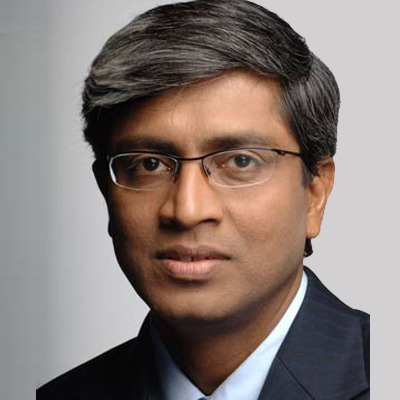
     As the world’s largest television news bazaar – with over 40 dedicated news channels, unrivalled by any other country – India offers exciting possibilities for broadcast journalism. At the same time, just as elsewhere in the world, television news in India shows a clear trend towards infotainment – soft news, lifestyle and celebrities – and a decline in journalism for the public interest.

    While news outlets have proliferated globally, the growing competition for audiences and, crucially, advertising revenue, has intensified at a time when interest in news is waning. Audiences for network television peak-time news bulletins have declined in the US from 85 per cent in1969 to 29 per cent in 2005 (though in India news audience has grown).

    With the growing commercialisation of television news, the need to make it entertaining has therefore become a priority for broadcasters. They borrow and adapt ideas from entertainment and adopt an informal style with an emphasis on personalities, storytelling and spectacle.


    This has been reinforced by the take-over of news networks by huge media corporations whose primary interest is in the entertainment business: Viacom-Paramount (CBS News); Disney (ABC News); AOL-Time-Warner (CNN) and News Corporation (Fox News/Sky News and Star News Asia). This shift in ownership is reflected in the type of stories – about celebrities from the world of entertainment, for example – that get prominence on news, thus strengthening corporate synergies.

    In the process, symbiotic relationships between the news and new forms of current affairs and factual entertainment genres, such as reality TV have developed, blurring the boundaries between news, documentary and entertainment. Such hybrid programming feeds into and benefits from the 24/7 news cycle: providing a feast of visually arresting, emotionally charged infotainment which sustains ratings and keeps production costs low. The growing global popularity of such infotainment-driven programming indicates the success of this formula.

    Infotainment – a term that emerged in the late 1980s to become a buzzword – refers to an explicit genre-mix of ‘information’ and ‘entertainment’ in news and current affairs programming. This new news cannibalises visual forms and styles borrowed from TV commercials and a MTV-style visual aesthetics, including fast-paced action, in a post-modern studio, computer-animated logos, eye-catching visuals and rhetorical headlines from an, often glamorous, anchor person. This style of presentation, with its origins in the ratings-driven commercial television news culture of the US, is becoming increasingly global, as news channels attempt to reach more viewers and keep their target audiences from switching over.

    As I demonstrate in my new book News as Entertainment: The Rise of Global Infotainment, such type of journalism has been very successful: in Italy, infotainment-driven private television catapulted Silvio Berlusconi from a businessman to the office of the Prime Minister. A study of journalism in post-Soviet Russia found that the media were ‘paying huge attention to the entertainment genre’, while in the Chinese news world, Phoenix channel regularly runs such soft news programmes as ‘Easy Time, Easy News.’

    In the world’s largest democracy, what I have described as – the three Cs – cinema, crime and cricket – encapsulate most of the content on television news. Here global influences are important: As in many other countries, the greatest contributor to infotainment in India has been Rupert Murdoch, whose pan-Asian network Star, launched in 1991, pioneered satellite television in Asia, transforming TV news and entertainment. Murdoch was responsible, among other things, for introducing the first music channel in India (Channel V); the first 24/7 news network (Star News) and the first adaptation of an international game show (Who Wants to be a Millionaire).

    Murdoch was also the first transnational operator to recognise the selling power of Bollywood, its glamour and glitz. The obsession of almost all news channels with Bollywood-centred celebrity culture today dominates coverage. Crime is big too: as the ratings battle has intensified, news networks have moved towards reporting sensational stories, which are becoming progressively gruesome: murder, gore and rape are recurring themes. The paradox is stark: although crime coverage has spiralled, especially on more populist Hindi channels, in the real India the crime rate has in fact fallen dramatically in the last decade.

    A third obsession is to be seen in the coverage of cricket: cricket-related stories appear almost daily on all networks – and not just on sports news. And as Bollywood stars start bidding for cricketers, the ‘Bollywoodisation‘ of news is likely to continue.

    These three Cs are indicative of a television news culture that is increasingly becoming hostage to infotainment. The lack of coverage of rural India, of regular suicides by peasants (more than 170,000, in the last 15 years, according to government figures), and the negligible reporting of health and hygiene, educational and employment equality (India has the world’s largest population of child labour at the same time as having vast pool of unemployed young people), demonstrates that such stories do not translate into ratings for urban, Westernized viewers and are displaced by the diversion of infotainment.

    The lack of concern among television news networks for India’s majority population is ironic in a country that was the first in the world to use satellite television for educational and developmental purposes, through its 1975 SITE (Satellite Instructional Television Experiment) programme. The interest in broader questions of global equality and social justice appear to have been replaced among many journalists by an admiration for charismatic and smooth-talking CEOs and American or Americanized celebrities.

    Should we worry about this perceived dilution and debasing of news? In the early 1980s, years before media globalization and rampant commercialization of the airwaves, Neil Postman, in his influential book Amusing Ourselves to Death, argued that television militated against deeper knowledge and understanding since it promoted ‘incoherence and triviality,’ and spoke in only one persistent voice – ‘the voice of entertainment.’

    A quarter century later, looking at the Bollywoodization of news in India, Postman’s words ring truer than ever.

    (Daya Kishan Thussu is Professor of International Communication at the University of Westminster in London. His latest book is News as Entertainment: The Rise of Global Infotainment – the first book-length study of this phenomenon, published by Sage.)

  • Where is the ‘News’?

    News is back,” said Anurradha Prasad at the launch of B.A.G Films and Media‘s Hindi news channel News24. Now does that simply indicate that news channels in India are currently devoid of “news” in its truest and purest form? A content analysis reveals something more…

    India‘s experience with TV remains unique. It is the only country in the world with more than three dozen 24-hour TV channels broadcasting programmes on news and current affairs, barely a quarter-century after the world‘s first 24-hour TV news channel (CNN or Cable News Network) came up in 1980. Till 1991, television viewers in India could view only the channels broadcast by Doordarshan. That landscape significantly changed with the invasion of private satellite news channels.

    Hindi news channels have been consistently accused of invariably having less news and more entertainment. Litres of ink and loads of paper have been spent, arguing that news channels are no longer part of the anti-establishment group as they carry only those stories that fetch them gold.

    Agrees IBN7 managing editor Ashutosh: “Over the last few years, the concept of news has changed. Even for those who used to watch political news, it is no longer a good proposition, as there are no charismatic leaders. The UPA government has not thrown up any leader worth following as news. Even the newspapers‘ political coverage has changed. All this has happened mainly because it is now all about eyeball chasing, and it is getting from bad to worse.”

    While speaking to indiantelevision.com earlier, Aaj Tak news director QW Naqvi had said: “Talking of the year 2007, I feel the audience has changed its choice and appeal. Issues like corruption don‘t appeal to viewers anymore. Maybe, people have accepted it as an integral part of our society. Therefore, an exposé featuring corruption doesn‘t interest the audience, to a large extent.”

    Undoubtedly there has been a paradigm shift of news. While many argue that news in itself has shifted its meaning, others ask who defines news. For some, naag-naagin shaadi (marriage of snakes) is just as important as a barbaric killing in Singur or Nandigarm.

    To further quote Naqvi: “No doubt, television news industry has grown at such a frantic pace that it has created certain pitfalls. All-out efforts in the past year were made to grab viewership. In this mad race, at times content was compromised and true journalism took a back seat. Compounding this malady, mushrooming news channels tended to water down the impact of many meaningful news reports.”

    Says Media Content and Communications Services (MCCS) managing editor Shazi Zaman, “Central to our selection of news is the impact it will have on people and the interest that people have in the story. The last few years have seen new viewers added, many of whom have non-traditional preferences. The changes in the content of news channels are a reflection of this shift.”

    In the last one or two years, it seemed Hindi news channels took a cue from the Hindi film fraternity. Whatever was hit in the news space was seen as a formula and followed thereafter.

    First came a wave of family drama, matrimonial discord, violence and divorce. Once it reached its fatigue, the audience got bored and the news content searched for a different formula.

    Then came ghost stories. News channels vied with each other for showing horror stories. While this content was very short lived, it was also alleged that some of the news reports were concocted.

    After ghost stories, came the Baba wave, followed by amazing videos. This was a completely new phenomenon. In these videos, channels showed people performing crazy feats. But finally this, too, seems to be nearing its end.

    Says Zaman, “Experimentation is the result of a desire to reach out to more and more people and to cater to as many tastes as possible. In 2007, news became more encompassing than ever before. Thus, it was no coincidence that the year of experimentation was also the year that saw genre expansion.”

    A study by the Delhi-based Centre for Media Studies (CMS) says that the three C‘s of cricket, cinema and crime lord over politics in Hindi news channels. The study shows that news channels have undergone a radical transformation, whereby news has not only changed in its definition and content, but also in the manner in which it is presented.

    Hindi news channels have seen a rise in comedy and reality show content, the emergence and establishment of trivia in news, and most significantly, the end of political news dominance.

    According to the CMS Media Lab, the time spent on political news in the year 2007 has come down by more than 50 per cent. Political news coverage by Hindi news channels has dipped from 23.1 per cent in 2005 to 10.09 per cent in 2007.

    On the other hand, sports, entertainment, crime and human interest news have managed to almost double up from 27.9 per cent in 2005 to 53.1 per cent in 2007. At the same time, agriculture, education, health and environment-related news have not seen any net change; their coverage has been as insignificant in 2007 as earlier.

    Ashutosh reverts, “Careful studies show that it is not sports coverage that has gone up, but cricket. There is hardly any non-cricket sports news. For the past two years, there have been so many controversies, and cricket news is being covered even for other reasons like Sourav being dropped, Rahul Dravid becoming the captain, the entire Chappell controversy. Secondly, in cricket India has been doing exceedingly well. So far as crime reporting is concerned, there is a lot of drama, and it is just right for television.”

    “Besides, the entertainment industry has grown tremendously, and they have realised the power of news channels. They are marketing their products through news channels, and all the big films have media partners,” he adds.

    News broadcasters also feel that serious stories without any element of drama have a short life in the Hindi news space.

    Naqvi points out that “Operation Kalank” (the Aaj Tak-Tehelka exposé on the connivance of state administration in sheltering and helping the riot accused in 2002) in a normal news environment would have shaken the foundation of governance in both Ahmedabad and Delhi.

    “But the shelf life of this haunting exposé was hardly a few days. It did shake up the intelligentsia and society for a while, but it was not the topic of discussion in most drawing rooms after even a week. Not much changed either. Even though our channels kept the issue alive for a few days, the story did not really move forward. And this, I presume, is largely due to a variety of news being aired by a host of channels.”

    He says further that there was another good story on another channel, portraying a major scandal in UP. That exposé showed how police in UP has surpassed all levels of corruption. For as little as Rs 3,000, police officers were acting as contract killers and shooting down people in fake “encounters.” This was not an insignificant story. Rather, it was a crucial exposé showing the depths of corruption within the police force. Had this story appeared a few years ago, it would have made national headlines and would have been the talking point for a long time. But in today‘s circumstances, it vanished from the scene within days and could not even attract print media‘s attention.

    A few broadcasters also believe that in the last two years there has been a clutter in the Hindi news space with some addition to it, which subsequently had its toll on the quality and focus of the content.

    “This has to be attributed to the overcrowding in the TV news space, which has reduced the audience attention span. There are so many news items being dished out that your interest in something of importance vanishes swiftly. Rather, to retain audience interest many a time too many stories are being splashed, so that the audience doesn‘t move away,” added Naqvi.

    A general rundown of Tam‘s (television audience measurement) top five programmes on Hindi news channels cannot be hard to guess: wrestler Khali, stand-up comedian Raju Srivastav, Lord Ram have been a hot favourite with the Hindi news channels in the past few months.

    Star News‘ comedy capsules edited out from Star One‘s The Great Indian Laughter Challenge, which is hosted by an anchor in a virtual studio with good number of ad breaks, has figured highest in the top five programmes in the last few months as per the data provided by Tam.

    Cricket has been featured differently in Ye Cricket Kuch Kehta Hain (Aaj Tak), Nach Le Cricket (Aaj Tak), Disco Cricket (Star news) while Khali has seen a variety of presentations like Khali Ki Khalbali, Khali Karega Khatma and Khali Sae Bali. Gods blessed the news channels in shows like Zinda Hain Rawan, Sabko Mil Gaye Ram and Kaise Dekhe Ram.

    Star News claims that in the week 9 ending 1 March, 41 per cent of the content in its channel was news bulletin while the rest was religious, crime and cricket-centric stories. Religious stories were 8 per cent while sports reviews, comedies, business shows, crime and thriller were 7 per cent each. Cricket-based shows grabbed 10 per cent while film shows managed 1 per cent of the entire content pie.

    One of the senior editors of a Hindi news channel vehemently opposes the Tam rating system. He argues that content is mainly driven by the Tam ratings. Explaining further, he says that most of the time the editorial is forced to do stories which categorically caters to the places or states where the Tam Peoplemeters are placed.

    A man hit by a bull in the streets of Delhi will get more coverage and footage than five men killed in Darjeeling or Assam. The reason is only that peoplemeters are located in places of Delhi and not in the hill zones. For a Delhite, the former story is about the neighbouhood which compulsorily gets more hits in the peoplemeter.

    “The content is decided by the geographical placement of the peoplemeter to get spikes in the ratings chart. Hence, some parts of India (where peoplemeter is absent) and some stories are left untouched or given very little importance,” says the senior editor.

    Another complaint of the news broadcasters is the heavy distribution cost. Broadcasters say more than half of the outlay goes in the distribution cost, which cuts other costs like human resources. That is why a reporter cannot be placed in the interiors as it has its own costs. A virtual studio ultimately becomes the easy answer.

    Ashutosh says, “Distribution cost has gone up tremendously because of the clutter of channels. This is in fact affecting quality as a lot of money from a fixed budget goes into distribution, and channels have not learnt to be patient enough to give quality products. If only we could be patient, a lot of difference could come in.”

    All said and done, Hindi news content is still doubted of its news value. Instances like a sting operation on a Delhi school teacher gone horribly wrong by Live India have forced the Information and Broadcasting ministry to consider taking the editorial reigns in its hands by the Broadcast Bill. Until then it is a merry time for all.

  • BBC World introduces a new on-air look

    BBC World introduces a new on-air look

    MUMBAI: News channel BBC World is refreshing its on-screen look with new graphics and updated music and titles. The channel will also be launching a new bulletin structure. The aim is to give more clarity to viewers and allow more space for analysis and discussion of the day’s news.

    The key features of the new on-screen look include an updated logo, news ‘ticker’ and straps, which have been re-positioned to make better use of the available screen space. For the first time on BBC World, correspondents’ live reports from around the world will be accompanied by an on-screen display of the local time at their locations. This will give viewers a better sense of how the story is unfolding on the ground.

    BBC World head of presentation Neil Caldicott says, “The new on-screen look is much cleaner and crisper. The main aim is to allow more space on the screen so our viewers can see more of the award-winning news coverage and programming on the channel. Viewers will also notice the new headline sequences which are now accompanied by updated music and re-designed titles. Our priority is to deliver an uncluttered screen and enhanced graphics which will give more space for our reports and journalism.”

    The BBC News graphics team has been working on this project to rejuvenate the current on-air look across the BBC’s television news brands, including the domestic services, as part of a major move to achieve a more consistent look for all BBC News outlets.