Tag: journalism

  • Media needs ‘auto-correction’, guidelines to restore order: Venkaiah Naidu

    Media needs ‘auto-correction’, guidelines to restore order: Venkaiah Naidu

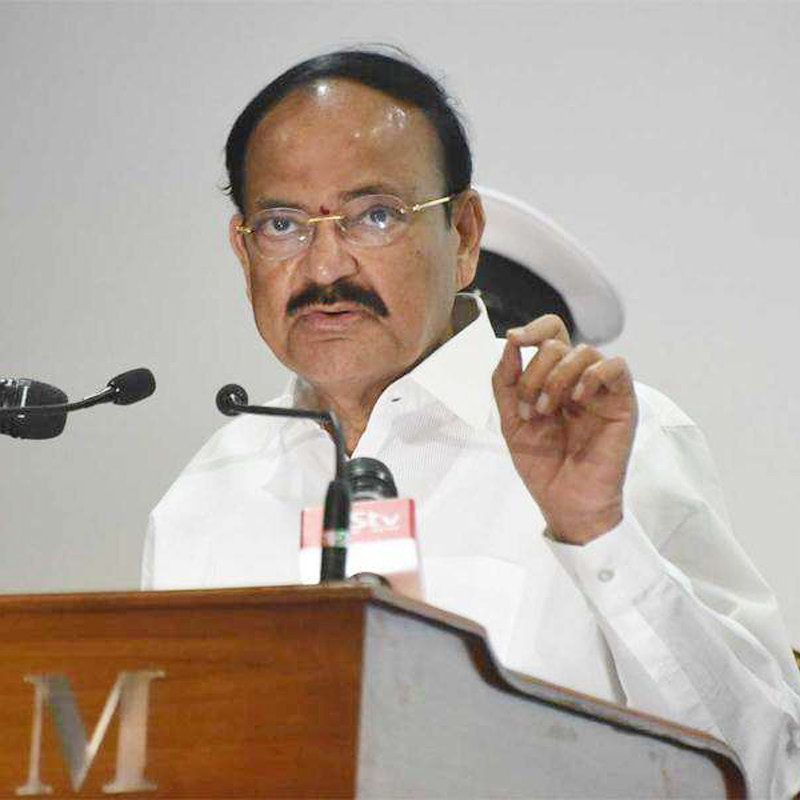
    NEW DELHI: Expressing concern over the future of journalism and the sanctity of news in the face of disruptive technological advances, vice president of India and Rajya Sabha chairman M Venkaiah Naidu urged all stakeholders to ensure credible journalism, since media is an effective tool of empowerment of people for informed public discourse.

    “While the democratisation and decentralisation that followed the rapid expansion of social media enabling freedom of expression are welcome, the world is witnessing the downside of it in the absence of self-regulation and protocols. In this era of saturated information and overabundance of news, the very news is getting devalued,” he pointed out. Naidu was speaking at the MV Kamat Memorial Endowment Lecture.  

    The vice president lamented the side effects of internet driven 'instant journalism' due to which the credibility of fact based journalism has taken a beating. He further noted that technology giants have emerged as algorithmic gatekeepers of information and the web has taken over as the main distributor of news. 

    In particular, he highlighted the financial implications for traditional media like the newspapers when their journalistic products are time and again leveraged by technology giants, who do not share the revenue back with them. 

    Some countries were taking measures to ensure revenue sharing by the social media behemoths like Google and Facebook to the print media. 

    "We also need to take a serious look at this problem and come out with effective guidelines and laws with a consensus to enable print media get their share from the huge revenues of the technology giants," Naidu emphasised. 

    Referring to the crisis situation being faced by the media and journalism for various reasons and uncertain future amidst disruptive changes, Naidu stressed that an ‘auto-correction’ is needed and in fact, inevitable for a better future. He suggested enabling guidelines and regulations for restoring order while maintaining he’s against any restrictive regulations.

    The media has always led the way in reporting and analysing the socio-political and economic transformation of the country. Naidu reminded mediapersons to be consistent in reporting such change instead of using different yardsticks for different periods. 

    He said, “I am not suggesting media to be like a chameleon. Media should use a standard set of reporting and analytical tools that capture the change without imposing respective positions. Media should not be seen by the public as discrediting the change that is happening since such a change is contrary to their long-held positions.” 

    Naidu further listed the concerns about media and journalism as issues relating to; freedom of press, censorship, flouting of norms of reporting, social responsibility of journalists, a decline in the values and ethics of journalism, yellow journalism, journalism of false crusades, reporting for profit, disinformation in the form of fake and paid news, disruptions caused by the internet and the future of media amidst these concerns and challenges.

    “Yellow journalism seeks to cloud the facts by resorting to eye-catching headlines and promotes distortion and misinformation. Journalism based on taking up false crusades as witnessed in the case of suicide of a film actor recently. Both are aimed at increasing readership and viewership and should be avoided,” he said.

    With the rapid rise and use of social media, wherein mobs can be gathered with a WhatsApp message and riots can be sparked off by a tweet, the former I&B minister stressed on the need to ensure sanity given the implications for social harmony, common good, peace, and national security. “Freedom of expression doesn’t mean unfettered outburst of anger and hate against each other that may lead to chaos,” Naidu remarked.

    He urged the media to be a part of the solution and not part of the problem since like every citizen, government and other stakeholders, media too, has a certain responsibility towards the nation.

  • Journalism webinars – the BBC Way

    Journalism webinars – the BBC Way

    New Delhi: During this unprecedented year, the BBC Indian Language Services have continued the trainee scheme in the form of webinars to train journalism and mass communication students who come from economically and socially marginalised communities of India. The ongoing webinars ‘Journalism – the BBC Way’ aim to educate the university students on BBC’s editorial standards of impartiality, accuracy, and factual journalism in six Indian languages: Hindi, Gujarati, Marathi, Punjabi, Telugu and Tamil.

    BBC head of Indian Languages Rupa Jha said: ‘’As journalists, we must always scrutinise arguments, question consensus and hold power to account with consistency and due impartiality.  As part of our training programme during the pandemic, we  reach out to students of journalism from  socially and economically marginalised groups to train them in the most important aspect of journalism, that is, impartiality.’’

    Over the last two years, under this outreach programme a number of journalism graduates and postgraduates were selected and trained at BBC’s Delhi bureau by senior journalists and the production team. The trainees were given an opportunity to work in the newsroom with BBC’s Indian Language Services on multiple platforms such as TV, radio, digital and social media. 

    Some of the trainees from the previous two programmes described the BBC’s trainee programme as a “significant value addition” to their learning. Ananya Das, a trainee from the 2018-2019 scheme, who is now working full time with BBC Monitoring said, ‘’The trainee programme allowed me to be part of a world comprising complexity and opportunities, ideas, and new challenges to grapple with. It has sharpened my resilience and discipline to multitask in a dynamic environment. Remembering that listening is just as important as being heard, has helped me grow both personally and professionally.’’   

    Kailas Pimpalkar who contributes to the BBC Marathi Service said, “BBC is like a family to me where everyone is treated equally. Everyone works on the same platform. I came from a rural background and never thought that I would ever be able to work in an international organisation like the BBC. It is the epitome of journalism and I am privileged to work here. However, the training scheme offered by the organisation helped a lot in sharpening my journalistic and social media skills which would help me throughout my life.”

    Chitvan Vinayak a trainee from the 2019-2020 Scheme who now works with another renowned media outlet said: “BBC Trainee programme was an edifying one since it helped in 360-degree skill development in the field of journalism. Learning from the best gave me a hand in mastering the ethics of journalism. The programme focussed on social media and that sharpened my skills. BBC provided me with a way to polish story writing skills and also learn the art of video presentation and its making. I got an opportunity to work with another organisation of national repute because of what I learned at BBC.”

  • BBC News invests in VR documentary series

    BBC News invests in VR documentary series

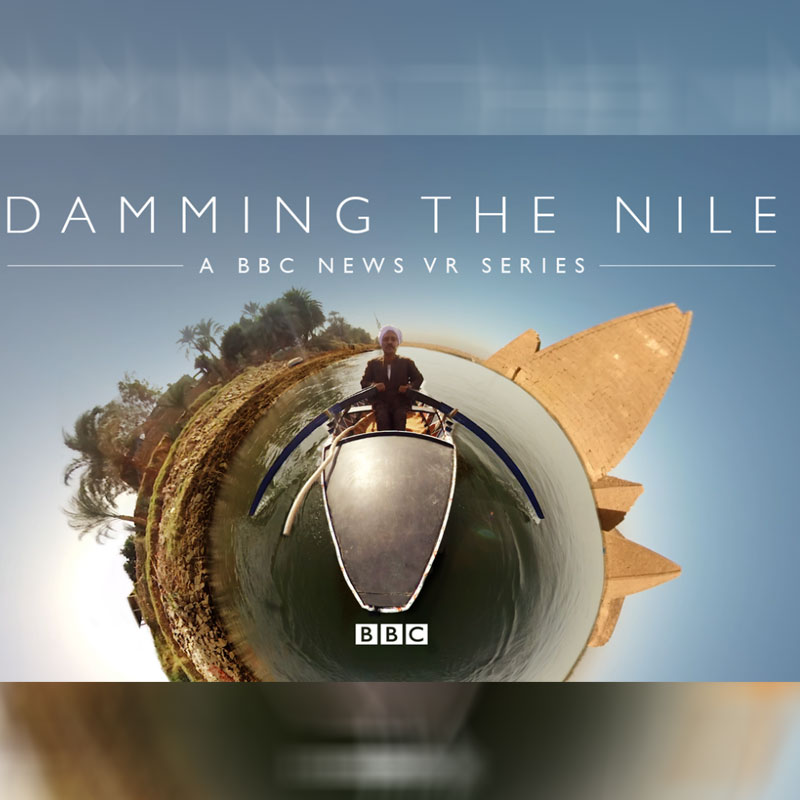
    MUMBAI: Hotly tipped as one of the digital trends to look out for in 2018, virtual reality (VR) has made significant steps towards becoming a more integrated offering from BBC News. The BBC is investing in bringing its award-winning journalism to audiences seeking new experiences by launching a VR documentary series.

    Produced by BBC News and the BBC VR Hub, Damming the Nile comprises a two-part VR documentary, a half-hour programme on BBC World News and a radio documentary on BBC World Service, as well as video and text on BBC.com. BBC VR Hub is a studio spearheading the VR production at the BBC and exploring how VR can create real audience impact.

    With VR at the heart of the production, the documentary follows BBC Africa Correspondent, Alastair Leithead, on a captivating journey along the Nile, exploring the politics and potential impact of Ethiopia’s $4.7 billion hydroelectric dam. Audiences are put in a correspondent’s shoes – through Ethiopia and Sudan, coming to an end at the mouth of the river Nile in Egypt – provoking an unmatched, emotional experience.

    To support the viewing of Damming the Nile, the BBC has launched an app on the Oculus Store, where Samsung Gear VR users can access an array of BBC VR content across news, factual and entertainment.

    BBC News digital development director James Montgomery said, “We’re committed to looking at ways in which to engage audiences with news, and – for the right project – VR can be an impactful and memorable way of doing our journalism. As an international broadcaster, it’s important for us to develop our storytelling and editing expertise to keep abreast of these rapidly improving technologies.” 

    Leithead said, “Damming the Nile is a fascinating series exploring the geopolitical struggle for regional power and influence surrounding the world’s longest river. It shows that virtual reality can be used to give a new perspective on world affairs and engage new audiences with world-class BBC News reporting. There’s nothing more exciting than taking the audience on an immersive journey with you.”

    The VR series allows audiences to fly high above the river Nile and its waterfalls, explore ancient Sudanese pyramids and take in the spectacular views of Egyptian temples from a hot air balloon before coming back down to earth in chaotic Cairo. Damming the Nile allows audiences to gain a whole new perspective on the conflict surrounding the world’s longest river.

    Damming the Nile will be available on the BBC VR Oculus app, bbc.com, BBC News Facebook and BBC News YouTube from 21 February.

  • NDTV to reduce workforce by up to 25%

    NDTV to reduce workforce by up to 25%

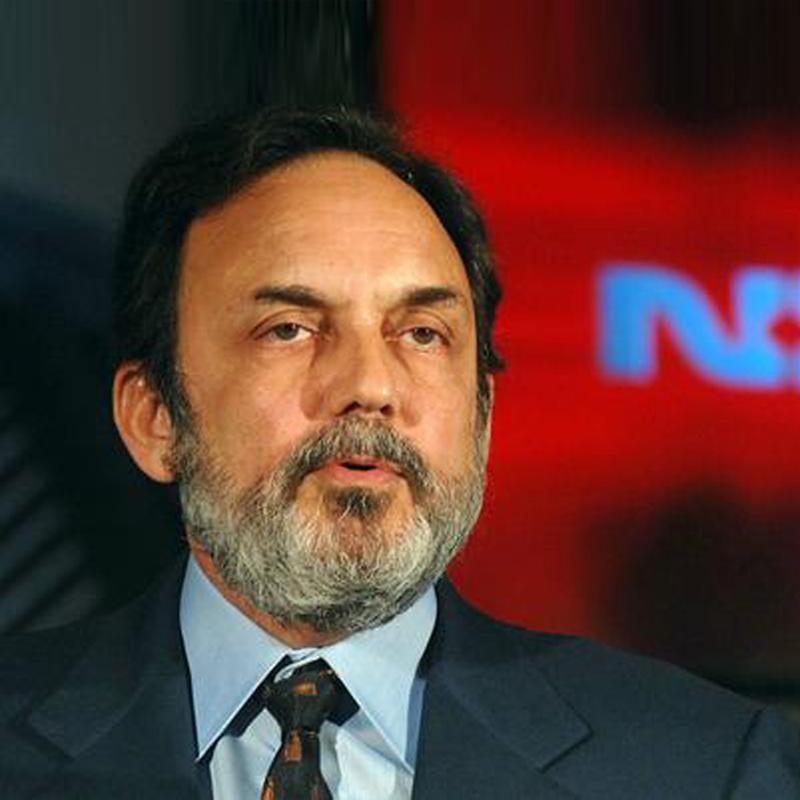
    MUMBAI: NDTV Group is undertaking measures to prune its workforce by up to 25 per cent in a bid to bring down costs and improve profitability. The move is a part of turnaround plan that was tabled a few months ago. A part of this plan was implemented in the last  quarter  and  included the much-noted  move  to new  technologies,  including to  mobile journalism. 

    The media company has pointed out that reporters  across  the country are now using mobile phones for the most efficient delivery of breaking news.

    “The strategy we are adopting calls for a far leaner operation, which  will feed only  our core business: our English and Hindi  news  channels, and NDTV Convergence and its digital teams  that  run  our  news  and other  apps and websites,” NDTV’s release to the BSE stated.

    As a result, the company will minimise all ancillary businesses that NDTV  had  expanded  into   over   the   last  few years.  “Given our  reprioritisation, our  workforce has to be altered too. Over  the next  month, we are considering   reduction  of the  workforce by up to 25 per cent,” the release added.

    When we reached out to NDTV, they declined to comment on the release.

    Also Read:

    Hindi news channels alter programming for Gujarat elections

    NDTV Digital narrows NDTV loss in second quarter

    NDTV restructures biz & newsroom amidst reports of layoffs

  • ‘The sort of shoddy opinionated journalism that you see on television isn’t limited to India:’ Andrew Stevens

    ‘The sort of shoddy opinionated journalism that you see on television isn’t limited to India:’ Andrew Stevens

    How often do we hear that Indian media, especially broadcast, is heavily inclined towards opinionated journalism where the prime time is ruled by one sided debates?

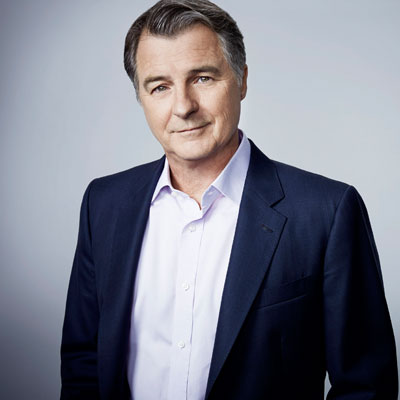
    The scenario isn’t restricted to only Indian media, but is a global trend, says CNN Asia Pacific editor and correspondent Andrew Stevens, who was in Mumbai recently for the CNN Business Forum 2016.

    The specialist business correspondent with over two decades of experience in the beat is known for his extensive coverage of news and business stories across the region. The latest feathers to his cap are covering Hong Kong’s ‘Umbrella Revolution’ pro-democracy movement and the mysterious disappearance of Flight MH370 in 2014.

    A former print journalist with several election coverages across many countries to boot, Stevens’ knowledge in geopolitics and its subsequent effect on the different Asia Pacific markets is unparalleled indeed.

    With ‘news’ and ‘business’ being the two sectors that Stevens has expertise on, his take on Indian media industry does put matters into a global perspective.

    In conversation with Indiantelevision.com Papri Das, Stevens shares his opinion on the current media industry and prospects of exploring new revenue models for the medium, why there is an audience for ‘debate format’ shows on television news, and why journalists must be careful when entertaining followers on social media.

    Excerpts:

    How do you see India in terms of freedom of the press? Have you noticed any change since the current government came into power?

    From an editorial standpoint I think Indian media is pretty free of censorship, and external influence. I am sure there are proprietors who wish to share their views in their own affiliated networks but generally I think it’s wonderful how robust the industry is. The different views that are aired daily through the news television networks is an indication of a healthy and thriving press in India.

    With regards to the current government, I haven’t seen any significant change. I don’t know if I am in the right position to answer this, but from what I have heard and read, there hasn’t been any serious clamming down of the press that’s visible to the international media.

    Do you think international media successfully covers India and doesn’t just scratch the surface?

    I find it’s a bit of both. It ultimately boils down to the reporter and reporting itself. There is no reason an international media such as ourselves can’t get to the real story. Churning out cliched news is lazy and I don’t believe in that type of journalism.

    I have been in India often and I find people to be very free and happy to share their opinions. Therefore there shouldn’t be an obstacle in gathering and reporting that very perspective internationally.

    Do you think digital will rule news and TV will gradually phase out?

    Digital media, especially social media is very attractive and an easy option. The news is snappy and one can simply grab a bite and they are done. But our job is to go beyond that.

    I don’t condone the whole social media as a news outlet. As a journalist I can tap into Twitter or other social media platforms to get good real time information as long as I trust my sources. But one needs to be aware that it’s a 15 secs of fame thing. Everybody is a journalist on Twitter in just 140 characters. At the end of the day, journalism is all about credibility and people need to trust what they read or watch. And that credibility can only be built through research and analysis, which is a journalist’s job. And that is why I think credible broadcast journalism will survive this digital wave; while those who are still into ‘byte’ form journalism will face tough competition.

    Are long form news programs a dying breed in broadcast in this generation of ADHD viewers?

    I certainly hope not. There always will be trends. I agree that right now snappy two minute video packages meant for the digital platforms are popular. For those who have a hunger for a holistic picture however, it leaves you wanting more. It is too basic a level and mostly scratches the surface. Yes, consumers of news are busy but they want to read and watch something that answers all their questions, not just make a statement. Like I always say, it comes down to the storyteller. Do I think good storytelling is in jeopardy? No, it still has a huge market and its industry is only growing.

    Prime time news in India is heavily dictated by the debate form of news. What is your take on this style of opinionated journalism?

    This sort of shoddy journalism that you see on television isn’t limited to India; we have examples of this in the west, and probably we lent this format to different markets. I think that a lot of people watch this because it conforms to their own ideas and opinions. It’s more of an echo chain where the broadcaster and the viewers feed off each others opinions. It’s human nature to keep watching something that we are comfortable listening to — a broadcaster who agrees with them; who confirms their prejudices or views. Personally, I get bored of that very quickly. I am not saying they are not influencing. I have been following the US Presidential election campaign very closely and the coverage there is very fascinating. Those who are glued to the television and are highly opinionated on the matter may actually end up having the fate of the entire western world in their hands.

    In India maximum news broadcasters are heavily dependent on ad revenue? How does a news channel ensure unbiased reporting and not lend itself to crony capitalism while running after ad ex?

    It is not only India, advertising remains a very important revenue stream for the broadcast industry all over the world and news is not an exception to that. There are also sponsorship deals now where companies will fund or bear part of the cost of certain content. News channels have a certain responsibility to provide an unbiased report and have to be very careful in striking a fine balance… as long as there is a clear labelling of advertorial, sponsorship and editorial.

    I know the lines do get blurred at times and that’s what we need to be concerned about. We have to make sure that we are not compromising news at the cost of our consumerist needs. We must understand that an advertiser chooses to lend their name and invest in a bulletin or a news program because the broadcaster and that content carries a certain credibility that they want to be associated with. Therefore a news channel’s primary job should be to not compromise on that. The entire business model should be based on it.

    Which do you prefer as a journalist — a subscription revenue platform or ad revenue platform?

    There is a lot of robust conversation about this issue even globally. People in the industry are talking about alternate sources of revenue. The internet has dragged the traditional advertising revenues down for people like us (broadcasters). If you ask me, a network like CNN would not work on just subscription revenue. But for a specialist or niche publication or broadcaster, it would work much better. And that is what we see on the digital platforms these days. People will pay for a deeper analysis in a specific beat rather than a news digest.

    How much does breaking the news before others matter to you? Does the rush not lead to an impulsive job?

    I think it’s a real danger to credible journalism, this whole practice of chasing after breaking news. That is why we don’t entertain any breaking news it until we confirm it ourselves. Suppose we get a news flash that Queen Elizabeth has died; we are not going to go anywhere near it until we verify the news ourselves through trusted and multiple sources. And that is what journalism is all about. The only reason people watch us is because when they hear us say something and they assume it to be true. Being the first mover doesn’t necessarily work, in fact it can be counter productive instead.

    CNN has consciously chosen to be those who might not be first to tell you what’s going on, but will tell you what is factually right. We don’t encourage sensationalisation of news but there are some news and personalities that lend themselves to controversy whom we also have to cover.

    A fine example would be the Republican candidate Donald Trump. We cover Trump a lot but then again Trump is a news maker and we cover news. It doesn’t necessarily mean that we agree with what he opines.

    What is your take on media debates involving sub-judice matter, which is called ‘Trial by media’ or ‘Media Trial?’

    It’s not fair but it’s a fact of life. This is where opinionated journalism can become very dangerous indeed. There have to be strong laws in place that will prevent this sort of influence by media on the judiciary. For example in UK, there are laws on what you can and can’t say when someone is under suspicion or charged with something. It’s partly the responsibility of the jurisdiction. One must understand that there is a whole spectrum of journalism.

    How much do you care about the number of digital views CNN generates? How in tune are you with the social media?

    I am not a digital native. So me and social media have a very loose association. While I do check from time to time, personally I am hardly tuned in. I don’t think I have tweeted since last November, so you can tell how active I am on the social network.

    But if you ask me if broadcasters today need to be social media savvy to stay connected with their audiences? Yes, I do think so. One has to manage that very carefully. I think we do have to be able to justify the stories we write and the pieces we put on air. We shouldn’t be hiding behind a mask or corporate wall. But at the same time I am not going to spend my life answering everybody’s question on what I do and why. A journalist has to have a keen ear, granted; but they can’t be influenced by popular opinion either. There has to be a fine balance.

    What will you advise budding journalists?

    It really depends on what you want to be. Do you really want to be the Indian correspondent internationally? I don’t think one needs to restrict oneself to a specific type of platform. As the world of media continues to change with these dynamic times, I feel that there are a lot more opportunities ahead for young and budding journalists out there. It’s becoming more important for young journalists starting up to make a name for their own self. Pick up a beat where you can thrive, whatever be the platform. And the key to it is of course breaking news. Apart from reacting to what is happening, develop skill sets and sources to find out newsworthy information for the world.

  • ‘The sort of shoddy opinionated journalism that you see on television isn’t limited to India:’ Andrew Stevens

    ‘The sort of shoddy opinionated journalism that you see on television isn’t limited to India:’ Andrew Stevens

    How often do we hear that Indian media, especially broadcast, is heavily inclined towards opinionated journalism where the prime time is ruled by one sided debates?

    The scenario isn’t restricted to only Indian media, but is a global trend, says CNN Asia Pacific editor and correspondent Andrew Stevens, who was in Mumbai recently for the CNN Business Forum 2016.

    The specialist business correspondent with over two decades of experience in the beat is known for his extensive coverage of news and business stories across the region. The latest feathers to his cap are covering Hong Kong’s ‘Umbrella Revolution’ pro-democracy movement and the mysterious disappearance of Flight MH370 in 2014.

    A former print journalist with several election coverages across many countries to boot, Stevens’ knowledge in geopolitics and its subsequent effect on the different Asia Pacific markets is unparalleled indeed.

    With ‘news’ and ‘business’ being the two sectors that Stevens has expertise on, his take on Indian media industry does put matters into a global perspective.

    In conversation with Indiantelevision.com Papri Das, Stevens shares his opinion on the current media industry and prospects of exploring new revenue models for the medium, why there is an audience for ‘debate format’ shows on television news, and why journalists must be careful when entertaining followers on social media.

    Excerpts:

    How do you see India in terms of freedom of the press? Have you noticed any change since the current government came into power?

    From an editorial standpoint I think Indian media is pretty free of censorship, and external influence. I am sure there are proprietors who wish to share their views in their own affiliated networks but generally I think it’s wonderful how robust the industry is. The different views that are aired daily through the news television networks is an indication of a healthy and thriving press in India.

    With regards to the current government, I haven’t seen any significant change. I don’t know if I am in the right position to answer this, but from what I have heard and read, there hasn’t been any serious clamming down of the press that’s visible to the international media.

    Do you think international media successfully covers India and doesn’t just scratch the surface?

    I find it’s a bit of both. It ultimately boils down to the reporter and reporting itself. There is no reason an international media such as ourselves can’t get to the real story. Churning out cliched news is lazy and I don’t believe in that type of journalism.

    I have been in India often and I find people to be very free and happy to share their opinions. Therefore there shouldn’t be an obstacle in gathering and reporting that very perspective internationally.

    Do you think digital will rule news and TV will gradually phase out?

    Digital media, especially social media is very attractive and an easy option. The news is snappy and one can simply grab a bite and they are done. But our job is to go beyond that.

    I don’t condone the whole social media as a news outlet. As a journalist I can tap into Twitter or other social media platforms to get good real time information as long as I trust my sources. But one needs to be aware that it’s a 15 secs of fame thing. Everybody is a journalist on Twitter in just 140 characters. At the end of the day, journalism is all about credibility and people need to trust what they read or watch. And that credibility can only be built through research and analysis, which is a journalist’s job. And that is why I think credible broadcast journalism will survive this digital wave; while those who are still into ‘byte’ form journalism will face tough competition.

    Are long form news programs a dying breed in broadcast in this generation of ADHD viewers?

    I certainly hope not. There always will be trends. I agree that right now snappy two minute video packages meant for the digital platforms are popular. For those who have a hunger for a holistic picture however, it leaves you wanting more. It is too basic a level and mostly scratches the surface. Yes, consumers of news are busy but they want to read and watch something that answers all their questions, not just make a statement. Like I always say, it comes down to the storyteller. Do I think good storytelling is in jeopardy? No, it still has a huge market and its industry is only growing.

    Prime time news in India is heavily dictated by the debate form of news. What is your take on this style of opinionated journalism?

    This sort of shoddy journalism that you see on television isn’t limited to India; we have examples of this in the west, and probably we lent this format to different markets. I think that a lot of people watch this because it conforms to their own ideas and opinions. It’s more of an echo chain where the broadcaster and the viewers feed off each others opinions. It’s human nature to keep watching something that we are comfortable listening to — a broadcaster who agrees with them; who confirms their prejudices or views. Personally, I get bored of that very quickly. I am not saying they are not influencing. I have been following the US Presidential election campaign very closely and the coverage there is very fascinating. Those who are glued to the television and are highly opinionated on the matter may actually end up having the fate of the entire western world in their hands.

    In India maximum news broadcasters are heavily dependent on ad revenue? How does a news channel ensure unbiased reporting and not lend itself to crony capitalism while running after ad ex?

    It is not only India, advertising remains a very important revenue stream for the broadcast industry all over the world and news is not an exception to that. There are also sponsorship deals now where companies will fund or bear part of the cost of certain content. News channels have a certain responsibility to provide an unbiased report and have to be very careful in striking a fine balance… as long as there is a clear labelling of advertorial, sponsorship and editorial.

    I know the lines do get blurred at times and that’s what we need to be concerned about. We have to make sure that we are not compromising news at the cost of our consumerist needs. We must understand that an advertiser chooses to lend their name and invest in a bulletin or a news program because the broadcaster and that content carries a certain credibility that they want to be associated with. Therefore a news channel’s primary job should be to not compromise on that. The entire business model should be based on it.

    Which do you prefer as a journalist — a subscription revenue platform or ad revenue platform?

    There is a lot of robust conversation about this issue even globally. People in the industry are talking about alternate sources of revenue. The internet has dragged the traditional advertising revenues down for people like us (broadcasters). If you ask me, a network like CNN would not work on just subscription revenue. But for a specialist or niche publication or broadcaster, it would work much better. And that is what we see on the digital platforms these days. People will pay for a deeper analysis in a specific beat rather than a news digest.

    How much does breaking the news before others matter to you? Does the rush not lead to an impulsive job?

    I think it’s a real danger to credible journalism, this whole practice of chasing after breaking news. That is why we don’t entertain any breaking news it until we confirm it ourselves. Suppose we get a news flash that Queen Elizabeth has died; we are not going to go anywhere near it until we verify the news ourselves through trusted and multiple sources. And that is what journalism is all about. The only reason people watch us is because when they hear us say something and they assume it to be true. Being the first mover doesn’t necessarily work, in fact it can be counter productive instead.

    CNN has consciously chosen to be those who might not be first to tell you what’s going on, but will tell you what is factually right. We don’t encourage sensationalisation of news but there are some news and personalities that lend themselves to controversy whom we also have to cover.

    A fine example would be the Republican candidate Donald Trump. We cover Trump a lot but then again Trump is a news maker and we cover news. It doesn’t necessarily mean that we agree with what he opines.

    What is your take on media debates involving sub-judice matter, which is called ‘Trial by media’ or ‘Media Trial?’

    It’s not fair but it’s a fact of life. This is where opinionated journalism can become very dangerous indeed. There have to be strong laws in place that will prevent this sort of influence by media on the judiciary. For example in UK, there are laws on what you can and can’t say when someone is under suspicion or charged with something. It’s partly the responsibility of the jurisdiction. One must understand that there is a whole spectrum of journalism.

    How much do you care about the number of digital views CNN generates? How in tune are you with the social media?

    I am not a digital native. So me and social media have a very loose association. While I do check from time to time, personally I am hardly tuned in. I don’t think I have tweeted since last November, so you can tell how active I am on the social network.

    But if you ask me if broadcasters today need to be social media savvy to stay connected with their audiences? Yes, I do think so. One has to manage that very carefully. I think we do have to be able to justify the stories we write and the pieces we put on air. We shouldn’t be hiding behind a mask or corporate wall. But at the same time I am not going to spend my life answering everybody’s question on what I do and why. A journalist has to have a keen ear, granted; but they can’t be influenced by popular opinion either. There has to be a fine balance.

    What will you advise budding journalists?

    It really depends on what you want to be. Do you really want to be the Indian correspondent internationally? I don’t think one needs to restrict oneself to a specific type of platform. As the world of media continues to change with these dynamic times, I feel that there are a lot more opportunities ahead for young and budding journalists out there. It’s becoming more important for young journalists starting up to make a name for their own self. Pick up a beat where you can thrive, whatever be the platform. And the key to it is of course breaking news. Apart from reacting to what is happening, develop skill sets and sources to find out newsworthy information for the world.
  • TIMES NOW completes 10 impactful years of action-oriented leadership and success

    TIMES NOW completes 10 impactful years of action-oriented leadership and success

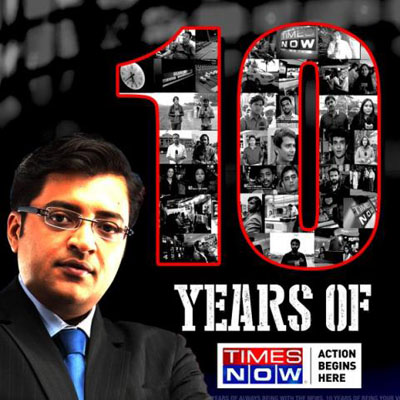
    MUMBAI:  India’s No 1 English News Channel has completed 10 successful and momentous years. Over the last 8 years, it has remained the most popular and impactful channel, because of its action-oriented approach to news, driven by the highest standards of professional journalism. The channel was launched on 31st January 2006.

    Within just two years of its 2006 launch, TIMES NOW raced away to become the biggest English news channel, and ever since, has remained India’s most popular and impactful television news channel – one that has delivered for the consumers and business associates, and most importantly for society and the Nation.

    M K Anand, CEO&MD – Times Network, says, “TIMES NOW is a truly iconic news channel respected for its committed, action-oriented, professional and impactful journalism. TIMES NOW, NewsHour and Arnab Goswami are household names. It’s hard to imagine that just a decade ago, we did not have this mega brand. TIMES NOW like other young global mega media brands is a reflection of what has changed in human society in the 21st century and what still endures as true and good. Over the last 10 years, TIMES NOW has led the nation’s discourse by stimulating collective national thought and resultant action and has become a strong agent of change. It is this drive that has not only made TIMES NOW India’s most impactful News Channel, but has also taken it to over 80 countries around the globe.”

    Arnab Goswami, President, News, Editor-in-Chief of TIMES NOW, ET NOW and Magicbricks NOW, the original architect of the soul of TIMES NOW, its content,  says, “Ten years ago, when we set about planning to create TIMES NOW, we questioned the old belief that news should remain just reported and hence a monologue. We asked ourselves: Why shouldn’t news be information plus added perspective of different news makers and thought leaders thrown in? Even as we innovated on strategy, questioned old formats, and infused news with speed, throughout, we have remained unwavering in our mission to maintain the highest ethical and professional standards of news reportage. We are committed to ensuring that relevant news does not remain hidden from the public, and that it sparks opinion, debate, and corrective action.”

     “Through our approach to television news journalism, we have changed, forever, the way news was presented in India. As a result, TIMES NOW boasts of an exceptional top-of-mind recall. 

    “I am grateful to my entire team for their belief, abilities, commitment and dedication, and for all the hard work they put in unfailingly each day, which has helped make TIMES NOW the incomparable channel it is.”

  • TIMES NOW completes 10 impactful years of action-oriented leadership and success

    TIMES NOW completes 10 impactful years of action-oriented leadership and success

    MUMBAI:  India’s No 1 English News Channel has completed 10 successful and momentous years. Over the last 8 years, it has remained the most popular and impactful channel, because of its action-oriented approach to news, driven by the highest standards of professional journalism. The channel was launched on 31st January 2006.

    Within just two years of its 2006 launch, TIMES NOW raced away to become the biggest English news channel, and ever since, has remained India’s most popular and impactful television news channel – one that has delivered for the consumers and business associates, and most importantly for society and the Nation.

    M K Anand, CEO&MD – Times Network, says, “TIMES NOW is a truly iconic news channel respected for its committed, action-oriented, professional and impactful journalism. TIMES NOW, NewsHour and Arnab Goswami are household names. It’s hard to imagine that just a decade ago, we did not have this mega brand. TIMES NOW like other young global mega media brands is a reflection of what has changed in human society in the 21st century and what still endures as true and good. Over the last 10 years, TIMES NOW has led the nation’s discourse by stimulating collective national thought and resultant action and has become a strong agent of change. It is this drive that has not only made TIMES NOW India’s most impactful News Channel, but has also taken it to over 80 countries around the globe.”

    Arnab Goswami, President, News, Editor-in-Chief of TIMES NOW, ET NOW and Magicbricks NOW, the original architect of the soul of TIMES NOW, its content,  says, “Ten years ago, when we set about planning to create TIMES NOW, we questioned the old belief that news should remain just reported and hence a monologue. We asked ourselves: Why shouldn’t news be information plus added perspective of different news makers and thought leaders thrown in? Even as we innovated on strategy, questioned old formats, and infused news with speed, throughout, we have remained unwavering in our mission to maintain the highest ethical and professional standards of news reportage. We are committed to ensuring that relevant news does not remain hidden from the public, and that it sparks opinion, debate, and corrective action.”

     “Through our approach to television news journalism, we have changed, forever, the way news was presented in India. As a result, TIMES NOW boasts of an exceptional top-of-mind recall. 

    “I am grateful to my entire team for their belief, abilities, commitment and dedication, and for all the hard work they put in unfailingly each day, which has helped make TIMES NOW the incomparable channel it is.”

  • Shutters down on Al-Jazeera America; AJ-English to expand digital ops in US

    Shutters down on Al-Jazeera America; AJ-English to expand digital ops in US

    MUMBAI: After three years of financial struggles, Al Jazeera America (AJAM) will down the shutters on its cable TV and digital operations by 30 April, 2016.


    The decision by the AJAM board was driven by the fact that its business model was simply not sustainable in light of the economic challenges in the US media marketplace.


    The closure of the US channel will be accompanied by an expansion of its existing worldwide digital services into the US to broaden its multi-platform presence.


    The expanded digital platform will augment the Network’s current digital offerings, including AJ+, which has achieved more than two billion online video views since its inception in September 2014.


    “As audiences increasingly turn to multiple platforms, including mobile devices, for news and information, this expansion will allow US and non-US consumers alike to access the network’s journalism and content wherever and whenever they want. By expanding its digital content and distribution services to now include the US, the network will be better positioned to innovate and compete in an overwhelmingly digital world to serve today’s 24-hour digitally focused audience,” the Al Jazeera Media Network said in a statement.


    Al Jazeera America CEO Al Anstey said, “I have witnessed and worked alongside some of the most talented people any organisation could wish for. Since its launch in 2013, the work done by the team at Al Jazeera America has been recognised with nearly every major award an American news organisation can receive. I greatly respect the unrivalled commitment and excellent work of our team, which has created great journalism. We have increasingly set ourselves apart from all the rest, and the achievements of the past two-and-a-half years should be a source of immense pride for everyone.”

  • Rajdeep Sardesai and Arnab Goswami poles apart on future of journalism

    Rajdeep Sardesai and Arnab Goswami poles apart on future of journalism

    MUMBAI: The venue: the National Centre of Performing Arts auditorium in south Mumbai. The occasion: a panel discussion that preceded the Press Club of India’s Red Ink Awards. On stage were IBN18 editor-in-chief  Rajdeep Sardesai, Times Now editor-in-chief Arnab Goswami, and Dainik Divya Marathi chief editor Kumar Ketkar, O&M national creative director and chairman Piyush Pandey. And for a change it was they who were grilled by Star India CEO Uday Shankar, a former journalist himself. The topic: Elections 2014: were we fair or did we stoke the NaMo wave?’

    Shankar set the pace for the panel when he spoke first, stating that it is he who would be asking the questions and no one would be allowed to answer – in all probability taking a jab at Arnab. As the audience burst into laughter,  he then told Rajdeep to open the debate by speaking his mind.

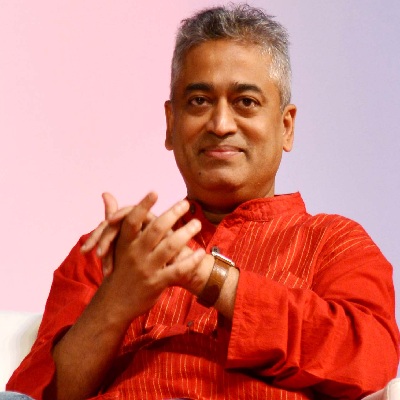
    Dressed as casually as one can get, in a red kurta, simple trousers and chappals, Sardesai delivered a hard hitting monologue on Modi and the kind of journalism that exists in India now.

    “Modi had the most  innovative and sustained campaign that we have ever seen in an Indian election,” he said, while pointing out that Congress president Rahul Gandhi was like a kid in kindergarten in front of Modi. But he also said that it was unfair to blame the media for creating the NaMo wave.

    “Some channels have abandoned the basic role of media. They are now doing cheerleading or supari journalism to get more viewers and ratings. Modi was not subject to the intense scrutiny in the last two years that the others were subject to. While he was brilliant with his social media strategy and communication he was spared the ignominy that others were subject to. Some channels elevated Narendra Modi to God. He is a good politician and communicator but not a messiah. Some journalists need to ask themselves if they want to do journalism or hagiography,” he added.

    On the other hand, Arnab instantly put himself and his channel in the spotlight by stating that one of the positives of being located in Mumbai, far away from the hub of channels (Noida) was that it keeps him disassociated with politicians.

    “I am not romantically involved with any political party so I don’t end up having a bitter break up with them. My distance with politicians is both physical and psychological. We in India are overawed by them. Modi was the focus because there was no competition. We are not dependent on politicians for ratings. There is no scientific evidence that Modi gets ratings,” he said while also stating that he wasn’t aware of this supari journalism that Rajdeep referred to.

    “The next 10 years of journalism to me are very bright,” said Arnab. A view that Shankar totally endorsed. Said he: “The future of journalism is bright because we do something that is essential to the society. We should not be cynical about the media, without them the country would not have been what it is.”

    However, Arnab’s view seemed to have irked Rajdeep who in the latter part of the discussion said, “We can state that in 10 years things will be great and things are going to change, but arrogance is the downfall of every journalist! At our time, it was never that what the anchor said would matter more than what the guests said.”

    Ketkar who comes from the print side of the media and was the senior most scribe on the panel let loose his spleen as he lambasted the electronic media for sidetracking and sideswiping print publications.

    “It is the electronic media that sets the tone for the next day’s morning headlines in the paper by these discussions. The people don’t set the agenda, the media does. The media has covered how miserable Bihar is but no mention of the Gujarat floods when Modi was campaigning at the height of his campaign trail. So, it is not just that you have to speak more about something, but by also not showing something you can stoke the fire,” he said.

    While the three editors did not refrain from taking digs and potshots at each other for the kind of journalism that is being resorted to, it was Piyush Pandey – the man behind the Narendra Modi election campaign –  who gave his insights on what led to NaMo wave. He pointed out that no matter what Modi did, he never gave the media a chance to ignore him; he made sure he was in the public eye, consistently giving out the right message that the public wanted to hear. “The media rode the Modi wave. It did not create it,” he said.

    While the very topic was sidelined, the editors were deeply engaged in pontificating on the state of journalism in the country with Goswami being the most optimistic about it.

    Having recently taken a month long break from his editorial duties, Rajdeep was the most vocal about the fact that news television needs to find its bearings quickly.

    “The idea that the television makes or breaks will not hold anymore. I really think that we have lost the capacity to go beyond the dramatic headline. We have lost our nerve. We need to introspect and ask ourselves : are we willing to do a serious interrogation of the Gujarat model, positive and negative?” he questioned. The fact that the BJP did well in places where cable TV did not reach efficiently was also brought out by Shankar and Sardesai.

    While the discussion didn’t see any real conclusion, it did end with a valuable point to ponder: whether journalists were getting too emotionally involved with politicians?

    Shankar had the last word on this. Said he:  “I think there is too much reverence even now in Indian media and on the other hand, there is too much emotional attachment. Either we are just cynical or when we go there we get sucked in. There has to be a balance in between. Overall, I think we shouldn’t be cynical about media. We have lots to capture and improve but without the media, this place, this country would be much worse.”