Tag: Josh

  • Josh and DW Hindi’s new season of ‘Vibecheck with DW’ series makes waves in Bharat

    Josh and DW Hindi’s new season of ‘Vibecheck with DW’ series makes waves in Bharat

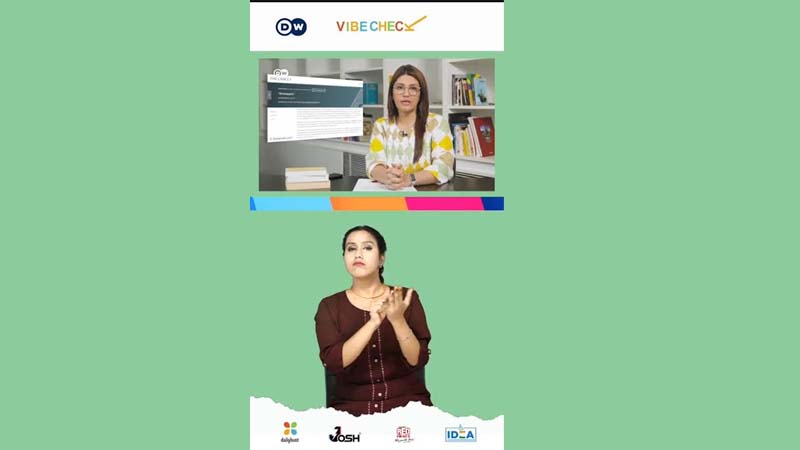
    Mumbai: Josh, a short video app, in collaboration with DW Hindi, the Hindi-language channel of German international broadcaster Deutsche Welle, has announced the successful conclusion of the second season of ‘Vibecheck with DW’. This collaborative series introduced DW’s ‘Sehat Talk’, a women-centric news series, to a wider audience through short videos on Josh and Dailyhunt.

    The introduction of ‘Sehat Talk’ programme on Josh and Dailyhunt marked a significant milestone in inclusive and women-centric media content for Bharat audiences. The second season, with a total of 45 videos which ran for 15 weeks on Josh and Dailyhunt, focused on an array of engaging and diverse topics including seed cycling, #Women trend awareness, “Whatsappitis,” and the intriguing connection between pain and cravings for sweets, among others.

    With over 300 million video views, 10 million hearts and nearly one million shares and downloads on Josh, the enthusiastic response indicates the show’s remarkable reach and impact. Presented in Hindi and Indian Sign Language, the informative series is hosted by renowned journalist Isha Bhatia Sanan and an interpreter from the Inclusive Divyangjan Entrepreneur Association (IDEA). RedFM and its RJs also supported the series, emphasizing its importance to their listeners.

    Commenting on this campaign, Josh head of creator & content ecosystem Sunder Venketraman said, “Vibecheck with DW’ has been an exceptional and impactful initiative since its inception. Our primary objective was to establish a safe and inclusive environment for women to engage in conversations about their health and related topics in the most inclusive manner possible. Through a comprehensive approach rooted in inclusivity, collaboration, and advocacy, we have not only achieved this goal but surpassed our objectives. Season 2’s success has been made possible by the collective efforts of the Vibecheck team, as well as our valued partners such as RedFM and IDEA.”

    Daniel Schulz and Jaya Oberoi from Deutsche Welle’s Asia distribution team, jointly commented “The success of ‘Vibecheck with DW’ Season 2 reflects our commitment to delivering informative and captivating content to audiences in India. We are thrilled to see the positive reception and intend to continue to empower and educate through our collaboration with Josh and Dailyhunt, whose support has been crucial in amplifying our message and reaching diverse audiences.”

    Season two of ‘Vibecheck with DW’ answers all the health-related “whys” that audiences may have. From understanding why anger fuels in an empty stomach to the intricacies of cancer development and the rationale between ageing and hair loss, the new season unravels the interconnected aspects of health and much more. The ‘Vibecheck with DW’ series can be viewed on DW Hindi’s channels on Josh and Dailyhunt.

  • “We help machines learn the content and AI understand the content”: TMW COO Ratnendra K. Pandey

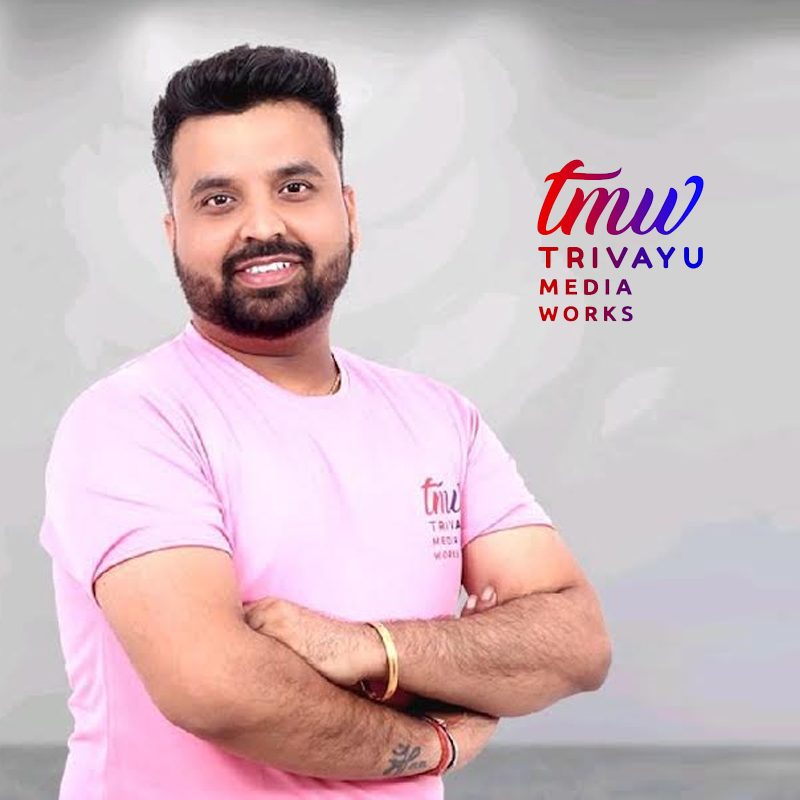
    “We help machines learn the content and AI understand the content”: TMW COO Ratnendra K. Pandey

    Mumbai: Indian hyperlocal content and resource distribution platform TriVayu Media Works (TMW), which was founded on 29 March 2020, is going from strength to strength. The Noida-based company, which claims to be the country’s first hyperlocal content distribution company, today has more than 10 micro-offices and over 10,000 content partners in India. It was co-founded by Tanu Shree Rawat and Ratnendra K. Pandey. TMW said that it helps Indian companies target the hyperlocal market by creating super-niche content, marketing, and resource services.

    TMW has been providing a wide array of services which include resource management (end-to-end customer success services in 12 languages); content learning (content moderations, tagging, grading services in 12 languages); creative designs (2D, 3D, motion graphics, VFX); bulk content (India’s largest ecosystem to manually crawl content, write articles, create memes and photos).

    Presently, TMW has 15 full-time employees, 60 project-based (ad-hoc) employees, and 600+ contract-based partners.

    TMW says that its mission is to make the youth of India self-reliant with the simple tool of the internet and to create an effective ecosystem which recruits and trains more and more candidates. TMW has a network of over 10,000 people and has a unique micro-office-based model that it claims no other company currently offers.

    TMW added that it has catered to the needs of over 110 clients and reached out to over one billion users through its various social media platforms. The company is targeting Rs 50 crore in revenue in the new fiscal and expects 10X year-on-year growth. TMW is aiming to open two studios to support India’s rising live streaming content industry. One studio will be based in Noida while the other will operate out of Lucknow.

    Indiantelevision.com caught up with Ratnendra K. Pandey to find out more about the company’s plans. His responsibility is to manage the lead operations and steer the strategy for all departments. As the Chief of Operations, he is keen to raise the brand as per the companies’ requirements and immediate goals.

    He started his career as a journalist at a time when very few realised the potential of internet content. Initially, he started working at the digital desk of Star News (now ABP News). He has also worked with many companies, including Terrevive, a Hong Kong-based tech company; CCM Benchmark, a Paris-based content company; and a couple of more clients.

    To kick-start TMW, Pandey invested rupees eight lakh in 2020 from his own savings to strengthen the operations, on-board the right talent, and boost the growth of TMW.

    In his free time, Pandey loves to travel and explore new destinations. From 2017 onwards, he has explored 50 cities across 10 countries in the world. Traveling re-energizes the lost soul and fosters a sense of unity and love among his family members.

    Edited excerpts:

    On the market gap that he saw when launching TriVayu Media Works in 2020

    Ratnendra: The story of TMW started five years ago. When I was working with UCBrowser, I saw that when I had to reach out to people in tier two and tier three cities, I had no agencies. Agencies were in the metros and it was unusual for them to reach out to tier two and three cities. If they wanted someone who could create a video and write articles, it was difficult to find.

    This was the market gap that existed. So, before starting TMW, I spent six months developing a community network. These people are very well-trained in creating and writing content in hyperlocal languages based in tier two and tier three cities. They can do multiple things in the content domain.

    On whether COVID-19 forced a course correction

    Ratnendra: When I started TMW, Covid-19 had not yet arrived. In January 2020, I visited multiple cities in UP and Rajasthan. I thought of training people in these cities. For me, it is a personal story, since I come from a small city. TMW gives them training. I did this before officially launching operations. Covid-19 came in March. It gave us the power to support brands that were struggling. Brands were not getting the support from agencies as, all of a sudden, everyone was working from home. We were working on developing in a community that worked from home.

    On the services that TMW offers, like resource management and content learning

    Ratnendra: When you talk about resource management, there are two major domains, one being content moderation, tagging, and placing. Fake news is a concern for brands. On Instagram reels, you see similar content on your timeline. The majority of content is tagged by a human. So if someone is driving a car in a short video, it will be defined to the machine by a human being. Every video is defined. Similarly, if there is a bad video on level one, it will be filtered by AI (artificial intelligence), but on level two, there will be human interference. It is human interference that is tagging the content. We help machines learn the content. We help AI understand the content.

    On the 10,000 content partners that TMW works with

    Ratnendra: We try to develop smaller communities in tier two and three cities. In Rajasthan, we have around 1,500–1,600 people working for us. They are college graduates or post-graduate students. There are communities in 13 cities. In some, we have 100 people, 200 people, or 1,000 people. We educate and on-board them for more and more work.

    On the work that TMW does with clients like ShareChat and MXPlayer

    Ratnendra: We have been providing them with content services. For MXPlayer, we provide content learning services. A show concluded recently. The show was streaming 24*7. There is the comment section open to everyone, so people may use abusive language while commenting. It is the platform’s responsibility to not allow such comments. We were helping them filter such comments, delete them, and take action against the users. It was moderation work for the platform. For Sharechat, we provide them with trending content services based on events.

    On TMW’s USP vis-a-vis competition

    Ratnendra: There is no company that gives all our offerings. Some companies provide 30 percent of what we do. We also have quickly available resources. We work on that side before a client approaches us. We can service a client in 48 hours. We organise smaller events to train employees on clients’ requirements. So a brand may come tomorrow and ask for 20 people.

    We are ready for it and we are quick in terms of providing resources. We are also strong on the hyperlocal side. So we can provide someone in Rajasthan with a local dialect. Haryanvi farmers speak Haryanvi—a dialect and not a language. We can provide a company with someone who speaks this dialect and can then create a promotional video. The aim is to make the communication process smooth.

    On the two studios that will be opened to leverage the streaming opportunity

    Ratnendra: Streaming is the next big thing that is happening in the country. We are opening one studio in Noida and another in Lucknow. It is about serving as many businesses as possible. Resource or content creators must not have to travel as much. The aim is to save clients money, time and make it more feasible for the creators. If this is successful, we will open more studios and penetrate deeper.

    On the key things that marketers need to keep in mind when they use Internet-based channels to generate maximum ROI

    Ratnendra: The most important part is choosing the correct medium, whether it is influencer marketing or another platform.If you have to target a farmer and promote a tractor, you should target a Youtube influencer to do the job, not someone on Instagram or Facebook. They have a specific way of narrating & more and more people watch them from the farming community in villages. This is why research is important.

    On trends seen in influencer marketing

    Ratnendra: The trend is going to be hyperlocal. It has always been there. When you travel by road in Europe, the language changes. When you go from one country to another, the language changes. If you take a highway from Chandigarh to Maharashtra, you will encounter six to seven languages. You have platforms that target a certain language.

    Similarly, on social media, you see content in different languages. You do not have to use Hindi to speak to a farmer in a tier two or three city. If a brand is targeting consumers in Uttarakhand, then why not create an app in the Kumauni language? Why must you use Hindi? That is the opportunity for TMW.

    On the role of regional in brand storytelling

    Ratnendra: This trend started four years ago. Increasingly, you are seeing billboards in local languages. Other media will soon adopt more local languages. There is also a joy in conversing in one’s mother tongue. If an advertiser or brand wants to communicate a message, why not do it in a language that the consumer is most comfortable with? It is important to adapt to things in the local lingo.

    On whether brands use social media platforms like Instagram and Twitter better

    Ratnendra: Brands explore them. They use them. It is just that initially there was only English, then Hindi came, and then came the local languages. In the future, more local languages will debut. Brands that aspire to become big will go the local language route in communication.

    On TMW launching a podcast

    Ratnendra: The podcast aims to connect the brands that work with us with more people from tier two to three cities. The podcast communicates through voice. We will make multiple cuts and distribute them through multiple platforms, like short video apps. A podcast is the only thing that can be cut and distributed in as many mediums as possible.

    Memes are also doing well, but they target only a specific kind of audience. But the podcast format has a future in the country. It is still in an early stage in the country, and in the future it will take a larger piece of the communication pie. We are seeing influencers in fields like finance using podcasts and doing pretty well.

    On how brands are using augmented reality, AI, and machine learning to enhance their campaigns

    Ratnendra: Access is a challenge for augmented reality. There is a section of Times Square where such advertisements can be seen, but there is no such platform in India. Technology has to become easier to access. Most of the country stays in tier two and tier three cities. Until they can access it easily, it will not become a trend. In video creation, you do not need to involve AI or ML; you only use them for content distribution. They do play a role in determining where the TG of a campaign resides.

    On trustworthiness being an issue when one talks about digital trust

    Ratnendra: This is where branding comes into the picture. You will struggle till people trust you, especially if you are a D2C brand. You have to convince them, or you will not be able to sell.

    On LinkedIn’s efforts at content creation

    Ratnendra: LinkedIn is a professional community focused majorly on corporate intellectuals. The platform has also started paying attention to the creators. So, as it is majorly targeting people in metro and tier 1 cities, it is not likely that we see a lot of content in languages other than English. Yes, they have recently started promoting Hindi. It is exciting! The content on LinkedIn generally floats in two directions—formal or more educational. I believe, as far as the video content is concerned, it is an early stage for them. It is a promising area, but the category is limited. Success stories are popular. Business and finance stories are popular. But if you talk about the massy content, it will not get that kind of traction on LinkedIn. In fact, users on LinkedIn clearly understand it. However, during the last few months, LinkedIn has also become video-friendly. But right now it will not appeal to tier two, tier three cities.

  • Josh partners with Germany’s international broadcaster Deutsche Welle TV to explore international content

    Josh partners with Germany’s international broadcaster Deutsche Welle TV to explore international content

    Mumbai: Josh, India’s fastest-growing and most engaged short-video app has entered into a one-year strategic partnership with Deutsche Welle, popularly known as DW, Germany’s leading international broadcaster to provide high-quality content to users on Josh in an engaging short-video format. Through this partnership, DW aims to bolster its reach across Bharat with news and informational content, leveraging the Bharat-centric platform that Josh is.

    Speaking on the partnership, Josh’s Head of Creator and Content Ecosystem Sunder Venketraman said, “We are looking forward to our partnership with DW TV, as we strive to leverage Josh’s reach and deep engagement with Bharat to bring to the users of Bharat news and infotainment from a global perspective. Through this partnership, we aim at empowering our users with the knowledge and global awareness using engaging formats and narratives while also ensuring to meet the local language content needs of our audience.”

    Commenting on the collaboration, DW’s Distribution Manager – DW in Asia Daniel Schulz and DW Distribution Representative for India, Sri Lanka, Afghanistan and Bangladesh, Jaya Oberoi said: “At Deutsche Welle, we aim to produce versatile content which is not only entertaining and educative but a conversation starter. Our partnership with Josh presents us with a unique opportunity to connect to a much younger and vibrant audience in India. The timing couldn’t be better as we are planning to expand our bouquet on regional languages with DW’s flagship programs in the coming months. We are excited to be joining hands with Josh, in our journey to distribute DW videos to the heart of India.

    As DW looks at significantly expanding its presence in India, the partnership with Josh enables DW to engage more meaningfully through their content thus making news more informative and engaging. The collaboration further elevates the objectives of both brands as they aim to cater to the demand for high-quality infotainment content in a format that is snackable and engaging while also meeting the local language needs of the users. The international content from DW will be available to users in English and Hindi.

    DW will be bringing information and content on diverse topics such as current affairs, climate change, history, health, and unique human interest among others, from around the world to users on Josh. 

  • VerSe Innovation raises $805 million in latest funding rounds

    VerSe Innovation raises $805 million in latest funding rounds

    Mumbai: Local language technology platform VerSe Innovation has raised $805 million in the latest funding rounds from marquee global investors Canada Pension Plan Investment Board (CPP Investments), Ontario Teachers’ Pension Plan Board (Ontario Teachers’), Luxor Capital, Sumeru Ventures and others. VerSe Innovation owns the family of ‘Bharat-focused’ apps namely Josh, Dailyhunt, and PublicVibe.

    Existing investors Sofina Group, Baillie Gifford and others will also participate north of their pro-rata in this round resulting in VerSe Innovation’s valuation reaching ~$ five billion.

    The fresh round of investment follows close on the heels of a $650 million+ fundraise from Siguler Guff, Carlyle Group, Baillie Gifford, Falcon Edge Capital via Alpha Wave Ventures, Glade Brook Capital, Google, and Microsoft and Qatar Investment Authority taking the total capital raised in the past year to ~$1.5 billion.

    The investment will be focused on strengthening the company’s leadership position as the largest, fastest-growing local language AI-driven content platform in the country.  

    VerSe plans on deepening as well as broadening its AI/ML and data science capabilities to further cement its leadership position across all user, engagement and retention metrics, drive deeper monetisation including influencers, e-commerce and live streaming and forays into Web 3.0 experiences across its local language creator base of over 50 million creators as well as its local language content ecosystem which experiences over 80 billion video plays per month.

    Avendus Capital was the exclusive financial advisor to VerSe Innovation on the transaction.

    “India’s digital content is experiencing phenomenal growth, and VerSe Innovation is well-positioned to be one of the leaders in the fast-growing short video and local language content space,” said CPP Investments MD and head of private equity Asia Frank Su. “This investment aligns with our approach of providing strategic capital to industry leaders in India’s technology sector. We look forward to supporting the next phase of VerSe Innovation’s growth journey, which we believe will deliver strong risk-adjusted returns for the CPP Fund.”

     “We are pleased to make a significant investment in VerSe Innovation through our new Alternative Capital Solutions team, which offers flexible capital to high-quality public and private growth companies,” commented Ontario Teachers’ MD and global group head of high conviction equities Maggie Fanari. “We have been impressed by the company’s innovative local language offerings, market leadership and strong management team, and are excited to be partnering with them in this journey as Ontario Teachers’ continues to build out its portfolio in India.”

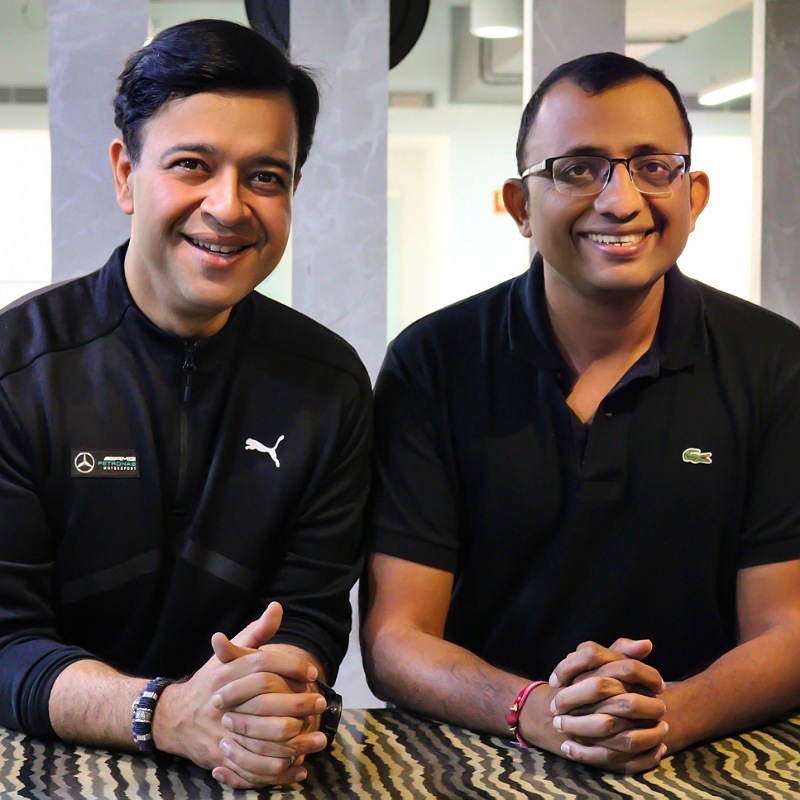
    “We are privileged and honoured to have prominent and stellar long-term partners like CPP Investments, Ontario Teachers’, Luxor Capital and Sumeru Ventures on board with us,” said VerSe Innovation co-founders Virendra Gupta and Umang Bedi.

    “This partnership will strengthen our ability and leadership to deliver on our vision to build the largest AI-powered local language content platform across a family of apps serving the next billion users. With a strategic focus on video content and building for India, we have seen explosive growth emerging from the next billion users coming out of regional India. This investment comes at a time when we’re on a path to further expand our offerings, monetisation models, deliver superlative Web 3.0 experiences for the globe and create an IPO scale business,” they added.

  • Are women able to make their presence felt in M&E industry?

    Are women able to make their presence felt in M&E industry?

    Mumbai: Media and entertainment companies must take deliberate action to foster gender diversity at the workplace. This includes instituting mentorship programmes for emerging leaders, flexible work policies and empowering the female workforce to take up non-traditional roles.

    In the corporate world, women are not just encumbered by low female labour force participation of 27 per cent, they also face deeply embedded biases in leadership roles and emerging disciplines such as technology, product development and data science. Women have always been an integral part of the Indian media and entertainment (M&E) industry since its inception. The sector which employs four million people, both directly and indirectly, has a higher female labour force participation compared to other industries with more women represented in leadership roles every year.

    In the last decade, the M&E industry has seen a transformative shift led by increasing digitisation of workflows and emerging technologies. While women are well represented in creative fields they still lack a presence in management positions. Although this trend is changing, corporates have an outsized role to play in ushering in an era of gender inclusivity and diversity at the workplace. This includes policy changes that engender not just an egalitarian work culture but also encourage women to aspire to leadership roles. For example, the Companies Act 2013 mandated that every board should have at least one woman and today women hold 17.1 per cent of board seats in India.

    “I don’t think any organisation begins by saying ‘I do not want a woman for this role’.  Nor women begin by saying ‘I do not want a challenging role’,” remarked Wunderman Thompson South Asia chief talent officer Roopa Badrinath. “By now, all organisations are aware of the benefits of having more women in their workforce.  I would like to believe that it is not that organisations do not want to hire women, it is just that they do not know where to find them.”

    “With digital becoming mainstream only in the recent past, tech and product are still relatively new roles. However, of late, we have seen the emergence of many women entrepreneurs who are creating their own digital businesses,” observed Josh country manager Rubeena Singh. “We are also seeing more women in management roles today, as compared to a few years ago. It takes years of work and experience to get to the top step and with more women today in middle management roles, there is hope of seeing many more women leaders in the coming future.

    A recent study by Grant Thornton India showed that the percentage of women in senior management roles in India is at 39 per cent versus 31 per cent globally. This pace of change has been aided by changing perception of women in the workplace as well as the shift towards hybrid style of working. “Covid-19 has taught us all to work from home at scale. This has provided women with the luxury of flexibility, a big positive, as it has enabled us to balance work and family responsibilities seamlessly,” explained Singh. “With this increased flexibility, women now have the opportunity to explore more with their careers and experiment with it.”

    In India, women do seven times more unpaid labour, i.e., household chores, as compared to men. This huge disparity was considerably reduced during the lockdown, enforced in 2020, when both men and women were working from home and divided domestic duties more fairly. “Work from home is a blessing for both genders. I see men enjoying it equally as much as women. Women are more challenged to work from home because while working from home, and you are expected to take care of the home chores, cooking, cleaning, kids, exams, tuition, teachers, etc. So, yes, I think work from home or a hybrid model is good, and it should encourage more diverse talent to come into the industry. It is suitable for the companies because A) your infrastructure cost is less and you can hire talent from vast geography,” said Altbalaji SVP marketing partnerships and revenue Divya Dixit.

    “Organisations like ours were quick to understand this and relentlessly emphasized on the importance of an empathy and trust driven leadership.  We encouraged our leaders to course correct their leadership style if need be and be more mindful of such challenges of women and focus on the well-being of their people.  The hybrid workplaces where we do not work 100 per cent from home or 100 per cent from the office will be empowering this under-served population to make choices which will be in their career interest and eventually be beneficial to the organisations,” said Badrinath.

    According to an industry observer, women in M&E have been confined to traditional roles such as HR, creative, media planning, business development, legal, corporate communication and marketing and have shied away from male dominated roles such as distribution, product development, strategy and operations. Strongly disagreeing with this view, Dixit said, “I’ve seen women take up leadership roles and challenges across industries and not just in the M&E sector. I think what needs to be kept in mind is that more women are reinstating themselves in non-traditional roles despite the glass ceiling. Today, I still think the male workforce is paid about 15-20 per cent more than women.”

    Women in corporate roles are judged by different standards by men and often face gender biased appraisals, found a McKinsey study. There is a need to retrain HR managers in the way they evaluate women candidates for leadership roles. “As an industry which almost always works on changing perceptions, attitudes and behaviours of consumers, we have a huge role to play through the work we do in breaking societal stereotypes imposed upon women,” noted Badrinath.

    “Social change takes a long time and we’re in the process of change,” according to Zee Entertainment Enterprises chief creative officer special projects Shailja Kejriwal. “If you’re a business leader you’re expected to be the ‘alpha’ and until you change the concept of a leader being ‘alpha’ a business won’t be run by women leaders who are perceived as empathetic.”

    I think as an industry and society we are heading towards a more empathetic way of working, whether it is flexible working hours or leave policies, and this is brought about by the pandemic,” she added. “It has made people question a lot of embedded beliefs and, therefore, you see things such as ‘The Great Resignation.’ What happens if corporates start realising that you need to nurture talent regardless of whether it is a man or a woman, otherwise your business won’t run? Then there is no choice but to go in the direction of dealing with things differently.”

  • Digital Brand Fest 2022: Decoding digital transformation for tech-led future

    Digital Brand Fest 2022: Decoding digital transformation for tech-led future

    Mumbai: Indiantelevision.com is organising a five-day event ‘Digital Brand Fest 2022’ from 21 to 25 February to explore and understand the new forces driving the digital transformation for a tech-led future. The week-long virtual summit is presented by Voot. Interakt, Josh and Pixis have joined as industry partners.

    The industry stands at a crucial juncture today. As the internet empowered consumers with more choices, digital became the new battleground for brands to test their marketing skills and retain their connect with consumers whose preferences were changing faster than ever. Whether it was the boom in influencer marketing or the popularity of short-video platforms, brands did not hesitate in jumping onto the digital bandwagon to up their marketing game.

    As we enter into 2022, Indiantelevision.com is taking this opportunity to bring a host of industry experts together on one platform to discuss these trends shaping the future. Digital Brand Fest 2022 will have brands, advertisers, tech platforms discuss all these developments and more. The virtual event will also look at the changes in consumer behaviour and how it has impacted the industry’s growth.

    The event will begin on Monday, 21 February with a keynote on ‘Decoding Current Digital Trends’ by Google industry head – telecom, media and entertainment Siddharth Shekhar.

    It will be followed by two-panel discussions – ‘Human X Machine’ and ‘SMS, Notifications and Whatsapp Marketing’. The first session moderated by Indiantelevision.com founder CEO and editor-in-chief Anil Wanvari will have Bharat Arora (Taboola), Nikhil Kumar (mediasmart and Affle company), Mehul Desai (Integral Ad Science), Rohan Chincholi (Havas Media Group India) and Salil Shanker (Amnet India) as panelists.

    On the second panel moderated by Niraj Ruparel (GroupM) are Ahshad Jussawala (Jio-Haptik), Jayant Kshirsagar (CleverTap), Madhur Acharya (WOW Skin Science), Priya Patankar (PhonePe), Ritesh Ghosal (Soptle) and Suchit Sikaria (SUGAR cosmetics).

    The discussion on 22 February will commence with Rapido’s Amit Verma, BigBasket’s Arun Jayaraman, Pixis’ Neel Pandya, Essence’s Sonali Malaviya, Snowflake’s Vimal Venkatraman, and Fresh to Home’s Vanda Ferrao deliberating on ‘Performance Marketing, Partnerships for good ROI’. The panel will be moderated by Xaxis India’s Dimpy Yadav.

    The second session will explore ‘Digital Marketing – The New Dynamic Shift Post Pandemic’ with BharatPe’s Ashish Agarwal, Omnicom Media Group’s Bharat Khatri, GoKwik’s Chirag Taneja, Godrej’s Michelle Francis, Adlift’s Neha Pandey and Network 18’s Puneet Singhvi as panellists and Chetan Asher of Tonic Worldwide Media as the moderator.

    Day three (Wednesday, 23 February) will witness another insightful session on ‘Engaging Communities and Driving Culture through Social Media’ moderated by Kosal Malladi from Madison Digital. Panellists include Sharechat’s Akshat Sahu, Cleartrip’s Himanshi Tandon, Zivame’s Khatija Lokhandwala, Trell’s Manikanta Yadavalli, Kalyan Jewellers’ Rupesh Jain and Puma’s Shreya Sachdev.

    On Thursday, 24 February a TBA-moderated panel will delve into ‘Content Marketing’ trends with Kunal Bhardwaj from Upstox, Maninder Bali from Vedantu, Pallavi Chelluri from Moglix, Samir Sethi from Policybazaar.com and Sharmin Ali from Instoried.

    ‘CTV 101’ and Gen Z X Short Video’ will be key themes discussed on the last of the summit, Friday, 25 February. The first panel moderated by Anil Wanvari includes Gijsbert Pols from Adjust, Mete Bargmann from Magnite, and Vijay Anand Kunduri from PubMatic.

    The second session will have Lenskart’s Anupam Tripathi, OML’s Gunjan Arya, Verse Innovation’s Nakul Puri, Bombay Shaving Company’s Siddha Jain and WATConsult’s Sahil Shah as speakers.

    For registration, click here.

  • Josh Studios’ ‘World Famous’ talent hunt heads to Rajasthan

    Josh Studios’ ‘World Famous’ talent hunt heads to Rajasthan

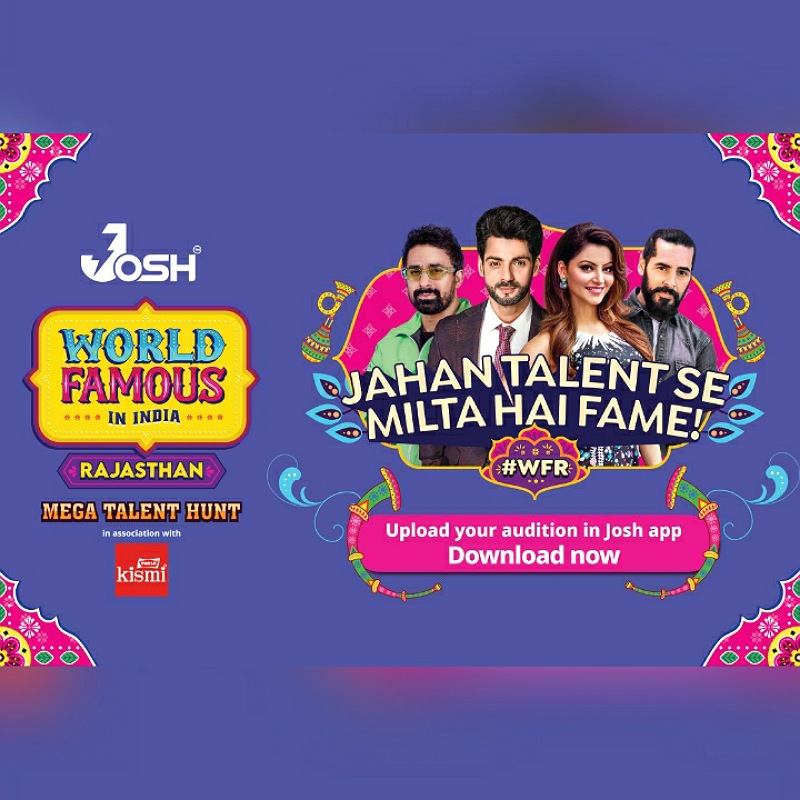
    Mumbai: Short video app Josh has announced the launch of the third edition of ‘World Famous’ – a multi-city talent hunt for discovering India’s talented youth. The platform has roped in Parle Kismi as a sponsor.

    A three-week-long talent hunt spanning three cities will first arrive in Jodhpur, before travelling to Kota and then concluding in a grand finale at Jaipur, said the statement.

    Registrations for the mega talent hunt has been kickstarted on the Josh app wherein participants can upload content across genres on the app with the hashtag #WFR. The participants with highest number of votes will get the opportunity to participate in the semi-finales at Jodhpur and Kota on 2 March and 4 March, respectively. The winners of the semi-finales will then get the chance to battle it out for the ultimate prize at the grand finale at Jaipur scheduled for 6 March.

    The winners of World Famous will stand the chance to win up to Rs 1 lakh in cash prizes and the opportunity to be mentored and groomed by the top creators in the ecosystem. Bollywood stars such as Dino Morea, Rannvijay Singh, Urvashi Rautela and Karan Wahi to interact with participants and give the talented youth of Rajasthan the platform to share their passion with the world.

    “Rooted in a rich artistic heritage, Rajasthan is home to some of the most rustic and dynamic art forms in India – be it the graceful Ghoomar dance, the rich folk music, the expressive kathputhli or the lively paintings,” said Josh Studios head Seher Bedi. “We, at Josh, are very excited to launch World Famous in Rajasthan as we continue our quest to discover India’s hidden talent. World Famous was crafted around the philosophy of celebrating talent. We believe the talented youth at Rajasthan will be a true reflection of the state’s artistic roots and are very excited to see what the state has to offer.”

    Josh Studios was unveiled in March 2021 to scale the short-video platform’s capabilities to create a cutting-edge content and talent hub.

  • How short video apps took media brands to masses in 2021

    How short video apps took media brands to masses in 2021

    Mumbai: “It came, it saw, it conquered…” the statement perfectly describes the meteoric rise of ByteDance-owned short video app TikTok in India. Such was the momentum created by it that by December 2020 – that just six months after TikTok was banned – the market was flooded by its Indian counterparts with Dailyhunt’s Josh leading the pack. Roposo, MXTakaTak, Chingari, Moj and others followed. 

    According to consulting firm RedSeer by April-June this year, the short-form video user base at 40-45 million creators hailing mostly from smaller towns and cities, was back to nearly 100 per cent of pre-TikTok ban, with strong loyalty to Indian apps. Monthly average users were up 1.2 times, while time spent on the apps was about 0.4 times higher.

    2021 was the time for short video app owners to tap into the goldmines that they were now sitting on. For players in the ecosystem partnerships and monetisation emerged as the key theme for the year, as all kinds of media brands like TV channels, OTT platforms and music labels latched on to the opportunity. Short-video apps were their window to ‘Bharat’.

    “Short video and entertainment platforms have seen one of the highest increases in monthly active users (MAUs) and the engagement time spent during the second wave of Covid-19. The changes in people’s emotions, platforms and emerging trends led to this growth. 

    With content offerings in 14 Indian languages, Josh boasts of 124 million Monthly Active Users (MAUs) and 60 million Daily Active Users (DAUs) coming from across 19000 pin codes in the country.

    Commenting on how the country’s dynamic digital landscape driven by ‘Bharat’ has affected partnerships and collaborations for him, Josh head of creator and content ecosystem Sunder Venketraman, says, “Tier-2 and tier-3 cities have widely been considered a niche market in terms of content, despite holding a majority of the country’s actual population. While initially it was the telcos, FMCG and handset manufacturers that targeted these markets, there has been growing interest from every major category from auto, retail, e-commerce, OTT and financial services.”

    With regard to media brands in particular, he adds, “At Josh we operate at the intersection of video and vernacular which presents a unique opportunity for media brands to reach out to a vast majority of the country’s audiences, given the growing popularity of vernacular content.”

    To promote season 15 of the popular show ‘Bigg Boss’ Josh collaborated with Voot in producing a rap song and a hashtag #BIGGBOSSS15ASLIFAN, resulting in 250 million + video views, 10,000 + UGC videos and 17 million + likes. Zee Bangla’s ‘Uma’ was promoted with a challenge around the show’s main theme Cricket. Female users on Josh were asked to balance a ball on the Cricket bat for 10 seconds. The collaboration resulted in over eight million + views, 140 + UGC videos and 630,000 + likes.

    The app also collaborated with Shemaroo, SVF Entertainment (Bengali film, television and OTT content production house), Pitaara TV (Punjabi movies channel, and recently launched OTT platform Chaupal), ALTBalaji (‘Cartel’), and ten leading music labels including Saregama. “This is revealing of how short-video apps are now a viable route for music labels to reach new audiences, and how new and upcoming artists can use platforms such as ours to reach out to niche audiences organically,” notes Venketraman.

    ALTBalaji’s senior vice-president – marketing and revenue Divya Dixit believes that such collaborations open up multiple gateways to reach out to the youth and the masses with the right message. “Short video and entertainment platforms saw one of the highest increases in MAUs, and ‘time spent’ during the second wave of Covid-19. Their tremendous growth in terms of number of content creators, brands, as well as ads on these apps, was led by changes in people’s emotions, choice of media platforms and other emerging trends,” she observes.

    A large part of ALTBalaji’s organic reach comes from short-video apps. The platform has carried out various promotional activities with the likes of Josh (‘Cartel’ and ‘Girgit’), ‘Chingari, Roposo, Moj (‘Pavitra Rishta) and Firework.

    Sharing the impact of these campaigns, Dixit states, “Our collaboration with MOJ for ‘Pavitra Rishta’ and Josh for shows like ‘Cartel’ and ‘Girgit’ helped in generating eyeballs for various show assets like songs, trailers, and dialogues that were amplified by the creators on their respective platforms via UGC push. It gave us reach in the hinterland markets, thus indirectly impacting the engagement numbers.”

    The Q COO Krishna Menon notes that while the pandemic made entertainment a bit of a challenge for most broadcasting houses and digital production houses as well, short video apps proved to be a boon for creators. “These creators are mostly the GenZ/millennials. Not only have they taken engagement on the platform higher, but are today setting day-to-day trends for people. Because The Q’s basic DNA is to work with the best of digital creators, short video platforms become like a strategic alliance for us as a source of content.”

    A recent example was the channel’s partnership with Chingari wherein it carried out digital auditions for its recently launched show ‘Jurm Ka Chehra’. Close to a million entries were received through the collaboration.  The Q runs multiple VOD platforms on Snap where the best of linear programming is cut into VOD episodes and made available for viewing. Some of the prominent platforms include ‘Daraawni Kahaaniyaan’ which has grown from few thousands to one million subscribers in the last year itself, ‘Khaao Gali’ and ‘Comedy Centre’.

    Elaborating on the significance of short video format for the Q, Menon shares, “Most broadcasting houses have their own digital storefronts. We haven’t created one for us because we want to go with those in the market. They are an additional source of revenue for us, and of entertainment for people.”

    Chingari started its collaboration journey with promoting all OTT content and moved on to launching exclusive trailers on the app, promoting web series/ music albums to now launching its own IPs.

    The app’s co-founder & COO, Deepak Salvi says, “We saw a huge surge in the time spent and engagement by users on the app during the pandemic and this is exactly what is needed by brands to promote themselves and their content. Knowing that a large population of the audience that belongs to their TG is spending time on Chingari, media companies like TV channels, OTT platforms, music labels and even production houses started associating with us for the promotion of their latest content.”

    Some of Chingari’s latest brand associations include Shemaroo Entertainment Ltd, Alt Balaji, Hoichoi, and Radio City.

    Due to the growing accessibility and affordability of the internet and the digital boost experienced in 2020-21, people in the tier 2 and 3 towns are now not only consuming content but are also very actively creating it. Salvi shares, “One of the main focus points for Chingari therefore is to create a very strong network of creators and consumers in the tier 2 and 3 cities. We are trying to reach out to the remotest areas of India by conducting events, partnering with regional content creators, OTT platforms, and music labels.”

  • Josh and SVF Entertainment enter strategic alliance

    Josh and SVF Entertainment enter strategic alliance

    Mumbai: Short video app Josh has inked a strategic partnership with East Indian media and entertainment company SVF. The collaboration paves the way for the creation of short video content from Bengali influencers and celebrities on the Josh app, said the statement.

    SVF will enable the production of more regional content by Bengali talent on the short video app Josh with the aim to empower regional creators. SVF will additionally extend its vast Bengali music library of SVF Music ranging from Bengali films, web series, and hit singles from popular artists from India and Bangladesh. This wide range of songs can be accessed by Josh’s 115+ million-strong user base.

    The partnership was announced on the eve of 25 October and was graced by hoichoi co-founder and executive director of SVF Vishnu Mohta; Josh head – creator and content ecosystem Sunder Venketraman, and VerSe Innovation chief marketing officer Samir Vora.

    “Josh and SVF, with the similar intention to create a wider content building ambiance in Bengal, is certain that this partnership will enable a lot of talents to create short format content in their regional language with advanced and easy to use video making features,” said Vishnu Mohta.

    “We at SVF, are delighted to have this avant-garde partnership that will not only enhance the scope of content innovation but also recognise the local talents, thereby supporting the overall growth of the industry,” said hoichoi co-founder and director of SVF Mahendra Soni. “The SVF-Josh tie-up is all poised to make Bengali music library available to all creators across the country, opening up the paradigm beyond mainstream content visibility.”

    “SVF Entertainment is a leader in the Eastern Indian content space and we, at Josh are very excited to have brought this partnership to life that will revolutionise the space of content creation in Bengali language,” said Sunder Venketraman and Samir Vora.

    “We believe that our app will prove to be the perfect destination for budding Bengali creators to share their talent across audiences– bringing visibility to themselves and the plethora of invigorating content that Eastern India has to offer,” they added.

  • ALTBalaji and Josh collaborate on new web series ‘Cartel’

    ALTBalaji and Josh collaborate on new web series ‘Cartel’

    Mumbai: ALTBalaji has announced its association with short video app Josh for the web series titled “Cartel”. The platform has roped in more than 138 actors for the upcoming thriller.

    Josh will begin promotion with the #CartelChallenge urging users to generate videos with dialogues from the series. The association with ALTBalaji will involve multiple collaborated activities including actor videos, social media content, contests, and giveaways, said the press statement.

    “The association is a perfect fit as both Josh as well as ALTBalaji are youth-centric brands that are encouraging and supporting indigenous talent and creativity in India. Through our ‘#CartelChallenge’, we aim at promoting ALTBalaji’s new release by leveraging the power of bite-sized, snackable content,” said Josh, head of creator and content ecosystem, Sunder Venketraman.

    Commenting on the partnership, ALTBalaji’s SVP- marketing and revenue, Divya Dixit said, “Josh is a made in India short video app catering to the youth and mass India just like our platform, which is majorly youth-centric. Also, UG content and influencers promotion enhance the surrounding noise on the show and encourage deeper audience involvement. This partnership allows us to reach and involve our target group effortlessly.”