Tag: Jonathan Barnard

  • Mobile internet consumption to hit 28% of media use by 2020: Zenith Report

    Mobile internet consumption to hit 28% of media use by 2020: Zenith Report

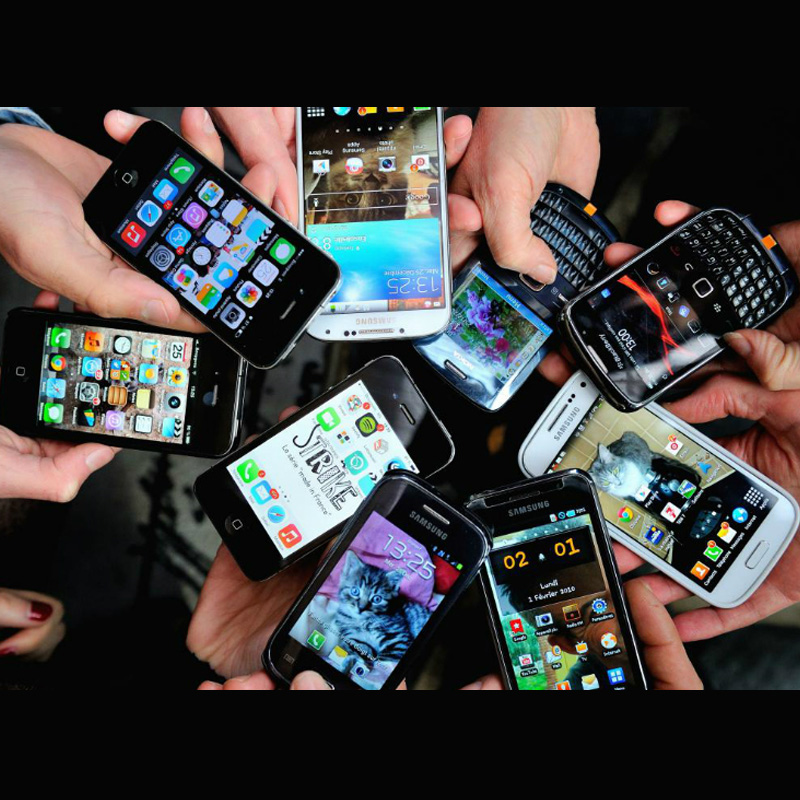
    MUMBAI: The spread of mobile devices and rapid mobile data networks has transformed global media consumption in recent years. A recent report by Zenith Media Consumption Forecasts 2018, reveals that 24 per cent of all media consumption across the world will be mobile this year, up from just five per cent in 2011. The report highlights that by 2020 internet usage will reach 28 per cent, taking share from almost all other media.

    The rise of mobile is also forcing brands to transform the way they plan their communications across media, focusing less on channels and more on consumer mind-set as the distinctions between channels are eroded.

    The report surveys changing patterns of media consumption since 2011 and forecasts how the amount of time people allocate to different media will change between 2018 and 2020, in 63 countries across the world.

    Mobile internet use has eroded the consumption of almost all other media. Newspapers and magazines have lost the most, as between 2011 and 2018 time spent reading them has fallen by 45 per cent for newspapers and 56 per cent for magazines. However, this refers only to time spent reading printed publications. Time spent reading newspapers and magazines online is included in the internet total, and for many publications the time they have gained online more than makes up for the time they have lost from print.

    Zenith’s head of forecasting and director of global intelligence Jonathan Barnard says, “Under traditional definitions, all other media are losing out to the mobile internet. But the truth is that the distinctions between media are becoming less important, and mobile technology offers publishers and brands more opportunities to reach consumers than ever.”

    Television and radio have also lost out, though not on the same scale. The time spent watching television shrank by three per cent between 2011 and 2018, while time spent listening to radio shrank by eight per cent. Again, television channels and radio stations have gained audiences online at the same time as they have lost them offline, but they have faced stiff competition from native digital platforms such as YouTube and Spotify.

    The rise of mobile has blurred the boundaries between different channels: it can be used for entertainment, news, information, research, socialising and communication. For brands it can play the role of building awareness, creating direct responses, allowing one-to-one communication, or generating earned content, depending on how the consumer is using the device, and in particular their mind-set while using it.

    A consumer who is actively searching for a specific information is in a very different mind-set from one who is sharing holiday photos with friends, or leaning back and enjoying a video. Brands need to understand the signals a consumer’s activity provides about their mind-set, and therefore what forms of communication are appropriate.

    Focusing on mind-set also dissolves the distinction between traditional and digital media: it’s more important that a consumer is reading news, than whether they are doing so using a printed newspaper or newspaper websites. People who are watching video content on television sets, laptops or smartphones have much in common, though people watching long-form entertainment can have quite different mind-sets from people scrolling short-form content on social media. Brands need to decide the role each platform plays in their communications strategies, however the consumer happens to access it.

    The rapid expansion of mobile internet use has increased the amount of time the average individual spends consuming media, by giving people access to essentially unlimited content almost everywhere, and at any time of the day. The report estimates that the average person will spend 479 minutes a day consuming media this year, 12 per cent more than in 2011 and will reach 492 minutes a day in 2020.

    Time spent at the cinema actually increased three per cent between 2011 and 2018 as cinema owners have invested in more screens and a better experience for visitors, while studios have marketed their films more effectively at international audiences. On average, though, people spend much less time at the cinema than they do with any other medium.

    Zenith’s global brand president Vittorio Bonori mentions, “Mobile technology is challenging brands to rethink how they communicate with consumers. Brands need to understand both the consumer’s mind-set and where they sit on the consumer journey, to determine how to communicate with them. By using data, ad tech and now artificial intelligence, brands can co-ordinate their communications across media and mind-sets to move them along the consumer journey most effectively.”


  • Adspend: Twitter fastest growing, FB & Google control 20%

    MUMBAI: Google and Facebook together accounted for 20% of global advertising expenditure across all media in 2016, up from 11% in 2012, according to the new edition of Zenith’s Top Thirty Global Media Owners. These two companies captured 64% of all the growth in global adspend between 2012 and 2016.

    The Top Thirty Global Media Owners report is Zenith’s unique ranking of the world’s largest media companies, and is being published since 2007. For this edition, it has decided to update its methodology and focus purely on media owners’ revenues from advertising, excluding revenues from all other activities, which gives the true measure of their status in the global advertising market.

    Google (under its holding company Alphabet) is by some distance the largest media owner in the world, attracting US$79.4bn in ad revenue in 2016, three times more than the second-largest – Facebook – which attracted US$26.9bn. The largest traditional media owner is Comcast, which takes third place in our ranking, with US$12.9bn in ad revenue.

    As we stated in our quarterly Advertising Expenditure Forecasts, internet advertising has overtaken television to become the world’s largest advertising medium this year. Accordingly, digital platforms that are funded by internet advertising dominate our top 30 ranking. As well as Alphabet and Facebook, there are five more pure-internet media owners in the top 30: Baidu, Microsoft, Yahoo, Verizon and Twitter. Between them, the seven digital platforms generated US$132.8bn in internet ad revenue in 2016 – that’s 73% of all internet adspend, and 24% of global adspend across all media.

    Verizon became a media owner in 2015 when it bought AOL, and if all goes to plan will become a much larger one when it acquires Yahoo later this year. Verizon takes 21st place in our current ranking; adding Yahoo to AOL would boost it to sixth.

    The fastest-growing media owner in our list is Twitter, which increased its ad revenues by 734% between 2012 and 2016. Tencent is second, having grown by 697% over this period, and Facebook is third, with 528% growth. Two other media owners have more than doubled in size between 2012 and 2016: Baidu, which grew 190%, and Sinclair Broadcasting Group, which grew 171%.

    Most of the media owners in our ranking – 20 out of 30 – are based in the US. The US dominates for several reasons: the US has the biggest ad market, US companies have invested the most in extending their reach abroad, and Silicon Valley innovation has powered the growth of internet advertising. China and Germany each have three media owners in the ranking (Baidu, Tencent and CCTV for China, and Bertelsmann, ProSiebenSat.1 and Axel Springer for Germany). Then there are four countries with one media owners each: France (JCDecaux), Brazil (Grupo Globo), Italy (Mediaset) and the UK (ITV).

    “The scale of the biggest platforms highlights the importance of building strong partnerships between agencies and media owners,” said Vittorio Bonori, Zenith’s Global Brand President. “Brands need to deal with these platforms to communicate with consumers effectively and efficiently, and agencies need to ensure they do so on the best terms available.”

    “Zenith’s new ranking demonstrates just how much the internet advertising platforms are setting the pace for global adspend growth,” said Jonathan Barnard, Head of Forecasting at Zenith. “Google and Facebook alone have accounted for almost two thirds of global adspend growth since 2012.”

    Ranking of Top 30 Global Media Owners 2017

    public://F1_4.jpg

  • Television dominates consumption even as other mediums emerge

    Television dominates consumption even as other mediums emerge

    MUMBAI: Despite the growth explosion in the digital and mobile universe, the age-old medium of television continues to lead the popularity chart when it comes to consumption, according to ZenithOptimedia’s Media Consumption Forecasts report.


    Attracting 183.9 minutes of consumption a day in 2014, television, despite its recent relatively minor decline, by far remains the most popular of all media globally.


    On the other hand, Internet consumption came a distant second at 109.5 minutes a day. Television accounted for 42.4 per cent of global media consumption in 2010, and 37.9 per cent in 2014 as per the report, generated after surveying the changing patterns of media consumption in 65 countries across the world. The report also predicts that television will still account for more than a third (34.7 per cent) by 2017.


    Internet disrupting traditional media with its robust growth

    While the internet has propelled growth in overall media consumption, it has also eroded the consumption of traditional media. The consumption of every traditional medium except outdoor (i.e. newspapers, magazines, television, radio and cinema) fell between 2010 and 2014, directly because of competition from the internet, the report predicts their decline to continue to 2017.


    Newspapers have suffered the most from competition from the internet, followed by magazines. Between 2010 and 2014, the average time spent reading newspapers fell by 25.6 per cent, while time spent reading magazines fell 19 per cent. Television consumption fell by just six per cent. Between 2014 and 2017, newspaper consumption is expected to shrink by an average of 4.7 per cent a year, while magazines and TV will shrink at average rates of 4.4 per cent and 1.6 per cent respectively.


    Internet consumption to grow at 10 % p.a, expanding overall consumption

    Global media consumption increased from an average of 461.8 minutes a day in 2010 to 485.3 minutes a day in 2014, an increase of 5.1 per cent, or an average of 1.2 per cent a year. Over these years, the amount of time people spent using the internet nearly doubled from an average of 59.6 to 109.5 minutes a day, while time allocated to more traditional media shrank from 402.2 to 375.8 minutes. Mobile technology in particular has created new opportunities to consume media, by allowing people to access the internet while out and about – shopping, commuting to work, waiting to meet friends, and so on.


    The report forecasts that, between 2014 and 2017, the amount of time spent consuming media around the world will increase by an average 1.4 per cent a year, reaching 506.0 minutes in 2017. Meanwhile, internet consumption will grow by 9.8 per cent a year to reach 144.8 minutes a day. The internet’s share of overall media consumption will rise from 12.9 per cent in 2010 and 22.6 per cent in 2014 to 28.6 per cent in 2017.


    Exposure to outdoor advertising is rising

    The amount of time people are exposed to outdoor advertising increased by 1.2 per cent between 2010 and 2014, from 106.0 to 107.2 minutes a day. This is the result of several factors more displays being built in public spaces, migration to cities in emerging markets, and consumers’ greater willingness to spend their leisure time out of the home as their disposable income recovered after the financial crisis. Between 2014 and 2017, exposure to outdoor advertising is expected to increase by 0.2 per cent a year.


    Latin Americans spend the most time with media; Asia Pacific the least

    Media consumption is highest in Latin America, where people spent an average of 744 minutes consuming media in 2014, and lowest in Asia Pacific, where consumption averaged just 301 minutes that year. Time spent consuming media in Asia Pacific is growing well ahead of the global average, however, as economic development gives people access to more media, and more leisure time in which to consume them: media consumption expanded by 6.7 per cent in 2014. The report forecasts average annual growth of 2.9 per cent to 2017.


    “The average person already spends half their waking life consuming media. But people around the world are clearly hungry for even more opportunities to discover information, enjoy entertainment and communicate with each other, and new technology is supplying these opportunities. Technology also enables brands to communicate with and learn from consumers in new ways. We expect media consumption to continue to grow for the foreseeable future, multiplying the opportunities for brands to develop relationships with consumers,” said ZenithOptimedia head of forecasting Jonathan Barnard.

  • 500 million multichannel TV homes in APAC: CASBAA

    500 million multichannel TV homes in APAC: CASBAA

    MUMBAI: The Asia Pacific now boasts of 500,639,000 multichannel homes, as per CASBAA’s Asia Pacific Multichannel TV Advertising 2015 book.


    The pay TV advertising market continues to grow in APAC with an estimated +9.4 per cent, y-o-y increase for 2014.


    CASBAA CEO Christopher Slaughter said, “Our latest report reinforces the fact that the Asia Pacific is truly the growth engine for the multichannel TV industry today. When we look at non-terrestrial TV connections, 61 per cent of homes in Asia now receive multichannel TV and the region is poised to strengthen its leadership as the largest multichannel video market globally in terms of subscribers.”


    ZenithOptimedia head of forecasting Jonathan Barnard added, “Television is the dominant advertising medium in Asia Pacific, attracting 40 per cent of all ad expenditure this year, and ZenithOptimedia forecasts it to grow at an average of 5 per cent a year until at least 2016. Meanwhile online video offers high-quality content that viewers can watch whenever they want and – using smartphones and tablets – wherever they want. Video advertising as a whole will remain the best way to build brand awareness and engagement for many years to come.”


    Data sourced from The Ericsson Consumer Insight Report 2014 says that OTT services and digital delivery are increasing with demand content constituting an important part of consumers viewing habits, specially streaming and a greater acceptance of paying for non linear TV content.


    The report also showed a 25 per cent increase in consumer willingness to pay for anywhere access compared to 2012 and a growing trend of using tablets and smartphones.