Tag: John Medeiros

  • CASBAA forms ‘Coalition Against Piracy,’ hires content protection veteran Neil Gane

    CASBAA forms ‘Coalition Against Piracy,’ hires content protection veteran Neil Gane

    MUMBAI: CASBAA has announced the formation of the Coalition Against Piracy (CAP), a major initiative to coordinate industry resources in the fight against rampant content theft.

    It has appointed Neil Gane, an industry veteran in content protection, as the general manager of CAP. Gane will direct CAP enforcement actions to disrupt, diminish and dismantle pirate enterprises across the region.

    The CAP includes leading video content creators and distributors in Asia. Members are: beIN Sports, CASBAA, The Walt Disney Company, Fox Networks Group, HBO Asia, NBCUniversal, Premier League, Turner Asia-Pacific, A&E Networks, Astro, BBC Worldwide, Media Partners Asia, National Basketball Association, PCCW Media, Sony Pictures Television Networks Asia, True Visions, TV5MONDE, and Viacom International Media Networks.

    CASBAA chief policy officer John Medeiros said, “One of CASBAA’s primary missions is to bring our members together to join the global fight against content theft. That’s what we are doing in establishing the CAP. CAP will focus on addressing the growing threat of illicit streaming devices (ISDs) and apps, which facilitate massive piracy of movies, sports, TV series and other creative video content. This does great harm to the content creation and distribution industries in Asia, as well as the millions of people who work in the creative economy around the world.”

    Gane said, “The Asia Pacific region has some of the worst rates of online piracy in the world.” Formerly with the Hong Kong Police, he has worked on content protection issues for more than a dozen years. He noted that the unprecedented growth in delivery of legal creative content over global broadband networks is being undermined by a surge in the sale of TV boxes with pre-loaded infringing applications.

    Online video and broadband distributions have the potential to be a massive economic growth engine in Asia with analysts forecasting market growth of more than 20 per cent over the next five years, benefiting consumers and creators of quality video content within Asia and around the world. But, this growth potential is threatened by piracy.

    In the past two years, there have been many new roll-outs of online content services across the Asia Pacific region, by existing players as well as new ones. Unfortunately, the likelihood of success for legitimate online content suppliers is severely reduced by online access to pirated content, resulting in the expectation of many consumers to get “something for nothing.”

    “The prevalence of ISDs across Asia is staggering. The criminals who operate the ISD networks and the pirate websites are profiting from the hard work of talented creators, seriously damaging the legitimate content ecosystem as well as exposing consumers to dangerous malware”, said Gane.

    Medeiros said, “Current legal frameworks are not adequate to handle this newly-enabled crime.” “Consumers are offered huge content bundles from overseas as if they were legal. But, receiving stolen content is wrong, and the fundamental purpose of an ISD network – with an innocent-looking box as its home node – is to monetise this redistribution of content without any recompense to those who worked to produce it.”

    “This is a highly organised transnational crime,” agreed Gane, “with criminal syndicates profiting enormously at the expense of consumers as well as content creators.”

    Mitigating the piracy threat requires international cooperation, added Medeiros, and CASBAA has established CAP to provide added support for the content and distribution companies in the worldwide fight against piracy. CAP intends to join hands with similar initiatives underway in other parts of the world, including with the newly-formed Alliance for Creativity and Entertainment (ACE) and in Europe where a separate coalition of broadcasters and content creators initiated by BBC and the Motion Picture Association has made great strides in information sharing and coordination.

    CASBAA CEO Christopher Slaughter said, “We are excited about the launch of CAP in Asia to enhance collaboration between different segments of the industry – distributors, aggregators, and creators – and to complement the other country-specific and global initiatives in place and starting to show results. Collaboration is key and we look forward to the success of this new program.”

    CAP will be launched officially at the forthcoming CASBAA Convention 2017, 6-8 November, at Studio City Macau, as a highlight of its robust policy and anti-piracy conference track.

  • 14 pc Singaporeans use illicit TV boxes, at malware risk: Casbaa-sponsored study

    14 pc Singaporeans use illicit TV boxes, at malware risk: Casbaa-sponsored study

    MUMBAI: Despite major growth in the number and range of legal online content choices available to them, recent studies have found Singaporeans to be among the top consumers of pirated online content around the world.

    A new consumer research study released by research company, Sycamore, at a Casbaa-sponsored event further examined online piracy behaviour within Singapore and found several striking trends:

    • Almost half the population admit to having engaged in online piracy, with 39 per cent stating they currently illegally stream (OTT / VoD) or download movies, TV shows or live sports channels.

    • Illicit Streaming Devices (TV boxes) are changing the face of piracy in Singapore, with 14 per cent of Singaporeans admitting to currently using an illicit streaming device.

    • Seventy-four per cent of active pirates recognise that accessing pirated content puts them at greater risk of getting viruses, spyware and other malware. In fact, the risk of malware was the primary reason (40 per cent) cited by those who said they had stopped pirating for their change in behaviour, followed by recognition that there were now more legal options available (37 per cent).

    • Sixty-eight per cent of Singaporeans recognise that pirating movies, TV shows or sporting events is stealing or theft, with almost a third agreeing that blocking of sites which profit from pirated content would be the most effective means of reducing online piracy.

    The Sycamore study combined qualitative and quantitative methodologies. This included a survey of 1,000 respondents in Singapore, weighted to be representative of the population, plus a further 300 users of illicit streaming devices, to better understand the details of their behaviours.

    “The implications of these results are significant”, commented CASBAA’s chief policy officer John Medeiros. “Admitted usage of TV boxes which provide illegal access to TV series, movies and live sports events is much greater in Singapore than in other developed markets, such as the US and the UK. While these numbers are already concerning, they rely on the candour of respondents and undoubtedly underestimate the true scale of the problem.”

    These findings point to an equally worrying trend in the Singaporean market. Despite the fact that two-thirds of Singaporeans agree that piracy is stealing, the study revealed that nearly three quarters of the population consider piracy to be a normal or typical behaviour.

    “The notion that piracy is something that everybody does nowadays turns it into a socially acceptable behaviour”, said Sycamore Research director Anna Meadows. “Numerous studies have shown that what we perceive others to be doing has a far stronger influence on our behaviour than what we know we ‘ought’ to do. People know that they shouldn’t really pirate, but they continue to do so because they believe those around them do as well. Interestingly, even among active pirates, almost a third agree that authorities should be able to take more action to deter piracy.”

    Those Singaporeans who admitted to actively streaming or downloading pirated content admitted that the primary incentive behind their behaviour is that it costs nothing to pirate. An overwhelming 63 per cent of respondents answered that their decision to pirate was motivated by the desire to access content for free. “On the other hand”, said Meadows, “there are few perceived downsides to piracy. Whilst the risk of devices being infected with viruses or malware is understood, it is underweighted. In the face of the benefit of free content, people appear to discount the risks, as the idea of getting something for nothing is so psychologically powerful.”

  • Taiwan digital video still underperforming

    MUMBAI: A key meeting of government officials, political leaders, industry regulators, business heads and international and local experts in Taipei has called for removal of investment constraints in the multichannel video industry, and increased attention to online piracy, as the Taiwan market reshapes itself as an all-digital (and often mobile) regional communications hub.

    Participants in the meeting, convened by regional industry body CASBAA on June 22nd, heard that a major hurdle blocking further development of the Taiwan digital video industry is the rigid application of the “No state/No party ownership” rule prohibiting any “government official, political party, or elected official to invest, directly or indirectly”, in cable system operators. ** The meeting heard that the rule is interpreted to prohibit acquisition of cable equities by companies where their corporate parents, several levels up, have even a single share owned by a government entity.

    “Because of these rigid restrictions, only introduced in 2005, urgently needed mergers between telecom carriers (fixed-line and mobile) and cable TV operators have proved almost impossible,” said CASBAA CEO Christopher Slaughter at the end of the meeting.

    Slaughter added that the “No state/No party” investment rule flies in the face of global industry experience over the past 20 years. “This is preventing Taiwan from enjoying the most compelling aspects of the twenty-first century media revolution,” he said.

    Proliferation of online piracy networks were cited as another major problem.

    Representatives of start-up OTT operators trying to market bouquets of programming to Taiwan consumers observed they faced huge obstacles, as long as pirate networks based offshore were free to steal the programs and distribute them for free. They warned that the development of innovative, indigenous Taiwan programming was at risk.

    Earlier points made during the packed agenda for the 130 Taiwanese government and media-industry decision makers included lively discussion of pay-TV pricing issues (the basic tier programming package is tightly controlled) and the desire of the government to promote broadcast of more Taiwan programming.

    By Y/E 2017, online video in Taiwan should attract 15 per cent of US$120 billion in revenues accrued by TV/telecoms industry from traditional free-to-air TV, pay-TV and OTT services, according to research house MPA.

    In the meantime, the rising level of mobile broadband penetration in Taiwan is benefitting cable TV and IPTV operators such as the dominant state-owned telco Chunghwa Telecom as they develop their own local-language, multiscreen services.

    No longer limited to traditional TV viewing, Taiwan’s mobile broadband subscribers are downloading apps and logging-in to pay-TV programming of all kinds. The largest group of OTT followers in Taiwan are young women aged 18-34, some 42 per cent of the total. Together with 18-34 year-old males, almost 70 per cent of OTT subscribers are “binge” viewers.

    While the CASBAA meeting was generally upbeat, warnings of the cost of revenue leakage i.e. piracy) were a recurring theme. “The hugely damaging level of content piracy is not only holding back growth of both traditional pay-TV and innovative OTT offerings, but also the overall economic development of Taiwan as a whole,” said CASBAA chief policy officer John Medeiros.

    “Living with massive revenue leakage from piracy while blocking sufficient investment in the digital economy, Taiwan is falling behind its natural potential as a regional communications hub,” added Slaughter.

    (** 
The island of Taiwan and its 23 million people are served by 61 cable operators, 36 of which are controlled by five Multi-System Operators, plus 25 smaller independent providers. As of Y/E 2016, the five MSOs controlled 73% of Taiwanese cable subscriptions.)

  • OTT driving Taiwan multichannel video: CASBAA study

    MUMBAI: A new study by regional pay-TV industry group CASBAA shows that overall access to multi-channel video services of all kinds in Taiwan is being bolstered by a mobile video market now accounting for 92 per cent of all individuals.

    According to the CASBAA study (to be discussed on 22 June during the “Taiwan in View 2017” conference in Taipei), with 15 locally established OTT platforms (as opposed to cross-border pirate services delivered from illegal off-shore servers) the largest group of OTT followers in Taiwan are young women aged 18-34, some 42 per cent of the total. Together with 18-34 year-old males, almost 70 per cent of OTT subscribers are “binge” viewers.

    The fast-rising level of mobile broadband penetration is benefitting cable TV and IPTV operators as they develop their own multiscreen services. No longer limited to traditional TV viewing, Taiwan’s mobile broadband subscribers are downloading apps and logging-in to pay-TV programming of all kinds.

    With access to fully digitized networks (95 per cent of Taiwan’s 5.2m cable TV subs) Taiwan’s pay-TV platforms now offer value added services such as VoD, interactive music and games, along with newly sophisticated EPGs, PVRs and the promise of Augmented Reality and Virtual Reality services.

    In line with the Netflix model, local pay-TV platforms are also bundling their own content with that of non-domestic program providers, developing exclusive content and packaging that appeals to younger consumers. Meanwhile, according to CASBAA, complex government constraints on cable TV investment under Taiwan’s ownership rules continue to hold back the industry. (These preclude any minimal state ownership (no matter how indirect) in pay-TV – but not telcos. The result is that “convergent” investment is difficult.)

    “The complicated rules on investment, along with a hugely damaging level of content piracy, are not only holding back the growth of the local pay-TV market but also the overall economic development of Taiwan as a whole,” said CASBAA chief policy officer John Medeiros.

    “Living with massive revenue leakage from piracy while blocking sufficient investment in the digital economy, Taiwan is falling behind its natural potential as a regional communications hub,” said CASBAA CEO Christopher Slaughter.

  • 80k illicit streaming consumers lost connections in Asia, CASBAA says

    80k illicit streaming consumers lost connections in Asia, CASBAA says

    MUMBAI: Tens of thousands of consumers of illegal TV services in Asia have lost their connections in recent weeks, as enforcement action against networks operating through illicit streaming devices (ISDs) picks up speed. Asian regional pay-TV association CASBAA applauded recent police actions in Thailand and Malaysia, which resulted in takedowns and arrests of operators of ISD networks.

    “The criminal syndicates selling ISDs have defrauded many consumers into believing their services were legitimate,” said CASBAA Chief Policy Officer John Medeiros. “They are not. And anyone buying an illicit IPTV box takes the risk of losing their money without warning when the network is taken down.”

    After the Thai raids, an estimated 50,000 consumers in Singapore, Hong Kong, Vietnam, Indonesia and other places all lost service, despite having pre-paid substantial amounts for “Expat.tv” services. The enforcement action that shut down the service led to the arrest of two British nationals and one Thai citizen, as well as the seizure of a considerable amount of equipment.

    In Malaysia, police estimated that 30,000 consumers were receiving service from a syndicate illegally retransmitting programming from Astro channels. Six men were arrested in raids in Kuala Lumpur and Johor.

    CASBAA CEO Christopher Slaughter said the TV industry — including creators of all genres of TV content as well as leading distribution companies like Astro, PCCW, and True Visions – are determined to keep up enforcement actions against ISD networks. “It’s important for consumers to understand that if a bouquet of TV programming offered on a box seems “too good to be true”, then it probably is not legitimate,” he said. “Money invested in an ISD is at risk of loss at any time.”

    Consumers also risked infection with malware when they attach ISDs, with their dodgy apps, to home networks, warned Medeiros. “Researchers in the UK have found ISD boxes importing viruses that could allow hackers access to all devices on home networks. This could result in the theft of personal data, credit card fraud or even being held to ransom. It’s only a matter of time before this problem hits consumers in Asia, too.”

    “Legitimate, licensed TV services are a far more reliable and more secure way to obtain programming.”

  • CASBAA hails judicial review of broadcast & cable tariff

    CASBAA hails judicial review of broadcast & cable tariff

    MUMBAI: CASBAA, the association of Asia’s pay-TV industry, has applauded the judicial review now under way in India of proposed extension and tightening of India’s pay-TV rate regulations.

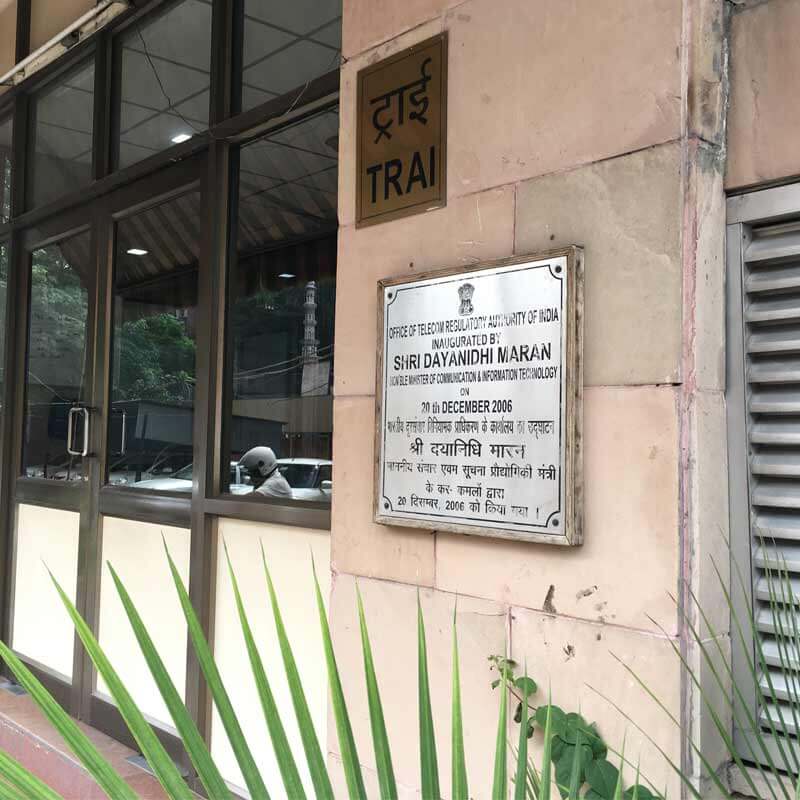
    The Madras High Court is reviewing the clash between the rights of copyright owners around the world and new tariff regulations proposed by the Telecom Regulatory Authority of India (TRAI). The court has ordered the TRAI not to give effect to the rules until the underlying issues are considered, with a hearing now set for 19 January.

    CASBAA CEO Christopher Slaughter observed that the new rules would be a major negative factor for the business environment in the US$ 17 billion Indian media industry. “India’s pay-TV regulations have long been among the strictest in the world”, he said. “The proposed new rules are highly intrusive and would make the environment much worse. Such a heavy-handed regulatory regime will inevitably hit foreign companies’ interest in investing in India.”

    Indian law gives copyright owners the ability to price and sell their creative works. In filing the Madras suit, the petitioner broadcasting organizations denounced the TRAI regulation as contrary to these principles as enshrined in the law, and in international treaties to which India is a signatory. (The TRAI rules would establish a controlled price regime by mandating a la carte channel supply, setting the ceiling, by specific genres, that broadcasting organizations can charge to multi-channel programme distributors, limiting discounts, prescribing carriage fees, and stipulating a compulsory distribution fee to be paid by Broadcasting Organizations to multichannel programme distributors.

    CASBAA has long expressed concern about India’s previous rate regulations, which included a cable retail price freeze imposed in 2004 “until the market became more competitive” and never revoked.

    “Today, India’s television content market is among the most competitive in the world,” said Slaughter. “Modern cable MSOs, six different DTH platforms and now online OTT television are all giving Indian consumers a wide range of viewing options.”

    CASBAA’s chief policy officer John Medeiros observed, “As convergence and greater competition sweep the TV economy, other governments around the world are eliminating rate controls, to give more scope to competition among traditional and new online providers. In the last few years, Korea and Taiwan have both undertaken to liberalize their pay-TV price controls, leaving India as the last market economy in Asia with a hyper-regulatory regime. The proposed new rules would take India in the opposite direction from the rest of the world.”

    Also Read:  Tariff order: Don’t notify without SC nod, TRAI told; Madras HC case to continue

    Also Read:  Copyright owners call for competitive pricing over TRAI regulation

  • CASBAA hails judicial review of broadcast & cable tariff

    CASBAA hails judicial review of broadcast & cable tariff

    MUMBAI: CASBAA, the association of Asia’s pay-TV industry, has applauded the judicial review now under way in India of proposed extension and tightening of India’s pay-TV rate regulations.

    The Madras High Court is reviewing the clash between the rights of copyright owners around the world and new tariff regulations proposed by the Telecom Regulatory Authority of India (TRAI). The court has ordered the TRAI not to give effect to the rules until the underlying issues are considered, with a hearing now set for 19 January.

    CASBAA CEO Christopher Slaughter observed that the new rules would be a major negative factor for the business environment in the US$ 17 billion Indian media industry. “India’s pay-TV regulations have long been among the strictest in the world”, he said. “The proposed new rules are highly intrusive and would make the environment much worse. Such a heavy-handed regulatory regime will inevitably hit foreign companies’ interest in investing in India.”

    Indian law gives copyright owners the ability to price and sell their creative works. In filing the Madras suit, the petitioner broadcasting organizations denounced the TRAI regulation as contrary to these principles as enshrined in the law, and in international treaties to which India is a signatory. (The TRAI rules would establish a controlled price regime by mandating a la carte channel supply, setting the ceiling, by specific genres, that broadcasting organizations can charge to multi-channel programme distributors, limiting discounts, prescribing carriage fees, and stipulating a compulsory distribution fee to be paid by Broadcasting Organizations to multichannel programme distributors.

    CASBAA has long expressed concern about India’s previous rate regulations, which included a cable retail price freeze imposed in 2004 “until the market became more competitive” and never revoked.

    “Today, India’s television content market is among the most competitive in the world,” said Slaughter. “Modern cable MSOs, six different DTH platforms and now online OTT television are all giving Indian consumers a wide range of viewing options.”

    CASBAA’s chief policy officer John Medeiros observed, “As convergence and greater competition sweep the TV economy, other governments around the world are eliminating rate controls, to give more scope to competition among traditional and new online providers. In the last few years, Korea and Taiwan have both undertaken to liberalize their pay-TV price controls, leaving India as the last market economy in Asia with a hyper-regulatory regime. The proposed new rules would take India in the opposite direction from the rest of the world.”

    Also Read:  Tariff order: Don’t notify without SC nod, TRAI told; Madras HC case to continue

    Also Read:  Copyright owners call for competitive pricing over TRAI regulation

  • 30 large sites average earnings/year in 2013 was $4.4 million from advertising-financed piracy in US

    30 large sites average earnings/year in 2013 was $4.4 million from advertising-financed piracy in US

    NEW DELHl: Advertising-financed piracy was an extremely profitable business as an economic study of the US market alone showed estimated pirate website ad revenue at $227 million annually.

    In a presentation on ‘Online Advertising, Brand Integrity and Content Creation: Problems and Solutions’, Cable and Satellite Broadcasting Association of Asia (CASBAA) Chief Policy Officer John Medeiros said the 30 largest sites had earned an average of $4.4 million per year in 2013 and even small sites could easily have earned $100,000. Barriers to entry awere low and attracting a user base required little effort or investment.

    Speaking at a FICCI conference on ‘Digital Advertising: Protecting Brand Integrity & Stimulating Content Creation’, he said Invalid Traffic (IVT) hosts were using online systems to generate non-human traffic (NHT) to illegitimately increase profit and high rates of IVT were seen 50 times more frequently among illegitimate sites than legitimate ones. He added that the growing problem of online ad misplacement was not only resulting in financially encouraging various illegal activities but was also causing serious damage to the integrity of major brands when they appeared on illegal sites.

    Meanwhile, the session was informed that the British Police Intellectual Property Crime Unit (PIPCU)’s Operation Creative law enforcement programme was coming down hard on online pirates to combat the menace of digital piracy.

    City of London police detective chief superintendent David Clark said PIPCU’s aim was to investigate, disrupt and serious and organized intellectual property crime which causes significant harm or damage to the UK economy or the general public.

    Clark said the strategic objectives of the UK police were to address IP crime through prosecution and disruption; use a problem-solving approach to address the international threat; maintain an intelligence-led capability; support enforcement activity with effective media coverage; develop a PREVENT strategy with the IPO and other organizations; and reduce IP crime through a partnership approach with stakeholders.

    He added that there was an urgent need for behavioral change as well in consumers who should realize that buying illegal products was a crime.

    A Digital Trading Standards Group (DTSG) had been established to ensure that digital display advertising was not supporting inappropriate or illegal content/services in the United Kingdom, he added.

    UK Good Practice Principles had also been drafted which integrated the industry-police approach. Highlighting the achievements of the UK police, Clark said 8,500 counterfeit websites have been suspended since PIPCU’s inception in 2013.

    21 Century Fox senior vice president for government relations Joe Welch said FICCI’s advocacy on IPR policy had led to many significant and effective changes in the policies related to IP. He added that a sound policy dialogue to appropriately tackle the menace of piracy and a conducive environment to invigorate investment climate for the creative industry in India will definitely benefit and project India globally as a preferred destination for investments by the creative industries of the world.

    After the inaugural session, discussions on the critical issue of misplaced ads resulting in funding of illegal activities were held and potential solutions that could be adopted by India to curtail this practice were explored to help digital advertising and the creative industries co-exist and flourish in today’s innovative and investment-led economy.


  • 30 large sites average earnings/year in 2013 was $4.4 million from advertising-financed piracy in US

    30 large sites average earnings/year in 2013 was $4.4 million from advertising-financed piracy in US

    NEW DELHl: Advertising-financed piracy was an extremely profitable business as an economic study of the US market alone showed estimated pirate website ad revenue at $227 million annually.

    In a presentation on ‘Online Advertising, Brand Integrity and Content Creation: Problems and Solutions’, Cable and Satellite Broadcasting Association of Asia (CASBAA) Chief Policy Officer John Medeiros said the 30 largest sites had earned an average of $4.4 million per year in 2013 and even small sites could easily have earned $100,000. Barriers to entry awere low and attracting a user base required little effort or investment.

    Speaking at a FICCI conference on ‘Digital Advertising: Protecting Brand Integrity & Stimulating Content Creation’, he said Invalid Traffic (IVT) hosts were using online systems to generate non-human traffic (NHT) to illegitimately increase profit and high rates of IVT were seen 50 times more frequently among illegitimate sites than legitimate ones. He added that the growing problem of online ad misplacement was not only resulting in financially encouraging various illegal activities but was also causing serious damage to the integrity of major brands when they appeared on illegal sites.

    Meanwhile, the session was informed that the British Police Intellectual Property Crime Unit (PIPCU)’s Operation Creative law enforcement programme was coming down hard on online pirates to combat the menace of digital piracy.

    City of London police detective chief superintendent David Clark said PIPCU’s aim was to investigate, disrupt and serious and organized intellectual property crime which causes significant harm or damage to the UK economy or the general public.

    Clark said the strategic objectives of the UK police were to address IP crime through prosecution and disruption; use a problem-solving approach to address the international threat; maintain an intelligence-led capability; support enforcement activity with effective media coverage; develop a PREVENT strategy with the IPO and other organizations; and reduce IP crime through a partnership approach with stakeholders.

    He added that there was an urgent need for behavioral change as well in consumers who should realize that buying illegal products was a crime.

    A Digital Trading Standards Group (DTSG) had been established to ensure that digital display advertising was not supporting inappropriate or illegal content/services in the United Kingdom, he added.

    UK Good Practice Principles had also been drafted which integrated the industry-police approach. Highlighting the achievements of the UK police, Clark said 8,500 counterfeit websites have been suspended since PIPCU’s inception in 2013.

    21 Century Fox senior vice president for government relations Joe Welch said FICCI’s advocacy on IPR policy had led to many significant and effective changes in the policies related to IP. He added that a sound policy dialogue to appropriately tackle the menace of piracy and a conducive environment to invigorate investment climate for the creative industry in India will definitely benefit and project India globally as a preferred destination for investments by the creative industries of the world.

    After the inaugural session, discussions on the critical issue of misplaced ads resulting in funding of illegal activities were held and potential solutions that could be adopted by India to curtail this practice were explored to help digital advertising and the creative industries co-exist and flourish in today’s innovative and investment-led economy.


  • Casbaa launches online directory of digital content in Singapore

    Casbaa launches online directory of digital content in Singapore

    MUMBAI: Casbaa and international media and technology law firm Olswang have launched Singapore‘s first online directory of digital content available from legitimate sources. The pilot directory is available to all at finddigitaltv.com and allows users to search for content by genre, device or just search for content that is free.

    The directory is being launched in tandem with "Digital, Legal and Anywhere – TV in Singapore Today", a new report showcasing the varied and abundant audio-visual content available through non-traditional media platforms and delivery mechanisms in Singapore.

    In the course of researching the report, Olswang found that the offerings were far more prolific and advanced than many were aware. A key problem, however, appeared to be consumer awareness of this, and the directory is therefore hoped to be a first step towards addressing this problem.

    Olswang partner Elle Todd said, "We hope that Singaporean consumers will be pleasantly surprised at the variety and richness of legitimate services that are now available".

    The report observes that multi-screen, multi-platform offerings of legitimate programming are rapidly multiplying in the city-state. The vast majority are coming from established content providers and pay-TV platforms such as StarHub and SingTel‘s mio TV – sometimes separately and sometimes in partnership – while options not connected with existing players are still few. The other good news for consumers is that 44 per cent of the offerings covered in the report and which appear in the directory are available free of charge.

    Casbaa chief policy officer John Medeiros said, "Viewers are increasingly consuming TV content in new and non-traditional ways prompted by increasing technology ownership and the proliferation of internet connected devices. Singapore‘s combination of high broadband connectivity, affluence and multi-lingual population creates a particularly ripe environment for such new content choices."

    But the report notes that while Singapore offers great opportunities as a market for such services, this growth and response to consumer demand comes with its own set of challenges.

    The main challenge is the prevalence of Singaporean consumers using illegitimate video services. Although Singapore has a small population, it has the highest per capita incidence of peer-to-peer infringement of English-language TV shows in the Asia-Pacific region. Such piracy makes it difficult for new content players to enter the market, and for existing players to justify investments in new platforms.

    Another issue is the regulatory ‘tilted playing field‘ which favours foreign and illegitimate offerings over domestic options. In particular, domestic providers need to comply with various censorship rules which mean that, even when consumers can obtain the same content at the same time from Singapore-based providers, they are choosing to access uncut versions through other sources.