Tag: Joel Multimedia

  • How South GECs are managing the lockdown

    How South GECs are managing the lockdown

    MUMBAI: When the going gets tough, the creative ones get going! This could be said about all those GECs that found themselves in a unique situation of entertaining the masses during the ongoing lockdown. Call it a quirk of fate! People are home throughout the day, doing nothing except turning to television most of the time for entertainment; but how could these television channels serve them brand new programmes when productions have come to a standstill due to the ongoing lockdown? Dishing out fresh content thus has posed a huge challenge for all these broadcasters in the entertainment segment.

    So how are they managing?

    Indiantelevision reached out to a crosssection of GECs in the south. And discovered that some have been working on keeping existing shows on air, while others have revived old popular shows, and yet others are managing with movies.  

    The national broadcaster DD went back to its archives and revived yesteryear hits like Ramayan and Mahabharat. Colors did the same with Dil se Dil Tak, Luv Khush, and Mahakali, among others. Regional channels are not far behind as well.

    According to the third edition of BARC and Nielsen report on crisis consumption during Covid2019 on TV and smartphone, return of old classic shows Metty Oli and Thangham improved Sun TV’s viewership. Metty Oli helped the channel to garner 23 per cent growth in viewership from week 2 to week 13. It witnessed 63 per cent week-on-week growth from week 12 to week 13. Thangham helped the channel’s viewership to grow by 11 per cent from week 2 to week 13. Metty Oli was originally telecasted in 2002; the channel started airing the show every Wednesday to Friday at 1 pm. Thangham is currently running at 3 pm timeslot every Wednesday to Friday. The show was originally telecasted in 2009.

    Zee Kannada and Zee Telugu continued the running of originals till the first week of April, but after that, the channels scheduled re-airing of popular shows.

    Zee Kannada and Zee Picchar business head Raghavendra Hunsur says that the channels have begun playing the title songs of daily soaps that go up to a little more than a minute and air the highlights of the serial with the corresponding visuals.

    “Currently, this is being done for two of our best serials, Gattimela and Jothe Jotheyali. A similar concept of adding detailed title songs is being incorporated for other serials as well, without high points. For popular fiction serials, we will showcase them from the beginning for the benefit of viewers to catch up on missed episodes. In addition, we will add voiceovers to narrate the story and have our lead actors share anecdotes from the show to keep the audience’s curiosity piqued through this season,” he says.

    Zee’s Kannada movie channel Zee Picchar will telecast movies like Doddmane Huduga, Shravani Subramanya, Bhagyada Balegaara, Aruna Raaga, Parva, Kissmat and Jodi between 16 to 19 April

    Similarly, Viacom18’s regional channels have added some of its most popular and highly-acclaimed shows across genres like family dramas, comedies and mythological series.

    Viacom18 regional TV network head Ravish Kumar says: "Since the lockdown, we have been working towards keeping our regional audiences entertained minus any interruption or disruption. We have reworked our programming to ensure that we cater to viewers across ages with content that is diverse and appealing, spread across genres. We have introduced dedicated slots for movies and special events thus keeping our viewers entertained at all times. We have also added a variety of content specifically for kids to ensure that they aren’t missing out on their dose of entertainment while being at home.”

    The network has created a PSA campaign #RahoSafeGharPe that spreads awareness on the need to stay home, to regularly wash hands and to maintain social distancing.

    In Telugu, Zee Telugu is doing re-runs of the popular original shows like Muddha Mandaram as well as some of its OTT shows from Zee5 such as Mudda Pappu Avakai, Mrs Subbalakshmi, Nanna Kuchi, What’s Up Panimanishi, and Ramya Krishna-starrer Queen. Zee Cinemalu, the Telugu channel, has scheduled blockbuster movies like Devdas, Jersey, Srimanthadu, Spyder and A AA.

    “Unprecedented times call for unprecedented measures. Ensuring non-stop entertainment from across genres catering to every family member to drive away lockdown blues, we are presenting dedicated blockbusters of comedy, drama, romance to give you the best content in the absence of the regular content. As we all try to get ahead of the pandemic, we want to continue being the audience companion for entertainment,” Zee Telugu and Zee Cinemalu business head Anuradha Gudur says.

    Production of shows has been shut across the country. Pixel Production founder-CEO Prashanti Malisetti says that the company is also doing its best to adapt to the situation while keeping in mind health advisories. In the current situation, Malisetti says that it is impossible to work on the ground with 150-200 people, either in studios or outdoors.

    She says: “Despite not having banked episodes, in the safety of our cast and crew, we have stalled our shoots in Hyderabad, too. I am sure the economic impact would be both immediate and long term. It’s a great challenge to be asked to wait patiently for weeks at home to fight an enemy you can’t even see but the need of the hour is to stay calm and rational. The humanity, patience and determination that people are showing to fight this war and keep their loved ones safe is awe-inspiring. We are eager to be part of it until the end."

    Zee Keralam, however, is confident of bringing the original content for its viewers. Zee Keralam business head Santosh J Nair informed that they have sufficient content in the bank to run during this lockdown.

    “Zee Keralam, the latest entrant among the general entertainment channels in Kerala, has no such issues of the dearth of original contents. We have already stored sufficient content in our ir bank. We are working on a plan for now and the coming days. Most of our fiction shows have episodes banked that can be aired for a while. It's not only fiction but nonfiction shows also. We will try our best to give original content," he said.

    The old shows and the programming strategies adopted by the channels are going well with regard to viewership and hopefully this would bring some money to their pockets.

    Joel Multmedia founder and CEO Varghese Thomas says: “As far as GECs are concerned, their main source of Ad revenue is from the fiction shows which consume major time slots. Then we have reality shows and movies adding to the genre mix of these channels. Since the shooting of fresh content is suspended due to COVID19, channels are under tremendous pressure to air content that will fetch more viewership.”

    “However, they are left with the option of airing either old shows or movies. Irrespective of the show being a super-hit in the past, it may not have great traction or enthusiasm among the audience as time has evolved. At the same time, movies are a better bet when it comes to repeat airing. Movies always garner decent numbers for their repeat telecasts. However this would help these channels to generate some revenue during this tough time,” he added.

    Thomas says that the other major concern with regard to advertisement is that many categories are not active at this point in time.  Either they are mute or lying very low.

    “Categories such as food & beverages, pharmaceutical products, personal care products, etc. are active with minimum exposure. Many advertisers are staying away from the game because of non-availability of their products in the market and supply chain issues due to the current situation. However, some of India's leading advertisers such as HUL, Wipro, Cipla, Mankind Pharma, etc. are advertising during this period. This would help these channels to an extent.”

    He also informed that this could be an interesting time for brands such as online games and OTT platforms to advertise during this period as there is a surge in demand for these products or services.

  • Despite viewership growth, DD needs to overcome content, advertising challenges

    Despite viewership growth, DD needs to overcome content, advertising challenges

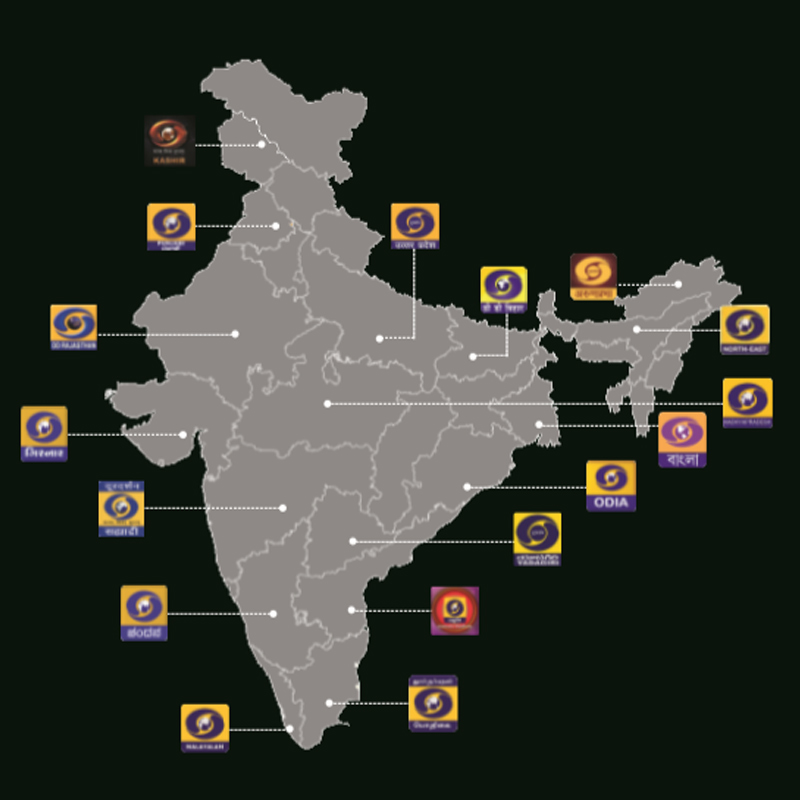
    MUMBAI: India’s public broadcaster, Prasar Bharati, is one of the largest public broadcasters in the world. It got a big boost with DD Free Dish that enabled it to reach into the interior parts of the country where pay channels didn’t have much headway. In 2019, Prasar Bharati added 11 regional channels on DD Free Dish to expand its reach, gaining 16 per cent more viewership over the previous year (2018). Half of its viewership comes from Hindi channels and the other half from regional language channels.

    Among the 24 DD channels measured by BARC India, the viewership of its English news channel DD India grew 63 per cent over the previous year, while that of DD Kisan gained 48 per cent. Notably, in the English news space, DD India contributes to 22 per cent of the entire genre viewership.

    Prasar Bharati CEO Shashi S Vempati says, “Doordarshan is not just a broadcaster; it is an institution that has helped germinate, build and popularise television in India. In the dynamic broadcast sector, Doordarshan, too, is transforming itself to keep in sync with its core mandate of public service broadcasting as well as meet audience expectations.”

    He further says, “Towards this, we rely on data and insights from BARC India to help target and deliver our content in a more effective manner. BARC India has done a great job in building the world’s largest TV viewership measurement system. As a key stakeholder of BARC India, we continue to engage and collaborate with the industry body as it consolidates and expands its services further.”

    Recently, the pubcaster revived two of its shows Ramayan and Mahabharat during the covid-19 crisis. Although it no longer enjoys a monopoly position, Doordarshan continues to have its dedicated audience and exercises its specific responsibility of public service and socially-relevant broadcasting.

    Joel Multimedia founder & CEO Varghese Thomas says, “India's public broadcaster was the one and only destination for television advertisers three decades ago. DD National, DD Metro and about 15 regional channels used to feature in all TV plans until the late 1990s. The public broadcaster has gifted a lot of good shows to the Indian television Industry such as Mahabharat, Ramayan, Surbhi, Rangoli, Chitrahaar, Superhit Muqabla, Shanti, Swabhiman etc. (Some of them were privately produced). The Friday and Saturday Hindi feature films were bumper hits among advertisers. Has anyone thought of creating a fantastic show out of a morning time band at 7 am on Sundays with a show like Rangoli? That was the power of Doordarshan during those days.”

    Thomas believes that after the entrance of satellite TV channels, pubcasters could not withstand the fast-changing trends and lost audience to private channels. He says, “Today, the HSM market has 57 per cent penetration of TV in the urban+rural markets. The proliferation of satellite channels with deep pockets and focus on innovative content has changed the way TV is consumed in India.  From fiction to sitcoms to reality shows, satellite channels have all that to entertain the ever-hungry TV audience. As the audience moved, advertisers have also moved to satellite channels as it was offering multi-dimensional opportunities for the brand rather than just buying a TV spot of 30 seconds.”

    Thomas, however, believes that though people in metros prefer satellite channels over public broadcasters only due to the programming, it would be a good idea to consider the public broadcaster for smaller towns and villages. “The terrestrial reach of the broadcaster is exclusive and no other broadcaster caters to that space which is very important. DD Free Dish is another superhit with 35 million connections and it's a great platform for even FTA satellite channels for distribution. Last year, the public broadcaster has generated revenue of Rs 500+ crore only by striking distribution deals with private channels.”

    According to the 2nd edition of BARC India- What India Watched 2019, the total viewership on DD grew to 573 billion viewing minutes in 2019 from 492 billion viewing minutes in 2018. The viewing minutes on DD's GEC channels grew by 19 per cent from 355 billion viewing minutes in 2018 to 424 billion viewing minutes in 2019.

    News genre witnessed five per cent growth in 2019 at 25 billion viewing minutes from 24 billion viewing minutes in 2018. Sports grew by four per cent at 101 billion viewing minutes in 2019 from 98 billion viewing minutes in 2018 and niche/others genre grew by 48 per cent at 23 billion viewing minutes in 2019 from 16 billion viewing minutes in 2018.

    “In spite of an increase in viewership, the number of advertisers in 2019 reduced by eight to10 per cent. In terms of spends there was growth in 2018 but in 2019 overall spends across DD network dropped by 30-35 per cent. Large CPG brands have also reduced spends on the DD channels in 2019,” informs Carat India executive VP Mayank Bhatnagar.

    He, too, agrees that the network has a vast untapped potential in the rural belt of the country. “The government has taken several steps to improve the quality of content and added new content to attract viewers. The viewership growth is exceptional, driven by the quality of the content and audience connect via increased presence on social media platforms. However, currently facing immense pressure from other FTA channels, DD needs to invest in the right content which is relatable and relevant to audiences,” he opines.

    Havas Media Group CEO India and South East Asia Anita Nayyar believe that if the public broadcaster is able to help advertisers with an attractive number of eyeballs and quality reach through innovative programming, it can get more investments.

    Nayyar says, “Depending upon the kind of audience and the markets it caters to and reaches, the investments follow. Advertisers are interested in reach and that too quality reach. With reach, the focus should be on quality of programming and that will get quality advertisers. As long as the same is delivered it should automatically attract advertisers and investments.”

    She further opines, “Unfortunately, the perception of public broadcasters in spite of the reach is not up to the mark and perceived to be low quality on both the audience and content fronts. With so many options available to view and great quality content available all across they have tough competition and will need to rise to the occasion.”

    There was some negative growth as well in some of the languages like Gujarati and Punjabi. Gujarati witnessed a fall of 5 per cent, the viewing minutes decreased to 9 billion in 2019 from 9.3 billion in 2018. Punjabi witnessed a 13 per cent fall in viewing minutes from 49 billion viewing minutes from 43 billion viewing minutes in 2018. 

  • Regional GECs on an upward growth trajectory

    Regional GECs on an upward growth trajectory

    MUMBAI: In the last four to five years, the regional television market witnessed a significant growth in viewership. Even the ad spend in the regional market has grown by 20 to 25 per cent in 2019 with more and more brands aiming to reach specific audiences. So how has the ROI improved for the regional channels? National broadcasters are expanding their footprints and businesses in the regional market by investing more on regional content and even brands are focussing more on the regional channels to reach specific markets.

    Carat India executive VP Mayank Bhatnagar says, “The overall growth of regional channels is healthy and all the key regional channels have grown. In fact, some of them have witnessed a healthy growth in ad revenue. The overall ad spends this year (2019) on regional channels have increased by 20 to 25 per cent.”

    As per BARC data, over a period of four years, regional viewership has grown to 30 – 35 per cent for languages such as Marathi, Gujarati, Bhojpuri, Odiya and Assamese. South continued to grow at around 9 to 10 per cent on an average. Hindi grew at about 7 to 8 per cent.

    Viacom18 Regional TV Network head Ravish Kumar says, “Regional channels have always offered great value to their advertisers and prioritised innovation, fresh concepts and new talent while perfecting the art of great storytelling. With their rich repository of theatre, literature, culture and music, regional content is making waves across mediums, screens and languages. So, the ROI on regional channels continues to be as strong as ever earning it an outperform rating in today’s value-seeking markets.”

    He further says: “Brands today have understood the reach a regional channel can give them. In addition to regional brands seeing value in our offerings, national advertisers too are understanding the importance of regional markets. While FMCG, auto, handset manufacturers continue to invest, there are newly emerging sectors such as education and gaming which are ramping up their advertising spends.”

    Joel Multimedia founder-CEO Varghese Thomas, however, believes that all regional players are not breaking even as content acquisition is an expensive affair and it takes time to recover the cost incurred in a highly competitive market environment like today.

    Regional channels also help brands to get the reach within a lower budget. “If we want to do a small campaign, these regional channels will help to drive efficiency. Regional will continue to grow as it is more efficient and help us to build the reach at much lesser cost as compared to HSM,” says Bhatnagar.

    Other major reasons for the growth of regional content are enhanced data bandwidth, cheap tariff and increased smartphone penetration that has resulted in digital explosion and accelerated digital adoption by audience due to which they started consuming content across screens. This resulted in regionalisation of the content from both production and consumption perspectives.

    Omnicom Media Group India Investment & Enterprise national head Yatin Balyan says, “For a national broadcaster mainline Hindi GEC continues to drive maximum business. However, regional channels are contributing more towards business growth for the network. Networks try to increase volume share with Hindi GEC as well as grow the business on the back of regional channels. National broadcasters investing in regional content also have to create a content bank for their respective OTT platforms.”

    He also believes that regional channels have seen a gradual increase in business coming from regional or retail advertisers. He says, “There is a prominent shift in how regional channels are being considered from a campaign planning perspective. Campaigns for regional markets are being planned with far more focus as advertisers started considering all these markets as mini India within one Big India.”

    Thomas is of the view that regional retail advertisers used to be the largest contributors of advertising revenue for the regional channels. But post demonetisation, the ad spends by retail business is on a downward trend and it has been really challenging to balance the revenue. Some of the players have come up with non-FCT ideas to cope with the challenges and it's paying off to an extent.

    When broadcasters look at expanding their footprint and diversifying into non-core areas of business, regional markets emerge as an option to explore. Though most of the regions are already flooded with a bunch of players, broadcasters are exploring the possibility of adding another channel to their basket in order to be part of the regional success story. It is interesting to know that some of the recently-entered regional players are doing extremely well and they have already made their position in the top 5 channels and started contributing to the growth of the network.

    Thomas says, “It's challenging for broadcasters to approach these markets with an innovative programming strategy. So, at times, they do an adaptation of their successful shows from their national channels. They also have an option to dub some of their super hit shows in to the regional languages where they are present.”

    Balyan, however, believes that Hindi GEC still commands the maximum business share within a broadcaster networks and it would be incorrect to assume that Hindi GEC has come to a level of saturation. TV penetration in the Hindi hinterland, which is still not at 100 per cent, is primarily driven by Hindi GECs. I see scope of further growth in Hindi GEC business with increased scope of audience measurement.”

    According to Kumar, from a macro perspective, 2019 was a challenging year for the entire broadcast industry, including regional, due to the impact of the new tariff order as well as the weak advertising and investing climate. However, he believes things are settling down now, and hopefully, this year will see a lot more buoyancy coming back in.

    He says, “I believe that regional markets offer more opportunities than the challenges they present. Regional audiences have become increasingly aware and hence content that is being presented to them needs to be more relatable, rooted and relevant. There is a growing demand for disruptive content, both in fiction and non-fiction spaces. Viewers are looking for fresh content experiences and stories which have believable characters. This is a great opportunity for storytellers like us.”

    Regional channels contribute significantly towards the overall growth and this will only continue to increase.

  • A blessing in disguise for broadcasters

    A blessing in disguise for broadcasters

    MUMBAI: The Coronavirus pandemic and the consequent decision to suspend shoots from 19-31 March have proved to be a blessing in disguise for broadcasters. With major shut down of malls, theatres, schools, colleges etc., people are restricting themselves within the narrow confines of their homes, spending more time watching television or exploring OTT platforms. In such a situation, advertisers looking for building brand salience would definitely like to explore the opportunity with better SOV. And broadcasters, needless to say, should have their smart programming strategies in place for the next two to three weeks.

    Omnicom Media Group India Investment & Enterprise national head Yatin Balyan says: “We need to analyse this from a shorter-time frame perspective. Logistics have got hit, travel is restricted, people are not venturing out and I believe the scenario would continue for a week/two or more based on the situation. This will eventually have an adverse impact on business. Yes, certain categories will have more impact than others. Advertisers in specific categories may consider postponing media activities. But I see business getting impacted for a couple of months and once normalcy in attained business will recover very quickly.”

    Joel Multimedia founder and CEO Varghese Thomas says, “Well when I look at the coming quarters, there will be a slow phase across the board. It’s not only for the film, serial or content industry but it’s affecting all industries.  So, there is a slow down we are seeing across.  This would have a direct impact on the performance of these production houses in terms of making new contents and their bottom lines if the date gets extended beyond 31st March. This will also have an impact on the lives of people who work on these production sets.”

    He informs, “As far as broadcasters are concerned, they are dependent on their production team to deliver fresh content every day or on a weekly basis for telecast.   This cycle may get disturbed due to the embargo and it can create a shortage of fresh content.  The programming team may have to re-work their FPCs to fix the short coming and to find solutions to feed the audience with interesting content from their libraries.  This is applicable for all the platforms whether it’s a movie theatre, tv channels or an OTT platform.  There would be a drop in viewership in case these channels are not able to telecast new episodes of their fictions or reality shows.  They could fill the slots with repeat telecasts of their old popular shows and movies.  Movies particularly have decent ratings even for repeat telecasts hence that could be an option for many tv channels if the issue persists.”

    Balyan adds: “From a broadcasters’ perspective, they will have enough content bank to be able to sustain 2-3 weeks without disrupting the on-air programming. With smart programme scheduling they can easily sustain for 3-4 weeks. Also, one perspective to be observed is that the audience will consume more content leading to better viewership. Hence advertisers looking to build brand salience would like to explore this phase with better SOV.”

    He expects advertisers in certain categories to push out or delay media activity. He says, “Also at the same time, certain categories like e-com may continue to invest as people are not looking for offline purchases. For a shorter time period channels may have to manage inventory. Also, I see some rationalisation of media mix to navigate the current challenges.”

    “Planners and agencies are looking to evaluate impact on client’s business and would provide recommendations accordingly. As I said recommendation would be very category-specific,” he opines.

    “As for advertisers and media planners, it would be advisable to evaluate if there is any drop in numbers in terms of viewership and work out their media plans accordingly,” says Thomas.

    Havas Media Group CEO India and South East Asia Anita Nayyar says: “This will certainly affect everyone, be it companies, broadcasters, advertisers, ad agencies as it almost is a lockdown situation. Many organisations have announced work-from-home as well. The situation is scary and worrisome, for, if the consumer is contained everything related to him gets contained. Many have postponed important decisions on purchases which will lead to drop in sales leading to drop in advertising, which in turn will cause drop in spends and business for ad agencies, and hence for publishers and broadcasters.”

    “Media planners need to look at more efficient and effective ways—digital and OTT being one of them. This will also lead to an increase in viewership at home given home is the new work destination,” said Nayyar.

    On 15 March, in a joint meeting of Indian Motion Pictures Producers' Association (IMPPA)- Western India Film Producers' Association (WIPFA)- Indian Film and Television Producers Council (IFTPC)-Indian Film & Television Directors' Association (IFTDA)- Federation of Western India Cine Employees (FWICE) have taken a decision to stop shooting various Indian association bodies of television, directors and producers of films, TV serials and web series from 19 March 2020 till 31 March 2020.

    Appreciating the move by the associations Thomas says, “I personally feel that it’s a great move by these associations and governing bodies to take a break from shootings where a lot of people’s lives could be at risk due to the widely spreading epidemic.  As we all know our lives are more important than anything else right?  So, it’s a fantastic initiative and a great endeavor to break-the-chain.”

    Keeping in mind the health and safety of all concerned, ZEE will stop all shoots in the timelines stipulated in the directive. “In times where social distancing is the need of the hour to curb the outbreak of COVID-19 and people are spending more time indoors, the idea is to provide audiences with the most engaging entertainment for the entire family. Talks are still on to arrive at a strategy that ensures viewers have the best content to look forward to in the said period,” informed the broadcaster.

  • Sony TV rides on ‘brandwagon’

    Sony TV rides on ‘brandwagon’

    MUMBAI: Normally, viewership plays an important role for broadcasters because that is what tells them whether viewers liked them or not. But, viewership may not be the sole determining factor in creating a brand perception among people, if the recent announcement of the ‘most desired brands 2020’ by Trust Research Advisory (TRA) is an indication. The weekly data of BARC India ratings put Sony Entertainment Television (SET) at the fourth or fifth position. However, the channel has entered the TRA’s top 20 India’s most desired brand 2020 at fourth position.

    TRA’s ‘most desired brands’ is a measure of the consumer’s perception of their expressed desire about brands they love. It lists those brands which have striven hard to woo their customers with a long-term relationship in their minds and hearts.

    The TRA’s report says: “At fourth rank is Sony TV with a small 7 per cent DI (Desire Index) difference from its predecessor. Sony TV, a Hindi GEC, makes a dramatic entry with massive jump of 594 ranks over the previous report. One of the country’s earliest Hindi TV channels, Sony TV has stayed relevant to the audience by evoking with their entertainment offering and a differentiated palette to maintain freshness.”

    TRA research director Sachin Bhosle said: "It is the first time that we have included 50 per cent housewives and 50 per cent working women in our women's sample. And we saw a great change in top brands. You have Sony TV entering the top 10, which was never the case earlier.”

    Bhosle explained that the TRPs are made of tangible things that are measured. Brand trust or desirability is based on intangible sides of the brand. “It is how it communicates with the audience, the way it creates aspirational value, the way it has a rationale behind it, and what is the aspirational value it is trying to create. That's all what is probably more important."

    Sony Entertainment Television Business Planning and Communication head Amit Raisinghani says: “We are pleased to see Sony Entertainment Television placed at fourth position amongst the Top brands in the recently released list of TRA’s most desired brands 2020. Perhaps, the clarity that we have with respect to the purpose of the brand and for whom the brand is meant for has helped us drive relevance, engagement and desire amongst our viewers. Our brand is a manifestation of our people, culture, relentless consumer focus and the premium that we put on creative talent. We hope to continue our relentless pursuit to delight our viewers with compelling content.”

    “There is a brand perception in the market that comes from what is its brand value. In case of Sony, when the channel aired KBC and Indian Idol, they did well in the BARC data. Brand perception and viewership is different; one is the brand love and trust and the second is the viewership, i.e. from the rating perspective which is as per the kind of content the channel is playing. There is a lot that Sony as channel does from the audience’s responsibility perspective which also plays a big role in brand perception. Sony as a channel cares and connects itself to social responsibility and that itself plays from the brand perception’s perspective,” opines Havas Media Group CEO India and South East Asia Anita Nayyar.

    Carat India executive VP Mayank Bhatnagar says: “Congratulations to Team Sony! It is great to see a TV channel brand scores the fourth position and gets featured in top 50. Viewers’ behaviour, habit and preference have evolved and this has resulted in a major shift in the way people consume content. Consumers today want to consume relatable and relevant content. Sony TV has got the mix right and it has helped them build a strong connect with urban viewers.”

    Bhatnagar, however, believes that this will not help the channel in attracting more advertisements as the media planners will continue to evaluate channel performance on the basis of viewership data.

    He says: “The Sony TV viewer profile is more skewed towards higher NCCS and urban. If we see the trends for the past few weeks, their viewership and ranking at All India and Urban market level has stayed consistent. The channel has built an unwavering trust through varied content. It's important to be consistent and innovative. This will help them further strengthen the brand and go from strength to strength.”

    Joel Multimedia founder-CEO Varghese Thomas comments: “Sony TV is the favourite choice of many advertisers and agencies irrespective of the numbers being delivered by the channel. In a media plan, the channel really helps to build reach in a big way. It's dominance in the male-oriented programmes is also commendable.  So, it really does not matter whether the channel has featured in the top ranking or not. Also, beyond numbers, the channel's intend to continuously invest in new shows tells us that they are serious about what has been offered to the television viewers across all genres. This announcement about the channel being featured on the fourth rank of TRA's most desired brands is a great achievement as far as the brand is concerned and will have a chance to attract more business.”