Tag: Joanna Lumley

  • Across Continents and Cultures: ‘Women’s Day Special’on Sony BBC Earth

    Across Continents and Cultures: ‘Women’s Day Special’on Sony BBC Earth

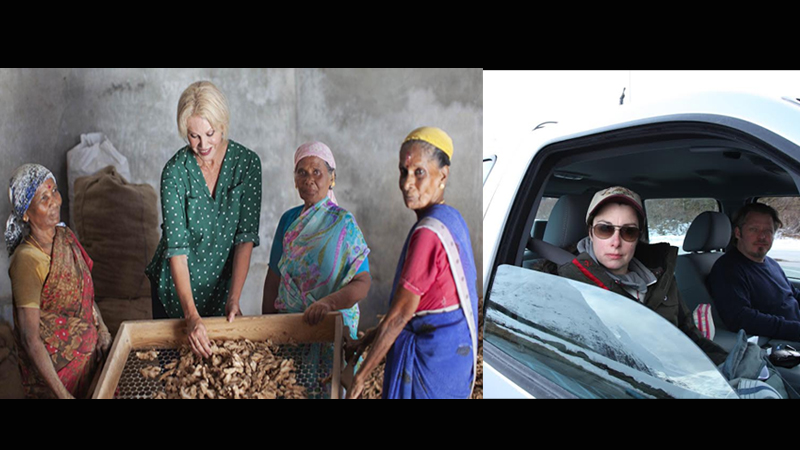
    This March, Sony BBC Earth will present ‘Women’s Day Special’, a contentline-up that will dive into a day of inspiring travel and exploration. Viewers will embark on adventures as celebrated female presenters Sue Perkins and Joanna Lumley guide them through diverse landscapes and cultures. Perkins will navigate the Ganges, explore Japan’s blend of tradition and modernity, and brave treacherous terrains. Lumley will trace the Silk Road, reveal hidden sides of European cities, and uncover the origins of beloved spices.

    ‘Women’s Day Special’ will commence with ‘Joanna Lumley’s Silk Road’, an expansive exploration across continents and cultures. From Venice, Lumley’s eastbound journey will allow viewers to witness the dramatic landscapes of Cappadocia, the architectural wonders of Uzbekistan, and the serene Kyrgyzstan. In ‘The Ganges With Sue Perkins’, Perkins will explore the Ganges, from its sacred Himalayan origin to its vast expanse, revealing modern India. She will meet the people who define the river, including holy men, climate refugees, and pilgrims, showcasing the river’s significance.  

    Following this, ‘Joanna Lumley’s Great Cities Of The World’ will unveil the secret sides of Europe’s major cities. Lumley will explore Paris, Rome, and Berlin, meeting locals and experiencing the cities’ rich and varied cultures. In ‘Japan With Sue Perkins’, Japan’s unique blend of ancient tradition and cutting-edge technology, from Tokyo’s neon streets to remote artisan villages, will reveal a nation balancing its past and future.  

    For adventure enthusiasts, ‘World’s Most Dangerous Roads’ will showcase Sue Perkins taking on extreme challenges, from Alaska’s icy Dalton Highway to the historically perilous Ho Chi Minh Trail. The journey will conclude with ‘Joanna Lumley’s Spice Trail Adventure’, where Lumley will explore the spice trade, uncovering its historical and cultural significance.

    Viewers can tune in to Sony BBC Earth on March 8, 2025, from 09:00 AM onwards, to experience a journey of cultural exploration and adventure with ‘Women’s Day Special’.
     

  • Ofcom registers plaint against ‘Joanna Lumley’s India’ as ‘materially misleading’

    Ofcom registers plaint against ‘Joanna Lumley’s India’ as ‘materially misleading’

    MUMBAI: The UK’s communications regulator Ofcom recently registered a complaint against “Joanna Lumley’s India” to be ‘materially misleading’. It has been registered under the “Complaints assessed, not investigated” section of Ofcom. Ofcom has decided not to pursue complaints recorded between 1 and 20 August 2017 because they did not raise issues warranting investigation. “Complaints assessed” fall under the procedures for investigating breaches of content standards for television and radio.

    TV show ‘Joanna Lumley’s India’ has been alleged in a section of the UK media for airbrushing history. Lumley had returned to the place of her birth to celebrate India and walk in her ‘family’s footsteps’. However, her show alleged overlooked British oppression in the former colony. In the final instalment of Lumley’s three-part travelogue adventure across India, she explored Rajasthan, Delhi and the mountainous North West ending in Kashmir, the place of her birth.

    Joanna Lumley’s India, shown on ITV, promise to “celebrate” modern India and “walk in my family’s footsteps”. Within minutes of the beginning of the first episode, there was reportedly an omission. Walking through Kolkata, then called Calcutta, Lumley notices the British-inspired architecture. She however fails to mention that the first Anglican cathedral on the subcontinent St John’s Church was built by James Agg, her great-grandfather and the first of her ancestors to arrive in India in 1777. She probably is unaware of the lineage, the Guardian reported.

    But. it was not hard to trace it. Or, it could be because of those four chilling words — British East India Company – the trading corporation turned “aggressive colonial power”, as the historian William Dalrymple pointed out, the activities of which brought the word “loot” (from the Hindustani ‘lut’) into the English dictionary, and from which Agg may have made his fortune.

    The Brit EIC was not just a group of merchants, but a military force that plundered India throughout the 18th and early 19th centuries. In Bengal, the first of the regions to fall to the British Raj, the immediate outcome was full pockets for the Westerners and poverty for the citizens. Indians were stopped from trading, were forced off their land by harsh taxes, and saw their world-renowned textile industry destroyed. 

    The poverty of this great city, Lumley says, was down to “conflict and politics”. Or, did she say: “conquest and policies” – such as the 50 per cent tax on income, the extraction of which was routinely helped along by torture. Defaulters could expect to be caged and left in the burning sun. Or, at worst, to quote Edmund Burke’s 1795 testimony in the Parliament about the horrors inflicted upon Bengali women, “they were dragged out, naked and exposed to the public view, and scourged before all the people … they put the nipples of the women into the sharp edges of split bamboos and tore them from their bodies,” the Guardian wrote.

    As Lumley’s camera crew panned over a child beggar, it began to feel like the presenter was in denial. Take the segment on the Dalits, or “untouchables”. It is hard to imagine, purrs a moralising Lumley, how “this modern country” can “tolerate such discrimination”. Yet, as Shashi Tharoor outlined in his new book “Inglorious Empire,” the British helped to entrench caste prejudice, giving a final shape to it as a means of control. “We had castes,” Tharoor says, “but we did not have the caste system.”

    Also Read:

    UK’s TV & online habits revealed, 40 mn watch episodes back-to-back 

    84 U.K. channels required to provide access services in 2018

    Fox-Sky deal: UK to assess implications by 29 June