Tag: JNU

  • JNU incident raises English News ratings afterslump in last week of 2019

    JNU incident raises English News ratings afterslump in last week of 2019

    BENGALURU: After an expected slump in viewership in the last BARC week of 2019 – week 53 (Saturday 28 December 2019 to Friday, 3 January 2020), the combined viewership of top 5 English News channels increased 9.2 percent to 1.835 million weekly impressions in week 1 of 2020 (Wy01 of 2020) from 1.681 million. Viewership was also boosted by the happenings at the Jawaharlal Nehru University (JNU) on January 5 and their subsequent fall out.

    There was a small change in Broadcast Audience Research Council of India (BARC) weekly list of top 5 English News channels in week 1 of 2019 (Saturday, 4 January 2020 to Friday 10 January 2020) – pubcaster network Doordarshan’sEnglish News channels DD India exited the list to be replaced by the Pronnoy and Radhika Roy led NDTV 24×7 which re-entered BARC’s weekly list after a short hiatus of two weeks. Earlier NDTV 24×7 had re-entered BARC’s weekly list of top 5 English News channels in week 51 of 2019 for the first time since BARC Recommenced publication of viewership data in the public domain in week 13 of 2019. BARC had stopped publication of weekly data in the public domain between weeks 6 and 12 of 2019 to enable  stabilisation of viewership after the implementation of Telecom Regulatory Authority of India (TRAI) New Tariff Order.

    Please refer to the figure below:

    As has become the norm, the top 2 channels in BARC’s weekly list of top 5 English News channels in week 1 of 2020 were same – the Arnab Goswami led Republic TV and his previous employer – Times Now. India Today Television moved up a place to rank 3 in week 1 of 2020 from rank 4 in week 53 of 2019. CNN News India also moved up a place to rank 4 during the week under consideration from rank 5 in the previous week. As mentioned above, NDTV 24×7 re-entered the list at rank five.

    Please refer to the figure below:

    Republic TV saw its ratings climb 8.1 percent to 0.615 million impressions in week 1 of 2020 from 0.569 million in the previous week. Times Now saw its viewership climb 14 percent in week 1 0f 2020 to 0.481 million weekly impressions from 0.422 million weekly impressions in week 53 of 2019. The India Today group’s India Today Television saw ratings jump 27.7 percent in week 1 of 2020 to 0.327 million weekly impressions from 0.256 million.

    CNN News18 saw viewership climb 26.6 percent to 0.224 million weekly impressions from 0.177 million weekly impressions. NDTV 24×7 entered the list with 0.188 million weekly impressions in week 1 of 2020.

    Please refer to the figure below

  • Incorrect and mischievous statements made by Vishwa Deepak

    Incorrect and mischievous statements made by Vishwa Deepak

    MUMBAI: It has come to the notice of Zee Media that Mr. Vishwa Deepak who was working with Zee News, after his resignation dated 19.02.2016, has made certain statements on various social media platforms which are not only incorrect but also defamatory and mischievous. Some of the media houses without proper verification of the facts and going into details of the false, incorrect and mischievous statements made by Mr. Vishwa Deepak, have portrayed the said statements as a statement of fact. It is disheartening to see that other media platforms without even caring to check with Mr. Pawan Nara who was reporting that night from JNU chose to believe and report wild allegations. By this statement ZMCL condemns and deny all the allegations made by Mr. Vishwa Deepak and wishes to highlight the following points appealing to all Media Houses to consider prior to portraying the statements as a statement of fact:
    1.    ZMCL is a large media house and people leaving and recruitments are a normal affair.
    2.    Mr. Vishwa Deepak was neither concerned nor was he involved in any stories related to the JNU issue.
    3.    Mr. Vishwa Deepak had never discussed any of these issues with anybody in the organization, if he had any.
    4.    The news report regarding happenings of events in JNU on 09.02.2016 and shouting of anti-national slogans such as ‘?????????????????’is a true factual event that was not only reported by ZMCL but also other Media houses which have also reported shouting of anti-national slogans.
    5.    It is evident from the raw footage shot by its cameraman that slogans such as ‘?????????????????’wereraisedin JNU on the night of 09.02.2016.
    6.    The raw footage of the happenings on the night of 09.02.2016 has been submitted by ZMCL to the Delhi Police and the Police Authorities are in the process of verifying the correctness and truthfulness of the said footage. ZMCL is confident and sure that the authenticity of the said footage would be once and for all clearly established by the reports of Delhi Police.
    7.    ZMCL is an independent media house which has no affiliations with any of the political parties and as such does not take any sides while reporting any news.
    8.    ZMCL has always endeavored to ensure that the news reported by it meets the standards of being unbiased, neutral and are true facts.


  • Incorrect and mischievous statements made by Vishwa Deepak

    Incorrect and mischievous statements made by Vishwa Deepak

    MUMBAI: It has come to the notice of Zee Media that Mr. Vishwa Deepak who was working with Zee News, after his resignation dated 19.02.2016, has made certain statements on various social media platforms which are not only incorrect but also defamatory and mischievous. Some of the media houses without proper verification of the facts and going into details of the false, incorrect and mischievous statements made by Mr. Vishwa Deepak, have portrayed the said statements as a statement of fact. It is disheartening to see that other media platforms without even caring to check with Mr. Pawan Nara who was reporting that night from JNU chose to believe and report wild allegations. By this statement ZMCL condemns and deny all the allegations made by Mr. Vishwa Deepak and wishes to highlight the following points appealing to all Media Houses to consider prior to portraying the statements as a statement of fact:
    1.    ZMCL is a large media house and people leaving and recruitments are a normal affair.
    2.    Mr. Vishwa Deepak was neither concerned nor was he involved in any stories related to the JNU issue.
    3.    Mr. Vishwa Deepak had never discussed any of these issues with anybody in the organization, if he had any.
    4.    The news report regarding happenings of events in JNU on 09.02.2016 and shouting of anti-national slogans such as ‘?????????????????’is a true factual event that was not only reported by ZMCL but also other Media houses which have also reported shouting of anti-national slogans.
    5.    It is evident from the raw footage shot by its cameraman that slogans such as ‘?????????????????’wereraisedin JNU on the night of 09.02.2016.
    6.    The raw footage of the happenings on the night of 09.02.2016 has been submitted by ZMCL to the Delhi Police and the Police Authorities are in the process of verifying the correctness and truthfulness of the said footage. ZMCL is confident and sure that the authenticity of the said footage would be once and for all clearly established by the reports of Delhi Police.
    7.    ZMCL is an independent media house which has no affiliations with any of the political parties and as such does not take any sides while reporting any news.
    8.    ZMCL has always endeavored to ensure that the news reported by it meets the standards of being unbiased, neutral and are true facts.


  • JNU’s Kanhiaya Kumar & the role of television news

    JNU’s Kanhiaya Kumar & the role of television news

    MUMBAI: “Where the mind is without fear and the head is held high

    Where knowledge is free

    Where the world has not been broken up into fragments

    By narrow domestic walls

    Where words come out from the depth of truth

    Where tireless striving stretches its arms towards perfection

    Where the clear stream of reason has not lost its way

    Into the dreary desert sand of dead habit

    Where the mind is led forward by thee

    Into ever-widening thought and action

    Into that heaven of freedom, my Father, let my country awake.”

    Given the perilous times that we are living in today, no words  resonate more aptly than these lines penned by Rabindranath Tagore more than a hundred years ago.

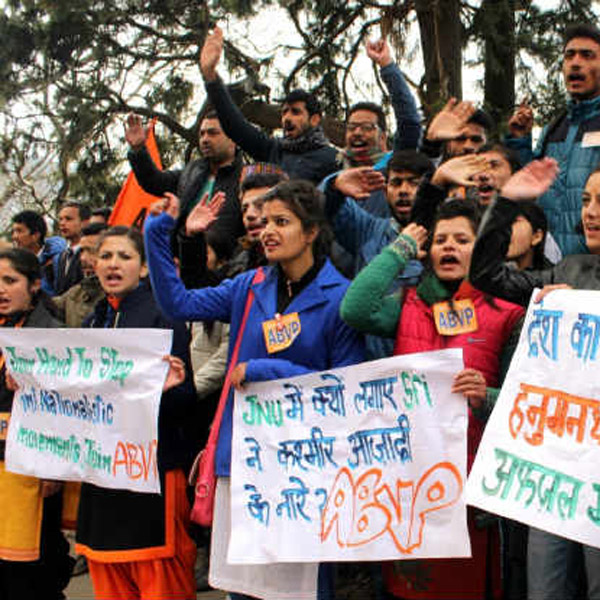
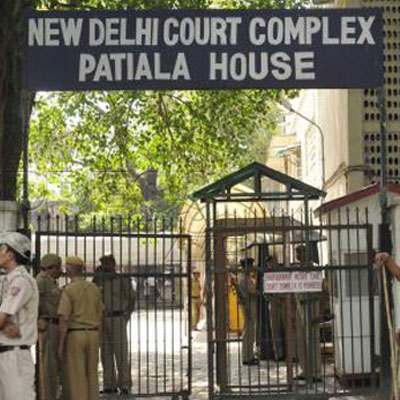
    Over the past one week, the country has witnessed debates, discussions and dialogues galore after the incident that happened in the Patiala Court on 15 February. That was the fateful afternoon when lawyers condemned students, journalists and cameramen who were present in court. That was the day when Jawaharlal Nehru University (JNU) Students Union president Kanhaiya Kumar, who had been arrested on charges of sedition for allegedly raising anti-India slogans, was supposed to be produced in front of the judge.

    With no journalist being spared by the ‘judges,’ the police force opted to be mere watchers turning a blind eye to what was happening. Anyone who didn’t look like a lawyer was beaten up. This action not only spurred anger across the nation but also marked 16 February as a Black Day wherein journalists displayed solidarity against what had happened in the high profile court complex. Hundreds of journalists decided to walk from the Press Club of India to the Supreme Court at noon on Tuesday to protest against the violence that took place.

    The event also saw some students allegedly raising anti-India slogans. NDTV CEO Vikram Chandra told indiantelevision.com that the unfortunate incidents on that day were deplorable. 

    Said he:  “I strongly oppose the slogan shouting that happened. It was highly inappropriate and shameful. Also, such reactions from the lawyers is disgraceful.”

    Then came claims, claims and more claims. Every news channel talked about the video that came out showing students chanting anti-Indian slogans, which celebrated Afzal Guru. While on the one hand, news channels kept airing the video of the attack by lawyers, on the other a few opted to take a stand on bigger issues of the events that unfolded at JNU. While some covered the attacks by lawyers, some covered the student protests at JNU. Diverse opinions and viewpoints bombarded newswatchers at home. 

    Such incidents make us question the basic right of freedom of expression laid down in Section 19 of the Indian Constitution. In the light of what happened, the lawyers completely mishandled and misinterpreted this basic right. 

    And in this constant tug-of-war between one side or the other, we saw some TV reporters and anchors going overboard and taking it out against each other in public.

    We watched as Times Now editor-in-chief Arnab Goswami conducted his routine debate session, bashing the students and disregarding what had happened. And the vociferous senior journalist has faced much criticism for the way he portrayed the event. 

    What’s more, Goswami has faced flak from senior journalists like NDTV’s Ravish Kumar and India Today Television’s Rajdeep Sardesai, who directly took him on because of his take on the entire issue. Goswami got fiery with the liberals asking them if such sloganeering or glorifying a terrorist as a martyr is freedom of speech or sedition, to speak the language of separatists? He ran out of “patience” while discussing this entire incident when one of the students Omar Khalid interrupted him in his prime time show The Newshour.

    NDTV senior journalist Ravish Kumar voiced his views on nationalism and what its connection is with our democracy. Kumar, in a blank black screen video with only subtitles, fired direct salvos against some anchors including Goswami. Starting with lines like: “In the name of debate, the everyday noise and shouting is either bringing you to light or taking you to darkness. You too must have been wondering.” 

    With just a dark and empty background sprinkled generously with impactful words, strong ideas and an eye-ball grabbing narration, he talked about the way in which TV debates are shaping up today. 

    He said, “Our job is not to provoke or incite, but simply ask; ask questions to those in power. But TV anchors don’t do that, intentionally so, and they shout. Is this how you speak at home, to your family, to your sister, to your wife?” he asked, adding, “Do we get accountability by screaming on television?”

    On the other hand, Sardesai came out with a blog titled: ‘I’m anti national,’ where he tried to convey an important point, and that was to stop dividing people in the name of nationalism. 

    “Yes, I am anti-national because I believe in an expanded definition of the right to free speech as spelt out in Article 19 of the Constitution,” are his exact words from the blog. He opined that the right to dissent is a fundamental right. “People cannot and should not take the law into their own hands. I don’t know yet whether the slogans that were raised were from the students or someone else,” he added.

    Video clips all over the Internet and social media have depicted students yelling out slogans like, Bharat ki barbaadi tak jang rahegi, Afzal Guru Zindabad, Pakistan Zindabad. However, the authenticity of these very videos is still shrouded in doubt. 

    To add to all this comes the shocking news about a Zee News producer Vishwa Deepak resigning from the news channel as a sign of disgust on the alleged biased coverage of the JNU protests and the sedition charges against the students’ union leader.

    He was reportedly a part of the team that produced a show on the night of 9 February, when alleged anti-India slogans were raised at the JNU campus. Deepak stated that the channel had broadcast a video of students raising slogans with a caption that said ‘Pakistan Zindabad’ while no such sloganeering was done and this could be easily figured out from the crowd and the darkness at that time.

    Of course media houses went to town carrying  his resignation letter in its entirety or excerpts from it, rubbing their hands in glee as it gave them fodder to denigrate the Hindi news channel as a handmaiden of the Modi sarkar. 

    Zee News has condemned and denied Vishwa Deepak’s statement saying that he was not associated with the coverage of the JNU crisis. It added that it has submitted the raw footage of the students sloganeering to the Delhi police and is awaiting the latter’s analysis to vindicate its stand. Additionally, it has stated it has no affiliations with any political parties. 

    CNN-IBN senior journalist Bhupendra Chaubey on his part has asked the nation’s journalists to be more vigilant. Said he: “It’s time that all the top editors and anchors across the industry should start looking at the reasons behind so much of hatred and negativity on social media. We should all be careful about what we are putting up on TV in-front of the nation.”

    With so much happening all around the world, it looks like a powder keg situation is brewing. With every passing day unveiling a new façade of the issue, the journalists and the media houses have to be fearless and honest so as to empower the citizens who rely on the Fourth Estate for credible information. 

    Freedom of speech and expression is a sovereign and democratic right of every Indian citizen irrespective of  caste, community, colour and creed. 

    But what if somebody is using the constitutional offering to sabotage harmony and arouse a polarised scenario? Who draws the line? 

    Self regulation based on conscience, morals and ethics seems to be not working, but is a regulatory body constructed under government diktat, a safer option?

    On the other hand, the Press in India has more freedom as compared to many other countries. But how is it helping the nation? If Goswami says no, then Barkha Dutt will contradict with a yes. If Zee News says galat (wrong), Aaj Tak will say sahi (correct). Even as journalists are marching on the road and news channels are resorting to visual effects, is anyone thinking on what the repercussions this will have on the millions following them? Certainly not!

    The Father of the nation Mahatma Gandhi rightly said, “The true function of journalism is to educate the public mind, not to stock it with wanted and unwanted impressions.” 

    That sagacious advice has been dust-binned by today’s trigger happy media. Decibel is the new decorum and views are all that is left in news, and TV ratings are all that matter. It remains to be seen, how long this craftsmanship can continue.

    ’Tis the time to really ponder over where we, as a country are going from hereon…

  • JNU’s Kanhiaya Kumar & the role of television news

    JNU’s Kanhiaya Kumar & the role of television news

    MUMBAI: “Where the mind is without fear and the head is held high

    Where knowledge is free

    Where the world has not been broken up into fragments

    By narrow domestic walls

    Where words come out from the depth of truth

    Where tireless striving stretches its arms towards perfection

    Where the clear stream of reason has not lost its way

    Into the dreary desert sand of dead habit

    Where the mind is led forward by thee

    Into ever-widening thought and action

    Into that heaven of freedom, my Father, let my country awake.”

    Given the perilous times that we are living in today, no words  resonate more aptly than these lines penned by Rabindranath Tagore more than a hundred years ago.

    Over the past one week, the country has witnessed debates, discussions and dialogues galore after the incident that happened in the Patiala Court on 15 February. That was the fateful afternoon when lawyers condemned students, journalists and cameramen who were present in court. That was the day when Jawaharlal Nehru University (JNU) Students Union president Kanhaiya Kumar, who had been arrested on charges of sedition for allegedly raising anti-India slogans, was supposed to be produced in front of the judge.

    With no journalist being spared by the ‘judges,’ the police force opted to be mere watchers turning a blind eye to what was happening. Anyone who didn’t look like a lawyer was beaten up. This action not only spurred anger across the nation but also marked 16 February as a Black Day wherein journalists displayed solidarity against what had happened in the high profile court complex. Hundreds of journalists decided to walk from the Press Club of India to the Supreme Court at noon on Tuesday to protest against the violence that took place.

    The event also saw some students allegedly raising anti-India slogans. NDTV CEO Vikram Chandra told indiantelevision.com that the unfortunate incidents on that day were deplorable. 

    Said he:  “I strongly oppose the slogan shouting that happened. It was highly inappropriate and shameful. Also, such reactions from the lawyers is disgraceful.”

    Then came claims, claims and more claims. Every news channel talked about the video that came out showing students chanting anti-Indian slogans, which celebrated Afzal Guru. While on the one hand, news channels kept airing the video of the attack by lawyers, on the other a few opted to take a stand on bigger issues of the events that unfolded at JNU. While some covered the attacks by lawyers, some covered the student protests at JNU. Diverse opinions and viewpoints bombarded newswatchers at home. 

    Such incidents make us question the basic right of freedom of expression laid down in Section 19 of the Indian Constitution. In the light of what happened, the lawyers completely mishandled and misinterpreted this basic right. 

    And in this constant tug-of-war between one side or the other, we saw some TV reporters and anchors going overboard and taking it out against each other in public.

    We watched as Times Now editor-in-chief Arnab Goswami conducted his routine debate session, bashing the students and disregarding what had happened. And the vociferous senior journalist has faced much criticism for the way he portrayed the event. 

    What’s more, Goswami has faced flak from senior journalists like NDTV’s Ravish Kumar and India Today Television’s Rajdeep Sardesai, who directly took him on because of his take on the entire issue. Goswami got fiery with the liberals asking them if such sloganeering or glorifying a terrorist as a martyr is freedom of speech or sedition, to speak the language of separatists? He ran out of “patience” while discussing this entire incident when one of the students Omar Khalid interrupted him in his prime time show The Newshour.

    NDTV senior journalist Ravish Kumar voiced his views on nationalism and what its connection is with our democracy. Kumar, in a blank black screen video with only subtitles, fired direct salvos against some anchors including Goswami. Starting with lines like: “In the name of debate, the everyday noise and shouting is either bringing you to light or taking you to darkness. You too must have been wondering.” 

    With just a dark and empty background sprinkled generously with impactful words, strong ideas and an eye-ball grabbing narration, he talked about the way in which TV debates are shaping up today. 

    He said, “Our job is not to provoke or incite, but simply ask; ask questions to those in power. But TV anchors don’t do that, intentionally so, and they shout. Is this how you speak at home, to your family, to your sister, to your wife?” he asked, adding, “Do we get accountability by screaming on television?”

    On the other hand, Sardesai came out with a blog titled: ‘I’m anti national,’ where he tried to convey an important point, and that was to stop dividing people in the name of nationalism. 

    “Yes, I am anti-national because I believe in an expanded definition of the right to free speech as spelt out in Article 19 of the Constitution,” are his exact words from the blog. He opined that the right to dissent is a fundamental right. “People cannot and should not take the law into their own hands. I don’t know yet whether the slogans that were raised were from the students or someone else,” he added.

    Video clips all over the Internet and social media have depicted students yelling out slogans like, Bharat ki barbaadi tak jang rahegi, Afzal Guru Zindabad, Pakistan Zindabad. However, the authenticity of these very videos is still shrouded in doubt. 

    To add to all this comes the shocking news about a Zee News producer Vishwa Deepak resigning from the news channel as a sign of disgust on the alleged biased coverage of the JNU protests and the sedition charges against the students’ union leader.

    He was reportedly a part of the team that produced a show on the night of 9 February, when alleged anti-India slogans were raised at the JNU campus. Deepak stated that the channel had broadcast a video of students raising slogans with a caption that said ‘Pakistan Zindabad’ while no such sloganeering was done and this could be easily figured out from the crowd and the darkness at that time.

    Of course media houses went to town carrying  his resignation letter in its entirety or excerpts from it, rubbing their hands in glee as it gave them fodder to denigrate the Hindi news channel as a handmaiden of the Modi sarkar. 

    Zee News has condemned and denied Vishwa Deepak’s statement saying that he was not associated with the coverage of the JNU crisis. It added that it has submitted the raw footage of the students sloganeering to the Delhi police and is awaiting the latter’s analysis to vindicate its stand. Additionally, it has stated it has no affiliations with any political parties. 

    CNN-IBN senior journalist Bhupendra Chaubey on his part has asked the nation’s journalists to be more vigilant. Said he: “It’s time that all the top editors and anchors across the industry should start looking at the reasons behind so much of hatred and negativity on social media. We should all be careful about what we are putting up on TV in-front of the nation.”

    With so much happening all around the world, it looks like a powder keg situation is brewing. With every passing day unveiling a new façade of the issue, the journalists and the media houses have to be fearless and honest so as to empower the citizens who rely on the Fourth Estate for credible information. 

    Freedom of speech and expression is a sovereign and democratic right of every Indian citizen irrespective of  caste, community, colour and creed. 

    But what if somebody is using the constitutional offering to sabotage harmony and arouse a polarised scenario? Who draws the line? 

    Self regulation based on conscience, morals and ethics seems to be not working, but is a regulatory body constructed under government diktat, a safer option?

    On the other hand, the Press in India has more freedom as compared to many other countries. But how is it helping the nation? If Goswami says no, then Barkha Dutt will contradict with a yes. If Zee News says galat (wrong), Aaj Tak will say sahi (correct). Even as journalists are marching on the road and news channels are resorting to visual effects, is anyone thinking on what the repercussions this will have on the millions following them? Certainly not!

    The Father of the nation Mahatma Gandhi rightly said, “The true function of journalism is to educate the public mind, not to stock it with wanted and unwanted impressions.” 

    That sagacious advice has been dust-binned by today’s trigger happy media. Decibel is the new decorum and views are all that is left in news, and TV ratings are all that matter. It remains to be seen, how long this craftsmanship can continue.

    ’Tis the time to really ponder over where we, as a country are going from hereon…

  • Jaitley, Bar Council deplore attacks on media; SC asks police to ensure safety

    Jaitley, Bar Council deplore attacks on media; SC asks police to ensure safety

    NEW DELHI: Even as the Bar Council of India condemned the attacks by lawyers on media persons at Patiala House courts where the Jawaharlal Nehru University Students Union Kanhaiya Kumar was being produced, the Supreme Court asked the Delhi Police to ensure the security of all including media persons.

    The apex court also agreed to hear a petition by media persons in this regard. 

    Information and Broadcasting Minister Arun Jaitley, himself an eminent lawyer, also condemned the attacks in a tweet, saying: “Media has an unhindered right to report. Attack on Media persons is highly improper and condemnable.” 

    Media persons in Mumbai and Kolkata also held demonstrations in support of their Delhi colleagues. As was previously reported by Indiantelevision.com, the News Broadcasters Association (NBA) also deplored the attacks.

    Earlier reiterating that attacks on journalists discharging their professional duties was not acceptable, the Press Council of India had sought a report from the Delhi Police regarding the assault on media persons in the Patiala House Court complex.

    The events at Patiala House court resulted in a massive outrage and top editors of national media and hundreds of journalists yesterday demonstrated on the streets demanding action against those involved in beating up members of their fraternity in police presence and sought Supreme Court’s intervention in protecting freedom of speech.

  • Jaitley, Bar Council deplore attacks on media; SC asks police to ensure safety

    Jaitley, Bar Council deplore attacks on media; SC asks police to ensure safety

    NEW DELHI: Even as the Bar Council of India condemned the attacks by lawyers on media persons at Patiala House courts where the Jawaharlal Nehru University Students Union Kanhaiya Kumar was being produced, the Supreme Court asked the Delhi Police to ensure the security of all including media persons.

    The apex court also agreed to hear a petition by media persons in this regard. 

    Information and Broadcasting Minister Arun Jaitley, himself an eminent lawyer, also condemned the attacks in a tweet, saying: “Media has an unhindered right to report. Attack on Media persons is highly improper and condemnable.” 

    Media persons in Mumbai and Kolkata also held demonstrations in support of their Delhi colleagues. As was previously reported by Indiantelevision.com, the News Broadcasters Association (NBA) also deplored the attacks.

    Earlier reiterating that attacks on journalists discharging their professional duties was not acceptable, the Press Council of India had sought a report from the Delhi Police regarding the assault on media persons in the Patiala House Court complex.

    The events at Patiala House court resulted in a massive outrage and top editors of national media and hundreds of journalists yesterday demonstrated on the streets demanding action against those involved in beating up members of their fraternity in police presence and sought Supreme Court’s intervention in protecting freedom of speech.

  • NBA, DUJ condemn attack on journalists outside Patiala House courts in Delhi

    NBA, DUJ condemn attack on journalists outside Patiala House courts in Delhi

    NEW DELHI / MUMBAI: The News Broadcasters Association (NBA) has condemned the assault by lawyers and others on journalists and cameramen, especially women journalists, who were reporting from Patiala House Court ON 15 February.

    The incident occurred when JNU Students Union president Kanhaiya Kumar was to be produced in the Court. 

    Condemning the incident and terming it as an attack on the freedom of the press, NBA president Rajat Sharma called it a cowardly attack meant to intimidate journalists carrying out their work in disseminating news and information, a service that is essential for any democratic society. 

    Senior journalist and India Today Group consulting editor Rajdeep Sardesai said, “The journalists are rightly showing solidarity to what happened yesterday at the Patiala House. What happened yesterday was unexpected. The way the lawyers acted is just shocking. The journalists should definitely unite and stand as one against this.”

    Expressing his doubts on the credibility of the lawyers present at the Patiala Court, he added, “Who are these lawyers? They behaved more like politicians. Denoting the media with such terms is just not accepted.”

    NDTV India senior executive editor Ravish Kumar said, “It is good to see journalists showing solidarity and coming together but the problem is that there are still many journalists who have not united to fight against this. What happened yesterday in the premise of a court is shocking. It is the right of any person to get a lawyer. The terrorists also get lawyers and the lawyers have taken up such cases in the past. The problem is that the lawyers have started to behave like judges. They should follow the ethics taught to them in their law schools.”

    CNN-IBN executive editor Bhupendra Chaubey opined, “I genuinely believe that this is a threat to the expression of one’s views in today’s politics. This type of lynch mob is dangerous and has to be tackled soon. It is good to see journalists coming together to fight this. This looks like a new definition of nationalism, which is being written now in our country. Nationalists and anti-nationalists are now defined by the ruling party but that is ideally supposed to be an individual’s decision. The way it has happened is just not acceptable.”

    Earlier, the Delhi Union of Journalists had also condemned the attack at Patiala House as well as at the campus. The DUJ has given a call for observance of a Black Day on 19 February.

    The Union strongly deplored the beating up of journalists, students and teachers in the Patiala House Courts by “goons.” Several of them including a few journalists were severely injured and had to be taken to the hospital.

    The DUJ said it was “surprising that though there was a heavy presence of the Police, it refused to intervene despite repeated requests by those who were being beaten up.”

    The DUJ demanded the immediate arrest of all those who indulged in this violence. “It is the responsibility of the police to provide protection to journalists who were discharging their duty,” it said.

    Congress spokesman Kapil Sibal later said at a party briefing that a matter in this connection had been mentioned in the Supreme Court and was likely to be heard tomorrow (17 February).

  • NBA, DUJ condemn attack on journalists outside Patiala House courts in Delhi

    NBA, DUJ condemn attack on journalists outside Patiala House courts in Delhi

    NEW DELHI / MUMBAI: The News Broadcasters Association (NBA) has condemned the assault by lawyers and others on journalists and cameramen, especially women journalists, who were reporting from Patiala House Court ON 15 February.

    The incident occurred when JNU Students Union president Kanhaiya Kumar was to be produced in the Court. 

    Condemning the incident and terming it as an attack on the freedom of the press, NBA president Rajat Sharma called it a cowardly attack meant to intimidate journalists carrying out their work in disseminating news and information, a service that is essential for any democratic society. 

    Senior journalist and India Today Group consulting editor Rajdeep Sardesai said, “The journalists are rightly showing solidarity to what happened yesterday at the Patiala House. What happened yesterday was unexpected. The way the lawyers acted is just shocking. The journalists should definitely unite and stand as one against this.”

    Expressing his doubts on the credibility of the lawyers present at the Patiala Court, he added, “Who are these lawyers? They behaved more like politicians. Denoting the media with such terms is just not accepted.”

    NDTV India senior executive editor Ravish Kumar said, “It is good to see journalists showing solidarity and coming together but the problem is that there are still many journalists who have not united to fight against this. What happened yesterday in the premise of a court is shocking. It is the right of any person to get a lawyer. The terrorists also get lawyers and the lawyers have taken up such cases in the past. The problem is that the lawyers have started to behave like judges. They should follow the ethics taught to them in their law schools.”

    CNN-IBN executive editor Bhupendra Chaubey opined, “I genuinely believe that this is a threat to the expression of one’s views in today’s politics. This type of lynch mob is dangerous and has to be tackled soon. It is good to see journalists coming together to fight this. This looks like a new definition of nationalism, which is being written now in our country. Nationalists and anti-nationalists are now defined by the ruling party but that is ideally supposed to be an individual’s decision. The way it has happened is just not acceptable.”

    Earlier, the Delhi Union of Journalists had also condemned the attack at Patiala House as well as at the campus. The DUJ has given a call for observance of a Black Day on 19 February.

    The Union strongly deplored the beating up of journalists, students and teachers in the Patiala House Courts by “goons.” Several of them including a few journalists were severely injured and had to be taken to the hospital.

    The DUJ said it was “surprising that though there was a heavy presence of the Police, it refused to intervene despite repeated requests by those who were being beaten up.”

    The DUJ demanded the immediate arrest of all those who indulged in this violence. “It is the responsibility of the police to provide protection to journalists who were discharging their duty,” it said.

    Congress spokesman Kapil Sibal later said at a party briefing that a matter in this connection had been mentioned in the Supreme Court and was likely to be heard tomorrow (17 February).

  • ‘We have stepped up work on digitalization for Prasar Bharati’ : Asutosh – IBN 7 managing editor

    ‘We have stepped up work on digitalization for Prasar Bharati’ : Asutosh – IBN 7 managing editor

    His father wanted him to be a doctor, but he chose science as his discipline in college. Within a short time, having done his graduation from Allahabad University, he switched over to philosophy as his master’s degree subject. He did not stick to that either, and did his M Phil from JNU in Foreign Affairs.


    Today at 37, Ashutosh is the managing editor of the Hindi news channel IBN 7. He has been with TV journalism ever since it took off in the country.


    But why journalism, and why so many changes? “Restlessness,” he smiles, almost apologetically. Suave and affable, Ashutosh got a prize fellowship, the Dag Hammejoldt U N Scholarship in 1996, and that was one of his two “major jumps in life.”


    He has got pretty strong opinions and does not believe he needs to pussyfoot his industry for some of the ills that have gotten in and are sticking out like snot. But he has the analytical tools to examine why these problems are there and tries to find a way out.


    Ashutosh spoke to Indiantelevision.com’s Sujit Chakraborty.


    Excerpts:

    Why is Hindi news television so loud, often crude, repetitive and boring?
    I agree with you, but only partly. There has been an unbelievable level of dumbing down of content, so much so that some of it ought not to be there at all. I guess the editors of Hindi channels would have to soon sit and decide what goes and what does not. It’s just the rating, the grabbing of eyeballs, which has become the single focal point and, therefore, all this is happening. But as time goes by, we shall have to mature. This is an evolutionary process.

    Eyeball journalism?
    Absolutely. To that extent, I agree with you. But there is the other positive side. Hindi TV journalism has completely revolutionised the news universe. It has educated and broadened the frontiers of news audience. Things have gone so local it is difficult to believe. And yet, we have become unbelievably global as well, for a Saddam story is as important to a Hindi viewer as a rape in Nashik.


    The other huge positive is at the cultural level. I mean, who knew Karva Chauth? We in the Hindi channels went and did Karva Chauth and now it is a nationally recognised Hindu festival. So is Ganesh Chaturthi…

    But Ganesh Chaturthi was always a huge affair…?
    Yes, but in Maharashtra. We now have brought it to mainstream news with round the clock coverage. Look at Dandiya dance from Gujarat. It is now an elite-class affair in Delhi, and our people here deck up and go for Dandiya. So we have brought Ganesh Chaturthi and Dandiya to Delhi and taken Karva Chauth and Chhat out of Hindi heartland to the rest of the country. Hindi news TV has re-unified and revitalised Indian culture and identity.


    The other thing is that Hindi journalism has brought terror to the law makers and law enforcers. They have changed radically after the sting operations. Corruption has not been wiped out, but things have changed, because now no one knows who is a sting man and who is a common person.


    Most importantly, Hindi TV journalism has brought in a sense of urgency, which has forced newspapers to change. They had lost all urgency, till we came along and gave them such a fright by being there 24 X 7. They had to wake up… I mean the Times Of India front page today is not what it was a few years ago.

    Is it that Hindi news channels introduced crudeness and audiences lapped it up? Or is it that the audience itself was like that and you catered to their tastes?
    Both are responsible. But much of this is misunderstood. Take for example: the ‘F’ word…. It sounds OK when said in English but if I were to translate it in Hindi and use it, there would be a horrific repercussion.


    Hindi itself and the people who speak the language are robust, rustic, loud, feudal. Hindi is used in the area where feudalism is still prevalent largely. Hindi journalism is evolving to be more liberal and things are changing.


    English journalism is sophisticated, modern and in touch with global realities. But English news is only for South Block, India International Centre, South Delhi’s sophisticated lot, may be. Even in Delhi, it makes no sense in Shahdara, a few kilometres from the heart of the Capital. Hence, all these account for the complaint of crudeness, etc., but things are changing.

    In what sense?
    Well, there is this stereotypical image of the Hindi journalist, that you have to be the jholawalla and chew paan masalaa….

    And try your best to be dirty and scrumpy, like this major presenter who makes you feel he could any time spit out the paan juice on the floor of the studio, despite the fact that he is a fine National School of Drama actor…. Why?
    (Laughs) But for him that is his achievement, being sophisticated and yet doing the opposite… Things, though, are changing fast. I mean, look around our studio here, there is none like that. Most of them are fluent in English, dress well… the Hindi news reporter’s image is changing fast. Today, in fact, Hindi TV scribes are better paid than their English counterparts. Because in English TV journalism, there is less competition, so there is less demand and the salaries are lower. We have to compete against huge odds.

    What are the synergies you draw from CNN-IBN?
    We are two entirely different and independent channels. Our outputs are different, but at the level of logistics and information there is a lot of synergising. If there is a murder somewhere, and we do not have that, but they (CNN-IBN) do, they tell us. If they are short of an OB Van where something is happening, they tell us and we give them the back up.

    Why are the names of programmes in your channel ( from Breakfast News downward) in English?
    This is a planned thing. It is a clear signal to the viewers that we have to be international in our approach. There is no point in forcing a bad Hindi name for a good Hindi programme. So if the name sounds good in English, and it catches on, we shall use English names. That is a conscious approach.

    Hindi journalism has brought terror to the law makers and law enforcers. They have changed radically after the sting operations

    Breaking news… all the time, Hindi channels are giving breaking news. Pramod Mahajan dies, that is breaking news for all the channels, from morning to late night. Don’t you think this is ridiculous?
    (Laughs) Those two words are the most misunderstood and misused in Indian TV journalism. Breaking News is a TV technique for catching the eye of the viewer; it is vibrant and attractive, but it is being used for everything. We have to evolve somehow to have different methods of presenting big breaking news and the ordinary news.

    Some of your programmes are very long drawn. Do you think any audience would stay that long with a channel?
    These long programmes are meant to tell the audience that here is a basket from which you get everything, from Saddam Hussain to Bollywood to travel and lifestyle. Stay with the channel and you will get everything from the same basket.

    But is it getting reflected in your TRPs?
    (Somewhat uncertainly), Yes, there is a good response. We have gained ratings and respectability.

    What would you say is the driver programme for your channel?
    We simply do not subscribe to the idea of a driver programme. If the driver programme is good, the channel’s showing is good. But if the driver programme flops, it all goes down. So we cannot have one or two driver programmes. The idea is to create a channel that has all good content across.

    I asked a friend once why there were no programmes on environment on Hindi channels, and he said it does not sell. Is that true?
    True, that is the worst tragedy of Hindi TV journalism. There is a lack of concern, and I am party to that crime. Blame it on eyeball journalism. Besides, can you imagine what kind of money BBC or CNN or Nat Geo spend on their programmes?

    Forget big money. Environmental programmes are the most ethical sting operations you can carry out at minimal cost and people would stay glued to them because it relates to their life. Also, corruption is rampant.
    (Ponders) Yes, I see what you mean, but may be we need to give some real thought to this.

    How do you see yourself in the ratings warfare?
    Everyone wants to be number one, and so do we. But as a group, we are have decided that the biggest thing that we need to develop is credibility. We need to bring back the credibility of TV news journalism. In the process, if we become number one, so be it. I would prefer to stay at the second or third place if people told me that we are hugely credible.

    You see so much sophistication in foreign channels. Why do Indian channels never pick that up?
    Oh, Indian channels are way ahead in terms of energy, vitality and intelligence. And we make mistakes, from the exuberance of youth. That can be corrected. But foreign journalism is not what we want to do.


    Indian journalism is far superior. We also went to war in Kargil, and we were taken there by the Indian army. But Indian channels did not spare the army for the mistakes they made. We did critical stories against the army as well.


    We have that freedom. But look at CNN’s embedded journalism… they not only go with the army, they become the army. This is unimaginable, there is no democracy. BBC was marginally better, but just that.