Tag: JNPT

  • Cable guy weathers the storm

    Cable guy weathers the storm

    As Ganpat Gaikwad stands in front of the slums in Kalyan, a town on the outskirts of Mumbai, he shakes his head in disbelief at the damage caused by the worst-ever rainfall the belt witnessed in a century.

    A devastated Kalyan

    “Almost 70 per cent of my network is damaged. The repair work will be over Rs 1.5 million. This is the worst situation I have ever faced,” he says, recollecting the 10 years since he has been running his cable network, Tisai Satellite Service, as an independent operator.

    That has not stopped Gaikwad to fight against all odds to get his cable TV service up and running within three days in an area that was struggling to get its basic necessities like electricity and telephone connections in place. “We have managed to restore 80 per cent of our network,” he says.

    Gaikwad will leave untouched the slums where his cable network used to run but now stands completely ruined. “It is no use investing in these areas now as people have lost almost everything here, including their television sets. We will do the work later,” he says.

    Gaikwad is just one example of how the cable TV operators withstood the fury of the rains to quickly restore services so that consumers could get the latest news on the telly. Even as Mumbai was reduced to a standstill, cable TV largely remained uninterrupted.

    Says Hathway Cable & Datacom chief executive officer K Jayaraman, “We could offer cable TV to 99 per cent of the areas where we operate. In case of broadband Internet, we covered 90 per cent of the belt. Our technicians were very supportive and I was monitoring from office for two continuous days. We coped up with the situation.”

    Hathway‘s services were, however, disrupted for a day in Mira Road and Kandivili, located in the western suburbs of Mumbai. Water gushed into the headends, affecting the equipment, and cable TV could be restored only the next day.

    There was no such issue by and large in the central and eastern suburbs of Mumbai serviced by Hathway Bhawani Cabletel & Datacom. The control room is on the third floor and there was enough fuel to put the generator on as power supply failed in the area.

    The Jawaharlal Nehru Port Trust (JNPT) township in Navi Mumbai also received cable TV services. “We have a full power pass system. We had a stock of diesel. We could offer our services without any major problem,” says Hathway Bhawani director Kulbhushan Puri.

    As for Hathway‘s services in South Mumbai, where the city‘s powerbrokers reside, there were of course no major complaints. The south was after all spared the fury of Mumbai‘s Great Deluge.

    Incablenet also had no major disruptions except in a few pockets. The Hinduja-promoted multi system operator (MSO) has a centralised headend, giving it a distinct advantage. “We were not affected as we have one headend supplying to the local operators,” says Incablenet president Manoj Motwani.

    Seven Star, which offers services in the western suburbs of Mumbai like Andheri, also withstood the havoc played by the rain. The control room was protected and there was no major breakdown. “Our people were working, trying to repair minor damages. It was an unusual time and people wanted to watch news channels. Besides, most of them were at home after the first heavy downpour last Tuesday. Our workers even slept in our offices. But wherever there was an electricity problem, we couldn‘t help,” says Seven Star director Atul Saraf.

    Siticable‘s headend in Ghatkopar, a north-eastern suburb in Mumbai, was badly damaged. The other two control rooms at Dharavi and Mulund, however, were protected.

    Admits Ravi Singh, a joint venture partner in Siticable who operates from Ghatkopar: “Water went into the control room as it is in the ground floor. We couldn‘t offer service for two days. The 3-km fibre connecting Nahar to Hiranandani in Powai was also damaged. Now it is being serviced from the second route through Vikhroli. We have to replace that with new fibre.”

    The three transmitters in Kurla (north-eastern suburb) have also gone, adds Singh. “We have not been able to fully restore the signals in the Kurla-Kalina belt. It will take us another couple of days. The total damage is above Rs 500,000.”

    The other MSOs are assessing the damage their equipment has suffered. Says Jayaraman, “Amplifiers and headend equipments have suffered damage.” Adds Incablenet chief operating officer Srinivas Palakodeti: “There has been damage. We are currently evaluating the losses.”
     

  • Core business flat, Hathway pushes digital, broadband

    Core business flat, Hathway pushes digital, broadband

    Digital cable. Unique content channels. Broadband. These are the services we have to push forward. And we have to do it fast,” says Hathway Cable & Datacom chief executive officer K Jayaraman.

    There is a sense of urgency in Hathway to set up an integrated revenue model as competition is lurking on the horizon from direct-to-home (DTH) and telecom operators who are planning entry into triple play service.

    The company has invested over Rs 1.5 billion for the past two years to upgrade its cable network for offering digital and broadband services. For a short time in the past, resources have also been pumped to acquire primary customers from the last mile operators.

    The big challenge, though, is how to scale up revenue from subscription, cable ISP and channel operations. Sources say the company‘s consolidated turnover (including subsidiaries Win Cable and Hathway Bhawani) increased to Rs 2.18 billion in 2004-05, up from Rs 1.94 billion a year ago. But it is still in a net loss situation and continues to face the threat of declining margins in all its revenue streams.

    In the cable TV business, margins are as low as five per cent and falling further. Hathway, which had a payout of Rs 1.07 billion to broadcasters in 2003-04, has been trying to improve this by negotiating hard with broadcasters. But there is pressure this year to service the second pay channel bouquet as Hathway feels subscribers are not willing to bear the extra cost.

    The tussle with broadcasters has already begun. On Tuesday, Star India served a one-month notice threatening to discontinue its channels if the contracted dues were not cleared. Incidentally, this is the first public face off between the two joint venture partners after Star had acquired a 26 per cent stake in Hathway.

    Hathway‘s ability to protect margins in the subscription business will depend on the extent to which it is able to bargain with the broadcasters.

    A way to grow in size is to acquire networks. Jayaraman, however, rules out the acquisition route as a feasible model for Hathway at this stage. The focus, instead, will be on organic growth. The multi system operator (MSO) reaches close to 2.5 million households, with around 44 headends across 11 cities where it provides cable services.

    Though there has been a surge in the cable and satellite (C&S) households, Jayaraman says Hathway has not enjoyed any major growth from this. The last mile operators have pocketed most of this rise in subscriber base without declaring it to the MSOs.

    There have been a few cases where the company has expressed its intent to expand though. Hathway Bhawani Cabletel & Datacom, a subsidiary company of Hathway which operates in central and eastern suburbs of Mumbai, has expanded its cable operations to Jawaharlal Nehru Port Trust (JNPT) township in Navi Mumbai.

    But it has lost the contract to service Bhaba Atomic Research Centre (BARC) which has gone to Abhay Vision, a local operator. “We see a lot of construction activity in that area. We may expand to Karjat through secondary connections,” says Hathway Bhawani director Kulbhushan Puri.

    With no major increase in subscribers, Hathway has been trying hard to increase the average revenue per user (ARPU). The regulation on subscription rates by the Telecom Regulatory Authority of India (Trai) makes this almost impossible. The way out is to push digital cable TV which will not only offer better quality image but also accommodate a heavy load of channels, currently impossible on the analogue system.

    Hathway has rolled out digital services in four cities – Chennai, Mumbai, Delhi and Pune. The next destination is Bangalore, scheduled for launch later this month.

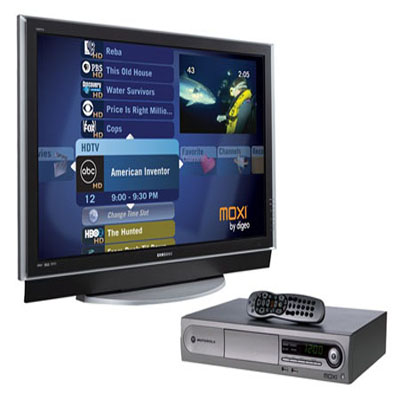
    Hathway plans to expand to Punjab, Hyderabad and Nashik in the second phase for which it will use the Motorola DWDM (Dense Wave Division Multiplexers) technology as the transport carrier solution. It has already used this technology for offering digital services in Pune, by having an underground fibre linkup from Mumbai. For the northern market, the digital headend will be in Delhi while Bangalore will service the southern language states and the western region will be connected from Mumbai as the hub.

    The DWDM technology will enable digital television channels to be carried with Internet Protocol (IP) interface. It will also enable Hathway to carry data and voice, whenever it is ready to offer these services. “We clearly realise that digital is the way forward. We have already invested Rs 1 billion towards this and have the set-top boxes (STBs) with us. The expansion to the cities requires minor additional investments towards fibre links and transport equipment,” says Jayaraman.

    Hathway is also planning to increase its channel offerings for its digital subscribers from 115 to 140 soon. The STBs cost Rs 4,000 but two instalment schemes are also available. Even with this, Hathway has managed to push just over 15,000 STBs in the market.

    Revenue from cable channel operations has remained almost flat this year. The channels earned around Rs 180 million in 2004-05, a source says. CCC, the cable movie channel with a presence in 56 cities, is the top earner. Hathway also has ITV Music and local cable channels for the different cities where it provides cable service.

    “We earn a small profit from the cable channels after amortisation. CCC faces competition from the satellite and other cable movie channels. It is a very competitive arena but we have our own space. We do not have ambitious expansion plans as there is a bandwidth constraint and distribution is expensive. Spreading it on new networks is an issue,” says Jayaraman. CCC is offered to non-Hathway networks as well so that the reach of the channel expands.

    The big focus area is to scale up the broadband business where Hathway enjoys margins as high as 20 per cent. The service is available in nine out of the 11 cities where Hathway has a cable TV presence. The plan is to launch next in Jalandhar, leaving out only Vijaywada from the ambit.

    Hathway has an ambitious plan to double its broadband subscribers. “We want to expand our broadband Internet subscriber base to 100,000 by 2006. We have a market-related pricing and have already introduced a download based scheme. Our broadband packages give the user access to various download limits and applications,” says Jayaraman.

    Though Hathway has corporate clients, the focus is on the retail segment. The broadband business is growing at 30-40 per cent, adds Jayaraman.

    Margins, however, are expected to decline due to pressure on prices with competition emerging from several players. Revenues, though, will increase as the subscriber base expands and the ARPU goes up.

    Carriage or positioning fee has become an important revenue source as broadcasters battle for prime space on cable networks. Market estimates project Hathway to earn around Rs 150 million from this in the current fiscal. Jayaraman, however, refused to comment on this. But, as he says, placement fees are not something upon which the company can base its revenue plans.

    Hathway‘s future growth will depend on how many digital and broadband subscribers it will be able to rope in. Says Jayaraman, “The current business model is not feasible. With the alternative delivery platforms coming in, we will have to compete on the digital space.”