Tag: Jitendra Singh

  • Over eighty tele-education networks established using Edusat between 2004 and 2010

    Over eighty tele-education networks established using Edusat between 2004 and 2010

    NEW DELHI: A total of 83 tele-education networks connecting about 5000 interactive and about 55000 receive only terminals were established with the help of the Edusat satellite between September 2004 and October 2010.

    Parliament was told today by Space Minister Jitendra Singh said the satellite had been planned for demonstrating the capabilities of satellite communication technology for education sector.

    It was launched in September 2004 and supported the educational services till October 2010.
    During this period, many educational transmission experiments were demonstrated using satellite communication networks.

    After October 2010, the tele-education networks are migrated to other communication satellites like INSAT-3C, INSAT-4CR and GSAT-12.

  • Antrix earned Rs 230 crore during 2015-16 through commercial launch services

    Antrix earned Rs 230 crore during 2015-16 through commercial launch services

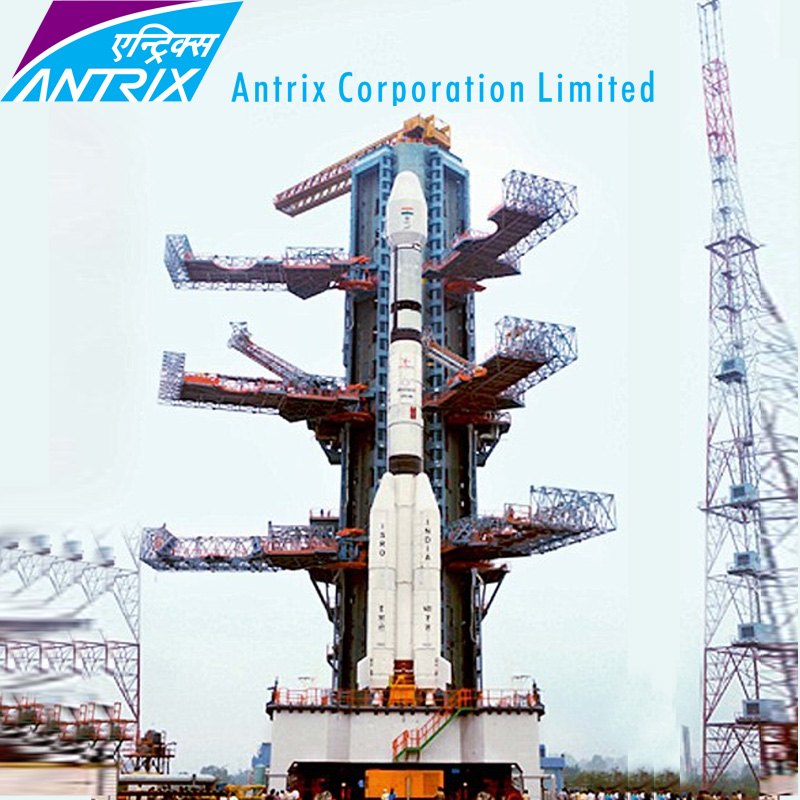
    NEW DELHI: Antrix, the commercial arm of the Indian Space Research Organisation (ISRO), earned revenue of approximately Rs 230 crore during 2015-16 through commercial launch services, which is about 0.6% of the global launch services market.

    The average annual revenue over the last three years according to the published reports available in the public domain on the international satellite market is approximately $200 billion (Rs 13 lakh crore), which includes the launch services market (Rs 0.37 lakh crore), satellite manufacturing (Rs 1.07 lakh crore), ground equipment (Rs.3.85 lakh crore) and satellite services (Rs. 8.17 lakh crore).

    Department of Space Minister Jitendra Singh told Parliament recently that ISRO is providing the launch capacity, when available, for launching satellites on a commercial basis through Antrix Corporation Limited.

    In order to meet the enhanced national requirements for launching satellites for earth observation, communication & navigation, ISRO is taking steps to increase the launch capacity. ISRO will continue to provide the launch capacity, when available, for commercial launch services. Towards stepping up the launch capacity, ISRO is in the process of exploring the possibility of enhanced involvement of Indian industry. Besides meeting the national demand, the industry can explore the opportunities for commercial launch services.

    India joining Missile Technology Control Regime (MTCR) would benefit India’s space development programme in strengthening international cooperation activities in high technology areas with other space faring nations, he said in reply to another question in Parliament.

    This will ease the procurements and supplies of export controlled high/ advanced technology items, components, materials, and equipment from other countries, especially MTCR partner states; and enhance commercial ventures in terms of export of sub-systems, satellites and commercial launch services etc.

    India as a major space faring nation and as a partner state in MTCR could play critical roles in various international fora such as UNCOPUOS, UN Conference on Disarmament (CD) and other space related international fora in major policy decisions relating to space applications, space security topics. India, as a Partner State of MTCR, can take part in the decision making process in ensuring non-proliferation of sensitive space technology related items, which are controlled through a list (called Technical Annex) and reviewed & revised annually through Technical Experts Meetings.

  • Antrix earned Rs 230 crore during 2015-16 through commercial launch services

    Antrix earned Rs 230 crore during 2015-16 through commercial launch services

    NEW DELHI: Antrix, the commercial arm of the Indian Space Research Organisation (ISRO), earned revenue of approximately Rs 230 crore during 2015-16 through commercial launch services, which is about 0.6% of the global launch services market.

    The average annual revenue over the last three years according to the published reports available in the public domain on the international satellite market is approximately $200 billion (Rs 13 lakh crore), which includes the launch services market (Rs 0.37 lakh crore), satellite manufacturing (Rs 1.07 lakh crore), ground equipment (Rs.3.85 lakh crore) and satellite services (Rs. 8.17 lakh crore).

    Department of Space Minister Jitendra Singh told Parliament recently that ISRO is providing the launch capacity, when available, for launching satellites on a commercial basis through Antrix Corporation Limited.

    In order to meet the enhanced national requirements for launching satellites for earth observation, communication & navigation, ISRO is taking steps to increase the launch capacity. ISRO will continue to provide the launch capacity, when available, for commercial launch services. Towards stepping up the launch capacity, ISRO is in the process of exploring the possibility of enhanced involvement of Indian industry. Besides meeting the national demand, the industry can explore the opportunities for commercial launch services.

    India joining Missile Technology Control Regime (MTCR) would benefit India’s space development programme in strengthening international cooperation activities in high technology areas with other space faring nations, he said in reply to another question in Parliament.

    This will ease the procurements and supplies of export controlled high/ advanced technology items, components, materials, and equipment from other countries, especially MTCR partner states; and enhance commercial ventures in terms of export of sub-systems, satellites and commercial launch services etc.

    India as a major space faring nation and as a partner state in MTCR could play critical roles in various international fora such as UNCOPUOS, UN Conference on Disarmament (CD) and other space related international fora in major policy decisions relating to space applications, space security topics. India, as a Partner State of MTCR, can take part in the decision making process in ensuring non-proliferation of sensitive space technology related items, which are controlled through a list (called Technical Annex) and reviewed & revised annually through Technical Experts Meetings.

  • ISRO mulling over using private enterprise for satellite launches

    ISRO mulling over using private enterprise for satellite launches

    NEW DELHI: The Indian Space Research Organzation (ISRO) is considering the possibility of involving Indian industry in a greater role to meet the increased national requirements and possible commercial demand for launch services.

    Discussions are being held with the Indian industry towards formulating a plan & strategy to enhance the capacity and capability of managing the Polar Satellite Launch Vehicle (PSLV) programme on an end to end basis.

    Space Minister Jitendra Singh told Parliament today that ISRO has been pursuing a conscious approach of building up and nurturing the industrial capabilities in the country to maximally support the Indian Space Programme.

    Through appropriate transfer of technology and hand-holding, ISRO is making focused efforts to consolidate and enhance participation of Indian industries for manufacturing and production of space related hardware such as rocket engine & stages, propellant tanks, spacecraft structures, solar panels, thermal control systems, electronic packages etc., required for satellites and launch vehicles.

    A provision exists for private players to operate communication satellites on their own in the country through an established mechanism called Committee for Authorising the establishment and operations of Indian Satellite Systems (CAISS).

  • ISRO mulling over using private enterprise for satellite launches

    ISRO mulling over using private enterprise for satellite launches

    NEW DELHI: The Indian Space Research Organzation (ISRO) is considering the possibility of involving Indian industry in a greater role to meet the increased national requirements and possible commercial demand for launch services.

    Discussions are being held with the Indian industry towards formulating a plan & strategy to enhance the capacity and capability of managing the Polar Satellite Launch Vehicle (PSLV) programme on an end to end basis.

    Space Minister Jitendra Singh told Parliament today that ISRO has been pursuing a conscious approach of building up and nurturing the industrial capabilities in the country to maximally support the Indian Space Programme.

    Through appropriate transfer of technology and hand-holding, ISRO is making focused efforts to consolidate and enhance participation of Indian industries for manufacturing and production of space related hardware such as rocket engine & stages, propellant tanks, spacecraft structures, solar panels, thermal control systems, electronic packages etc., required for satellites and launch vehicles.

    A provision exists for private players to operate communication satellites on their own in the country through an established mechanism called Committee for Authorising the establishment and operations of Indian Satellite Systems (CAISS).

  • Sixteen vans touring states to create awareness about digital and satellite technology

    Sixteen vans touring states to create awareness about digital and satellite technology

    NEW DELHI: A total of sixteen vans are traveling to 34 districts of nine states to introduce one million citizens (10 lakh) to services only possible via interplay of Satellite Technology along with other existing Broadband technologies, such as optical fibre, mobile, cable, etc. The vans were flagged off by Communications and Information Technology minister Ravi Shankar Prasad last week as part of the Digital India Outreach Campaign.

    The Broadband India Forum (BIF) has acknowledged Government efforts to deliver connectivity and Broadband to remote and difficult-to-access parts of India.

    The 2nd International India Satcom -2016 summit organized by the Forum on 7 June is aimed at showcasing the scope of catalysing achievement of socio-economic objectives with the use of innovations in Satellite Communications technology.

    Inviting the delegates to the meet, Forum President TV Ramachandran said: “Digital India, Make in India and Broadband for All will require integration of many parallel technologies that have high potential but are less understood, such as Satellite Communication (Satcom), to achieve a dream that’s close to Prime Minister Narendra Modi’s heart. Integration will expedite penetration of affordable Broadband in India, particularly in remote, rural regions. BIF has always propagated enhancement and integration of new technologies that can expedite penetration of affordable Broadband in India to complement other Broadband technologies, such as optical fibre, mobile, cable, etc. Our objective through this summit is to bring all Broadband technology players on board to support the Digital India initiative.”

    The meet is focusing on the theme ‘Broadband for All using NextGen Satellite Technologies’. Dr.Jitendra Singh, minister of State for the Ministry of Development of North East Region, Prime Minister Office, Personnel, Public Grievances & Pensions, Department of Atomic Energy and Department of Space is the Chief Guest.

    The event is supported by The Department of Electronics and Information Technology (DeitY), C and IT Ministry.

    BIF said sector reforms are expected to bring in FDI worth $2-5 billion over the next decade. Liberalisation and reforms of satellite communication policy harbours potential for successful deployment of Broadband under Digital India for all 2,50,000 Gram panchayats in just 12 to 18 months.

    The summit will witness deliberations on the viability of Satellite Communications for Digital India and possible Next Gen Satcom Innovation & Applications by senior members from the Government, including DoT, TRAI, DoS, Niti Aayog, Dept. of Industrial Policy & Promotion (DIPP), DeitY and Indian Council for Research on International Economic Relations (ICRIER) departments and representatives from Leading Satellite Operators, VSAT Service Providers, Telecom Service Providers, Internet Service Providers, Technology Providers, VSAT Manufacturers, Cable Service Providers, User Organisations (Banks, Oil & Gas, Defence, Security Forces etc), DTH Service Providers, and other allied Industries.
  • Sixteen vans touring states to create awareness about digital and satellite technology

    Sixteen vans touring states to create awareness about digital and satellite technology

    NEW DELHI: A total of sixteen vans are traveling to 34 districts of nine states to introduce one million citizens (10 lakh) to services only possible via interplay of Satellite Technology along with other existing Broadband technologies, such as optical fibre, mobile, cable, etc. The vans were flagged off by Communications and Information Technology minister Ravi Shankar Prasad last week as part of the Digital India Outreach Campaign.

    The Broadband India Forum (BIF) has acknowledged Government efforts to deliver connectivity and Broadband to remote and difficult-to-access parts of India.

    The 2nd International India Satcom -2016 summit organized by the Forum on 7 June is aimed at showcasing the scope of catalysing achievement of socio-economic objectives with the use of innovations in Satellite Communications technology.

    Inviting the delegates to the meet, Forum President TV Ramachandran said: “Digital India, Make in India and Broadband for All will require integration of many parallel technologies that have high potential but are less understood, such as Satellite Communication (Satcom), to achieve a dream that’s close to Prime Minister Narendra Modi’s heart. Integration will expedite penetration of affordable Broadband in India, particularly in remote, rural regions. BIF has always propagated enhancement and integration of new technologies that can expedite penetration of affordable Broadband in India to complement other Broadband technologies, such as optical fibre, mobile, cable, etc. Our objective through this summit is to bring all Broadband technology players on board to support the Digital India initiative.”

    The meet is focusing on the theme ‘Broadband for All using NextGen Satellite Technologies’. Dr.Jitendra Singh, minister of State for the Ministry of Development of North East Region, Prime Minister Office, Personnel, Public Grievances & Pensions, Department of Atomic Energy and Department of Space is the Chief Guest.

    The event is supported by The Department of Electronics and Information Technology (DeitY), C and IT Ministry.

    BIF said sector reforms are expected to bring in FDI worth $2-5 billion over the next decade. Liberalisation and reforms of satellite communication policy harbours potential for successful deployment of Broadband under Digital India for all 2,50,000 Gram panchayats in just 12 to 18 months.

    The summit will witness deliberations on the viability of Satellite Communications for Digital India and possible Next Gen Satcom Innovation & Applications by senior members from the Government, including DoT, TRAI, DoS, Niti Aayog, Dept. of Industrial Policy & Promotion (DIPP), DeitY and Indian Council for Research on International Economic Relations (ICRIER) departments and representatives from Leading Satellite Operators, VSAT Service Providers, Telecom Service Providers, Internet Service Providers, Technology Providers, VSAT Manufacturers, Cable Service Providers, User Organisations (Banks, Oil & Gas, Defence, Security Forces etc), DTH Service Providers, and other allied Industries.
  • Government launches mobile app to enable citizens to file complaints

    Government launches mobile app to enable citizens to file complaints

    NEW DELHI: Citizens can now register their complaints and even keep track of action taken on a new mobile launched by the Personnel, Public Grievances & Pensions Ministry.


    The app launched by Minister Jitendra Singh is for the Centralized Public Grievances Redress & Monitoring System (CPGRAMS) portal of the Department of Administrative Reforms and Public Grievances (DARPG). 

    A further step has been taken by providing M-access to citizens through mobile phones. A Quick Response (QR) code has been provided on the pg-portal, which can be scanned on to the smart phone after which grievances can be sent from the smart phone directly on to CPGRAMS. 

    Singh said this is another step towards translating Prime Minister Narendra Modi’s vision of “ART of Governance” as spelt out by him, with A for Accountability, R for Responsibility and T for Transparency, forming the bedrock of the Government. He said the goal is that the Administration should be citizen-centric, transparent and responsive. 


    Singh hoped the common public will make maximum use of the mobile app since the mobile phone has emerged as the easiest way of communication from anywhere across the country. 

    DARPG and Department of Pensions & Pensioners’ Welfare Secretary Devendra Chaudhary said the mobile app will not only allow lodging of grievances, but the people can also track the status of the redress of their grievance. 


    The DARPG is also carrying out analysis of the grievances and a systematic response is being worked out on how best to address the grievances, he added. 

    The Mobile App for the CPGRAMS is another innovative initiative of the DARPG, the nodal agency to formulate policy guidelines for citizen-centric governance in the country, redress of citizens’ grievances, being one of the most important initiatives of the department. The DARPG has been making endeavours to bring excellence in public service delivery and to redress grievances of citizens in a meaningful manner by effectively coordinating with different Ministries and Departments of the Government and trying to eliminate the causes of grievances.

  • Space Department launches augmented reality app for Android

    Space Department launches augmented reality app for Android

    NEW DELHI: An augmented reality application – ‘Sakaar’ – which is a live direct view of a physical, real-world environment whose elements are augmented (or supplemented) by computer-generated 3D models, animations, videos etc. has been launched by the Government.


    DECU-ISRO has developed this application for Android devices, which was launched by Minister of State for Atomic Energy and Space Jitendra Singh.


    The technology enhances the user’s current perception of reality. Augmentation is in real time and the information is overlaid on the live view of the device’s camera. Essentially, AR requires three elements: Android device with back camera, AR application, AR Markers. The multimedia content, which is embedded in the Sakaar app, is generated with the support of multimedia and editing facilities of DECU-ISRO.


    Sakaar consists of 3D models of MOM, RISAT, rockets (PSLV, GSLV Mk-III); videos of INSAT 3D-predicting cyclones, GSLV D5/Cryo, Mars Orbiter Mission (MOM) orbit insertion, launch video of MOM, 360 degree animated view of MOM; Anaglyph of Mars surface.


    The sakaar app is loaded on webpage with the URL: http://www.sac.gov.in/SACSITE/sakaar/index.html. User can scan the QR code using a QR code reader on the device for downloading the app.

  • Eleven communication satellites operational; six more under development: Govt

    Eleven communication satellites operational; six more under development: Govt

    NEW DELHI: Eleven Indian satellites including four for communications were successfully launched during the last three years between January 2012 and February 2015, apart from the launch of 13 foreign satellites.


    Out of these, the expenditure incurred on launching the Indian satellites being used for communications in the last three years was pegged at Rs 1656.11 crore. The breakup is as follows: GSAT-14: Rs 173 crore, GSAT-10: Rs 406.82 crore, GSAT-7: Rs 495.29 crore and GSAT-16: Rs 581 crore.


    There are a total of eleven communication satellites out of the 27 satellites that are operational in the country currently.


    These are: INSAT-3A, INSAT-3C, INSAT-4A, INSAT-4B, INSAT-4CR, GSAT-7, GSAT-8, GSAT-10, GSAT-12, GSAT-14 and GSAT-16.


    A total of six communication satellites namely GSAT-15, GSAT-9, GSAT-6, GSAT-6A, GSAT-7A and GSAT-11, are being developed indigenously as part of the XII Five Year Plan (2012-17).


    A total of 95 Ku-band (a part of K band) transponders onboard indigenous communication satellites are being utilised for various communication applications.


    Minister of State in the Prime Minister’s office Jitendra Singh told Parliament that the government is also working on resolving the connectivity issues in the hilly areas.