Tag: Jiostar

  • Jiostar fields big brands for Women’s World Cup 2025

    Jiostar fields big brands for Women’s World Cup 2025

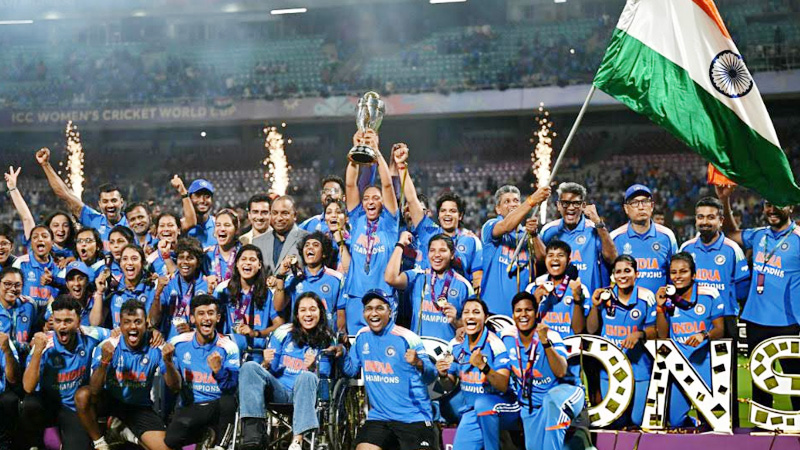
    MUMBAI: Cricket isn’t the only thing hitting boundaries this season, brands are too. As the ICC Women’s World Cup 2025 kicks off on 30th September, broadcaster and streaming partner Jiostar has unveiled a sponsorship squad as glittering as the trophy itself.

    From Google’s tech powerhouses: Gemini, Pay, Android and Pixel, to household giant HUL’s Rexona, banking behemoth SBI, and luxury authority IGI, the line-up underscores how women’s cricket has become the big-ticket stage for global and Indian brands alike. More names are set to join the roster in the weeks ahead.

    “We are thrilled to welcome this incredible mix of sponsors,” said JioStar chief revenue officer-sports Anup Govindan. “Each brings unique strengths and a shared vision to elevate women’s cricket worldwide. With these marquee partners, the tournament will inspire millions and open up high-impact engagement opportunities.”

    For IGI, the tie-up is more than branding. “Just as every diamond is shaped under pressure to shine, so too are these exceptional athletes,” said IGI’s global CEO Tehmasp Printer. “This partnership celebrates brilliance, authenticity, and women embracing their true shine on and off the field.”

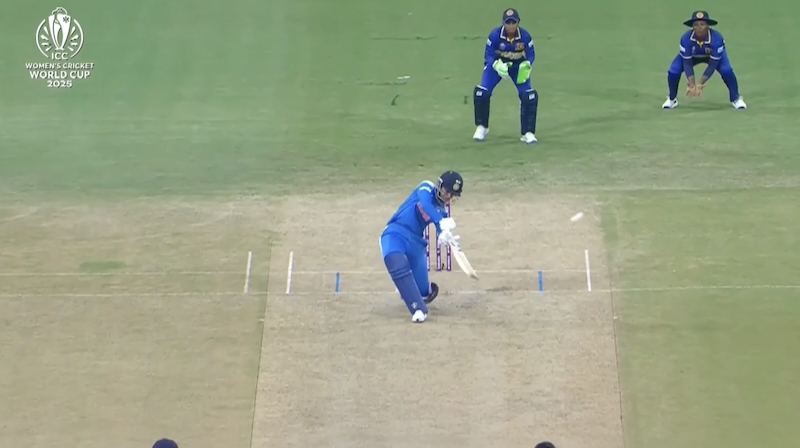
    Running till 2 November, the World Cup brings together the best of women’s cricket, with India opening its campaign against Sri Lanka. Fans can watch every ball live on Star Sports or stream exclusively on Jiohotstar.

    This festive season, expect not just fours and sixes, but brand fireworks too.

  • ICC women’s cricket gets the full broadcast treatment

    ICC women’s cricket gets the full broadcast treatment

    MUMBAI: The ICC Women’s Cricket World Cup 2025 is getting the full broadcast bells-and-whistles treatment, with every match set for live production on ICC.tv with the  tournament kicking off today on 30 September  across five venues in India and Sri Lanka.

    The production, backed by JioStar as production services partner and NEP supplying kit, is serving up a 30-minute pre-game show, in-depth innings-break analysis and comprehensive post-match wrap-ups—the full monty for cricket fans worldwide.

    ICC.tv, working with JioStar, is producing vertical, mobile-first coverage for select games, catering to the thumb-scrolling generation.

    On the tech front, Hawk-Eye’s Smart Replay system is powering the Decision Review System (DRS) whilst also providing Piero graphics for tactical insights and technical analysis. WTVision is handling scoring graphics, collaborating with Cricviz for deep cricket data and analytics. Quidich Innovation Labs rounds out the team with player tracking services and Field 360°, a dynamic virtual field model that showcases evolving fielding positions in real time.

    The tournament’s commercial clout underscores women’s cricket’s surging popularity. The broadcast is reaching audiences via Star Sports, Disney+ Hotstar, Sky Sports, SuperSport, Willow, Prime Video, CricLife, PTV Sports, Ten Sports, ESPN, Sky NZ, TSM, ATN and TV1—a global footprint that would have been unthinkable a decade ago.

    Emirates, Aramco and DP World have signed on as premier partners, whilst Coca-Cola, Sobha, Rexona and Google have joined as global partners. Royal Stag, FanCraze and Near round out the commercial roster as official supporters, with Cricket4Good backing the tournament’s social responsibility initiatives.

    The tournament marks another step forward in broadcasting women’s cricket with production values matching the men’s game—and sponsors queuing up to be part of it.

  • IBC 2025 brings the future of media to Amsterdam

    IBC 2025 brings the future of media to Amsterdam

    AMSTERDAM: Amsterdam’s RAI convention centre will become the global capital of media and technology from 12–15 September when IBC 2025 opens its doors to broadcasters, streamers, studios and tech firms from around the world.

    The show will run 10:30–18:00 on opening day, 09:30–18:00 across the weekend and close at 16:00 on Monday. Organisers have built the edition around the theme of innovation, with a newly minted Future Tech hub in Hall 14. Here visitors can test emerging tools such as artificial intelligence, cloud-native production workflows, augmented reality, virtual sets, immersive audio-visual formats and sustainability-driven hardware.

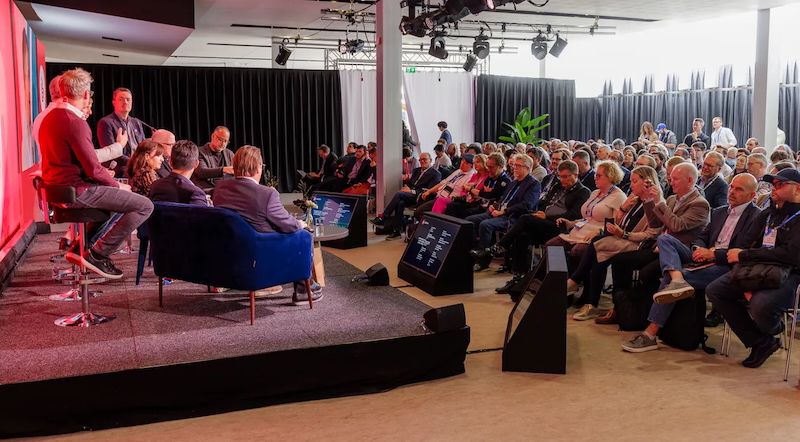
    A three-day conference, from 12–14 September, features more than 300 speakers drawn from major broadcasters, global streaming platforms, technology vendors and creative studios. Panels will probe platform evolution, revenue models, AI integration and the next wave of interactive storytelling. JioStar’s Prashant Khanna is one of the headlined speakers being featured at IBC this year. 

    Elsewhere, the IBC Innovation Awards will celebrate cutting-edge deployments, while the Accelerator Media Innovation Programme offers collaborative trials of experimental tech. Free-to-attend theatres and showcase stages promise continual demos and debate on content delivery, rights management, talent development and the fast-changing business landscape.

    Beyond the exhibition floor, organisers are pitching IBC 2025 as a working laboratory: a place where engineers, producers and executives can handle new kit, swap ideas and chart the next phase of global media transformation.

  • JioStar’s ‘jersey wahi toh jazba wahi’ breaks gender norms, champions ‘Women in Blue’

    JioStar’s ‘jersey wahi toh jazba wahi’ breaks gender norms, champions ‘Women in Blue’

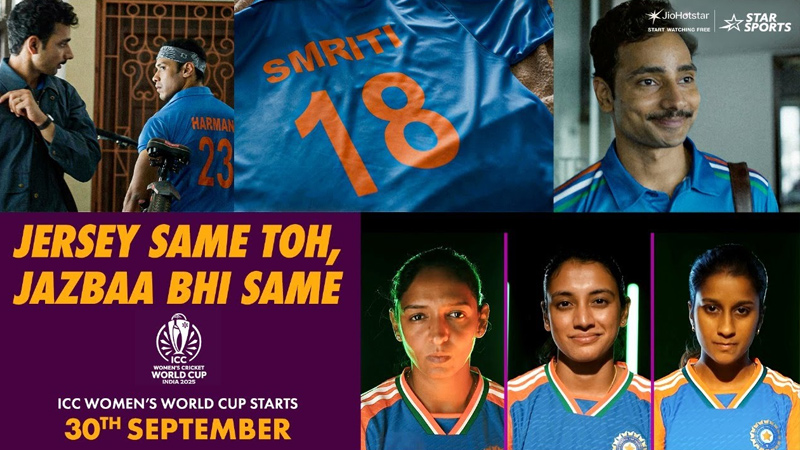
    MUMBAI: JioStar’s new women’s WC ’25 campaign film opens with the protagonist asking his partner a slightly awkward question, “But is it necessary to wear the women’s jersey?” after she suggests he put one on for a match screening at a friend’s place. His partner, exasperated by the lingering stigma, looks on in dismay, pitying the shame that still surrounds supporting women in cricket. Undeterred, he steps out the door wearing the jersey, hiding it beneath a jacket.

    On his way, he notices fellow Indians proudly donning women cricketers’ jerseys, from colleagues to even the office lift operator, who delivers the knockout line, “Virat khelein ya Smriti, jeetega toh India hi na” (whether it’s Virat or Smriti, India will win anyway). The moment sparks pride as the protagonist ditches the jacket and walks into the office with his Smriti Mandhana jersey proudly on display.

    With the ICC women’s cricket world cup India 2025 just around the corner, JioStar’s “Jersey Wahi Toh Jazba Wahi” (conceptualised by Bubblewrap Films) celebrates the unifying power of the India jersey. It sends a clear message: no gender norms can diminish the pride of wearing blue, and the joy of support far outweighs the question, “Who watches women’s cricket anyway?”  

    JioStar, head of viewership and monetisation initiative – sports, Siddharth Sharma said, “This tournament is more than cricket. It is about rewriting history and inspiring a generation. Our endeavour is to channel this moment into a campaign that unites the country, reminding fans to take equal pride in every Indian jersey.”

    The ICC women’s cricket world cup 2025, hosted across India and Sri Lanka, kicks off on 30 September in Guwahati with India facing co-host Sri Lanka. With matches lined up against Pakistan, Australia, England and others, the women in blue are chasing a trophy that has long eluded them.

    With the roar of home crowds and the momentum of this campaign, JioStar aims to capture a cultural shift: cricket pride is not about gender, it is about the jersey and every fan who wears it.

  • JioStar sparks ad revolution with Moment.AI that feels the right moment

    JioStar sparks ad revolution with Moment.AI that feels the right moment

    MUMBAI: When it comes to ads, timing really is everything and JioStar wants brands to nail the moment, not miss it. The company has unveiled Moment.AI, an advanced contextual advertising tool designed to catch viewers right when their emotions are at their peak.

    Built on the philosophy of own the feeling, own the moment, the tech marvel scans video content using artificial intelligence and machine learning to decode over 600 emotions and objects from smiles and celebrations to hugs and family scenes. Instead of clumsy interruptions, brands can now slip into stories exactly when the heartstrings are tugged or the laughter rolls.

    JioStar head of revenue for entertainment Mahesh Shetty called it a breakthrough: “Moment.AI integrates messaging at natural points of emotional impact, making campaigns more effective for brands and engaging for viewers.”

    The system is anchored on the R.A.C.E. framework reach, attention, connection, and effectiveness ensuring ads deliver more than just eyeballs. Early studies already show a 34 per cent uplift in advertising effectiveness compared to conventional placements.

    Moment.AI isn’t confined to one category. Whether it’s jewellery during a proposal, skincare in a mirror moment, or snacks at a family gathering, the platform is designed to work across sectors like handsets, gifting, food and beverages, home décor, fashion, and festivals making every placement feel native.

    Currently live across JioStar’s Entertainment network and gearing up to roll out on JioHotstar, the innovation is pitched as a new era for contextual advertising, blending technology with consumer insight.

    For brands, the message is simple: stop gate-crashing the moment start owning it.

  • Kunal Gaur takes the leap from JioStar to launch his own digital venture

    Kunal Gaur takes the leap from JioStar to launch his own digital venture

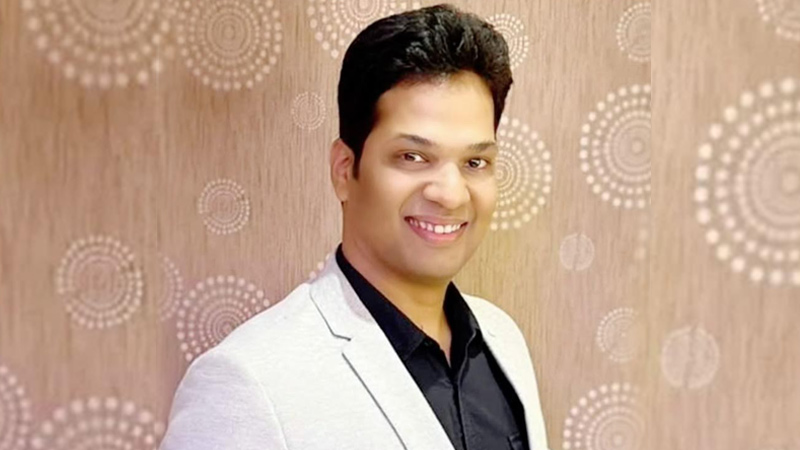
    MUMBAI: From streaming giants to star power, Kunal Gaur has played the numbers game across India’s biggest media houses – and now, he’s ready to bet on himself. The seasoned executive has stepped down from his role as Business Commercial Lead at JioStar to launch his own digital marketing enterprise.

    Armed with over 20 years of experience across media, entertainment, and finance, Gaur’s career reads like a who’s who of the industry. At Viacom18, he spent four years as Chief Commercial Officer, steering spends for channels like Colors, MTV, Sports18, Cineplex, and OTT platform JioCinema. Before that, he was Netflix India’s Director of Production Finance, working on 17 series, 14 films, and 20 development projects, from Sacred Games to Extraction.

    Nearly a decade at Star India and Hotstar saw him negotiating content deals, licensing formats, and even leading commercial talks for Star Sports’ sprawling 12-studio project. His early years at PwC sharpened the financial rigour that has since underpinned his media journey.

    At JioStar, Gaur oversaw commercials across Digital, Creator, Marketing, Talent, and Technology driving efficiencies and shaping strategic partnerships. Now, with his new venture, he’s blending that financial expertise with media know-how to build a future-focused digital marketing company designed for India’s evolving landscape.

    “Finance may have been my foundation, but creativity and innovation are my growth engines,” Gaur quipped while announcing his entrepreneurial leap.

    As the industry braces for another wave of digital disruption, all eyes will be on whether Gaur can turn his decades of boardroom wins into startup success.
     

  • Jiostar strikes gold at Gema India with 32 wins across categories

    Jiostar strikes gold at Gema India with 32 wins across categories

    MUMBAI: Jiostar didn’t just shine at this year’s Gema India Awards, it glittered. The entertainment marketing giant bagged an impressive 32 metals, including 15 golds and 17 silvers, making it one of the night’s biggest winners.

    The victories cut across every corner of the creative spectrum, from promos and video campaigns to craft, design, social media and branded partnerships. Whether it was MTV Beats’ cheeky Jassi and Rinku promo, the stylish Diwali Diya animations, or the thought-provoking One for Change series, Jiostar proved it could deliver work that entertains, inspires, and breaks the clutter.

    Formerly known as Promax, the global entertainment marketing academy of arts & sciences (Gema) has been celebrating cutting-edge TV and streaming marketing for 60 years. Winning at Gema is regarded as one of the highest accolades in entertainment marketing, and Jiostar’s haul cements its reputation as a creative powerhouse.

    “These awards underscore the firepower of our teams and JioStar’s leadership in entertainment marketing,” said a Jiostar spokesperson. “It is a strong testament to our ability to set new benchmarks and shape the future of entertainment storytelling.”

    From scripting (Showtime: kjo’s biopic) and sound design (Thunder thighs film festival) to bold key visuals (Lootere) and heartfelt social good campaigns, JioStar walked away with recognition across the board.


  • BGMS levels up with Rs 1.5 crore prize and biggest format shake-up yet

    BGMS levels up with Rs 1.5 crore prize and biggest format shake-up yet

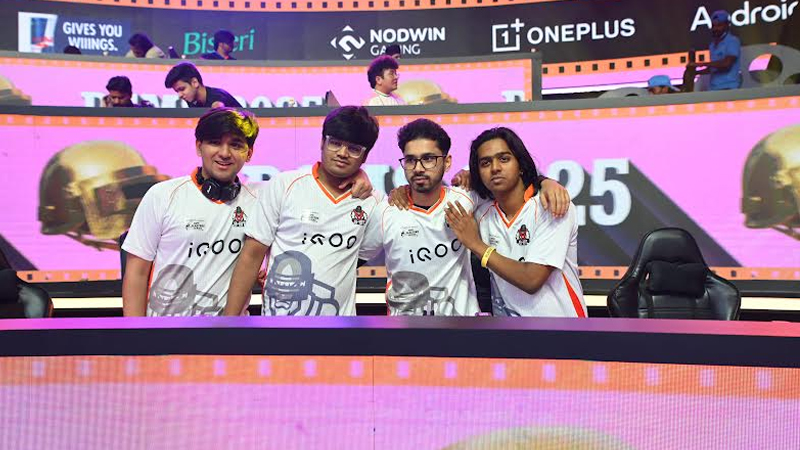
    MUMBAI: Drop in, squad up, and watch the leaderboard go wild Battlegrounds Mobile India Masters Series (BGMS) is back with a bang. Nodwin Gaming’s flagship tournament, co-powered by Oneplus and Android, returns for Season 4 from 18 August to 14 September, with matches airing live daily on Star Sports Khel and JioStar between 5:00 pm and 8:00 pm. With a prize pool of Rs 1.5 crore and a bold new dual-tier structure, this year’s edition promises to be the most inclusive yet.

    For the first time, viewers will get a multi-cam broadcast, one main stream, a dedicated map cam, plus four top-team cams that spotlight key players. From next week, player cams will zoom in on rising stars, giving fans an intimate look at gameplay. On the competition front, 24 pro teams will slug it out in the BGMS Masters Series, while another 24 squads including four all-women line-ups battle in the Challenger Series. The top four Challenger squads will advance to the playoffs, joining the lower-ranked Masters teams in a fight to secure one of 16 coveted semifinal slots.

    “BGMS has always been more than a tournament; it’s a cultural phenomenon… From grassroots to greatness, from campus halls to national TV. This is BGMS like you’ve never seen before,” said Nodwin Gaming co-founder & MD, Akshat Rathee welcoming partners OnePlus, Android, TVS and Bisleri onboard.  

    Adding to the thrill are returning mechanics like the Powerplay (double finish points in the first zone), Impact Player (weekend finish points doubled for one chosen star), and the Bounty System (10 bonus points for eliminating the daily target team from 21 August to 7 September). These features, paired with back-to-back LAN events running from noon to 8:00 PM, ensure fans get wall-to-wall action both on ground and on screen.

    “BGMS continues to break new ground in Indian esports, and we at JioStar are proud to bring this cultural movement to screens across the country,” added JioStar head of audience engagement and viewership and monetization initiatives Siddharth Sharma. “The expanded format, diverse participation and high-quality gameplay are exactly the kind of dynamic, youth-driven content we aim to champion.”  

    Season 3 of BGMS pulled in 145.5 million views across platforms, making it India’s most-watched esports tournament. With Season 4 airing on both television and JioStar for the first time, and inclusivity at its heart, BGMS is no longer just an esports league, it’s a cultural festival where campus hopefuls, pro gamers, and even all-women squads share the same battleground.

  • Revolving doors keep spinning in television as executives flee for calmer pastures

    Revolving doors keep spinning in television as executives flee for calmer pastures

    MUMBAI: The Indian media and entertainment business is experiencing something of a convulsion. At the heart of the storm sits television, a medium once considered impregnable, now rattled by both economic pressures and shifting consumption patterns. Senior and mid-level executives are walking out of plush offices at an unprecedented rate, turning resignation letters into the industry’s hottest commodity. The revolving doors at general entertainment channels, factual broadcasters and news networks have scarcely stopped spinning.

    Take the case of Rahul Kanwal, who after more than 16 years of high-profile editorial leadership quit India Today TV to join NDTV, in a move that shocked newsroom insiders. Or Ajit Varghese, the revenue chief at JioStar, who traded the corporate heft of a giant for partnership status at Madison, Sam Balsara’s three-and-a-half-decade-old agency. Meanwhile, Ashish Sehgal, a towering presence at Zee Entertainment for two decades and long seen as a confidant of Subhash Chandra and Punit Goenka bowed out just last week, a departure many in the industry still consider unimaginable.

    The Indian entertainment industry has been undergoing a leadership shake-up, particularly at Sony Pictures Networks India (SPNI). Veteran executive Neeraj Vyas exited after decades with the broadcaster to pursue entrepreneurial ambitions, signalling a personal pivot. Leena Lele Dutta, who oversaw the Kids and Animation business, is also stepping down, with Ambesh Tiwari set to replace her—a move that reflects SPNI’s portfolio restructuring. At the same time, the network bolstered its programming muscle by onboarding Nimisha Pandey as Programming Head at Sony SAB, underlining a renewed focus on fresh content creation.

    At Zee Media, a similar churn has unfolded. Manish Kalra and Archana Anand departed from Zee5 amid the platform’s ongoing strategy reset, while Mona Jain, Chief Revenue Officer, stepped down in August, citing industry-wide advertising pressures. Leadership realignment continued with Karan Abhishek Singh taking over as CEO, succeeding Abhay Ojha. These shifts highlight both the turbulence caused by stalled merger talks and the urgent need for sharper digital and ad revenue strategies.

    The news broadcasting sector has also witnessed high-profile exits. Avinash Pandey, CEO of ABP Network, resigned after more than two decades, stating personal reasons and the desire for a new professional chapter, with Sumanta Datta stepping in as his successor. MK Anand, CEO of Times Network, retired after leading the group through market headwinds, paving the way for Varun Kohli, who joined as COO to drive growth. Meanwhile, industry veteran Bobby Pawar shifted gears by joining News18 Studio as a creative consultant, reflecting the increasing importance of branded storytelling and creative content partnerships in newsrooms.

    The exits stretch beyond individual cases. Varun Kohli, who lasted barely a year as chief executive of Times Now, is gone. Aditya Raj Kaul, a stalwart of TV9, has crossed over to NDTV. At Warner Bros Discovery, Uttam Pal Singh, who spearheaded kids’ programming, resigned suddenly earlier this year, followed by Azmat Jagmat, another senior name. And in a particularly symbolic shift, Sanjog Gupta, head of sports at JioStar, has left to take up what one insider calls “a less bruising role” at the International Cricket Conference.

    What explains this exodus? A cocktail of pressures, say industry watchers. “Some of the folks are being let go on account of job redundancies,” observes one long-time media consultant. The wave of mergers and acquisitions JioStar’s consolidation, Zee’s attempted tie-ups, and the global reorganisations at Warner Bros Discovery has created overlapping functions. Where there are two people for one chair, one has to go.

    But redundancies only partly explain the malaise. The sharper truth, argue observers, lies in economics. Television revenues are under siege. Ad growth has slowed dramatically, with TAM Media data showing a 10 per cent decline in the first half of the year. Broadcasters, desperate to offset the slide, are demanding steeper targets from revenue heads and programming chiefs. “The expectations are unreasonable,” says another insider. “Advertisers are spoiled for choice, streaming platforms are eating into budgets, and yet top managements are chasing revenue hikes that are simply not possible. The stress is unbearable.”

    Increments, too, have dried up. Senior executives accustomed to annual rises and bonuses now find themselves fighting merely to hold ground. Worse still, broadcasters have been launching streaming services of their own almost all advertising-driven which has only spread resources thinner and pushed teams into even more brutal competition for a shrinking pool of ad dollars.

    Not all departures are sackings; some are voluntary retreats. As one industry observer puts it: “Executives are not just quitting jobs, they’re choosing health over hypertension. The rat race is too costly.” Indeed, several departures from Sanjog Gupta’s exit to ICC, to executives slipping into agencies or advisory roles bear the hallmark of a search for relative calm.

    Macro forces are compounding the gloom. With Russia’s war in Ukraine dragging on, Israel and Palestine locked in fresh conflict, and US president Donald Trump slapping stiff tariffs on Indian goods, global instability is feeding into local advertising budgets. Brands, particularly multinationals, are cautious, trimming campaigns and deferring big spends. “Belt-tightening will only intensify in the second half of the year,” warns a veteran media planner. “Blood baths are going to continue. Expect more resignations, more forced exits. The churn is far from over.”

    For now, television in India is still a business of scale: hundreds of millions watch every day, advertising still contributes the lion’s share of broadcaster revenues, and regional channels continue to proliferate. But for the men and women running the show, the glamour has dimmed. The executive suite, once the ultimate perch, has become a revolving door. And the more it spins, the less likely it seems to stop anytime soon.


  • Reliance AGM: Mukesh Ambani unveils JioHotstar’s new AI-led features

    Reliance AGM: Mukesh Ambani unveils JioHotstar’s new AI-led features

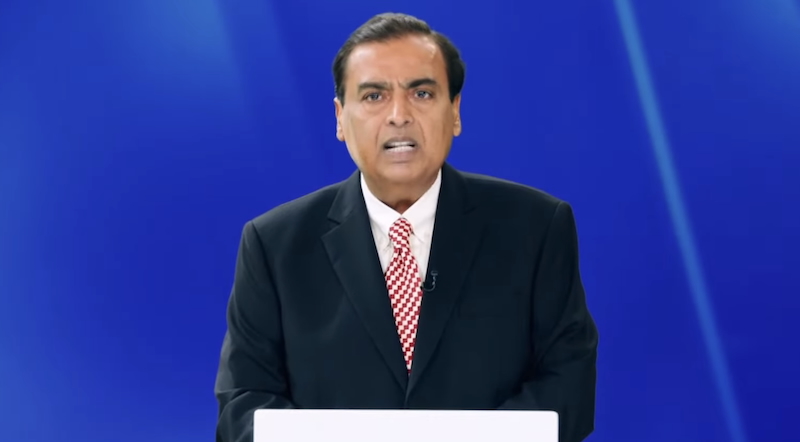
    MUMBAI: Reliance Industries chairman Mukesh Ambani  declared at the firm’s annual general meeting held today that JioStar has reshaped India’s media landscape within months of launch. The media and entertainment arm now boasts over 3.2 lakh hours of programming—six times more than its nearest rivals—with 30,000 hours added annually.

    The JioHotstar app has surged to 600m users in just three months, including 75m connected TVs. With 300m paying subscribers, Ambani claimed it has become the world’s second-largest streaming platform, achieved entirely in India. Reliance also commands a 34 per cent share of India’s TV market, equal to the next three networks combined.

    To cement its lead, Ambani unveiled a trio of AI-driven features. Riya, a voice-enabled assistant, promises effortless content discovery across shows, films and sports. Voice Print uses AI voice cloning and lip-sync to let stars “speak” in viewers’ own languages without losing authenticity. And JioLenZ offers multiple, personalised viewing options at the click of a button.

    “We have created an experience that combines the best of content, software and AI,” said Ambani. “JioStar will continue to expand across platforms and geographies as we serve a billion screens.”