Tag: Jio

  • BSNL Bharat Fiber revises rates to take on Jio GigaFiber’s broadband plans

    BSNL Bharat Fiber revises rates to take on Jio GigaFiber’s broadband plans

    MUMBAI: BSNL has decided to revise its broadband plans anticipating the wave that Reliance Jio’s GigaFiber is expected to bring. Two of Bharat Fiber service plans have seen an increase in price where benefits have been increased.

    The first plan of Rs 777 has been providing 500 GB per month but in the revised plan will give 600 GB a month while the price has been increased to Rs 849 a month. The speed has been retained at 50 Mbps but after using up the data limit, it goes down to 2 Mbps.

    In the second plan, subscribers will get 55 GB as opposed to 50 GB with a speed of 100 Mbps which goes down to 4Mbps after using up the limit. The price of this plan has gone up from Rs 3999 to Rs 4499.

    BSNL’s aim is to get more people to subscribe to its service. Reliance Jio, it has been rumoured, will offer plans for Rs 600 and provide 100 GB data a month at a speed of 50 Mbps. In addition, they will also get free calling on the landline service and a Jio Home TV subscription with 600 TV channels.

  • Jio GigaFiber to cost Rs 600 a month for 50 Mbps: Reports

    Jio GigaFiber to cost Rs 600 a month for 50 Mbps: Reports

    MUMBAI: The upcoming Jio GigaFiber broadband service has been the star of the Indian tech scene ever since it was launched under the public beta mode. As per reports, the base plan will offer speeds of 50Mbps and will be available for Rs 600 per month. The 100Mbps plan that has been available to Preview subscribers is expected to cost Rs 1000 per month. This will enable GigaFiber to gain a huge advantage over rival operators and draw more subscribers. A few months ago, the Triple Play Plan was also revealed costing Rs 600 per month and offering 100 GB data per month at 100Mbps speed. Jio is also likely to provide additional access to Jio’s HomeTV service which is expected to be its foray into the DTH sector. It will also offer access to a landline connection which will enable free voice service. Initially, Jio had only one plan that offered a 100Mbps connection under the preview offer in which the users would have to pay Rs 4500 as security deposit and they could access data for free. However, a few months ago, many subscribers reported that they were getting the GigaFiber connection with a security deposit of Rs 2500. With this plan, subscribers are only able to get speeds of 50Mbps and are restricted to a single-band router. Jio hasn’t declared the official prices yet, but according to reports many are expecting GigaFiber to be extremely affordable, undercutting all existing broadband operators with a strong pricing strategy. Reliance is expected to officially announce its plans within a few weeks.

  • RIL likely to infuse Rs 20,000 cr in Reliance Jio

    RIL likely to infuse Rs 20,000 cr in Reliance Jio

    MUMBAI: Mukesh Ambani-led Reliance Industries Ltd (RIL) is likely to infuse Rs 20,000 crore in Reliance Jio to boost its broadband and 5G services. As per a Mint report, Reliance Jio will issue 4 billion non-cumulative optionally convertible preference shares to its parent at Rs 50 each for cash.

    “The capital would be used to expand operations of Reliance Jio. The non-cumulative optionally convertible preference shares carry an interest rate of 9 per cent," Mint report said citing a source. Jio has built a subscriber base of 306.7 million in a very short span of time.

    An analyst at a domestic brokerage said that capital requirement for the telecom sector will stay high due to the constant infrastructure upgradation and the proposed 5G expansion. He added that Jio is now focused on reaching out to the country’s underserved homes and enterprise connectivity market.

    RIL has an outstanding debt of more than Rs 2.87 trillion as of 31 March which increased by Rs 69,000 crore during the year due to investments in Jio. The telco giant has decided to transfer its fibre and tower arms to two infrastructure investment trusts (InvITs) – Digital Fibre Infrastructure Trust and Tower Infrastructure Trust to cure debt.

    “In our view, the InvIT has effectively allowed RIL to replace ₹710 billion of external debt with very-long-term (20-year) money and thereby remove any refinancing need on this amount of debt. It also gives more balance sheet flexibility and allows RIL to further increase spending across its consumer business if it chooses to do so,” said an earlier JPMorgan report as quoted by Mint.

  • Jio Gigafiber tops Netflix report on best internet speeds

    Jio Gigafiber tops Netflix report on best internet speeds

    MUMBAI: Reliance Jio Gigafiber has topped the list of internet service providers (ISPs) with the highest speed, according to a report by Netflix. In the month of February, it had a speed of 3.61 mbps beating rivals Airtel, Spectranet and 7 Star Digital.

    Since its launch in September 2018, Jio has consistently maintained its pole position in the chart giving speeds above 3.41 mbps. The report is released by Netflix to show which provider can give the best viewing experience for its videos.

    After Jio, 7 Star Digital gave a speed of 3.43 mbps, Spectranet with 3.34 mbps and Airtel with 3.29 mbps. Some of the other bigger players such as Hathway, ACT Fibernet, MTNL and BSNL were ranked lower in the list.

    The company is leaving no stone unturned to ensure it dominates the internet space. Last week, it was reported that Reliance Jio is testing a Triple Play Plan for its fibre to the home (FTTH) service, Jio GigaFiber. The plan will enable users to access Jio GigaFiber, Jio Home TV and Jio Apps in a single pack. The plan will offer 100GB of high-speed data, unlimited voice calling, Jio Home TV subscription along with access to Jio’s portfolio of app. It will be valid for 28 days.

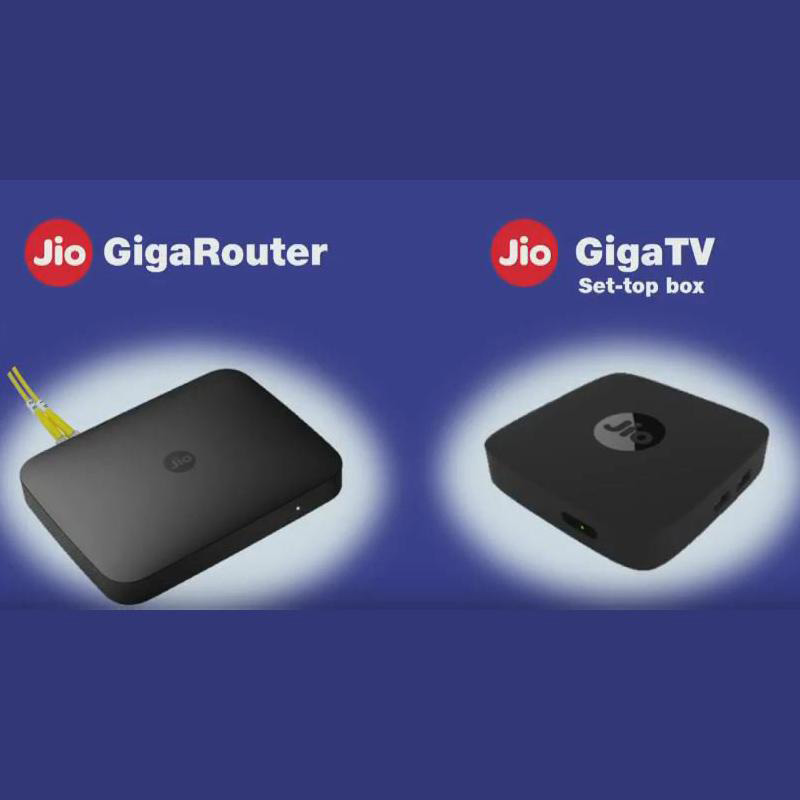
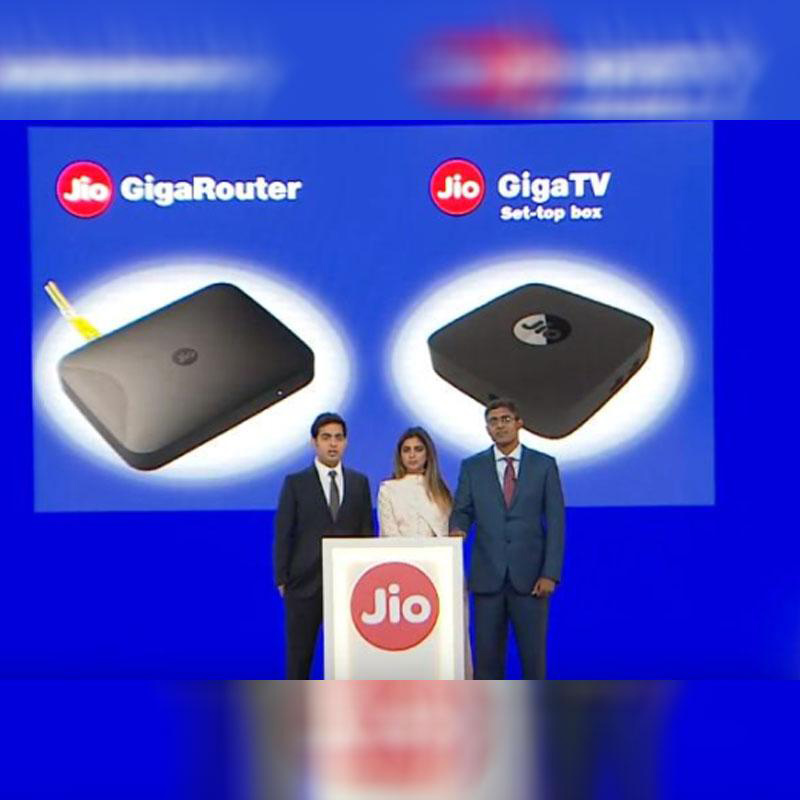
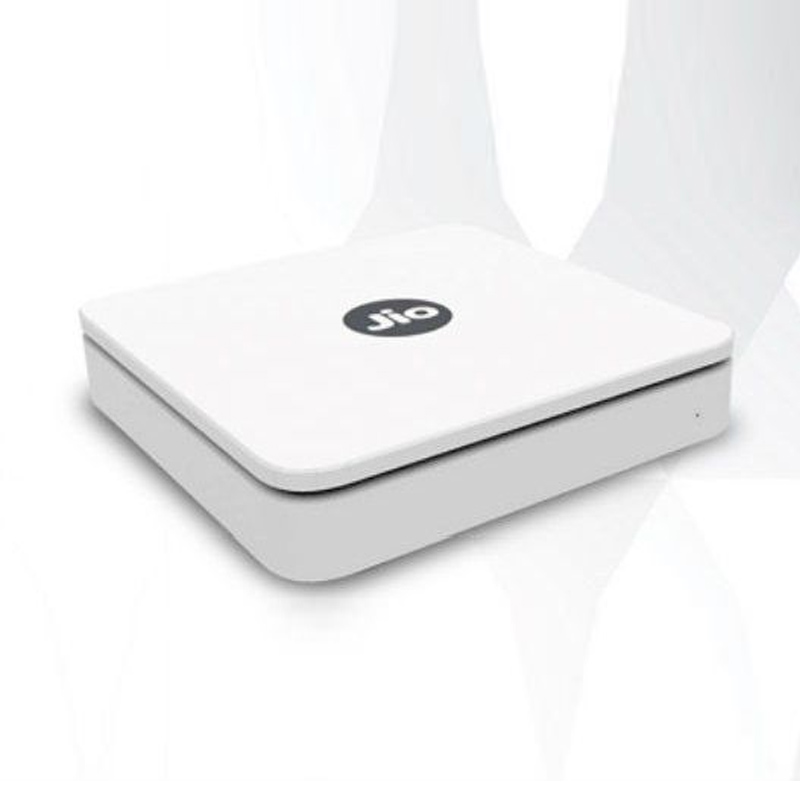
    Mukesh Ambani-led Jio announced its high speed fixed line broadband services for retail customers last year. During the formal announcement, it was announced that Jio Giga Fibre would come with a Jio Giga TV set top box offering more than 600 TV channels as well as over 1000 movies with enabled voice command feature for TV.

    Along with that, an interesting feature of video calling through TV was also highlighted. Users can call every other TV connected through Jio Gigafibre.  For smooth rollout of the service, the company also acquired majority stakes in multi system operators such as Hathway and DEN Networks.

  • Jio to connect GigaFiber, Home TV and apps

    Jio to connect GigaFiber, Home TV and apps

    MUMBAI: Reliance Jio is reportedly testing a 'Triple Play Plan' for its fibre to the home (FTTH) service, Jio GigaFiber. The plan will enable users to access Jio GigaFiber, Jio Home TV and Jio Apps in a single pack.

    As per a report from Telecom Talk, the company is testing the triple play plan with its employees and the plan can be seen on the GigaFiber account dashboard.  The plan will offer 100GB of high-speed data, unlimited voice calling, Jio Home TV subscription along with access to Jio’s portfolio of app. It will be valid for 28 days.

    Mukesh Ambani-led Jio announced its high speed fixed lined broadband services for retail customers last year. During the formal announcement, it was announced that Jio Giga Fibre would come with a Jio Giga TV set top box offering more than 600 TV channels as well as over 1000 movies with enabled voice command feature for TV.

    Along with that, an interesting feature of video calling through TV was also highlighted . Users can call every other TV connected through Jio Gigafibre.  For smooth rollout of the service, the company also acquired majority stakes in multi system operators such as Hathway and DEN Networks.

  • RIL plans to acquire additional 26% stake in Hathway Cable and Datacom

    RIL plans to acquire additional 26% stake in Hathway Cable and Datacom

    MUMBAI: Reliance Industries (RIL) and its group companies have announced an open offer to acquire an additional 26 per cent stake in Hathway Cable and Datacom, after receiving the approval from Competition Commission of India (CCI), according to a new article in the Press Trust of India.

    Reliance Industries along with Jio Content Distribution, Jio Internet Distribution Holdings and a clutch of group companies "have announced an open offer for acquisition of up to 46,02,27,170 fully paid up equity shares…from public shareholders of Hathway Cable and Datacom, representing 26 per cent of the expanded voting share capital, at a price of Rs 32.35 per equity share aggregating to total consideration of Rs 1,488.83 crore, payable in cash," Hathway informed in a regulatory filing.

    In October 2018, Reliance Industries had acquired majority stakes in Den Networks Ltd and Hathway Cable and Datacom Ltd for Rs 5,230 crore.

    In DEN, Reliance made a primary investment of Rs 2,045 crore through a preferential issue and secondary purchase of Rs 245 crore from existing promoters. In Hathway, RIL made a primary investment of Rs 2,940 crore through a preferential issue.

  • Reliance Jio adds 27.9 mn subs in Q3; GigaFiber marks entry in 1400 cities

    Reliance Jio adds 27.9 mn subs in Q3; GigaFiber marks entry in 1400 cities

    BENGALURU: Mukesh Dhirubhai Ambani’s juggernaut Reliance Industries Ltd (RIL) reported 50.7 percent growth in gross revenue for the quarter ended 31 December 2018 (Q3 2019, quarter or period under review) as compared to the corresponding year ago quarter. The company’s operating result was 25.4 percent higher during the quarter under review as compared to the year ago quarter. Organised retail under Reliance Retail Ltd and Digital Services segment under Jio have been adding a larger and larger share to the company’s topline and operating results over time. 

    Q3-2019 was no different. Revenue for RIL’s Reliance Retail almost doubled (grew 89.3 percent) y-o-y in Q3 2019 to Rs 35,577 crore (16.7 percent of gross revenue) as compared to Rs 18,798 crore (13.3 percent of gross revenue) in Q3 2018. The segment’s operating result grew 210.5 percent y-o-y to Rs 1,512 crore (0.71 percent of gross revenue) during the period under review from Rs 487 crore (0.34 percent of gross revenue). The segment’s contribution to operating results grew to 8.7 percent in Q3 2019 from 3.5 percent in Q3 2018.

    RIL’s digital segment revenue in Q3 2019 grew 51.2 percent y-o-y to Rs 12,302 crore (5.8 percent of gross revenue) from Rs 8,136 crore (5.8 percent of gross revenue). Operating results for the digital segment grew 64 percent y-o-y to Rs 2,362 crore (1.1 percent of gross revenue) in Q3 2019 from Rs 1,440 crore. (1 percent of gross revenue). The segment’s contribution to operating results grew to 13.6 percent in Q3 2019 from 10.4 percent in Q3 2018.

    RIL reported gross revenue of Rs 2,12,752 crore for Q3 2019 as compared to Rs 1,41,182 crore for the corresponding year ago quarter. Operating result for the period under review was Rs 17,341 crore as compared to Rs 13,830 crore for Q3 2018. The company reported profit for the period as Rs 10,376 crore which was 10 percent higher as compared to Rs 9,437 crore in Q3 2018. Total Comprehensive income for Q3 2019 was 28.8 percent higher y-o-y at Rs 11,052 crore as compared to Rs 8,582 crore.

    FTTH JioGigaFiber services, Den Networks and Hathway Cable & Datacom Investments

    In its earnings release, RIL said that JioGigaFiber services for home broadband, entertainment, smart home solutions, wireline and enterprise has witnessed overwhelming customer interest across 1,400 cities. Trial services are being rolled out across several cities to optimise service offerings.

    The company said that Jio’s customer engagement stayed healthy with average data consumption per user per month of 10.8 GB and average voice consumption of 794 minutes per user per month. Video consumption drove most of the usage, increasing to 460 crore hours per month.

    RIL said further that it awaits regulatory approvals to complete the recently announced investment in Den Networks Ltd and Hathway Cable and Datacom Ltd. Post completion of the transaction, Reliance and Jio will be strengthening the business model of 27,000 LCOs that are aligned with DEN and Hathway across 750 cities, by creating multiple future opportunities with new services and platforms.

    RIL says that Jio added 2.79 crore subscribers in Q3 2019 and its net subscriber base grew to 28 crore. The company says that Jio has had the lowest monthly churn in the industry of 0.61 percent during the quarter. Jio’s ARPU for Q3 2019 was Rs 130 as compared to Rs 131.70 in the immediate trailing quarter.

    Company speak

    RIL chairman and managing director Ambani said, “In our endeavour to consistently create more value for our country and stakeholders, our company has become the first Indian private sector corporate to cross Rs 10,000

    crore quarterly profits milestone. I am proud to be part of the committed and talented team at Reliance that has helped achieve many milestones in our continuing growth journey.

    “In an oil price environment that witnessed heightened volatility through the quarter, RIL has delivered strong quarterly results on a consolidated basis. Competitive cost positions and integration benefits is core to our oil to chemicals (refining and petrochemicals) business, driving sustained performance even in challenging global business environment. In our new-age consumer businesses, we maintained robust growth momentum across Retail and Jio platforms and the share of consumer businesses is steadily increasing its contribution to the overall profitability of the Company. In our wireless business, our customer-centric offerings and strong ubiquitous network are helping to digitalise India at an unprecedented rate. As we execute on our strategies to deliver superior products and services to Indian consumers, I am confident, Reliance is well-positioned for the future and for the next cycle of growth,” concluded Ambani.

  • OTT platforms may soon adopt self-censorship

    OTT platforms may soon adopt self-censorship

    MUMBAI:  Leading OTT players clearly don’t want the government interfering with their content or creating rules like broadcast. So, Netflix, Hotstar, Reliance Jio and some other streaming services may soon adopt a voluntary censorship code.

    As part of the code, the platforms will remove content that has been banned by the courts and that disrespects the national flag, emblem, hurts religious sentiments or promotes violence or terrorism against the country, or even shows children in sexual acts. These are codes that even the broadcast industry follows.

    Economic Times citing sources reported on the self-censorship initiative. However, tech companies including Amazon, Facebook and Google are unlikely to sign up for the code as this move of could set an example of how to regulate internet and meddle with creative freedom.

    The code is likely to include a “redressal mechanism” allowing the users of the streaming platform to issue complain in case they think that the over-the-top (OTT) services have violated the code. Eventually, this mechanism may transform in an “adjudicatory body” that will resolve the complaints filed by the customers.

    According to the report, ZEE5, Times Internet, Eros Now and AltBalaji are in favour of the code and the Internet and Mobile Association of India (IAMAI) is facilitating the process. It also added that the players who don’t think it as a very wise step opine it would lead to an unnecessarily nervous environment and validates the government’s point of view that the internet needs regulation.

    Allegedly, the whole process has been opaque and closed-door while content creators have not been included in the discussions. The opposition group to the court also believes the process has been swayed by companies that want OTT companies to be at a more level playing field with broadcasters.

  • JioCinema, Disney India strike content partnership

    JioCinema, Disney India strike content partnership

    MUMBAI: That latest OTT partnership is that of JioCinema, a digital app from Reliance Industries Ltd (RIL) with Disney India. Under the partnership, the app will host a dedicated Disney branded section on the homepage for the first time ever. Jio users now will get access to stories from the biggest brands in storytelling including Disney, Pixar, Marvel, and Lucas Film.

    Along with these famous stories, Jio users will be able to access a large number of international as well as locally created content through this association. Moreover, the app also brings in a unique character customisation option where fans can choose from their favourite Disney, Marvel, Pixar or Star Wars character such as Mickey Mouse, Captain America, and Lightening McQueen and browse the entire range of content available on that character.

    Kids will definitely enjoy JioCinema more than ever as it is now home to heart-warming stories of Disney like The Jungle Book, The Lion King and the ever-so-popular tales of Disney Princesses like Cinderella, Snow White and the Seven Dwarfs, Sleeping Beauty and more. Even superhero fans are in for a treat with movies like Iron Man, Captain America: The First Avenger, Thor along with animated series such as Guardians of the Galaxy, Avengers Assemble.

    It is obvious that the partnership will increase the width of content on the platform enormously. All telco players are increasing their content play by striking deals with large content creators as well as by investing in original content.

  • The year M&A changed the face of the media and entertainment industry

    The year M&A changed the face of the media and entertainment industry

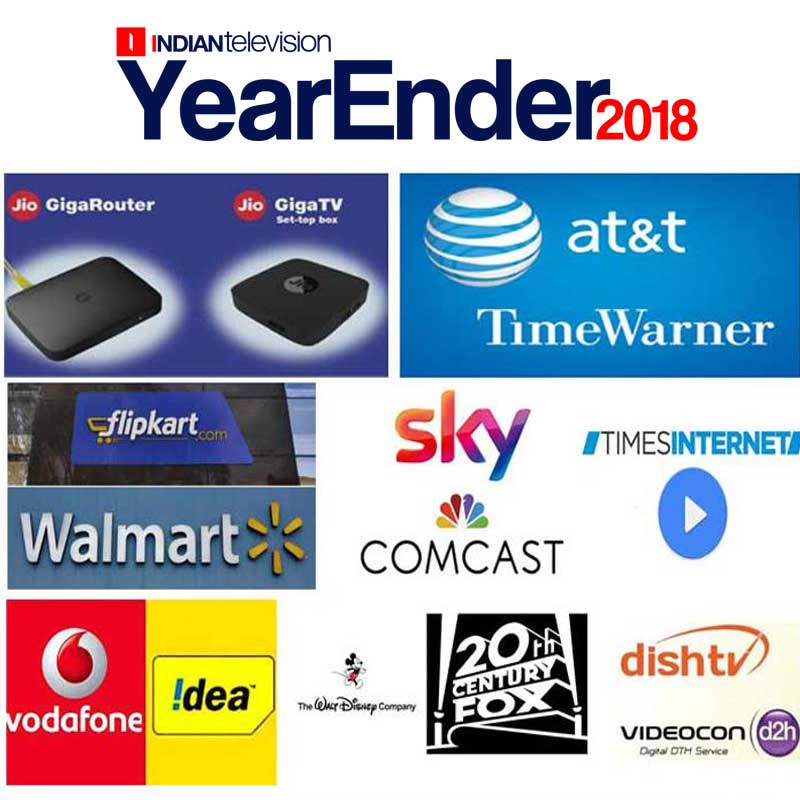
    MUMBAI: The emergence of numerous streaming platforms and convergence between technology, media, and telecom companies shook the core of the media and entertainment business globally. Giant tech and telco players, on the back of their direct customer reach, started taking content creation and distribution a lot more seriously. Rapid change in content consumption pressurised traditional players to invest more in technology and focus more on the B2C model. The ongoing flux brought the industry on the brink of instability, leading to consolidation in the form of mergers and acquisitions.

    In the last couple of years, the nature of competition in the global ecosystem has witnessed a gradual swing. Organisations like Netflix, Amazon Prime and Google have brought a structural shift forcing traditional players to rethink their approach to content and distribution. Legacy brands upped the ante to attract and retain more consumers even through cross-border deals. PwC India partner Raman Kalra points that everybody in this world of media disruption is trying to be relevant in reach and scale, the two critical factors that are driving deals. To corroborate his thesis, he highlights the AT&T-Time Warner deal where the former, with a huge reach, wanted to scale up its content play with the collaboration.

    Closer to home, billionaire Mukesh Ambani’s RIL rode the TMT convergence wave better than most. India’s richest man started the year with a bang, intensifying TV18’s stake to 51 per cent by acquiring 1 per cent of Viacom18’s equity from Viacom Inc. for a cash consideration of $20 million. The RIL-owned Jio Infocomm also acquired a controlling stake in two large MSOs – DEN and Hathway – building ammunition for its FTTH’s foray. That’s not all, RIL also pocketed a small but significant five per cent stake in Eros International.

    E&Y media and entertainment advisory services partner Ashish Pherwani expects more deals to materialise in 2019.

    “Especially technology-driven deals because so many changes are happening in that space, and consolidation, led by inbound investments. There are three types of deal. One type of deal is happening in order to build efficiency and scale in the business, led by cost pressures. Another type of deal is around relevance and market share – to get a bigger slice of the market to monetise a larger base of consumers.  The third type of deal which is happening is basically technology driven – for access to technology that could drive competitive advantage in the digital future. Hence, the three reasons market share, efficiency, technology are driving the deals,” he adds.

    There were other interesting deals struck through the year that are likely to reshape the media and entertainment business going forward.

    Birth of the world’s second largest DTH company

    The Indian market wasn’t exempted from the global merger frenzy. The coming together of two large DTH operators – Dish TV India and Videocon d2h – was finally concluded this year, creating the largest DTH service provider in the country with a subscriber base of about 29 million. Apart from leveraging their individual strengths, it was expected that the combined entity would benefit from economies of scale. One of the biggest attractions for Dish TV as the acquirer was Videocon’s significantly higher average revenue per user (ARPU). Significantly, the combined entity’s ARPU was Rs 207 in the second quarter as opposed to Dish TV’s standalone ARPU of Rs 144 pre-merger. The deal also helped Dish TV position itself better when it came to negotiating with broadcasters.

    Decks cleared for FTTH warfare

    From formally launching FTTH service Jio GigaFiber to acquiring majority stakes in two large MSOs to speed up the rollout, the Mukesh Ambani-led Reliance Jio was definitely the centre of attention in 2018. Reliance Industries Ltd (RIL) made an investment of Rs 2,290 crore for 66 per cent stake in Den and Rs 2,940 crore for 51.3 per cent stake in Hathway. It will save RIL the cost of reaching out to customers as well as making the last mile connectivity easier in its ambitious bid of seizing control over India’s wired broadband business. With the launch of its telecom service, RIL gave rise to what many call ‘digital democratisation’. As the Jio juggernaut marked its entry into India’s multi-billion-dollar cable TV and DTH businesses, traditional players eyed the development with a healthy mix of scepticism and optimism.

    Rivals joined hands

    The Indian telecom sector this year saw the marriage of two giant companies, creating the country’s largest telecom company. In the month of August, Vodafone India and Idea Cellular completed the merger after getting approval from National Company Law Tribunal (NCLT). The consolidation of India’s telecom sector was a direct result of Jio’s relentless pricing war. Post the Idea-Vodafone deal, India’s telco business now comprises of just three players. Analysts expect the combined entity to yield better coverage than before as it would have access to a more robust ecosystem of cellular towers. COAI also believes that as competitive pressures drive consolidation, customers and the industry stand to benefit from the greater stability and better networks which will emerge. Surprisingly, a few years ago, the Indian telco sector had 13 operators.

    Bansals became billionaires

    Walmart gained a strong foothold in India’s this year as it completed its much-talked-about $16 billion acquisition of the country’s largest e-commerce company Flipkart. Poster boys of India’s start-up community Sachin and Binny Bansal became billionaires in a big win for Indian talent and home-grown businesses. Despite protests from traders across the country, as the deal could potentially harm their business, the Competition Commission of India (CCI)’s green signal came earlier this year. The biggest e-commerce deal globally bolstered Walmart’s repertoire in its war with Amazon internationally. With India being one of the most attractive retail markets in the world, a strong play here is bound to further boost the American behemoth in a rapidly changing environment.

    Times Group joined the streaming sweepstakes

    With almost major broadcasters and media companies trying to grab a slice of the hottest piece of the M&E business – OTT, the Times Group too jumped on the bandwagon. To get a stronger foothold in the space, Times Internet invested over Rs 1,000 crore to acquire a majority stake in video playback app MX Player. According to media reports, the company will introduce a streaming service within the app. The large cross-border deal which surprised the industry will definitely help Times Internet in the OTT race thanks to the huge base and popularity of MX Player in south Asian countries. With over 30 OTT players vying for consumers’ attention in India, the game has just begun with enough opportunities for new platforms. Earlier in the year, MX Player content head Gautam Talwar had told Indiantelevision.com that like many other OTT platforms, MX Player too wants to tap into the millennial audience. It wants to cater to users with 50,000 to 100,000 hours of premium curated licensed content along with a high focus on originals, he further added. 

    The telco takeover

    Giant wireless carrier and telco AT&T’s acquisition of content powerhouse Time Warner is just one example of how the lines between distribution companies and content creators are blurring. With the $85 billion deal, the telco gained ready access to the content pool of CNN, HBO, and Warner Bros.

    “Under the terms of the merger, Time Warner Inc shareholders received 1.437 shares of AT&T common stock, in addition to $53.75 in cash, per share of Time Warner Inc.1 As a result, AT&T issued 1,185M shares of common stock and paid $42.5B in cash,” said AT&T providing the financial details of the deal.

    Though the deal was first announced in 2016, it had to negotiate past several subsequent legal hurdles. The Donald Trump-led US Department of Justice (DOJ) even filed a lawsuit against AT&T and Time Warner to block the proposed merger. Following a six week trial, a US district court approved the deal without any conditions on 12 June and also urged the government to not seek any stay. The main argument of the US administration was that the merger would hand over too much power to AT&T, making the market less competitive.

    A once-in-a-lifetime deal

    Another blockbuster deal that came through this year was the $71 billion acquisition of 21st Century Fox assets by Disney. After a long and sustained bidding war with Comcast, the Mouse House got its hands on much of the Murdoch empire. “Combining the 21CF businesses with Disney and establishing new ‘Fox’ will unlock significant value for our shareholders,” 21st Century Fox executive chairman Rupert Murdoch said. The shareholders of both the companies approved the deal immediately, with foreign approvals and regulatory reviews now the final procedural hurdle.

    Disney is now in pole position to take on streaming giants like Amazon and Netflix with its OTT Disney+. The company has also already indicated its desire to stop licensing content to Netflix by ending the deal in favour of its own B2C service. Moreover, Disney now has majority control of Hulu, Endemol Shine Group and Star India, making it the most powerful content owner in the world. The reaction to the growth of OTT services has clearly shown that joining forces with rivals and competitors is not unacceptable anymore to survive in the market.

    Second time lucky

    After a failed attempt to buy 21st Century Fox, US cable giant Comcast won the bid for European entertainment biggie Sky. The former sealed the deal for a controlling stake in the British broadcaster with a winning bid of $40 billion. Analysts said that Comcast and Sky would become the biggest private sector provider of pay TV in the world with 52 million customers. Given the vast reach and growing customer base of Sky in Europe, Comcast took the step to expand its international business with it losing ground in the domestic market. This deal was a direct effect of cord-cutting as Netflix’s growth in the US has posed a major threat to the likes of Comcast. According to an analysis from Ampere, post the media mega-mergers of Comcast/Sky and Disney/Fox, two in every 10 dollars spent on content worldwide will now be spent by these two entities.

    The merger madness from 2018 is likely to continue in 2019, as corroborated by experts we spoke to. Not only would it be interesting to track which companies opt for consolidation, but 2019 will also give us a sense of how the deals from 2018 take shape and play out.