Tag: Jio

  • TRAI to examine whether 4G offer can ‘Jio’ till Mar ’17

    TRAI to examine whether 4G offer can ‘Jio’ till Mar ’17

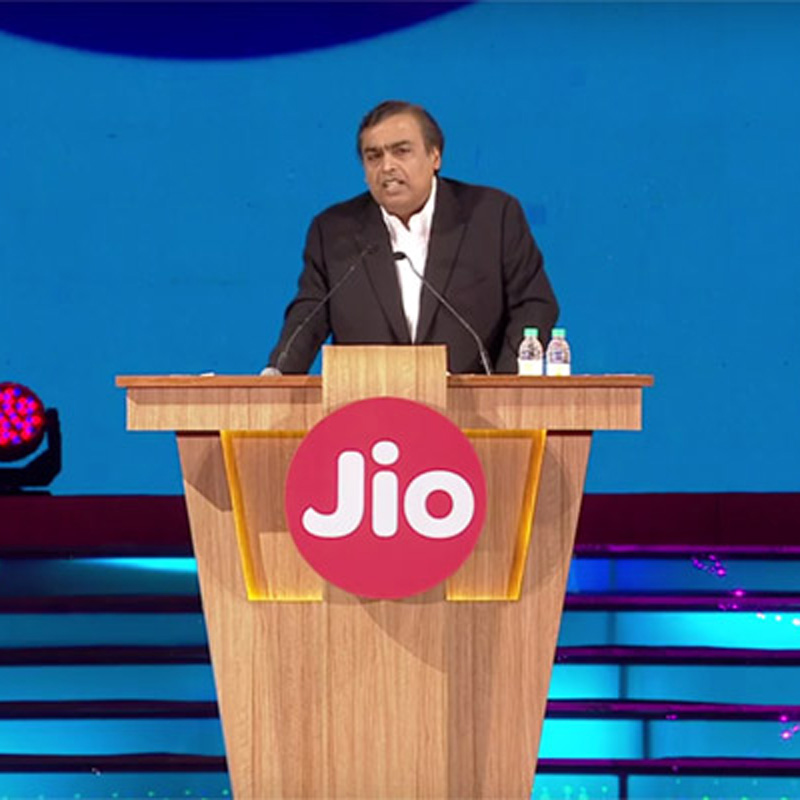
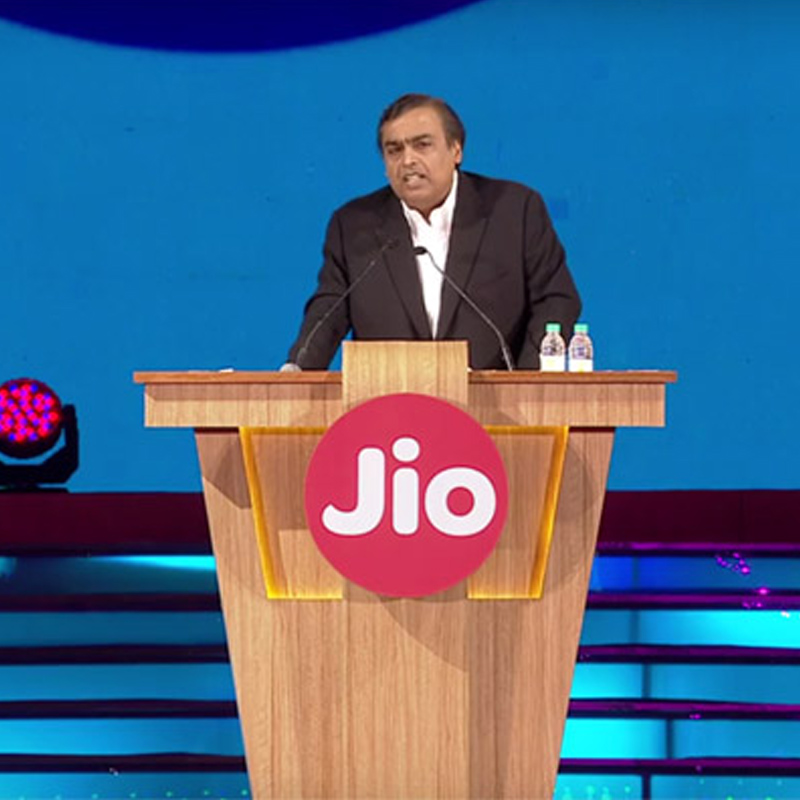
    MUMBAI: In his attempt to arduously chase the 100-million subscriber base, Reliance Jio CMD Mukesh Ambani announced extension of free domestic voice calls and data till 31 March, 2017, having crossed 50 million in 83 days. The Telecom Regulatory Authority of India (TRAI), however, said it will examine Jio’s latest offer providing free 4G services for all till 31 March.

    Jio’s new offer, meanwhile, struck a blow at competing incumbent operators — Idea Cellular, Bharti Airtel, and Vodafone India. The latest offer hurt the rivals’ share price. Airtel was down 1.66% at Rs 319.10 on the Bombay Stock Exchange (BSE), and Idea Cellular and Reliance Communications, respectively, dropped around 6% and 5%. By contrast, RIL price was up 0.45%.

    Ambani, on Thursday, announced the continuation of freebies currently being offered for fourth-generation (4G) long-term evolution (LTE) data and voice services till March next year. TRAI had earlier allowed Reliance Jio to provide free service till the end of this year.

    About the validity of Jio’s offer, TRAI chairman R S Sharma said that they would look into it. Every tariff that was filed before the authority was examined. TRAI would give its response at an appropriate time, Sharma added. TRAI had earlier allowed the new operator to provide free services till the end of 2016 for subscribers who joined till 3 December.

    The Prime Minister’s Office (PMO) meantime stated that it did not formally allow use of the prime minister Narendra Modi’s picture in electronic and print advertisements of Reliance Jio.

    Meanwhile, lower penetration of broadband (7 per cent) may slow down the ‘Digital India’ drive, according to TRAI. Sharma suggested that a potential solution would be to use connections for cable TV for broadband delivery. TRAI has already made the recommendation to the government, he added. Digital India would have to ride on that infrastructure, and if India did not have robust infrastructure, it was not going to achieve the objective of knowledge economy, Sharma added.

    Also read:

    http://www.indiantelevision.com/iworld/telecom/jio-money-merchant-app-helps-transition-to-cashless-economy-161201

    http://www.indiantelevision.com/iworld/telecom/jio-extends-hny-free-data-offer-up-to-31-march-17-161201

  • TRAI to examine whether 4G offer can ‘Jio’ till Mar ’17

    TRAI to examine whether 4G offer can ‘Jio’ till Mar ’17

    MUMBAI: In his attempt to arduously chase the 100-million subscriber base, Reliance Jio CMD Mukesh Ambani announced extension of free domestic voice calls and data till 31 March, 2017, having crossed 50 million in 83 days. The Telecom Regulatory Authority of India (TRAI), however, said it will examine Jio’s latest offer providing free 4G services for all till 31 March.

    Jio’s new offer, meanwhile, struck a blow at competing incumbent operators — Idea Cellular, Bharti Airtel, and Vodafone India. The latest offer hurt the rivals’ share price. Airtel was down 1.66% at Rs 319.10 on the Bombay Stock Exchange (BSE), and Idea Cellular and Reliance Communications, respectively, dropped around 6% and 5%. By contrast, RIL price was up 0.45%.

    Ambani, on Thursday, announced the continuation of freebies currently being offered for fourth-generation (4G) long-term evolution (LTE) data and voice services till March next year. TRAI had earlier allowed Reliance Jio to provide free service till the end of this year.

    About the validity of Jio’s offer, TRAI chairman R S Sharma said that they would look into it. Every tariff that was filed before the authority was examined. TRAI would give its response at an appropriate time, Sharma added. TRAI had earlier allowed the new operator to provide free services till the end of 2016 for subscribers who joined till 3 December.

    The Prime Minister’s Office (PMO) meantime stated that it did not formally allow use of the prime minister Narendra Modi’s picture in electronic and print advertisements of Reliance Jio.

    Meanwhile, lower penetration of broadband (7 per cent) may slow down the ‘Digital India’ drive, according to TRAI. Sharma suggested that a potential solution would be to use connections for cable TV for broadband delivery. TRAI has already made the recommendation to the government, he added. Digital India would have to ride on that infrastructure, and if India did not have robust infrastructure, it was not going to achieve the objective of knowledge economy, Sharma added.

    Also read:

    http://www.indiantelevision.com/iworld/telecom/jio-money-merchant-app-helps-transition-to-cashless-economy-161201

    http://www.indiantelevision.com/iworld/telecom/jio-extends-hny-free-data-offer-up-to-31-march-17-161201
  • ’85 per cent Indians consume video content online every week’

    ’85 per cent Indians consume video content online every week’

    MUMBAI: Kantar TNS’ recently-conducted Connected Life study has concluded that 85 per cent of Indian consumers consume video content online every week. The study shows that this consumption is spread across various platforms such as video content that appears in social feeds, free video on platforms such as YouTube along with some paid online TV subscription services as well.

    What differentiates the Indian video consumer from its global counterparts is, while the weekly trend translates strongly into daily online video consumption as well (global average = 65 per cent), in India, only less than half of these weekly users watch online videos daily (39 per cent).

    The barriers that stop online video from becoming a mainstream daily habit are mainly around high data costs and patchy connectivity.

    Kantar TNS India executive director Anusheel Shrivastava said on a positive note, “With Jio’s launch the data rates are already seeing a drop; this along with improved availability of public WiFi will help in lowering the barriers. It may not be long before the online video landscape in India will change”.

    Connected Life data showed that free online video, such as YouTube, is watched by a large proportion of connected consumers daily, with Cambodian internet users watching the most at 94 per cent, followed by Hong Kong (84 per cent) and China (78 per cent); whereas in India it is at 39 per cent. Two thirds (62 per cent) of people online are also watching videos that appear on their social feed, either from brands, news sources or their friends. Connected consumers in mobile-first markets are consuming a lot of video in this way, with 93 per cent of internet consumers in Cambodia watching social video daily, 80 per cent in Malaysia and 69 per cent in Vietnam. Digital channels are allowing one in three (32 per cent) connected consumers to access on-demand channels, allowing them to catch up on broadcast TV content online. Some are also using paid-for subscription services such as Netflix, viewed by 11 per cent daily across the region.

    Kantar TNS digital director APAC Zoë Lawrence said: “There’s been an explosion in the consumption of online ‘on-demand’ viewing across Asia Pacific, creating new media moments that didn’t exist in a traditional marketing world.Online video provides brands with an opportunity to tell their story in a different way; we’re seeing a lot of brands succeed with long-format video and also great creative work that overcomes some of the challenges of video in a social feed. If the content is good enough, people will watch it. Brands now know that simply putting their TVC online will not work; they need to develop content that works well within the context of the online channel they are using.”

  • ’85 per cent Indians consume video content online every week’

    ’85 per cent Indians consume video content online every week’

    MUMBAI: Kantar TNS’ recently-conducted Connected Life study has concluded that 85 per cent of Indian consumers consume video content online every week. The study shows that this consumption is spread across various platforms such as video content that appears in social feeds, free video on platforms such as YouTube along with some paid online TV subscription services as well.

    What differentiates the Indian video consumer from its global counterparts is, while the weekly trend translates strongly into daily online video consumption as well (global average = 65 per cent), in India, only less than half of these weekly users watch online videos daily (39 per cent).

    The barriers that stop online video from becoming a mainstream daily habit are mainly around high data costs and patchy connectivity.

    Kantar TNS India executive director Anusheel Shrivastava said on a positive note, “With Jio’s launch the data rates are already seeing a drop; this along with improved availability of public WiFi will help in lowering the barriers. It may not be long before the online video landscape in India will change”.

    Connected Life data showed that free online video, such as YouTube, is watched by a large proportion of connected consumers daily, with Cambodian internet users watching the most at 94 per cent, followed by Hong Kong (84 per cent) and China (78 per cent); whereas in India it is at 39 per cent. Two thirds (62 per cent) of people online are also watching videos that appear on their social feed, either from brands, news sources or their friends. Connected consumers in mobile-first markets are consuming a lot of video in this way, with 93 per cent of internet consumers in Cambodia watching social video daily, 80 per cent in Malaysia and 69 per cent in Vietnam. Digital channels are allowing one in three (32 per cent) connected consumers to access on-demand channels, allowing them to catch up on broadcast TV content online. Some are also using paid-for subscription services such as Netflix, viewed by 11 per cent daily across the region.

    Kantar TNS digital director APAC Zoë Lawrence said: “There’s been an explosion in the consumption of online ‘on-demand’ viewing across Asia Pacific, creating new media moments that didn’t exist in a traditional marketing world.Online video provides brands with an opportunity to tell their story in a different way; we’re seeing a lot of brands succeed with long-format video and also great creative work that overcomes some of the challenges of video in a social feed. If the content is good enough, people will watch it. Brands now know that simply putting their TVC online will not work; they need to develop content that works well within the context of the online channel they are using.”

  • Interconnect tussle: Vodafone, Airtel, Idea may move court against proposed Rs 3,000-cr penalty

    Interconnect tussle: Vodafone, Airtel, Idea may move court against proposed Rs 3,000-cr penalty

    MUMBAI: The Telecom Regulatory Authority of India (TRAI) plans to impose a heavy penalty on three major telecom operators for failing to provide adequate interconnectivity to RJio even as operators attempted to comply with the rules. Jio had written to the TRAI seeking action against incumbent operators for not giving an adequate number of interconnection points.

    Several thousand customers of Reliance Jio’s new 4G network were facing disruption in service due to shortage of interconnection with other operators for some weeks now. TRAI had earlier called Idea Cellular, Airtel, Vodafone and Jio for a meeting. Point of interconnection, the place where two networks connect, is needed for seamless communication when a user of one operator calls a user of another operator.

    TRAI has now proposed penalties on Vodafone India, Bharti Airtel, and Idea Cellular for denying interconnection to Reliance Jio Infocomm (RJio), the new entrant into telecom space in India.

    The three incumbent operators meanwhile may take a legal recourse to challenge TRAI’s suggestions. A source from one of the operators told the Hindu, it was ‘surprising that RJio’s network was having congestion in all the circles’.

    TRAI has suggested levying of a ₹50-crore penalty per circle on the three incumbent players, which could total more than ₹3,000 crore. According to TRAI, Airtel and Vodafone have to pay ₹1,050 crore each, and Idea Cellular ₹950 crore. The penalty has been imposed for violating quality of service norms.

    RJio had written to TRAI seeking action against incumbent operators for not giving an adequate number of interconnection points on July 14 and July 15, to which TRAI had communicated to all three operators on July 19 to do the needful.

    According to RJio, it is targeting 100 million subscribers, for which it had approached existing operators seeking adequate interconnection. “Instead of augmenting the PoIs, other operators are blocking the PoI augmentation on various unreasonable grounds,” RJio said in a letter to DoT.

    However, incumbent operators initially refused to give these points of interconnection. The operators earlier said they could not release more interconnections because RJio was allegedly bypassing regulations by offering full-fledged services under the guise of test connections.

    However, after a meeting between the rival operators, hosted by TRAI, the incumbent operators started releasing points of interconnection. Though this eased the congestion on RJio’s network, the operator said that a majority of calls on its networks were still dropping.

    Meanwhile, the three incumbent operators may take a legal recourse to challenge TRAI’s suggestions. According to sources from one of the operators, it was ‘surprising that RJio’s network was having congestion in all the circles’.

    Under the licence conditions, operators are required to offer interconnection to each other. TRAI has set a cap of 14 paise as the interconnection charge, which means that operators on whose network the call originates have to pay that fee to the operator on whose network the call terminates. However, incumbent operators have refused to give interconnection.

  • Interconnect tussle: Vodafone, Airtel, Idea may move court against proposed Rs 3,000-cr penalty

    Interconnect tussle: Vodafone, Airtel, Idea may move court against proposed Rs 3,000-cr penalty

    MUMBAI: The Telecom Regulatory Authority of India (TRAI) plans to impose a heavy penalty on three major telecom operators for failing to provide adequate interconnectivity to RJio even as operators attempted to comply with the rules. Jio had written to the TRAI seeking action against incumbent operators for not giving an adequate number of interconnection points.

    Several thousand customers of Reliance Jio’s new 4G network were facing disruption in service due to shortage of interconnection with other operators for some weeks now. TRAI had earlier called Idea Cellular, Airtel, Vodafone and Jio for a meeting. Point of interconnection, the place where two networks connect, is needed for seamless communication when a user of one operator calls a user of another operator.

    TRAI has now proposed penalties on Vodafone India, Bharti Airtel, and Idea Cellular for denying interconnection to Reliance Jio Infocomm (RJio), the new entrant into telecom space in India.

    The three incumbent operators meanwhile may take a legal recourse to challenge TRAI’s suggestions. A source from one of the operators told the Hindu, it was ‘surprising that RJio’s network was having congestion in all the circles’.

    TRAI has suggested levying of a ₹50-crore penalty per circle on the three incumbent players, which could total more than ₹3,000 crore. According to TRAI, Airtel and Vodafone have to pay ₹1,050 crore each, and Idea Cellular ₹950 crore. The penalty has been imposed for violating quality of service norms.

    RJio had written to TRAI seeking action against incumbent operators for not giving an adequate number of interconnection points on July 14 and July 15, to which TRAI had communicated to all three operators on July 19 to do the needful.

    According to RJio, it is targeting 100 million subscribers, for which it had approached existing operators seeking adequate interconnection. “Instead of augmenting the PoIs, other operators are blocking the PoI augmentation on various unreasonable grounds,” RJio said in a letter to DoT.

    However, incumbent operators initially refused to give these points of interconnection. The operators earlier said they could not release more interconnections because RJio was allegedly bypassing regulations by offering full-fledged services under the guise of test connections.

    However, after a meeting between the rival operators, hosted by TRAI, the incumbent operators started releasing points of interconnection. Though this eased the congestion on RJio’s network, the operator said that a majority of calls on its networks were still dropping.

    Meanwhile, the three incumbent operators may take a legal recourse to challenge TRAI’s suggestions. According to sources from one of the operators, it was ‘surprising that RJio’s network was having congestion in all the circles’.

    Under the licence conditions, operators are required to offer interconnection to each other. TRAI has set a cap of 14 paise as the interconnection charge, which means that operators on whose network the call originates have to pay that fee to the operator on whose network the call terminates. However, incumbent operators have refused to give interconnection.

  • Q2-17: Reliance: Jio busts records, organised retail grows 63 percent

    Q2-17: Reliance: Jio busts records, organised retail grows 63 percent

    BENGALURU: The Mukesh D Ambani led Reliance Industries Limited (RIL) organized retail segment – Reliance Retail,  continued its growth momentum and profitability in the quarter ended 30 September 2016 (Q2-17, current quarter), while its digital services offering Jio has broken all records in terms of subscriber acquisition.

    The RIL earnings release for Q2-17 says that Jio has created a world record by crossing 1.6  crore (16 million) subscribers in its first month of operations (September 2016). RIL says that Jio has achieved this growth faster than any other telecom operator or start up in the world including the likes of Facebook, WhatsApp and Skype.

    Ambani, said, “We are delighted and humbled by the enthusiastic adoption of Jio by India. Jio is built to empower every Indian with the power of data.”

    Further, RIL claims that Jio applications have been very popular on the network. In 1 week from launch, all the 12 Jio applications were ranked in the top 15 applications on Playstore and Appstore. All the Jio applications, including JioTV, JioCinema, JioMusic, JioMagazine, JioNews, which bouquet is worth Rs. 15,000 for an annual subscription, have been provided complimentary for all active Jio subscribers up to 31 December 2017.

    Organised Retail

    RIL’s Organised Retail segment revenue in the current quarter increased 63 percent year-over-year (y-o-y) to Rs 8,079 crore as compared to Rs 4,856 crore and increased 21.2 percent quarter-over-quarter (q-o-q) from Rs 6,666 crore. 

    The segment’s EBIT increased 42.1 percent y-o-y to Rs 162 crore from Rs 114 crore and increased 9.5 percent q-o-q from Rs 148 crore.

    RIL says that during the quarter, Reliance Retail added 59 stores across various store concepts and strengthened its distribution network for consumer electronics. Omni commerce channel offerings www.footprint360.com and www.ajio.com gained traction during the quarter. As on 30September 2016, Reliance Retail operated 3,442 stores across 679 cities with an area of over 1.3 crore (13 million) square feet.

    RIL numbers

    RIL achieved a turnover of Rs 81,651 crore ($ 12.3 billion), an increase of 9.6 percent, as compared to Rs 74,490 crore in the corresponding period of the previous year. Increase in revenue is primarily on account of increase in volumes in refining, petrochemical and retail businesses.

    Operating profit before other income and depreciation (before exceptional item) increased by 20.2 percent on a y-o-y basis to Rs 11,176 crore ($ 1.7 billion) from Rs 9,301 crore in the previous year. Strong operating performance from refining and petrochemicals businesses was partially offset by lower contribution from Oil &  Gas business due to lower volumes and weak price environment says that company.

    Profit after tax excluding exceptional items was higher by 43.1 perc ent at Rs 7,206 crore ($ 1.1 billion) as against Rs 5,035 crore in the corresponding period of the previous year. 

    Basic earnings per share (EPS) excluding exceptional items for the quarter ended 30th September 2016 was Rs 24.4 as against Rs 17.1 in the corresponding period of the previous year.

    Note:The unit of currency in this report is the Indian rupee – Rs (also conventionally represented by INR).The Indian numbering system or the Vedic numbering system has been used to denote money values. The basic conversion to the international norm would be:
    (a) 100,00,000 = 100 lakh = 10,000,000 = 10 million = 1 crore.
    (b) 10,000 lakh = 100 crore = 1 arab = 1 billion.Skype, www.footprint360.com, www.ajio.com, Q2-17

  • Q2-17: Reliance: Jio busts records, organised retail grows 63 percent

    Q2-17: Reliance: Jio busts records, organised retail grows 63 percent

    BENGALURU: The Mukesh D Ambani led Reliance Industries Limited (RIL) organized retail segment – Reliance Retail,  continued its growth momentum and profitability in the quarter ended 30 September 2016 (Q2-17, current quarter), while its digital services offering Jio has broken all records in terms of subscriber acquisition.

    The RIL earnings release for Q2-17 says that Jio has created a world record by crossing 1.6  crore (16 million) subscribers in its first month of operations (September 2016). RIL says that Jio has achieved this growth faster than any other telecom operator or start up in the world including the likes of Facebook, WhatsApp and Skype.

    Ambani, said, “We are delighted and humbled by the enthusiastic adoption of Jio by India. Jio is built to empower every Indian with the power of data.”

    Further, RIL claims that Jio applications have been very popular on the network. In 1 week from launch, all the 12 Jio applications were ranked in the top 15 applications on Playstore and Appstore. All the Jio applications, including JioTV, JioCinema, JioMusic, JioMagazine, JioNews, which bouquet is worth Rs. 15,000 for an annual subscription, have been provided complimentary for all active Jio subscribers up to 31 December 2017.

    Organised Retail

    RIL’s Organised Retail segment revenue in the current quarter increased 63 percent year-over-year (y-o-y) to Rs 8,079 crore as compared to Rs 4,856 crore and increased 21.2 percent quarter-over-quarter (q-o-q) from Rs 6,666 crore. 

    The segment’s EBIT increased 42.1 percent y-o-y to Rs 162 crore from Rs 114 crore and increased 9.5 percent q-o-q from Rs 148 crore.

    RIL says that during the quarter, Reliance Retail added 59 stores across various store concepts and strengthened its distribution network for consumer electronics. Omni commerce channel offerings www.footprint360.com and www.ajio.com gained traction during the quarter. As on 30September 2016, Reliance Retail operated 3,442 stores across 679 cities with an area of over 1.3 crore (13 million) square feet.

    RIL numbers

    RIL achieved a turnover of Rs 81,651 crore ($ 12.3 billion), an increase of 9.6 percent, as compared to Rs 74,490 crore in the corresponding period of the previous year. Increase in revenue is primarily on account of increase in volumes in refining, petrochemical and retail businesses.

    Operating profit before other income and depreciation (before exceptional item) increased by 20.2 percent on a y-o-y basis to Rs 11,176 crore ($ 1.7 billion) from Rs 9,301 crore in the previous year. Strong operating performance from refining and petrochemicals businesses was partially offset by lower contribution from Oil &  Gas business due to lower volumes and weak price environment says that company.

    Profit after tax excluding exceptional items was higher by 43.1 perc ent at Rs 7,206 crore ($ 1.1 billion) as against Rs 5,035 crore in the corresponding period of the previous year. 

    Basic earnings per share (EPS) excluding exceptional items for the quarter ended 30th September 2016 was Rs 24.4 as against Rs 17.1 in the corresponding period of the previous year.

    Note:The unit of currency in this report is the Indian rupee – Rs (also conventionally represented by INR).The Indian numbering system or the Vedic numbering system has been used to denote money values. The basic conversion to the international norm would be:
    (a) 100,00,000 = 100 lakh = 10,000,000 = 10 million = 1 crore.
    (b) 10,000 lakh = 100 crore = 1 arab = 1 billion.Skype, www.footprint360.com, www.ajio.com, Q2-17

  • Idea, Vodafone neck-and-neck with Airtel, Jio in 4G tussle

    Idea, Vodafone neck-and-neck with Airtel, Jio in 4G tussle

    Idea and Vodafone have spent astronomical sums in spectrum auctions to acquire 2500 MHz airwaves so as to give a tough fight to Airtel and Jio which already have pan-India 4G holdings. Two of three telecom majors in India are betting on lower price of 2500 MHz. Idea Cellular and Vodafone India seem to have bet on 4G airwaves in that band.

    Global telecom expert Sanjay Kapoor however says, India would need further towers for 4G and investments. The former chairman of Micromax said that the telecom industry was moving towards consolidation.

    In the recent spectrum auction, nearly 60 per cent of airwaves, including premium 4G bands, remained unsold. Meanwhile, Airtel, Vodafone and Idea secured adequate 4G spectrum during the recently-concluded auction to counter Jio, making them more competitive, FE reported.

    Airtel acquired 173.8 MHz spectrum in bands of 1800MHz, 2100 MHz and 2300 Mhz for Rs 14,244 crore in circles including Kerala, Assam, Maharashtra, Delhi, Mumbai and the North-East. Idea acquired 349.20 MHz of spectrum for Rs 12,798 crore in 1800 MHz, 2100 MHz, 2300 MHz and 2500 MHz bands and will be able to offer 4G services on its own spectrum across 20 circles, including nine new service areas of Uttar Pradesh (West), UP (East), Gujarat and Mumbai.

    Vodafone India, which has emerged as the most aggressive bidder, has acquired spectrum in 1800 MHz, 2100 MHz and 2500 MHz bands for a total cost of Rs 20,280 crore. It has 17 circles with 4G capability.

    Experts said Vodafone and Idea have taken the plunge amid a rapidly-evolving devices ecosystem in 2500 MHz band in China besides the lower price of these airwaves, ET stated.

    Idea’s management recently guided for a rollout on this 4G band over the next two to five years as the ecosystem matures. Brokerages expect the 2500 MHz band devices ecosystem to evolve quickly in India thanks to Vodafone and Idea investing in them. Nearly, half the Rs 20,280 crore that second-largest carrier Vodafone spent at the auction went to 4G airwaves in the 2500 MHz band in 15 circles, while No. 3 Idea spent Rs 2,520.8 crore on the same in 16 circles.

  • Idea, Vodafone neck-and-neck with Airtel, Jio in 4G tussle

    Idea, Vodafone neck-and-neck with Airtel, Jio in 4G tussle

    Idea and Vodafone have spent astronomical sums in spectrum auctions to acquire 2500 MHz airwaves so as to give a tough fight to Airtel and Jio which already have pan-India 4G holdings. Two of three telecom majors in India are betting on lower price of 2500 MHz. Idea Cellular and Vodafone India seem to have bet on 4G airwaves in that band.

    Global telecom expert Sanjay Kapoor however says, India would need further towers for 4G and investments. The former chairman of Micromax said that the telecom industry was moving towards consolidation.

    In the recent spectrum auction, nearly 60 per cent of airwaves, including premium 4G bands, remained unsold. Meanwhile, Airtel, Vodafone and Idea secured adequate 4G spectrum during the recently-concluded auction to counter Jio, making them more competitive, FE reported.

    Airtel acquired 173.8 MHz spectrum in bands of 1800MHz, 2100 MHz and 2300 Mhz for Rs 14,244 crore in circles including Kerala, Assam, Maharashtra, Delhi, Mumbai and the North-East. Idea acquired 349.20 MHz of spectrum for Rs 12,798 crore in 1800 MHz, 2100 MHz, 2300 MHz and 2500 MHz bands and will be able to offer 4G services on its own spectrum across 20 circles, including nine new service areas of Uttar Pradesh (West), UP (East), Gujarat and Mumbai.

    Vodafone India, which has emerged as the most aggressive bidder, has acquired spectrum in 1800 MHz, 2100 MHz and 2500 MHz bands for a total cost of Rs 20,280 crore. It has 17 circles with 4G capability.

    Experts said Vodafone and Idea have taken the plunge amid a rapidly-evolving devices ecosystem in 2500 MHz band in China besides the lower price of these airwaves, ET stated.

    Idea’s management recently guided for a rollout on this 4G band over the next two to five years as the ecosystem matures. Brokerages expect the 2500 MHz band devices ecosystem to evolve quickly in India thanks to Vodafone and Idea investing in them. Nearly, half the Rs 20,280 crore that second-largest carrier Vodafone spent at the auction went to 4G airwaves in the 2500 MHz band in 15 circles, while No. 3 Idea spent Rs 2,520.8 crore on the same in 16 circles.