Tag: Jio

  • The year the telecom sector quaked

    The year the telecom sector quaked

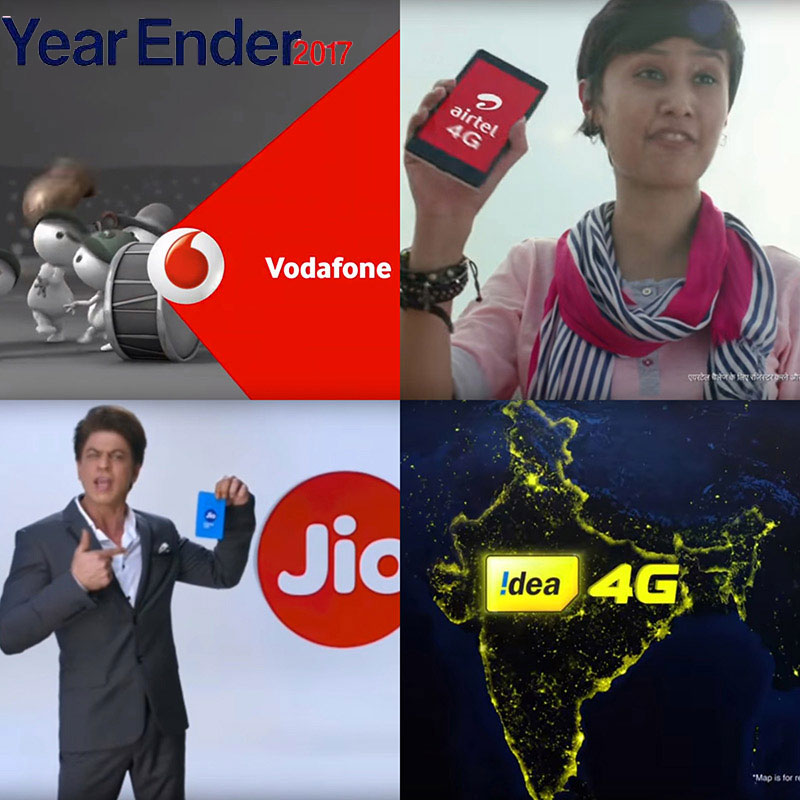
    An interplay of myriad factors contributed to India’s telecom industry witnessing both turmoil and revolution in 2017. Consolidation was the buzzword as some of the largest telecom operators merged even as Reliance Jio Infocomm Ltd (RJio) emerged as a frontrunner for Reliance Communications’ (RCom) assets according to reports. RJio can also take credit for ushering in a data revolution in the country.

    Moreover, smartphone penetration during the year increased three-fold with the aggregate number of users at more than 300 million. With smartphones still accounting for less than 50 per cent of handset users (650 million) in the country, another surge in data consumption is on the anvil.

    The price war

    Indian tycoon Mukesh Ambani sparked a price war in 2016 with the launch of Reliance Jio. As a consequence, the country’s large telcos have been burning through cash this year to hold on to their market share. Vodafone and Airtel tried luring customers through cheap data and unlimited calling offers. Reliance Jio, however, clearly won that battle. Within the first month of commercial operations, Jio announced that it had acquired 16 million subscribers. This was the fastest scaling up by any mobile network operator anywhere in the world. The operator crossed the 50 million subscriber mark 83 days from its launch, crossing 100 million subscribers on 22 February 2017. By October 2017, it had around 130 million subscribers. 

    With telcos looking to push for higher data pack purchases, 4G became cheaper than 3G. Today, 4G data costs are as low as 1 paisa per MB.

    Sectoral consolidation 

    From as many as 13 players at one point in time, we are now left with just five major contenders even as RCom sits on the brink of leaving the fray. Earlier this year, Vodafone India and Idea Cellular decided to merge operations to create India’s largest telecom operator worth more than $23 billion beating Sunil Bharti Mittal-led Airtel. With this deal, Vodafone India’s valuation stood at Rs 82,800 crore and Idea’s at Rs 72,200 crore. 

    RCom, reeling under a debt of around Rs 46,000 crore, shut down its voice services from 1 December 2017 after it failed to close its wireless business merger deal with Aircel. The Telecom Regulatory Authority of India (TRAI) has issued a directive to RCom’s customers to move to other networks by the end of this year. Vodafone, Airtel, and Jio created special packs for RCom customers to lure them to their networks. 

    Telcos and handsets 

    In July 2017, Jio introduced JioPhone–the company’s first affordable 4G feature phone powered by KaiOS. The phone was made available for a security deposit of Rs 1500, which could be reimbursed on returning the phone after three years. This phone was released for beta users on 15 August 2017 and pre-booking for regular users started on 24 August 2017. 

    To strengthen its presence amidst the battle for market share, Airtel launched Android-powered 4G smartphones in partnership with Indian cellphone manufacturer Karbonn Mobiles. Airtel also partnered various other mobile handset manufacturers, including Intex, to create an ‘open ecosystem’ of affordable 4G smartphones.

    Not one to be left out of the party, Vodafone and domestic handset maker Micromax came together to offer a smartphone priced a shade under Rs 1000 with a three-year rider.

    Internet of Things

    Despite posing privacy risks, Internet of Things, or IoT, remained one of the buzzwords in tech circles this year. According to Vodafone Plc’s annual IoT barometer report 2017-18, the percentage of companies with more than 50,000 connected devices active has doubled in the last 12 months with over 84 per cent of IoT adopters saying that their use of IoT has grown in the last year. From the Indian organisations that were a part of the study, 81% felt that IoT was key to digital transformation.

    In India, Vodafone marked itself as the first brand to undergo this evolution. The telco repositioned itself as a contemporary and future-fit brand. It is a significant metamorphosis for one of India’s most iconic and loved brands since the ‘Power to you’ tagline was introduced in 2009. This new positioning, a part of Vodafone’s rebranding exercise across 36 countries, is designed to underpin its belief in new technologies and digital services playing a positive role in transforming society.

    Net neutrality  

    In what was seen as a sign of things to come, the US Federal Communications Commission voted in December to scrap net neutrality, which requires internet service providers to treat all internet traffic equally. The TRAI, not too long after, came out in strong support of net neutrality in a series of recommendations following a long process of consultations on the issue. The regulator believes that the licensing terms should be amplified to provide explicit restrictions on any sort of discrimination in internet access based on the content being accessed, the protocols being used or the user equipment being deployed. 

    With IoT being the talk of the town, networks fighting to grab RCom’s assets and customers, and an ongoing telco war between Airtel, Vodafone, and Jio to become the country’s numero uno operator, it will be interesting to watch how the industry shapes up in 2018.
  • Voot sets its sights on regional & premium ad-free content

    Voot sets its sights on regional & premium ad-free content

    MUMBAI: It’s time for Voot to woot because the 18-month old digital venture from the Viacom18 stable witnessed four fold the growth in video streaming in November.

    According to App Annie’s November report, Voot is at third position with 7.5 billion minutes of total time spent. The top two slots were taken by Hotstar and Jio TV. For 2018, Voot’s focus is on original and regional content with Tamil in focus. Kannada, Marathi and Bengali are also on the radar. “We will create originals and also dub content into other regional languages,” says Voot COO Gaurav Gandhi.

    The first quarter of 2018 is dedicated to regionalisation while the next three months are dedicated to international expansion catering to the global Indian diaspora. Simultaneously, the second quarter will see Voot’s focus shift to premium ad-free content such as original series and movies. Gandhi says that there are 30 million Indians living overseas and the expansion will be to the US, UK, Canada, South Africa, Singapore, Indonesia, etc.

    The year also has something for kids with 30 new shows. There will be 20 shows in six languages that is a part of Voot’s aggressive ‘going regional’ plan. Last year it won the innovation award for content distribution for its progressive web app (PWA) at the International Broadcasting Convention 2017. This year, it wants to make video available offline on its PWA.

    Voot is getting a makeover with a new logo, refreshed packaging and a brand film that shows Voot as the ultimate entertainment destination. Says Voot head – marketing and partnerships Akash Banerji: “To connect with the audience, we need to connect with them on a thought level. #WHYNOT is not just an expression or a phrase, it is a belief system, a philosophy and a mindset that Voot as a brand aims to foster and encourage in this country.”

    The new brand campaign for Voot, created by Mullen Lintas, is designed to gratify the dynamic media consumption patterns of a new age user, seeking entertainment on their own terms.

    Mullen Lintas national creative director Shriram Iyer says that the campaign is about people who, unhappy with current content choices, moved to Voot. He says, “The idea of any new technology is to question the status quo. And Voot’s new campaign is all about that. The current campaign is about them and their question to the world ‘Why not’.”

    Voot, as a part of both AVOD and SVOD model, has bagged 175 advertisers and 350 brands trust in the year 2017. Gandhi says that this year advertisers have excitedly taken part in participating in various digital offerings, which eventually increases the revenue of content providers.

    Refering to the highlights of the year 2017, Gandhi says that Voot has gained 32 million monthly active users, six million plus daily active users, and 50 minutes time spent per viewer per day. Its daily time spent has taken it to the second position after Netflix, according to App Annie report. Colors’ flagship show Bigg Boss has given Voot 550 million views till date and 60 minutes average time spent per viewer per day. Even a show like Splitsvilla, which has male viewership of 52 per cent, got 150 million views.

    Voot has grown exponentially during the year by banking 10 original serious in the account till date. The next step is to break the regional barrier.

    Also read:

    Our work culture fosters leaders: Viacom18’s Sudhanshu Vats

    Bigg Boss Season 11 garnered 70 mn views on Voot in 10 days

    Voot originals’ strategy of disruptive shows unfolds with ‘Yo Ke Hua Bro’ from 18 Aug

  • RIL to plan IPO for Reliance Jio: Bloomberg

    RIL to plan IPO for Reliance Jio: Bloomberg

    Mumbai: Reliance Industries Ltd (RIL) may launch the initial public offering (IPO) for Reliance Jio by late 2018 or early 2019 to further challenge the collective might of Airtel and the Idea-Vodafone combine, according to a Bloomberg report. Reliance Jio, which hasn’t made a profit since its official launch last year, is targeting to improve its financial performance before diluting any stake.

    Reliance Jio reported net loss of Rs2.71 billion in the quarter ended 30 September 2017, though the business made profit before interest and taxes over the period. The wireless operator is “ahead of our schedule in terms of the returns” generated, Ambani said at a recent event.

    A Reliance Jio listing would cap a return to the mobile market for Ambani, more than a decade after a family feud that led him to cede control of a previous telecom venture to his younger brother. Reliance Jio, which is wholly owned by RIL, launched a free-for-life call service last year that triggered a price war and consolidation in one of the world’s most crowded mobile markets.

    Bharti Airtel Ltd this year agreed to absorb Tata Group’s mobile phone business, while Vodafone Group Plc and Idea Cellular Ltd announced they would merge their local operations to create the nation’s largest wireless operator. Despite being the newest entrant, Reliance Jio has accumulated more than 138.6 million subscribers, making it the fourth largest operator at the end of September, according to data from Trai.

    Deliberations about a Reliance Jio listing are at an early stage, and there’s no certainty they will lead to a transaction, Bloomberg’s sources said. A representative for Reliance Industries declined to comment.

  • Viacom18 celebrations: Mukesh Ambani sets the roadmap for next 10 years

    Viacom18 celebrations: Mukesh Ambani sets the roadmap for next 10 years

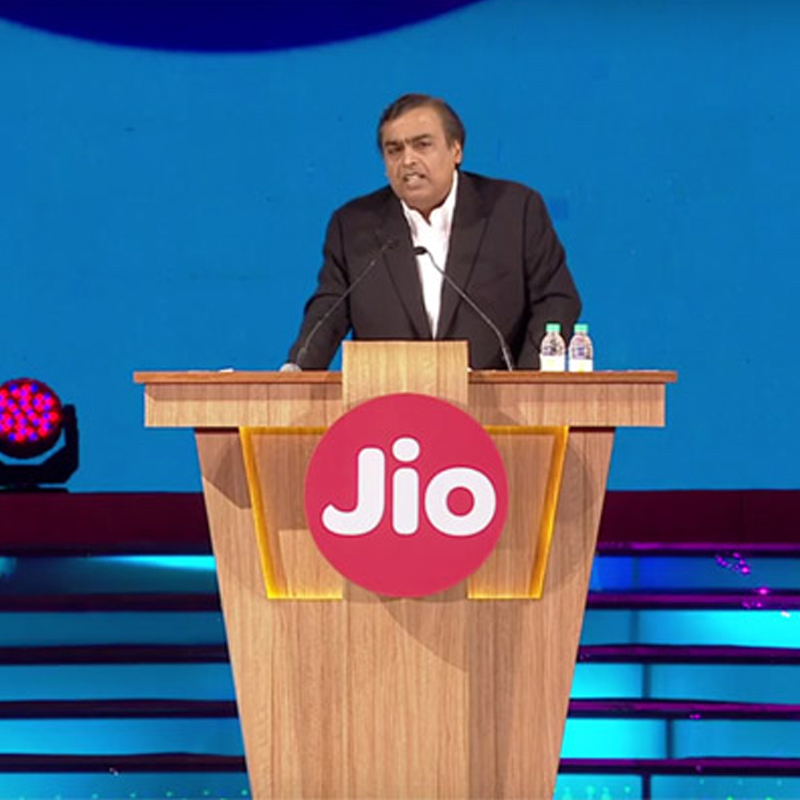
    MUMBAI: Indian television channel owners better watch out. Mukesh Ambani is riding into town and he means business. He sounded his intent at Viacom18’s tenth anniversary celebrations which, were held over the weekend in Mumbai’s NSCI Dome. He came in for a bit post 9 pm. And he was there for a few minutes on the massive stage that was flanked by large LED panels all around the dome. However, what he said, as a joint venture partner of US network Viacom, is what should make other TV industry entrepreneurs sit up and take note.

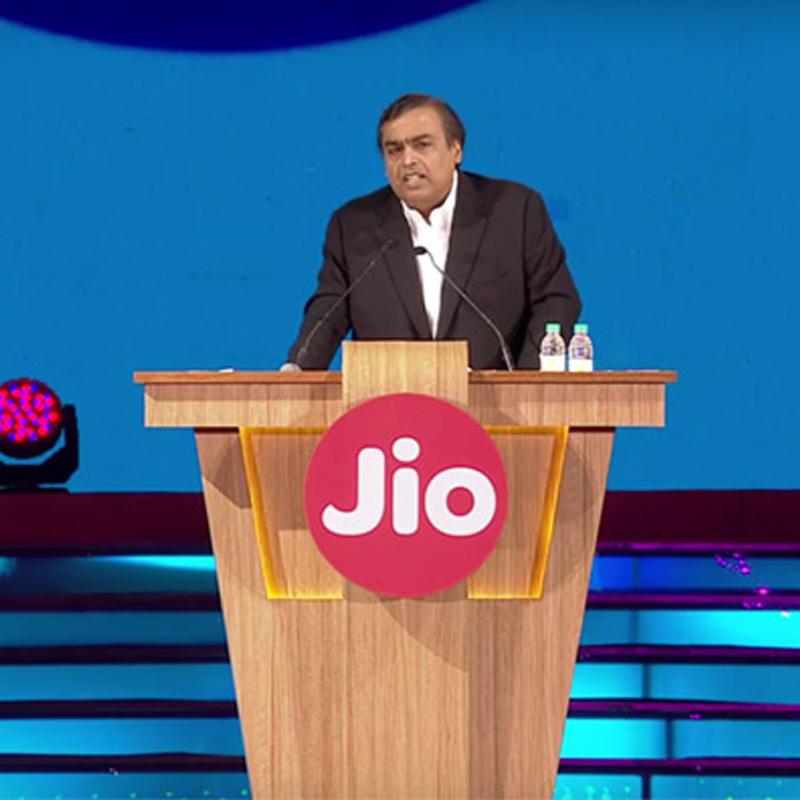
    Clearly laying out the roadmap for the group for the next 10 years, Ambani, India’s richest man, said: “The digital industry in India and the entertainment industry is going to grow manifold. The next decade is going to be the golden period of the entertainment industry and all of you should contribute and learn from this opportunity. This is a once-in-a-lifetime opportunity. And for all of us–Sudhanshu (Vats, the group CEO of Viacom18) told us we are in the storytelling mode–I think collectively for all of us, the entire Viacom18 team, has the responsibility to win the hearts of 1.3 billion people. (With) the synergies that can come from the talent in the Viacom18 family and digital distribution, there is no limit to growth. It’s been over three years since Viacom18 is part of the Reliance group along with Viacom. But I have to tell you. I was, too, obsessed with Jio and I had told Sudhanshu that once I am done with it I’ll be there. The birthday gift I am giving you is I will give you some of my time and support.”

    Obviously, Ambani is looking at replicating the aggressive growth that he has got from his 4G enterprise Reliance Jio. “I think that what we have achieved in Jio in the last two years is take India from 154th in the world to number one in the world in mobile data consumption. Last month on Jio alone, the video viewing was 200 crore hours. And this is just the beginning,” he said.

    Ambani also extolled the young leaders – the average age at Viacom18 is 32 and he urged Sudhanshu to keep at it that over the next decade – “to have courage to dream big, the determination to realise their vision, to have curiosity and the ability to learn.You have to learn something new everyday. And I believe that empathy is required of everyone–to see and understand what the other feels. It is not about yourself, it is about everybody else. These are three principles, which have helped me. I believe for leaders and the team at the top, the job is to win the hearts of our people.”

    Ambani erred when he said that he remembered in 1997 when Colors was launched (he obviously meant 2008), there was skepticism if a third entertainment channel could succeed. “Today as you stand here, the success is all yours – the entire ViacomTV18 team,” he said. “Today is the day to remember the founders and founding team of Viacom18, which includes Raghav Bahl and others.”

    The tenth anniversary celebrations had performances from many artists associated with Colors’ entertainment shows right from Manish Paul to Malaika Arora Khan to Parthiv Gohil to Mouni Roy to Bharti Singh to Raghu Dixit to Kailash Kher, among many others. The party was attended by the crème de la crème of the industry, including Sony Pictures Networks India CEO NP Singh, Star India MD Sanjay Gupta, Dentsu Aegis CEO Ashish Bhasin, Madison World chairman Sam Balsara as well as actors, producers and directors.

    For many, it was an evening to remember.

  • After telecom, Jio to bite into broadband and TV

    After telecom, Jio to bite into broadband and TV

    MUMBAI: After disrupting the telecom sector, Muskesh Ambani led Reliance Jio is now heading towards the fixed broadband and television space.

    The company will launch high speed fibre to the home (FTTH) broadband in more than 30 cities early next year, to offer TV as well as internet to subscribers, it is learnt.

    As reported by Business Standard, Jio has mapped out a plan to address over 100 million TV households across these cities, including tier II and III, by ensuring dense fibre presence for last-mile connectivity to homes. In the first phase itself, at least 50 million households will be offered the service, according to sources in the know.

    Jio has already spread out over 300,000 kilometres of optic fibre (half of which is through a long-term contract with Anil Ambani’s Reliance Communications).

    In his annual speech, Reliance Industries chairman Mukesh Ambani indicated that Jio was on track to offer high-speed broadband services. The infrastructure was in place and it would be the next big monetisation opportunity for the company, he had said.

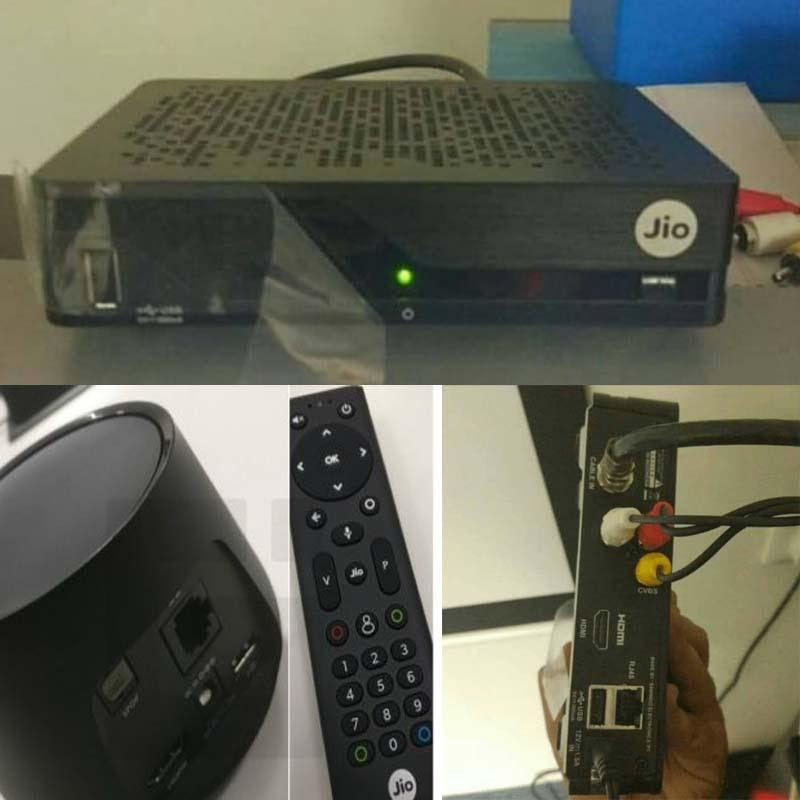
    According to the news report, Jio is expected to woo customers with premium offers such as ultra-high speed of up to 1 gigabit per second. The set-top box, as part of the package, will be a home entertainment hub – offering TV channels, high-end gaming and video on demand, among others.

    Jio is eyeing an average revenue per user of around Rs 1000 to Rs 1500 per month from subscribers (which includes internet and TV), as their usage of data goes up, a source said.

    Trials are being conducted in Mumbai and Delhi with only internet services at speeds of 100 megabits per second and 100 gigabytes of data free of cost. It is providing a special router, which connects multiple devices at a refundable deposit of Rs 4500. With a multi-service operator (MSO) licence in place, it will also offer TV services.

    Representatives of conventional TV industry cite numbers to back their claim that this is a tough game. While there are 180 million TV households in the country, subscribers fork out an average of only Rs 300- 400 a month for as many as 400 to 500 channels currently, they say.

    Competitors also say that currently, only three million subscribers cough up over Rs 1000 for high-speed broadband internet and only two million rustle up a similar amount per month for DTH or cable. So, the market that Jio is looking to address is currently niche and a small one.

    “Deploying FTTH is an expensive business and obviously Jio is making large investments. So, they have to get an adequate return on their investments. They might offer free broadband like they are doing currently and as they did earlier in the mobile space,” said a top industry executive to BS. But they will have to increase tariffs to make money and that might not translate into mass adoption.

    If the experiment succeeds, the number of households with TV and broadband, currently growing very slowly, could just explode, he said.

  • Jio reports operating profits in maiden quarterly financials

    Jio reports operating profits in maiden quarterly financials

    BENGALURU: Reliance Jio Infocomm Limited (Jio), a wholly owned subsidiary of Reliance Industries Limited (RIL), reported positive EBIT for the quarter ended 30 September 2017 (Q2-17, current quarter) of Rs 2,595.7 million. This was the company’s maiden financial quarterly result. The company’s EBIDTA for the quarter was Rs 14,434.5 million on revenue from operations of Rs 61,470.6 million. Consolidated revenue from operations including service tax/GST was Rs 71,970.8 million. Other income was Rs 16.7 million.

    Jio’s subscriber in the current quarter increased to 138.6 million, up 15.3 million from the previous quarter. The company says that ARPU for Q2-17 was Rs 156.4 per month. Jio claims total wireless data traffic for the quarter at 3,780 million gigabytes and average voice traffic during the quarter was 2,670 million minutes per day.

    Commenting on the results, RIL chairman and managing director Mukesh D. Ambani, “The world is transforming, turning digital and India is not going to be left behind. India is ready to go digital, move from voice to data and Jio is creating the foundation of data for the next generation business. The rapid uptake of Jio services reflects the latent need of the society. We are confident that Jio will bring significant benefits to the Indian economy and the Indian customers and will take India to a much higher pedestal. We are focussed on providing multi-layered digital services on top of the basic connectivity service to optimally utilise our world class infrastructure. The strong financial results of Jio demonstrates the robust business model of Jio and the significant efficiencies that the company has built through its investment in the latest 4G technology and right business strategy. As always, the group has demonstrated excellence in execution, vision and commercial acumen.”

    Let us look at the other numbers shared by the company

    Total Expenditure for the current quarter was Rs 65,625.4 million. Networking operating expenses for the quarter were Rs 13,718.9 million. Net access charges expenses was Rs 21,398.8 million. The company paid Rs 3,990 million towards license fees/spectrum charges. Employee benefits expense was Rs 3,031 million. Finance costs were Rs 6,733.8 million. Selling and distribution expenses were Rs 2,608.4 million. Other expenses were Rs 2,305.7 million.

  • Jio and Roy Kapur Films sign multi-year original content deal

    Jio and Roy Kapur Films sign multi-year original content deal

    MUMBAI: Unique collaborations between content companies and OTT and MVOD platforms are marking a milestone in the confluence of rapidly-evolving entertainment, technology and telecom sectors in India.

    Reliance Jio Infocomm (Jio) and Roy Kapur Films (RKF) have entered into a content partnership.

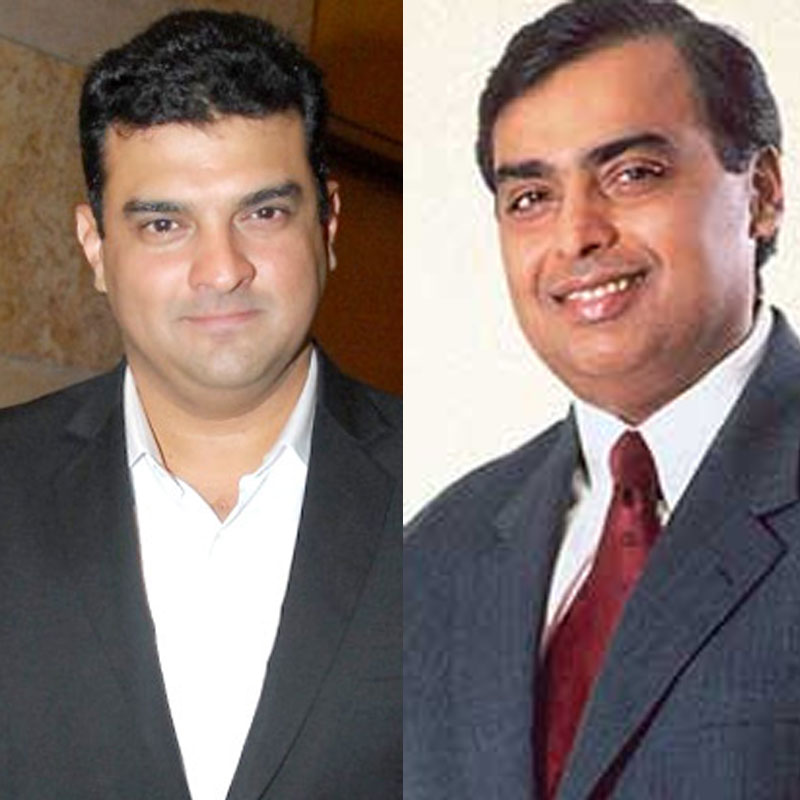
    RKF, a leading film and media production company founded by Siddharth Roy Kapur, will curate, develop, commission and creatively produce original digital video content for Jio.

    This will include finite and continuing series, long form and short form content across genres, and over time, ‘First on Jio’ feature films.

    RKF will tap into the vibrant content production ecosystem in India and together with Jio’s cutting-edge technologies, power the Jio platform with a robust content pipeline of Jio Originals. This exclusive content will be available to more than 128 million Jio subscribers across India.

    Jio’s Jyotindra Thacker said, “Jio carries over 55 million hours of video daily on its network, already making it one of the largest mobile video networks globally. This association with Roy Kapur Films will help us to power forward towards our goal of delivering the highest quality video entertainment content to our mobile subscribers.”

    Kapur said, “Content that can be watched all over India, across all demographics and best of all completely at one’s convenience, across all screens mobile, tablet, laptop and TV. Never before has so much entertainment been so accessible to so many. Our goal is to provide Jio subscribers with a wide variety of content that caters to their diverse tastes and sensibilities.”

  • Jio, Sun Direct, Dish TV among top 50 as HDFC retains BrandZ crown

    Jio, Sun Direct, Dish TV among top 50 as HDFC retains BrandZ crown

    MUMBAI: HDFC Bank has continued to maintain its leadership position in fourth consecutive year, according to the BrandZ Top 50 Most Valuable Indian Brands 2017 report released by WPP and Kantar Millward Brown.

    HDFC Bank (24 per cent) is the India’s most valuable brand, almost doubling its brand value since the ranking started in 2014 from $ 9.4bn to $ 18.0bn.

    “It has a strong purpose – to improve lives by bringing world class financial services to all sections of India – and demonstrates it through increased access to banking in rural areas, an expanded digital presence and leveraging the latest technology to simplify its offering for customers. BrandZ data shows that consumers perceive the bank as increasingly innovative,” the report stated.

    India’s most valuable brands have increased their brand value by 21 per cent to US$ 109.3 billion in the last year. This compares with a two per cent decline in 2016, and is well ahead of the eight per cent value increase of the BrandZ Top 100 Most Valuable Global Brands 2017.

    There are seven newcomers in the overall ranking. Telecom provider Jio ranks at number 11 — only months after its launch, having disrupted its category with free-data promotions. The others are newly-listed retailer D-Mart (no.24), appliance brand Whirlpool (no.45), insurance brand Bajaj Allianz (no.49), Canara Bank (no.50) and entertainment brands Sun Direct (no.27) and Dish TV (no.47)

    The Store WPP CEO EMEA and Asia David Roth said, “Indian consumers seek authenticity and value for money, and the meaning of those things is being constantly redefined. As consumers become wealthier, they look beyond price to factors such as extra features, innovation and a personalised experience. As reflected in this year’s ranking the most agile Indian brands have recognised the complexity in the market, and achieved just the right balance between aspirational and affordable.”

    The automobile category, which also includes tyres, lubricants and motor fuels, grew 23 per cent in value. Brands responded to the changing market with new models that combined smart pricing and functionality with style and power. Royal Enfield, Maruti Suzuki and TVS were among the Top 10 overall fastest risers. Royal Enfield (no.40, 59 per cent) engaged with biker  groups on social media, and marketed a range of accessories. Maruti Suzuki (no.7, 56 per cent) extended the brand beyond its traditional appeal to the value segment of the market, while introducing new showrooms called NEXA to reach premium customers.

    India’s Top 50 faced successive disruptions in the last year, some global, some created by fast-growing competitors and others strategically imposed by the government – including demonetisation.

    The FMCG category, which includes alcohol, food and dairy, personal care and soft drinks, was significantly affected by these challenges but still managed to grow 6 per cent in total value. Some brands achieved impressive value increases by accurately understanding and responding to Indian sensibilities. Noodle brand Maggi (no.32; 66 per cent), the overall second-fastest riser, aligned itself with the trend for nostalgia. This helped it bounce back after a difficult couple of years; its rapid regrowth demonstrating how a strong brand can help a company weather a crisis and recover faster, although it is still some way below its peak brand value of $1.1bn in 2014. Health food brand Saffola (no.36; 24 per cent), meanwhile, introduced oats in new localised flavours and expanded its range of oils into a new super premium sub-segment.

    The financial services category increased its value by 26 per cent. The fastest rising banks were Punjab National Bank (no.39; 43 per cent), which is highly customer-focused and more agile than some of its competitors, and Kotak Mahindra Bank (no.6; 36 per cent), which has innovated in areas including digital banking. Both of these brands still have significant catching up to do, however, if they are to reach the top of the leader board.

    The BrandZ™ Top 10 Most Valuable Indian Brands 2017

    Rank 2017

    Brand

    Category

    Brand value 2017 (US$M)

    Change

    1 (-)

    HDFC Bank

    Banks

    17,965

    +24%

    2 (-)

    Airtel

    Telecom providers

    10,233

    +3%

    3 (-)

    State Bank of India

    Banks

    8,334

    +31%

    4 (-)

    Asian Paints

    Paints

    4,717

    +15%

    5 (-)

    ICICI Bank

    Banks

    4,697

    +19%

    6 (+1)

    Kotak Mahindra Bank

    Banks

    4,522

    +36%

    7 (+1)

    Maruti Suzuki

    Automobiles

    4,449

    +56%

    8 (-2)

    Bajaj Auto

    Automobiles

    3,564

    +5%

    9 (-)

    Hero

    Automobiles

    3,295

    +17%

    10 (-)

    Axis Bank

    Banks

    2,428

    +2%

    Other trends highlighted in this year’s BrandZ Top 50 Most Valuable Indian Brands include: The long-term growth curve of the Top 50 is positive, with the total brand value of the ranking up 57 per cent  since the study was first carried out in 2014, when it amounted to $69.6bn

    India experienced a resurgence in national pride, while also embracing globalization. This manifested in a desire for products and brands that best reflect Indian heritage, sensibilities and tastes, which benefited local brands and put pressure on multinationals to follow suit. Colgate (no 28; two per cent) launched a toothpaste with Ayurvedic properties to meet this demand.

    The top riser is insurance brand ICICI Prudential (no.35; 89%). It benefited from the ‘halo effect’ of other brands’ successful responses to rising consumer affluence, which led to an increase in sales of assets such as cars that need insurance protection

    Kantar Millward Brown MD — South Asia Vishikh Talwar said, “There are now ‘multiple Indias’. Consumers continue to love the brands they’ve loved for generations, while equally embracing the brands of the future. Brands must be completely in rhythm with the pulse of the market. Those that can accurately interpret Indian sensibilities, while ensuring smart pricing, are likely to be most successful. This is easier for local brands, but people will relate just as positively to a global brand if it uses insight to understand and meet their needs, and communicate in a way that builds trust.”

    For the first time, this year’s BrandZ Top 50 Most Valuable Indian Brands 2017 study incorporates new research from Y&R’s BAV Group into what it takes to build powerful nation brands. According to the 2017 Best Countries report, India stands out for its history, cultural influence, distinction and reputation for entrepreneurship; especially among the world’s business decision-makers.

  • Four telcos will emerge from India consolidation, predicts CCS Insight

    MUMBAI: On 27 June, global analyst firm CCS Insight announced the launch of its new report focused on the development of the Indian telecom industry.

    The report – India: Halcyon Days Ahead in a Four-Operator Market – highlights the history, dynamism and consolidation of the Indian telecom market, revealing that:

    A total of 68 per cent of leading telecoms executives surveyed predict that India will consolidate to a four-operator market

    Just over half of respondents to a CCS Insight survey think that Vodafone will still be operational in India in five years’ time
    Market consolidation will be a positive outcome for network operators, consumers and manufacturers of infrastructure and handsets
    India’s population of more than 1.25 billion people represents an enormous market for mobile communications. It has attracted billions of dollars of investment from domestic and international companies over the past 20 years and, with the consolidation process in India now moving at a rapid pace, it has the potential to bring an end to two decades of market chaos.

    The report is written by CCS Insight senior adviser Tony Worthington, the former Global Head of Telecoms, Media and Technology at Standard Chartered Bank. Tony has been involved in the Indian telecoms industry for over 20 years.

    He notes that “the consolidation process in India is now well under way, and the main uncertainty seems to be whether the Ambani brothers — one of whom owns Reliance Communications, and one of whom owns Jio – will be able to live with a merger between the two companies. Most of the survey sample seems to think that, ultimately, they would”.

    CCS Insight CEO Shaun Collins adds, “This report provides some interesting thoughts for consumers, handset providers and mobile operators in India. Consolidation is a reality for operators across the globe and there’s a history of instability in the Indian market, so we’re excited to see the growth and evolution of this sector. CCS Insight looks forward to working with its valued clients in considering the future implications of consolidation in India, fuelled by the mergers of Vodafone and Idea Cellular, Reliance Communications and Aircel and by the ambitions of Jio”.

  • Most Jio recharges were digital & traditional spend was above average, says Vishal Sampat

    MUMBAI: Reliance Jio’s launch in India caused a stir in the telecommunication industry. Since then, it’s been a fight between all the telecom players. When Jio launched with free call and text messages, and five times cheaper than others data, it disrupted the industry indeed.

    To decode the journey of Brand Jio, its chief digital officer Vishal Sampat was in conversation with WATConsult CEO Rajiv Dingra at IAMAI 13th Marketing conclave in Mumbai. Speaking about the digital versus traditional marketing spend ratio, Sampat said, “A majority of recharges came from the digital channels and the traditional spend above telecom average.”

    So, what is Brand Jio and what does it stand for? Jio stands for so much more than a telecom company, and it’s the world’s largest startup. “From the business perspective, we have been building a pipe that enables billions of Indians to be online, get access to information that they did not get at the right rate,” Sampat said.

    “We are creating an ecosystem with our apps which not only allows consumers to come online, but experience so much more. We envision Jio as a way of life when it comes to people’s digital life,” he said.

    About the biggest challenge as Brand Jio moving from a service which was largely free to now paid, Sampat said: “Even after stopping being service, we still had a majority of users and we still are a hundred million plus — with subscribers who paid us for Jio Summer Surprise and Jio Dhan Dhana Dhan. People are using our network constantly. Our data rates are the best in the industry. For paid Jio, consumers expect from us a certain level of customer experience. Despite the challenges, we successfully moved people from free to pay.”

    One great thing which actually worked for the brand is King Khan, who is the brand ambassador.

    “The market was dominated by three large players, and we planned to disrupt that market. From the marketing perspective, we had to be ready with various options — one of which was choosing the perfect brand ambassador. Shah Rukh Khan’s persona resonated with Jio,” Sampat said.

    “With our best quality service and SRK’s help, we could clearly show to the world that there was an appetite for data. Then, we changed our strategy from the new launch campaign to a product-based campaign. I think product base campaign is the right way to go,” Sampat said.

    Jio started building the brand on two points — one was the Net speed, and other was data. “You constantly challenged the market with these. They are challenging Jio with aggressive speed and downloads. Do you think you have to come up with a better promise,” Dingra asked.

    Sampat said that speed and downloads were the most talked about aspects. “The fact is that the 90 per cent mobile broadband data is carried by Jio in India. A majority of people are using our sim for data. People who claim that they are the fastest network need to cross-check with TRAI. On the regulator’s website, a home-test in the last four months will reveal that Jio apps have been download faster than others. We are also the only pan-India 4G providers,” he added.