Tag: Jio

  • Mukesh Ambani keeps salary unchanged for 10th year in a row

    Mukesh Ambani keeps salary unchanged for 10th year in a row

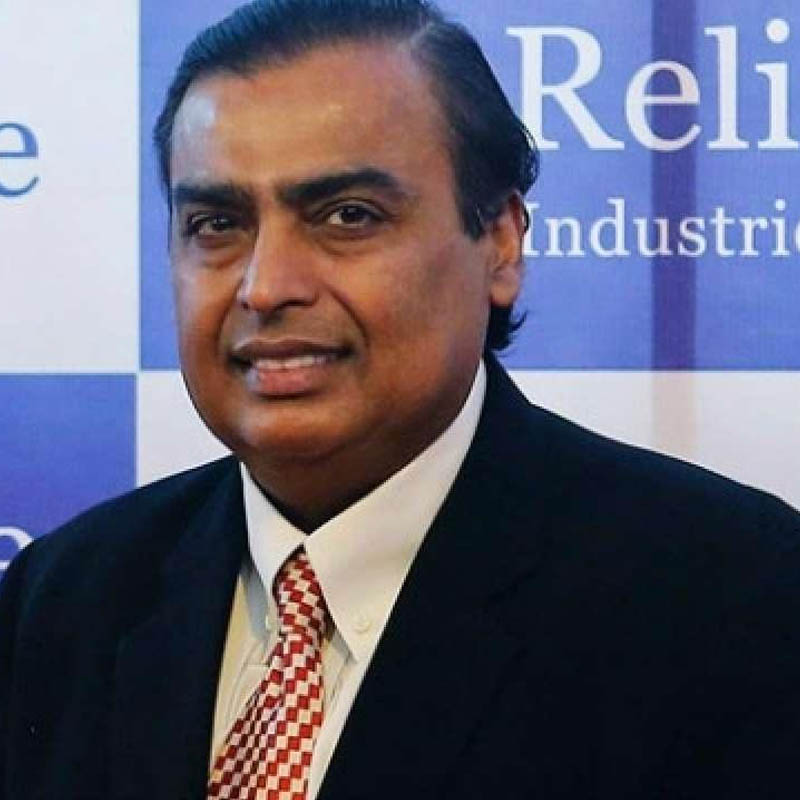
    MUMBAI: Reliance Industries (RIL) chairman and India’s richest man Mukesh Ambani kept his annual salary capped at Rs 15 crore for the tenth year running. RIL’s annual report released on Thursday said Ambani’s decision to freeze his pay shows “his desire to continue to set a personal example for moderation in managerial compensation levels”.

    According to a report by news agency PTI, Ambani’s remuneration for 2017-18 included Rs 4.49 crore as salary and allowances. Commission, at Rs 9.53 crore, witnessed no alternation, while perquisites were reduced to Rs 27 lakh from Rs 60 lakh, with retirement benefits of Rs 71 lakh.

    Ambani, who has a net worth of $40.1 billion, took home a lesser pay than his cousins and RIL executive directors Nikhil Meswani and Hital Meswani . The duo earned Rs 19.9 crore each in the financial year 2017-18. In 2016-17, the Meswani brothers were paid Rs. 16.58 crore each.

    Ambani’s wife Nita Ambani earned Rs 6 lakh sitting fee and a commission of Rs 1.50 crore as compared to Rs 1.35 crore in 2016-17. Nita joined the RIL board as a non-executive director in 2014.

    The 61-year-old Ambani was ranked 19th globally in Forbes 2018 ‘World’s Billionaires’ list, moving up from the 33rd position he occupied last year.

  • BTVI to leverage digital mediums for growth

    BTVI to leverage digital mediums for growth

    MUMBAI: English business news channel BTVI is completing two years in August this year. The company was transformed from Bloomberg TV India after Bloomberg decided not to renew its deal with Business Broadcast News. BTVI got its COO Megha Tata in 2016 at the same time it got its new name. 

    English Business News (EBN) genre is still a very niche market with only five channels in the race – CNBC TV18, ET Now, BTVI, NDTV Profit and CNBC TV18 Prime HD. The genre contributes to less than one per cent of the total TV pie where BTVI is still struggling to compete with the genre leaders, CNBC TV18 and ET Now.

    It was around the same time that BTVI decided to bring in ex HBO MD Megha Tata on board as the channel’s new COO. Tata’s journey ever since has been a roller-coaster ride and she believes that refurbishing the leadership at BTVI has been a positive step. “Bringing back revenue function in-house which was outsourced before was another move that has worked for us,” she says. 

    One of the crucial decisions that paid off for BTVI was refurbishing the leadership. “Besides having a strong editorial leadership, in people like Anuj Katiyar to lead marketing, research and branded content, Shilpa Shetty to head revenue, Ashim Chakraborty as HR head and Deepa George to head our legal, I think we found an absolutely perfect leadership team. Bringing back revenue function in-house which was outsourced before was another move that has worked for us,” she adds.

    The hard work in the last one year has helped in boosting the channel’s market share from two per cent to a stable 15 per cent (touching as high as 24 per cent at times). This growth was riding on the back of very strong consumer insights being translated into on air content, programming changes, promo planning, FPC planning and brand building. 

    Tata believes that the business news genre is consumed not only on linear TV but also on OTT platforms. The channel is already present on Hotstar, Jio TV, Yupp TV, Airtel TV and Tata Sky TV. The key trend this year, according to Tata, will be the further penetration of TV in rural areas.

    Tata says that the future is for broadcasters to create specialised content for their social media as well as OTT platforms to retain subscribers and their loyalty. “More TV viewers from rural India will also mean an increase in advertiser base and hence advertising revenue. This year will also see exponential growth in the viewership of non-linear OTT platforms. Now that these OTT platforms have garnered critical subscriber base, it will be interesting to see what are the different revenue models that will emerge to monetise this critical subscriber mass. BARC is expected to launch EKAM – the integrated viewership measurement module – later this year. This will certainly help in rationalisation of investments in these OTT platforms,” she adds.

    With eight states gearing up for elections, news channels are sure to have a ball. Tata thinks that with addressable TV, broadcasters will get an option of customising ad breaks and play different ads targeted at different markets/TG. This will make TV lucrative for regional and small advertisers thus increasing advertiser base and revenues of broadcast TV media.

    BTVI, in the last financial year, had focussed on improving the OTS levels to 100 per cent in its key markets. In this financial year, the channel’s aim is to achieve this 100 per cent OTS in all the P1 markets.

    The growth in digital hasn’t had a deteriorating impact on traditional news viewing. Instead, Tata believes they complement each other and it is the content that will be the winner. Advertising on digital medium is growing rapidly, though not at the expense of TV revenues. 

    Urban India is ahead when it comes to consuming news on digital mediums but it is mainly headlines. When it comes to analysis, views or opinions, the option is always a news channel or newspaper.

    Tata reveals that increasingly audiences are consuming English business news on their mobiles and non-linear platforms like OTT and m-sites of trading apps. It’s an opportunity not to be missed. “Hence, we at BTVI have increased our focus on building a strong digital ecosystem for brand BTVI. We are already available on trading apps of Kotak, Axis Direct and IIFL. We are also working on our mobile app as well as revamping our website. To support the app and website, we plan to build a robust digital content plan,” she says.

    Though the regional market is important, BTVI will first look at focussing its energy and resources in establishing itself in its core metro market first. The regional market will come in at a later time.

    Speaking on the issue of taking up dual local channel number (LCN) she says that though it is advantageous to the channel, it can even hamper the brand since people can’t remember more than one number for a channel. Though it may get additional reach, it won’t get enough TSV to justify the cost.

  • Jio partners Screenz for interactive TV solution

    Jio partners Screenz for interactive TV solution

    MUMBAI: Mukesh Ambani’s Reliance Jio is wanting to capture every pie of the media and entertainment business. Even as it charters new growth avenues in digital, Jio has announced a partnership with Screenz to launch Jio Screenz.

    It will be a solution for broadcasters to get digital interactivity and will convert passive TV viewing and advertising into an interactive and participative one. Screenz is used globally by broadcasters and format owners for entertainment-based interactivity.

    For starters, there will be two-way communication between broadcasters and viewers through quizzes, polls and votes during the show. There will be an easy content management system (CMS) for broadcasters to design, create and launch interactive engagements. It can be enabled on any digital app using SDK with support on Android, iOS and Jio Kai-OS. Jio Screenz supports various social networks namely Google, Facebook, Twitter etc.

    It also has a drooling proposition to advertisers – better customer profile. Jio Screenz will support a rich data reporting and create unique profiles for each user, hence enabling targeted advertisement.

    This partnership will be an add on to Jio’s existing platform for gamification. Jio Screenz claims to be the largest and probably the only platform to provide entertainment-based gamification. Some of its features are to allow live, real-time interaction between broadcasters and viewers for intense engagement and viewership.

    In a press release, Jio calls itself a ‘customer obsessed organisation and will continue to bring disproportionate value, innovative features and best-in-class services to its customers, always’.

    A few days ago Jio launched JioInteract, an AI-based brand engagement platform.

  • Reliance Jio makes a punt on tech start-ups

    Reliance Jio makes a punt on tech start-ups

    MUMBAI: After closing Saavn and Embibe deals, Reliance Jio, according to a report published by The Economic Times, is now looking to acquire Indian start-ups in the technology ecosystem.

    In a bid to take on its competition, Reliance Jio is now looking to invest more to create a comprehensive ecosystem of digital products and services around its core telecom service.

    To add more relevant entertainment and education content to its Jio platform, the company is looking to invest in or acquire start-ups operating in the content, healthcare, education technology, financial technology and transportation segments. It might also look at Jio aligning with product technology ventures, particularly those operating in artificial intelligence (AI) and machine learning (ML).

    In April, Reliance Jio Music and Saavn leveraged their synergies to jointly strengthen their foothold in the Indian music streaming market. The combined value of the companies has been pegged at $1 billion, out of which Jio Music’s implied valuation is $670 million leaving Saavn at a valuation of $330 million. With this, Reliance also acquired a partial stake in Saavn from its existing shareholders for $104 million.

    Also, soon after this, Reliance Industries Ltd (RIL) agreed to invest over $180 Mn into AI-based education platform, Embibe over the next three years. This will put RIL in a position to buy out around 72.69% stake from Embibe’s existing investors including Lightbox and Kalaari Capital.

    Leading Jio’s charge into the start-up ecosystem is Akash Ambani, the 27-year-old Brown University-educated older son of Mukesh Ambani. Akash Ambani, chief of strategy at the company, is believed to be deeply involved in the negotiations.

    Also Read :

    Jio Music, Saavn to merge; RIL to invest $100 mn in combined entity

    Jio shifts focus to wired broadband


  • Jio reports maiden annual profit

    Jio reports maiden annual profit

    BENGALURU: Mukesh Dhirubhai Ambani’s biggest start-up in the world Reliance Jio Infocomm Ltd, or simply Jio, had started returning profits a couple of quarters ago. For the year ended 31 March 2018 (FY 2017-18, the year under review), this Reliance Industries Ltd (RIL) subsidiary reported profit of Rs 723 crore against operating revenue of Rs 20,154 crore and value of services of Rs 23,714 crore.

    Jio statement said that it has continued its strong subscriber growth trend with net addition during the quarter ended 31 March 2018 (Q4 2017-18) of 26.5 million (as against 21.5 million in the previous quarter) and a churn of 0.25 percent per month. Jio’s subscriber base as on 31 March 2018 was 186.6 million (18.66 crore). Average revenue per user (ARPU) during the quarter was Rs 137.1 per subscriber per month. A Jio earnings release said that Jio subscribers continue to demonstrate high activity levels with average data consumption per user per month of 9.7 GB and average voice consumption of 716 minutes per user per month. Also, video consumption is at over 240 crore hours per month on the network while Jio apps continue to be highly popular.

    Commenting on the results, RIL chairman and managing director Ambani said, “A full-blown social, mobile and digital revolution is underway across the world, and I am glad that India is not being left behind in any way with the advent of Jio. Everyone at Jio is today proud to have played a pivotal role in transforming the digital landscape of this country and empowering millions of Indians with all the leading digital tools and skills. Jio is offering the ‘power of data’ to each Indian to fulfil every dream and to collectively take India to global digital leadership. The strong financial results of Jio in a competitive market environment demonstrates the robustness of the Jio business model and ability to offer the most value to our customers and partners. Jio has demonstrated that it can scale and sustain its strong financial performance.”

    RIL numbers

    For FY 2017-18, RIL achieved consolidated revenue of Rs 430,731 crore, an increase of 30.5 percent, as compared with Rs 330,180 crore in the previous year. The company’s profit after tax was higher by 20.6 percent at Rs 36,075 crore as against Rs 29,901 crore in the previous year.

    Also Read :

    Jio Music, Saavn to merge; RIL to invest $100 mn in combined entity

    Star India beats Sony, Jio to win media rights for BCCI’s home matches

    Reliance launches JioTV for web


  • Feb-18: Mobile broadband numbers increase as wired internet subscribers decline

    Feb-18: Mobile broadband numbers increase as wired internet subscribers decline

    BENGALURU: The total number of broadband internet connections have increased by about eight per cent in the calendar year 2018 (year started 1 January 2018, CY-2018) until 28 February 2018 (Feb-18) as per Telecom Regulatory Authority of India (TRAI) data. The period under review in this paper is the period between 1 January 2018 and 28 February 2018. CY-2017 closed with 362.87 million (36.287 crore) broadband connections as on 31 December 2017. The total number of broadband connections in Feb-18 was 392.06 million (39.206 crore). Broadband internet growth in the country was driven by mobile (phones and dongles) internet services which had about 8.5 per cent subscriber growth and closed February 2018 with 373.94 million (37.384 crore) subscribers. TRAI defines broadband internet speed as download speeds equal to or exceeding 512 kbps. TRAI data has been rounded off to the nearest 10,000, hence the accuracy of this report is limited to that extent.

    During the period under consideration, wired internet subscriber numbers declined 0.8 per cent to 17.72 million (1.772 crore) from the 17.86 million (1.786 crore) subscribers reported at the end of December 2017 or as at 1 January 2018. Fixed wireless (WiFi, Wi-Max, point-to-point radio and VSAT) subscriber numbers also declined 9.1 per cent during the period to 0.4 million (0.04 crore) from 0.44 million (0.044 crore).

    Among the top five internet players, Indian telecom major Bharti Airtel (Airtel) showed the highest growth rate during the period under review at about 13 per cent. However, in absolute numbers, it was Mukesh Ambani’s biggest startup in the world – Reliance Jio Infocomm or Jio that added the most number of subscribers in the two months of the current year at 17.04 million or 1.704 crore. During the period, Airtel added 9.15 million (0.915 crore) broadband internet subscribers.

    The top five service providers in India as on 28 February 2018 constituted 94.99 per cent market share of the total broadband subscribers. These service providers were Jio (177.13 million, 17.713 crore), Airtel (80.24 million 8.024 crore), Vodafone (55.54 million, 5.554 crore), Idea Cellular or Idea (38.52 million, 3.852 crore) and BSNL (21.00 million, 2.1 crore).

    While the first five players saw a growth of subscribers during the period under review, the government-owned BSNL or Bharat Sanchar Nigam Limited has been losing them. BSNL had 21.95 (2.195 million) broadband subscribers and lost about 0.95 million (0.095 crore) subscribers or de-grew by over four per cent.

    Top five wireless broadband internet players

    As mentioned above, broadband wireless aka mobile internet players have been the broadband internet subscriber numbers’ growth drivers. As on 28 February 2018, the top five wireless broadband service providers were Jio (177.13 million, 17.713 crore), Airtel (78.07 million, 7.807 crore), Vodafone (55.54 million, 5.554 crore), Idea (38.52 million 3.852 crore) and BSNL (11.71 million, 1.171 crore).

    Here also, Airtel has reported the largest growth in percentage terms – it grew by about 13 per cent, while Jio had the highest growth in absolute numbers – Jio grew by 17.04 million (1.704 crore) during the first two months of 2018. BSNL has been bleeding wireless broadband internet players during this period. It lost about 0.86 million (0.086 crore) subscribers or de-grew by approximately nine per cent.

    Top five wired broadband internet players

    As has also been mentioned above, wired internet subscriber numbers have declined during the first two months of 2018. As on 28 February 2018, the top five wired broadband service providers were BSNL (9.30 million, 0.93 crore), Airtel (2.17 million, 0.217 crore), Atria

    Convergence Technologies or ACT (1.30 million, 0.13 crore), MTNL (0.88 million, 0.088 crore) and Hathway Cable & Datacom (0.75 million, 0.075 crore).

    The top five wired internet players in the made up over 81 per cent of the total wired internet subscribers in India. Their share has grown during the period under consideration despite a slight drop in share in Jan-18. Except for BSNL and the other government-owned player Mahanagar Telecom Nigam Limited or MTNL, the other three players among the top five have grown the number of wired broadband internet subscribers. BSNL lost about 80,000 subscribers while MTNL lost about 30,000 subscribers during Jan-Feb 2018. The other three players among the top five have added about 60,000 subscribers (added about 20,000 subscribers each) during the period under review.

    Among the other wired broadband internet players, besides the five mentioned above, are television multi system operators (MSOs) and local cable TV operators (LCOs). The numbers provided by TRAI indicate that while during the period under review, the top five wired broadband internet players lost about 50,000 subscribers, the total number of wired broadband internet subscribers fell by about 0.14 million or 140,000. This means that the other players have lost about 90,000 subscribers.

    Also Read :

    Jio continues leading broadband subs addition while wireline internet loses subs in Oct

     TRAI bats for converged regulator & renaming of NTP’18

    SC could take up TRAI-Star case on tariff regulations
  • Jio shifts focus to wired broadband

    Jio shifts focus to wired broadband

    MUMBAI: After bringing about a massive change in the usage of wireless internet and market dynamics, Reliance Jio is looking at the broadband or wired internet sector. According to a media report, Jio is working at full steam to launch broadband in homes towards the end of this year.

    Jio’s success in wireless internet with 168 million subscriber base is unquestionable. For the launch of the broadband service, the company has already started beta trials across some locations in country along with offering free broadband across regions in New Delhi and Mumbai. The trial service is offering unlimited internet at 100 mbps for a security deposit of Rs 4,500.

    “The full-fledged commercial launch is likely to be announced on 28 December, which happens to be late Dhirubhai Ambani’s birthday,” a person familiar with the development was quoted by Livemint in its report.

    A TRAI report earlier said that India had only 21.28 million wired internet subscribers compared with 424.67 million wireless internet subscribers in 2017. The major player in the segment is BSNL followed by Bharti Airtel. The low number of wired internet users leaves a big scope for Jio’s upcoming business. Airtel, Jio’s main competitor, provides high-speed wired broadband across 89 cities in India.

    While big players are chasing metro cities, cable TV distribution company DEN Networks Ltd has shifted its focus to small towns.

    “The tariff and stress of telcos is, as of now, focussed on the main metros. So we have made the game plan for tier 2 and tier 3 cities. We don’t want to be trapped in this (the war between telcos),” DEN Networks chief executive officer SN Sharma said.

    Tags: Jio, Airtel, BSNL, DEN Networks, Wired internet connection

    Also Read: 

    CCI okays RCom’s asset sale to Reliance Jio

    India’s jio wins “Best Mobile Operator Service for Consumers” at Global Mobile Awards 2018


  • Jio & Sodexo to accelerate digital transformation

    Jio & Sodexo to accelerate digital transformation

    MUMBAI: Reliance Jio and Sodexo, the leader in Employee Benefits today announced the partnership to accelerate India’s digital transformation. Jio and Sodexo will leverage complementary strengths and offerings to create an enriched digital life ecosystem for Indians.

    JioMoney, the PPI wallet offered by Jio Payments Bank Ltd., has enabled integration of Sodexo Meal Cards with a user’s JioMoney account to allow mobile-based payments via Sodexo Meal Card. The partnership will enable thousands of Sodexo Merchants like grocery shops, kiranas, restaurants and cafes across the country, to accept digital payments via Sodexo.

    Sodexo’s proprietary meal benefit solution, Sodexo Meal Pass can be linked to the JioMoney App for making quick payments on-the-go. It will also be an added digital transaction option for JioMoney’s rapidly growing user-base across India. Consumers no longer have to carry the Sodexo’s physical card for the purchase of food and non-alcoholic beverages. They can simply add the Sodexo Meal Card balance to the JioMoney app and start transacting on-the-go. Jio and Sodexo will continue to work together to accelerate adoption of services offered by both the brands.

    Speaking on the association, JioMoney, Business Head,  Anirban S Mukherjee said, “Jio’s partnership with Sodexo will further Jio’s endeavour to deliver the benefits of evolving digital technologies to every Indian and allow them to live Digital Life to the fullest. The integration will bring convenience and new digital transaction options for both JioMoney and Sodexo users in India. Going forward both brands will leverage core strengths, develop synergies and expand their reach and presence in India’s growing digital ecosystem.”

    Rewards Services India, CEO Sodexo Benefits, Stephane Michelin said, “At Sodexo, we constantly strive to enhance the consumer experience by expanding the ways to use the Sodexo Meal card within our proprietary network. Our endeavour has been to improve the retail experience for our 3 million daily users. With this partnership, JioMoney’s MPOS system will help segregate the food & non – food items among standalone, smaller merchants, which will further strengthen Sodexo’s position as a compliant meal benefit solution in the country.”

    The solution has already been launched in Mumbai and the consumer response has been excellent. The JioMoney solution will be enabled at all Sodexo accepting merchants nationally over a period of time. This partnership between JioMoney and Sodexo, both being leaders in their respective spaces brings high levels of domain expertise will bring about a radical change in the payments landscape across the country.

  • BCCI rights: Day 2 top bid ends at Rs 6032.50 crore

    BCCI rights: Day 2 top bid ends at Rs 6032.50 crore

    MUMBAI: The bid for the Board of Control for Cricket in India’s (BCCI) home matches has reached a whopping Rs 6,032.50 crore at the end of the e-auction process on day two according to India Sports TV’s twitter handle.

    The e-auction process will resume at 11 am on Thursday.

    The last bid on day two stood at Rs 6,032.50 crore for the consolidated rights–amounting to a per match value of Rs 59.14 crore. The figure has already bettered the Indian Premier League’s per match record value of Rs 55 crore.

    On Wednesday, the bids that were made public stood at Rs 4517.25 crore, Rs 4565.20 crore, Rs 5488.30 crore, Rs 5748 crore, Rs 6001 crore, Rs 6003.09 crore and Rs 6032.50 crore.

    And so the bidding for the 102-game BCCI FTP for five years (2018-2023) continues. There is a feeling within the BCCI that the final bid may touch the magic number of Rs 6,500 crore for the consolidated rights. 

    Bids for BCCI’s home rights close in on Rs 6000 crore

    As the bidding for the media rights for the Board of Control for Cricket in India’s (BCCI) home matches intensifies, the bid price has breached the Rs 5000 crore mark. According to Insidesport.co, the latest bid (in the round that concluded at 3:40 pm) was at Rs 5748 crore, translating into an astronomical Rs 56.3 crore per match. For the 2012-18 cycle, Star India paid the BCCI Rs 3851 crore or Rs 43 crore per match.

    Three companies – Star India, Sony Pictures Network India (SPN) and Reliance Jio—are currently in the middle of an intense bidding war for the rights, which include 102 international matches across 190 days in the 2018-23 cycle. The bidding started on April 3 and was carried forward to the next day when no successful outcome was reached on the first day of the e-auction.

    Three categories of rights have been put on sale by the BCCI–global television rights and rest of the world digital rights (GTVRD), digital rights for the Indian subcontinent alone (ID), and the global consolidated rights comprising worldwide TV and digital rights (GCR). As was the case with the Indian Premier League, if the global consolidated bid exceeds the sum of the GTVRD and ID, then that bid wins. If not, the individual bids–India television, global digital and India digital rights—will be deemed winners.

    The base price for the 2018-19 season for the GTVRD is Rs 35 crore, Rs 8 crore for ID and Rs 43 crore for the global consolidated rights. For the 2019-2023 tenure, the base price for GTVRD is Rs 33 crore, for ID is Rs 7 crore and Rs 40 crore for GCR.

    Also Read:

    Bidding takes BCCI home matches’ media rights to a new high

    BCCI strengthens IPL ACU, appoints Ajit Singh as head

  • Bidding takes BCCI home matches’ media rights to a new high

    Bidding takes BCCI home matches’ media rights to a new high

    MUMBAI: The race is on to capture the five year media rights to the Indian cricket team’s home matches (102 matches in India from June 2018 to March 2023)

    On offer are the television and rest of the world digital rights (GTVRD), Indian subcontinent digital rights (ID), and the global consolidated rights (GCR). And by end of yesterday (3 April), only three bidders – Reliance, Star India and Sony- were left in the fray in the e-auction for the GCR. The reason: the other bidders like Google and Facebook were disqualified as they did not have both a TV and digital presence.

    The BCCI on its Twitter handle, through the day, announced which way the price graph was headed. Star India, which had the rights from 2012 to 2018, had breasted the tape by quoting Rs 3851 crore for a total of 96 matches across formats and included internet as well as mobile rights.

    But according to BCCI’s Twitter handle, the e-auction bidding commenced with a price of Rs 43 crore per match and an annual payout of Rs 774 crore (in 2018-19); Rs 40 crore per match with an annual payout of Rs 1040 crore in 2019-20, Rs 40 crore and Rs 580 crore in 2020-21, Rs 40 crore per match and Rs 920 crore for 2021-22, Rs 42 crore per match and Rs 882 crore annually giving a total GCR bid of Rs 4176 crore.

    That bid was bettered soon with an offer of Rs 4201.20 crore. Another offer of Rs 4244 crore came in according to the BCCI Twitter account.

    Reports at the end of the day stated that the bidding went further northward with offers of Rs 4303 crore, Rs 4328.25 crore and Rs 4442 crore being the final quote just as the e-auction for day one ended. BCCI is being assisted by MJunction Services, Deloitte Haskins & Sells and Cyril Amarchand Mangaldas to ensure transparency and compliance.

    The online auction will now resume today, 4 April at 11 am from the same stage.

    Experts opine the BCCI media rights figure could climb rapidly tomorrow and expectations are that bidders could up the rates to between $800 million to $1billion

    The BCCI would surely approve.