Tag: Jio World Convention Centre

  • Mumbai Comic Con 2025 blasts off with cosplay, games and girl power

    Mumbai Comic Con 2025 blasts off with cosplay, games and girl power

    MUMBAI: It wasn’t just another Saturday at Jio World Convention Centre. It was the Saturday—where pop culture pulsed through every aisle, comic panels came alive, and Mumbai felt like the center of the multiverse.

    Day one of Mumbai Comic Con 2025 kicked off in spectacular fashion, with thousands of fans dressed head-to-toe in everything from anime classics to MCU icons. You could spot a Spider-Man grooving to DJ beats next to a perfectly hand-crafted Princess Mononoke—it was a wild, wonderful celebration of fandom.

    But it wasn’t just about costumes. Indie Game Utsav, a buzzing zone that stole the show. With over 40 made-in-India PC and console games, this section became the heartbeat of the con. Imagine test-playing raw, brilliant game ideas while casually bumping into reps from Epic Games and Xbox. Yeah, it was that cool.

    The comic zone was a nostalgia-packed haven. Lined with vintage treasures, indie releases, and new-age graphic novels, it was more than a shopping stop—it was a sacred space for storytellers. OG fans clutched their prized first editions while curious newcomers flipped through Indian-origin comics with wide-eyed wonder. Creators were on hand, signing covers, sharing origin stories, and soaking in the love. The energy was pure, geeky bliss.

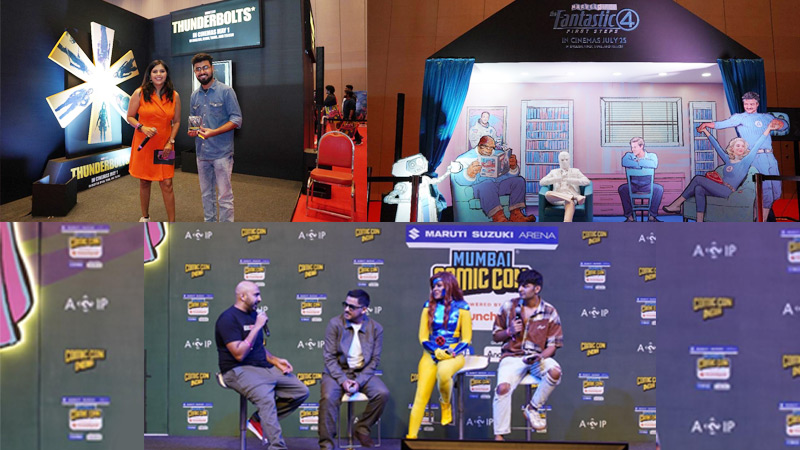
    The Comic Book Store co-founder Hamza Sayed, Superhero Toy Store founder Devesh Chhabria, Marvel super fan and cosplayer Medha Shrivastava, and influencer Arya Kothari engaged in a dynamic panel discussion on the future of superhero films and their influence on pop culture.

    Moderated by influencer Arya Kothari, the conversation explored the growing fascination with anti-heroes and shifting audience preferences. A key highlight was the discussion around Marvel Studios’ upcoming release Thunderbolts, which focuses on reformed villains navigating complex moral choices.

    And then came a twist of empowerment.

    Hidden behind the colorful chaos was a stage glowing with quiet power—the IAGT (It’s A Girl Thing) Salon. Think sisterhood meets sass, with real stories, raw laughs, and radical confidence.

    The vibe? Electric. The crowd? Madly in love. Cosplayers posed like pros, merch stalls were swamped, and panel discussions had fans leaning forward in excitement. You could feel the joy, the nostalgia, and the pure thrill of being around people who just get what it means to be a fan.

    And guess what? This was just day one.

    Whether you were hunting exclusive collectibles, demoing the next big Indian game, or finding a little feminist fire at IAGT—Comic Con Mumbai proved once again that fandom isn’t just for fun. It’s a feeling.

  • Magnum to debut a luxurious new flavour at Lakme Fashion Week x FDCI

    Magnum to debut a luxurious new flavour at Lakme Fashion Week x FDCI

    MUMBAI: Magnum, is set to create a stir at Lakmē Fashion Week x FDCI with the unveiling of its newest indulgent flavour. Taking place from 26 to 30 March 2025 at the Jio World Convention Centre, the brand promises a lavish celebration of fashion, luxury, and pleasure.

    Bringing its signature chocolate dipping bar to the prestigious event, Magnum will treat guests to an array of decadent experiences. The highlight of the celebration will be the Magnum party, an exclusive evening of glamour and indulgence, attended by the crème de la crème of the fashion industry.

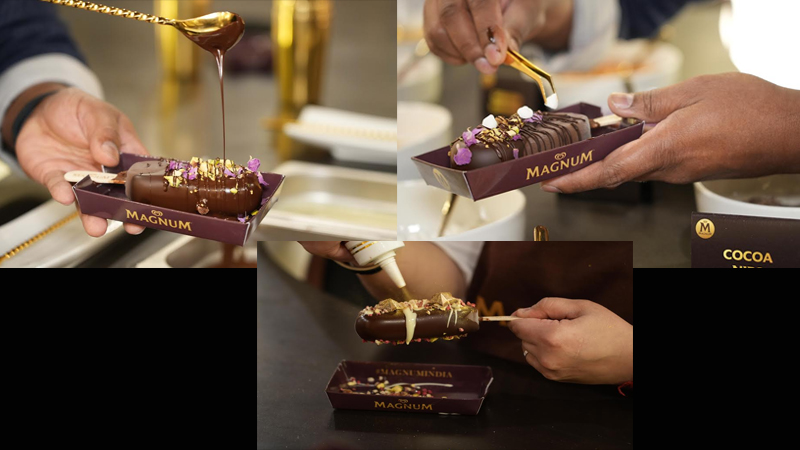
    Indian designers Falguni Shane Peacock, Amit Aggarwal, and Shantnu Nikhil will craft bespoke Magnum bars inspired by their signature styles. Each creation will reflect their distinctive design aesthetic, elevating the ice cream into a work of edible art.

    Magnum will introduce a limited-edition candle collection in collaboration with designer Ritika Mirchandani. The candles, inspired by the brand’s signature flavours, will capture the essence of indulgence through scent, offering a multi-sensory experience that extends beyond taste.

    HUL head of ice cream business Toloy Tanridagli said, marking 25 years of Lakmē Fashion Week. “We are proud to be part of this landmark celebration, bringing new levels of luxury and pleasure to the Indian market. From the exclusive party to creative collaborations, we aim to offer unforgettable experiences that blend taste with fashion.”

  • Challenges we face in the production and broadcast industry are universal: Stefan Pfütze

    Challenges we face in the production and broadcast industry are universal: Stefan Pfütze

    Mumbai: The second day of the Broadcast India Show at the Jio World Convention

    Centre in Mumbai pulsated with the vibrant energy of the broadcast media and

    infotainment sectors. In an industry where technology evolves at lightning speed, the

    impact on broadcast and entertainment is profound. For over 30 years, the Broadcast India Show has served as an interactive platform, showcasing groundbreaking shifts in infotainment technology while connecting attendees with the innovators behind these marvels.

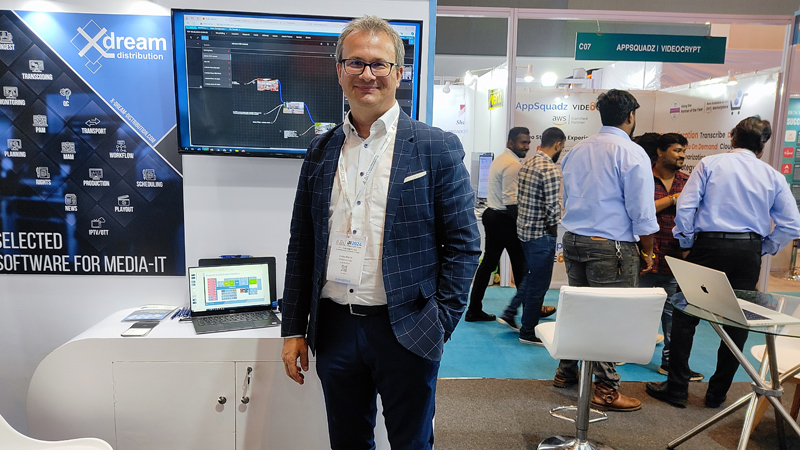
    While exploring the booths, we were particularly drawn to x-dream-group, a full-service provider for the media industry as well as for any commercial or public organisation that utilises audiovisual media. Their clientele includes post-production facilities, broadcasters, telecom operators and public entities.

    Indiantelevision.com’s Rohin Ramesh at the sidelines of this event, caught up with x-dream-group managing director Stefan Pfütze, who shared insights about his organisation with a beaming smile.

    Edited excerpts

    On brief overview of your organisation:

    We are known as x-dream-group, which encompasses three distinct types of activities. One of these is x-media, our company that specialises in software integration, focusing on creating end-to-end solutions using products from other software providers. We are solely dedicated to software and do not engage in hardware manufacturing.

    Through our work at x-dream-media, we’ve identified several established engineering companies that offer excellent products—many now in their second or third generation—but lack international market reach. To address this gap, we established an umbrella organisation called extreme distribution, which serves as a brand ambassador and master distributor for these companies. I am currently representing these various brands at Broadcast India.

    On elaborating some of the productised solutions you have developed for your customers:

    In our journey of development, we began with plugins for transcoders, which have become less relevant over time. From that foundation, we created a business called 1 GUI—a centralised user interface that integrates with various tools such as transcoders, ingest tools, quality control tools, workflow tools, and file transport tools. This interface serves as a cockpit for managing workflow and job queues.

    Over time, we expanded our offerings by adding a workflow starter and a workflow layer. Our latest release is the broadcast suite, a desktop application designed for playback, recording, and multi-viewing—targeted at professional AV users and broadcasters in need of quality control and engineering solutions. While it may not function as a traditional video server in a server room, it provides similar capabilities on a desktop level.

    Our flagship product, extreme fabric, is an end-to-end solution tailored for the media industry. Unlike our software integration approach, which involves customising ecosystems for clients, extreme fabric is a ready-to-go, pre-designed, pre-integrated, and pre-configured solution. Users can simply download and install it to establish a fully functional TV station.

    This may sound ambitious, but our primary target customers are tier one broadcasters who seek custom solutions and want to collaborate closely with us. For tier two and tier three broadcasters, as well as clients from sectors like corporate, banking, insurance, and government, the need is different. These customers often lack broadcast engineering capabilities and require a ready-made solution. When we ask them about their production business processes, they often look at us in confusion—many have little understanding of the necessary workflows.

    We showcase our capabilities on our website and at conferences and trade shows, aiming to enhance the overall process. This challenge is prevalent not only in emerging markets but also in regional TV stations, where organisations may have one or two knowledgeable individuals but lack the capacity to manage large integration projects. They require a more accessible solution. As I travel to various countries, I often hear the excuse that “it’s different in our country” regarding technology, habits, business processes, or even infrastructure. I believe that the challenges we face in the production and broadcast industry are universal whether in India, the Middle East, Europe or America.

    On identifying and addressing the specific needs of your clients:

    To identify and address the specific needs of our clients, we begin with clear demands. For example, when selling individual products, a customer may say they need software to integrate their central ingest desk with their newsroom and post-production systems. From there, we ask probing questions: “Do you also manage remote offices? What about live feeds or social media content?” This often leads to a realisation of additional needs they hadn’t considered.

    When it comes to transcoding, some clients initially believe that open-source solutions are sufficient. However, as they aim for advanced features like 4K Ultra HD, HDR colour spaces, or delivery to professional platforms, they soon realise they must meet strict requirements, such as delivering certified ProRes formats to companies like Apple. This is where we step in to provide the necessary support.

    Monetisation is another crucial area where we see demand for features like ad insertion, graphic overlays, audio track management, and subtitle management—more sophisticated needs than the basics. When we engage with clients, particularly during visits or trade shows, we often hear about inefficiencies in their workflows, such as the inconvenience of using USB devices to transfer content between departments. We can certainly improve these processes, especially for companies with distributed setups that include on-premises installations, cloud services, and multiple facilities across different cities.

    Another significant project category involves managing the business side of operations, particularly through media asset management systems. These systems serve as essential repositories, often involved in both the beginning and end of media business processes. Many vendors offer mini MAM systems for temporary storage, but we approach media management on a larger scale. We focus on publication strategies for marketing, advertising, and B2B or B2C content sales. For B2C, this includes video-on-demand portals, while our B2B offering, called the media market, enables broadcasters and content producers to sell their content online to a global audience.

    Editing is also a critical aspect, where our goal is to manage the bridge between business processes and the editing suite. This includes project management, approval workflows, and remote editing capabilities. Our product portfolio consists of software solutions, allowing customers to select their own hardware, rather than being tied to specific storage systems.

    Additionally, we have introduced a new component we refer to as “storytelling,” which functions as a newsroom system. This terminology resonates with clients outside the media industry, making it more relatable. Our applications are designed to be cross-media, supporting not just TV but also radio, web, and social media. This means that our playout solutions are essentially a form of publication across multiple platforms.

    When it comes to integrating these production systems, aside from editing challenges, we also face issues like ensuring compatibility between various tools and managing different workflows efficiently. We overcome these challenges through thorough assessments of client needs, providing tailored solutions that enhance their overall operations.

    On some common challenges you face when integrating an isolated production system:

    As software developers, it’s natural for us to explore the APIs of various software solutions. Today, most applications typically offer RESTful APIs, though some might have soft APIs, database connections, or file-based integrations. About 99 per cent of software now utilises rest APIs, and when we integrate systems, we prefer this approach because it provides optimal control, monitoring, and failure handling when working with third-party software.

    A common scenario I frequently encounter among system integrators and other vendors involves the use of watch folders. Many systems still rely on a chain of watch folders, where one application drops files into the watch folder of another. This approach is outdated and leads to significant operational overhead, particularly in process management and troubleshooting.

    Another prevalent trend is the transition from on-premises solutions to cloud-based systems. For many of our projects related to publication, we emphasise a hosted approach. However, this doesn’t necessarily mean a public cloud; it could involve dedicated or boutique hosting solutions with either physical servers or virtual machines. While public clouds often rely on virtual machines, they may not be cost-efficient for long-term engagements—though they can be suitable for short-term needs.

    We are witnessing a shift from fully on-premises elements, such as archives and publication systems, to remote data centres. This transition is driven by improved network connections, enhanced security, and better hosting capabilities, including power supply and cooling. Offloading hardware management allows for 24/7 operations without constant oversight, which is a significant advantage of a hosted approach, whether private or public.

    We support this trend through hybrid systems. For instance, high-resolution operations can remain on-premises, where the personnel and content are physically located, and archives may still reside on LTO tapes. Meanwhile, we can move the access components of the system to a hosted solution, connecting both sides to function as a single entity.

    The challenge today is ensuring that these systems operate seamlessly together. Currently, the approach often results in a disruption; the inner system handles publishing to the outer system while the outer system feeds information back to the inner one. Unfortunately, these remain separate systems that do not behave as a unified business process, despite essentially being one.

    On some upcoming trends:

    Discussing trends can be challenging. We’ve seen fads like 3d technology, ultra hd, and hdr come and go. In hindsight, many of these were just hype—something everyone talked about but few actually implemented. Today, most television remains hd and sdr. However, AI is different; it’s here to stay. Currently, we see practical applications like transcriptions and translations being effectively utilised.

    In our portfolio, we offer a product that provides live subtitling with translation capabilities. This tool is actively used in practice, and customers are willing to invest in it because it’s reasonably priced, making it a sensible option.

    One trend I observe is the shift toward on-premises artificial intelligence. Many customers are often unaware of their options and feel compelled to rely on public cloud solutions simply because that’s what vendors are promoting. However, the same software can often be deployed on-premises, which can be advantageous. While it may be challenging to navigate training models and related complexities, the cost savings on data traffic, time, and hosting and processing fees can be substantial.

    Artificial intelligence will also significantly impact storytelling in news, but I view this with some caution. There’s a common misconception that you can simply input a topic into an artificial intelligence and receive a well-formed story. In reality, we still need journalists and reporters in the field, gathering information and engaging with people. Artificial technology can assist in processing and shaping that information into a coherent story, but it cannot create news on its own. While artificial intelligence can generate lyrics or fiction, the essence of news relies on human insight and experience. Ultimately, it is the human mind that remains irreplaceable.

  • Ross Video shines at Broadcast India Show with cutting-edge solutions

    Ross Video shines at Broadcast India Show with cutting-edge solutions

    MUMBAI: The first day of the Broadcast India Show at the Jio World Convention Centre in Mumbai pulsated with the vibrant energy of the broadcast media and infotainment sectors. In an industry where technology evolves at lightning speed, the impact on broadcast and entertainment is profound. Yet, the full spectrum of innovative advancements often feels just out of reach-except for one remarkable occasion each year. For over 30 years, the Broadcast India Show has served as an interactive platform, showcasing groundbreaking shifts in infotainment technology while connecting attendees with the innovators behind these marvels.

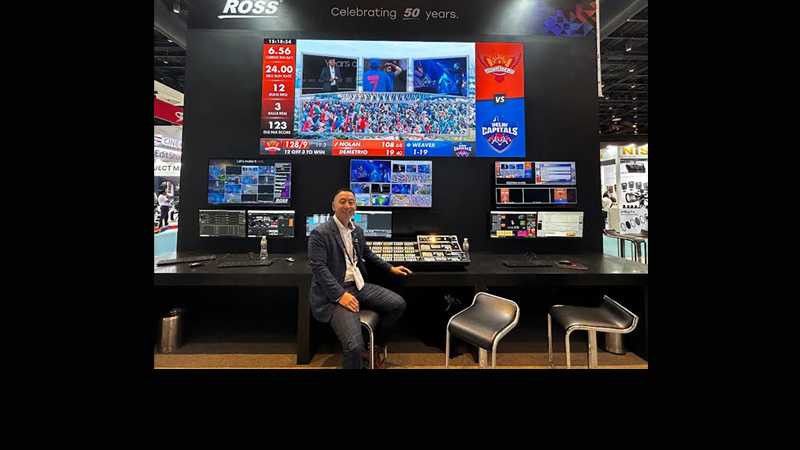
    As we navigated the bustling trade show, overwhelmed by the cutting-edge equipment and technology on display, one booth captured our attention: Ross Video. Initially sceptical, we quickly found ourselves engaged in one of the most enlightening conversations of the day with Ross Video director- sales, Asia, Simon Roehrs along with Ross Video marketing manager, APAC, Irene Siah. Their enthusiasm was infectious and before agreeing upon giving an in depth interview, they provided a brief overview of the company’s journey.

    Founded in 1974 by John Ross in the basement of his Montreal home, Ross Video began with a bold vision. John sold a meticulously restored World War II trainer aeroplane for $3,500, using those funds to launch the company. Remarkably, this initial investment remains the only external funding Ross Video has ever received. Since then, the company has flourished through self-funding and organic growth, reinvesting profits back into the business. In the present, John’s son, David Ross, serves as the chief executive officer, owning over 80 per cent of the company, while dedicated employees hold the remaining 20 per cent.

    Now, Ross Video stands out in the ever-evolving media landscape with an impressive array of products and services. Their offerings include state-of-the-art cameras, real-time motion graphics, advanced production switchers, robotic camera systems and immersive augmented reality and virtual studios. Additionally, the company provides video servers, robust infrastructure and routers, social media management solutions, newsroom systems and comprehensive live event production services.

    Buckle up readers as Indiantelevision.com’s Rohin Ramesh and Sreeyom Sil dived into an in-depth interview with Simon and Irene. Both were eager to tackle a plethora of questions we had lined up.

    Edited excerpts

    On the evolution of the company with the increasing demand for cloud based solutions

    I’ve been frequently asked about our cloud strategy, both by journalists and customers. It’s a great question! At Ross, we recognise that the cloud is a crucial component of the future, and we’re committed to providing a comprehensive broadcast workflow solution for our customers.

    Currently, Ross already offers a substantial range of broadcast-related capabilities in the cloud. This includes video servers, streaming applications like NDI and SOP, as well as graphics, switching, and audio mixing—all the essential elements needed to establish a full broadcast workflow in the cloud.

    Additionally, we provide Software as a Service (SaaS) options for customers, particularly in areas like Media Asset Management (MAM). With our SaaS model, we handle the relationship with AWS and deploy the necessary microservices, allowing customers to simply subscribe to our service. This contrasts with our other model, where the customer manages their own relationship with AWS while we assist in deploying the workflow.

    Our SaaS offerings include not only MAM but also inception, our Newsroom Computer System (NRCS). This dual approach allows us to cater to different customer needs while maintaining a strong commitment to delivering effective cloud solutions.

    On the integrating AI and automation in your product lineup

    That’s another excellent question! Honestly, we don’t focus much on our competition. While they do their thing, we concentrate on how we can best serve our customers today and into the future.

    AI is not new to us; we’ve been working with it for years. Our research lab, which consists of nearly 500 R&D professionals, is dedicated to this effort. For example, we’ve integrated ChatGPT, one of the leading AI technologies, into our Media Enterprise Management System (MEMS) and our Inception Newsroom Computer System (NRCS). This integration helps streamline the daily tasks of journalists.

    Imagine a journalist returning from an assignment with a lengthy story. They may want to create a brief snippet for social media, like an audio or video highlight. ChatGPT can summarise the story into a few concise sentences, which the journalist can then review and approve before publication. This significantly reduces turnaround times for digital content.

    Another exciting development is rossbot, which is available on our website. This chatbot allows customers from countries like Japan or Thailand to ask questions in their native languages. Rossbot accesses our extensive documentation and continually learns to provide accurate answers. For instance, if a user asks about a specific company code, Rossbot can deliver a precise response within 10 to 15 seconds. This is a remarkable improvement compared to traditional support channels, where inquiries often take much longer to resolve.

    Since deploying rossbot, we’ve seen a stabilisation in the volume of support calls, which speaks to its effectiveness in addressing customer queries efficiently.

    On sharing any recent case studies where your company has significantly transformed globally

    One of our most successful products is our hyperconverged solution. A significant trend in the broadcast industry, highlighted during events like IBC, is the growing focus on operational efficiencies. Many countries are facing economic challenges, which impact advertising revenue, especially with the rise of social media platforms. As a result, broadcasters need to operate more efficiently, find synergies, and potentially reduce their workforce.

    Our hyperconverged clusters offer a remedy to these challenges. By combining switching, routing, and a variety of essential features into a single, compact unit, we simplify broadcast operations. This integrated solution eliminates the need for multiple separate devices, reducing cabling and streamlining setups.

    Additionally, our hyperconverged systems significantly lower costs, both in terms of total cost of ownership and deployment speed. For mobile operations, for example, you only need one hyperconverged unit instead of a large truck filled with equipment. This not only saves on costs but also allows for faster on-air readiness. Overall, our hyperconverged solution has tremendous potential for cost reduction in the broadcast industry.

    On the major sport you are targeting in India, given that cricket is already the most established one

    I really appreciate your questions so far! Currently, we cover over 20 different sports, and if you take a look at the screen right there, you’ll see kabaddi. This sport is primarily popular in India, and it’s well-known because of local teams that share their requirements and trends with us. That’s why we’re actively supporting kabaddi today.

    When we identify a trend or demand, we collaborate closely with our product teams to adapt our offerings to fit regional markets. For instance, cricket is incredibly important—not just in India, but also in countries like Australia, England and South Africa. Interestingly, we’ve seen a significant rise in cricket’s popularity in North America.

    Did you know that there are approximately two million Indians living in Canada? This vibrant community is driving interest in the sport, which is why we’ve hosted matches in locations like New York, Texas, and Los Angeles. For example, India faced Pakistan in a match in New York, demonstrating the strong audience demand. When you look at the global audience for cricket, it’s impressive—it dwarfs many other sports.

    On elaborating more on your other vertices besides sports

    As I mentioned earlier, our primary market focus is broadcasting, which encompasses various aspects, especially sports broadcasting. Currently, about half of our revenue comes from this sector, making it a crucial vertical for us. However, we recognise that the broadcasting industry faces increasing challenges.

    We are also looking into live production and sports, as these are two of the most effective ways to capture audience attention. News and live sports are unparalleled in their ability to engage viewers, especially when it comes to thrilling moments like cheering for a cricket team.

    Beyond broadcasting, there is a growing demand for video solutions across other sectors, including government, education, and corporate environments. We see significant potential in corporate markets in India, particularly with large organisations like Tata and Accenture, as well as major banks. These companies are increasingly interested in video solutions for purposes such as video conferencing, board meetings, and town hall events.

    In the U.S., we have a strong customer base that uses our latest Carbonite switchers alongside Microsoft products. For instance, our switchers offer USB-C webcam output, allowing users to easily feed a high-quality video signal into their laptops or PCs. This setup can then be displayed on a TV, providing a professional-grade production quality for executive meetings and other large gatherings.

    On the future of broadcasting in India

    I see a bright future for the Indian broadcast market, and here’s why.

    First, about 50 per cent of broadcasting is still being done in standard definition (SD), which presents significant opportunities for upgrading to high definition (HD) and even ultra high definition (UHD).

    Second, the number of TV channels is steadily increasing. My team informs me that more than 100 new news channels are launched each year. This growth reflects the importance of news in India, a country characterised by its remarkable diversity.

    With distinct differences across the North, South, East, and West, and around 115 languages and dialects spoken, India’s diversity is truly unparalleled. This unique landscape creates a rich environment for broadcasting, with ample opportunities for tailored content that resonates with various audiences.

    On venturing into the post production market in the coming future

    In post-production, creativity is paramount. We are proud to offer a range of creative tools to support this. Additionally, we have a department called Rocket Surgery, which is truly exceptional. This team comprises approximately 40 to 50 talented individuals and is one of our notable acquisitions, showcasing Ross’s commitment to growth.

    Rocket Surgery specialises in bespoke projects tailored to our customers’ needs. When clients come to us with a vision and aren’t sure how to bring it to life, this team steps in to map out their ideas and provide innovative solutions. Some of these solutions are so groundbreaking that they’ve never been seen before in the industry.

    Looking ahead, we certainly see the potential to expand further into the entire production market.

  • We keep talking about digital & technology, but at the end of the day it’ll always be about people: Dentsu’s Amit Wadhwa

    We keep talking about digital & technology, but at the end of the day it’ll always be about people: Dentsu’s Amit Wadhwa

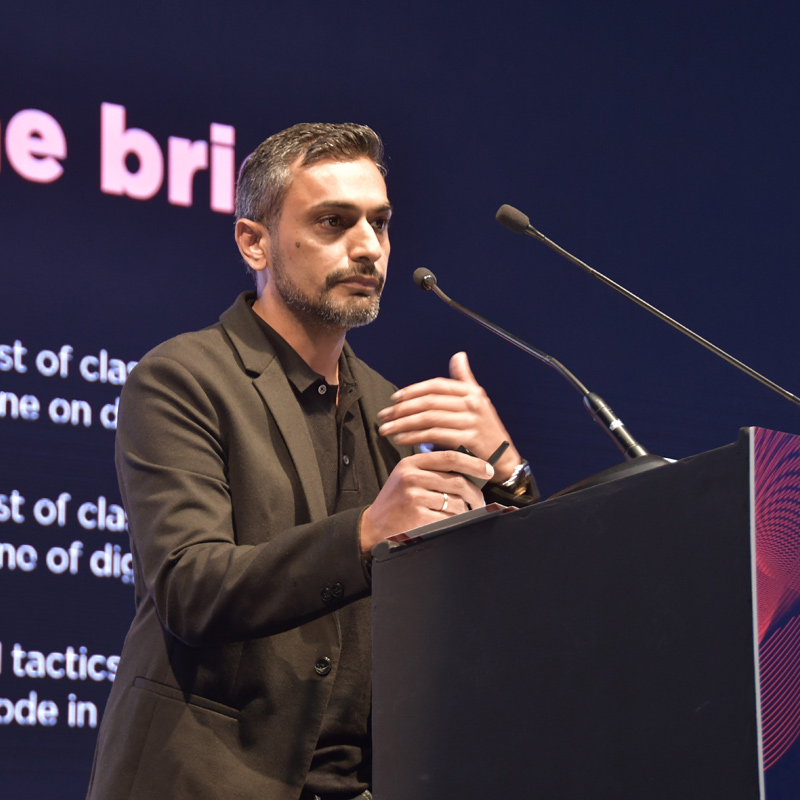
    Mumbai: The ever-changing digital ecosystem has altered the game of advertising and marketing as we once knew it. Digital marketing has developed into a significant platform for some profound work and brand case studies. Whether it’s digital or non-digital, every creative needs to emanate from a strong idea, said Dentsu Creative India CEO Amit Wadhwa, sharing his insights on the digital space and what works in the medium at the third edition of The Advertising Club’s D: CODE held recently in Mumbai.

    We keep talking about digital and technology, but this will always be about people at the end of the day, Wadhwa emphasised. “People are needed for ideas. People are needed to create technology. People are needed to run and understand the medium. That is the most important consideration.”

    At the Tac’s annual digital review, ten digital evangelists from the advertising and marketing fraternity shared key takeaways that brands and their digital custodians can make use of.

    Repersenting dentsu creative, the winner of the Agency Of The Year award at Cannes this year, Wadhwa shared the two pieces of work that stirred him. Or, in his own words, like a true advertising professional, he “stuck to the brief” – where the brief given was to showcase one best-of-class work from their own stable, along with one work that truly inspired them. He started with a creative coming from Dentsu’s stable, called The Protest March.

    Speaking about exactly why he chose this particular piece of work, Wadhwa said, “Who says protests have to be on the street… who says protests have to be violent or there has to be aggression? This is cricket and this is a protest-you can’t get a bigger and better idea.” More importantly, he added, this idea is digital at its core. The whole reason this is happening is that digital is there as a platform.

    Pointing out the third important element, Wadhwa said, “And I strongly believe in the third power—that’s purpose. I think it’s important for everything to have a purpose. And look at the purpose this one had. Taliban taking over, rights being taken away and I think you can’t have a stronger purpose than that.”

    Titled ‘The Protest Match’, the initiative recreated the Afghanistan women’s cricket team virtually, replicating the exact team that was unfairly banned from playing in real life. With an objective to pledge support and protest the injustice caused to the Afghan Women’s Cricket team, on 3 April 2022 – the day the ICC Women’s World Cup finals took place in New Zealand, Global eSports, in partnership with Isobar India Group, re-created the finals—one that could have happened.

    Talking about the next piece of work that inspired him, titled ‘Backup Ukraine,’ Wadhwa said, “When I went to Cannes this year, there was a team from Ukraine presenting this idea. And it hit me so hard that it remained with me.”

    The project was led by Virtue Worldwide, a Vice Media-owned creative agency, and centres on a digital and mobile platform that enables people in Ukraine to capture and digitally preserve 3D images of historical artefacts, monuments, and other culturally-relevant structures and objects at risk of being damaged or destroyed in light of the ongoing war with Russia. The tool employs technology developed by 3D imaging startup Polycam to create realistic digital replicas and store the digital blueprints of the artefacts they capture in the cloud.

    “I feel equally important to “what” we show on digital is “when” we show it. The timing is key,” Wadhwa said, adding that timing is key in any medium, but more so in digital.

    Wadhwa also mentioned how, nowadays, the brief itself states, ‘We want a stronger integration on digital.’ “I don’t think we need a stronger integration of digital—digital is all around us. If the idea is good, it will finally land on digital,” he asserted, adding that the moment you start trying too hard, you will see it going wrong somewhere.” Talking about the one thing that’s really spoiled us, Wadhwa says that with this medium, everything is possible, and that’s what the medium is all about.

  • 10 digital evangelists decode the digital mantra at The Advertising Club’s third edition of D:CODE

    10 digital evangelists decode the digital mantra at The Advertising Club’s third edition of D:CODE

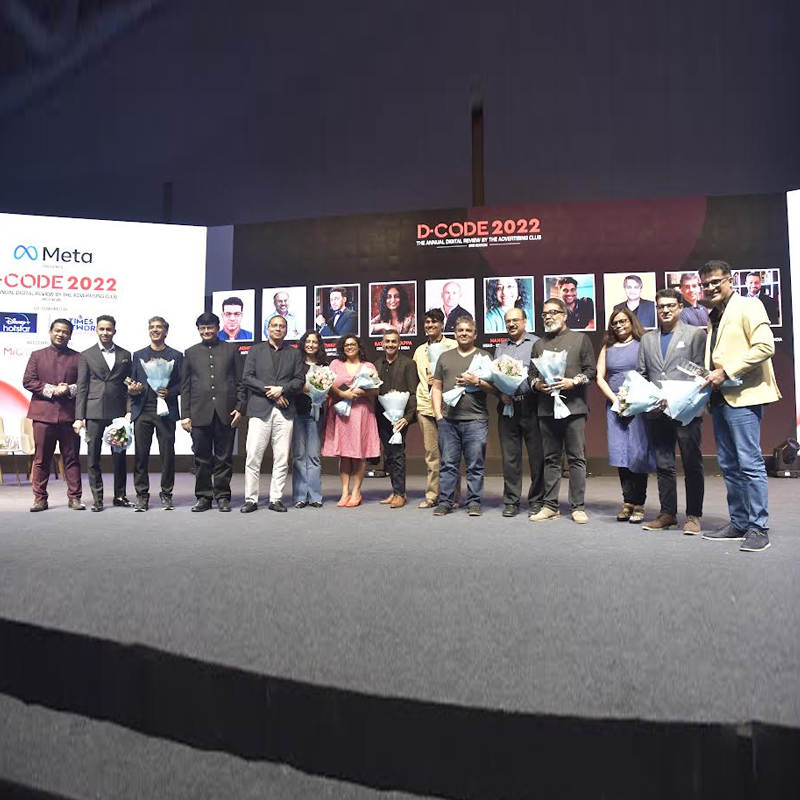
    Mumbai: Leaders from different digital domains, spanning publishers, marketers, new age digital companies, and creative and media agencies, gathered on 26 August at The Advertising Club’s third edition of D-CODE: The Annual Digital Review 2022 in Mumbai.

    The evening kicked off with tech professional turned stand-up comic turned compere for D-CODE 2022, Anshu Mor, who welcomed the attendees with a humorous anecdote narrating his real-life resignation story.

    Welcoming the attendees, The Advertising Club president Partha Sinha, emphasised how digital has become a game-changing medium for brands over the course of the last 10–15 years.

    Dentsu Creative CEO Amit Wadhwa kicked off the event as the first speaker, showcasing two case studies – ‘The Protest March’ and ‘Back Up Ukraine’—and prodded the audience to remember that we are still about people.

    S4 Capital CEO – APAC Michel de Rijk presented the Tata Tea example done for Independence Day and emphasised how the integration of data and content with technology enables agencies to create high-quality content overnight in just their own studio.

    ONDC chief business officer Shireesh Joshi articulated the vision and implications of the ONDC initiative for sellers, buyers, and every component and process along the e-commerce chain.

    Shedding light on the power of targeting and geolocation insights in campaigns, Jio Ads CEO Gulshan Verma enlightened the audience on the scale and solutions offered by JioAds.

    Talented founder P G Aditiya took the audience through the 55 steps that were involved in creating the Cannes 2022 Grand Prix winner, “The Unfiltered History Tour,” and emphasised the benefits of a long client-agency relationship in creating path-breaking campaigns.

    Following this was Disney+ Hotstar executive VP and CMO Sidharth Shakdher, who shared his thoughts on reversing the narrative of digital driving people apart by building a better consumer experience.

    YouTube India head of consumer marketing Mansha Tandon, spoke about shaping creativity with culture and trends in the digital space.

    Speaking next was luxury & lifestyle influencer Rizwan Bachav, who walked the audience through his journey, learning, and challenges in becoming an influencer.

    Sharing thoughts on how creativity can build brands, Starcom CEO Rathi Gangappa emphasised the need of being human in the age of digital transformation.

    Concluding the review, Meta marketing director Avinash Pant spoke about the evolution of social connections and the exponentially growing metaverse space empowering meaningful experiences.

    Addressing the evolving digital ecosystem at the third edition of D:CODE, Sinha said, “Digital marketing has gone on to become a game-changing phenomenon and the Advertising Club’s D:CODE is a testimony to our persistent efforts to create awareness and enhance the learning curve of the fraternity with insights and takeaways from the industry’s best digital minds. D:CODE has witnessed great case studies that have worked beyond the boardroom. As we move forward in this ever-evolving and competitive digital era, D-CODE will continue to become a significant platform with case studies that give profound experiences, transforming the way brand custodians especially approach their digital.”

    At the third edition of The Advertising Club’s annual digital review, the 10 digital evangelists from the advertising and marketing fraternity shared key takeaways that brands and their digital custodians can make use of.

  • D:CODE 2022 by The Advertising Club: Industry experts to share insights on rapid transformation of digital industry

    D:CODE 2022 by The Advertising Club: Industry experts to share insights on rapid transformation of digital industry

    Mumbai: The pandemic era which we passed through has seen an interesting shift in consumer behaviour towards small businesses and homegrown brands. This has fueled the need and importance of digital marketing as a platform to connect and reach out to more consumers. Owing to this accelerated business and rapid consumer shift towards digital, The Advertising Club is once again back with its third edition of D:CODE 2022, India’s Annual Digital Review.

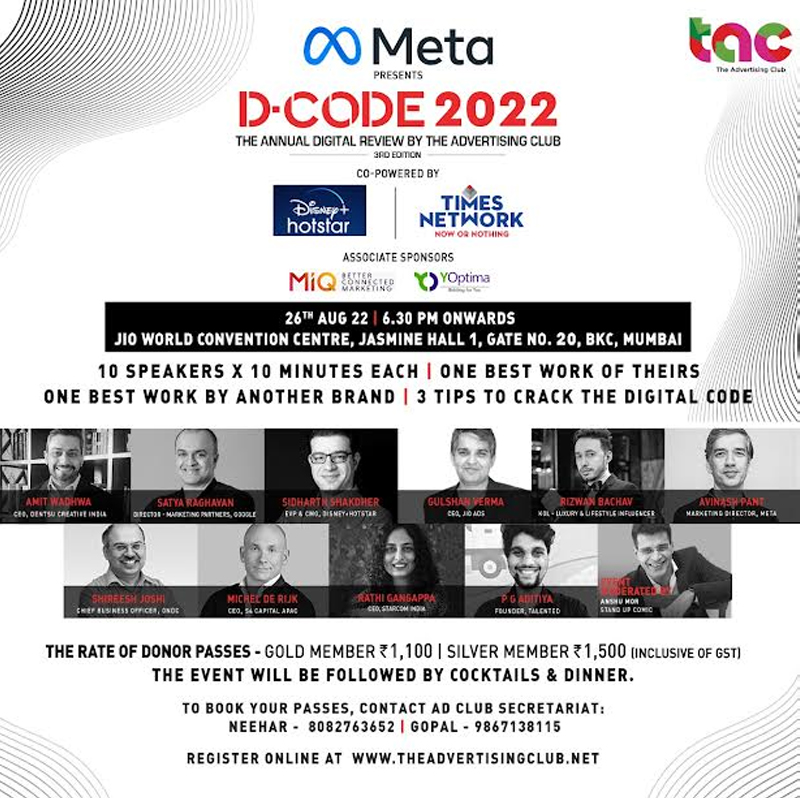
    The Advertising Club’s third edition of D:CODE 2022, presented by Meta, will take place on 26 August 2022, at the Jio World Convention Centre in Mumbai, beginning at 6:30 p.m. Following the phenomenal success of the first two editions, the upcoming edition will see the best minds in digital, media, and marketing come together to address the evolving digital ecosystem.

    D:CODE 2022 will see the following 10 industry leaders, including Dentsu Creative chief executive officer Amit Wadhwa; Google director-marketing partners Satya Raghavan; Hotstar executive VP and CMO Sidharth Shakdher; Jio Ads CEO Gulshan Verma; Luxury & Lifestyle Influencer and I-banking professional turned KOL Rizwan Bachav; Meta marketing director Avinash Pant; ONDC chief business officer Shireesh Joshi; S4 Capital chief executive officer-APAC Michel de Rijk; Starcom CEO Rathi Gangappa and Talented founder P G Aditiya. They will cover three areas in 10 minutes each: their own work they are proud of; the work of other brands that inspired them; and tips to crack the digital code in the year ahead.

    Speaking about the third edition of the review, The Advertising Club president Partha Sinha, said, “The Advertising Club has been at the leading edge in driving several pioneering initiatives that truly define the current state of the media and advertising industry. With sustained efforts year on year, D:CODE has emerged as an engaging knowledge platform, providing a reason to “Inspire and be inspired”. We are excited to present our third edition of the show with leading industry stalwarts from India and APAC whose insights and learnings will continue to celebrate the rapidly changing dynamics of the digital industry. With D:CODE 2022, The Advertising Club looks forward to creating yet another benchmark in the Indian media and advertising landscape and paving the way to unleashing the true potential of digital.”

    D-CODE chairperson Punitha Arumugam added, “We are excited to continue with the 10 minute per speaker format at D-CODE 2022. Our 10 speakers will showcase, in total, 20 digital case studies done in the past year and provide 30 tips to crack the digital code in the year ahead—all this in just one evening! We hope it will be a truly educative and immersive experience for the audience.”

    “The D-CODE 2022 line up of speakers covers award winners from Cannes this year (Dentsu Creative, PG Aditiya), best of global digital publishers (Google, Meta, Disney+Hotstar, Jio Ads), new age orgs defining the future of digital agencies and e-commerce (S4 Capital, ONDC), digital forward media agencies (Starcom) and social influencers (niche KOL like Rizwan).  With these 10 speakers, D-CODE 2022 covers a relevant spectrum of all things digital; not to mention the laughs the audience will have with our compere Anshu Mor, a tech professional turned stand-up comic,” said D-CODE co-chairperson Avinash Pant.

    D-CODE 2022 is presented by Meta, co-powered by Times Network and Disney+Hotstar in association with MiQ & YOptima.