Tag: Jio Platforms

  • Reliance hits record Q1 FY26  EBITDA as Jio and retail fire on all cylinders

    Reliance hits record Q1 FY26 EBITDA as Jio and retail fire on all cylinders

    MUMBAI: Reliance Industries has kicked off FY26 with a blockbuster first quarter, posting its highest-ever consolidated quarterly EBITDA of Rs 58,024 crore ($ $6.8 billion), a sharp 35.7 per cent leap over last year, fuelled by robust performances across digital, retail and energy verticals.

    Group net profit soared 76.5 per cent year-on-year to Rs 30,783 crore ($3.6 billion), aided by operational gains and a Rs 8,924 crore windfall from its stake sale in Asian Paints. Total revenue rose 6 per cent to Rs 2.73 lakh crore ($31.9 billion), with EBITDA margins improving by a stellar 460 basis points to 21.2 per cent.

    Reliance Jio continued to dominate the digital landscape, crossing a jaw-dropping 200 million 5G subscriber milestone and 20 million home broadband connections. Jio Platforms’ revenue jumped 19 per cent to Rs 35,032 crore, while EBITDA climbed 24 per cent to Rs 18,135 crore, with margins expanding 210 basis points to a best-in-class 51.8 per cent.

    ARPU rose to Rs 208.8, driven by premium subscriber additions and deepening data consumption, which reached 54.7 billion GB this quarter. Jio also unveiled its next-gen tech stack—JioGames Cloud, JioPC, and the proprietary UBR fixed wireless platform—taking a firm aim at India’s AI and home computing future.

    Reliance Retail cemented its pole position, clocking Rs 84,171 crore in revenue (up 11.3 per cent), and EBITDA of Rs 6,381 crore (up 12.7 per cent), marking an industry-leading margin of 8.7 per cent. The business added 388 new stores, taking the total footprint to 19,592 outlets spanning 77.6 million sq ft.

    JioMart’s hyper-local push paid off with daily order volumes exploding 175 per cent year-on-year. AJIO continued to thrive in the online fashion segment with its new 4-hour delivery service and strong traction for Shein, while the FMCG arm doubled revenue to Rs 4,400 crore.

    Reliance’s Oil-to-Chemicals (O2C) segment, despite a 1.5 per cent drop in revenue due to crude price softness and planned shutdowns, posted a solid 10.8 per cent EBITDA gain at Rs 14,511 crore. Jio-bp’s aggressive retail fuel push contributed significantly, with volumes of petrol and diesel up 38.6 per cent and 34.2 per cent respectively.

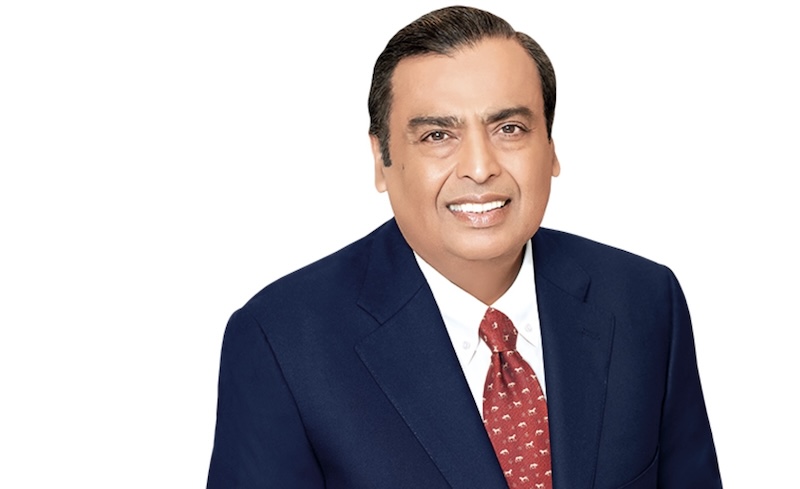
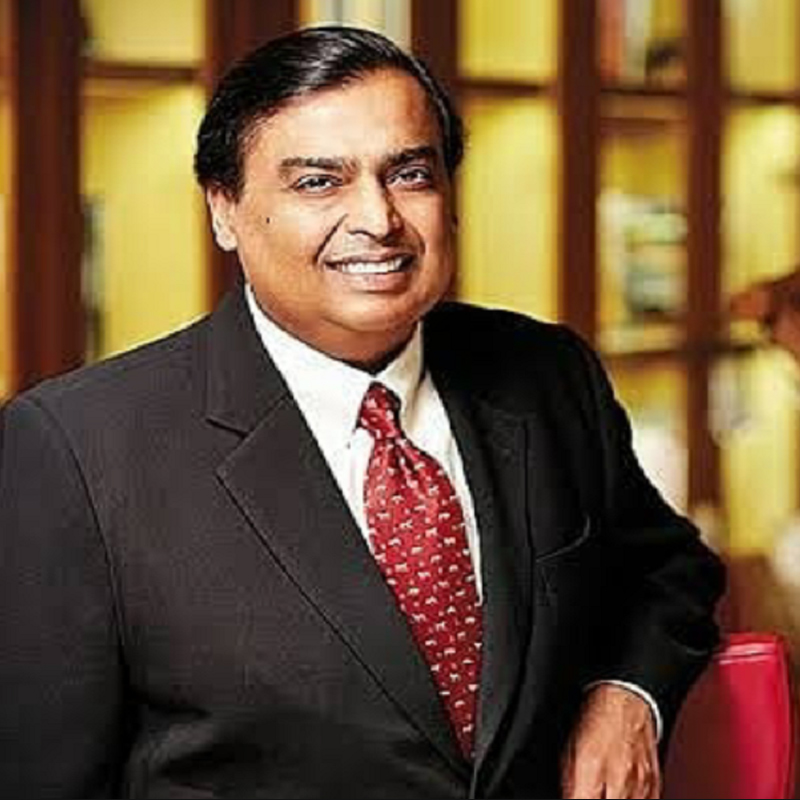
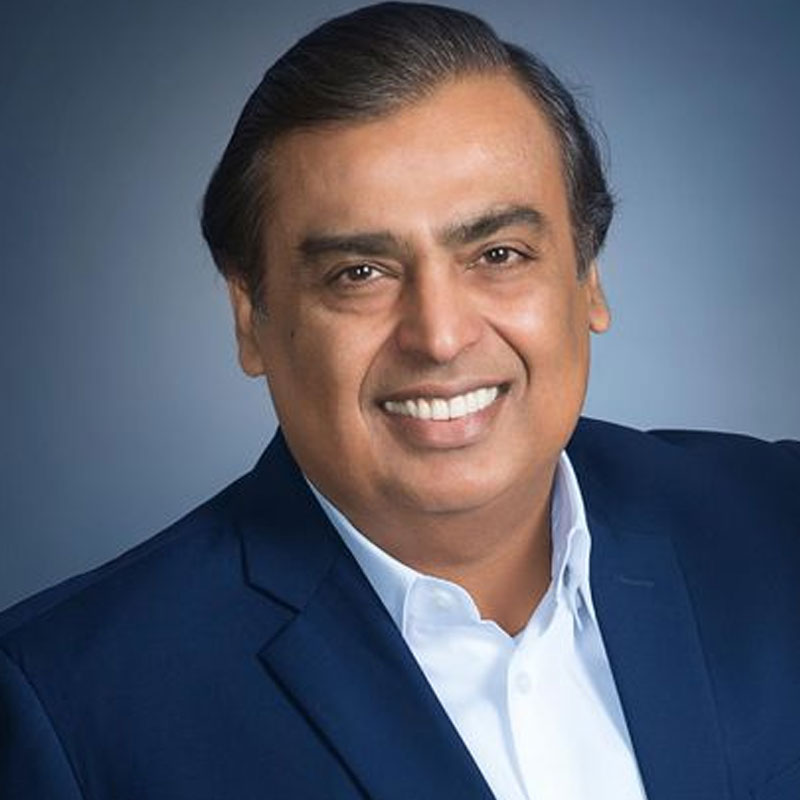
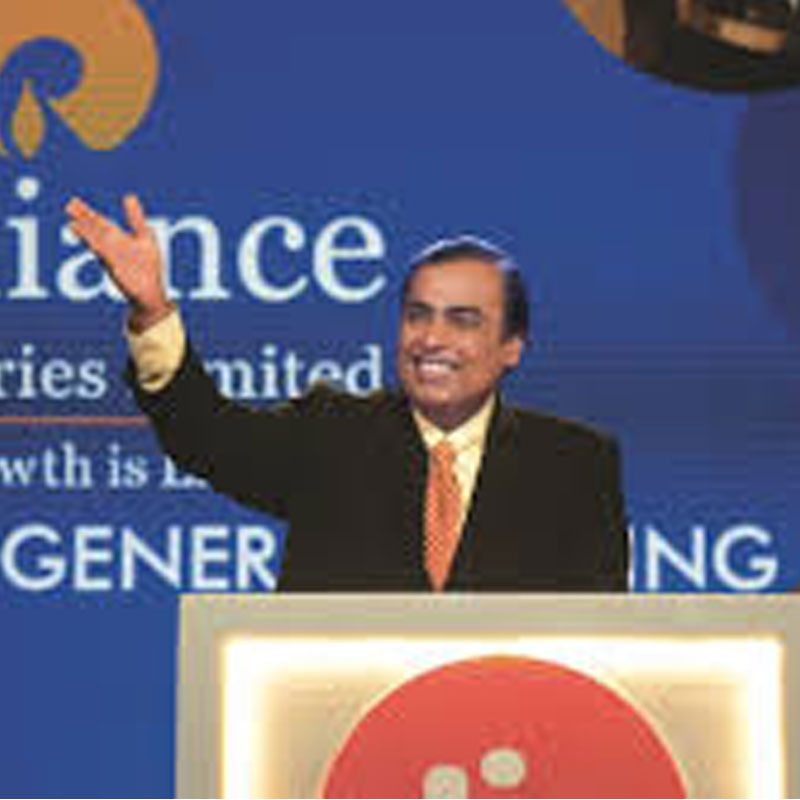
    With net debt remaining flat at Rs 1.17 lakh crore and capital expenditure of Rs 29,875 crore this quarter, the group is doubling down on its “golden decade” growth strategy across tech, consumption, and energy. Chairman Mukesh Ambani said, *“Reliance will continue its stellar track record of doubling value every four to five years.”

    From superfast data to doorstep delivery and clean fuels, Reliance is firing on all fronts—and showing no signs of slowing down.

  • Jio hops onto SpaceX’s StarLink bandwagon close on the heels of Airtel

    Jio hops onto SpaceX’s StarLink bandwagon close on the heels of Airtel

    MUMBAI:  In a strategic move that follows arch-rival Airtel’s recent partnership, Jio Platforms has entered into an agreement with SpaceX to offer Starlink’s satellite internet services to Indian customers.

    The agreement, announced Wednesday, will see India’s data traffic heavyweight join forces with the world’s leading low Earth orbit satellite operator in a partnership that promises to reach even the most remote corners of the subcontinent.

    “This deal isn’t just about connecting the unconnected—it’s about transforming digital access,” says an industry analyst. “With Airtel and now Jio partnering with Starlink, SpaceX has strategically orchestrated its entry into one of the world’s most competitive telecom, internet and data delivery markets.”

    Jio’s retail network will soon showcase Starlink equipment alongside installation and activation support, creating a significant expansion of connectivity options that complement existing JioAirFiber and JioFiber services.

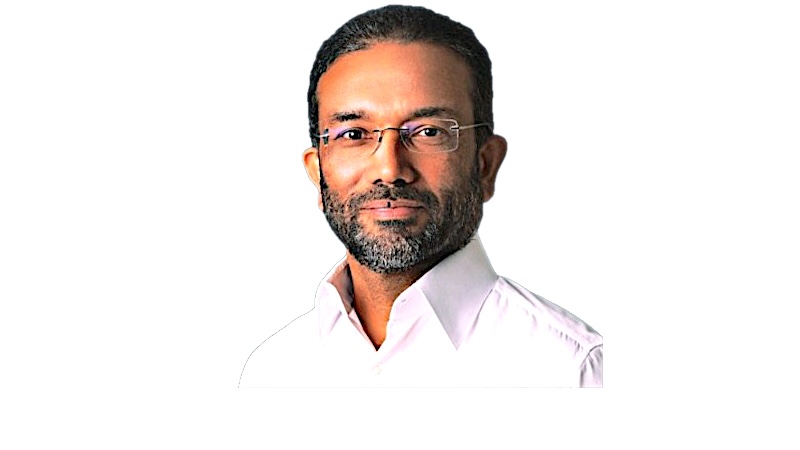
    Mathew Oommen, group chief executive at Reliance Jio, emphasized the company’s mission to provide “affordable and high-speed broadband” to all Indians, while Gwynne Shotwell, president and chief operating officer of SpaceX, expressed enthusiasm about the partnership—pending government authorisation. “We are looking forward to  to provide more people, organisations and businesses with access to Starlink’s high-speed internet services.”

    The satellite internet competition has intensified in India, with both telecom giants now aligning with Elon Musk’s constellation. Industry watchers suggest this competition could revolutionise connectivity across rural India, where terrestrial infrastructure has traditionally been inadequate.

    Beyond immediate internet provisions, both companies are exploring additional collaborative ventures to boost India’s digital ecosystem in what Oommen described as “this AI-driven era.”

    For millions of Indians lacking reliable internet access, these satellite partnerships promise to be a significant breakthrough—one that now has not just one, but two major telecom providers driving forward.

  • Ex-Disney+Hotstar head Sajith Sivanandan jumps on to Jio Platforms

    Ex-Disney+Hotstar head Sajith Sivanandan jumps on to Jio Platforms

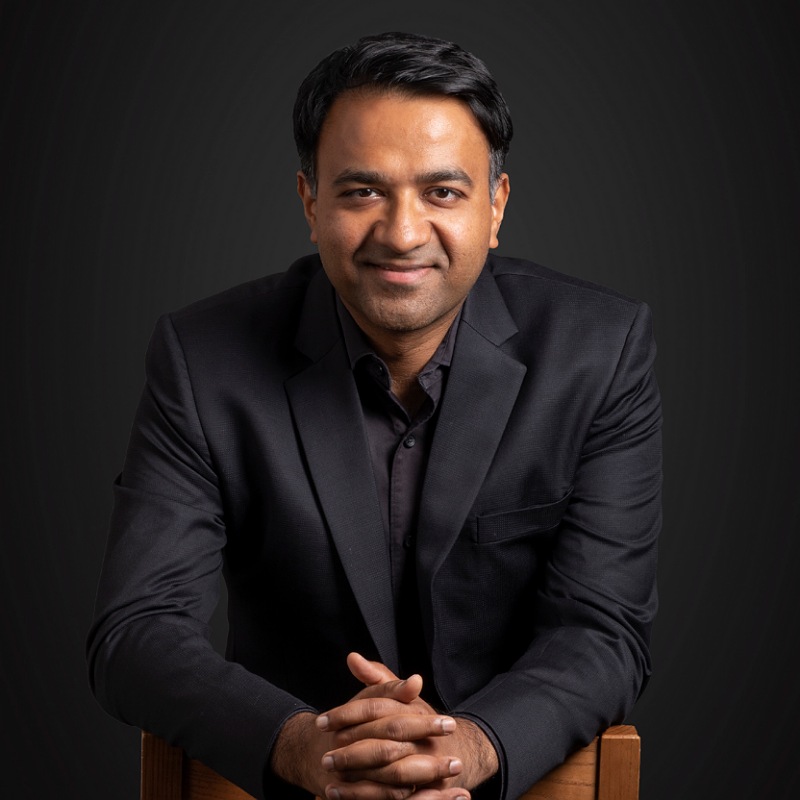
    MUMBAI:  It’s a homecoming of sorts of Sajith Sivanandan. He worked  with the team at Disney+Hotstar and he’s transitioned from there (with the same folks who have moved to the merged company) as  president of Jio Mobile Digital Services  under Jio Platforms.  In this role, Sanjith will lead the development of AI-driven digital services for Jio Mobile, with a focus on enhancing user experience and scaling digital solutions.

    Sajith brings a wealth of experience to his new position, having previously served as the head of Disney+ Hotstar from October 2022 to December 2024. During his tenure, he managed the platform’s strategy, growth, and product development, helping it remain a major player in India’s streaming market. Prior to this, he worked at Google for 15 years, holding various leadership positions, including managing director and business head for Google Pay and Next Billion User Initiatives in the Asia Pacific region.

    Sajith has also worked at various other notable organizations, including XA Network, where he was a member from February 2021 to December 2023; Affle UK Ltd, where he was a director of market development and consumer insight from October 2006 to October 2007; and The Gallup Organization, where he was an associate partner from May 2001 to September 2006.

    Sajith’s expertise in digital media, business strategy, and analytics will be instrumental in driving Jio Mobile’s digital services forward. He will work closely with cross-functional teams to build a suite of digital services at scale for Jio Mobile, underpinned by AI. Sanjith’s appointment is a significant milestone in Jio Platforms’ mission to revolutionise the digital landscape in India.

    Sajith holds an MBA in finance from the Asian Institute of Management and a bachelor’s degree in History from Hindu College, Delhi University. He has also completed his MBA in marketing from FORE School of Management, New Delhi.

    Sajith’s appointment is a significant milestone in Jio Platforms’ mission to revolutionize the digital landscape in India. With his extensive experience in digital media, business strategy, and analytics, he is well-equipped to drive Jio Mobile’s digital services forward and enhance user experience for customers.

    (Earlier, the article had mentioned Sajith’s name as Sanjith. We have corrected it since. A big thank you to Peter Mukerjea for pointing it out. The error is regretted – Editor.)

  • Nvidia and Reliance partner to build AI infrastructure in India

    Nvidia and Reliance partner to build AI infrastructure in India

    Mumbai: In a groundbreaking move poised to reshape India’s tech landscape, Nvidia and Reliance have announced a strategic partnership to develop advanced AI infrastructure in the country. The collaboration was unveiled during the Nvidia AI Summit 2024, with Nvidia CEO Jensen Huang and Reliance Industries chairman Mukesh Ambani sharing the stage in a compelling fireside chat. This partnership aims to accelerate India’s progress in artificial intelligence, leveraging cutting-edge technology to enhance various industries from healthcare to telecommunications.

    Speaking at the summit, Huang highlighted India’s emerging leadership in AI. “India has the potential to become one of the world’s AI superpowers, and with partners like Reliance, we can make AI more accessible to businesses and developers across the country,” said Huang. The joint venture will see Reliance’s extensive digital infrastructure integrated with Nvidia’s AI computing capabilities, creating a robust ecosystem to support the development of AI-driven applications.

    The initiative is set to play a key role in India’s AI mission, which seeks to harness the power of artificial intelligence to drive economic growth, job creation, and innovation. With Reliance providing its digital assets and extensive network through Jio Platforms, the partnership is expected to facilitate the rapid deployment of AI solutions across sectors such as agriculture, healthcare, and education.

    Ambani emphasised the potential of this collaboration, stating, “AI will be a catalyst for economic and social transformation, and together with Nvidia, we are committed to democratising AI in India.” The partnership is also expected to contribute significantly to the development of India’s digital infrastructure, enhancing capabilities in data processing, AI modelling, and real-time analytics.

    Nvidia’s decision to partner with Reliance aligns with India’s broader ambition to position itself as a global AI hub. This partnership represents a pivotal moment, as the country seeks to build foundational infrastructure to support AI innovation on a large scale. The collaboration will involve building AI supercomputers and software development platforms that will empower developers and startups to build AI-based applications.

  • Reliance Industries reports lower net profit; flat revenues in Q2 FY 2025

    Reliance Industries reports lower net profit; flat revenues in Q2 FY 2025

    MUMBAI: Billionaire Mukesh Ambani’s Reliance Industries Ltd reported nearly flat revenues and lower profits for Q2 of FY 2025 ended 30 September 2024 as compared to Q2 of FY 2024 ended 30 September 2023.

    Revenue from operations at the oil to telecom conglomerate was at Rs 235,481 crore (Rs 234,956 crore); other income (Rs 4,876 crore vs Rs 3,841 crore) took up total income to Rs 240,357 crore (Rs 238,797 crore). Higher expenses of Rs 215,320 crore (Rs 212,304 crore) took a toll on the bottom line with PBT falling to Rs 25,037 crore (Rs 26,493 crore). Lower taxes (both direct and differed) of Rs 5,396 crore (Rs 6,673 crore) helped rescue the fall in PAT marginally which dropped to Rs 19,101 crore (Rs 19,820 crore). Net profit attributable to the owners of the company fell 4.88 per cent to Rs 16,563 crore (Rs 17,394 crore).

    The oil to chemicals business reported higher revenues of Rs 155,580 crore (Rs 147,988 crore) with EBITDA dipping to Rs 12,143 crore (Rs 16,277 crore). A press release stated that the oil to chemicals revenue improved with higher volumes and increased domestic placement of products. EBITDA was lower by 23.7 per cent on account of sharp decline in product margins. Fuel cracks declined by nearly 50 per cent Y-o-Y. Downstream chemical also declined with muted global demand. In a well-supplied market, RIL benefited due to superior ethane cracking economics driven by sharp fall in ethane prices.

    The oil and gas business had a lower top line with revenues at Rs 6,222 crore (Rs 6,6620 crore). EBITDA for this segment however showed buoyancy rising to Rs 5,290 crore (Rs 4,766 crore). The press release stated that lower gas price realizations led to six per cent  lower revenue in the oil and gas segment. Oil and gas segment EBITDA increased by 11.0 per cent on account of sustained volume growth and one time provisioning towards decommissioning cost for Tapti field in Q2 FY 24.

    Reliance’s retail business received a slight knock with revenues dropping to Rs 76,325 crore (Rs 77,163 crore). The press release said EBITDA for this segment improved fractionally to Rs 5,861 crore (Rs 5,841 crore) with a continued focus on streamlining of operations and calibrated approach in B2B.

    Digital services which includes its Jio Platforms business was the shining star with revenues climbing to Rs 38,055 crore (Rs 32,657 crore) and EBITDA at Rs 16,139 crore (Rs 14,055 crore). The 17.8 per cent Y-o-Y EBITDA increase was due to better subscriber mix, digital services scale-up and revision in telecom tariffs, stated the RIL press release.  

    “I am happy to note that during this quarter Reliance once again demonstrated the resilience of its diversified business portfolio. Our performance reflects robust growth in digital services and upstream business,” said RIL chairman & managing director Mukesh Ambani. ”This helped partially offset weak contribution from O2C business which was impacted by unfavorable global demand-supply dynamics.  

    “Growth in digital services was led by increased ARPU and improving customer engagement metrics reflecting the strong value proposition of our services. The home broadband segment is witnessing accelerated momentum on the back of our unique industry-leading JioAirFiber offering. Jio’s broad spectrum of offerings enables it to digitally empower every village, town and city in India as well as the country’s small and medium scale enterprises. The digital services business continues to focus on innovative deep-tech solutions on a national scale and is on track to deliver the path-breaking benefits of Artificial Intelligence to all Indians. 

    “The retail segment continues to increase its consumer touchpoints and product offerings across physical and digital channels. The unique omni-channel retail model enables the business to service a wide range of requirements of a vast, heterogenous customer base. The retail business continues to partner with renowned domestic as well as global players, expanding its basket of quality product offerings. The focus on strengthening our retail operations will help us rapidly scale-up this business in the coming quarters and years and sustain our industry-leading growth momentum.  

    “The first of our new energy giga-factories is on-track to commence production of solar PV modules by the end of this year. With a comprehensive range of renewable solutions including solar, energy storage systems, green hydrogen, bio-energy and wind, the new energy business is poised to become a significant contributor to global clean energy transition.” 

  • Jio Platforms hires tech veteran Dr Sayed Peerzade

    Jio Platforms hires tech veteran Dr Sayed Peerzade

    MUMBAI: Jio Platforms Ltd (JPL) is making moves to shore up its AI and cloud  ambitions. The company has hired tech veteran Dr Sayed Peerzade as executive vice-president – cloud. Peerzade, until recently, was with the Hiranandani group-promoted Yotta Data Services as chief cloud officer, head of special initiative, cloud, AI & M&E practice. He announced his joining JPL on linkedin.

    In his new role as part of the AI ops team, Peerzade said “he will focus on driving technological innovations in cloud and AI domains, enhancing and creating products for the group, shaping go-to-market strategies,  leading solutions and engineering channels and optimizing presales channels to deliver transformative business outcomes.”

    Peerzade, who holds a PhD in engineering with a specialisation in digital transformation from Dr Abdul Kalam Research Centre,  has worked with various organisations right from Netex Solutions to Hathway Cable, UTV, ICICI Bank, Zapak Digital, and Reliance Entertainment. He is a recipient of many an Indian and global honour and award for his work in technology. 
     

  • VBS 2024: Evolving content distribution landscape

    VBS 2024: Evolving content distribution landscape

    Mumbai: India is in the grips of seismic changes as far as video and broadband consumption is concerned. Pay TV cord-cutting is rampant even as free TV subscriptions are on the rise and OTT buy-ins are churning with the signs up for certain platforms stagnating even as others are seeing rapid increases and some are seeing cataclysmic drops. Aggregators of OTTs are popping up on the horizon promising cheap bundles along with value-added services for cable TV and DTH. There’s a rush to set up free advertising-supported TV channels by TV set manufacturers and smart TV device makers. There’s the Jio factor where it is seeking to convert most pay TV customers to free streaming of video content by offering access to consumers at no cost. The consumer continues to demand bandwidths higher than ever imagined even as prices are dropping. Margins are under pressure as every player goes one-up on each other to acquire and retain customers.

    Clearly, the video and broadband distribution landscape has not been as vibrant as it is now… How long will this pot-boiling continue? What will the magic potion of video and broadband look and taste like? And what’s the end game? Indiantelevision.com held its 20th edition of Video and Broadband Summit better known as VBS at Sahara Star Hotel, Mumbai.

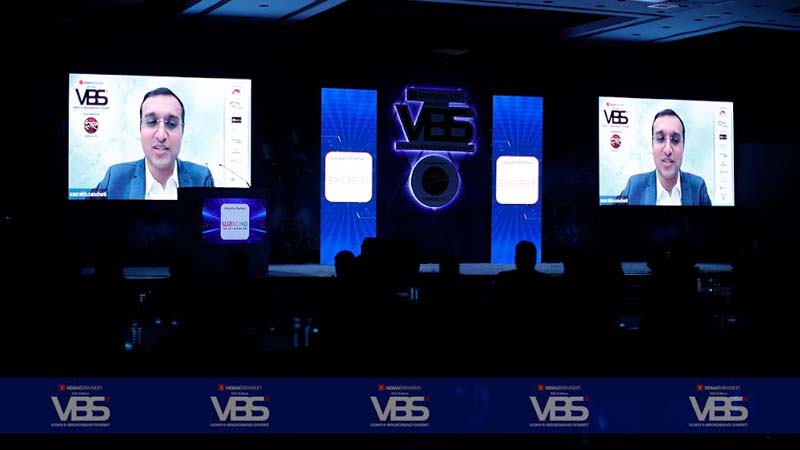
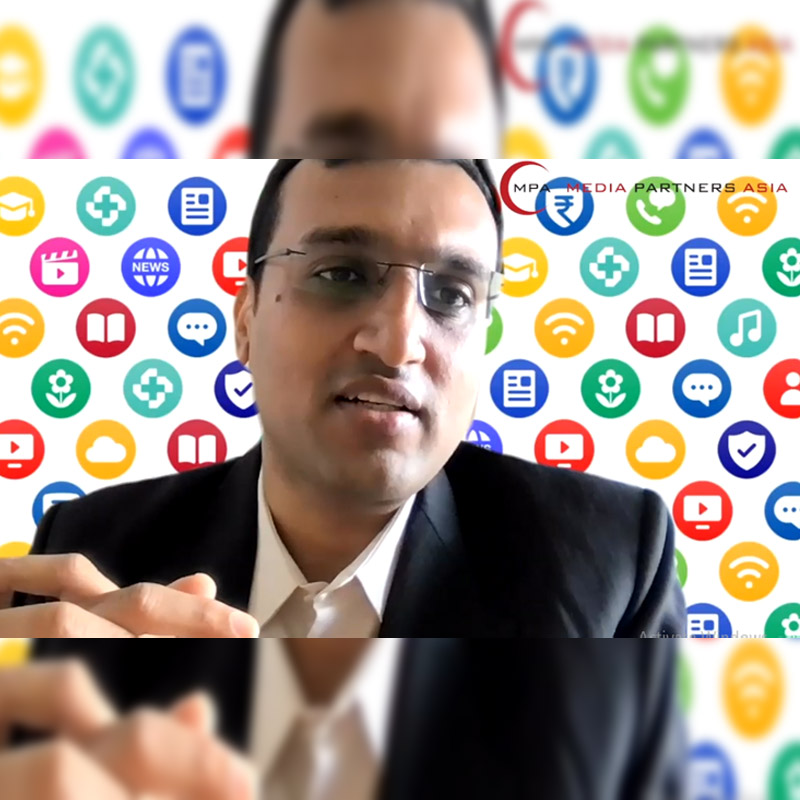
    The very first fireside chat of the event, on the topic: ‘Evolving Content Distribution Landscape’ had Jio Platforms group CFO Saurabh Sancheti as the speaker in conversation with Indian Television.com group founder, chairman & editor-in-chief Anil NM Wanvari.

    Wanvari began the chat by asking Sacheti, how he has seen the content distribution landscape evolve over the past few years.

    Sacheti answered, “I think India is a very exciting market, and content distribution and media is like a market no other. Definitely, the last five years have been a big revolution on all fronts. So let me tell by seeing how the market is today and versus what it will be tomorrow. So today, yes, largely, even today, whatever people may say cable and DTH are very prominent platforms, they have the highest reach, they reach more than 100 million households and there’s a very big proportion, which they are serving directly as a pay TV. There’s a big business, which obviously, the free dish is having and the whole revolution on connectivity, which has changed not just the mobile, but the whole technology around, i.e., connected TVs, and large screens is there. There, we are just scratching the surface. So if I look, actually India had 350 million households, the last bottom 100 and 250 million don’t have a TV, and their only access is low-cost smartphones, for the content. If I look at the top tier, the top 50 million homes have connected TV, and many of them have a pay TV as well, which is where there are two products to the same segment, about 100 million pay-TV homes. So, the distribution landscape is changing very fast, because the numbers are not consumer time and attention is. That is what is leading to a lot of change in the mix of more choices, the customer time, definitely is now getting into multiple channels. So it’s an exciting time. I think the future is exciting for all the mediums of content distribution. Overall as the economy grows more prosperous, definitely the number of users and consumption is there to rise.”

    Moving on to the next question, Wanvari asked, “What are some of the key factors that have driven these changes in content distribution?”

    Sancheti replied, “One good thing that has happened is, definitely a lot of ecosystems are coming together. The access which was earlier very difficult is something which has been made easy. So earlier, we had it in mobility where, as a mobile subscriber, you had to pay 250 rupees a GB and therefore it was criminal to watch video on your mobile phone to now having very affordable tariffs that are less than 10 rupees a GB and everybody can afford a mobile phone with content and that opens up a huge audience. The same revolution, by the way, is also happening in phones, now almost touching 40 million internet users. It’s a very big market which is happening. What connectivity does is because it’s like the baseline infra but what it does is, it definitely changes the overall proposition. At the same time, with this opening up of the market, people are able to take exciting bets and make it really large. I mean, for example, just look at JioCinema and what has happened with digital watching on IPL, it’s like the whole model is pivoted, the whole attention has gone there. Therefore a lot of interesting experiments are happening, which is a very good thing to happen for the overall industry, because that is what maximises the consumer surplus and that really generates a lot of value for everybody in the ecosystem, not just the content producers, distributors, but the consumers as well. So it’s really exciting.”

    Wanvari then asked, “In your experience, what role do the new and emerging platforms play in reaching diverse audiences? How do you identify such platforms?”

    Sancheti then answered, “I’ll break the question into two parts. One is obviously as a content producer and then as a distribution channel. As a content producer, the good thing as I said, in India is there is no one India, there are many Indias, and overall, India is so big that even in the three Indias that I was discussing earlier, you have an opportunity of a global scale. Now, coming to the content producer angle, which is very interesting in India. So, D2C is the buzzword, that everybody’s trying to grapple with it, but the Indian consumer is kind of a high-touch consumer. So, existing relationships definitely prevail and across industries our learning is, that is definitely a winning point. Therefore, wherever you have a distribution channel, whether it be wire, a local cable operator, or a telco distribution, or any other distribution, where you have some touchpoint with the user, you have a lot of chance of getting him converted, and at least sample and if the content is of quality, definitely consume it. So, as a content producer and distributor, like I said, India is moving very fast, shifting fast, the market is growing, and it’s quite an exciting time to see how things are evolving. And if you have a great product, there is no dearth of consumers that clearly this market is showing.”

    Wanvari then added, “These days, we don’t look at a customer, we look at the lifetime value of a customer, how is that? What kind of role is that playing in terms of customer acquisition?”

    Sancheti commented saying. “I think that’s a very relevant question. The good thing is that consumers today have choices, and the bad thing is consumers ‘have’ choices. So if you are not able to take her attention at the right time with the right content, you’re lost. And that’s where I think, affordability, access, and the size of the market is a given, which everybody talks about. But content personalisation is the real secret sauce, which very few people talk about, and are working towards. I think one very important thing is unlike a lot of other categories, where the consumer is very involved in the purchase, and likes to go through the process of making the decision, entertainment is always a lean-back experience. The consumer may like to play around a bit, but the consumer doesn’t want to do a bit of big research to find the right piece of content. That’s where if you have the right content dished out at the right time, to the right consumer, the consumption obviously goes up. What I always try to remind my team is that choice is not actually a boon, it’s not certainly a gift, it’s a tax to the consumer. So the more you are making the consumer choose, you’re making them want variety. So in that sense, your variety of platforms is required but don’t expect the consumer to put a lot of effort in discovery. It should be seamless, the right content should surface and clearly, the who’s who of the world, the best people globally have this as the secret sauce. I think this is what in the whole Jio ecosystem, we have been able to do well. We have been able to segment the users, understand their needs, know what kind of content they need, and give them at the right time and price. And I think one more thing, which, I was talking to a large global techfin a couple of days back over dinner. One of the common pain points that came to them was, that digital is the sexy thing, everybody talks about it. But it’s really painful as a user because I don’t know what piece of content will appeal me where. Even if I have something in mind, I don’t know what platform it is available. It’s a lot of research. That’s I think, when we were just discussing what we have done in India, they were really blown away apart from that. So to summarise, I think the whole personalisation aspect is the aspect that is changing and which will differentiate, which will make the winners from the losers.”

    After that, Wanvari asked, “How important is the lifetime value?”

    To which Sancheti answered, “Let me explain it in a two-part equation. One part of the equation is the value derived from the users. But our principle in the business, and what I’ve learned through my own experiences here is that you should focus on the other part, which is what value you give to the user. If your product is valuable enough, and value is not only in monetary terms, it’s value in terms of giving the right thing, without the consumer having to put effort, giving it at the right price, giving it to the right user. What it does is, it adds a lot of value to the user. So the way businesses should look at it is to go beyond the LTV. That’s the internal control metric they should use, but focus more on giving and acquiring the right kinds of customer metrics. A lot of times what I’ve seen, a lot of people do is the whole process is more on vanity metrics of acquisition, and just trying to get the consumer in, and not figuring out what his or her needs are. So focusing more on the extracting part from the consumer, and focusing less on the giving part. And over a longer term, usually, the giving part is what makes the consumer stick around and, generate value. So focus on adding consumer surplus as I began with.”

    Wanvari then asked Sancheti about the challenges they have faced so far, as they’re not just looking at one port of distribution but at multi-channel distribution.

    Replying to this, Sancheti said, “I think the challenge, as I said, is that there is a large set of users today who have access to multiple channels. So it’s because a lot of things are in motion, like I explained. So it’s not like there’s only one channel, there’s only one way in which the consumer was. So if I zoom or go past 10 years back, life was very simple, because most of the consumers are either or. It’s either this kind of consumer or that kind of consumer, and when the choices are limited, it’s easier to get and retain the attention of the consumer to make him or her happy. But when there are too many choices, it’s important to first get the attention of the user and then make him or her happy. So I think what we have been trying to do is, figuring out what consumers need and at the same time, enable multiple products across the value chain for each of them. That is something that is working well for us because we have realised that rather than trying to compartmentalise the user that ‘okay, she is X kind of person, and they would need only Y kind of thing’. We are trying to give them a combination and figure out how to just serve what they want. So their attention is our currency, which we deeply track across businesses.”

    Wanvari then asked the next question “The consumer is more used to using mobile internet rather than internet at home. Is that true? Also, the fact that connected TVs are growing. Then apart from that, there’s a lot of competition amongst cable and DTH right now. There’s also free-to-air television. So what does this all mean for you? What kind of challenges do these factors pose to you?”

    Sacheti answered, “As I said, the part where we focus most on is delivering value to the user. And value is definitely dependent a lot on figuring out what the consumer wants. So at the end of the day, what you want is, the basic currency is attention of the consumer. Is the consumer spending more time with you, more attention to you, or staying with you longer, that’s all. That is the basic currency, everything else is the resultant. Therefore that is the lead indicator that we work on and analytics plays a very big part in it. So what analytics does is, in all our businesses, it plays a very important role. It helps us identify the right content for the right consumer and hypothesis testing and combine it with our tech capabilities. A lot of personalization and the whole consumer cohort strategy and dynamic cohorts are being created all by AI now. There are no longer a product manager who is standing up and saying, ‘Hey, I have five ideas, let’s test it out’, it’s the machines who are driving it, and which is helping us understand the customer better and serve it better. So if I go back to the previous one when I was talking about a multi-channel distribution strategy, a consumer has many choices. Getting their attention today is not easy. We are adapting for the new world by deeper analytics and serving them better.”

    Sancheti added, “I’ll tell you the fundamentals of business, which I have learnt. I think only one part in which people realise how to increase demand. So demand is what consumers demand. There is one part that people are overly fixated on, which is that if you make something cheaper, it increases the demand. But one thing, which is very rarely appreciated, is if you make something easier, that also increases demand. It’s not only the price thing, it’s easier and what is easier, personalised content, personalised product, something which understands me, I’ll be happy to lap it up. So that second part of the equation is often underappreciated. I’ve seen that by multiple people. That is what we focus a lot on.”

    Wanvari then asked, “In terms of content, what trends have you found that have been particularly effective in the current landscape?”

    Sachetio replied, “I’ll start with a global trend, and that is not unique to India. But what I realised is that people call some extrapolate two points and try to call it a trend. A trend is an underlying phenomenon, everything else is a resultant. So if I look at, just the underlying phenomena, for example, one thing which is given is what social media has done over the past 20 years is people’s attention spans are becoming shorter. There’s a whole boom of content and choices available. Therefore the need for gripping storytelling, something that captures attention is there. Now everything is just vying for attention. So attention span is smaller and the important or a different storyline is important. If I just extrapolate that to India, how I see things happening, I think, 10 years, if you talk about a concept, which was in the US, but you talk about in India, i.e., one season 24 or 30 episodes, the story ends and something else begins, was unheard of, and unthinkable, and it’s working very well. Or, say I think there’s a big digital audience, let me do a movie premiere on OTT people would laugh, it was not even thinkable. So all those kinds of things are definitely bringing new types of products, varieties to bring people in. I also think that, all the new formats, that have come in, and some of them are global formats, and all the new content formats, in a gripping storytelling way, which just captures the attention and imagination is there. This generates a lot of consumer surplus, because the whole consumer, which was posed to only a limited genre of content today has at least 100x more choices, if you just explore by types of subcategories. So the whole choice has exploded, the format has become shorter, and the storytelling is better and more gripping. So these are the trends and these are going to continue for the next 10 years as well.”

    Adding on to what Sancheti’s response, Wanvari said, “The audience has started participating a lot more and they’ve almost become a part of the content themselves. A lot more, as compared to if I watch what you do on JioCinema during the cricket tournament during the cricket tournaments that are going on, if I’ve watched what’s going on on Shark Tank, if I watch that the audience can actually also invest in, in those in the startup or whatever offerings they have.”

    After which, Sancheti said, “If you look at the overall piece, today audience is much more connected much more wanting to identify themselves personally with the content. And they are also very conscious about what they are about. So therefore, again, a larger variety of audience and more important, therefore to serve the right content to the right person, otherwise you end up taking away the attention or at least upsetting the consumer.”

    Wanvari then asked, “How is the entire Reliance Jio Group making sure that it stays ahead of the trends and it also stays relevant?”

    Sancheti replied, “This is something like we always remind ourselves, every day in the morning when we walk in. It’s not about what we have accomplished, but what is yet to be done. It’s still day zero. There’s a good saying which which we have in our team, that the best teacher in the universe is consumer, because especially when we are product managers, business folks, we think that we know the consumer, but consumer is the one who teaches us. Usually, those teachings come very late because we don’t realise it. So one thing which we do very rigorously is take the feedback and listen to consumer very, very intently, and look for signals where we are wrong. It’s important to know that consumer is right, and you will be wrong in multiple places. That is what we always look as a signal. We humbly accept it wherever it’s not working and we change our strategy and go ahead with that learning. So learning is is an integral part, it has always been important, but never as much as now, given the pace at which the whole industry is shifting. If you don’t learn, if you rest on your laurels, this is such a fast changing world, it will soon become mainstream. So we just keep reminding this to ourselves, and keep on putting ourselves the promise that consumer is right, maybe we are not getting it right and look for signs where we can improve.”

    Wanvari further asked, “Do we see pay TV and cable TV as well as DTH having legs because of the disruption that you’ll have been putting forth in the industry as a whole.”

    Sancheti answered, “Typically what happens is, a lot of times, people are quite pessimistic about things, but don’t see the overall opportunity and the size. So like I said, let me again, zoom into 10 years later, how do I see the market and what is going to happen in the market. 10 years later, India would have 400 million households and India would reach a per capita income of average of $5,000. That kind of per capita income, there would be a 90% penetration of TV, that’s like globally proven macroeconomic fact, which means that about 360 million households should own a TV at that point of time. Now, where are these people today? Today, those homes in contrast, are close to 350 million and 200 million only on TV. This means the overall homes which can be serviced by entertainment is going to expand significantly. I think there will be a top tier which is significantly large, which will be like about 120-150 million range, which will be fully digital, because at the end of the day, the choice and the personalisation, which can be delivered on digital will be unmatched. However, I still believe that out of the bottom 250 million left after that, or 210 million to be precise, left after that, pay TV universe would still be 100 million. The only challenge that pay TV will have will be the users who don’t have any touchpoint with the consumer. I think cable has a fantastic opportunity because you have a guy who has known the consumer for not just years, but decades. And therefore the kind of personalisation, adaptation, listening to consumer that you can do, is like nothing else. So cable definitely has a very bright future. DTH will have to reinvent itself a bit. At the end, obviously, there’s a big bottom tier about 50 to 100 million at least which will be on free dish or pay TV kind of offering. The beauty about Indian market is, it’s so big that any fun business you pick up, it’s still 100 million kind of scale, which is what you don’t even get in large countries. So the relevance definitely I see. The need for reinvention is also there. What I keep on reminding, across businesses to all our teams that, our past laurels are past laurels, but the way in which industry is changing, we need to reinvent ourselves. But I’m sure Indian organisations, our competition, or lot of people, especially Indian businesses are very smart. They will move and adapt quite quickly and we see a big market in it.”

    Wanvari then asked a question on forecasting the future, “How do we see the world of media and entertainment being aligned? Do we see three or four large players who are integrated like they are in the US, but the US has a lot more players now, because the tech giants are really driving the agenda. So what do we see happening in the marketplace as far as media and entertainment is concerned? We see a similar kind of play happening are we see telcos or do we see a software giant tech solution providers like like in the US?”

    Sacheti replied, “Out of 400 million households, 360 owning TV, I see three large markets. One is the digital-first market, which will be connected largely by telcos, who are obviously putting in a lot of money in fixed investments as well. That revolution is about to happen because even at 120 million out of 400 million, we’re at barely at 30 per cent penetration. Today, any country, of $5,000 per capita income goes higher, so that is bound to happen. Telcos will lead the distribution and digital companies, both the OTTs as well as the Internet giants, would be the media engines to them. I think the media engines of pay TV and free TV will serve the other 200 that will be there. The opportunity is so big, I do see a lot of space for everybody. That’s the beauty about India. Even if you pick up a niche, it’s 10s of millions. So the addressable market is large. The market is up for grabs and I’m extremely bullish on the future.”

    Adding on to Sancheti, Wanveri added, “India is this kind of a market, which is leapfrog a lot of things now. It’s very fertile, it’s very virginal. It’s very fertile for companies like Amazon, Microsoft, and Google to come in and make up a strong play and with the larger market that we have to come in, try to read up on acquisition strategy going forward. Do you see that happening?”

    Sancheti said, “All the global Internet giants will definitely make a mark. They have already made a mark. So it’s nothing like that. But having said that, isn’t there enough and more for Indian companies? I think the opportunity is so big that no one player, no one set of industry can take it over. It’s so big that everybody has a huge opportunity. Everybody has an opportunity to grow multi-fold from where we are.”

    Wanvari then asked, “Do you have anything to tell the cable TV or the pay TV fraternity as well as operators? Should they focus on broadband? Should they deliver video?”

    Sancheti answered, “What has been happening is, there has been a lot of pessimism and that happens in any inflection point. Anytime when things are not going as well as things are getting shaken up. A lot of self-confidence loss happens, whether it be cable fraternity or the pay TV. I think this is short-lived. This is an inflection point, this is where we can really build on our strengths. So the only thing which I’m working towards myself and my advice would be to reinvent ourselves be closer to the consumer, because there is a very big opportunity.”

    Wanvari commented saying, “But do we see the pipe or do we see wireless?”

    Sancheti said, “Everything will coexist. Look at the kind of consumption levels in India, you still are talking about a very little penetration even in wireless, the penetration levels are not the level that similar countries per capita will have when when we reach $5,000. So even wireless consumption, wired and I’ll even say the one-way medium also has a lot of flex because India has all the tiers available. When you think of yourself as a consumer, you also try to think that you are the only archetype. We are only one small portion of the archetype, there are many multiple archetypes. I have traveled to households in 75 villages and their outlook on how they consume media. That is what has opened my eyes. I found all sorts of contrast, people who move from one medium to the other. So yeah, it’s quite exciting.”

    Wanvari then wrapped up the conversation with his final question, “I think hyper localisation of content is what’s going to keep cable TV very relevant going forward apart from the bundle offerings and also even OTT is relevant at the same time. Whoever delivers more hyper localisation will also benefit apart from offering a wide diverse content offering.”

    Sancheti answered, “I couldn’t agree with you more. At the end of the day, the trend is that human beings are social animals and anything you get to them, which can correlate with their communities is going to help you. Communities are smaller, communities communities are local, they will be able to relate more they will be able to know more. I think what has not been cracked so far is a kind of economic model in which low-cost production can happen and be also telecasted or broadcasted locally, and regionally. But local and regional events is one of the key things which which will happen because that is where technology is going. It’s again a trend that is going to happen. So that suddenly will change the fortunes of cable.

  • Uday Shankar & Punit Goenka to speak at APOS 2022

    Uday Shankar & Punit Goenka to speak at APOS 2022

    Mumbai: Former Disney Asia Pacific head Uday Shankar, who has now teamed up with James Murdoch for a JV Bodhi Tree Systems and who is also Marigold Park founder, director, and ZEEL manging director & CEO Punit Goenka, is among the speakers at APOS 2022, which will take place in-person in Singapore at the Capella from 27-29 September 2022. The event will also be streamed, keeping in mind the current COVID situation.

    Created and curated by Media Partners Asia, APOS positions itself as the ultimate destination for deals, partnerships, and thought leadership as industry leaders focus on sustainable growth and investment across content, connectivity, and commerce.

    The other speakers include Meta India VP & MD Ajit Mohan, JIO Platforms group CFO Saurabh Sancheti, Warner Bros. Discovery president, international Gerhard Zeiler, Paramount senior VP, Head of Office and Streaming, Asia Catherine Park, Candle Media co-CEO, founder Kevin Mayer, Prime Video VP, International Kelly Day, Sky NZ CEO Sophie Moloney and YouTube global head of media co partnerships Lori Conkling.

    The key themes are:

    Media Macros: The Long And Short View

    APOS takes the pulse of key APAC markets, providing an outlook on advertising and consumer spending across media with discussions on key drivers and challenges along with secular shifts.

    Streaming’s Sustainability

    2022 will help investors and industry stakeholders assess the scalability of streaming with a laser focus on the sustainability of customer growth, monetisation and the path to profitability. APOS brings global and local perspectives into sharper focus.

    Valuations And Investor Expectations

    TV remains profitable with low growth, while streaming is rapidly growing but unprofitable. What is the inflection point for streaming and the outlook for long-term cash generation? What are the various approaches toward valuations of pure-play streamers, companies in transition, and other proxies?

    Growth of Premium Asian Content

    Korean dramas and Japanese anime drive nearly 40 per cent of premium online video consumption across the region. Production values in Thailand, Indonesia, and other markets continue to improve as budgets increase and broadcasters recoup investments across TV and online. What is the future forecast? Will Korean dramas continue to dominate? Can Japanese anime and other genres grow share? What is the outlook for local dramas in the country and regionally?

    Metaverse Impact

    New applications are being pioneered to drive consumer experiences with growing use cases across gaming, movies, music, TV content, and social connectivity. What will be the impact on consumer engagement and the development of new media franchises?

    Battle for the Living Room

    The growth of smart TVs along with the proliferation of video services has driven demand for aggregation with an emphasis on customer simplicity, improved content search and discovery, and efficient payment. 2022 will see competition for the living room escalate amongst internet & technology giants and telcos & pay-TV operators. What does customer success look like in key markets and what compelling use cases are emerging?

    Scalability of Premium AVOD

    TV broadcasters and regional platforms are capitalising on CTV growth, local IP, and attractive demos to help shape the premium AVOD market in major Asia-Pacific markets. How are the dynamics playing out amongst key stakeholders and what will drive future growth?

    Expanding the Creator Economy

    What are the latest innovations and emerging technologies expanding the creator economy as platforms and advertisers look to next-gen content creators to reach new audiences and build engagement? How are key platforms investing in monetization engines and unique platform features to drive new revenue streams that sustain creator ecosystems internationally and in large local markets in APAC?

    Recalibration of Sports

    After pandemic-induced lockdowns in 2020-21, rights fees experienced a correction; is market demand returning to pre-Covid levels, and if so, which markets and franchises benefit and which lag? How are distribution dynamics and drivers changing with the growth of online video?

    Telco State of Nation

    Telco strategy and investor focus across key markets are being driven by 5G and mobile consolidation. What catalysts across consumer, enterprise, and other key verticals will drive value creation for telcos in 2022 and beyond?

    New Normal for Movies

    2022 box office is still relatively depressed in most markets. When will demand snap back and what role will streaming continue to play? How are exhibitors, studios, and production houses positioning themselves? How are investors reacting?

    Optimising Content and the Video Experience

    How are new technologies helping platforms optimise customer experiences across content and connectivity? What applications are helping companies thrive in a highly competitive video landscape with content personalisation, targeted advertising, and the overall consumer experience?

  • Glance buys out gaming firm Gambit in NFT push

    Glance buys out gaming firm Gambit in NFT push

    Mumbai: InMobi’s consumer internet division Glance has announced the acquisition of Indian gaming firm Gambit Sports. This will accelerate Singapore-based Glance’s ambition of building the biggest platform for NFT-based live gaming experiences for gen-Z, across markets, it said.

    The acquisition brings together Glance’s scale and lock screen-centric innovation with Gambit’s expertise and understanding of the gaming ecosystem. Glance Games – Glance’s lock screen gaming platform – has over 45 million monthly active users across Asia. Close to 70 per cent are in the age group of 18 to 34, while over 40 per cent of its gamers are female, the company shared.

    Gambit has deep experience in building platforms with high engagement and monetisation. Co-founded in 2015 by Yashashvi Takallapalli, Gaurav Konar, Ranaveer Sankieneni, and Deepak Venkatramani, the company owns and operates Nostragamus (Nostra Pro) – a popular gaming platform with fantasy sports, poker, rummy, quiz, and hyper-casual games. Over 100 million games have been played on the Nostragamus platform, and it has close to 10 million registered users.   

    Glance will leverage Gambit’s expertise to launch engaging live gaming experiences including tournaments, game shows, game streaming and multi-player games on lock screen. Gambit will also enable Glance to launch multiple casual-to-midcore games that can be enjoyed by diverse sets of gamers. In the coming quarters, Glance also plans to launch NFTs in live gaming. This will potentially enable creators, streamers and developers to monetise through assets and NFT-based game creation while giving gamers unique experiences that they love.  
    “Gaming is the most exciting content category across the world today and Gen-Z spends more time on gaming than on any other activity online,” said InMobi co-founder and Glance president and COO Piyush Shah. “Giving users live, connected, interactive gaming experiences on the lock screen is key to Glance’s vision of building the world’s largest live internet platform. We also aim to launch creator-led NFTs for live gaming which will generate unique ‘play-to-earn’ and ‘play-to-own’ possibilities for the entire gaming ecosystem.”

    “We have already started seeing great traction for live gaming on Glance. For instance, over 10 million users watch live game streams on Glance every week now. With Glance and Gambit’s combined strengths and our belief that there is a game for every person, we envision doubling the number of monthly active gamers on Glance Games in the next year,” added Gambit co-founder and CEO Yashashvi Takallapalli. 

    In February 2022, Glance had signed an agreement to raise $200 million funding from Jio Platforms to accelerate its global expansion. The company also entered into a business partnership with Jio through which Glance’s lock screen platform will be integrated into JioPhone Next smartphones. This integration is expected to further boost the reach of Glance Games.

  • Jio Platforms to invest $200 million in AI-powered Glance

    Jio Platforms to invest $200 million in AI-powered Glance

    Mumbai: AI-driven lock-screen platform Glance has announced that it has agreed to raise $200 million from Jio Platforms (“Jio”) in its Series D round of funding. The transaction is subject to the satisfaction of customary closing conditions and regulatory approvals.

    The proposed investment by Jio is aimed at accelerating Glance’s launch in several key international markets outside of Asia such as the USA, Brazil, Mexico and Russia. The company is aiming to create the world’s largest live content and commerce ecosystem on the lock screen and will use the funds raised to expand globally. In addition to Jio Platforms, Glance is also backed by technology giant Google and Silicon Valley-based venture fund Mithril Capital.

    Concurrent with the proposed investment, Glance has also entered into a business partnership arrangement with Reliance Retail Ventures (“Reliance Retail”), providing for Glance’s ‘lock screen platform’ to be integrated into the JioPhone Next smartphones to transform the internet experience for millions of Jio users. This is the latest in a series of strategic partnerships between Glance and global players in the mobile ecosystem. The deal is also expected to lead to further strategic collaborations between Glance, Reliance Retail, and Jio across devices, commerce, content and gaming ecosystem.

    Glance will be integrated into the Pragati OS, which has been co-developed by Jio Platforms and Google, to bring LIVE content on Lock Screen for millions of Jio users. Its entertainment-led commerce platform Roposo will bring the power of live creator commerce to Jio users on their lock screen.

    Jio Platforms director Akash Ambani said, “Glance has grown at a phenomenal pace over the past two years and has given users a truly unique solution by unlocking the power of the lock screen for experiencing the internet, live content, creator-driven entertainment commerce, and gaming. With the help of this investment, Glance expects to launch in several key markets globally as well as to extend the experience to millions of Jio users, further reinforcing our commitment to provide the most advanced and next-level tech and digital ecosystem for consumers in India and beyond.”

    InMobi Group founder and CEO Naveen Tewari added, “Jio’s investment in Glance brings a deep synergy of vision and philosophy. Jio is a truly disruptive company. It made the internet accessible for millions of users, making India one of the largest internet markets in the world. Reliance is now disrupting the smartphone market with the launch of its JioPhone Next smartphones. Jio’s investment in Glance and Glance’s presence on the lock screen of JioPhone Next smartphones will lead to a paradigm shift in how its users experience the internet.”

    “Glance has created a disruptive lock screen-first discovery platform for live content, commerce and gaming in Asia, and we intend to scale it globally going forward,” shared InMobi Group co-founder and Glance president and COO Piyush Shah. “Jio’s investment is a huge validation of this vision and gives us the firepower to take the innovative experience of Glance to surfaces across the world. We look forward to working with Jio to build the content, creator and commerce ecosystem of the future together.”

    Morgan Stanley acted as the exclusive financial advisor and Khaitan & Co. acted as the legal counsel to Glance. White & Case and K Law acted as the legal counsels and Ernst & Young provided accounting and tax due to diligence services to Jio Platforms.