Tag: Ji Mantriji

  • It happens only in indya, Star opts to buy out portal

    Star has finally taken a full-fledged leap into the dotcom pool. Confirming its confidence in the Internet space, Star India today hoicked its stake in the much-hyped portal indya.com to “almost 100 per cent.”

    A joint release from Star and indya.com states that the Rupert Murdoch-promoted firm has bought the entire shareholding of founder and Microland chairman Pradeep Kar, and other investors. Kar had established indya.com in April 2000.

    The market was abuzz for long that Star would gobble up indya.com in toto but its management had consistently pooh-poohed that possibility. Star had earlier paid out $ 50 million for a 37 per cent stake in the portal but that was before the worldwide dotcom meltdown. No further details were available on how much Star paid to buy out Kar and associates, but official sources say current valuations are significantly lower. Some estimates put the figure at about $25 million.

    Gary Walrath, executive vice-president, Star Group Ltd, has been appointed chairman of indya.com while CEO Sunil Lulla will continue to head the dotcom, assisted by Indya’s management team, says the company release.

    The website is planned to become the online destination for all of Star’s India properties on its TV channels today and in future. Already, Star Plus, Star Movies, Star World and Channel [V] have been integrated into indya.com and will soon be joined by the group’s other channels in the coming months.

    The press release says benefits will also accrue to indya.com. “The alignment will give consumers and users an opportunity to interact more with Star on the internet and see more of indya.com on television,” it states.

    Recently the website launched interactive applications and multimedia content built around some of Star’s popular programmes like Kaun Banega Crorepati, Kyunki Saas Bhi Kabhi Bahu Thi, Kaahin Kissii Roz, Kahani Ghar Ghar Ki, Ji Mantriji (all on Star Plus), Friends, X-Files, Ally McBeal and Baywatch (on Star World).

  • ‘People are turning to the BBC as a source of global perspective on world events’ : Rupert Gavin Chief executive of BBC Worldwide’s

    For Rupert Gavin, BBC Worldwide’s chief executive, a trip to India seems linked to announcing a new programming initiative with Star India.

    Last year he was in Mumbai in the middle of October to announce a licencing agreement with Star for the popular British television serials Yes Minister and Yes Prime Minister for broadcast in Hindi as Ji Mantriji and Ji Pradhanmantriji respectively. Ji Mantriji is currently running on Star but Ji Pradhanmantriji seems to have gone into permanent cold storage.

    This time round (25 October to be exact) it was to announce The Weakest Link, the biggest programming hit to come out of the BBC Worldwide stables in the last decade.

    The largest non-US, English language television programme producer and exporter in the world (2000-01 programme sales increased from ?138m to ?150m), BBC Worldwide is still in the build phase as far as India is concerned, Gavin says. It is building the brand, building its presence so that it will be in a position to make investments. Once that happens, maybe India will contribute more than the 2 per cent it currently does to BBC Worldwide’s sales.

    In an interview with indiantelevision.com’s Thomas Abraham, Gavin outlined BBC Worldwide’s plans in the changed scenario post-11 September.

    Post September 11, has there has been any particular change in strategy, how has the business model changed?
    Since then, a lot has changed. Obviously our news programming, our news channels, have gained a lot. The world market has opened for documentaries. See, we probably have some of the best documentaries on Bin Laden, Al Qaida (the chief suspects in the attacks on the World Trade Centre). Nobody wanted them eight weeks ago. Now suddenly people who were not aware of these guys’ movements are showing interest in buying these documentaries.

    We are also aware of a shift in demand to a slightly more serious, more factual programming ethos. I think people’s attitude to life, certainly in the West, has changed.

    Is there a transformation in people’s demands, are they more interested in trying to figure out what is happening outside America?
    Big transformation. We have a lot of demand because a lot of the American papers have been writing that America’s television news has become exclusively domestic. And certainly people are turning to the BBC as being a source of global perspective on world events. They are sad events no doubt but they have had a very significant and positive impact on us.

    Obviously, the advertising market has been precarious. But the advertising market has been precarious all the way round the world. And that has an effect on us. But we will have to see how that shapes through.

    ‘We are interested in bringing in more BBC channels, or channels in partnership with other people’

    As a long term effect?
    Whether it is a long term downturn or whether it is just a cycle.

    What do you propose in India? Last year, there were a lot of things happening. There was also talk that you were in discussions with the Indian government regarding investment plans in broadcasting. What came of that?

    We are still in discussions. It has been very a turbulent market and some of the changes that were going to take place did not. DTH, things like that, due to tight government restrictions. We are interested in the investment market in India. But things will have to move a little faster.

    What projects are you looking at other than these?
    We are interested in bringing in more BBC channels, or channels in partnership with other people. We are also interested in the radio market.

    We are also expanding our publishing operations. At the moment, our publishing is gaining partnership with Penguin and the Noddies with Egmont.

    From our perspective, and the traditional way that we work, is to expand by way of working with existing players on a licensed basis.

    When we build on a sufficient scale in the market, we will start investing as well in infrastructure.

    That is the programme of activity – we are in the build phase, which is why we are doing things with Star. Which is where Teletubbies and Noddy come in, as well as Ji Mantriji, the books with Penguin. We are actually building the brand, building our presence and that will help us to be in a position to make investments.

    Any concrete investment plans?
    Bring in channel operations. We are also looking at the possibilities of Radio, and publishing, maybe even magazines.

    These will be BBC publications printed in India for sale in India?
    Yes.

    As far as radio is concerned, do you have that kind of cachet in India? I think radio as a medium seems to have lost out.
    We are primarily on short wave, with a certain amount of FM redistribution. But that’s all. We have got to get to a stage where it is accepted that BBC news can be broadcast on domestic channels.

    Basically FM? Is that what you are looking at?
    That’s right.

    ‘We have got to get to a stage where it is accepted that BBC news can be broadcast on domestic channels’

    But you say you have a small band on FM. Could you elaborate on that?
    I think we must be having. It’s not my particular area but we do have a range of partnerships for FM redistribution around the world. Or, a lot of people are listening to us on the Internet. But obviously for India, the bulk of our dependence is on short wave.

    Talking about your short wave listenership, have you tracked that in any way? Has it gone down?
    It has remained pretty steady, actually. It’s surprising that. It’s not increasing but it’s stable.

    Any numbers?
    It’s around 30 million. It’s very substantial considering that our total weekly listenership to the (BBC) World Service around the world is around 153 million.

    What do you think about broadband, the Internet? Even in the West, it has not taken off, leave aside India.
    We are the biggest Internet content provider outside America. We just keep pumping out internet content. We use more video content than any other internet provider in the world. And that’s part of the service we provide.

    As people’s connections get faster and faster, their appreciation of our service also gets better. But we’ve always been ahead of the curve. That’s why we have all of our radio channels on the Internet. That’s why we have all of our news bulletins, a lot of our video archives on the Internet. We have more video and audio on the Internet than any other media company in the world.

    What about the revenue model? That’s the question any Net-based venture confronts today.
    The majority of is publicly funded. That is our unique difference. We are able to do that because of public funding.

    What about BBC’s current investments in India, is it increasing… decreasing?
    Increasing. I can’t give you any figures though.

    What about worldwide sales figures; what is coming out of Asia and how much is the contribution of India in percentages?
    It’s modest. Of our total worldwide sales it’s about two per cent.

    And Asia?
    Asia is more substantial. Asia is about 15 per cent, but that includes Australia, which is a very big market for us. Bear in mind that 50 per cent of our sales are in the UK

    Still? But wasn’t that the sales break-up average in 1999? You were thinking it would go up weren’t you? But it hasn’t really gone up.
    No it has. The international is now above. So we have moved from international (sales) being about 45 per cent to about 55 per cent. That’s been the change over three years.
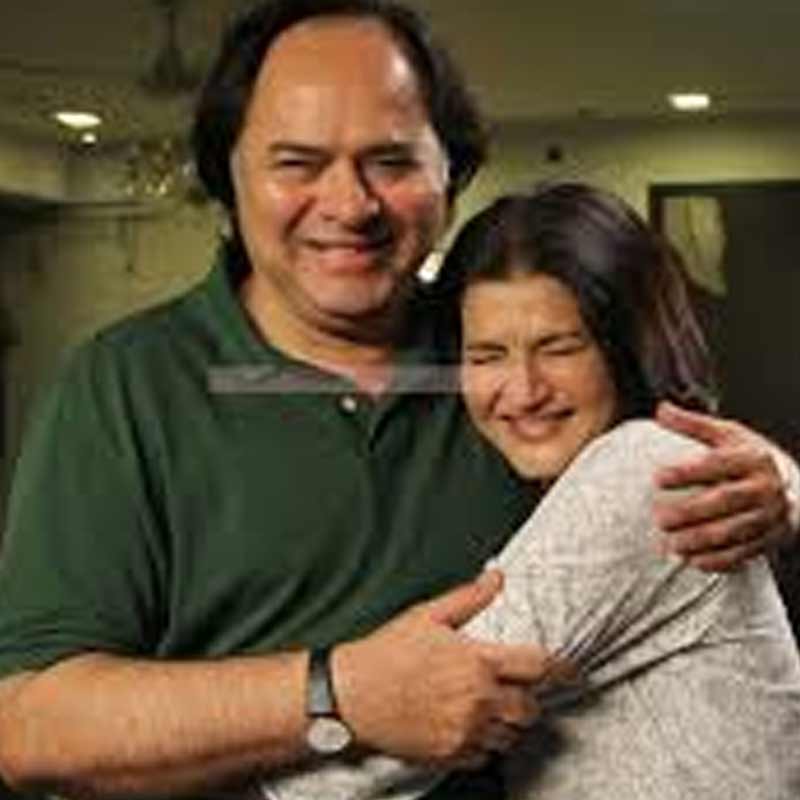
  • Acting is the assembly of experiences from various sources  : Farooq Shaikh

    Acting is the assembly of experiences from various sources : Farooq Shaikh

    Farooq Shaikh made his debut as an actor some 32 years ago in the MS Sathyu-directed classic Garam Hawa. Soon to follow was an immensely successful romantic film, Noorie. Although the following years saw him achieve moderate success in a number of offbeat films, real stardom remained elusive. Not that he chased after it. One can never forget his wonderfully inspired performance in the hit comedy Chashme Baddoor, which was to pave the way for his later roles in sitcoms on television.

    Some 12 years after he was first seen on TV, Farooq has created a niche for himself in this medium, albeit more as a comedian. For someone whose foray into cinema was not a planned move, Farooq has indeed come a long way. The mantriji (minister) of Star Plus’ new political satire Ji Mantriji (Yes Minister) took time off from his hectic schedule to speak to our correspondent, Amar.

    What brought you to acting?
    Well, it began with amateurish stage performances in school and college. While in college I was associated with the Indian Peoples’ Theatre Association (IPTA) where MS Sathyu was a senior director. While casting for his film – Garam Hawa – he offered me a role which I readily accepted and that’s how my acting career started. But, to be frank I did not actually intend to be a professional actor. In fact, I am a qualified lawyer.

    Farooq Shaikh with Varsha Usgaonkar in Alvida Darling, a Metro Film-produced serial which used to air on Zee TV.

    Do you follow any genre of acting? Would you call yourself a method actor or do you go by your instincts?
    See, from whatever little I have read and known about acting, there cannot be a fixed formula in it. Nobody can justify a particular method and call all other methods useless. For me, acting is the assembly of various sources – my memory of past experiences, my instincts, the feed I get from my co-actors, the script and the instructions of my director. I agree that when the method school of acting first gained prominence it aroused a lot of interest. It was as if an intangible thing had suddenly become tangible or come into existence. But for me acting does not involve any hard and fast rule.

    As against your innings in movies, on TV you seem to have been typecast in comedy roles. How do you choose your roles?
    People forget that I started my career on TV with a serious role in Shrikaanth which was Sarat Chandra’s autobiographical novel. Even after that I did a serious drama – Aakhri Daao – with Deepti Naval. I have never been conscious of the type of role I’m doing or whether it is comedy or drama. My only criterion for taking up a role is my gut feel on whether I’m going to enjoy doing a role or not. I have also never craved for a particular role.

    “Minister” Farooq Shaikh confronts “bureacrat” Jayant Kriplani in Ji Mantriji, the new serial airing on Star Plus.

    Many actors are of the opinion that comedy is the most difficult part of acting. Do you agree?
    It is not the most difficult, but yes, it requires a slightly better sense of timing. Performing a comedy scene is like narrating a joke. The joke may be wonderful but if it is not narrated with the right flair, the right expressions, the right timing, it will fall flat.

    How do you work on your sense of timing?
    One can’t specifically work on it on his own. Your timing by and large depends on the feed you get from your co-artistes. The only way you can possibly improve on it is by striking a chordant note with your CO-artistes and rehearsing with them a lot more than you normally do.

    Have you encountered a problem wherein your co-actor is very poor at comedy?
    It does happen that some actors have a problem with comedy. At times, the problem is with the language and on other occasions it is with the content. As a co-actor I try to be as patient and supportive as possible. But cinema is a medium where these problems are more often than not eventually taken care of by deft editing.

    The “mantri” tries to get one over the “bureacrat”.

    How did you prepare for your role in Ji Mantriji?
    See, as a moderately educated city dweller, who is aware of the political situation in the country I didn’t need any special preparation to enact a role like that. I think all of us more or less have a perception about our politicians. Moreover, I read a lot of magazines and newspapers and keep a tab on current political issues. Beyond that, no research has gone into the role. Neither has it been modeled on any particular politician.

    What are the natural instincts required to be a successful comedian?
    Some kind of inherent flair and liking for comedy, the sensitivity to imbibe the funnier and the more humorous influences from the atmosphere, a good sense of humour, the ability and the habit of playing with words and phrases.

    Do you adhere to a given script or do you go beyond it?
    Effective comedy is not possible without improvisation. I or rather we improvise as much as possible within the broad ambit of the script and the instructions of the director.

    Many of the greatest comedians have been scriptwriters and producers of their own work. Wouldn’t you want to be one?
    No, no. I just don’t have the temperament to write. And being a producer involves too much of a headache. Acting is more enjoyable.

    Hasn’t TV comedy veered more towards the slapstick in recent times?
    It has, no doubt. And that’s because economics is the overriding concern nowadays. I believe, in the perception of the channels, slapstick is less unsafe because it tends to evoke an immediate reaction. But with Ji Mantriji, we’ve tried something different. We’ve gone for subtle humour. We’ve pitched it at a less than ‘loud’ level and if this succeeds, it should set a new trend.

    For someone who has done movies most of his career, don’t you find TV taxing?
    No doubt, TV involves much more hard work. We can some 23 minutes of an episode, which is about one sixth or one eighth of a movie in one and half days. If we shoot a movie at this rate, movies will get completed in twelve days. But again, the economics of the medium cannot be managed otherwise. The only solution lies in being selective about your work and enjoying whatever you do.

    Who are your favorite actors?
    Frankly, I have no favourites. Whoever has done well at a given point of time and has enjoyed doing that piece of work has impressed me. Invariably I have found that no actor or director can be an absolute perfectionist. Actors who have been exceptional in one role have looked quite ordinary in another. So I cannot think of any name or names I can count as my favourites

    What is your advice to aspiring comedians?
    (Laughs). They should have a better sense of the language. Without this one

  • ‘Watch out for Zee TV, the war has just begin’: Sandeep Goyal CEO Zee Network

    ‘Watch out for Zee TV, the war has just begin’: Sandeep Goyal CEO Zee Network

    Rediffusion DY&R president Sandeep Goyal has taken up a challenge not many people would have at this particular juncture. Come June, he will be heading the erstwhile shooting star Zee Telefilms as CEO. His mandate from chairman Subhash Chandra: shoot down Star and claim the numero uno perch it currently occupies from it for Zee.


    This at a time when it is raging through controversies aplenty. It has been lagging in the viewership stakes with channels such as Star TV and Sony Entertainment surging ahead. Analysts have criticised its wild expansionist urges. More than that there are the charges of the alleged siphoning of funds to the Essel group to acquire equity in other entertainment companies such as B4U and ABCL.


    Other charges that have been hurled at Zee include those of alleged share price manipulation in the early days along with cornered bull Ketan Parekh. Additionally, Zee Telefilms is also facing shareholders‘ ire as the share collapsed to below Rs 100 from a high of Rs 1,600. (The scrip closed at Rs 106.85 today as buying interest revived on the counter).


    Clearly the 38-year-old English literature gold medalist from Punjab University and MBA, who comes from a family of bureaucrats and has 15 years of advertising industry experience under his belt with agencies like HTA, Trikaya Grey, Mudra and Rediffusion, has his task cut out for him. But Goyal does not let this put him down.
    “I am going into the job optimistically,” he says determinedly .


    Goyal had once told a magazine: “If you play, you must win. Playing just for the sake of playing is no fun. Success is not a destination but a way of life and it does not happen incidentally. You have to work at it.” Indiantelevision.com‘s Anil Wanvari spoke with Goyal a little after WPP boss Martin Sorrell paid a visit to Rediffusion DY&R‘s office in Mumbai.


    Excerpts from the interview: 


    What will be your immediate priorities?

    I want to figure out the business first. Get Zee back to the No 1 spot. That‘s the responsibility I have been charged with. And I am optimistic about what I can do..


    What are the problems plaguing Zee Telefilms today?

    It‘s a little too early for me to comment on that as I haven‘t yet got into the job. But from a media buyer‘s point of view I can say that it was going through a bad patch. I have been associated with the company as their advertising agency for their game show POW. Zee TV was looking like a Chapter XI case around six months but now it is coming back. Three of its programmes are in the Top 10 as against nothing a while ago. Out of the Top 30 programmes, 50 per cent are from the Zee stable. The problems it was facing have been remedied and the channel is coming back.


    There‘s an allegation that the top management‘s job at Zee TV has been going through a revolving door with several of them being shunted out at regular intervals based on the alleged whims of chairman Subhash Chandra even though they may have delivered on their assignments. How have you secured yourself?

    I don‘t buy this. I am a professional manager. I believe that if as a professional manager you deliver on your targets your employer has no choice but to retain your services. The company has been restructured as per AT Kearney‘s recommendations and even my being brought in is part of those recommendations. I am being brought in with all good intentions to deliver and I will do so.


    Zee Telefilms is allegedly riddled with politics with power groupings all over the place? How will you be able to cope with this?

    Every company has lots of politics. I have been through reasonably difficult times and have turned around organisations which looked very troubled. I am leaving Rediffusion DY&R not when it is down but when it is doing very well..


    Why did you take up the challenge?

    It‘s a much larger canvas for me. Looking after the various Zee constituencies. Its 15 channels. It‘s a new industry for me. Advertising is all about understanding the consumer and connecting with him, and I have been doing this for the past 15 years. You have to understand the consumer well.


    I see my job as an extension of what I have been doing so far. It‘s a different format, the strokes are different, but the concepts are the same. Additionally, I have been behind more than 400 commercials over the past 15 years. Those were 30 second commercials. Soaps, series are of a 30 minute format. Both have to grab and hold viewer attention. Hence, it‘s something I am quite familiar with.


    But you will be taking up your assignment at the most difficult time with Star roaring ahead with new programmes and Sony Entertainment also being all charged up to fight back with the launch of Kkusum from the Balaji stable?

    Star is not really roaring these days. Its growth engine was KBC. I helped Star launch KBC. Nobody knew that it would be the driver that it became. But today it is not that any more, it is going down. Because of KBC the soaps around it picked up audiences. It is however taking a beating today. We‘ll see how long the other shows hold up.


    Television is not consistent; otherwise you would have channels producing consistent hits all the time. Star is launching Ji Mantriji and Zee TV is doing PradhanMantri. Will both work or will one of them? Or will both fail. Nobody knows. Nobody has had a consistent record so far. So, who knows what awaits Star around the corner?


    How many people are aware that Zee TV‘s “Chandan Ka Palna” airing at the same time as KBC has managed a TRP of 7, which is equal to that attained by KBC?


    As for Sony, it does not seem to have gone too far so far. You say it is introducing soaps such as Kkusum. I would like to see to how long the tea-jerker formula lasts out. And how long somebody can replicate success. It too will run its course. Interest in them will wane like it has for KBC.


    You have to watch out for Zee TV, the war has just begun. And we are pretty well armed.

  • KBC to cut down to thrice weekdays; Sony takes some pot shots

    KBC to cut down to thrice weekdays; Sony takes some pot shots

    Programming head Sameer Nair had let it slip some time in December last that Star might at some point consider taking its Kaun Banega Crorepati gameshow off air for a while to keep interest alive. There was a storm raised at the time with hurried clarifications that no such move was planned.


    Wonder what the reaction would be today if he were to make a similar statement. With TRPs (television rating points) slipping and soaps ruling the roost again like in days of yore, Star is going to cut down the frequency of KBC from four episodes to three on weekdays from next month. A Kiddies KBC is planned on the weekend, and will probably be slotted for Sunday, according to Yash Khanna, head communications**.


    “We have two big serials lined up for the prime time slot, Ji Mantriji, is one of them,” Khanna said, adding that these serials would make up for the absence of KBC.


    Star may well have to take KBC off air for a while at some point to give the viewers a breather. Interest is definitely waning and it makes sense for Star to give itself some lead time in which it can make plans to go forth and multiply.


    So don’t be surprised if KBC announces a monsoon break.


    That aside, it is clear that the weekend Kiddies KBC is aimed at scuppering Sony Entertainment Television’s Jeeto Chappar Phaad Ke. And Sony hasn’t been sleeping while Star works on ways to eat into JCPK. Recent ads appearing in print and on the telly exhort viewers to watch Sony Entertainment Television Monday to Thursday, 9 PM to 10 PM and get a chance to be on JCPK. Its not a coincidence that KBC airs at that time on star Plus.


    **In the report originally posted, Yash Khanna was inadvertantly referred to as head of programming when his correct designation is that of communications head. The error is regretted.