Tag: Jehangir Pocha

  • RIP Jehangir Pocha: A journalist & a gentleman

    RIP Jehangir Pocha: A journalist & a gentleman

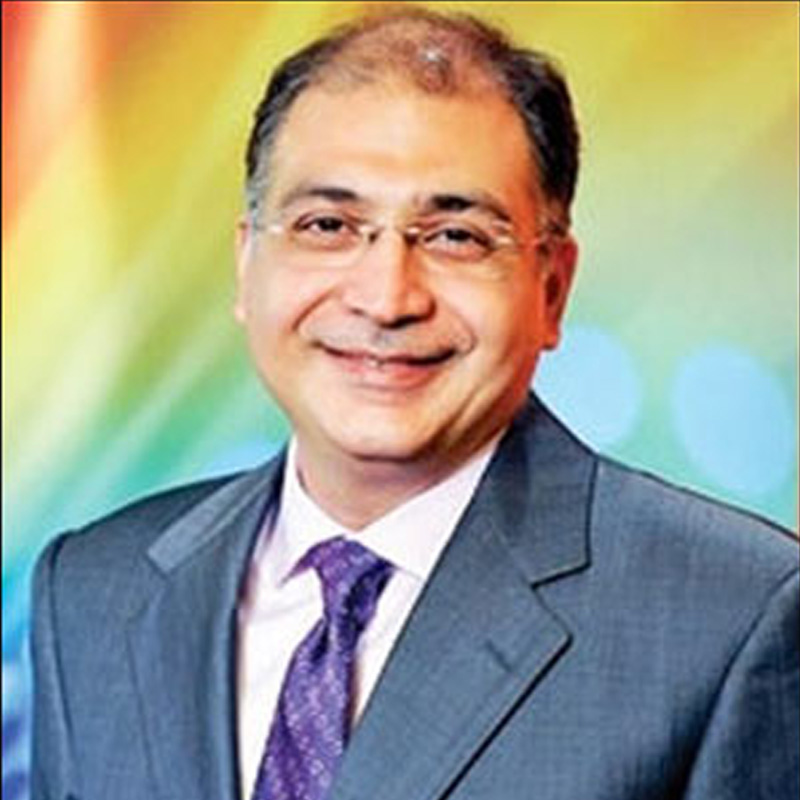
    To most viewers, he looked fit as a fiddle. Hence, when news broke that NewsX editor in chief Jehangir Pocha had breathed his last, it came as a shocker. Some had only spoken to him the previous evening, others last week, or very recently, or like us earlier this year when he attended the Indian Digital Television Honours in New Delhi as a representative of the ITV group.


    At first glance, Jehangir came across as a cool, calm, collected sort of a chap. A cultured Parsi gentleman used to speaking softly in measured tones when he encountered you in person. Beneath that mild-mannered exterior ran a probing journalistic mind, which posed many an incisive question that put those he interviewed on the 9X News channel on the spot.  


    But unlike other celebrity news anchors on other English news channels who indulge in histrionics and one-sided shrill shouting matches, he gave his guests a chance to speak. His questions begged an answer, and respond guests had to, because Jehangir would not let them get away without doing so. Whether it was the former chief minister of Delhi Sheila Dixit or Amitabh Bachchan or Anna Hazare.


    He was only a phone call away for us at the indiantelevision.com group and general manager Anoop Wanvari would oft reach out to him to partner with our various ground initiatives which he willingly did, even when he was finding it a struggle to keep NewsX going.  We are grateful to him for his support in our times of need.


    A former colleague, Indrajit Gupta, the founding editor of Forbes India, writes in an obituary piece in BusinessWorld, that he got a call early last week from him, saying he was frustrated with the Indian system and he was dying to go back abroad.


    “He sounded agitated. Venture capitalists had promised him they’d step in after the elections. But they hadn’t to back his plans. He wanted to bid for some distressed media assets in play,” writes Gupta in his obit. “The frustration was beginning to creep in.”


    His last tweet on the night before he passed away mentioned that he was “hurrying home” with a news clip (about a Bombay High Court judgment that stated that reaching home late consistently without informing your wife amounts to cruelty) attached to it.


    His demise prompted member of parliament Derek O’Brien to tweet: “The high pressure life of TV journalism?  Appan Menon at 49, SP Singh at 49 and today @JehangirPocha at 45 NewsX. Gone too soon.”


    And that’s a question which begs answering: is the high pressure life of TV news journalism getting to those in it?  They may not know it, but it probably is. When you are working in the business of television news, you are working in a pressure-cooker environment.  


    Deadlines because of the competitive nature of the business, irregular meals, pressure from affected vested interests while reporting, reporting from dangerous and conflict zones, keeping pace with the latest developments – the news journalist is on a treadmill that never seems to be stopping.


    For the managements of news organisations, they have to additionally deal with rising costs not accompanied by revenue increases; carping advertising partners disturbed by news reports; maintaining, nay, improving viewership ratings, innovating with changing technology and what have you.


    One can say that all these pressures are intrinsic – and have been so for long – to running a news channel. But they have been magnified in the recent past in India with increasing competition and the rapid commercialisation of news. It is quite likely that these will exacerbate further.


    Jehangir was under pressure. His channel was in keen competition with the English language news leader Times Now.  He wanted to expand his company’s business footprint, could not for want of capital and was thus frustrated, which added to his pressure.


    Therefore it’s about time TV news organisations introspected and even made those that are employed with them look deep within. Regular health checks, exercise, and leading a well-paced daily routine generally should be encouraged even more.


    It could go some way in preventing many more from going the Jehangir Pocha, Appan Menon, and SP Singh way.

  • NewsX editor-in-chief Jehangir Pocha passes away

    NewsX editor-in-chief Jehangir Pocha passes away

    MUMBAI: The pressure-filled TV news business has had another casualty. Jehangir Pocha, the co-promoter of  IndiMedia Pvt Ltd, which earlier owned the NewsX channel, died earlier this morning in Gurgaon following a cardiac arrest. 


    Pocha came into the limelight after he worked out a rescue package  to bail out the channel in 2009 along with Nai Duniya CEO Vinay Chhajlani. Launched originally by the eighties poster boy of television – Peter Mukerjea – as part of the INX Media group, it had fallen up on troubled times soon after its launch in 2008. Pocha was editor in chief at BusinessWorld maagazine when he partnered with Chhajlani.


    NewsX continued, but desperately needed cash to run and Pocha and Chhajlani found a buyer in the Kartikeya Sharma owned Information TV (part of the ITV Group) and its associates in mid-2012. Even as Chhajlani exited, Pocha continued as the channel’s editor in chief.


    Born in Mumbai, Pocha did his Bachelors in Economics in 1990, followed by an MBA in Marketing in 1992 from the SP Jain Institute, Mumbai University. Later, he also did his Masters in Public Administration, Media and foreign policy from Harvard University Kennedy School of Government.


    Pocha was The Boston Globe’s Beijing-based China correspondent from 2003-2007. Prior to that he spent about a decade in the IT industry, holding management positions with start-ups and Fortune 500 companies in the US and Singapore.


    His passing away has been mourned by many. Amomg them the prime minister Narendra Modi who said: “I am shocked and saddened to hear about Jehangir Pocha’s demise. I pay my condolence to his family in this hour of grief. May his soul rest in peace.”


    The  Broadcast Editors’ Association sent out  a statement condoling his sad demise: “It is big loss to the world of TV journalism. Jehangir was a dear colleague of ours and was a guiding force in BEA’s activities.”


    Former IBN18 editor in chief Rajdeep Sardesai tweeted, “Deep condolences to family of Jehangir Pocha. Life is transient, but was lived well. RIP”


    Anupam Kher’s tweet: “Can’t believe that is no more. Just spoke to him few days back. One of the best journalists & human beings. So so sad. RIP”


    Senior news TV journalist Dibang  tweeted: “Oh suddenly passes away Life is transient, can end suddenly; we plan for future, now is the only moment we have:


    Colors TV CEO Raj Nayak had this to say in his tweet: “A friend who tweeted 10 hrs ago, who came to meet me few days back to discuss his future plans is suddenly no more RIP


    Journalist and digital entrepreneur Govind Ethiraj tweeted “RIP wonderful guy, India’s best China journalist, great writer.”


    The soft spoken Pocha’s tweeted late last night: “Hurrying Home…”


    Pocha’s tweet was in response to a news clipping that he had attached with it. It referred to a High court judgement stating that “constantly reaching home late from work without informing your wife amounts to cruelty. “


    He is survived by his wife Ranjana and twins.


    RIP!  Jehangir.

  • #Elections2014 result: Media industry tweets

    #Elections2014 result: Media industry tweets

    MUMBAI: Social media played an important role in this election season. With the country buzzing with the election results today and Narendra Modi ready to take charge as the PM, the social media is buzzing again.


    People have their own set of opinions/jokes/statements to make regarding the day which is being pointed as a historic day by many.


    We at indiantelevision.com bring to you what the media fraternity feels/thinks about the new dawn.


    Punit Goenka @punit_goenka – The government that comes to power should be given time to perform! We need to understand that there’s no overnight solution! #Results2014


    Jehangir Pocha @JehangirPocha – The Indian elections are the greatest democratic show on Earth. A fitting tribute from an ancient nation to the greatest human idea.

    Raj Nayak @rajcheerfull – The right thing for all parties would be to accept the verdict gracefully, pick up the phone & congratulate @narendramodi before Obama does.


    Vivek Srivastava @vivek3180 – The Indian voters have done their job given clear majority… now its about the politicians to deliver. #Results2014


    Satbir Singh @thesatbir – Remember: in 1984, BJP won 2 seats. 30 years later, 280. Today, AAP leading in 4 seats. Anything can happen in future


    TANUJ GARG @tanuj_garg – Rakhi Sawant got 15 votes, FYI. Y’all can sleep in peace now.


    bhatnaturally @bhatnaturally – So Mani Aiyyar can open tea shops in Mayiladuthurai now


    Madhavan Narayanan @madversity – Sensex at 25,000. It is a dream peak. But where does it go from here? What do mountaineers to when they reach the Everest?


    Ashok Lalla @ashoklalla – It’s Diwali day for halwais and mithai shops across India as the #RaceTo272 is decided today.


    Madan Sanglikar @maddyisms – It’s Boxing Day today in India #election2014


    Ramesh Srivats @rameshsrivats – Modi’s first act as PM will be to change the password for @PMOIndia from Sonia123 to ModiOnly1.


    Harit Nagpal @haritnagpal – I switched on Times Now to figure out which party was leading and was told that Times Now leads, amongst news channels.


    Harini Calamur @calamur – The last time a political party got these kind of numbers, I was in school


    Sunil Lulla @SunilLulla – Jai Namo, Jai Namo, Jai Namo


    dilip cherian @DILIPtheCHERIAN – Exaggerated or not the stories of internecine battles in the #BJP indicate it’s now a party that has a whiff of power!


    Partho Dasgupta @parthodasgupta – So will now VK Singh be the new Defence Minister? Kissakursika

  • The tough task of building a non-tabloid news channel in India -NewsX Co-promoter & Editor-in-Chief Jehangir Pocha

    The tough task of building a non-tabloid news channel in India -NewsX Co-promoter & Editor-in-Chief Jehangir Pocha

    Nothing worth doing is easy, and building a genuine, non-tabloid news channel in India is certainly worth doing. But it‘s clearly very difficult.

    It‘s widely put out that the problem is the viewer. It‘s posited that he (and it‘s almost always considered to be a “he”) is of only average intelligence, attracted by gaudy sets, sensational presenters, cluttered screens, and animation that is more animated than a Korean video game.

    Yet, at NewsX, we have seen our viewership and appreciation for our non-tabloid content swell significantly. Shows like Art Talk, the only one of its type that no one would have thought of as a TRP driver, are sometimes the most watched shows of the week! Our reporting from Kashmir, Naxal areas, and bomb blast sites often get more viewers than other channels‘ Bollywood shows. In fact, on weekends, when other channels load up on entertainment, lifestyle and sports, our news bulletins and shows score so well we‘re almost always one of the most-watched news channels.
     
    The fact is that viewers (men and women) are desperate for real, non-sensational, non-tabloid news channels, and a very sizable segment of them are rapidly evolving in their taste, knowledge and interests. One can see this in Bollywood, where these new viewers drive the success of films, such as Peepli Live.

    But it is the broadcast industry itself, with its many distortions, that puts barriers in the way of reaching these viewers and consolidating them.

    This is especially problematic for new entrants.

    The biggest problem is distribution. The cost of distributing a new channel is prohibitive, and the monopolistic nature of distribution means new channels have limited leverage. There is also no incentive for distributors to want to encourage and develop new channels, as their limited carriage bandwidth is already overloaded.

    In fact, too many distributors do the opposite – work with established channels to hinder new ones. Sad. And bad for democracy. A more enlightened approach, that could benefit everyone, would be to introduce digitisation, and end the artificial scarcity in distribution by creating limitless bandwidth. This would grow the entire industry, from the number of broadcasters, to the revenue of distributors, and the quantum of advertising. Yet, the government and industry leaders are failing at this.

    The faults of the Tam system are also well established, but again, the inaction on fixes is worrying. There is always a vested interest in the status quo, but isn‘t there now more advertiser, agency, public and broadcaster interest in revamping and refining Tam? As it is, the final ratings for English news channels is determined every week by just 5 to 7 individuals! They‘re among the most powerful people in the country, except they don‘t know it.

    Tam is like a microscope – when inefficient, it can vaguely show only huge items, or bundles of viewers. This was acceptable when there were only a handful of channels with huge viewership. But the TV industry is now much more fragmented. So there is a need for Tam to become efficient and more clearly show smaller bundles of viewers. Company marketing heads and CEOs I have spoken to all know this. They all have this gnawing feeling that they‘re not necessarily spending their advertising budgets well and not getting the best bang for their buck.

    That‘s one reason India is one of the only countries in the world where print is still heavily favoured by advertisers. There‘s just a greater comfort factor with print, and its substantially better metrics and measurements. So, if anyone wants to grow TV advertising, they should know reforming Tam is the key.