Tag: Jeev Milkha Singh

  • Jeev Milkha Singh reflects on golf and life in ‘Duologue with Barun Das’ season two

    Jeev Milkha Singh reflects on golf and life in ‘Duologue with Barun Das’ season two

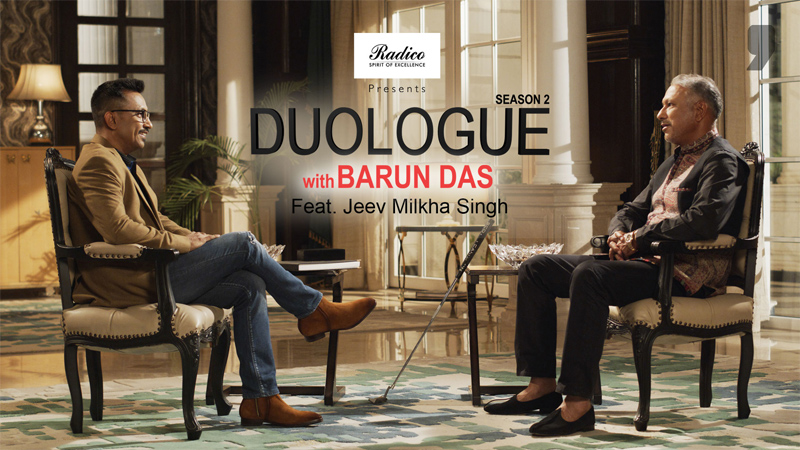
    Mumbai: The much-anticipated fourth episode of ‘Duologue with Barun Das’ season two premiered on News9 Live, India’s only 24×7 digital English news stream, at 9 pm on 8 June 2024. The episode featured TV9 Network MD and CEO Barun Das in an engaging conversation with India’s most iconic golfer, Jeev Milkha Singh.

    In a heartfelt and candid exchange, Jeev Milkha Singh shares that it was his father, the legendary sprinter Milkha Singh, who introduced him to the world of golf. He recounts his early experiences on the golf course fondly, playing alongside his father and other young enthusiasts. He further emphasizes how his father acted both as a source of support and as a prudent advisor, warning him of the risks of taking up a sport professionally.

    Discussing the idea of a ‘sporting gene’ in light of the sporting success of both his parents, Jeev attributes his success not to genetics but to a mindset instilled in him from a young age. He recalls how the philosophy of hard work, practice, and belief in oneself was a recurring theme at family dinner table conversations, which played a crucial role in shaping his professional approach.

    The duologue enters philosophical territory as Jeev reflects on the nature of golf and its parallels with life itself. “As a professional golfer, you will wake up one day and you will be brilliant that day. And next day, you’re playing like a beginner. So it teaches you. Every day is not the same, but whatever is thrown at you, you make the most out of it. You go out and fend for yourself. Handle the situation in the best manner that is thrown at you. And you’ve got to use your mind. You cannot lose it”, said Jeev.

    Here, host and media maverick Barun Das added his own insights gleaned from the golf course. Viewing the game from the perspective of a corporate leader, Das opined that golf taught him that by keeping an eye on the result, he lost one on the process. Elaborating on process vs outcome, he believes that a golfer isn’t hitting a ball, but making a perfect swing with the ball just happening to be in the path of the swing.

    The duologue also touches upon the subject of golf in India, and the need for systemic support to nurture talent. Acknowledging the large reservoir of untapped golfing talent in India, Jeev advocates for the creation of more public golf courses and driving ranges to democratise the sport, emphasizing the importance of building an ecosystem that encourages people to play and pursue excellence.

    The episode offered viewers a rare glimpse into the personal and professional life of one of India’s most celebrated golfers, and his relationship with one of India’s most beloved athletes, exclusively on News9 Live.
  • Here’s top 20 moments in Indian sports history : ESPN

    Here’s top 20 moments in Indian sports history : ESPN

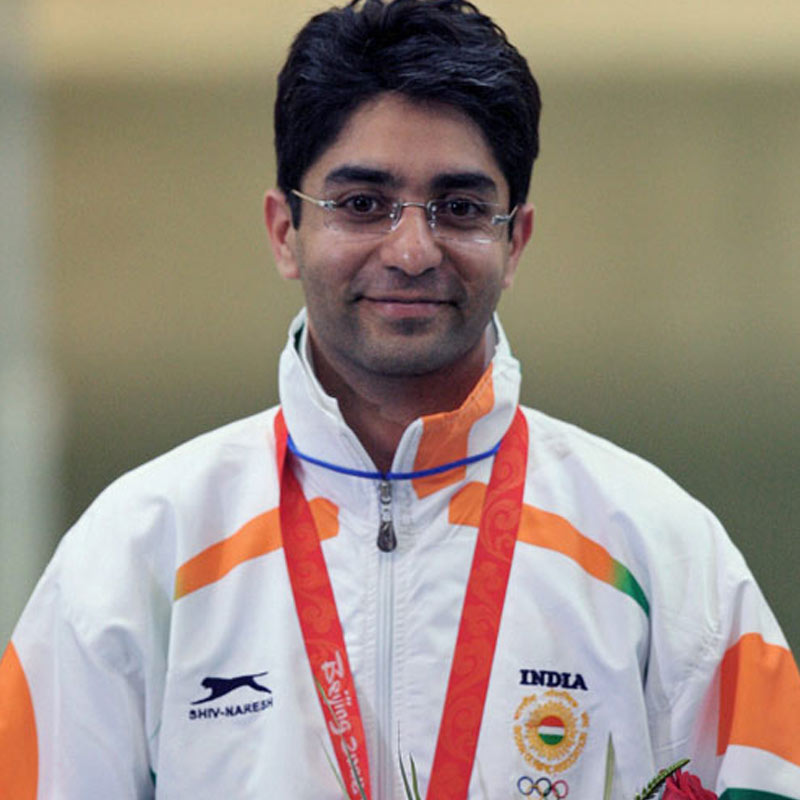
    MUMBAI: Showcasing ESPN’s expertise in all things sports, ESPN India today announced Abhinav Bindra’s Olympic gold from 2008 as the best moment in Indian sport. This moment was part of ESPN’s initiative to curate the top 20 moments as a tribute to the greatest achievements in the country’s rich and varied sporting history. The top 20 moments were announced starting 6 July with the No.1 moment being unveiled on 15 July.

    “It was no easy task for the jury to rank these performances that spanned nearly a century, but it was hugely fulfilling. The best thing about the process was exploring the rich history of Indian sports and sportspersons who have defined it. This exercise is a small but valuable step towards putting the spotlight on the feats and events that have shaped Indian sports and inspired generations of athletes to strive for excellence,” said Sambit Bal, Editor-in-Chief, ESPN India, South Asia.

    The top 20 moments in Indian sport was curated by a 31-member jury consisting of current and former sports personalities, journalists and influencers with the likes of Rahul Dravid, Jeev Milkha Singh, Cedric D’Souza, Michael Ferreira, Jaidip Mukerjea and Rohit Brijnath, among others.

    The initial list included 75 best sports moments before the jury began the process of selecting the final 20. Once the jury rankings were in,each sporting event was given points based on where it featured on a jury member’s ranking system: 20 points for each No. 1 ranking, 19 for a No. 2, and so on.

    The stars of the winning moments also shared their memories and reactions:

    “Those are the highlights of my career. I made the mistake of admiring my opponents. I started appreciating their good shots, but in today’s professionalism, they would laugh at it”, said Ramanathan Krishnan on his reaching the Wimbledon Semifinals in 1960.

    “The world title came to India for the first time, so I can very safely say that was the happiest moment of my life,” said Wilson Jones on winning the Billiards World Championship in 1958.

    “I was playing emotional tennis. I wasn’t thinking. All I can promise is that every time I go on court I will give my best,” said Leander Paes, remembering the moment he won the   Olympic Bronze for Tennis in Atlanta, 1996.

    The initial list included 75 best sports moments before the jury began the process of selecting the final 20. After the jury presented their initial ranking, each sporting event were assigned points based on where it featured on a jury member’s ranking system: 20 points for each No. 1 ranking, 19 for a No. 2, and so on.  The winning events were then finalized based on their cumulative scores.

    Here is the complete list

    http://www.indiantelevision.com/sites/drupal7.indiantelevision.co.in/files/styles/large/public/espn.jpg?itok=KHe92raF

  • Here’s top 20 moments in Indian sports history : ESPN

    Here’s top 20 moments in Indian sports history : ESPN

    MUMBAI: Showcasing ESPN’s expertise in all things sports, ESPN India today announced Abhinav Bindra’s Olympic gold from 2008 as the best moment in Indian sport. This moment was part of ESPN’s initiative to curate the top 20 moments as a tribute to the greatest achievements in the country’s rich and varied sporting history. The top 20 moments were announced starting 6 July with the No.1 moment being unveiled on 15 July.

    “It was no easy task for the jury to rank these performances that spanned nearly a century, but it was hugely fulfilling. The best thing about the process was exploring the rich history of Indian sports and sportspersons who have defined it. This exercise is a small but valuable step towards putting the spotlight on the feats and events that have shaped Indian sports and inspired generations of athletes to strive for excellence,” said Sambit Bal, Editor-in-Chief, ESPN India, South Asia.

    The top 20 moments in Indian sport was curated by a 31-member jury consisting of current and former sports personalities, journalists and influencers with the likes of Rahul Dravid, Jeev Milkha Singh, Cedric D’Souza, Michael Ferreira, Jaidip Mukerjea and Rohit Brijnath, among others.

    The initial list included 75 best sports moments before the jury began the process of selecting the final 20. Once the jury rankings were in,each sporting event was given points based on where it featured on a jury member’s ranking system: 20 points for each No. 1 ranking, 19 for a No. 2, and so on.

    The stars of the winning moments also shared their memories and reactions:

    “Those are the highlights of my career. I made the mistake of admiring my opponents. I started appreciating their good shots, but in today’s professionalism, they would laugh at it”, said Ramanathan Krishnan on his reaching the Wimbledon Semifinals in 1960.

    “The world title came to India for the first time, so I can very safely say that was the happiest moment of my life,” said Wilson Jones on winning the Billiards World Championship in 1958.

    “I was playing emotional tennis. I wasn’t thinking. All I can promise is that every time I go on court I will give my best,” said Leander Paes, remembering the moment he won the   Olympic Bronze for Tennis in Atlanta, 1996.

    The initial list included 75 best sports moments before the jury began the process of selecting the final 20. After the jury presented their initial ranking, each sporting event were assigned points based on where it featured on a jury member’s ranking system: 20 points for each No. 1 ranking, 19 for a No. 2, and so on.  The winning events were then finalized based on their cumulative scores.

    Here is the complete list

    http://www.indiantelevision.com/sites/drupal7.indiantelevision.co.in/files/styles/large/public/espn.jpg?itok=KHe92raF

  • Manmohan Singh CNN IBN’s ‘Man of the Year’

    Manmohan Singh CNN IBN’s ‘Man of the Year’

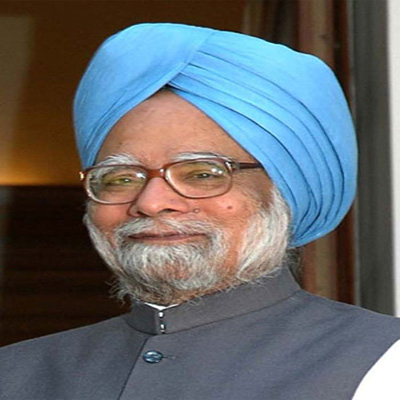
    NEW DELHI: The word was out early last morning in huge ads splashed in newspapers that Dr Manmohan Singh, the Indian premier had won the Indian Man of the Year in the “Politics” category, but later in the evening in a high-tech massive awards ceremony, he was declared the overall winner of the CNN-IBN Indian Man of the Year 2007.

    The organisers had thought he would perhaps finally be able to make it, but he could not. The award was received on his behalf by Dr Sanjay Baru, his media in-charge. But soon after, Singh was shown receiving his award at his residence in a special TV coverage. The gala event saw some of the top men and women from business, media and political fields attend the first ever CNN-IBN Indian Man of the Year awards.

    With the biggest ever business takeover of Corus Steel by the Tata group, Ratan Tata expectedly won the award in the business category. He too could not attend and the prize and citation were received by his representative.

    Laxmi Narayan Mittal had also been in the running in the business section, but had to make way to Tata. However, his stature and achievement was rewarded by a Jury Award. But perhaps the best surprise was in the sports category, with Jeev Milkha Singh winning the sports award, with a proud father, Flying Sikh, Milkha Singh applauding. Sania Mirza failed the rigorous tests and processes involved, though Amar Singh, sitting in the audience would have none other than her as his choice.

    “Jeev’s mother and I never wanted him to be a sportsperson, because when we were in sports there was no money in it. We wanted him to become a doctor or engineer, but he went ahead and became a golfer. Now that he has done so, he must win every award in the sport,” Milkha Singh said.

    There were two other delightful decisions. Rajkumar Hirani, director of “Lagey Raho Munnabhai” and the right to information missionary Arvind Kejriwal won the awards in the entertainment and social work categories.

    Hirani said he was overwhelmed by the audience reaction to the film. “I was scared when we did the film. It is truly gratifying that a concept like Gandhism has found a meaning in the context of the 21st century India,” Hirani said.

    Introducing the awards, CNN-IBN chief editor Rajdeep Sardesai said that the idea was first floated by one of his senior colleagues but “My first reaction was – Oh, another award.” He said that most Indian awards were confusing: who chose them, on what criteria, what was the credibility?

    “We decided that if we have to go for an awards ceremony, we needed to have that credibility. That is why some of India’s top people were selected as jury, headed by eminent jurist Soli J Sorabjee.” Strict criteria were fixed and nominations received from across the country. These were scrutinised and the jury spent days going through the process.

    “We wanted the Indian’s to vote as a whole and hence the SMS votes were also invited,” However, Sardesai said that “We knew SMS votes can be fixed, so there was a modicum of doubt about that.” Still, he said, some factors were considered from there.

    Finally, the awardees were decided and he along with the jury were satisfied with the choice as credible and acceptable.

    The jury comprised of Sorabjee, senior police officer and social worker Kiran Bedi, former billiards champion Geet Sethi, industrialist Deepak Parekh and Infosys boss Nandan Nilekani.

    Interestingly, before the announcement of prize for each category, members of the audience were asked their choice. In one such response, railways minister Laloo Prasad drew laughter when he refused to comment. “Yeh judicial mamla hain, to jury nay jo kaha hum usko mantey hain (This is a judicial matter, and I stand by the verdict of the jury).

    Sadesai had spoken of the new, vibrant India, the cynosure of world business, and it was thus in the fitness of things that Pepsi CEO Indra Nooyi bagged the jury’s verdict in the NRI category.

    The audience was regaled when Sorabjee said that deciding on awards was fraught with danger, of losing old friends, but in a more serious note, added that 100 top Indians had been initially short-listed and the most important deciding factor in the final verdict was, did the person concerned do India proud in his or her area of activity and put India on the global map?

    Somenath Chatterjee, Speaker, Lok Sabha brought the ceremony late at night by a long and arduous speech.