Tag: Jean-Marie Luton

  • Ariane 4 wins Space Foundation award

    Ariane 4 wins Space Foundation award

    MUMBAI: A few days ago The Space Foundation presented its 2004 apace achievement award to Arianespace, the CNES French national space agency and the European Space Agency (ESA).

    The annual Space Foundation prize was awarded to the companies as they were responsible for operating the Ariane 4 launcher. It orbited 182 satellites for 50 customers from around the world, on 116 Ariane 4 vehicles. Ariane 4 entered service in June 1988 and carried out its final mission in February 2003.

    Arianespace chairman Jean-Marie Luton was quoted in a company release saying, “This award recognises the excellence and reliability of the European launcher. It is a fitting tribute to the remarkable development work accomplished by CNES, and in general to the entire European industry operating through ESA. At the same time it recognises the top-flight professionalism of Arianespace’s operational and commercial staff.”

  • Ariane reports losses of 193 million euros end 2001

    Ariane reports losses of 193 million euros end 2001

    Arianespace has reported a loss of 193 million euros for the year ended March 2001.

    The losses have been attributed to Arianespace’s decision to take charges to account for rapidly deteriorating commercial conditions in the global launch services marketplace during the past months, and the impact from a stand-down in Ariane 5 flights after the launchers 10th mission was affected in July 2001. The company has posted sales of 807 million euros, according to an official release.

    Commenting on the results, Arianespace chairman and CEO Jean-Marie Luton has said that an aggressive action plan to allow a rapid return to the breakeven point in the company’s operations will now be put into place. In a move of solidarity, the company’s board of directors confirmed its full support for a further strengthening of the its launch system, and backed its commitment to deploy measures needed for Arianespace to successfully continue operations in line with the strategic and commercial goals.

    Arianespace has carried out six launches since January 2002, including the Ariane 511 mission in February that marked a resumption of Ariane 5 launches. With seven more Ariane flights scheduled for the remainder of this year, the company is set to perform a total of 13 launches in 2002.

  • Agrani satellite deal closed; launch by 2003-end

    Agrani satellite deal closed; launch by 2003-end

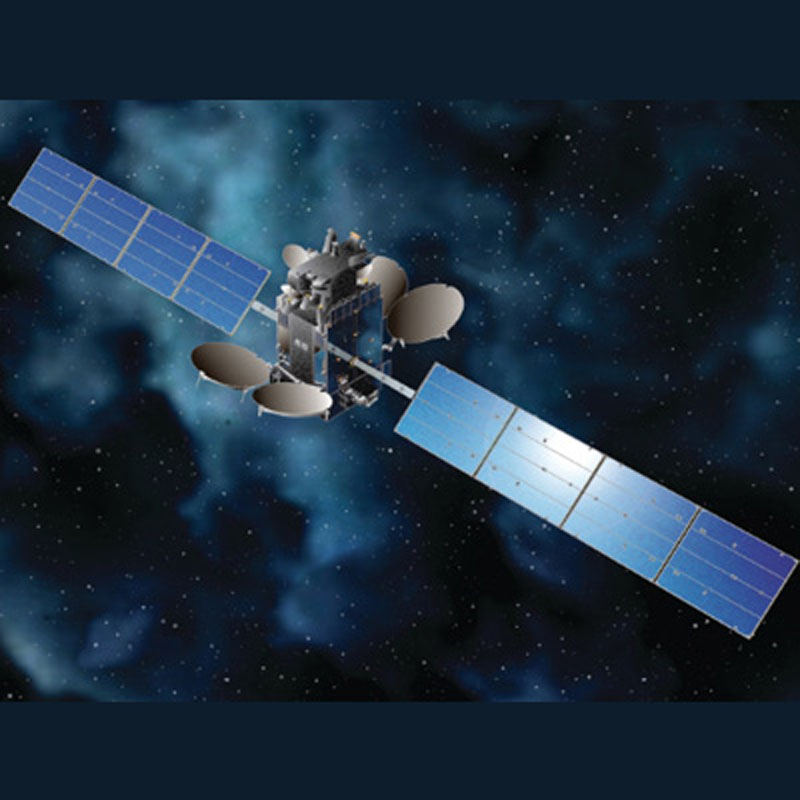
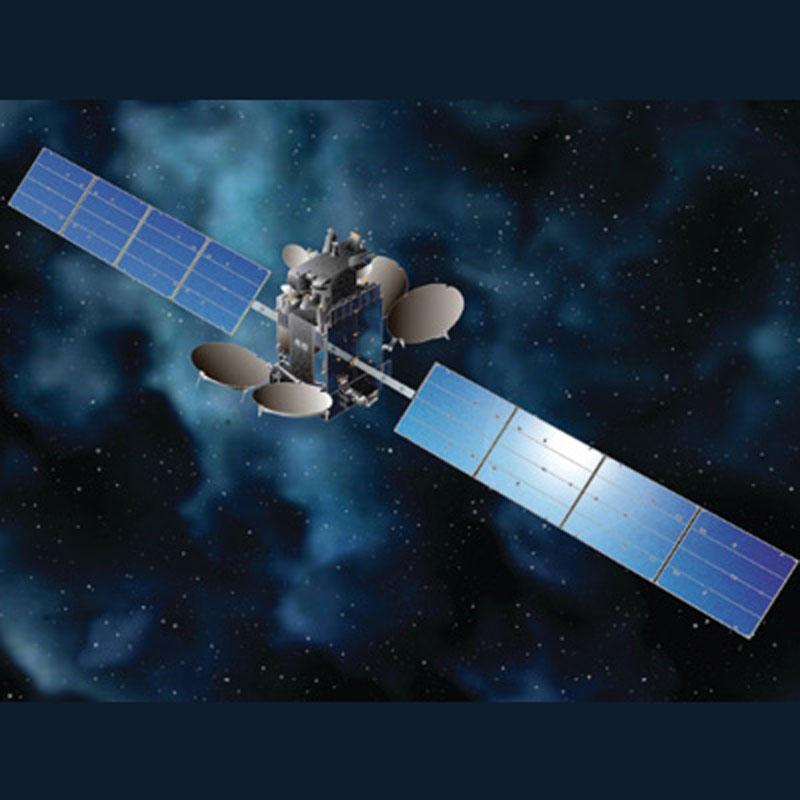
    Media baron Subhash Chandra has a number of firsts to his credit. To that list add another one. India’s first private sector satellite initiative officially went onstream today with the signing of a turnkey contract between Chandra’s Agrani Satellite Services Ltd (ASSL), Alcatel Space Industries and Arianespace (providing the launch vehicle).

    The contract was signed today by Chandra and Pascale Sourisse, chairman and CEO, Alcatel, in the presence of Jean-Marie Luton, president – director-general, Arianespace.

    The geostationary satellite is expected to begin commercial operations from the fourth quarter of 2003 and will be delivered in orbit on an Ariane 5 launch vehicle.

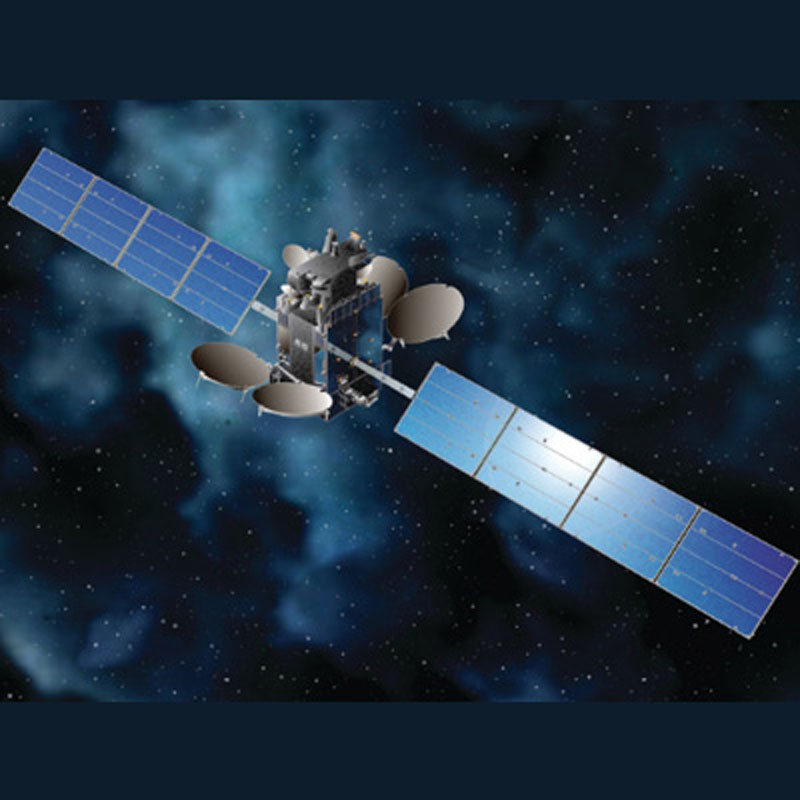
    The deal involves the in-orbit delivery of a 5.4kw satellite with a 14-year lifespan. The long life satellite with 24 C band (12 in the India coverage beam and 12 in the Asia coverage beam) and 14 Ku band transponders are distributed over two beams, one for India coverage and the other steerable over the Middle east, South East Asia or Europe. Of the Ku-band transponders, seven will have a fixed India coverage; three, a steerable coverage over Europe, Middle East and South East Asia; and the remaining transponders will be switchable between fixed and steerable. These transponders have a total bandwidth of 1,404 MHz.

    The satellite is expected to support a broad range of applications ranging from TV broadcasting and DTH to rural and distance routes.

    Queried as to how much of the satellite’s capacity would be used by the Essel/Zee channels, Chandra said 15 per cent of the C Band capacity and a small percentage of the satellite’s Ku Band capacity would be utilised. The remaining bandwidth will serve television broadcasting and distribution companies, Internet service providers and other telecom service providers.

    The ASC Enterprises Ltd (Ascel)-promoted ASSL is the first private satellite system to be authorised by the Indian government under the 1997 Satcom policy framework. The government has also approved the equity participation of Alcatel and Arianespace in ASSL.

    The main reason that the lead time for the satellite to become operational is only 18 months or so is because ASSL is acquiring an existing satellite from Alcatel. The satellite was built in 1997 for use by Shinawatra Satellite, Thailand. It was, however, never used and has been lying in storage for four years.

    The total project cost is Rs 11.5 billion in which the debt funding of Rs 6.9 billion is being arranged by a consortium of Indian banks and financial institutions. Of the equity component of Rs 4.6 billion, Alcatel and Arianespace have taken a stake of 9.75 and 3.25 per cent stake respectively. This will be worth $15 million and $5 million respectively.

  • Europe’s Ariane rocket lofts US TV satellite sucessfully

    Europe’s Ariane rocket lofts US TV satellite sucessfully

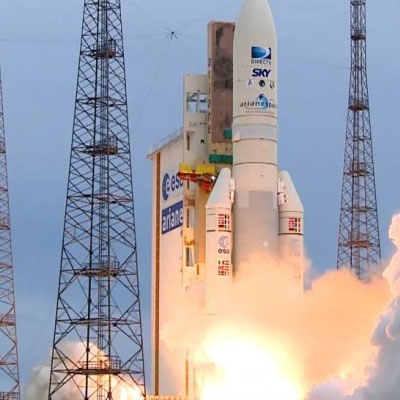
    European space rocket Ariane 44LP successfully placed a large satellite in orbit for DirecTV, the biggest US subscription TV channel early this morning. 

    The Ariane 44LP workhorse version having two liquid and two solid strap-on boosters was launched from the European Space Agency’s launch pad at Kourou, French Guiana, on schedule at 9:35 pm and DirecTV-4S satellite separated from the launcher about 21 min later as per a press release from Arianespace. 

    DirecTV-4S will be placed in geostationary orbit west of the Galapagos Islands, providing a digital footprint across the entire United States of America. DirecTV is the largest satellite television provider in the United States serving 10 million subscribers. The satellite will be used by California-based DirecTV to provide digital television service with more than 300 channels of additional capacity to deliver additional local channels.

    Direct Tv-4S, a 4.3-tonne payload is the third satellite launched by Ariane for DirecTV. Among the earlier five satellites under DirectTV’s umbrella , DirecTV-1 was launched in December 1993 and DirecTV-3 followed in June 1995 through Arianespace. 

    EchoStar Communications, DirecTV’s nearest rival, won a bidding war for the company last month against US-Australian media magnate Rupert Murdoch with the deal being subject to clearing several regulatory hurdles.

    Arianespace chairman and CEO Jean-Marie Luton noted that tonight’s flight was with the 200th spacecraft built by Boeing Satellite Systems. 

    Luton also added that DIRECTV-4S set a record for pre-launch processing as the satellite was launched just two and a half weeks after its arrival in French Guiana, to make this the shortest satellite campaign in the history of Ariane, and to satisfy the requirements of customer Direct TV-4S. 

    The DIRECTV-4S platform will be the first spacecraft in the DIRECTV fleet to use highly focused spot beam technology, allowing the company to expand its local channel offerings in metropolitan markets.

  • Arianespace speeds up Insat 3C launch date; targets late-January for Ariane-5 launcher

    Arianespace speeds up Insat 3C launch date; targets late-January for Ariane-5 launcher

    The Indian Space Research Organisation (Isro) will get its latest generation satellite Insat-3C into space in early 2002, 16 Januaryy 2002, to be exact, if one goes by a press release from Arianespace, its satellite launch partner. 

    Insat 3C will be sent into orbit using an Ariane-4 rocket, which may surprise satellite enthusiasts because Isro and Arianespace had initially agreed to an Ariane-5 launch vehicle (flight 143), which had been scheduled for a July blasttoff, but was postponed when a prior flight (Flight 142) ran into trouble.

    Flight 142 had a dual satellite payload which did not make it to proper orbit in July, and hence further Ariane-5 missions were aborted until corrections could be made. A committee was appointed to inquire into the mission failure. The enquiry panel had stated that that the malfunction was due to the combustion instability at the ‘EPS’ upper stage ignition due to the abnormally high pressure gradient in the combustion chamber.

    In October (see Launch of Insat-3C not before 2002 – http://www.indiantelevision.com/headlines/y2k1/oct/oct10.htm), Arianespace had said that “the return-to-flight program for the Ariane 5 is moving ahead at present with more than 60 ignition tests of the Aestus upper stage engine having been performed on a test rig in Germany. The data will be used in determining the new ignition sequence. Modifications of the Aestus engine test rig will be made to validate flight conditions during the ground-based static firings.” Arianespace CEO Jean-Marie Luton had then said that the next flight of Ariane-5 was targeted for January 2002, following the modifications and the upper stage’s qualification.

    Apparently, things did not pan out with Ariane-5 and with Isro pressing for an early launch, Arianespace decided to use an Ariane-4 rocket, keeping in mind one of its long standing and most dynamic customers, the press release states.

    The Arianespace press release adds that: “The recovery plan approved in August is on track towards its goal of resuming Ariane 5 launches in early 2002. All mandatory tests have approved Ariane 5 for launch. Resumption of Ariane 5 is on schedule for late January 2002. The complete recovery plan will increase the fiability and enhance quality of the launcher.

    “Ariane 5 is the only new generation launcher which is available, qualified and operational today. It is already adapted to the evolution of the market and to the satellites of the next generation : Ariane 5 ESC-A will reach 10 tons performance mid 2002.

    “The Ariane 5 return-to-flight program achieved a major milestone on 10 November when the first Aestus engine ignition test was performed on the modified P4-2 test bench in Lampoldshausen, Germany. Modifications to the Lampoldshausen test bench were undertaken to better simulate the flight conditions during ground tests with the Aestus engine. “The test firing phase clears the way for the continuation of the test program as defined for the action plan’s next phase. Objectives of the next phase are improvement and qualification of the Aestus engine’s ignition sequence. “Arianespace conducted the first phase of the next launch campaign (Ariane 511/Flight 145) during late September and early October. The heavy-lift launcher’s two solid booster stages were mated to the core cryogenic stage, and the vehicle equipment bay was installed atop it. An EPS upper stage was temporarily modified stand and digital models will be used in an attempt to duplicate the conditions which led to the Flight 142 malfunction in July. The P4-2 stand will subsequently be used for acceptance firing tests of the Aestus engines for the upcoming Ariane 5 launchers, as well as for tests to qualify the new ignition sequence.”

  • Launch of Insat-3C not before 2002

    Launch of Insat-3C not before 2002

    India’s next generation communication satellite Insat-3C, which was originally scheduled to be launched in September, will not be placed in orbit before January at the earliest. And that is dependent on it’s getting space aboard Arianespace’s Ariane 5 rocket.


    The failure of Ariane 5’s flight 142 to reach a proper orbit on July 12 led to the indefinite suspension of further Ariane 5 flights as a seven-member independent inquiry board went into what went wrong. The panel, which submitted its report to Arianespace on 1 August, notified all its customers, including the Indian Space Research Organisation (ISRO), which had launched the Insat series on French Ariane rockets.


    The summary of the findings state that the malfunction was due to a combustion instability at the ‘EPS’ upper stage ignition due to the abnormally high pressure gradient in the combustion chamber.

    The return-to-flight program for the Ariane 5 is moving ahead at present with more than 60 ignition tests of the Aestus upper stage engine having been performed on a test rig in Germany. The data will be used in determining the new ignition sequence.


    Modifications of the Aestus engine test rig will be made to validate flight conditions during the ground-based static firings. To allow these modifications to be carried out, and to provide time for the upper stage’s qualification, the Ariane 5’s next flight is now targeted for January 2002, Arianespace CEO Jean-Marie Luton has said.


    Arianespace at present has a backlog of 50 payloads to be launched, which include 41 satellites and nine ATV missions for the international Space station. This is for both its Ariane 4 and 5 series.


    The 1,170 kg Insat-3C will provide fixed satellite services (FSS) in the normal and extended C-bands, as also broadcast satellite services and mobile satellite services in the S-band.


    Insat-3C will replace India’s current workhorse, Insat-2C, whose capacity will be transferred to the new bird. Insat-2C is expected to reach the end of its seven-year life span in another six months.


    The launch of Insat-3C will be the first phase of ISRO’s efforts to add more than 50 transponders to its capacity, ISRO chairman K Kasturirangan had told a conference of V-SAT service providers some months ago.


    The demand for V-SATS is expected to increase from the 14,000 currently in operation to 20,000 in the next couple of years with broadband V-SATs coming in with new technology.


    Insat-3C has cost ISRO $40 million. In addition, it is paying $77 million to Arianespace as launch costs.