Tag: Jawhar Sircar

  • IDOS 2016: Prasar Bharati could share infra with private players: Sircar

    IDOS 2016: Prasar Bharati could share infra with private players: Sircar

    GOA: Prasar Bharati has thrown an invitation to all private broadcasters and it reads: come and use our under-utilised resources and infrastructure to increase your reach in digital format terrestrially. What’s more, the Indian pubcaster will help in the distribution.

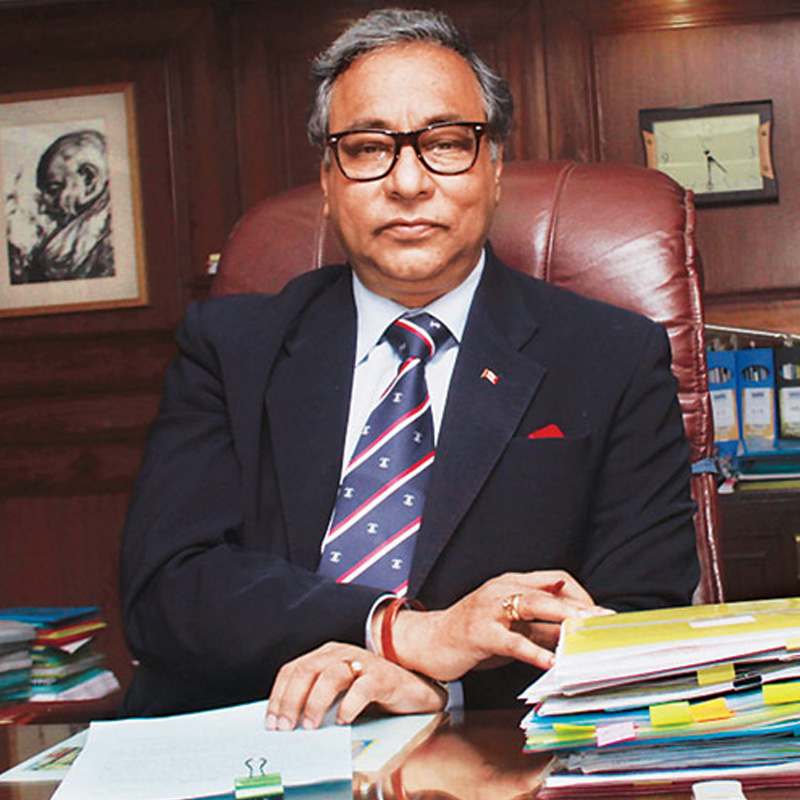
    According to Prasar Bharati CEO Jawhar Sircar, the best spectrum available for broadcasting was between 470-585  MHZ, which is with the pubcaster Doordarshan lying  highly underutilised. And, private TV channels can join hands as the organisation plans to make linear TV available to the public on their hand-held devices via digital terrestrial transmission (DTT).

    “Twenty  channels can be relayed per two antennas as such (via DTT) in four metros. All that people have to do with DVB-T2 is attach an affordable dongle on their mobile handsets and watch TV channels on the go. We can give it away free to consumers to experience it and then charge for it in the second year,” Sircar said while speaking at IDOS 2016 here on Friday.

    As Doordarshan has 1,400 broadcast towers and in the event of complete conversion to digital, DD may not need all those towers for the sake of broadcasting its own channels. The tower infrastructure could therefore be shared and private broadcasters could look at Prasar Bharati as an alternate delivery medium, Sircar explained. There would then be digitised cable, DTH and DTT on offer to the consumer.

    In conversation with indiantelevision.com founder CEO and editor-in-chief  Anil Wanvari, Sircar admitted that DD’s viewership may be falling and which was getting reflected in BARC’s audience measurement.

    “The grand days of DD happened not at the hands of DD’s personnel producing content but duringRamayan, Buniyaad, etc, all of which were made by private producers,” he said. “Hence DD should not make the content on its own. The people over here don’t know how to. The time slot sale to private producers is the best way to go,” he said, adding Prasar Bharati will primarily work on sharing its resources and reduce (in-house) content creation.

    To drive home his point on indifferent quality of present programming on DD, Sircar said the reach of the pubcaster’s resources hasn’t diminished and added, “We allowed private players to come on DD’s FreeDish platform. Yes, they are willing to pay from Rs 1.5 crore (Rs. 15 million) a year in the beginning to Rs 5.5 crore ( Rs. 55 million) today for a slot on FreeDish. That’s because it’s getting them viewership.”

    However, the former bureaucrat, now in the last lap of his present assignment, was evasive and forthcoming at the same time on FreeDish’s actual reach. “Nobody knows how many set top boxes for FreeDish are there, but the industry knows about missing subscribers of (private) DTH players. Those are our FreeDish subscribers. They could number 30 million or so,” he asserted, adding that DD had not initially put in CAS, but now  intends to do so with Indian CAS, take the boxes up to MPEG4 , and add more transponders for distribution, thereby increasing the DTH platform’s capacity to 250 channels in a phased manner.

    Asked about DD’s role as a pubcaster and obvious comparison with the BBC, Sircar was quick to point out that the British pubcaster gets thousands of crores of rupees every year from consumers  in licence fee, apart from government funding.

    Still, unable to restrain himself from taking a dig at the present Indian system regarding pubcasting, Sircar quipped, “They (BBC) know for sure what is expected from a pubcaster. The problem with DD is that we don’t know our real goal and mission.”

    Quizzed further on muddled policies and the pubcaster’s objectives, Sircar, with is tongue firmly in cheek, quipped, “I am Jawhar Sircar, not Bharat Sarkar.” The punning on his last name and Sarkar (Hindi for Indian government) was telling.

    Also read
    http://www.indiantelevision.com/regulators/trai/prasar-bharati-responds-to-trai-consultation-paper-open-to-sharing-dtt-infrastructure-160926

  • IDOS 2016: Prasar Bharati could share infra with private players: Sircar

    IDOS 2016: Prasar Bharati could share infra with private players: Sircar

    GOA: Prasar Bharati has thrown an invitation to all private broadcasters and it reads: come and use our under-utilised resources and infrastructure to increase your reach in digital format terrestrially. What’s more, the Indian pubcaster will help in the distribution.

    According to Prasar Bharati CEO Jawhar Sircar, the best spectrum available for broadcasting was between 470-585  MHZ, which is with the pubcaster Doordarshan lying  highly underutilised. And, private TV channels can join hands as the organisation plans to make linear TV available to the public on their hand-held devices via digital terrestrial transmission (DTT).

    “Twenty  channels can be relayed per two antennas as such (via DTT) in four metros. All that people have to do with DVB-T2 is attach an affordable dongle on their mobile handsets and watch TV channels on the go. We can give it away free to consumers to experience it and then charge for it in the second year,” Sircar said while speaking at IDOS 2016 here on Friday.

    As Doordarshan has 1,400 broadcast towers and in the event of complete conversion to digital, DD may not need all those towers for the sake of broadcasting its own channels. The tower infrastructure could therefore be shared and private broadcasters could look at Prasar Bharati as an alternate delivery medium, Sircar explained. There would then be digitised cable, DTH and DTT on offer to the consumer.

    In conversation with indiantelevision.com founder CEO and editor-in-chief  Anil Wanvari, Sircar admitted that DD’s viewership may be falling and which was getting reflected in BARC’s audience measurement.

    “The grand days of DD happened not at the hands of DD’s personnel producing content but duringRamayan, Buniyaad, etc, all of which were made by private producers,” he said. “Hence DD should not make the content on its own. The people over here don’t know how to. The time slot sale to private producers is the best way to go,” he said, adding Prasar Bharati will primarily work on sharing its resources and reduce (in-house) content creation.

    To drive home his point on indifferent quality of present programming on DD, Sircar said the reach of the pubcaster’s resources hasn’t diminished and added, “We allowed private players to come on DD’s FreeDish platform. Yes, they are willing to pay from Rs 1.5 crore (Rs. 15 million) a year in the beginning to Rs 5.5 crore ( Rs. 55 million) today for a slot on FreeDish. That’s because it’s getting them viewership.”

    However, the former bureaucrat, now in the last lap of his present assignment, was evasive and forthcoming at the same time on FreeDish’s actual reach. “Nobody knows how many set top boxes for FreeDish are there, but the industry knows about missing subscribers of (private) DTH players. Those are our FreeDish subscribers. They could number 30 million or so,” he asserted, adding that DD had not initially put in CAS, but now  intends to do so with Indian CAS, take the boxes up to MPEG4 , and add more transponders for distribution, thereby increasing the DTH platform’s capacity to 250 channels in a phased manner.

    Asked about DD’s role as a pubcaster and obvious comparison with the BBC, Sircar was quick to point out that the British pubcaster gets thousands of crores of rupees every year from consumers  in licence fee, apart from government funding.

    Still, unable to restrain himself from taking a dig at the present Indian system regarding pubcasting, Sircar quipped, “They (BBC) know for sure what is expected from a pubcaster. The problem with DD is that we don’t know our real goal and mission.”

    Quizzed further on muddled policies and the pubcaster’s objectives, Sircar, with is tongue firmly in cheek, quipped, “I am Jawhar Sircar, not Bharat Sarkar.” The punning on his last name and Sarkar (Hindi for Indian government) was telling.

    Also read
    http://www.indiantelevision.com/regulators/trai/prasar-bharati-responds-to-trai-consultation-paper-open-to-sharing-dtt-infrastructure-160926

  • On DD’s b’day, Naidu lauds it for information empowerment

    On DD’s b’day, Naidu lauds it for information empowerment

    NEW DELHI: Information and Broadcasting Minister M Venakaiah Naidu said on Thursday that Doordarshan had truly lived up to its credo of being a public service broadcaster — not caring for competition and sticking to its mandate.

    He also said the DD News remains the most credible news TV channel in the country giving news that were in-depth and complete in every way and that the organisation had resulted in creating information empowerment by spreading information of government programmes.

    Speaking at a cultural programme held in the Doordarshan premises to mark the birthday or foundation day of DD, he said it had a national reach and also a reputation that was far above the private channels’.

    The Minister said the programmes telecast by Doordarshan had kept alive the arts and culture of the country through its vast archives and encouragement to classical artistes.

    In recorded messages, both Minister of State for I and B Rajyavardhan Rathore and Prasar Bharati board chairman Surya Prakash conveyed their gratitude to the millions of people who had always given encouragement to the presenters. Prasar Bharati CEO Jawhar Sircar said DD ran 16 regional stations, had seven national level channels, and several other channels apart from beaming for overseas Indians.

    MIB Minister exhorts journalism students to stay true to profession

    Meanwhile, on a busy day at another event, Naidu said communicators should stay away from sensationalism and present facts as they existed without any biases.

    Addressing students of the Indian Institute of Mass Communication (IIMC) during the 49th convocation, he urged them to preserve age-old values and culture while reporting and use information to fight social evils such as corruption, poverty and illiteracy.

    While referring to the corrupt practice of paid news, the Minister urged them to not succumb to such unethical pressures and that they should maintain high standards of journalism as true soldiers of fourth estate.

    He said the process of converting IIMC into a university was under way and it would have a platform to start many innovative programmes that would aim at providing wider perspective and inter-disciplinary approach to media education. It would also provide the institute with requisite resources to meet the growing demand of manpower in the industry and academia.

    Emphasizing on the increasing role of social and digital media in communications domain, Naidu said social media had changed the way the communication flows. Millions of people across cultures and geographies are interacting in real time turning the world virtually into a ‘global village’.

    He further added that digital media had brought in immense opportunities and challenges because information was shared in real time which generated instant feedback and response.


  • On DD’s b’day, Naidu lauds it for information empowerment

    On DD’s b’day, Naidu lauds it for information empowerment

    NEW DELHI: Information and Broadcasting Minister M Venakaiah Naidu said on Thursday that Doordarshan had truly lived up to its credo of being a public service broadcaster — not caring for competition and sticking to its mandate.

    He also said the DD News remains the most credible news TV channel in the country giving news that were in-depth and complete in every way and that the organisation had resulted in creating information empowerment by spreading information of government programmes.

    Speaking at a cultural programme held in the Doordarshan premises to mark the birthday or foundation day of DD, he said it had a national reach and also a reputation that was far above the private channels’.

    The Minister said the programmes telecast by Doordarshan had kept alive the arts and culture of the country through its vast archives and encouragement to classical artistes.

    In recorded messages, both Minister of State for I and B Rajyavardhan Rathore and Prasar Bharati board chairman Surya Prakash conveyed their gratitude to the millions of people who had always given encouragement to the presenters. Prasar Bharati CEO Jawhar Sircar said DD ran 16 regional stations, had seven national level channels, and several other channels apart from beaming for overseas Indians.

    MIB Minister exhorts journalism students to stay true to profession

    Meanwhile, on a busy day at another event, Naidu said communicators should stay away from sensationalism and present facts as they existed without any biases.

    Addressing students of the Indian Institute of Mass Communication (IIMC) during the 49th convocation, he urged them to preserve age-old values and culture while reporting and use information to fight social evils such as corruption, poverty and illiteracy.

    While referring to the corrupt practice of paid news, the Minister urged them to not succumb to such unethical pressures and that they should maintain high standards of journalism as true soldiers of fourth estate.

    He said the process of converting IIMC into a university was under way and it would have a platform to start many innovative programmes that would aim at providing wider perspective and inter-disciplinary approach to media education. It would also provide the institute with requisite resources to meet the growing demand of manpower in the industry and academia.

    Emphasizing on the increasing role of social and digital media in communications domain, Naidu said social media had changed the way the communication flows. Millions of people across cultures and geographies are interacting in real time turning the world virtually into a ‘global village’.

    He further added that digital media had brought in immense opportunities and challenges because information was shared in real time which generated instant feedback and response.


  • Jawhar Sircar sets 12-point action plan before early retirement

    Jawhar Sircar sets 12-point action plan before early retirement

    NEW DELHI: Prasar Bharati Chief Executive Officer Jawhar Sircar wants to ride into the sunset slightly before his tenure ends officially first quarter 2017, but in his trademark  style — feisty, frank and fearless — has started a raging debate in media and political circles nevertheless.

    “No, I have not threatened to quit (but) have just expressed a desire to relinquish (duties) a few months before tenure (ends). I do not see any controversy in that,” Sircar told indiantelevision.com.

    Sources in Ministry of Information and Broadcasting (MIB) confirmed on Sunday that Sircar has not resigned yet, but has informally expressed desire to leave Prasar Bharati few months before his five-year tenure ends officially early 2017.

    A source in Prasar Bharati, while agreeing with the MIB line, informed this website that Sircar has drawn a 12-point list of things he would like to accomplish before relinquishing office. The source, however, declined to spell out the action points.

    Interestingly, in a Facebook post on his timeline Saturday, Sircar did say that he wants to go from Prasar Bharat, also alluding to the time-frame. “Since news is out today: I will clarify. I hope to be back in Kolkata by NOV. After 41+ years (of) service, I want to retire: just to read, write and relate,” he wrote. One presumes by NOV, he mean November of 2016.
    Sircar, who took office in mid-February 2012 and has been at odds at times with MIB and even the Prasar Bharati Board, told  indiantelevision.com, “The Information and Broadcasting Ministry and Prasar Bharati Board are in sync and supportive…. No issues there.”

    public://ScreenShot of Jawhar Sircar FB Post.jpg

    Pointing out that the present MIB Secretary Ajay Mittal had been “supportive” as also his immediate predecessor, Sunil Arora, who’s now an advisor to Prasar Bharati, Sircar described the speculation regarding his quitting the pubcaster as “playing in non-troubled waters”.

    According to the feisty former bureaucrat, relationship with MIB “improved dramatically” after Arora took over as Secretary in 2014.

    On being asked about the media reports and resultant debate on his quitting Prasar Bharati as he was “tired”, Sircar cryptically said he had not wanted to speak to anyone but was compelled to reply to some “charged SMS from some newspersons” when he was in Benaras or Varanasi recently. He refused to elaborate any further.

    A go-getter bureaucrat who took retirement from active government service to take up the top, but challenging, job at India’s pubcaster, managing Doordarshan and All India Radio (AIR), Sircar had told indiantelevision.com few months back in an interview that Prasar Bharti’s “monopolistic-era mind-set had to change” if it has to make itself relevant in today’s vastly changed India broadcasting scenario or come anywhere near BBC’s standards.

    Not only critical of his own Board of Directors, Sircar had, from time to time, taken on the political establishment too in India, accusing it of using Prasar Bharati as a fiefdom for government propaganda.

    In recent times, he has been criticised within Prasar Bharati for proposing to auction time-slots on DD to gain good programming and additional revenue. However, due to bureaucracy and vested interests at play, the scheme failed to get the desired results, failing to take off in the first place.

    Still, Sircar has been able to break new grounds and introduce digital technologies and cut down obsolescence at Prasar Bharat. He has also given a new push to digitization of the huge archives of AIR and DD and has received three awards for this in three years.

    He has also been elected as Vice-President of the world’s largest public broadcasting service TV and radio organization, Asia Pacific Broadcasting Union, on which 67 nations are represented.

    Sircar’s name had been cleared after a three-member selection panel in 2012, headed by Vice-President Hamid Ansari and comprising the Press Council of India Chairman and MIB Secretary, recommended his name for the CEO’s post at Prasar Bharati. The appointment of the CEO is done by the President of India on the recommendation of the selection panel, which will, probably, have to start deliberations soon.

    Born on 22 March 1952, Sircar belongs to the 1975 batch of Indian Administrative Service from West Bengal. After the retirement of MIB Secretary Raghu Menon in September 2011, Sircar had been asked to hold additional charge of the ministry as a stop-gap measure, apart from his Secretary’s responsibilities at the Culture Ministry.

    Sircar holds two post-graduate degrees in Ancient Indian History and Culture and in Sociology with Social Anthropology. He has served at various senior positions in the Central and State Governments.

    Sircar is actively associated with several cultural and academic bodies like the Asiatic Society, Victoria Memorial, Centre for Archaeological Studies, Kolkata Museum of Modern Art and the Indian Anthropological Society. He took the lead in establishing the annual Kolkata Film Festival as an international event and has published several articles and research papers on history, culture and society. In the last decade, he has focused his research on specific aspects of popular culture, folk religion and on the development of socio-religious identities.

    Sircar studied at St Xavier’s School, Presidency College and Calcutta University in Kolkata and at the Universities of Cambridge and Sussex.

    ALSO READ:

    Prasar Bharati’s monopolistic-era mind-set has to change: CEO Jawhar Sircar


  • Jawhar Sircar sets 12-point action plan before early retirement

    Jawhar Sircar sets 12-point action plan before early retirement

    NEW DELHI: Prasar Bharati Chief Executive Officer Jawhar Sircar wants to ride into the sunset slightly before his tenure ends officially first quarter 2017, but in his trademark  style — feisty, frank and fearless — has started a raging debate in media and political circles nevertheless.

    “No, I have not threatened to quit (but) have just expressed a desire to relinquish (duties) a few months before tenure (ends). I do not see any controversy in that,” Sircar told indiantelevision.com.

    Sources in Ministry of Information and Broadcasting (MIB) confirmed on Sunday that Sircar has not resigned yet, but has informally expressed desire to leave Prasar Bharati few months before his five-year tenure ends officially early 2017.

    A source in Prasar Bharati, while agreeing with the MIB line, informed this website that Sircar has drawn a 12-point list of things he would like to accomplish before relinquishing office. The source, however, declined to spell out the action points.

    Interestingly, in a Facebook post on his timeline Saturday, Sircar did say that he wants to go from Prasar Bharat, also alluding to the time-frame. “Since news is out today: I will clarify. I hope to be back in Kolkata by NOV. After 41+ years (of) service, I want to retire: just to read, write and relate,” he wrote. One presumes by NOV, he mean November of 2016.
    Sircar, who took office in mid-February 2012 and has been at odds at times with MIB and even the Prasar Bharati Board, told  indiantelevision.com, “The Information and Broadcasting Ministry and Prasar Bharati Board are in sync and supportive…. No issues there.”

    public://ScreenShot of Jawhar Sircar FB Post.jpg

    Pointing out that the present MIB Secretary Ajay Mittal had been “supportive” as also his immediate predecessor, Sunil Arora, who’s now an advisor to Prasar Bharati, Sircar described the speculation regarding his quitting the pubcaster as “playing in non-troubled waters”.

    According to the feisty former bureaucrat, relationship with MIB “improved dramatically” after Arora took over as Secretary in 2014.

    On being asked about the media reports and resultant debate on his quitting Prasar Bharati as he was “tired”, Sircar cryptically said he had not wanted to speak to anyone but was compelled to reply to some “charged SMS from some newspersons” when he was in Benaras or Varanasi recently. He refused to elaborate any further.

    A go-getter bureaucrat who took retirement from active government service to take up the top, but challenging, job at India’s pubcaster, managing Doordarshan and All India Radio (AIR), Sircar had told indiantelevision.com few months back in an interview that Prasar Bharti’s “monopolistic-era mind-set had to change” if it has to make itself relevant in today’s vastly changed India broadcasting scenario or come anywhere near BBC’s standards.

    Not only critical of his own Board of Directors, Sircar had, from time to time, taken on the political establishment too in India, accusing it of using Prasar Bharati as a fiefdom for government propaganda.

    In recent times, he has been criticised within Prasar Bharati for proposing to auction time-slots on DD to gain good programming and additional revenue. However, due to bureaucracy and vested interests at play, the scheme failed to get the desired results, failing to take off in the first place.

    Still, Sircar has been able to break new grounds and introduce digital technologies and cut down obsolescence at Prasar Bharat. He has also given a new push to digitization of the huge archives of AIR and DD and has received three awards for this in three years.

    He has also been elected as Vice-President of the world’s largest public broadcasting service TV and radio organization, Asia Pacific Broadcasting Union, on which 67 nations are represented.

    Sircar’s name had been cleared after a three-member selection panel in 2012, headed by Vice-President Hamid Ansari and comprising the Press Council of India Chairman and MIB Secretary, recommended his name for the CEO’s post at Prasar Bharati. The appointment of the CEO is done by the President of India on the recommendation of the selection panel, which will, probably, have to start deliberations soon.

    Born on 22 March 1952, Sircar belongs to the 1975 batch of Indian Administrative Service from West Bengal. After the retirement of MIB Secretary Raghu Menon in September 2011, Sircar had been asked to hold additional charge of the ministry as a stop-gap measure, apart from his Secretary’s responsibilities at the Culture Ministry.

    Sircar holds two post-graduate degrees in Ancient Indian History and Culture and in Sociology with Social Anthropology. He has served at various senior positions in the Central and State Governments.

    Sircar is actively associated with several cultural and academic bodies like the Asiatic Society, Victoria Memorial, Centre for Archaeological Studies, Kolkata Museum of Modern Art and the Indian Anthropological Society. He took the lead in establishing the annual Kolkata Film Festival as an international event and has published several articles and research papers on history, culture and society. In the last decade, he has focused his research on specific aspects of popular culture, folk religion and on the development of socio-religious identities.

    Sircar studied at St Xavier’s School, Presidency College and Calcutta University in Kolkata and at the Universities of Cambridge and Sussex.

    ALSO READ:

    Prasar Bharati’s monopolistic-era mind-set has to change: CEO Jawhar Sircar


  • DD e-auction process to start anew; permits film prod houses participation

    DD e-auction process to start anew; permits film prod houses participation

    NEW DELHI: Doordarshan, which had put the initiative of the e-auction of its slots under suspension on the basis of queries and proposals, has now decided to allow renowned film production houses also to enter the fray. In a major decision to start the entire e-auction process de novo, Prasar Bharati has decided to roll out the process from 1 November instead of 1 October.

    The Prasar Bharati Board, which considered the various responses and queries to the earlier announcement on Doordarshan’s website in mid-May this year, decided that the condition of applicants having at least 300 hours of TV productions may be reduced to 200 hours.

    A senior Prasar Bharati official told indiantelevision.com that the earlier condition that only those who had experience in television production was being done away with and major film production houses will also be allowed to bid to take part in the auction of the prime time slots. The official said details were being finalized and would be announced shortly.

    Earlier, it had been announced to invite eligible producers to create and market fresh content on the channel for a fixed tenure extending up to three years.

    Encouraged by its success in e-auction slots in FM Radio Phase III, Prasar Bharati shortlisted some slots in DD prime time that will be put up for e-auction to attract high quality content on its national and regional channels.

    DD sources said the policy encourages private entrepreneurs to produce cutting edge general entertainment programming with a commitment for providing wholesome family enjoyment.

    The technical and financial criteria for the new policy will be notified separately. The sale of slots to be auctioned will be through e-auction mode

    The roll out of the Slot Sale Policy will commence with DD’s flagship channel ‘DD National’ on its prime time slots will then be progressively extended to other slots and channels.

    The base price for DD National Prime Time is being kjept reasonable keeping in view the content environment and market economics to attract bidders. In the draft notification for Sale of Slots on Prime Time of DD National (to be separately notified), the Minimum Floor Price for DD National Prime Time is proposed to be Rs Two lakh for each 30 minute time slot between 7-11 PM (excluding feature film slots).

    The slot price increase is to be based on half yearly reviews through a transparent mechanism linked to the ratings achieved in the slot.

    The slots available for bidding would be for a sequence of slots for daily strips on weekdays/weekends.

    The aim is to follow a transparent bidding process so that opportunities are made available to all.

    Give more Free Commercial Time (FCT) to the Bidder or slot holder. For Sale of Slots on Prime Time of DD National, the Free Commercial Time (FCT) will be enhanced from the existing 2.5 minutes to 4.0 minutes for every 30 minute slot.

    This will ensure that there is no competition between DD and the Bidder/slot holder in vying for the same clients and advertisements. Successful bidders would be free to procure advertisements from all clients within their entitlement of FCT with the exception of Government and PSU (Public Sector Undertaking) clients.

    Bids may be invited for any/various combinations of/all slots as detailed below:

    i) For a single standalone slot
    ii) For longer time durations comprising of more than one slot for catering to the needs of telecasting special events, feature films etc.
    iii) For a single slot on weekly basis
    iv) For a sequence of slots in the same time band running over certain number of days in a week (e.g. Monday-Thursday; Monday-Friday; Saturday-Sunday, etc.)

    The decision regarding inviting bids in respect of slots will be at the sole discretion of Doordarshan after taking into account its programme requirements for any channel or time band.

    The website www.ddindia.gov.in gives detailed information for applicants.

    Earlier, Prasar Bharati Chief Executive Officer Jawhar Sircar told www.indiantelevision.com that this would bring about greater transparency and also put the onus on the successful bidder to ensure good content.

    Sircar in an exclusive interview had said that the e-auction would be completely transparent, stressing that the “cost of transparency is very heavy.”

    When his attention was drawn to the earlier system where renowned filmmakers were attracted by Doordarshan to make serials, he said that kind of system had led to monopolization.

    He admitted that he had initially faced internal resistance to his plan for e-auction of prime time slots.

    (DD has already announced that this is being done an experimental basis and may be extended to its other channels if the scheme is accepted.)

    He had said he was confident that audience loyalty, sentiment, and reach of Doordarshan would help to make the scheme a success.

  • DD e-auction process to start anew; permits film prod houses participation

    DD e-auction process to start anew; permits film prod houses participation

    NEW DELHI: Doordarshan, which had put the initiative of the e-auction of its slots under suspension on the basis of queries and proposals, has now decided to allow renowned film production houses also to enter the fray. In a major decision to start the entire e-auction process de novo, Prasar Bharati has decided to roll out the process from 1 November instead of 1 October.

    The Prasar Bharati Board, which considered the various responses and queries to the earlier announcement on Doordarshan’s website in mid-May this year, decided that the condition of applicants having at least 300 hours of TV productions may be reduced to 200 hours.

    A senior Prasar Bharati official told indiantelevision.com that the earlier condition that only those who had experience in television production was being done away with and major film production houses will also be allowed to bid to take part in the auction of the prime time slots. The official said details were being finalized and would be announced shortly.

    Earlier, it had been announced to invite eligible producers to create and market fresh content on the channel for a fixed tenure extending up to three years.

    Encouraged by its success in e-auction slots in FM Radio Phase III, Prasar Bharati shortlisted some slots in DD prime time that will be put up for e-auction to attract high quality content on its national and regional channels.

    DD sources said the policy encourages private entrepreneurs to produce cutting edge general entertainment programming with a commitment for providing wholesome family enjoyment.

    The technical and financial criteria for the new policy will be notified separately. The sale of slots to be auctioned will be through e-auction mode

    The roll out of the Slot Sale Policy will commence with DD’s flagship channel ‘DD National’ on its prime time slots will then be progressively extended to other slots and channels.

    The base price for DD National Prime Time is being kjept reasonable keeping in view the content environment and market economics to attract bidders. In the draft notification for Sale of Slots on Prime Time of DD National (to be separately notified), the Minimum Floor Price for DD National Prime Time is proposed to be Rs Two lakh for each 30 minute time slot between 7-11 PM (excluding feature film slots).

    The slot price increase is to be based on half yearly reviews through a transparent mechanism linked to the ratings achieved in the slot.

    The slots available for bidding would be for a sequence of slots for daily strips on weekdays/weekends.

    The aim is to follow a transparent bidding process so that opportunities are made available to all.

    Give more Free Commercial Time (FCT) to the Bidder or slot holder. For Sale of Slots on Prime Time of DD National, the Free Commercial Time (FCT) will be enhanced from the existing 2.5 minutes to 4.0 minutes for every 30 minute slot.

    This will ensure that there is no competition between DD and the Bidder/slot holder in vying for the same clients and advertisements. Successful bidders would be free to procure advertisements from all clients within their entitlement of FCT with the exception of Government and PSU (Public Sector Undertaking) clients.

    Bids may be invited for any/various combinations of/all slots as detailed below:

    i) For a single standalone slot
    ii) For longer time durations comprising of more than one slot for catering to the needs of telecasting special events, feature films etc.
    iii) For a single slot on weekly basis
    iv) For a sequence of slots in the same time band running over certain number of days in a week (e.g. Monday-Thursday; Monday-Friday; Saturday-Sunday, etc.)

    The decision regarding inviting bids in respect of slots will be at the sole discretion of Doordarshan after taking into account its programme requirements for any channel or time band.

    The website www.ddindia.gov.in gives detailed information for applicants.

    Earlier, Prasar Bharati Chief Executive Officer Jawhar Sircar told www.indiantelevision.com that this would bring about greater transparency and also put the onus on the successful bidder to ensure good content.

    Sircar in an exclusive interview had said that the e-auction would be completely transparent, stressing that the “cost of transparency is very heavy.”

    When his attention was drawn to the earlier system where renowned filmmakers were attracted by Doordarshan to make serials, he said that kind of system had led to monopolization.

    He admitted that he had initially faced internal resistance to his plan for e-auction of prime time slots.

    (DD has already announced that this is being done an experimental basis and may be extended to its other channels if the scheme is accepted.)

    He had said he was confident that audience loyalty, sentiment, and reach of Doordarshan would help to make the scheme a success.

  • TRAI extends time for views on opening up DTT to private players

    TRAI extends time for views on opening up DTT to private players

    NEW DELHI: With sharing of Prasar Bharati infrastructure remaining a ticklish issue, the Telecom Regulatory Authority has decided to give more time to stakeholdes to respond to its consultation paper on the issue of Digital Terrestrial Transmission (DTT), which has until now remained a monopoly of the public broadcaster Doordarshan.

    Sakeholders can now respond with comments by 5 August and counter-comments on12 August, and Trai has said no further time would be given.

    The paper issued on 24 June 2016 was aimed at examining opening up DTT to private players in an effort to reach the largest audiences in the country.

    indiantelevision.com had earlier reported that the government was in the final stages of this exercise. Later, the website quoted Prasar Bharati Chief Executive Officer Jawhar Sircar has saying that the pubcaster had itself cleared this more than a year earlier, even while pointing out that this would necessitate use of the Prasar Bharati infrastructure.

    DD, which presently has exclusive domain over terrestrial broadcasting, ranks amongst the world’s largest terrestrial television networks. It has a network of 1412 analog transmitters that provide TV services through two national channels namely, DD National and DD News. In addition to this, the network also broadcast several regional TV channels over the terrestrial network in a time sharing mode to meet the local and regional needs of people in different parts of the country. All TV channels provided by DD are free-to-air.

    DTT for broadcasting TV programme services was first introduced in the UK in 1998 by deploying the first generation DVB-T standard developed by the European Digital Video Broadcasting (DVB) group. Since then, Trai says many new standards have evolved and at this juncture implementation of the second generation standards are underway. The DTT broadcasting spectrum has been harmonized with earlier analog spectrum allocation and therefore DTT makes use of similar analog channel allocations. Latest DTT technologies provide a number of advantages over analog terrestrial broadcasting technology, of which some include better quality TV reception – with enhanced picture and sound performance; eEfficient use of frequency – one DTT transmitter can broadcast multiple TV channels; frequency reuse possible – a single frequency network (SFN) can be implemented to cover a large geographical area; efficient reception of TV channels in portable environment such as on moving vehicles; TV channels can also be received on mobile phones and handheld devices; and the 7 or 8 MHz TV frequency band can accommodate 10-12 Standard Definition (SD) TV channels or it can be employed as a data pipe to deliver different type of services including radio services.

    The DTT platform is flexible and content format agnostic – newer formats of TV channels such as HD TV, 3D TV, UHD TV, data and radio services etc. can thus be delivered with reduced transmission power requirements. Digitization also allows for government bodies to reclaim spectrum and repurpose it.

    With standardized DTT transmission and clear advantages in terms of effective frequency utilization as well as enhanced TV quality, many countries the world over have laid down clear roadmaps to switch-off analog terrestrial TV transmission with a transition to DTT. In India, though work for changeover from Analog terrestrial transmission to digital terrestrial transmission by DD has already commenced, a clear roadmap is however unavailable.

  • TRAI extends time for views on opening up DTT to private players

    TRAI extends time for views on opening up DTT to private players

    NEW DELHI: With sharing of Prasar Bharati infrastructure remaining a ticklish issue, the Telecom Regulatory Authority has decided to give more time to stakeholdes to respond to its consultation paper on the issue of Digital Terrestrial Transmission (DTT), which has until now remained a monopoly of the public broadcaster Doordarshan.

    Sakeholders can now respond with comments by 5 August and counter-comments on12 August, and Trai has said no further time would be given.

    The paper issued on 24 June 2016 was aimed at examining opening up DTT to private players in an effort to reach the largest audiences in the country.

    indiantelevision.com had earlier reported that the government was in the final stages of this exercise. Later, the website quoted Prasar Bharati Chief Executive Officer Jawhar Sircar has saying that the pubcaster had itself cleared this more than a year earlier, even while pointing out that this would necessitate use of the Prasar Bharati infrastructure.

    DD, which presently has exclusive domain over terrestrial broadcasting, ranks amongst the world’s largest terrestrial television networks. It has a network of 1412 analog transmitters that provide TV services through two national channels namely, DD National and DD News. In addition to this, the network also broadcast several regional TV channels over the terrestrial network in a time sharing mode to meet the local and regional needs of people in different parts of the country. All TV channels provided by DD are free-to-air.

    DTT for broadcasting TV programme services was first introduced in the UK in 1998 by deploying the first generation DVB-T standard developed by the European Digital Video Broadcasting (DVB) group. Since then, Trai says many new standards have evolved and at this juncture implementation of the second generation standards are underway. The DTT broadcasting spectrum has been harmonized with earlier analog spectrum allocation and therefore DTT makes use of similar analog channel allocations. Latest DTT technologies provide a number of advantages over analog terrestrial broadcasting technology, of which some include better quality TV reception – with enhanced picture and sound performance; eEfficient use of frequency – one DTT transmitter can broadcast multiple TV channels; frequency reuse possible – a single frequency network (SFN) can be implemented to cover a large geographical area; efficient reception of TV channels in portable environment such as on moving vehicles; TV channels can also be received on mobile phones and handheld devices; and the 7 or 8 MHz TV frequency band can accommodate 10-12 Standard Definition (SD) TV channels or it can be employed as a data pipe to deliver different type of services including radio services.

    The DTT platform is flexible and content format agnostic – newer formats of TV channels such as HD TV, 3D TV, UHD TV, data and radio services etc. can thus be delivered with reduced transmission power requirements. Digitization also allows for government bodies to reclaim spectrum and repurpose it.

    With standardized DTT transmission and clear advantages in terms of effective frequency utilization as well as enhanced TV quality, many countries the world over have laid down clear roadmaps to switch-off analog terrestrial TV transmission with a transition to DTT. In India, though work for changeover from Analog terrestrial transmission to digital terrestrial transmission by DD has already commenced, a clear roadmap is however unavailable.