Tag: Jawaharlal Nehru University

  • JNU incident raises English News ratings afterslump in last week of 2019

    JNU incident raises English News ratings afterslump in last week of 2019

    BENGALURU: After an expected slump in viewership in the last BARC week of 2019 – week 53 (Saturday 28 December 2019 to Friday, 3 January 2020), the combined viewership of top 5 English News channels increased 9.2 percent to 1.835 million weekly impressions in week 1 of 2020 (Wy01 of 2020) from 1.681 million. Viewership was also boosted by the happenings at the Jawaharlal Nehru University (JNU) on January 5 and their subsequent fall out.

    There was a small change in Broadcast Audience Research Council of India (BARC) weekly list of top 5 English News channels in week 1 of 2019 (Saturday, 4 January 2020 to Friday 10 January 2020) – pubcaster network Doordarshan’sEnglish News channels DD India exited the list to be replaced by the Pronnoy and Radhika Roy led NDTV 24×7 which re-entered BARC’s weekly list after a short hiatus of two weeks. Earlier NDTV 24×7 had re-entered BARC’s weekly list of top 5 English News channels in week 51 of 2019 for the first time since BARC Recommenced publication of viewership data in the public domain in week 13 of 2019. BARC had stopped publication of weekly data in the public domain between weeks 6 and 12 of 2019 to enable  stabilisation of viewership after the implementation of Telecom Regulatory Authority of India (TRAI) New Tariff Order.

    Please refer to the figure below:

    As has become the norm, the top 2 channels in BARC’s weekly list of top 5 English News channels in week 1 of 2020 were same – the Arnab Goswami led Republic TV and his previous employer – Times Now. India Today Television moved up a place to rank 3 in week 1 of 2020 from rank 4 in week 53 of 2019. CNN News India also moved up a place to rank 4 during the week under consideration from rank 5 in the previous week. As mentioned above, NDTV 24×7 re-entered the list at rank five.

    Please refer to the figure below:

    Republic TV saw its ratings climb 8.1 percent to 0.615 million impressions in week 1 of 2020 from 0.569 million in the previous week. Times Now saw its viewership climb 14 percent in week 1 0f 2020 to 0.481 million weekly impressions from 0.422 million weekly impressions in week 53 of 2019. The India Today group’s India Today Television saw ratings jump 27.7 percent in week 1 of 2020 to 0.327 million weekly impressions from 0.256 million.

    CNN News18 saw viewership climb 26.6 percent to 0.224 million weekly impressions from 0.177 million weekly impressions. NDTV 24×7 entered the list with 0.188 million weekly impressions in week 1 of 2020.

    Please refer to the figure below

  • JNU’s Kanhiaya Kumar & the role of television news

    JNU’s Kanhiaya Kumar & the role of television news

    MUMBAI: “Where the mind is without fear and the head is held high

    Where knowledge is free

    Where the world has not been broken up into fragments

    By narrow domestic walls

    Where words come out from the depth of truth

    Where tireless striving stretches its arms towards perfection

    Where the clear stream of reason has not lost its way

    Into the dreary desert sand of dead habit

    Where the mind is led forward by thee

    Into ever-widening thought and action

    Into that heaven of freedom, my Father, let my country awake.”

    Given the perilous times that we are living in today, no words  resonate more aptly than these lines penned by Rabindranath Tagore more than a hundred years ago.

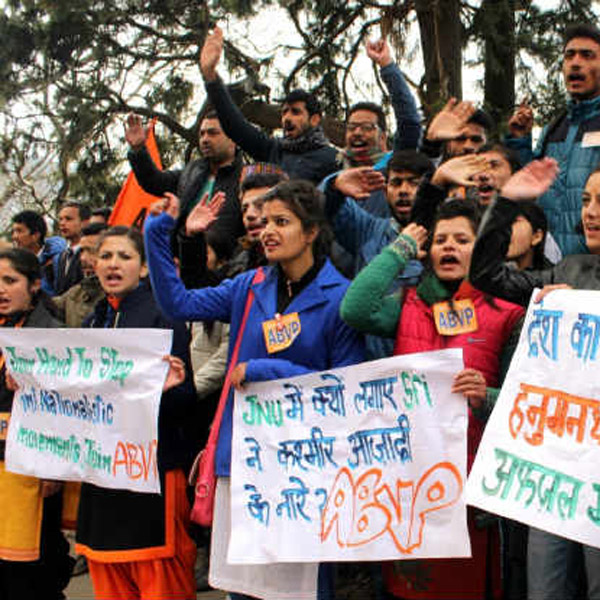
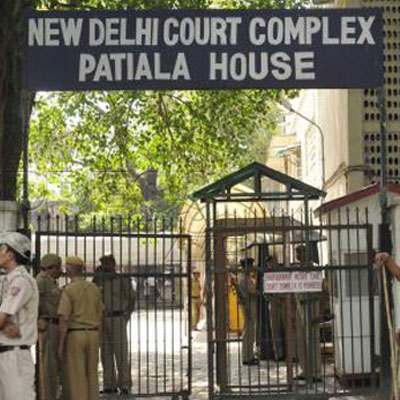
    Over the past one week, the country has witnessed debates, discussions and dialogues galore after the incident that happened in the Patiala Court on 15 February. That was the fateful afternoon when lawyers condemned students, journalists and cameramen who were present in court. That was the day when Jawaharlal Nehru University (JNU) Students Union president Kanhaiya Kumar, who had been arrested on charges of sedition for allegedly raising anti-India slogans, was supposed to be produced in front of the judge.

    With no journalist being spared by the ‘judges,’ the police force opted to be mere watchers turning a blind eye to what was happening. Anyone who didn’t look like a lawyer was beaten up. This action not only spurred anger across the nation but also marked 16 February as a Black Day wherein journalists displayed solidarity against what had happened in the high profile court complex. Hundreds of journalists decided to walk from the Press Club of India to the Supreme Court at noon on Tuesday to protest against the violence that took place.

    The event also saw some students allegedly raising anti-India slogans. NDTV CEO Vikram Chandra told indiantelevision.com that the unfortunate incidents on that day were deplorable. 

    Said he:  “I strongly oppose the slogan shouting that happened. It was highly inappropriate and shameful. Also, such reactions from the lawyers is disgraceful.”

    Then came claims, claims and more claims. Every news channel talked about the video that came out showing students chanting anti-Indian slogans, which celebrated Afzal Guru. While on the one hand, news channels kept airing the video of the attack by lawyers, on the other a few opted to take a stand on bigger issues of the events that unfolded at JNU. While some covered the attacks by lawyers, some covered the student protests at JNU. Diverse opinions and viewpoints bombarded newswatchers at home. 

    Such incidents make us question the basic right of freedom of expression laid down in Section 19 of the Indian Constitution. In the light of what happened, the lawyers completely mishandled and misinterpreted this basic right. 

    And in this constant tug-of-war between one side or the other, we saw some TV reporters and anchors going overboard and taking it out against each other in public.

    We watched as Times Now editor-in-chief Arnab Goswami conducted his routine debate session, bashing the students and disregarding what had happened. And the vociferous senior journalist has faced much criticism for the way he portrayed the event. 

    What’s more, Goswami has faced flak from senior journalists like NDTV’s Ravish Kumar and India Today Television’s Rajdeep Sardesai, who directly took him on because of his take on the entire issue. Goswami got fiery with the liberals asking them if such sloganeering or glorifying a terrorist as a martyr is freedom of speech or sedition, to speak the language of separatists? He ran out of “patience” while discussing this entire incident when one of the students Omar Khalid interrupted him in his prime time show The Newshour.

    NDTV senior journalist Ravish Kumar voiced his views on nationalism and what its connection is with our democracy. Kumar, in a blank black screen video with only subtitles, fired direct salvos against some anchors including Goswami. Starting with lines like: “In the name of debate, the everyday noise and shouting is either bringing you to light or taking you to darkness. You too must have been wondering.” 

    With just a dark and empty background sprinkled generously with impactful words, strong ideas and an eye-ball grabbing narration, he talked about the way in which TV debates are shaping up today. 

    He said, “Our job is not to provoke or incite, but simply ask; ask questions to those in power. But TV anchors don’t do that, intentionally so, and they shout. Is this how you speak at home, to your family, to your sister, to your wife?” he asked, adding, “Do we get accountability by screaming on television?”

    On the other hand, Sardesai came out with a blog titled: ‘I’m anti national,’ where he tried to convey an important point, and that was to stop dividing people in the name of nationalism. 

    “Yes, I am anti-national because I believe in an expanded definition of the right to free speech as spelt out in Article 19 of the Constitution,” are his exact words from the blog. He opined that the right to dissent is a fundamental right. “People cannot and should not take the law into their own hands. I don’t know yet whether the slogans that were raised were from the students or someone else,” he added.

    Video clips all over the Internet and social media have depicted students yelling out slogans like, Bharat ki barbaadi tak jang rahegi, Afzal Guru Zindabad, Pakistan Zindabad. However, the authenticity of these very videos is still shrouded in doubt. 

    To add to all this comes the shocking news about a Zee News producer Vishwa Deepak resigning from the news channel as a sign of disgust on the alleged biased coverage of the JNU protests and the sedition charges against the students’ union leader.

    He was reportedly a part of the team that produced a show on the night of 9 February, when alleged anti-India slogans were raised at the JNU campus. Deepak stated that the channel had broadcast a video of students raising slogans with a caption that said ‘Pakistan Zindabad’ while no such sloganeering was done and this could be easily figured out from the crowd and the darkness at that time.

    Of course media houses went to town carrying  his resignation letter in its entirety or excerpts from it, rubbing their hands in glee as it gave them fodder to denigrate the Hindi news channel as a handmaiden of the Modi sarkar. 

    Zee News has condemned and denied Vishwa Deepak’s statement saying that he was not associated with the coverage of the JNU crisis. It added that it has submitted the raw footage of the students sloganeering to the Delhi police and is awaiting the latter’s analysis to vindicate its stand. Additionally, it has stated it has no affiliations with any political parties. 

    CNN-IBN senior journalist Bhupendra Chaubey on his part has asked the nation’s journalists to be more vigilant. Said he: “It’s time that all the top editors and anchors across the industry should start looking at the reasons behind so much of hatred and negativity on social media. We should all be careful about what we are putting up on TV in-front of the nation.”

    With so much happening all around the world, it looks like a powder keg situation is brewing. With every passing day unveiling a new façade of the issue, the journalists and the media houses have to be fearless and honest so as to empower the citizens who rely on the Fourth Estate for credible information. 

    Freedom of speech and expression is a sovereign and democratic right of every Indian citizen irrespective of  caste, community, colour and creed. 

    But what if somebody is using the constitutional offering to sabotage harmony and arouse a polarised scenario? Who draws the line? 

    Self regulation based on conscience, morals and ethics seems to be not working, but is a regulatory body constructed under government diktat, a safer option?

    On the other hand, the Press in India has more freedom as compared to many other countries. But how is it helping the nation? If Goswami says no, then Barkha Dutt will contradict with a yes. If Zee News says galat (wrong), Aaj Tak will say sahi (correct). Even as journalists are marching on the road and news channels are resorting to visual effects, is anyone thinking on what the repercussions this will have on the millions following them? Certainly not!

    The Father of the nation Mahatma Gandhi rightly said, “The true function of journalism is to educate the public mind, not to stock it with wanted and unwanted impressions.” 

    That sagacious advice has been dust-binned by today’s trigger happy media. Decibel is the new decorum and views are all that is left in news, and TV ratings are all that matter. It remains to be seen, how long this craftsmanship can continue.

    ’Tis the time to really ponder over where we, as a country are going from hereon…
  • JNU’s Kanhiaya Kumar & the role of television news

    JNU’s Kanhiaya Kumar & the role of television news

    MUMBAI: “Where the mind is without fear and the head is held high

    Where knowledge is free

    Where the world has not been broken up into fragments

    By narrow domestic walls

    Where words come out from the depth of truth

    Where tireless striving stretches its arms towards perfection

    Where the clear stream of reason has not lost its way

    Into the dreary desert sand of dead habit

    Where the mind is led forward by thee

    Into ever-widening thought and action

    Into that heaven of freedom, my Father, let my country awake.”

    Given the perilous times that we are living in today, no words  resonate more aptly than these lines penned by Rabindranath Tagore more than a hundred years ago.

    Over the past one week, the country has witnessed debates, discussions and dialogues galore after the incident that happened in the Patiala Court on 15 February. That was the fateful afternoon when lawyers condemned students, journalists and cameramen who were present in court. That was the day when Jawaharlal Nehru University (JNU) Students Union president Kanhaiya Kumar, who had been arrested on charges of sedition for allegedly raising anti-India slogans, was supposed to be produced in front of the judge.

    With no journalist being spared by the ‘judges,’ the police force opted to be mere watchers turning a blind eye to what was happening. Anyone who didn’t look like a lawyer was beaten up. This action not only spurred anger across the nation but also marked 16 February as a Black Day wherein journalists displayed solidarity against what had happened in the high profile court complex. Hundreds of journalists decided to walk from the Press Club of India to the Supreme Court at noon on Tuesday to protest against the violence that took place.

    The event also saw some students allegedly raising anti-India slogans. NDTV CEO Vikram Chandra told indiantelevision.com that the unfortunate incidents on that day were deplorable. 

    Said he:  “I strongly oppose the slogan shouting that happened. It was highly inappropriate and shameful. Also, such reactions from the lawyers is disgraceful.”

    Then came claims, claims and more claims. Every news channel talked about the video that came out showing students chanting anti-Indian slogans, which celebrated Afzal Guru. While on the one hand, news channels kept airing the video of the attack by lawyers, on the other a few opted to take a stand on bigger issues of the events that unfolded at JNU. While some covered the attacks by lawyers, some covered the student protests at JNU. Diverse opinions and viewpoints bombarded newswatchers at home. 

    Such incidents make us question the basic right of freedom of expression laid down in Section 19 of the Indian Constitution. In the light of what happened, the lawyers completely mishandled and misinterpreted this basic right. 

    And in this constant tug-of-war between one side or the other, we saw some TV reporters and anchors going overboard and taking it out against each other in public.

    We watched as Times Now editor-in-chief Arnab Goswami conducted his routine debate session, bashing the students and disregarding what had happened. And the vociferous senior journalist has faced much criticism for the way he portrayed the event. 

    What’s more, Goswami has faced flak from senior journalists like NDTV’s Ravish Kumar and India Today Television’s Rajdeep Sardesai, who directly took him on because of his take on the entire issue. Goswami got fiery with the liberals asking them if such sloganeering or glorifying a terrorist as a martyr is freedom of speech or sedition, to speak the language of separatists? He ran out of “patience” while discussing this entire incident when one of the students Omar Khalid interrupted him in his prime time show The Newshour.

    NDTV senior journalist Ravish Kumar voiced his views on nationalism and what its connection is with our democracy. Kumar, in a blank black screen video with only subtitles, fired direct salvos against some anchors including Goswami. Starting with lines like: “In the name of debate, the everyday noise and shouting is either bringing you to light or taking you to darkness. You too must have been wondering.” 

    With just a dark and empty background sprinkled generously with impactful words, strong ideas and an eye-ball grabbing narration, he talked about the way in which TV debates are shaping up today. 

    He said, “Our job is not to provoke or incite, but simply ask; ask questions to those in power. But TV anchors don’t do that, intentionally so, and they shout. Is this how you speak at home, to your family, to your sister, to your wife?” he asked, adding, “Do we get accountability by screaming on television?”

    On the other hand, Sardesai came out with a blog titled: ‘I’m anti national,’ where he tried to convey an important point, and that was to stop dividing people in the name of nationalism. 

    “Yes, I am anti-national because I believe in an expanded definition of the right to free speech as spelt out in Article 19 of the Constitution,” are his exact words from the blog. He opined that the right to dissent is a fundamental right. “People cannot and should not take the law into their own hands. I don’t know yet whether the slogans that were raised were from the students or someone else,” he added.

    Video clips all over the Internet and social media have depicted students yelling out slogans like, Bharat ki barbaadi tak jang rahegi, Afzal Guru Zindabad, Pakistan Zindabad. However, the authenticity of these very videos is still shrouded in doubt. 

    To add to all this comes the shocking news about a Zee News producer Vishwa Deepak resigning from the news channel as a sign of disgust on the alleged biased coverage of the JNU protests and the sedition charges against the students’ union leader.

    He was reportedly a part of the team that produced a show on the night of 9 February, when alleged anti-India slogans were raised at the JNU campus. Deepak stated that the channel had broadcast a video of students raising slogans with a caption that said ‘Pakistan Zindabad’ while no such sloganeering was done and this could be easily figured out from the crowd and the darkness at that time.

    Of course media houses went to town carrying  his resignation letter in its entirety or excerpts from it, rubbing their hands in glee as it gave them fodder to denigrate the Hindi news channel as a handmaiden of the Modi sarkar. 

    Zee News has condemned and denied Vishwa Deepak’s statement saying that he was not associated with the coverage of the JNU crisis. It added that it has submitted the raw footage of the students sloganeering to the Delhi police and is awaiting the latter’s analysis to vindicate its stand. Additionally, it has stated it has no affiliations with any political parties. 

    CNN-IBN senior journalist Bhupendra Chaubey on his part has asked the nation’s journalists to be more vigilant. Said he: “It’s time that all the top editors and anchors across the industry should start looking at the reasons behind so much of hatred and negativity on social media. We should all be careful about what we are putting up on TV in-front of the nation.”

    With so much happening all around the world, it looks like a powder keg situation is brewing. With every passing day unveiling a new façade of the issue, the journalists and the media houses have to be fearless and honest so as to empower the citizens who rely on the Fourth Estate for credible information. 

    Freedom of speech and expression is a sovereign and democratic right of every Indian citizen irrespective of  caste, community, colour and creed. 

    But what if somebody is using the constitutional offering to sabotage harmony and arouse a polarised scenario? Who draws the line? 

    Self regulation based on conscience, morals and ethics seems to be not working, but is a regulatory body constructed under government diktat, a safer option?

    On the other hand, the Press in India has more freedom as compared to many other countries. But how is it helping the nation? If Goswami says no, then Barkha Dutt will contradict with a yes. If Zee News says galat (wrong), Aaj Tak will say sahi (correct). Even as journalists are marching on the road and news channels are resorting to visual effects, is anyone thinking on what the repercussions this will have on the millions following them? Certainly not!

    The Father of the nation Mahatma Gandhi rightly said, “The true function of journalism is to educate the public mind, not to stock it with wanted and unwanted impressions.” 

    That sagacious advice has been dust-binned by today’s trigger happy media. Decibel is the new decorum and views are all that is left in news, and TV ratings are all that matter. It remains to be seen, how long this craftsmanship can continue.

    ’Tis the time to really ponder over where we, as a country are going from hereon…

  • Jaitley, Bar Council deplore attacks on media; SC asks police to ensure safety

    Jaitley, Bar Council deplore attacks on media; SC asks police to ensure safety

    NEW DELHI: Even as the Bar Council of India condemned the attacks by lawyers on media persons at Patiala House courts where the Jawaharlal Nehru University Students Union Kanhaiya Kumar was being produced, the Supreme Court asked the Delhi Police to ensure the security of all including media persons.

    The apex court also agreed to hear a petition by media persons in this regard. 

    Information and Broadcasting Minister Arun Jaitley, himself an eminent lawyer, also condemned the attacks in a tweet, saying: “Media has an unhindered right to report. Attack on Media persons is highly improper and condemnable.” 

    Media persons in Mumbai and Kolkata also held demonstrations in support of their Delhi colleagues. As was previously reported by Indiantelevision.com, the News Broadcasters Association (NBA) also deplored the attacks.

    Earlier reiterating that attacks on journalists discharging their professional duties was not acceptable, the Press Council of India had sought a report from the Delhi Police regarding the assault on media persons in the Patiala House Court complex.

    The events at Patiala House court resulted in a massive outrage and top editors of national media and hundreds of journalists yesterday demonstrated on the streets demanding action against those involved in beating up members of their fraternity in police presence and sought Supreme Court’s intervention in protecting freedom of speech.

  • Jaitley, Bar Council deplore attacks on media; SC asks police to ensure safety

    Jaitley, Bar Council deplore attacks on media; SC asks police to ensure safety

    NEW DELHI: Even as the Bar Council of India condemned the attacks by lawyers on media persons at Patiala House courts where the Jawaharlal Nehru University Students Union Kanhaiya Kumar was being produced, the Supreme Court asked the Delhi Police to ensure the security of all including media persons.

    The apex court also agreed to hear a petition by media persons in this regard. 

    Information and Broadcasting Minister Arun Jaitley, himself an eminent lawyer, also condemned the attacks in a tweet, saying: “Media has an unhindered right to report. Attack on Media persons is highly improper and condemnable.” 

    Media persons in Mumbai and Kolkata also held demonstrations in support of their Delhi colleagues. As was previously reported by Indiantelevision.com, the News Broadcasters Association (NBA) also deplored the attacks.

    Earlier reiterating that attacks on journalists discharging their professional duties was not acceptable, the Press Council of India had sought a report from the Delhi Police regarding the assault on media persons in the Patiala House Court complex.

    The events at Patiala House court resulted in a massive outrage and top editors of national media and hundreds of journalists yesterday demonstrated on the streets demanding action against those involved in beating up members of their fraternity in police presence and sought Supreme Court’s intervention in protecting freedom of speech.