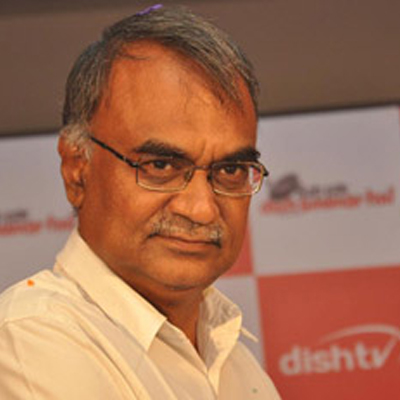
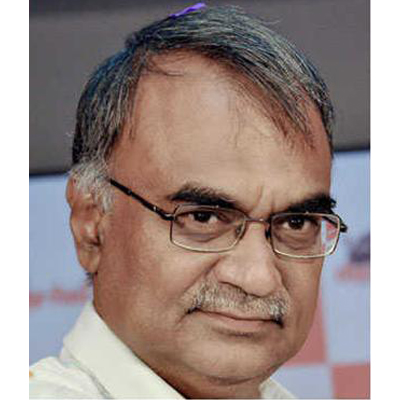
Tag: Jawahar Goel

  • Dish TV CEO RC Venkateish resigns

    Dish TV CEO RC Venkateish resigns

    MUMBAI: There’s change coming at the top in India’s oldest DTH operator Dish TV India. The company informed the Bombay Stock Exchange (BSE) a short while ago that its CEO R.C. Venkateish has resigned following a board meeting earlier today.


    The meeting also saw the elevation of managing director Jawahar Goel as Dish TV chairman, and the resignation of non-executive promoter director Subhash Chandra from the board.


    Venky or RC as he is commonly called was Dish TV CEO for the past five years and his resignation will be effective from 31 October, 2015, while Chandra’s resignation comes into effect by end of today.


    RC shall however continue to be associated with the company in an advisory role specifically in areas relating to content, legal and regulatory affairs. He shall also continue to represent Dish TV in the DTH Association and before industry and regulatory bodies.


    Under his leadership, among other achievements, Dish TV more than doubled its revenues, increased market share and launched various new services including a  sub brand – ‘Zing’ for the regional market as well as turned profitable.


    Said Goel, “On behalf of the Board of Directors and the entire company, I want to thank Mr. Venkateish for his outstanding work and leadership in continuing the growth and success story at Dish TV. His term as Chief Executive was marked by outstanding business performance and exemplary leadership in the challenging environment that the DTH sector operates in. Venkateish lead the company with strength, resolve and passion. Dish TV shall benefit with his continued association with it in an advisory role.”


    Added RC, ”I have enjoyed every moment of my stint at Dish TV and it was a great experience to lead the company for over five years through a highly complex business environment and to build it to its current position as a strong profitable leader in the DTH space in India. I look forward to seeing the company continue to build on its successful track record of executing on its plans, innovating and expanding the business and remain very confident about its future prospects. I shall continue my association with Dish for the specific projects.”


    Meanwhile the company has announced its Q2FY-2016 results. Details of that will follow shortly.

  • Dish TV unveils VOD movie service DishFlix

    Dish TV unveils VOD movie service DishFlix

    NEW DELHI: Dish TV has launched a video on demand service that – unlike IPTV – works without the Internet and offers a choice of fifty English and Hindi films to choose from at any time.


    While conceding that it was akin to the Internet Protocol Television (IPTV), which had been introduced without much success almost a decade earlier, Dish TV CEO R C Venkateish said that the difference was that DishFlix would work without the internet.


    The new technology would require a small box costing Rs 5990 that will be attached to the set top box. Viewers can avail the service for a monthly fee of Rs 100. One film will be added every second day, making it a total of 15 new films every month. However, the total number of films would remain the same on the service.


    Dish TV executive vice president Anjali Malhotra tells Indiantelevision.com that the company will be spending approximately Rs 20 – 25 crore in marketing the new product.  DishFlix will be promoted on Zee and other channels as well as across theatres chains like PVR and INOX. Movie portals will also be seen sporting DishFlix ads.


    While at launch the ratio of Hindi and English film on the service would be 70:30, other language films would be brought in at a later stage. The films were divided across five genres on DishFlix, informs Malhotra.


    Dish TV MD Jawahar Goel informs that the new service would help curb piracy as lesser people would be templed to download films from the internet. Moreover, consumers could also bid goodbye to the problem of buffering caused by the slow Internet rate.


    Venkateish added that this VOD version puts the power in the hands of the consumer. “It is a plug in service with films that would be completely free of advertisements,” he said.


    Viewers will be able to pause, play, fast forward and rewind movies or TV shows at their own convenience. The service works sans any internet connection as the content will be pushed to the customer’s STB through satellite. Customers need to buy a DishFlix Box that comes preloaded with 50 movies. Out of these, 15 movies will be refreshed every month on first in first out basis so that the viewable movie library is always updated.

  • Q1-2016: Affirmation that DTH in India has turned the corner?

    Q1-2016: Affirmation that DTH in India has turned the corner?

    BENGALURU: If numbers reported by direct-to-home (DTH) operators in Q1-2016 are anything to go by, then the segment might just have turned the corner last quarter.


    As may be recalled, Indiantelevision.com had reported in the last quarter that the DTH industry in India had probably reached an inflection point in FY-2015 (financial year ended 31 March, 2015, previous year), and more so during the last quarter of the previous year (Q4-2015). The financial results for the quarter ended 30 June, 2015 (Q1-2016, current quarter) seem to confirm this fact.


    Another endorsement of this website’s surmise is a single statement in the Sun TV Network’s earning release for the current quarter – Subscription revenues continue to grow with cable TV revenues growing by approximately 13 per cent and DTH subscription revenue growing by nine per cent over the same quarter of last year. Sun TV had approximately eight per cent market share among the private Indian DTH players as on 31 March, 2015.


    Note: 100,00,000 = 100 lakh = 10 million = 1 crore.


    This report covers only the three of the seven DTH service providers in India (as had the previous one) since the other four – Reliance Digital TV, Sun Direct (about 97 lakh subscribers as on 31 March, 2015), Tata Sky and DD Free Dish are not listed on the bourses and their financial numbers are not available, unless the principals of these companies/segments chose to reveal them. The three players – Airtel DTH, Dish TV and Videocon d2h have already been covered in our earlier report mentioned above.


    Despite Q1 being a relatively weak quarter seasonally, two of the three players – Airtel DTHDish TV and Videocon d2h have reported QoQ and YoY growth across all the important parameters that include revenue, operating profits with healthy margins, subscription numbers, average revenue per user (ARPU) for the current quarter. The third player Videocon d2h, has also shown improved numbers across all the parameters mentioned above, except in the case of operating profits – the company’s YoY and QoQ loss reduced significantly in Q1-2016.


    Dish TV is the largest DTH player in terms of subscriber base and probably revenue too, in India. The company posted a 55.2 per cent QoQ growth in consolidated profit after tax of Rs 54.21 crore (7.2 per cent margin) in Q1-2016 on revenue of Rs 736.68 crore. For the corresponding quarter of last year, Dish TV had reported a loss of Rs 14.97 crore on revenue of Rs 618.04 crore.


    As a matter of fact, Dish TV is also the first among listed DTH companies in the country in FY-2015 and Q4-2015 to report a profit after tax as opposed to the operating profits reported by a segment of the other goliaths for whom DTH services is just another small segment.


    Airtel DTH reported the highest YoY growth in ARPU in Q1-2016, as well as the highest ARPU among the three players in this report.


    Let us look at some of the numbers reported by the three players:


    Airtel DTH


    For Bharati Airtel Limited (Airtel), Digital TV services (Airtel DTH) contributes just a small fraction to its overall numbers. The DTH segment’s contribution to overall Airtel numbers is approximately four per cent to revenue and three per cent to EBIDTA, and yet it had a seven per cent share in the company’s capex investments pie to the extent of Rs 211.3 crore fresh investments in Q1-2016. Overall, cumulative investment made by Airtel into its DTH segment is Rs 5621.6 crore (about three per cent of Airtel’s overall cumulative investments).


    Mentioning the DTH segment in Airtel’s Q1-2016 earning release, Airtel MD and CEO, India & South Asia Gopal Vittal said, “I am pleased that our revenue growth is broad based across all business units, especially the domestic enterprise and corporate segment, which saw revenues grow by 18.1 per cent, and DTH business which had a underlying topline growth of 26.8 per cent.”


    Airtel DTH reported 15.8 per cent increase in YoY revenue to Rs 684.8 crore in Q1-2016 as compared to the Rs 591.5 crore in Q1-2015 and 7.9 per cent more than the Rs 634.8 crore in Q4-2015.


    The telecom major’s DTH segment reported a 67 per cent growth in operating profit (EBIDTA) in the current quarter at Rs 240.8 crore (46.1 per cent margin) as compared to the Rs 143.8 crore (24.3 per cent margin) in Q1-2015 and 15.9 per cent more than the Rs 207.8 crore (32.7 per cent margin) immediate trailing quarter.


    Airtel’s DTH segment reported 10.9 per cent YoY growth in Airtel DTH customer base for the current quarter at 104.12 lakh as compared to the 93.88 lakh in Q1-2015 and 3.4 per cent growth as compared to the 100.73 lakh in Q4-2015.


    As mentioned above, ARPU in Q1-2016 improved significantly to Rs 222 as compared to the Rs 214 in both Q1-2015 and Q4-2015. Monthly churn in the current quarter was higher at 0.8 per cent as compared to the 0.6 per cent in the corresponding year ago quarter, but lower than the one per cent in the immediate trailing quarter.


    Dish TV


    Dish TV has shown almost flat QoQ revenue growth in Q1-2016. The company reported 0.9 per cent higher consolidated net total Income from Operations (TIO) in the current quarter at Rs 736.68 crore as compared to the Rs 729.93 crore in the immediate trailing quarter and 19.2 per cent more than the Rs 618.04 crore in Q1-2015.


    As mentioned above, the company has reported 55.2 per cent higher PAT at Rs 54.21 (7.4 per cent margin) as compared to the Rs 34.94 crore (margin 4.8 per cent) in Q4-2015. The company had reported a loss of Rs 14.97 crore in Q1-2015, while it had reported a consolidated PAT of Rs 3.14 crore for FY-2015.


    With effect from 1 April, 2015, Dish TV says that it has started netting-off certain collection fees paid to its trade partners from its topline. This has resulted in the company’s topline getting shrunk by around four per cent, with a similar number being decreased from the middle line.


    Further, Dish TV transferred its non-core business (including set-top boxes, dish antenna and related services) to its wholly owned subsidiary Dish Infra Services Private Limited (formerly known as Xingmedia Distribution Private Limited) on 1 April, 2015 on a going concern basis.


    The company reported addition of 3,90,000 net subscribers in Q1-2016, taking its total subscriber base to 1.33 crore as on 30 June, 2015. Post consolidation, Dish TV’s ARPU was Rs 173 versus Rs 172 (QoQ) in Q4-2015. The company reported consolidated subscription revenues at Rs 628.88 crore, up 20.6 per cent YoY.


    Dish TV chairman Subhash Chandra said, “Dish TV has been actively contributing to the ‘Digital India’ movement by digitizing analog TV homes in DAS phase 3 and 4 markets and remains optimistic about its prospects to acquire a substantial share in these markets.”


    Dish TV managing director Jawahar Goel added, “Our first quarter results are in line with the success of our regional and high definition (HD) strategy. Our regional offering, ‘Zing’, would soon be launched in Kerala and would carry the largest cache of vernacular channels offered in that market. ‘Zing’ cemented Dish TV’s supremacy in the DAS Phase 3 and 4 markets with custom-made content, hardware and service packages for the regional audience. High definition continues to be a value driver and a key differentiator for us compared to other DTH offerings in India. Dish TV’s industry leading bandwidth capacity supports 42 HD channels, the largest on offer by any distribution platform so far.”


    Further, Dish TV recently formed a content negotiating joint venture (JV) called Comnet with its group company and multi system operator (MSO) Siti Cable Network Limited. Both Dish TV and Siti Cable are equal partners in the JV that came into existence on 1 July, 2015. As part of the JV, both companies will hold joint discussions with broadcasters post, which separate direct contracts between the broadcaster and distribution platform will be signed. The JV also tends to bring together the industry on contentious taxation issues like the recent arbitrary hike in entertainment tax in Delhi.


    Videocon d2h


    For Videocon d2h, the addition of 6.1 lakh gross subscribers and 4.6 lakh net subscribers in Q1-2016 coupled with higher ARPU for Q1-2016, resulted in a YoY 32.1 per cent growth in subscription revenue and 23.3 per cent growth in revenue from operations (TIO) in Q1-2016. On a QoQ basis, subscription revenue increased 3.7 per cent, while TIO increased six per cent. The company also reported a marked fall in finance costs and consequently the company’s loss in the current quarter more than halved to Rs 24.4 crore as compared to the Rs 55.8 crore in Q1-2015 and was less than a third of the Rs 75.7 crore in Q4-015.


    TIO in Q1-2016 at Rs 662.83 crore was 23.3 per cent more than the Rs 537.65 crore in Q1-2015 and 6 per cent more than the Rs 625.27 crore in Q4-2015.


    Videocon achieved strong subscription revenue growth of 32.1 per cent to Rs 599.61 crore (90.5 per cent of TIO) in Q1-2016 as compared to the Rs 453.77 crore (84.4 per cent of TIO) in Q1-2015 and growth of 3.7 per cent as compared to the Rs 578.33 crore (92.5 per cent of TIO) in the immediate trailing quarter Q4-2015.


    Average revenue per user (ARPU) in Q1-2016 at Rs 205.30 was 9.7 per cent more than the Rs 187.14 in the corresponding year ago quarter and was 1.5 per cent more than the Rs 202.17 in Q4-2015. (Conversion rate from 1 dollar = 62.59 Indian rupee for all the three quarters).


    The company considers advertisement revenue as an important contributor to its numbers, and is beginning to see an encouraging response from multiple advertisers. Videocon d2h recently set up an advertising team to sell ad inventory on its own proprietary channels and added three proprietary channels – d2h nursery rhymes; d2h Cinema HD; and another music channel. The company has also launched three Active services, namely, Active Kids, Active Games and Active Learning in this quarter, which the company says are beginning to get traction from its customer.


    Videocon d2h executive chairman Saurabh Dhoot said, “We are pleased to declare a strong set of results for the quarter ended 30 June, 2015 and are on track to achieve the guidance provided for fiscal 2016. With a strong subscriber growth outlook, DTH sector gaining market share over cable and an improving ARPU scenario; we believe we are just at the beginning of a multi-year strong growth opportunity.”


    Conclusion


    The three players considered in this report had an approximate combined market share of 67 per cent in among the private players India at the end of the previous year, or more than two-thirds. It is still early days as yet to really conclude that the DTH sector in India has turned the corner based on good results for only two consecutive quarters reported by three companies that represent about two thirds of the sector. Of course, the amount of representation goes up to 75 per cent of the private players, if one were to consider the Sun TV market share of eight per cent. However, looking at the intensity and the moves of these players, it is quite likely that the sector should continue showing improved positive results, and may have turned the corner in Q4-2015.
  • Q1-2016: Dish TV q-o-q PAT up 55%, adds 390K net subscribers

    Q1-2016: Dish TV q-o-q PAT up 55%, adds 390K net subscribers

    BENGALURU: Last fiscal and quarter (year and quarter ended 31 March, 2015, Q4-2015), the Subhash Chandra led Essel groups DTH operator Dish TV Limited (Dish TV) turned the corner with a consolidated PAT of Rs 3.14 crore and Rs 34.94 crore (margin 4.8 per cent) respectively. 


    Dish TV was probably the first among listed DTH companies in the country in FY-2015 and Q4-2015 to report a profit after tax as opposed to the operating profits reported by a segment of the other goliaths for whom DTH services is just another small segment.


    This quarter (quarter ended 30 June, 2015, Q1-2016), the company has reported 55.2 per cent higher PAT at Rs 54.21 (margin 7.4 per cent) as compared to the above mentioned PAT in Q4-2015. The company had reported a loss of Rs 14.97 crore in Q1-2015.


    Note:  (1)100,00,000 = 100 Lakh = 10 million = 1 crore


    (2) With effect from April 1, 2015, Dish TV says that it has started netting-off certain collection fees paid to its trade partners from its topline. This has resulted in the company’s topline getting shrunk by around 4 percent, with a similar number being decreased from the middle line. The values for the prior comparative periods have also been recast to reflect the same.


    (3) Dish TV recently transferred its non-core business (including set-top boxes, dish antenna and related services) to its wholly owned subsidiary Dish Infra Services Private Limited (formerly known as Xingmedia Distribution Private Limited) on April 1, 2015 on a going concern basis. The Company today reported its maiden consolidated quarterly numbers.


    The company reported addition of 3,90,000 net subscribers in Q1-2016, taking its total subscriber base to 1.33 crore as on 30 June, 2015. Post consolidation, Dish TV says that Average Revenue Per User (ARPU) was Rs 173 versus Rs 172 (q-o-q) in Q4-2015. ARPU however would have been Rs 180, as compared to Rs 179 in Q4-2015, without the effect of consolidation. The company reported consolidated subscription revenues at Rs. 628.88 crore, up 20.6 percent y-o-y.


    The company reported 0.9 per cent higher consolidated net total Income from Operations (TIO) in the current quarter at Rs 736.68 crore as compared to the Rs 729.93 crore in the immediate trailing quarter and was 19.2 per cent more than the Rs 618.04 crore in Q1-2015.


    Dish TV chairman Subhash Chandra said, “Dish TV has been actively contributing to the ‘Digital India’ movement by digitizing analog TV homes in DAS phase 3 and 4 markets and remains optimistic about its prospects to acquire a substantial share in these markets. Continuing its focus on growth with profitability, the company delivered another quarter of encouraging financial results.”


    Let us look at the other numbers reported by Dish TV


    Dish TV total expenditure in Q1-2016 at Rs 659.69 crore (89.5 per cent of TIO) was 0.7 percent lower than the Rs 664.08 crore (91 per cent of TIO) in Q4-2015 and was 8.7 per cent more than the Rs 606.80 crore (98.2 per cent of TIO) in Q1-2015.


    A major expense head is programming /content and other costs (content costs). In Q1-2016 content cost at Rs 212.01 crore (28.8 per cent of TIO) was 2.1 per cent more than the Rs 207.62 crore (28.4 per cent of TIO) and was 5.3 per cent more than the Rs 201.39 crore (32.6 per cent of TIO) in Q1-2015.


    Employee Benefit Expense (EBE) in Q1-2016 at Rs 34.67 crore (4.7 per cent of TIO) was 39.7 per cent more than the Rs 24.81 crore (3.4 per cent of TIO) an was 34.8 per cent more than the Rs 25.72 crore (4.2 per cent of TIO) in the corresponding year ago quarter.


    Dish TV managing director Jawahar Goel said, “Our first quarter results are in line with the success of our regional and high definition (HD) strategy. Our regional offering, Zing, would soon be launched in Kerala and would carry the largest cache of vernacular channels offered in that market. Zing cemented Dish TV’s supremacy in the DAS Phase 3 and 4 markets with custom-made content, hardware and service packages for the regional audience. High definition continues to be a value driver and a key differentiator for us compared to other DTH offerings in India. Dish TV’s industry leading bandwidth capacity supports 42 HD channels, the largest on offer by any distribution platform so far.”


    “Led by robust subscriber additions and an improving ARPU, subscription revenues for the quarter increased 20.6 per cent over the corresponding quarter last fiscal. EBITDA of Rs 2,368 million recorded a significant 51.3 per cent jump over the corresponding quarter. Net Profit for the quarter was Rs 54.2 crore compared to a loss of Rs 15 crore in the first quarter last fiscal. The resultant free cash flow was Rs 68.9 crore. Amid improving financial performance, churn for the quarter remained steady at 0.7 per cent per month,” added Goel.

  • FY-2105: Dish TV in black; adds 1.5 million subscribers

    FY-2105: Dish TV in black; adds 1.5 million subscribers

    BENGALURU: Last quarter (Q3-2015, quarter ended 31 December, 2015), India’s largest DTH operator, Dish TV Limited had reported a lower loss at just Rs 2.87 crore as compared to double-digit crore loss numbers in the previous or like-to-like quarters.


    However that is now a thing of the past as the company has reported a standalone net profit after tax (PAT) of Rs 35.01 crore in Q4-2015 and a standalone PAT of Rs 1.01 crore in FY-2015 as compared to a standalone loss of Rs 154.21 crore in FY-2014.


    This probably makes Dish TV the first among listed DTH companies in the country to report a profit after tax as opposed to the operating profits reported by a segment of the other goliaths for whom DTH services is just another small segment. Dish TV’s consolidated PAT for FY-2015 was Rs 3.14 crore as against a consolidated loss of Rs 157.61 crore in FY-2104.


    Note: 100,00,000 = 100 Lakh = 1 crore = 10 million


    The company also added 1.5 million net subscribers in FY-2015 and closed the year with a subscriber base of 12.9 million. With the addition of 4.04 lakh subscribers in Q4-2015, Dish TV maintained the tempo it had set in the previous quarter (Q3-2105) by adding a slightly higher number of subscribers at 4.16 lakhs.


    Dish TV also reported higher average revenue per user (ARPU) of Rs 179 in Q4-2014 as against Rs 177 in Q3-2015 (1.13 per cent increase in ARPU). In Q4-2014, the company had added 2.26 lakh net subscribers and its annual ARPU was Rs 170 (Q4-2105 ARPU increased 5.3 per cent as compared to Q4-2014).


    Dish TV chairman Subhash Chandra said, “The DTH sector is a direct beneficiary of a positive consumer sentiment. Dish TV achieved a strong, sector leading, subscriber growth of 1.5 million net subscribers during the year. Fiscal 2015 also saw Dish TV swing to net profit, a first for any DTH company in India. Through this milestone to the next and thereafter, Dish TV remains committed to outperform the industry growth rate and create shareholder value while continuing to entertain its subscribers with rich content and compelling value added services using updated modes of delivery.”


    Dish TV managing director Jawahar Goel added, “During the quarter, we garnered net subscribers that were almost equal to the numbers during the festival quarter of October – December 2014. While Zing gained ground in Phase 3 and 4 markets, high definition (HD) driven sports offerings were the mainstay, in Rest of India, during the Cricket World Cup 2015.”


    Let us look at the other numbers reported by Dish TV:


    Dish TV’s standalone and consolidated net Total Income from Operations (TIO) in FY-2016 at Rs 2781.64 crore was 10.9 per cent more than the Rs 2508.97 crore in FY-2014. Standalone TIO in Q4-


    2015 at Rs 754.72 crore grew 18.5 per cent as compared to the Rs 636.91 crore in the corresponding year ago quarter and was 10.3 per cent more than the Rs 684.26 crore in Q3-2015.


    As mentioned above, net profit for Q4-2015 was Rs 35.01 crore as against a loss of Rs 149.05 crore in Q4-2014 and a loss of Rs 2.87 crore in the immediate trailing quarter.


    The company’s EBIDTA in FY-2015 increased 17.5 per cent to Rs 733.1 crore as compared to the Rs 624 crore in FY-2014. EBIDTA in Q4-2015 at Rs 221.9 crore was a whopping 72.1 per cent more than the Rs 128.9 crore in Q4-2014 and 16.1 per cent more than the Rs 191.2 crore in the preceding quarter.


    The company’s total expenditure (TE) in FY-2015 increased 8.7 per cent to Rs 2048.5 crore as compared to the Rs 1884.9 crore in the previous year. TE in the current quarter increased 4.9 per cent to Rs 532.8 crore as compared to the Rs 508 crore in the corresponding year ago quarter and was 1.9 per cent more than the Rs 522.7 crore in Q3-2015.


    Programming, content/other costs (programming) in FY-2015 increased 2.9 per cent to Rs 800.75 crore from Rs 778.44 crore in FY-2014. Programming cost in Q4-2015 at Rs 207.63 crore was three per cent more than the Rs 201.57 crore in Q4-2014 and 4.4 per cent more than the Rs 1988.86 crore in Q3-2015.


    License Fees in FY-2015 increased 10.5 per cent to Rs 288.83 crore from Rs 261.38 crore in the previous year. Dish TV paid 16.7 per cent higher license fees in Q4-2015 at Rs 78.17 crore as compared to the Rs 66.98 crore in Q4-2014 and 5.1 per cent more than the Rs 74.35 crore in Q3-2015.


    Advertisement expense in Q4-2015 at Rs 11.5 crore was 10.6 per cent more than the Rs 10.4 crore in Q4-2014, but declined 7.3 per cent from Rs 12.4 crore in Q3-2015.


    Consolidated Employee Benefit Expense (EBE) in FY-2015 increased 14.1 per cent to Rs 101.75 crore as compared to Rs 89.16 crore in FY-2014. EBE in Q4-2015 at Rs 25.71 crore was 17.6 per cent more the Rs 21.02 crore in Q4-2014 and was 4.3 per cent lower than the Rs 25.83 crore in Q3-2015.


    Summing up Dish TV’s performance, Goel said, “Fiscal 2015 was a satisfying year. Our single-minded devotion to being the leader in the DTH industry along with uncompromised financial discipline enabled us to reach the net profitability milestone much ahead of our peers. With cost line items under control, the resultant EBITDA for the quarter increased by a strong 72.1 per cent y-o-y. EBITDA margin improved to 29.4 per cent. PAT of Rs 35.01 crore resulted in Free Cash Flow (FCF) of Rs 70.2 crore for the quarter. Churn for the quarter was maintained at 0.7 per cent per month.”


    Click here to read the financial statement  

  • Dish TV exploring possibility of setting up domestic STB manufacturing business

    Dish TV exploring possibility of setting up domestic STB manufacturing business

    MUMBAI: The positive thrust that the cable and DTH industry has been receiving from the current Information and Broadcasting (I&B) Minister Prakash Javadekar is getting encouraging response from the industry.


    While the government has classified set top boxes (STBs) as telecom equipment to encourage indigenous manufacturing of STBs, Dish TV has decided to tap into the emerging domestic market.


    Reporting improved results, Dish TV MD Jawahar Goel said that the company is ‘re-evaluating possibilities for domestic manufacturing of STBs’.


    Speaking to indiantelevision.com, Dish TV CEO RC Venkateish said, “We are exploring the idea of domestic STB manufacturing given the incentive and fillip that the government is keen to provide to domestic manufacturers.” He added that there seems to be an overall trust of the government which is the underlying assumption that indigenous manufacturing will save costs as compared to importing boxes.


    Venkateish said that the company is currently evaluating the cost structure for setting up an STB manufacturing unit that will not just provide boxes to Dish TV but to others in the industry as well. Though the company would have to invest in capex and opex for the manufacturing unit, whether this will help them save up the additional cost of custom duties that imported boxes incur, is still a question mark.


    Dish TV has reported an addition of 332,000 subscribers in Q2 2015 with lower losses at Rs 15 crore as compared to the previous quarter.

  • Dish TV reports improved results for Q2-2015

    Dish TV reports improved results for Q2-2015

    MUMBAI: Reporting earnings for the current quarter (Q2-2015), Dish TV India Limited (Dish TV) announced addition of 3,78,000 subscribers in the quarter taking net subscriber base to 1.21 crore at the end of the quarter. The company added 3,32,000 subscribers last quarter and 164,000 subscribers in the corresponding quarter last year.


    The subscription revenue for the quarter rose 12.2 per cent to Rs 616.8 crore y-o-y while the total operating income (Total Income from Operations – TIO) at Rs 672.3 crore was 11.9 per cent more than Rs 600.8 crore in Q2-2014 and 4.9 per cent more than Rs 640.6 crore in Q1-2015.


    Also reporting the half yearly result, the HY1-2015 TIO for the company at Rs 1290.8 crore was 7.2 per cent more than Rs 1203.9 crore in HY1-2014.


    The company announced a decline in loss for the current quarter at Rs 15.1 crore as compared to the Rs 16.05 crore in the trailing quarter but higher than the Rs 8.53 crore in the corresponding quarter last year.


    The total expenditure of the company for the current quarter also rose to Rs 661.9 crore, 11.1 per cent up from Rs 595.5 crore in Q2-2014 and 5.2 per cent more than Rs 628.8 in the trailing quarter.


    The company reported the total expenditure for HY1-2015 at Rs 1290.8 crore which was 7.2 per cent more than Rs 1203.9 crore in HY1-2014.


    The increase in total expenditure can be attributed to rise in Employee benefit expense (EBE), advertising expense (AE) and selling and distribution expenses (S&DE).


    The EBE for Q2-2015 was reported at Rs 25.16 crore, up 12.6 per cent from Rs 22.34 crore in the corresponding quarter last year and 1.6 per cent lower than the trailing quarter.


    AE in Q2-2015 at Rs 17.7 crore, was 39.4 per cent more than Rs 12.7 crore in Q1-2015 while the selling and distribution expenditure rose 22.1 per cent Q-o-Q.


    The S&DE comprises of commission and other selling and distribution expenses.


    The commissions for the company in Q2-2015 was reported at Rs 60.74, 12.2 per cent more than Rs 54.12 crore announced in the immediate trailing quarter and  41.3 per cent more than Rs 42.96 crore in Q2-2014.


    While the other selling and distribution expenses at Rs 53.8 crore jumped 42.1 per cent from Rs 37.86 in Q1-2015 and 74.9 per cent from Rs 30.76 crore in the corresponding quarter last year.


    ARPU for the second quarter increased to Rs 172 from Rs 170 in the previous quarter. Despite significantly higher activations, churn continued to be at a healthy 0.7 per cent per month. Festival driven, higher selling and distribution expenses resulted in the EBITDA margin being marginally lower at 24.1 per cent compared to 24.5 per cent in the previous quarter, said the press release.


    EBITDA for the quarter was Rs 162.3 crore, up 4.4 per cent as compared to Rs 155.4 crore in the corresponding quarter last fiscal.

    Talking about the overall industry growth, Dish TV chairman Subhash Chandra said, “The industry, led by Dish TV, recorded a healthy 38 per cent Y-o-Y growth in gross additions during the second quarter of fiscal 2015.”


    “Our performance during the second quarter is a reflection of our belief that a financially stable business is best placed to capitalize on any growth opportunity. While we have been growing in the right direction, growth without healthy returns to our shareholders falls below our aspirations. However, we are committed to generate them and by focusing on revenues, expenses and balance sheet quality we are building near term benefits for all our stakeholders,” he added commenting on the company’s earnings report.


    Adding to the same, Dish TV MD Jawahar Goel said, “Dish TV maintained its leadership position during the second quarter. Buoyed by a healthy growth in HD sales and good traction coming in from sale of the ‘Zing’ brand.”


    He further added, “In view of the Prime Minister’s ‘Make in India’ campaign Dish TV is re-evaluating possibilities for domestic manufacturing of set top boxes.” High Definition (HD) box sales gained Traction. It comprises of 15 per cent of the incremental additions.


    Despite the push back of digitization, ‘Zing’ helped propel the sales of the flagship ‘Dishtv’ brand through a wider reach and top of the mind recall. The newly introduced Sports driven packaging also found instant favor with subscribers, thus enabling Dish TV outgrow the industry growth rate, the press release added.


    Click here to read the unaudited financial result


    Click here to read the press release

  • Dish TV adds 8.1 lakh subscribers in FY-2014; ARPU up from Rs 158 to Rs 170

    Dish TV adds 8.1 lakh subscribers in FY-2014; ARPU up from Rs 158 to Rs 170

    BENGALURU:  Dish TV Limited (Dish TV) in its earnings release for FY-2014 says that it has added about 8.1 lakh net subscribers in FY-2014 and 2.26 lakh subscribers in Q4-2014 to take its total subscriber base to 1.14 crore net subscribers during the period.


    The company also claims that it has increased ARPU (Average Revenue Per User) from Rs 158 during the previous year to Rs 170 in FY-2014. It says that it has managed to contain the subscriber churn to 0.6 per cent per month.


    Note: (1) 100,00,000=100 lakh = 1 crore = 10 million.

    (2) Standalone figures in this report 


    FY-2014 standalone revenues stood at Rs 2508.98 crore recording 15.79 per cent growth over the Rs 2166.80 crore in FY-2014. Dish TV reported standalone operating revenue of Rs 636.91 crore, recording 14.68 per cent growth over the Rs 555.40 crore in corresponding period last fiscal and 2.10 per cent more than the Rs 623.81 crore in immediate trailing quarter.


    Dish TV’s net loss for FY-2014, impacted by a prior period adjustment of Rs 116.4 crore, was Rs (-154.2) crore as compared to a loss of Rs (-66.75) crore in FY-2013. Net loss for Q4-2014, impacted by the above mentioned prior period adjustment of Rs 116.4 crore, increased to Rs (-149.05) crore compared to Rs (- 43.62) crore in Q4-2013 and a loss of Rs (-28.36) crore in Q3-2014, says the company.


    Let us look at the other numbers reported by Dish TV for FY-2014 and Q4-2014


    Dish TV’s Total Expense (Tot Exp) in FY-2014 at Rs 2482.30 crore (98.94 per cent of Total standalone revenue) was 12.07 per cent more than the Rs 2214.96 crore (102.22 per cent of Total standalone revenue) in FY-2013. Q4-2014 Tot Exp at Rs 657.05 crore (103.16 per cent of Total standalone revenue) was 4 per cent more than the Rs 631.78 crore (101.28 per cent of Total standalone operating income) in Q3-2014 and 13.21 per cent more than the Rs 580.36 crore (104.49 per cent of Total standalone operating income) in Q4-2013.


    The company’s finance cost increased 3.37 per cent in FY-2014 to Rs 132.68 crore (5.29 per cent of Total standalone operating income) from Rs 128.36 crore (5.92 per cent of Total standalone operating income) in FY-2013. Dish TV’s Q4-2014 finance cost at Rs 32.63 crore (5.12 per cent of Total standalone operating income) was 8.41 per cent more than the Rs 30.10 crore (4.83 per cent of Total standalone operating income) in Q3-2014 and (-5.01) per cent lower than the Rs 35.85 crore (6.18 per cent of Total standalone operating income) in Q4-2013.


    Dish TV’s Programming/content and other cost (Content cost) in FY-2014 at Rs 261.38 crore (10.42 per cent of Total standalone operating income) was 15.81 per cent higher than the Rs 225.70 crore (10.42 per cent of Total standalone operating income). Q4-2014 content cost was 2.29 per cent more at Rs 66.98 crore (10.52 per cent of Total standalone operating income) as compared to the Rs 65.48 crore (10.5 per cent of Total standalone operating income) in the immediate trailing quarter and 15.3 per cent more than the Rs 58.09 crore (10.46 per cent of Total standalone operating income) in the year ago quarter Q4-2013.


    The company paid Rs 288.48 crore (11.5 per cent of Total standalone operating income) as licence fees in FY-2014 which was 25.49 per cent more than the Rs 229.89 crore (10.61 per cent of Total standalone operating income) in FY-2013. Dish TV paid Rs 82.38 crore (12.93 per cent of Total standalone operating income) towards licence fees in Q4-2014 which was 10.96 per cent more than the Rs 74.24 crore (11.90 per cent of Total standalone operating income) in Q3-2014 and 34.34 per cent higher than the Rs 61.32 crore (11.04 per cent of Total standalone operating income) in Q4-2013.


    Dish TV’s selling and distribution expense is made up of two parts – ‘commission’ and ‘other selling and distribution expense’ (distribution exp).


    Commission expense in FY-2014 at Rs 183.67 crore (7.32 per cent of Total standalone operating income) was 17.84 per cent more than the Rs 155.87 crore (7.19 per cent of Total standalone operating income) in FY-2013. Q4-2014 commission expense at Rs 50.65 crores (7.95 per cent of Total standalone operating income) was 0.56 per cent more than the Rs 50.37 crore (8.07 per cent of Total standalone operating income) in Q3-2014 and 31.94 per cent more than the Rs 38.39 crore (6.91 per cent of Total standalone operating income) in Q4-2013.


    Distribution Exp in FY-2014 at Rs148.42 crore (5.92 per cent of Total standalone operating income) was 0.44 per cent more than the Rs 147.77 crore (6.82 per cent of Total standalone operating income) in FY-2013. In Q4-2014, Dish TV paid (-5.85) per cent lower towards distribution exp at Rs 32.66 crore (5.13 per cent of Total standalone operating income) as compared to the Rs 34.69 crore (5.56 per cent of Total standalone operating income) in Q3-2014 and (-8.9) per cent lower than the Rs 35.85 crore (6.45 per cent of Total standalone operating income) in Q4-2013.


    Dish TV’s take


    Dish TV chairman Subhash Chandra said, “The Media industry had its share of opportunities and challenges all through the year. Digitisation kept the industry on its toes. In an uncertain macro environment, Dish TV pursued its strategy of self-funded growth; deleveraging the business while being selective about its subscriber additions notwithstanding the noise around digitisation. The result, a healthier Balance Sheet coupled with the largest subscriber base in the industry and a free cash positive business which is much better equipped to capitalize on the opportunities ahead.”


    Dish TV managing director Jawahar Goel added, “Unlike fiscal 2013, fiscal 2014 was a disruptive period where we had to choose between immediate benefits and long term sustainability in the hyper competitive DTH industry. Choosing the later, we continued to deleverage while maintaining our subscriber acquisition price point. With a much manageable and scalable debt profile now, we have started 2014 with a significant positive overhaul to our macro parameters.”


    “With a new government at the Centre, the DTH industry is optimistic about rationalisation in the tax regime. As notification of the Goods and Services Tax (GST) is taking time, we look forward to allowance of abatement in Service Tax along with moderation in Entertainment Tax in line with the prevailing structure in Gujarat and other forward looking states. We are also hopeful of an early resolution of the DTH license renewal and payment of license fees matter in the industry’s favour. We also expect a firm push to digitisation and are confident that encryption, packaging, billing and other critical requirements will be implemented at the last mile,” he added.


    “Dish TV’s fourth quarter subscriber adds are a result of some serious strategic initiatives taken earlier. The ‘Zing’ sub-brand launched as part of a differentiated strategy to cater to the Phase III & IV markets got a tremendous response and even bolstered the flagship brand’s sales. We exited the fourth quarter bagging the highest incremental market share while keeping a check on our churn, which remained at 0.6 per cent per month. Making further headway on our Sri Lanka Project, we launched test signals as per plan,” said Goel.

  • Dish TV flexes muscles; to launch consumer campaign

    Dish TV flexes muscles; to launch consumer campaign

    MUMBAI: Dish TV subscribers will find a ticker running on their TV screens when they tune in tomorrow morning. The Direct-To-Home (DTH) player begins a campaign, starting 15 November, called ‘On Request Channels.’ The move, it says, is to give TV consumers a freedom of choice.


    With this, Dish TV says it aims to provide consumers a flexible package and savings by offering channels ‘on request only basis’.


    Currently, the DTH provider has seven different packages for subscribers in north India and eight different packages for south Indian subscribers with a combination of different channels.


    Now, Dish TV proposes to classify most channels as ‘On Request Channels.’ The subscribers will have several weeks to decide and place their request.


    Once a subscriber places a request to unsubscribe to a particular channel or channels, he/she will stop receiving them from the cut-off date, Dish TV states. These subscribers will be given 100 bonus points (worth Rs 100) for each unrequested channel. The points can be used to purchase movies-on-demand and selected a la carte channels of their choice.


    Says Dish TV India CEO R.C Venkateish:  “The current trend from media aggregators is to force-bundle all kinds of unwanted channels into packages and the customer is forced to receive numerous channels that he/ she may never watch or appreciate. The idea is to have viewers watch and opt for channels or content that they like and our new offer gives them just that. The bonus point here is that they can save as well.”


    The DTH operator, over a period of time, expects content costs to come down significantly, with each subscriber being served only those channels that he or she wants to watch. The DTH player wants to pass down the benefits to its consumers, it says.


    The Jawahar Goel run-DTH player says channels that want to reach out to subscribers despite being unrequested will need to pay a carriage fee to compensate for the extra bandwidth consumption.


    Dish TV, says it has also circulated a rate card to all broadcasters for carriage services as well as a menu of offerings for different levels of service including channel numbers.
    The move has got the aggregators’ ire despite it being pitched as a pro-consumer offering.  “It will only confuse consumers. Which consumer has the time to choose channels?” says an aggregator on condition of anonymity.


    He further adds that Dish TV is under pressure with five other DTH players competing in the space and it is resorting to gimmicks.


    “Another reason for this could be that it is looking at extracting more carriage fees from the broadcasters,” he says. “It could be posturing for all you know as it may be laying the ground to negotiate better when the time comes to renew deals with aggregators.”


    The buzz is that the IndiaCast bouquet of channels is likely to be listed in the ticker which begins on 15 November.  IndiaCast group COO Gaurav Gandhi was surprised when indiantelevision.com called him up. “I don’t know what you are talking about,” he said.  “As far as we are concerned, we have a very good relationship with Dish TV. We have four ongoing deals with them, right now. We will have to see how it plays out.”

  • Dish TV reports improved results for Q2-2014, pares debt by Rs 235 crore

    Dish TV reports improved results for Q2-2014, pares debt by Rs 235 crore

    BENGALURU: India’s largest DTH services provider Dish TV India (Dish TV) reported second quarter fiscal 2014 total income from operations at Rs 592.6 crore which was 11 per cent more than the Rs 533.6 crore for Q2-2013 and 2.5 per cent more than the Rs 578.4 crore for Q1-2014.

    When it announced Q1-2014 results, the company had said that it was planning to pare down debt by Rs 750 crore. To that extent, Dish TV has reported along with its Q2-2014 results that it has reduced debt by Rs 235 crore during the half year ended 30 September 2014. Its financial expense for Q2-2014 at Rs 34.5 crore was slightly lower (by 2.5 per cent) than the Rs 35.4 crore in Q1-2014. Its financial expense for Q2-2013 was Rs 31.7 crore.

    Let us look at other results for Q2-2014 reported by Dish TV

    The company has reported an increased EBIDTA margin of 25 per cent for Q2-2014 at Rs 147.9 crore as compared to Q1-2014 when Dish TV had reported EBIDTA of Rs 121.7 crore (22 per cent margin). Its EBIDTA for Q2-2013 was Rs 155.7 crore (29.2 per cent margin).

    The company reported a lower net loss of Rs 16 crore for Q2-2014 as compared to the loss of Rs 30.4 crore for Q1-2014. Exceptional gain at Rs 76.4 crore in Q2-2013 resulted in a PAT of Rs 55.1 crore for Q2-2013.

    Dish TV’s primary expenses include cost of goods and services, personnel cost, administrative cost, Dish TV’s advertising expense for Q2-2014 at Rs 11.3 crore was almost a third (36.8 per cent) of the Rs 30.7 crore in Q1-2014. Advertising expense in Q2-2013 was almost double at Rs 22.2 crore for Q2-2013.

    The company’s selling and distribution expense for Q2-2014 at Rs 62.4 crore was 19.5 per cent higher than the Rs 52.2 crore in Q2-2013 and 5.5 per cent more than the Rs 59.3 crore reported for Q1-2014.

    Dish TV reported 1.64 lakh additional subscriptions during Q2-2014 as compared to the 2 lakh new subscribers the company had reported for Q1-2013. Dish TV had said that it had added 4.77 lakh new subscribers in Q2-2013 and had achieved a gross of 1.39 crore and 1 crore net subscribers at the end of Q2-2013.

    Its subscriber acquisition cost (SAC) during Q2-2014 at Rs 1,849 per subscriber was 18.7 per cent lower than the Rs 2,273 per subscriber during Q2-2013, but about 1.1 per cent more than the Rs 1,828 SAC per customer for the immediate preceding quarter (Q1-2014).

    Subscription revenue for Q2-2014 at Rs 537 crore was higher by 13.6 per cent as compared to the Rs 477 crore for Q2-2013 and higher by 1.7 per cent as compared to the Rs 528 crore for Q1-2014. Its ARPU at Rs 165 remained the same for Q2-2014 and Q1-2014.

    Dish TV managing director Jawahar Goel said, “We added 164 thousand net subscribers during the quarter and maintained our leadership share. Aided by quality additions, Dish TV’s churn remained at 0.6 per cent per month while SAC was flattish. This was despite the fact that being seasonally weak, the quarter witnessed brief periods of desperate attempts to undercut prices by select DTH platforms. Dish TV, aware of the subsequent fallout of throw away prices, chose not to jump on the bandwagon.”

    “With massive opportunity in the form of Phase III and IV of mandatory digitisation ahead, we are confident of acquiring industry leading incremental share while still keeping a tab on the subsidy per box. We continue to be conscious about self-funded growth with minimal debt on the books. In line with that, we repaid debt to the tune of Rs 235 crore in the first half and would be paying off the rupee equivalent of $ 9 crore in the second half of the current fiscal,” he added.
    “We are on track and look forward to acquiring additional transponder capacity to beef up our existing, industry leading bandwidth in the current fiscal. We intend to leverage the additional capacity to distribute localised content as well as strengthen carriage revenues. Moreover, with more than 60 per cent of the broadcasting industries subscription revenues coming from DTH alone, it is now time that the favourable terms, including carriage fees, extended to the MSO’s by the broadcasters be either revisited or offered to DTH platforms as well. This becomes all the more imperative considering that, in a digital environment, cable MSO’s are now almost there in terms of package wise billing in select 2-3 cities of Phase I & II,” said Goel further.