Tag: Jawahar Goel

  • ‘Chawal’ to channel: Zee’s 24 years of a memorable roller-coaster ride

    ‘Chawal’ to channel: Zee’s 24 years of a memorable roller-coaster ride

    It was a hot and humid Delhi afternoon sometime in the very early 1990s. A few journalists, mostly clueless about electronic media as we know it today, were milling around in a room in a central Delhi five-star hotel waiting for a press conference to begin. The host was a hitherto unknown company called Essel. When the conference began, one of the gentlemen, sporting former PM Indira Gandhi-style white streak in his hairs, announced that his company would start India’s first Indian-owned satellite TV channel. The other gent present on the occasion was Rajat Sharma, who was till then known as a print media journalist of some repute. The confusing series of question-answer that followed highlighted that few (including yours truly) had any idea of cable and satellite TV (CNN coverage of the first Iraq War was a trailer for Indians and later Star TV’s Santa Barbara and Bold & The Beautiful were like manna from the sky) and fewer understood fully the gravity of what Subhash Chandra was telling the Delhi scribes.

    The rest, as they say, was history. Over 24 years, this journey has not only created India’s first home grown electronic media company, but inspired many others to venture out, as Star Trek’s Captain Kirk & Co would say, where no man or entrepreneur has gone ever before.

    Zee Telefilms or Zee Television or Zee Entertainment Enterprises Ltd — as Zee group has been known in corporate circles from time to time — is itself a testament of the changing ethos of the company and the evolving Indian media landscape. But never has there been a time when the group — now housed over several floors in a swanky building in Mumbai’s Lower Parel area — been not associated with Chandra. To borrow a clichéd political line of the 1970s, it could be said that Zee is Subhash Chandra and Subhash Chandra is Zee.

    From those early days — Zee News started late 1990s used to function out of a four-bedroom residential flat in Delhi’s South Extension and the main office on Mumbai’s Annie Besant Road comprised a series of thatched mostly non-AC rooms — it has a been a long journey not only in terms of time, but also business and expansion.

    One of last annual reports (if we go back in time) on Zee’s corporate website pertains to 1998-99 financial year. Message from Chairman Chandra read: “For Zee Telefilms, 1998-99 was yet another year of exceptional accomplishment and growth. Having made its debut in 1992 as a software production company and marketing concessionaire, Zee has come a long way with its recognition as an emerging company of the year. The 35.8 percent total return our Company produced on the capital employed is of utmost importance to us. We’re not content with that…”  

    In 2016, addressing the investors and public at large in the 2015-16 annual report, the vision is gets contemporaneous as Chandra says: “ZEEL is proactively reorganising its operations focusing on newer delivery formats and ramping up its digital business in line with the changing dynamics of the operating environment. Multiple initiatives are being undertaken. Just as consistency has been a hallmark of our journey, so has change!”

    Change? Yes, of course. And why not? From a humble beginning, Zee now straddles the world, growing its business portfolio along with global presence and revenues. With a strong presence in over 171 countries and a total viewership of 1 billion plus people around the globe, when Zee claims it’s a worldwide media brand, it isn’t off the mark.

    Sample some facts. With a networth of Rs 62,315 million, Zee closed the 2015-16 financial year ending March 2016 with a total income of Rs. 58, 515 million and EBITDA of Rs 15, 095 million wherein global advertising revenue was Rs. 34, 297 million and subscription income was Rs. 20,579 million. Add to these vital stats the fact that the group offers content in multiple Indian and foreign languages and various formats with more than 2,22,703 hours of television content and rights to more than 3,818 movie titles from premiere studios featuring Indian film stars, making it one of the largest Hindi film libraries in the world. All this content is aired via 38 international and 33 domestic channels.

    If Essel group, Zee’s parent, made money from trading in commodities in the early parts of its 90-year existence (having begun in a small town in Haryana state), in the 1980s it upgraded itself to export chawal (rice) to the erstwhile USSR, apart from other more urban-centric business activities. This evolution and flirting with little-known businesses has been a hallmark of Zee’s progress too.

    public://SC-Modi.jpg

    Very few would remember that Chandra’s Essel Group wanted to be the first private sector Indian satellite operator having realised that synergies in entertainment, broadcast and delivery business could have its advantages (as also disadvantages). Though the satellite dream is still to fructify as Agrani started and folded quietly in the 1990s, it helped initiate Chandra’s elder son and present MD of Zee Entertainment, Punit Goenka, into the business.

    Though Zee had a blow-hot-blow-cold relationship with Rupert Murdoch’s 21st Century Fox (in the 1990s it was News Corp) and it’s Indian subsidiary Star TV, the three joint ventures that Zee had with Murdoch’s company in those early days, including a 50:50 shareholding in MSO Siti Cable, helped Chandra and his band of colleagues to firm their footsteps in the broadcast world in India first and then globally.

    The joint ventures with Star, which was bought over by Murdoch mid-1990s from Hong Kong-based Chinese businessman Li Ka-Shing, also helped Zee raise himself to broadcast and entertainment’s international levels where negotiations are cut-throat and not an inch is given to even business partners.

    A description of a Chandra-Murdoch meeting in New York is telling. An expat, then working with Chandra for the Agrani project, glowingly says that despite Murdoch’s reputation of being a ruthless businessman, the comparatively younger and inexperienced Indian businessman (Chandra) discussed business with the Star TV boss on an equal footing over drinks— as a CEO would talk shop with another CEO. India, probably, is one of those rare instances where even the mighty Murdoch got bought out by his Indian partner in joint ventures.

    Just when the 1990s was preparing to bid goodbye, Zee announced it was buying out Star’s shareholding in three joint ventures in a stock-and-share deal worth approximately USD 300 million. Yours truly very well remembers that in an interview soon after the historic deal, Chandra, though jubilant, said in a measured tone said at about 1 am, “Yes, it feels exciting being an Indian (to have bought out the foreign partner), but the tough part has just begun now for Zee.

    And he was bang on target— like he has been so many other times. These 24 years for Zee have not been all smooth sailing; especially so after Zee broke its business chords with Star. There have been decisions taken on fronts like programming, corporate and personnel appointments as also distribution that have been questioned by viewers, investors and media observers alike.

    Take, for example, the introduction on Zee TV around late 2000 and early 2001 a show titled Sawaal Dus Crore Ka (A Question for Rs. 10 crore or Rs 100 million). Put on air in an effort to counter the runaway success of rival Star Plus’ Amitabh Bachchan-anchored Kaun Banega Crorepati, an Indian version of the UK game show Who Wants To Be A Millionaire, Zee’s Swaal… was a major flop and the channel had to terminate it mid-way blaming its two anchors, film stars Anupam Kher and Manisha Koirala, for its failure after having burnt its fingers and loads of cash. Not to mention Zee’s two failed bids to mount a cricket league (Indian Cricket League), which were shot down by cricket politics, but paved the way for the now hugely successful Indian Premier League, blessed by the Indian cricket Board and cricket’s international apex body ICC.

    There have been leadership position appointments that have been also questioned. Adman Sandeep Goyal’s tenure as Group CEO of Zee in 2001, handpicked by Chandra, was regarded controversial.However, destiny’s child that Chandra could be had managed to build a company that was populated with professionals and such decisions helped Zee get over several mishaps over the 24 years.

    Some of the best professionals — many of them who have now left Zee to make a name for themselves independently —  that worked along with Chandra and later his son Punit included people like programming specialist Kanta Advani, marketing whiz Meenakshi Madhvani (now Menon), newsperson Rajat Sharma (he now owns the Hindi news channel India TV), former Times of India group’s Vijay Jindal and Pradeep Guha (both served as successful CEOs at Zee), strategist Bharat Ranga, communications expert Ashish Kaul, Deepak Shourie, newspersons (at Zee News) Alok Verma and Rohit Bansal, operations specialist Rajiv Khattar (Siti Cable and Dish TV), legal eagle A. Mohan, government relations expert PC Lahiri  and, of course, Chandra’s friend, philosopher and guide Ashok Kurien. But most of all, the whole Zee group — now diversified and broken down into separate business entities owing to regulatory restrictions and compulsions — benefited a lot from a harmonious family that controlled it. Chandra’s two younger brothers, Jawahar and Laxmi Goel, at various stages had been instrumental in pushing things and being the balancing factor, but never publicly having a spat with their elder brother.

    Because Zee (and Chandra) valued professionals, it was no surprise when Chandra, during his acceptance speech for Asian industry organisation CASBAA’s award for “Lifetime Contribution to the Asian Pay-TV Industry’ in 2009, said, “The achievement is not my own. Many others have made this possible, most notably my old colleagues Ronnie Screwvala of UTV Software, Prannoy Roy, the Chairman of NDTV and Raghav Bahl who now leads Network 18 Group.” Both Screwvala and Bahl since then have exited the companies after selling their shareholding. But even they were taken aback by the graciousness shown by Zee boss.

    At a time when Zee could well look back over its shoulder and afford to smile while preparing for the 50th anniversary in a growing digital world, the present leadership of Zee could well borrow poet Robert Frost’s lines, echoed also by India’s first Prime Minister Jawaharlal Nehru at the time of Independence, `But I have promises to keep, And miles to go before I sleep.’ We shall certainly Zee (as in see).

     

  • Q2-17: Dish TV adds 2.59 lakh subscribers

    Q2-17: Dish TV adds 2.59 lakh subscribers

    BENGALURU: Indian direct to home (DTH) company Dish TV India Limited (Dish TV) has reported growth across important financial and operational parameters including operating revenues (TIO) , EBIDTA and subscription numbers. The company reported addition of 2.59 lakh net subscribers for the quarter ended 30 September 2016 (Q2-17, current). It closed the quarter with 151 lakh subscribers. Average revenue per user (ARPU) for Q2-17 was Rs 162 in the current quarter versus Rs 161 in the corresponding year ago quarter..

    Dish TV reported 11.9 per cent higher y-o-y subscription revenue of Rs 728.8 crore for Q2-17, as compared to Rs 651.4 crore. Operating revenue in the current quarter increased 9.6 per cent y-o-y to Rs 779.6 crore from Rs 711.2 crore in the corresponding quarter of the previous year. (Refer Note 2.1 and 2.2 below)

    Segment Revenue

    Three segments contribute to Dish TV’s numbers – DTH; Infra Support Services; and ‘Others’.

    DTH segment revenue in Q2-17 declined 14.2 per cent to Rs 509.55 crore from Rs 594.16 crore in Q2-16. The segment reported 15.5 per cent lower operating profit in the current quarter at Rs 86.43 crore as compared to Rs 102.24 crore in the corresponding year ago quarter.

    Infra Support services segment reported 13.7 higher y-o-y revenue of Rs 280.65 crore in Q2-17 vis-à-vis Rs 246.91 crore in Q2-16. The segment’s operating profit declined 39.3 per cent in the current quarter to Rs 12.30 crore from Rs 20.26 crore in the corresponding year ago quarter.

    ‘Others’ segment revenue increased 3.5 per cent in Q2-17 to Rs 5.59 crore from Rs 5.40 crore in Q2-16. The segment’s operating profit grew 5.3 per cent in the current quarter to Rs 2.80 crore from Rs 2.6 6 crore in Q2-16.

    A look at the other numbers reported by Dish TV

    Dish TV reported PAT of Rs. 70.1 crore in Q2-17, down 19.4 per cent as compared to Rs 87 crore in Q2-16.

    EBIDTA in the current quarter increased 3.6 per cent to Rs 264.2 crore from Rs 255 crore in Q2-16.

    Expense in the current quarter increased 12.9 per cent y-o-y to Rs 51.51 crore from Rs 456.2 crore. Employee Benefits Expense increased 23.1 per cent y-o-y to Rs 36.4 crore from Rs 29.58 crore. Other operating expenses in the current quarter declined 30.8 per cent to Rs 70.14 crore from Rs 101.30 crore in Q2-16..

    Licensing fees in the current quarter increased 1.3 per cent to Rs 54.52 crore from Rs 53.81 crore in Q2-17. Programming/Content and other costs in Q2-17 increased 17.4 per cent to Rs 238.92 crore from Rs 203.54 crore in Q2-16.

    Dish TV managing director Jawahar Goel said, “Torrential rains in many parts of the country often force consumers to defer buying a new DTH connection while the existing ones may delay recharging if the going gets too tough. Both sales and recharge however normalize subsequently if the festival season hits early. Targeting phase 3 & 4 markets, our subscriber additions during the quarter remained in-line with expectations.”

    Expressing his views on the regulatory developments, Goel, said, “While the draft Regulations have been formulated with an intention of subscriber welfare, there are certain omissions, optimistic presumptions as well as unanswered questions that would hopefully be addressed once the final orders see the light of the day. We appreciate the spirit of transparency and non-discrimination that have been the guiding force behind these draft orders and hope that DTH would soon get the level playing field that it has been seeking. Restrictions placed on carriage fees should go a long way in correcting the industry macro environment.”

    “We continue to remain positive about other regulatory interventions including the proposed new license regime for the DTH sector and the impending nationwide roll-out of Goods and Services Tax (GST). The centre proposing 12 per cent and 18 per cent as the standard rates for majority of the taxable goods is a welcome step,” he added.

    Discussing the results, Goel said, “Healthy subscriber additions led to a 11.9% y-o-y growth in subscription revenues. EBITDA margin was 33.9 per cent. Net Profit for the quarter was Rs. 701 million (Rs 70.1 crore) and positive Free Cash Flow was Rs. 791 million (Rs 79.1 crore).”

    Notes:The unit of currency in this report is the Indian rupee – Rs (also conventionally represented by INR). The Indian numbering system or the Vedic numbering system has been used to denote money values. The basic conversion to the international norm would be:
    (a) 100,00,000 = 100 lakh = 10,000,000 = 10 million = 1 crore.
    (b) 10,000 lakh = 100 crore = 1 arab = 1 billion.

  • Q2-17: Dish TV adds 2.59 lakh subscribers

    Q2-17: Dish TV adds 2.59 lakh subscribers

    BENGALURU: Indian direct to home (DTH) company Dish TV India Limited (Dish TV) has reported growth across important financial and operational parameters including operating revenues (TIO) , EBIDTA and subscription numbers. The company reported addition of 2.59 lakh net subscribers for the quarter ended 30 September 2016 (Q2-17, current). It closed the quarter with 151 lakh subscribers. Average revenue per user (ARPU) for Q2-17 was Rs 162 in the current quarter versus Rs 161 in the corresponding year ago quarter..

    Dish TV reported 11.9 per cent higher y-o-y subscription revenue of Rs 728.8 crore for Q2-17, as compared to Rs 651.4 crore. Operating revenue in the current quarter increased 9.6 per cent y-o-y to Rs 779.6 crore from Rs 711.2 crore in the corresponding quarter of the previous year. (Refer Note 2.1 and 2.2 below)

    Segment Revenue

    Three segments contribute to Dish TV’s numbers – DTH; Infra Support Services; and ‘Others’.

    DTH segment revenue in Q2-17 declined 14.2 per cent to Rs 509.55 crore from Rs 594.16 crore in Q2-16. The segment reported 15.5 per cent lower operating profit in the current quarter at Rs 86.43 crore as compared to Rs 102.24 crore in the corresponding year ago quarter.

    Infra Support services segment reported 13.7 higher y-o-y revenue of Rs 280.65 crore in Q2-17 vis-à-vis Rs 246.91 crore in Q2-16. The segment’s operating profit declined 39.3 per cent in the current quarter to Rs 12.30 crore from Rs 20.26 crore in the corresponding year ago quarter.

    ‘Others’ segment revenue increased 3.5 per cent in Q2-17 to Rs 5.59 crore from Rs 5.40 crore in Q2-16. The segment’s operating profit grew 5.3 per cent in the current quarter to Rs 2.80 crore from Rs 2.6 6 crore in Q2-16.

    A look at the other numbers reported by Dish TV

    Dish TV reported PAT of Rs. 70.1 crore in Q2-17, down 19.4 per cent as compared to Rs 87 crore in Q2-16.

    EBIDTA in the current quarter increased 3.6 per cent to Rs 264.2 crore from Rs 255 crore in Q2-16.

    Expense in the current quarter increased 12.9 per cent y-o-y to Rs 51.51 crore from Rs 456.2 crore. Employee Benefits Expense increased 23.1 per cent y-o-y to Rs 36.4 crore from Rs 29.58 crore. Other operating expenses in the current quarter declined 30.8 per cent to Rs 70.14 crore from Rs 101.30 crore in Q2-16..

    Licensing fees in the current quarter increased 1.3 per cent to Rs 54.52 crore from Rs 53.81 crore in Q2-17. Programming/Content and other costs in Q2-17 increased 17.4 per cent to Rs 238.92 crore from Rs 203.54 crore in Q2-16.

    Dish TV managing director Jawahar Goel said, “Torrential rains in many parts of the country often force consumers to defer buying a new DTH connection while the existing ones may delay recharging if the going gets too tough. Both sales and recharge however normalize subsequently if the festival season hits early. Targeting phase 3 & 4 markets, our subscriber additions during the quarter remained in-line with expectations.”

    Expressing his views on the regulatory developments, Goel, said, “While the draft Regulations have been formulated with an intention of subscriber welfare, there are certain omissions, optimistic presumptions as well as unanswered questions that would hopefully be addressed once the final orders see the light of the day. We appreciate the spirit of transparency and non-discrimination that have been the guiding force behind these draft orders and hope that DTH would soon get the level playing field that it has been seeking. Restrictions placed on carriage fees should go a long way in correcting the industry macro environment.”

    “We continue to remain positive about other regulatory interventions including the proposed new license regime for the DTH sector and the impending nationwide roll-out of Goods and Services Tax (GST). The centre proposing 12 per cent and 18 per cent as the standard rates for majority of the taxable goods is a welcome step,” he added.

    Discussing the results, Goel said, “Healthy subscriber additions led to a 11.9% y-o-y growth in subscription revenues. EBITDA margin was 33.9 per cent. Net Profit for the quarter was Rs. 701 million (Rs 70.1 crore) and positive Free Cash Flow was Rs. 791 million (Rs 79.1 crore).”

    Notes:The unit of currency in this report is the Indian rupee – Rs (also conventionally represented by INR). The Indian numbering system or the Vedic numbering system has been used to denote money values. The basic conversion to the international norm would be:
    (a) 100,00,000 = 100 lakh = 10,000,000 = 10 million = 1 crore.
    (b) 10,000 lakh = 100 crore = 1 arab = 1 billion.

  • IBC 2016 scores another triumph

    IBC 2016 scores another triumph

    The 49 th edition of IBC 2016 held at Amsterdam’s RAI convention centre between 8-13 September 2016 resulted in streets, hotel lobbies, trams, restaurants, bars, cafes, and even the infamous red light district brimming over with techies and business executives.

    Statistics released by the IBC office reveal that 55,796 professionals attended the six-day exhibition-cum-conference, coming from 160 countries. 668 more attended this year compared to 2015. 435 speakers took part in more than 100 sessions including keynotes and panel discussions during the IBC conferences.

    On the exhibition side, 1,800 exhibitors set up tent in the RAI with stands. 249 of them were newbies to the trade show.

    One important addition to the feature areas in the exhibition was the IBC IP Interoperability Zone, an initiative to push forward open standards in new connectivity. Supported by AIMS and the IABM and working with AES,AMWA, the EBU, SMPTE and VSF, IBC created a dedicated exhibit which demonstrated verified technical progress in IP interoperability and featured the award-winning VRT-EBU LiveIP studio which was used for IBCTV’s production at this year’s show.

    IBC chief executive Michael Crimp was thrilled to bits. Said he: “IBC really is the only forum that attracts a global audience, the most comprehensive exhibition, and the best thought-leaders to spark the debate. Above all else, it is about bringing people together to share knowledge and to do business. It is clear, from the buzz around the whole show, that this has been a great year.”

    It probably had a record participation this year from India too. Specific numbers were not available but they definitely were in excess of 300. CTOs of broadcast majors, cable ops roamed the aisles trying to get to grips the technological upheaval the world of television. OTT, cable TV is going through. Dish TV’s Jawahar Goel, Tata Sky’s Harit Nagpal, Videocon d2h Himanshu Patil were spotted meeting their tech suppliers. GTPL’s Anirudh Singh Jadeja was checking out the latest in STBs and billing solutions.

    Among the major Indian exhibitors figured: Media Guru, Amagi, Wasp3D, Canara Lighting, Tata Elxsi, and Prime Focus Technologies.

    Media Guru’s Sanjay Salil said he had back to back meetings with clients which kept him on his toes throughout the six days.

    According to Goel, the transformation of the industries towards the cloud,IP and streaming services is going to change the way everyone in traditional television delivers and creates content. In the process, this is going to put pressure on vendor pricing – especially those who are continuing to work in the old linear television broadcast ways.

    Amongst the key trends noticed were the increasing shift towards augmented reality, virtual reality filming equipment, processing and VR and AR video delivery. Ultra HD, HDR, OTT platforms and app development and deployment were some of the major key words heard during the six days.

  • IBC 2016 scores another triumph

    IBC 2016 scores another triumph

    The 49 th edition of IBC 2016 held at Amsterdam’s RAI convention centre between 8-13 September 2016 resulted in streets, hotel lobbies, trams, restaurants, bars, cafes, and even the infamous red light district brimming over with techies and business executives.

    Statistics released by the IBC office reveal that 55,796 professionals attended the six-day exhibition-cum-conference, coming from 160 countries. 668 more attended this year compared to 2015. 435 speakers took part in more than 100 sessions including keynotes and panel discussions during the IBC conferences.

    On the exhibition side, 1,800 exhibitors set up tent in the RAI with stands. 249 of them were newbies to the trade show.

    One important addition to the feature areas in the exhibition was the IBC IP Interoperability Zone, an initiative to push forward open standards in new connectivity. Supported by AIMS and the IABM and working with AES,AMWA, the EBU, SMPTE and VSF, IBC created a dedicated exhibit which demonstrated verified technical progress in IP interoperability and featured the award-winning VRT-EBU LiveIP studio which was used for IBCTV’s production at this year’s show.

    IBC chief executive Michael Crimp was thrilled to bits. Said he: “IBC really is the only forum that attracts a global audience, the most comprehensive exhibition, and the best thought-leaders to spark the debate. Above all else, it is about bringing people together to share knowledge and to do business. It is clear, from the buzz around the whole show, that this has been a great year.”

    It probably had a record participation this year from India too. Specific numbers were not available but they definitely were in excess of 300. CTOs of broadcast majors, cable ops roamed the aisles trying to get to grips the technological upheaval the world of television. OTT, cable TV is going through. Dish TV’s Jawahar Goel, Tata Sky’s Harit Nagpal, Videocon d2h Himanshu Patil were spotted meeting their tech suppliers. GTPL’s Anirudh Singh Jadeja was checking out the latest in STBs and billing solutions.

    Among the major Indian exhibitors figured: Media Guru, Amagi, Wasp3D, Canara Lighting, Tata Elxsi, and Prime Focus Technologies.

    Media Guru’s Sanjay Salil said he had back to back meetings with clients which kept him on his toes throughout the six days.

    According to Goel, the transformation of the industries towards the cloud,IP and streaming services is going to change the way everyone in traditional television delivers and creates content. In the process, this is going to put pressure on vendor pricing – especially those who are continuing to work in the old linear television broadcast ways.

    Amongst the key trends noticed were the increasing shift towards augmented reality, virtual reality filming equipment, processing and VR and AR video delivery. Ultra HD, HDR, OTT platforms and app development and deployment were some of the major key words heard during the six days.

  • Pay TV-DTH gains: Airtel leads subs race as Jio could pose challenges

    Pay TV-DTH gains: Airtel leads subs race as Jio could pose challenges

    BENGALURU: Last quarter (Q3-16, quarter ended 31 December 2015), we at www.indiantelevision.com had said: Contrary to expectations that the sunset date of 31 December 31, 2015 (Q3-16 in financial terms in India) would rake in good numbers for the DTH industry for Q3-15, results declared by three of the seven players in the country did notshow much of a change. At that time, though Airtel Digital TV and Videocon d2h had both shown a small spike in subscriber additions between Q2-2016 and Q3-2016, overall taking the combined addition in subscription numbers by all the three, the change was just 3.59per cent. In the case of the third player-Dish TV, it witnessed the lowest growth over a five quarter period starting Q3-2015 until Q3-16 at 2.19 per cent.

    We’d said further that Chrome figures for January 2016 revealed that the DTH industry is a major beneficiary of DAS phase III. If that is the case, then DTH players should report even better numbers for Q4-16 and FY-16. Did they?And what will be the fate of the carriage industry once Jio has been rolled out completely across the country, along with low cost devices? Jio presents a huge disruption…. But more on that later. Lets look at the numbers for the DTH industry…

    Combined subscriber additions for the annual period ended 31 March 2016 (FY-16) vis-à-vis the previous year (FY-15)grew by 12.3 percent of the three pay-direct to home (pay-DTH) operators in India whose financial and operational data is available in the public domain.  This subscriber growth rate was however a little less than half that these entities had in FY-15 at 24.7 percent as compared to FY-14. As indicated above, the three operators in this paper in alphabetical order are Airtel’s Digital TV segment (Airtel DTH), the Essel group’s Dish TV Limited (Dish TV) and the Videocon group’s Saurav Dhoot led Videocon d2h.

    Among the three, Airtel DTH added more net subscribers in absolute numbers in FY-16 than in FY-15, Dish TV added approximately the same number of net subscribers in both FY-15 and FY-16, while Videocon d2h saw slightly lower absolute net subscribers increment in FY-16 as compared to FY-15. Airtel DTH added 55.6 percent more subscribers in FY-16 – 16.52 lakh to reach net subscriber base of 117.52 lakh as compared to 10.62 lakh in FY-15; Dish TV added 15 lakh subscribers in the current year as well as in the previous year; Dish TV’s subscriber base was 145 lakh in FY-16; Videocon d2h added 16.8 lakh subscribers in FY-16 to reach a subscriber base of 118.6 lakh as compared to 17.4 lakh subscriber additions in FY-15. The above numbers are based on the financial results/investor presentations reported by the three DTH entities. Figures C1, C2 and C3 below indicate the quarterly subscriber base of these three players from Q2-15 until Q1-17.

    Let us see where the three pay DTH players considered in this paper stand in the Indian DTH eco-system

    As per data obtained from a government website, the total number of active DTH subscribers in India was 5,59,81,376 as on 31 December 2015. The number of active DTH subscribers of Airtel was 1,13,43,424 with a market share of 20.26 percent of the total number of active DTH subscribers in the entire country;  the number of active DTH subscribers of Dish TV was 1,39,52,866 with a market share of 24.92 percent of the total number of active DTH subscribers in the entire country. Among all the pay DTH Operators in India, Dish TV had the largest number of DTH subscribers as on 31 December 2015 and was the market leader.

    The number of active DTH subscribers of Reliance was 17,86,705 as on 31 December 2015 and its market share was 3.19 percent of the total number of active DTH subscribers in the country. Among all the DTH Operators in India, Reliance had the smallest number of DTH subscribers.

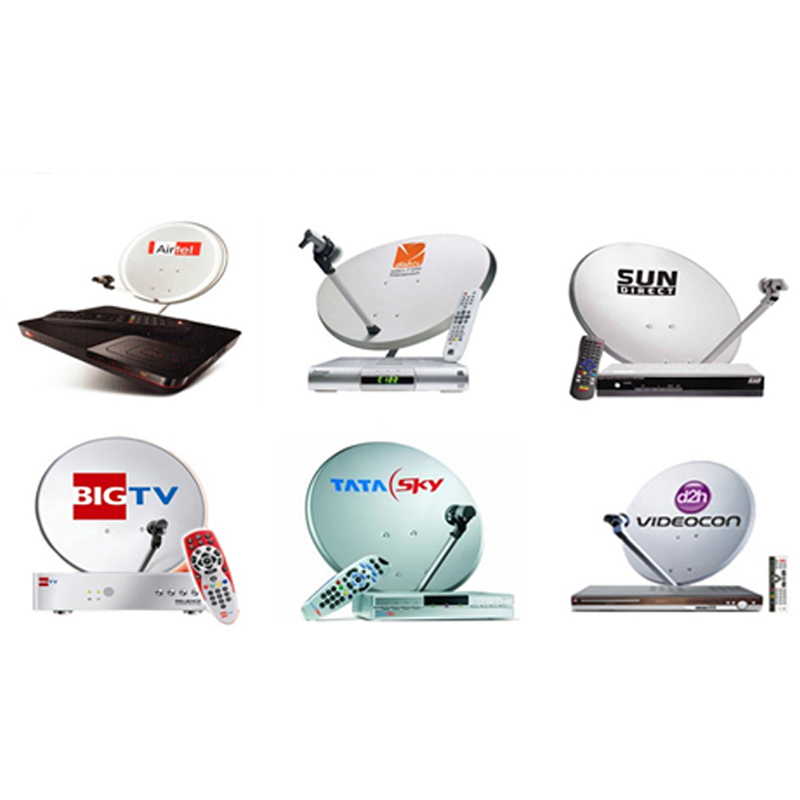
    The number of active DTH subscribers of Sun Direct was 56,98,544 as on 31 December 2015 and Sun direct had a market share of 10.18 percent; the number of active DTH subscribers of Tata Sky was 1,20,45,410 which had a market share of Tat Sky was 21.52 percent; the number of active DTH subscribers of Videocon D2H was 1,11,54,427 and its market share was 19.93 percent of the total number of active DTH subscribers in India. Please refer to Fig A below

    Assuming that the proportions remained approximately the same at the end of fiscal 2016, this means that the three operators in this paper represented 65.11 percent or almost two thirds of the Indian pay-DTH universe. This can further be substantiated by TRAI data below.

    As per TRAI data, the number of active DTH subscribers in the country increased by 25.5 lakh between Q3-16 and Q4-16. The combined subscription numbers reported in their financial reports by the three players in this paper have grown by 17.1 lakh or 67.02 percent of the total increase across the country. Hence it is safe to assume that the three players in this paper represent about two-thirds of the total pay-DTH subscribers in the country and it can be further assumed that their combined performances represent approximately the performance of the pay-DTH industry in India.

    Besides the six pay DTH players mentioned above is Doordarshan’s (DD) FreeDish DTH service – the largest DTH player by far in terms of subscribers with an estimated 15 million or 1.5 crore subscribers in 2015 as per the KPMG-FICCI Indian Media and Entertainment Industry Report 2016 (KPMG-FICCI M&E Report 2016) titled The Future: Now streaming. It must however be noted that an exact number for registered or active subscribers is not available since this is a free DTH service. Prasar Bharati’s chief executive officer Jawahar Sircar had said during an exclusive interview in June this year, “As the (FreeDish) antennas are available in the market (at a nominal one-time price ranging between Rs 3,000-4,000) and no monthly subscription is paid, it is difficult to know how many television households have FreeDish. This audit will become easier when we complete the process of encryption of FreeDish while keeping it free to air.

    Exact figures may be difficult in our case as even the Telecom Regulatory Authority of India admits there is a gap between the number of active and registered subscribers of private DTH operators. But it is understood (from feedback from market and sale of antennas) that there are around 15 million households hooked to FreeDish.

    In recent times, FreeDish has got some very good response from private TV channels…many of them, including the big names, want to hop onto FreeDish’s platform for wider reach of their products. We have plans to increase the number of FTA television channels on the platform so a consumer gets more choice.”

    Has the pay DTH industry truly gained from DAS, and more specifically DAS phase-3?

    DAS in the first three phases was to cover about 79 million (7.9 crore or 790 lakh) television households in India by 31 December 2015 as per the KPMG-FICCI M&E Report 2016. As per TRAI data, the number of registered DTH subscribers has grown 91.65 percent from 462.5 lakh as on 31 March 2012 to 886.4 lakh as on 31 March 2016. Active DTH subscribers have grown 57.4 percent from 371.9 lakh on 31 March 2014 to 585.3 lakh as on 31 March 2016. Complete rollout of DAS phase 3 had been delayed by litigation. The same can be expected for DAS phase 4.

    The KPMG-FICCI M&E Report 2016 projects that the number of television homes in the country will increase by 10 million or 1 crore in 2016 to 170 million or 17 crore homes. The break-up of this 17 crore television households is 41 million or 4.1 crore analogue cable; 55 million or 5.5 crore each for Digital cable and pay DTH and; 19 million or 1.9 crore Free DTH. Please refer to figure B for the projected break-up. The report projects total DTH subscriber base of 7.4 crore including Fre

    public://7878.jpg

    DAS phase 4 offers an even bigger opportunity – 81 million or 81.1 crore cable and satellite homes of which 52 million or 5.2 crore were digitised, leaving 39 million (3.9 crore) analogue cable homes as on 31 December 2015, the sunset date for DAS phase 3, as per the KPMG-FICCI M&E Report 2016. This is low hanging fruit for the DTH industry.

    The KPMG-FICCI M&E Report 2016 says that the number of pay DTH subscribers has increased from 34 million or 3.4 crore in 2012 to 44 million or 4.4 crore in 2015, and projects 55 million or 5.5 crore pay DTH subscribers in 2016. December 31, 2016 is the sunset date for DAS phase 4, but the KPMG-FICCI M&E Report 2016 expects the roll-out to be complete only in December 2017. Taking this date into account, the KPMG-FICCI M&E Report 2016 projects 179 million or 17.9 crore television subscribers, with the pay DTH subscription base expected to reach 74 million or 7.4 crore.The report says that FreeDish subscribers will increase from 19 million (1.9 crore) in 2016 to 20 million (2 crore) in 2017. Please refer to the radar type chart in Figure B above.

    A  Videocon d2h corporate presentation in March 2015 claimed that the active DTH subscriber market share was projected to grow from 32 percent in 2015 to 37 percent in 2019, with the active DTH revenue market share to grow from 41 percent to 47 percent during the same timeline.

    So how have the three players gained?

    Let us look at their financial performance and some of their operational matrices.

    Airtel Digital TV (Airtel DTH)

    Fig C1 below indicates the quarterly performance by Airtel DTH.

    public://554545454.jpg

    Let us look at Airtel DTH’s annual number comparison between FY-15 and FY-16. Revenue in year ended 31 March 2016 (FY-16) increased 17.8 per cent to Rs 2,917.8 crore as compared to Rs 2,475.9 crore in the previous year. Airtel’s DTH segment reported EBIT (Earnings before interest and tax) of Rs 184.3 crore (6.3 per cent operating margin) in FY-16 as compared to a negative EBIT of Rs 158.1 crore in FY-15.

    Annual subscription numbers have been mentioned above. Average revenue per user (ARPU) increased to Rs 229 ascompared to Rs 214 in the corresponding quarter of last year. Airtel DTH reported a monthly subscriber churn of 0.8 per cent in Q4-16  (quarter ended 31 March 2016) as compared to a churn of 1 per cent for the corresponding quarter of last year and a slightly lower 0.7 per cent for the immediate trailing quarter.

    DAS III has resulted in Airtel’s increasing the capex for its DTH segment for FY-16 by 40 per cent (Rs 313.8 crore) as compared to the previous year. The company’s capex spend in FY-16 was Rs 1,098 crore as compared to Rs 784.2 crore in FY-15. The company’s cumulative investments into Airtel DTH increased 20 per cent to Rs 6,490.6 crore in the current year as compared to Rs 5,410.9 crore in the previous year.

    Performance in Q1-17

    Airtel DTH added 4.24 lakh net subscribers for the first quarter ended 30 June 2016 (Q1-17) to bring its subscriber base to 121.9 lakh from 117.25 lakh in the previous quarter. Average revenue per user (ARPU) increased to Rs 233 from Rs 229 in the immediate trailing quarter. Airtel DTH reported a monthly subscriber churn of 0.8 percent in Q1-17, same as the churn in Q1-16 and Q4-16.

    Revenue from Airtel’s DTH segment in Q1-17 increased 22.2 per cent to Rs 836.9 crore as compared to Rs 684.8 crore in the corresponding quarter of the previous year.

    Dish TV

    Please refer to Figure C2 below for Dish TV’s quarterly performance

    FY-16 was the second consecutive year that Dish TV reported growth across important financial and operational parameters including operating revenues (TIO), profit after tax (PAT) and subscription numbers. Last fiscal and quarter (year and quarter ended 31 March, 2015, FY-15 and Q4-15), this Essel Group DTH operator turned the corner with a consolidated profit after tax (PAT) of Rs 3.14 crore and Rs 34.94 crore (margin 4.8 per cent) respectively. The company followed this up with improved numbers for the subsequent two quarters of FY-16, and rendered a fait accompli of sorts in the final quarter with the largest ever subscription numbers add in a quarter in Q4-16, as if to reiterate – Profits are here to stay!. Dish TV plays the value game, rather than the ‘exclusivity’ that most other pay DTH players worth reckoning play.

    Dish TV reported subscription revenue of Rs 2,827.5 crore in fiscal 2016. Operating revenue during the period increased to Rs 3,059.9 crore from Rs 2,687.9 crore in the previous year.

    Dish TV reported PAT of Rs. 692.4 crore in FY-16, including deferred tax expense of Rs. 436 crore. EBIDTA in FY-16 increased 39.8 percent to Rs 1,024.9 crore from Rs 733.1 crore in FY-15.

    ARPU in Q4-16 declined to Rs 174 from the Rs 179 reported in Q4-15, but increased from Rs 172 reported in Q3-16.

    Performance in Q1-17

    Dish TV reported addition of 4.02 lakh net subscribers for Q1-17. It closed the quarter with 149 lakh subscribers. Average revenue per user (ARPU) for Q1-17 remained the same year-over-year (y-o-y) and quarter-over-quarter (q-o-q) at Rs 174.

    Dish TV reported 6.7 percent higher y-o-y subscription revenue of Rs 728.2 crore for Q1-17, as compared to Rs 682.8 crore. Operating revenue in Q1-17 increased 5.7 percent y-o-y to Rs 778.6 crore from Rs 736.7 crore in the corresponding quarter of the previous year.

    Dish TV reported PAT of Rs. 50.9 crore in Q1-17, down 24.6 percent as compared to Rs 54.2 crore in Q1-16. EBIDTA in Q1-17 increased 12.2 percent to Rs 264.6 crore from Rs 235.7 crore in Q1-16.

    Videocon d2h

    Please refer to Fig C3 below for Videocon d2h’s quarterly performance.

    Revenue in FY-16 increased 22.2 percent to Rs 2,855.86 crore from Rs 2,337.71 crore in the previous year. Subscription and Activation revenue in FY-16 grew 26.4 percent to Rs 2,607 crore compared to Rs 2,063 crore in FY-15.

    Videocon d2h reported simple EBIDTA of Rs 789.52 crore (EBIDTA margin of 27.6 percent) for FY-16 which was 32.5 percent more than the Rs 595.64 crore (25.5 percent EBIDTA margin) in FY-15.

    The DTH major reported a lower loss in FY-16 at Rs 92.21 crore as compared to a loss of Rs 272.66 crore in FY-15.

    ARPU increased by Rs 11 from Rs 196 in the previous year to Rs 207 in FY-16. ARPU in Q4-16 increased by Rs 12 y-o-y from Rs 202 in the corresponding year ago quarter to Rs 214 in Q4-16. ARPU in Q4-16 increased quarter-over-quarter (q-o-q) by Rs 3 from Rs 211 in Q3-16.

    Incremental subscriber-churn in the current year reduced by 7 basis points to 0.73 percent as compared to 0.80 percent in FY-16. Incremental subscriber churn in Q4-16 increased 16 basis points to 0.58 percent year-over-year (y-o-y) from 0.42 percent but declined 15 basis points q-o-q from 0.73 percent.

    Performance in Q1-17

    Videocon d2h is the second listed Indian DTH player to report a profit after tax (PAT) in Q1-17, after the Essel group’s Dish TV that turned the numbers black last year. Videocon d2h reported PAT of Rs 2.7 crore for Q1-17. For the corresponding year ago quarter (Q1-16), the company had reported a loss of Rs 24.4 crore and for Q4-16, the reported loss was Rs 21.2 crore.

    The DTH major also reported 15.5 percent year-over-year (y-o-y) growth in net subscriber number growth at 122.9 lakh for Q1-17 as compared to 106.4 lakh and a 3.6 percent quarter-over-quarter (q-o-q) growth from118.6 lakh. Average revenue per user (ARPU) in Q1-17 increased to Rs 219 from Rs 205 in Q1-16 and from Rs 214 in Q4-16

    Adjusted EBIDTA grew 32.4 percent y-o-y in Q1-17 to Rs 251.9 crore (30.8 percent margin) from Rs 190.3 crore (28.7 percent margin) and grew 15 percent q-o-q from Rs 219.1 crore (28.4 percent margin). Videocon d2h reported that EBIDTA per subscriber had increased to Rs 70 in Q1-17 from Rs 61 in Q1-16 and from Rs 63 in Q4-16.

    Industry speak on Q1-17

    Dish TV managing director Jawahar Goel said, “Buoyed by digitization, notwithstanding the relative seasonal weakness in Q1-17, the industry collectively added around 15 percent higher subscribers compared to the same quarter last fiscal. DishTV maintained its lead in incremental subscriber additions during the quarter. Our strengtheneddistribution in DAS Phase III and IV areas along with the popularity of the Dish TV Insta Care – 4-Hour Service Assurance Campaign were instrumental in helping us maintain an edge overcompetition. Our regional and mass-market offerings continued to remain crowd-pullers in respective geographies.”

    Please refer to figures D1 and D2 below for quarterly ARPU and monthly subscriber churn

    Comments

    As seen from above, the combined total number of net subscriber adds in Q1-17 was 12.97 lakh. Though Dish TV is the largest player in terms of subscription base, both Airtel DTH and Videocon d2h have overtaken it in terms of revenue.Overall, the pay DTH industry is turning profitable as is obvious from the results.

    DAS III and IV are sunshine periods for the television carriage industry. Activation revenues have been adding to the top lines and bottom lines of most of the players. Have the players been able to optimise the opportunity that DAS has offered? Not fully!

    At present the focus of a majority of the players across the carriage industry is more investor oriented, not viewer oriented. This has to change. DTH has the potential to grow even more than the predictions of the industry pundits, provided they get their act together in coming out with packaging – as has Dish TV to a limited extent. India is a price sensitive market, offer the viewers what they want at a reasonable price and the sheer volumes will bring in more and more moolah.

    More important – can the operators truly compete with Jio with their current menu offerings? It is not only the telecom sector that has been disrupted. Television, as we know it from the carriage perspective has also been disrupted and may soon be a part of history. The way content is produced could change.

    Mukesh Ambani in his address to the shareowners early this month has promised a huge cache of media and entertainment with the Jio app that comes free, and content that will be free until 31 December 2016. Here is what he has said, “Jio offers a suite of applications that brings you the very best across the categories of media, entertainment, moneyand essential utilities.With the JioTV entertainment app, ‘Anytime is Prime-time’.You can watch more than 300 live TV channels including 40 HD channels with access to all of last week’s programmingat any point in time.The JioCinema app brings the cinema-theatre at your fingertips.Watch ad-free, HD movies from the largest library of 6,000 movies, more than 60,000 music videos and 1 lakh episodes of TV shows in 10 languages.The JioMusic app makes Ultra-HD music a reality, with a library of 10 million (1 crore)  songs in over 10 languages.”

    And what happens to profits once the activation fee component goes down, optimistically, though falsely,assuming that Jio will not affect the statusco?

    Notes:

    (1)The unit of currency in this report is the Indian rupee – Rs (also conventionally represented by INR). The Indian numbering system or the Vedic numbering system has been used to denote money values. The basic conversion to the international norm would be:
    (a) 100,00,000 = 100 lakh = 10,000,000 = 10 million = 1 crore.
    (b) 10,000 lakh = 100 crore = 1 arab = 1 billion.

    (2) As per data from a Dish TV investor presentation, Dish TV says that it is the largest player in the country with a market share of 26 percent. It says that Airtel has a market share of 20 percent and Videocon d2h of 16 percent as per estimates based on 30 June 2016. It maybe noted that in its investor presentation, Videocon d2h claims a subscriber market share of 21 percent as on 31 March 2016.

    (3) TRAI Reports:DTH has attained a registeredsubscriber base of around 88.64 million (including 58.53 million activesubscribers). As on March 2016, there are 6 pay DTH serviceproviders catering to this subscriber base. This is besides theviewership of the free DTH services of Doordarshan.

    (4) This paper covers only the three of the seven DTH service providers in India (as had the previous two papers) since the other four– Reliance Digital TV, Sun Direct (about 97 lakh subscribers as on March 31, 2015), TataSky and DD Free Dish are not listed directly on the bourses and their financial numbers are not available, unless the principals of these companies/segments chose to reveal them. The three players – Airtel DTH, Dish TV and Videocon d2h have already been covered in our earlier reports.

    (5) Some of the players mention their financial as well as subscription numbers in millions in their financial reports/investor presentations and other documents that they make available publically. The financial numbers have been converted to Rs crore  and subscription number to lakh to an approximation, andpercentages have been mentioned to the second decimal place approximation wherever required.

  • Pay TV-DTH gains: Airtel leads subs race as Jio could pose challenges

    Pay TV-DTH gains: Airtel leads subs race as Jio could pose challenges

    BENGALURU: Last quarter (Q3-16, quarter ended 31 December 2015), we at www.indiantelevision.com had said: Contrary to expectations that the sunset date of 31 December 31, 2015 (Q3-16 in financial terms in India) would rake in good numbers for the DTH industry for Q3-15, results declared by three of the seven players in the country did notshow much of a change. At that time, though Airtel Digital TV and Videocon d2h had both shown a small spike in subscriber additions between Q2-2016 and Q3-2016, overall taking the combined addition in subscription numbers by all the three, the change was just 3.59per cent. In the case of the third player-Dish TV, it witnessed the lowest growth over a five quarter period starting Q3-2015 until Q3-16 at 2.19 per cent.

    We’d said further that Chrome figures for January 2016 revealed that the DTH industry is a major beneficiary of DAS phase III. If that is the case, then DTH players should report even better numbers for Q4-16 and FY-16. Did they?And what will be the fate of the carriage industry once Jio has been rolled out completely across the country, along with low cost devices? Jio presents a huge disruption…. But more on that later. Lets look at the numbers for the DTH industry…

    Combined subscriber additions for the annual period ended 31 March 2016 (FY-16) vis-à-vis the previous year (FY-15)grew by 12.3 percent of the three pay-direct to home (pay-DTH) operators in India whose financial and operational data is available in the public domain.  This subscriber growth rate was however a little less than half that these entities had in FY-15 at 24.7 percent as compared to FY-14. As indicated above, the three operators in this paper in alphabetical order are Airtel’s Digital TV segment (Airtel DTH), the Essel group’s Dish TV Limited (Dish TV) and the Videocon group’s Saurav Dhoot led Videocon d2h.

    Among the three, Airtel DTH added more net subscribers in absolute numbers in FY-16 than in FY-15, Dish TV added approximately the same number of net subscribers in both FY-15 and FY-16, while Videocon d2h saw slightly lower absolute net subscribers increment in FY-16 as compared to FY-15. Airtel DTH added 55.6 percent more subscribers in FY-16 – 16.52 lakh to reach net subscriber base of 117.52 lakh as compared to 10.62 lakh in FY-15; Dish TV added 15 lakh subscribers in the current year as well as in the previous year; Dish TV’s subscriber base was 145 lakh in FY-16; Videocon d2h added 16.8 lakh subscribers in FY-16 to reach a subscriber base of 118.6 lakh as compared to 17.4 lakh subscriber additions in FY-15. The above numbers are based on the financial results/investor presentations reported by the three DTH entities. Figures C1, C2 and C3 below indicate the quarterly subscriber base of these three players from Q2-15 until Q1-17.

    Let us see where the three pay DTH players considered in this paper stand in the Indian DTH eco-system

    As per data obtained from a government website, the total number of active DTH subscribers in India was 5,59,81,376 as on 31 December 2015. The number of active DTH subscribers of Airtel was 1,13,43,424 with a market share of 20.26 percent of the total number of active DTH subscribers in the entire country;  the number of active DTH subscribers of Dish TV was 1,39,52,866 with a market share of 24.92 percent of the total number of active DTH subscribers in the entire country. Among all the pay DTH Operators in India, Dish TV had the largest number of DTH subscribers as on 31 December 2015 and was the market leader.

    The number of active DTH subscribers of Reliance was 17,86,705 as on 31 December 2015 and its market share was 3.19 percent of the total number of active DTH subscribers in the country. Among all the DTH Operators in India, Reliance had the smallest number of DTH subscribers.

    The number of active DTH subscribers of Sun Direct was 56,98,544 as on 31 December 2015 and Sun direct had a market share of 10.18 percent; the number of active DTH subscribers of Tata Sky was 1,20,45,410 which had a market share of Tat Sky was 21.52 percent; the number of active DTH subscribers of Videocon D2H was 1,11,54,427 and its market share was 19.93 percent of the total number of active DTH subscribers in India. Please refer to Fig A below

    Assuming that the proportions remained approximately the same at the end of fiscal 2016, this means that the three operators in this paper represented 65.11 percent or almost two thirds of the Indian pay-DTH universe. This can further be substantiated by TRAI data below.

    As per TRAI data, the number of active DTH subscribers in the country increased by 25.5 lakh between Q3-16 and Q4-16. The combined subscription numbers reported in their financial reports by the three players in this paper have grown by 17.1 lakh or 67.02 percent of the total increase across the country. Hence it is safe to assume that the three players in this paper represent about two-thirds of the total pay-DTH subscribers in the country and it can be further assumed that their combined performances represent approximately the performance of the pay-DTH industry in India.

    Besides the six pay DTH players mentioned above is Doordarshan’s (DD) FreeDish DTH service – the largest DTH player by far in terms of subscribers with an estimated 15 million or 1.5 crore subscribers in 2015 as per the KPMG-FICCI Indian Media and Entertainment Industry Report 2016 (KPMG-FICCI M&E Report 2016) titled The Future: Now streaming. It must however be noted that an exact number for registered or active subscribers is not available since this is a free DTH service. Prasar Bharati’s chief executive officer Jawahar Sircar had said during an exclusive interview in June this year, “As the (FreeDish) antennas are available in the market (at a nominal one-time price ranging between Rs 3,000-4,000) and no monthly subscription is paid, it is difficult to know how many television households have FreeDish. This audit will become easier when we complete the process of encryption of FreeDish while keeping it free to air.

    Exact figures may be difficult in our case as even the Telecom Regulatory Authority of India admits there is a gap between the number of active and registered subscribers of private DTH operators. But it is understood (from feedback from market and sale of antennas) that there are around 15 million households hooked to FreeDish.

    In recent times, FreeDish has got some very good response from private TV channels…many of them, including the big names, want to hop onto FreeDish’s platform for wider reach of their products. We have plans to increase the number of FTA television channels on the platform so a consumer gets more choice.”

    Has the pay DTH industry truly gained from DAS, and more specifically DAS phase-3?

    DAS in the first three phases was to cover about 79 million (7.9 crore or 790 lakh) television households in India by 31 December 2015 as per the KPMG-FICCI M&E Report 2016. As per TRAI data, the number of registered DTH subscribers has grown 91.65 percent from 462.5 lakh as on 31 March 2012 to 886.4 lakh as on 31 March 2016. Active DTH subscribers have grown 57.4 percent from 371.9 lakh on 31 March 2014 to 585.3 lakh as on 31 March 2016. Complete rollout of DAS phase 3 had been delayed by litigation. The same can be expected for DAS phase 4.

    The KPMG-FICCI M&E Report 2016 projects that the number of television homes in the country will increase by 10 million or 1 crore in 2016 to 170 million or 17 crore homes. The break-up of this 17 crore television households is 41 million or 4.1 crore analogue cable; 55 million or 5.5 crore each for Digital cable and pay DTH and; 19 million or 1.9 crore Free DTH. Please refer to figure B for the projected break-up. The report projects total DTH subscriber base of 7.4 crore including Fre

    public://7878.jpg

    DAS phase 4 offers an even bigger opportunity – 81 million or 81.1 crore cable and satellite homes of which 52 million or 5.2 crore were digitised, leaving 39 million (3.9 crore) analogue cable homes as on 31 December 2015, the sunset date for DAS phase 3, as per the KPMG-FICCI M&E Report 2016. This is low hanging fruit for the DTH industry.

    The KPMG-FICCI M&E Report 2016 says that the number of pay DTH subscribers has increased from 34 million or 3.4 crore in 2012 to 44 million or 4.4 crore in 2015, and projects 55 million or 5.5 crore pay DTH subscribers in 2016. December 31, 2016 is the sunset date for DAS phase 4, but the KPMG-FICCI M&E Report 2016 expects the roll-out to be complete only in December 2017. Taking this date into account, the KPMG-FICCI M&E Report 2016 projects 179 million or 17.9 crore television subscribers, with the pay DTH subscription base expected to reach 74 million or 7.4 crore.The report says that FreeDish subscribers will increase from 19 million (1.9 crore) in 2016 to 20 million (2 crore) in 2017. Please refer to the radar type chart in Figure B above.

    A  Videocon d2h corporate presentation in March 2015 claimed that the active DTH subscriber market share was projected to grow from 32 percent in 2015 to 37 percent in 2019, with the active DTH revenue market share to grow from 41 percent to 47 percent during the same timeline.

    So how have the three players gained?

    Let us look at their financial performance and some of their operational matrices.

    Airtel Digital TV (Airtel DTH)

    Fig C1 below indicates the quarterly performance by Airtel DTH.

    public://554545454.jpg

    Let us look at Airtel DTH’s annual number comparison between FY-15 and FY-16. Revenue in year ended 31 March 2016 (FY-16) increased 17.8 per cent to Rs 2,917.8 crore as compared to Rs 2,475.9 crore in the previous year. Airtel’s DTH segment reported EBIT (Earnings before interest and tax) of Rs 184.3 crore (6.3 per cent operating margin) in FY-16 as compared to a negative EBIT of Rs 158.1 crore in FY-15.

    Annual subscription numbers have been mentioned above. Average revenue per user (ARPU) increased to Rs 229 ascompared to Rs 214 in the corresponding quarter of last year. Airtel DTH reported a monthly subscriber churn of 0.8 per cent in Q4-16  (quarter ended 31 March 2016) as compared to a churn of 1 per cent for the corresponding quarter of last year and a slightly lower 0.7 per cent for the immediate trailing quarter.

    DAS III has resulted in Airtel’s increasing the capex for its DTH segment for FY-16 by 40 per cent (Rs 313.8 crore) as compared to the previous year. The company’s capex spend in FY-16 was Rs 1,098 crore as compared to Rs 784.2 crore in FY-15. The company’s cumulative investments into Airtel DTH increased 20 per cent to Rs 6,490.6 crore in the current year as compared to Rs 5,410.9 crore in the previous year.

    Performance in Q1-17

    Airtel DTH added 4.24 lakh net subscribers for the first quarter ended 30 June 2016 (Q1-17) to bring its subscriber base to 121.9 lakh from 117.25 lakh in the previous quarter. Average revenue per user (ARPU) increased to Rs 233 from Rs 229 in the immediate trailing quarter. Airtel DTH reported a monthly subscriber churn of 0.8 percent in Q1-17, same as the churn in Q1-16 and Q4-16.

    Revenue from Airtel’s DTH segment in Q1-17 increased 22.2 per cent to Rs 836.9 crore as compared to Rs 684.8 crore in the corresponding quarter of the previous year.

    Dish TV

    Please refer to Figure C2 below for Dish TV’s quarterly performance

    FY-16 was the second consecutive year that Dish TV reported growth across important financial and operational parameters including operating revenues (TIO), profit after tax (PAT) and subscription numbers. Last fiscal and quarter (year and quarter ended 31 March, 2015, FY-15 and Q4-15), this Essel Group DTH operator turned the corner with a consolidated profit after tax (PAT) of Rs 3.14 crore and Rs 34.94 crore (margin 4.8 per cent) respectively. The company followed this up with improved numbers for the subsequent two quarters of FY-16, and rendered a fait accompli of sorts in the final quarter with the largest ever subscription numbers add in a quarter in Q4-16, as if to reiterate – Profits are here to stay!. Dish TV plays the value game, rather than the ‘exclusivity’ that most other pay DTH players worth reckoning play.

    Dish TV reported subscription revenue of Rs 2,827.5 crore in fiscal 2016. Operating revenue during the period increased to Rs 3,059.9 crore from Rs 2,687.9 crore in the previous year.

    Dish TV reported PAT of Rs. 692.4 crore in FY-16, including deferred tax expense of Rs. 436 crore. EBIDTA in FY-16 increased 39.8 percent to Rs 1,024.9 crore from Rs 733.1 crore in FY-15.

    ARPU in Q4-16 declined to Rs 174 from the Rs 179 reported in Q4-15, but increased from Rs 172 reported in Q3-16.

    Performance in Q1-17

    Dish TV reported addition of 4.02 lakh net subscribers for Q1-17. It closed the quarter with 149 lakh subscribers. Average revenue per user (ARPU) for Q1-17 remained the same year-over-year (y-o-y) and quarter-over-quarter (q-o-q) at Rs 174.

    Dish TV reported 6.7 percent higher y-o-y subscription revenue of Rs 728.2 crore for Q1-17, as compared to Rs 682.8 crore. Operating revenue in Q1-17 increased 5.7 percent y-o-y to Rs 778.6 crore from Rs 736.7 crore in the corresponding quarter of the previous year.

    Dish TV reported PAT of Rs. 50.9 crore in Q1-17, down 24.6 percent as compared to Rs 54.2 crore in Q1-16. EBIDTA in Q1-17 increased 12.2 percent to Rs 264.6 crore from Rs 235.7 crore in Q1-16.

    Videocon d2h

    Please refer to Fig C3 below for Videocon d2h’s quarterly performance.

    Revenue in FY-16 increased 22.2 percent to Rs 2,855.86 crore from Rs 2,337.71 crore in the previous year. Subscription and Activation revenue in FY-16 grew 26.4 percent to Rs 2,607 crore compared to Rs 2,063 crore in FY-15.

    Videocon d2h reported simple EBIDTA of Rs 789.52 crore (EBIDTA margin of 27.6 percent) for FY-16 which was 32.5 percent more than the Rs 595.64 crore (25.5 percent EBIDTA margin) in FY-15.

    The DTH major reported a lower loss in FY-16 at Rs 92.21 crore as compared to a loss of Rs 272.66 crore in FY-15.

    ARPU increased by Rs 11 from Rs 196 in the previous year to Rs 207 in FY-16. ARPU in Q4-16 increased by Rs 12 y-o-y from Rs 202 in the corresponding year ago quarter to Rs 214 in Q4-16. ARPU in Q4-16 increased quarter-over-quarter (q-o-q) by Rs 3 from Rs 211 in Q3-16.

    Incremental subscriber-churn in the current year reduced by 7 basis points to 0.73 percent as compared to 0.80 percent in FY-16. Incremental subscriber churn in Q4-16 increased 16 basis points to 0.58 percent year-over-year (y-o-y) from 0.42 percent but declined 15 basis points q-o-q from 0.73 percent.

    Performance in Q1-17

    Videocon d2h is the second listed Indian DTH player to report a profit after tax (PAT) in Q1-17, after the Essel group’s Dish TV that turned the numbers black last year. Videocon d2h reported PAT of Rs 2.7 crore for Q1-17. For the corresponding year ago quarter (Q1-16), the company had reported a loss of Rs 24.4 crore and for Q4-16, the reported loss was Rs 21.2 crore.

    The DTH major also reported 15.5 percent year-over-year (y-o-y) growth in net subscriber number growth at 122.9 lakh for Q1-17 as compared to 106.4 lakh and a 3.6 percent quarter-over-quarter (q-o-q) growth from118.6 lakh. Average revenue per user (ARPU) in Q1-17 increased to Rs 219 from Rs 205 in Q1-16 and from Rs 214 in Q4-16

    Adjusted EBIDTA grew 32.4 percent y-o-y in Q1-17 to Rs 251.9 crore (30.8 percent margin) from Rs 190.3 crore (28.7 percent margin) and grew 15 percent q-o-q from Rs 219.1 crore (28.4 percent margin). Videocon d2h reported that EBIDTA per subscriber had increased to Rs 70 in Q1-17 from Rs 61 in Q1-16 and from Rs 63 in Q4-16.

    Industry speak on Q1-17

    Dish TV managing director Jawahar Goel said, “Buoyed by digitization, notwithstanding the relative seasonal weakness in Q1-17, the industry collectively added around 15 percent higher subscribers compared to the same quarter last fiscal. DishTV maintained its lead in incremental subscriber additions during the quarter. Our strengtheneddistribution in DAS Phase III and IV areas along with the popularity of the Dish TV Insta Care – 4-Hour Service Assurance Campaign were instrumental in helping us maintain an edge overcompetition. Our regional and mass-market offerings continued to remain crowd-pullers in respective geographies.”

    Please refer to figures D1 and D2 below for quarterly ARPU and monthly subscriber churn

    Comments

    As seen from above, the combined total number of net subscriber adds in Q1-17 was 12.97 lakh. Though Dish TV is the largest player in terms of subscription base, both Airtel DTH and Videocon d2h have overtaken it in terms of revenue.Overall, the pay DTH industry is turning profitable as is obvious from the results.

    DAS III and IV are sunshine periods for the television carriage industry. Activation revenues have been adding to the top lines and bottom lines of most of the players. Have the players been able to optimise the opportunity that DAS has offered? Not fully!

    At present the focus of a majority of the players across the carriage industry is more investor oriented, not viewer oriented. This has to change. DTH has the potential to grow even more than the predictions of the industry pundits, provided they get their act together in coming out with packaging – as has Dish TV to a limited extent. India is a price sensitive market, offer the viewers what they want at a reasonable price and the sheer volumes will bring in more and more moolah.

    More important – can the operators truly compete with Jio with their current menu offerings? It is not only the telecom sector that has been disrupted. Television, as we know it from the carriage perspective has also been disrupted and may soon be a part of history. The way content is produced could change.

    Mukesh Ambani in his address to the shareowners early this month has promised a huge cache of media and entertainment with the Jio app that comes free, and content that will be free until 31 December 2016. Here is what he has said, “Jio offers a suite of applications that brings you the very best across the categories of media, entertainment, moneyand essential utilities.With the JioTV entertainment app, ‘Anytime is Prime-time’.You can watch more than 300 live TV channels including 40 HD channels with access to all of last week’s programmingat any point in time.The JioCinema app brings the cinema-theatre at your fingertips.Watch ad-free, HD movies from the largest library of 6,000 movies, more than 60,000 music videos and 1 lakh episodes of TV shows in 10 languages.The JioMusic app makes Ultra-HD music a reality, with a library of 10 million (1 crore)  songs in over 10 languages.”

    And what happens to profits once the activation fee component goes down, optimistically, though falsely,assuming that Jio will not affect the statusco?

    Notes:

    (1)The unit of currency in this report is the Indian rupee – Rs (also conventionally represented by INR). The Indian numbering system or the Vedic numbering system has been used to denote money values. The basic conversion to the international norm would be:
    (a) 100,00,000 = 100 lakh = 10,000,000 = 10 million = 1 crore.
    (b) 10,000 lakh = 100 crore = 1 arab = 1 billion.

    (2) As per data from a Dish TV investor presentation, Dish TV says that it is the largest player in the country with a market share of 26 percent. It says that Airtel has a market share of 20 percent and Videocon d2h of 16 percent as per estimates based on 30 June 2016. It maybe noted that in its investor presentation, Videocon d2h claims a subscriber market share of 21 percent as on 31 March 2016.

    (3) TRAI Reports:DTH has attained a registeredsubscriber base of around 88.64 million (including 58.53 million activesubscribers). As on March 2016, there are 6 pay DTH serviceproviders catering to this subscriber base. This is besides theviewership of the free DTH services of Doordarshan.

    (4) This paper covers only the three of the seven DTH service providers in India (as had the previous two papers) since the other four– Reliance Digital TV, Sun Direct (about 97 lakh subscribers as on March 31, 2015), TataSky and DD Free Dish are not listed directly on the bourses and their financial numbers are not available, unless the principals of these companies/segments chose to reveal them. The three players – Airtel DTH, Dish TV and Videocon d2h have already been covered in our earlier reports.

    (5) Some of the players mention their financial as well as subscription numbers in millions in their financial reports/investor presentations and other documents that they make available publically. The financial numbers have been converted to Rs crore  and subscription number to lakh to an approximation, andpercentages have been mentioned to the second decimal place approximation wherever required.

  • Siti & DishTV opt for Conax conditional access

    Siti & DishTV opt for Conax conditional access

    MUMBAI: The Essel group has been using Conax’s tech for sometime now for its Siti Network (earlier known as Siti Cable). Now the group has extended that partnership for another product for both Siti Network and DTH operator Dish TV India. This time it is for the cardless set top boxes that the two are slated to roll out.

    Based on the flagship Conax ContegoTM security hub, the Conax Cardless conditional access (CA) technology will be a key and essential security component integrated in the chipsets, which will enable use of multiple layers of content protection in the new Dish TV India and SITI Networks cardless STBs.

    Conax Cardless technology employs a unique combination of hardware security and software security providing a hardware root of trust for the best level of protection. The secure software is executed within a purpose-built hardware protected environment (Secure Execution Environment) within the chipset.

    The Conax Cardless technology provides seamless co-existence with legacy smart card population, all based on a single, unified back-end, meaning in any operation only one back-end is necessary
    “With the growing competitive landscape in the operator segment, and the need for access to costly premium content and at the same time keeping operational costs low, it is essential to employ flexible solutions that also offer a high level of security as we look to continue to grow our business”, says Dish TV India managing director Jawahar Goel. “Conax has been a long term partner and we believe their strong security solutions will continue to provide an important layer of security to our growing pay-TV business already servicing over 13 million subscribers.”

    “As we continue to advance our footprint in the Indian cable TV market and venture into digitization in phase 3 and phase 4 markets it is essential that new and cost-effective security solutions are available to us. SITI Networks is pleased to further its existing relationship with Conax and implement the Conax cardless technology going forward in our markets,” says Siti Networks CEO & executive director V.D. Wadhwa.

    “Conax’ long term relationship and partnership with the Essel group reaches a new milestone today as we look to further strengthen both the Dish TV and SITI Networks platforms and help expand its customer base with a new high security, flexible and revolutionary solution,” says Conax president & CEO Morten Solbakken. “With this unique concept they are well positioned to capture additional new market share and protect the premium content demanded by savvy consumers. We are honored to work together with Essel Group in the next step of their journey.”

  • Siti & DishTV opt for Conax conditional access

    Siti & DishTV opt for Conax conditional access

    MUMBAI: The Essel group has been using Conax’s tech for sometime now for its Siti Network (earlier known as Siti Cable). Now the group has extended that partnership for another product for both Siti Network and DTH operator Dish TV India. This time it is for the cardless set top boxes that the two are slated to roll out.

    Based on the flagship Conax ContegoTM security hub, the Conax Cardless conditional access (CA) technology will be a key and essential security component integrated in the chipsets, which will enable use of multiple layers of content protection in the new Dish TV India and SITI Networks cardless STBs.

    Conax Cardless technology employs a unique combination of hardware security and software security providing a hardware root of trust for the best level of protection. The secure software is executed within a purpose-built hardware protected environment (Secure Execution Environment) within the chipset.

    The Conax Cardless technology provides seamless co-existence with legacy smart card population, all based on a single, unified back-end, meaning in any operation only one back-end is necessary
    “With the growing competitive landscape in the operator segment, and the need for access to costly premium content and at the same time keeping operational costs low, it is essential to employ flexible solutions that also offer a high level of security as we look to continue to grow our business”, says Dish TV India managing director Jawahar Goel. “Conax has been a long term partner and we believe their strong security solutions will continue to provide an important layer of security to our growing pay-TV business already servicing over 13 million subscribers.”

    “As we continue to advance our footprint in the Indian cable TV market and venture into digitization in phase 3 and phase 4 markets it is essential that new and cost-effective security solutions are available to us. SITI Networks is pleased to further its existing relationship with Conax and implement the Conax cardless technology going forward in our markets,” says Siti Networks CEO & executive director V.D. Wadhwa.

    “Conax’ long term relationship and partnership with the Essel group reaches a new milestone today as we look to further strengthen both the Dish TV and SITI Networks platforms and help expand its customer base with a new high security, flexible and revolutionary solution,” says Conax president & CEO Morten Solbakken. “With this unique concept they are well positioned to capture additional new market share and protect the premium content demanded by savvy consumers. We are honored to work together with Essel Group in the next step of their journey.”

  • Dish TV to introduce card-less set top boxes

    Dish TV to introduce card-less set top boxes

    MUMBAI: Dish TV India is looking at moving away from set top boxes requiring smart cards for subscribers to its satellite pay TV service. This is likely to take place over the next three or four months.

    Last weekend, India’s largest DTH provider announced that it had selected Rambus’ Cryptomedia security platform for use in its pay TV satellite system. The platform, which includes a hardware root-of-trust embedded in the set-top box chipset, ensures secure distribution of premium content for cable and satellite operators while eliminating the need for a smart card and enhancing usability of the set-top box.

    “As we look to grow our customer base from the current 13 million subscribers, the demand for cost-effective and robust content protection solutions becomes increasingly important for consumers seeking premium content,” said Dish TV India managing director Jawahar Goel. “By leveraging the embedded CryptoMedia core, we no longer need a smart card to provide secure access to premium content, significantly reducing the cost and improving the security of the set-top box.”

    The CryptoMedia Content Protection Core, developed by Rambus Cryptography Research, is one of several new security elements to be integrated in Dish TV India’s latest set-top boxes. Together with the CryptoMedia operator services, the solution provides a flexible security foundation that allows Dish TV India to easily update and reconfigure software and hardware security throughout the lifecycle of the set-top box. Dish TV India will launch the new platform in broad commercial operation later this year.

    “By using the CryptoMedia Content Protection Core, Dish TV India recognizes the value of enabling another level of protection in the set-top box chipset alongside security elements provided by CAS vendors,” said Martin Scott, senior vice president and general manager of the Security Division at Rambus. “Our CryptoMedia Security Platform provides Dish TV India with extra protection for the delivery of content, utilizing our expertise in both embedded security and ecosystem enablement.”

    Formerly part of the CryptoFirewall family, the CryptoMedia Content Protection Core is designed to provide strong security and superior system design flexibility for premium content distribution. The solution minimizes the risk of security failure and helps simplify product development. The core is available in a broad range of set-top box and smart TV chipsets and is compatible with the leading CAS and DRM systems to prevent unauthorized access to content and services, including features like pay-per-view and service-tier upgrades.