Tag: Jawahar Goel

  • 2017’s Top India TV industry leaders – Part I

    2017’s Top India TV industry leaders – Part I

    MUMBAI: The year 2017 threw up myriad conundrums and dilemmas for the men and women who are the showrunners of India’s media and entertainment (M&E) sector, which is expected to grow at a compound annual growth rate (CAGR) of 13.9 per cent, to reach USD 37.55 billion by 2021 from USD 19.59 billion in 2016, outshining the global average of 4.2 per cent.

    It was a rocky year, one during which everyone’s mettle was tested. First, there were the aftereffects of demonetisation. If that wasn’t enough, the Goods and Services Tax was unleashed in the second half of 2017. This sent everyone into a tizzy. Business targets went awry as executives grappled with the changes they had to deal with. Net results: industry growth numbers dipped. Despite this, the resilience of the industry and media leaders was never in question.

    Like in the past, we decided to list down—not in any particular order—the top 20 senior leaders from the television industry who, we believe, made noteworthy moves in 2017.  Of course almost every professional in the business deserves to be lauded in these rapidly mind-numbing-confusing-as-hell changing times—for even just hanging in there.  Forget about doing well. However, a list has to be selective and we took upon ourselves to do so. We hope you will appreciate our initiative. Read on for the first installment in our year-ender series featuring six of India’s top TV industry leaders and their achievements in 2017.

    public://Mukesh-Ambani1.jpg

    Mukesh D Ambani

    Disruption. That’s what the D in his full name stands for, apart from his entrepreneurial father’s name Dhirubhai. And clearly that’s what the chairman of Reliance Industries did in 2017. He shook old established players in the telecom sector by giving away wireless data access for free through Reliance Jio–a process he started just as 2016 was ending–quickly adding more than 100 million subscribers.

    The old guard yelped, blocked calls to their networks, but he plodded on through the year, fought them out in courts, and had his way. In the process, he forced them to rework their business plans and models.

    The entry of Jio has forever changed the way the telecom industry prices services for customers. The cheap data has also changed the way Indian viewers are consuming their video content.  Probably, forever.

    Since the launch of Jio more than 200 crore hours of video and around 10 GB data per capita per user per month are being consumed every month by just Jio subscribers. The number for the 375 odd million internet users will be much higher than that. Apart from wireless delivery of video, Ambani also has plans for distribution by fibre to the home (FTTH). If leaked pricing plans are to be believed, he is likely to totally upset the economics of the cable TV ecosystem, too.

     Jio has also invested in content companies such as Alt Balaji, partnered with Hotstar, and appointed Siddharth Roy Kapur Films to curate content for its VOD services. And Ambani already owns close to 38 TV channels under the Network18 group, and has a joint venture with Viacom that gives it a clutch of channels amongst which figures the leading Hindi GEC Colors and other entertainment channels in many languages. Ambani has more disruption plans up his sleeves. At the Viacom18 tenth anniversary celebrations in Mumbai he said he has not paid attention to the video content business under that group company. But he added that the teams there were going to see a greater involvement from his side. That should give a lot many in the TV business sleepless nights.

    public://Uday_Shankar.jpg

    Uday Shankar

    This journo turned media CEO clearly stands head and shoulders above almost every TV and media industry executive in the country. Over the years, his bold, brazen and, at times, out of the box moves have seen what was once a smallish TV network expand into the leader in the media and entertainment landscape—of course, the foundation had been laid some his predecessors and the promoters, the Murdoch family, gave ample support to this ‘jewel’ in the crown of the parent company that’s now known as 21st Century Fox and is seeking regulatory approvals in the US to merge with Disney. 2017 was no different for Uday.

    The year saw Uday getting appointed as the Asia head of Fox – of which Star India is an offshoot. But before that he betted big by coughing up USD 2.55 billion on sewing up the all-media rights for the world’s top cricket property – the Indian Premier League. Many have scoffed at the audacious price he has been willing to pay for that property; something which they did when Paul Aileo and Peter Chernin picked him to run Star India around a decade ago after Peter Mukerjea’s departure.

    But Uday proved the nay-sayers wrong in every way.  He is likely to do it again. And again. Under Uday’s leadership, the India business has firmly established itself as a world-class asset with durable businesses across entertainment, sports, satellite distribution and OTT. Now he has set his eyes to do the same with Fox Asia.

    public://Jawahar_Goel.jpg

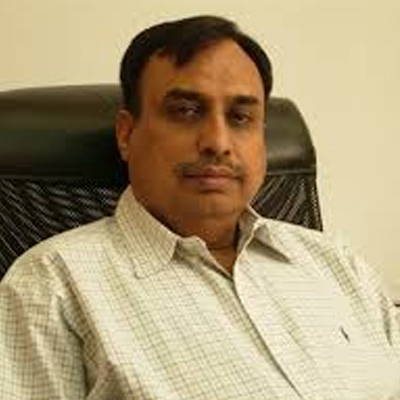
     Jawahar Goel

    The third of the four Goel brothers who nourished Essel Group (Zee and Dish TV’s parent), along with the eldest sibling Subhash Chandra, Jawahar Goel, or JG as he’s popularly known as in the industry, has always been a street fighter—and a smart one at that. Historic boardroom battles in New Delhi’s Lawrence Road-based Essel House in the 1990s, notwithstanding (Zee had three JVs with Rupert Murdoch’s Star TV then), JG is regarded as a go-to-man in the industry by most people because of his understanding of the complexities and nuances of the various segments of the media industry. A tech-savvy person, his tablet is the holder of many secrets and strategies.

    2017 saw him getting into the limelight if, for a bit, in stops and starts. In late 2016, he announced what seemed like a mother of a merger with rival Videocon d2h–the process of regulatory clearances for the same took up most of 2017. Everyone expected the going to be smooth and the final clearance came from the ministry of information and broadcasting at close to the end of the year. And then came the announcement in the last week of December 2017 that the merger was being delayed because of technical glitches. And those glitches became clear in early 2018: JG had instructed his investment bankers and lawyers to relook the deal in the light of the fact that the Videocon group was defaulting on loans and whether any action by the government or financial institutions would have an impact on the valuation of Videocon d2h. The market has interpreted this to mean that JG is back at his best: he is striking a further hard bargain or that he has decided to not do it all.

    JG also set the cat among the pigeons in the year by alleging in letters to the TRAI, IBF and the MIB that if the rights of the IPL were awarded to Star India by the BCCI it would tantamount to a monopoly. Nobody heeded him and the rights still went to Star India. That still did not stop JG: he then appealed to the courts that Star’s pay TV service Life OK should not be allowed to go FTA as Star Bharat. Once again, the courts did not agree with him.

    2018 will be an interesting period for him. He will have to come clean on whether Dish TV is going ahead with its merger with Videocon d2h or not.  And if not then what is the course, he and his CEO—a top notch professional who ran Hero Honda—Anil Dua are going to do with the firm going forward. It’s over to the man.

    public://Arnab-goswami2.jpg

    Arnab Goswami

    You can hate him, you can love him, but you just can’t ignore him—no matter how one tries doing the last. Republic TV—Arnab’s new baby—before its debut whipped up a political storm with BJP politician Subramaniam Swamy questioning use of the word `republic’ for a commercial venture and his former employers Times TV Network dragging him to court over who owned the copyright over the phrase ‘the nation wants to know.’

    But Arnab loves a slugfest; he got into a public brawl with Times TV on ratings, distribution practices with the latter taking him to court. For a moment it looked like the News Broadcasters Association and even the ratings body had got polarized with those for and against Republic or those for Times TV. So much so that Arnab called it names. But finally sense prevailed as the dust settled and Republic took up membership of the association.

    Republic TV continued to be a hot topic of discussion throughout 2017 with its line of editorial stand and shows, which some critics dubbed as absolutely partisan and non-journalistic. However, despite widespread criticisms Republic TV not only managed to lead the ratings game amongst the TV news channels, but also succeeded in dividing the news fraternity at one time over audience measurement numbers.

    That it continues to lead a life on the edge of ethics and non-ethics — and thrive — speaks volume of the Arnab charm and his brand of opinionated journalism. With Republic TV expanding into VR programming and also spreading wings outside Indian shores ( it debuted in the Middle East last year), 2018 would be an interesting period of evolution of this news venture backed by some of the staunchest supporters of  PM Modi and his government.

    public://Smriti_Irani.jpg

    Smriti Irani

    For many years, Smriti Irani along with Ekta Kapoor and Star India contributed to the rise and rise of Indian television thanks to the hugely popular Kyuunki Saas Ki Kabhi Bahu Thi, a series in which Smriti played the role of a dutiful Indian daughter in law, who had sanskaar yet was willing to stand up for herself when she was wronged. 

    Now, 17 years later, Smriti sits over the entire broadcast sector as India’s TV content regulator as  the minister of information and broadcasting, a position none of the executives or professionals in Indian television even envisaged she would one day hold.

    Smriti acted quickly following her appointment: she put a halt to the process of e-auctions of DD’s free-to-air direct-to-home platform DD FreeDish.  She even stopped the privatisation of time slots on national broadcaster DD National and even said not yet to two productions (one by Gajendra Singh and the other by Balaji Telefilms), which had got the go ahead. That did not augur well for at least Singh as it allegedly caused him grievous losses.

    Then, under her watch, her ministry has been demanding that the world’s most valued cricket league the IPL is of national import and that Star India needs to share its feed with pubcaster DD, something which the Fox group company sees as not fair. Additionally, the ministry has also raised the fees for live uplinking—a move which many see as targeted at making things dearer for Star India as it cover test cricket in six languages in 2018.

    Smriti also left her stamp on this year’s IFFI, which was probably the most glamorous in its history with A-list Bollywood stars winging it to Goa. Her ministry lifted the bar for the festival in terms of scale and quality.

    She also clamped down on steamy condom commercials, which were flooding channels on TV channels during the day. Broadcasters were ordered to telecast such ads only between 10 pm and 6 am.

    public://Shashi Shekhar Vempati.jpg

    Shashi Shekhar Vempati

    Shashi Shekhar Vempati has quite a few creds to his name. One of them being that he is youngest executive to be the CEO of pubcaster Prasar Bharati and the other being that he is the first private sector manager called on to run the behemoth. And 2017 put all his managerial skill sets to the test.

    When he joined, there were plans already in place to grow DD Free Dish, to study if there was opportunity in the kids’ space for it and check out if a gasping DD National could be given fresh oxygen and survive the hectic competition in general entertainment television.

    Shashi slammed the brakes on all growth plans, heeding to the orders of the powers that be (read his new I&B boss Smriti Irani). Under his watch, the e-auctions of DD Free Dish, the selling of slots to private producers were called off. He also told DD director general Supriya Sahu to dive deeper into DD Kids and not rush into it. And he spent a large part of the year studying what DD was all about and what he could do and not do at the organisation. 

    This apart, Shashi has been focusing his energy on two fronts: one on sports and the second on DD’s News outreach and ensuring that the pubcaster relays the right messaging of a nation, which is being watched by the world.  India is predicted to become a global power— one of the most important consuming countries globally in the not, too, distant future.

    Most people saw the Supreme Court’s endorsement of the Delhi High Court verdict, which disallowed Doordarshan or DD from sharing the live feed of cricket matches of ESPN and Star India with cable operators as a setback. But not the new kid on the block; Shashi saw it as an opportunity.

    During an interview with www.indiantelevision.com, Vempati said that the decision forced away complacency at the pubcaster where earlier many changes and additions were either being implemented either too slowly or not at all. Prasar Bharati now had a reason to make DD Sports a go to destination for viewers and would help in promoting DD Free Dish and DD terrestrial to larger audiences across many more cities than the 19 in which DD’s terrestrial signals are available, and to switch DD Free Dish to MPEG-4.

    Shashi said that the verdict has created an avenue for making DD Sports the place for cricket. Earlier, cricket and other sports were being aired on DD National. Now they would be aired on DD Sports. The court’s verdicts’ would prevent cable operators from pushing their own ads while blanking out DD National signals during matches. In future, through DD Sports, there would be a separate feed for cricket and there would be no need to blank out an important channel like DD National.

     Shashi will be watched through the year in 2018. He has plans to harness new technologies such as in-built digital tuners in some television models, DVB through dongles and mobiles and plugging into hotspots that are DVB ready. He feels that DTT is a new viewership base and is a new way for advertisers to connect with viewers.

  • MIB clears path for Dish TV Videocon

    MIB clears path for Dish TV Videocon

    MUMBAI: Even as a new global media powerhouse was created in the US yesterday with Disney’s buyout of Fox’s entertainment assets for $52.4 billion, India’s ministry of information & broadcasting (MIB) has cleared the decks for Dish TV and Videocon d2h paving the pathway for the creation of a mammoth DTH company.

    The companies had received the green signal from the Mumbai division of the national company law tribunal some months ago after which the ministry’s approval was pending. Dish TV and Videocon d2h reported separate revenue and EBITDA numbers which at a pro-forma level add up to Rs 60,862 million and Rs 19,909 million for FY17. Following the amalgamation, the combined entity will be renamed as Dish TV Videocon Limited.  

    As on 30 September 2017, the duo together serve more than 29 million customers.

    Dish TV CMD Jawahar Goel says, ““It has been a long journey since the announcement of the agreement between the two companies a year back. We would like to thank the ministry of information and broadcasting, the national company law tribunal, the competition commission of India, the securities and exchange board of India, the stock exchanges and all other stakeholders for showing their trust in us. I would also like to express our gratitude to our shareholders for standing by us through the transaction and believing in us to take the combined entity to the next level going forward.”

    Dish TV group CEO Anil Dua says, “Together, Dish TV and Videocon d2h are going to write history as we embark on this journey of delighting our 29 million and growing customer base. It is an exciting way ahead as we get this opportunity to leverage the individual strengths of the two organisations. I feel reassured looking at the formidable combination of these two talented teams that are now going to be working together towards a shared vision and common goals.”

    Dish TV Videocon is expected to provide better synergies and growth opportunities through enhanced after-sales, distribution and technology capabilities. Aon, Deloitte and PwC have been roped in to help it with project management for seamless integration of core functions, processes and technology infrastructure.

    It has been a year-long journey for Dish and Videocon since they announced the intent to merge last November. The scheme will take effect in the coming weeks.

    For the quarter ended 30 September 2017, Videocon d2h saw PAT of Rs 168 million and an addition of 0.21 million subscribers, taking its total to 13.25 million. On the other hand, Dish TV’s PAT for the same quarter was Rs 689.6 million while subscribers increased by 0.188 million to hit 15.9 million.

    The new year is expected to be a good one for the dynamic duo. And they have every reason to celebrate.

    Also Read:  Dish TV reports improved operating profits for second quarter

    Videocon d2h reports another profitable quarter

    Dish TV–D2H merger gets NCLT approval

  • Dish TV reports improved operating profits for second quarter

    Dish TV reports improved operating profits for second quarter

    BENGALURU: Hit by a double whammy–that of demonetisation and the implementation of the new goods and services tax (GST)–Indian media and entertainment (M&E) companies have been struggling to attain and/or maintain black in their financials. Direct to home or DTH was one of the components of the M&E industry that had slowly started reporting profits – operating or plain profits after tax. The Essel group’s DTH services company Dish TV India Ltd (DishTV) was one of the first companies from the Indian carriage industry that had started churning out profits until the aforementioned double whammy. Subscription collections were suddenly hit because people just didn’t have enough legal currency. Average revenue per user (ARPU) fell – last year in the quarter before demonetization, the company had reported ARPU of Rs 162. For the quarter ended 30 September 2017 (Q2-18, quarter under review), ARPU was Rs 149. In the immediate trailing quarter (Q1-18), ARPU was slightly lower at Rs 148.

    Over the last few quarters post demonetisation, Dish TV’s net profits were in the red. However, during these quarters, operating profits (EBIDTA) were positive and that seems to have improved for the quarter under review as compared to the immediate trailing quarter (q-o-q, Q1-18). Year-over-year however, Dish TV has reported a net loss and lower operating profit for Q2-18 as compared to net profit and EBIDTA numbers of the corresponding year ago.

    Dish TV reported 7.4 percent higher q-o-q EBIDTA for Q2-18 at Rs 2,160.8 million (28.9 percent margin – on operating revenue) as compared to Rs 2012.0 million (27.2 percent margin) for Q1-18. EBIDTA for Q2-17 was Rs 2,656.8 million (34.1 percent margin). The company’s net loss however widened q-o-q to Rs 178.7 million during the quarter under review as compared to a net loss of Rs 135.1 million in Q1-18 and a net profit after tax of Rs 689.6 million (8.8 percent margin) for Q2-17.

    The silver lining for the company has been its growing subscriber base, and this despite lower ARPU has resulted in 1.3 percent q-o-q increase of operating revenue to Rs 7,585.80 million for Q2-18 as compared to Rs 7,388.8 in Q1-18. However, y-o-y operating revenue during the quarter under review was 3.9 percent lower as compared the Rs 7,792.8 million for Q2-17.

    The company’s subscriber base has increased by 0.188 million subscribers during the quarter under review and it has reported a subscriber base of 15.9 million. The company had closed the corresponding year ago quarter with a subscriber base of 15.1 million – it had added 0.259 million subscribers in Q2-17. Consequently, Dish TV’s subscription revenue grew 1.9 percent q-o-q during the quarter under review to Rs 7,049 million. Year-on-year, subscription revenues were 3.3 percent lower than the Rs 7,288 million reported for Q2-17. Churn for Q2-18 was 0.8 percent

    A look at the other numbers

    Total expense in Q2-18 increased 6 percent y-o-y to Rs 7,834.7 million from Rs 7,393.1 million. Employee benefits expense was almost flat (declined 0.2 percent) y-o-y to Rs 366.3 million from Rs 367 million. Operating expenses in Q2-18 increased 6.6 percent y-o-y to Rs 3,893.4 million from Rs 3,651.9 million. Other expenses during the quarter under review declined 4.8 percent to Rs 1,038.0 million from Rs 1,090.8 million in Q2-17. Finance costs in Q2-18 increased 6.4 percent y-o-y to Rs 610.9 million from Rs 574.2 million.

    Amalgamation of Videocon D2h into Dish TV

    The proposed combination of Dish TV and Videocon d2h would create one of the world’s leading DTH platform.

    Dish TV CMD Jawahar Goel said, “We have been eager to get back to our stakeholders with the news of the successful closure of the merger. With all other approvals in place, the only approval pending is from the Ministry of Information and Broadcasting. We are optimistic about hearing back from the MIB any moment now and hope to close the merger at the earliest thereafter.”

     “We remain excited about the next phase of growth that the combined entity, Dish TV Videocon Limited, will go through and are committed to make the combination a mega success. On the synergy front, we stick to our guidance of Rs. 1,800 million for FY18 and Rs. 5,100 million for FY19,” he added.


  • Comment: Jawahar Goel gets into the boxing ring with iron gloves

    Comment: Jawahar Goel gets into the boxing ring with iron gloves

    MUMBAI: Jawahar Goel is known to be a feisty fighter.  The third amongst four brothers, and currently the chairman & managing director of Dish TV, JG (as he is called) was probably the most vociferous amongst them, after eldest brother Zee TV chairman and MP Subhash Chandra,  in the past. Like a pugilist, he had a wide array of punches – the uppercut, the jab, the cross, and even the hook.  And he used them in good measure in the corporate world, weighing his gloves  with lead.

    He was known not to mince his words;  he would speak straight from his heart. On most occasions, they rang true. Hence, they were harsh and would land where it hurt his opponents.

    However, JG has been relatively quiet for a large part over the past half a decade. Almost reticent to a ‘T,’ he shied away from making any major public pronouncements to the media or appearing in any industry conferences.  He left the speaking to professionals in his company or his elder brother or the next generation Punit and Amit Goenka.  

    He, for a long time has smarted and yelped that the DTH sector has been overburdened in terms of entertainment taxes, royalties to government, and of course on content costs that it forks out to broadcasters. His belief has been that the DTH sector has been paying a premium to TV channels and in the process has subsidized  cable TV sector costs for content, and now the OTT platforms, which are getting it for very low cost or free.

    He should know as Dish TV is also the oldest DTH operator in India and has gone the whole route of high capex, customer acquisition, and operating costs,  negative cash flows, and a bleeding bottomline. Finally, after more than a decade of operations it attained profitability a couple of years ago.

    A pioneer, JG had a great hand to play in the setting up the MSO Alliance, a lobby body of multi-system operators or the large cable networks in the early 2000s.  Then, around three years back,  he attempted to bring together several distribution platforms to form a content aggregation company to negotiate carriage deals with large broadcasters.  It made sense on paper – might would definitely bring clout, and help the cabal hammer down prices that networks such as Star India, Sony Pictures levy was charging them. But bringing together fiercely competitive groups with vested interests was an idea bound to fail right from the get-go.  And hence the plan had to be aborted. Finally, he set up a venture called Comnet but with the combine subsrciber base of Siti Networks and Dish TV.


    Even then  JG harboured the hope  that others would join the combine. And he continued to bristle about the high costs of content and was waiting, watching, keeping his eyes open for any chance to turn things in DishTV’s favour.  He had been working hard to make the DTH operator cash positive as well as bottom line positive.  And lower content costs by growing  scale could aid him in that attempt. Quite a change for a man who was president of the broadcast industry body the Indian Broadcasting Foundation for four years or terms.

    All along he was planning to make Dish TV even bigger. It was already India’s largest DTH operator. But that was not enough for him. He was looking at more than organic growth.

    The opportunity came from unexpected quarters, rival DTH venture, the fast growing Videocon d2h’s promoters had run into a spot of bother thanks to the overleveraging they had resorted at the parent group  Videocon which is a consumer electronics major and had diversified into oil and gas, real estate, and other ventures.

    Of course, there was a relationship too for the past decade or so, with the two entrepreneurial families – the Dhoots and the Goels – having a connection through marriage.

    JG  and his team quickly evaluated what was on offer and the two groups had the media guessing what would follow next. News reports incorrectly speculated that Dish was acquiring Videocond2h.  Goel and the Dhoots instead went in for a merger, surprising many.  

    The duo’s decision created the largest satellite TV delivering platform in India. And  along with Siti Networks made the Essel Group, arguably the third largest TV distribution firm in the world, courtesy the 38-39 million subs they jointly control.

    The joint venture is expected to see the light of day anytime now following all government, exchanges, and regulatory clearances. But it has resulted in the two families having equal say in managing it. However, Dish TV has the option to either buy a substantial chunk over time from Videocon or the market. With the scale that the Essel group has got now, broadcasters will have to be ready for a  bloody battle when content contract re-negotiation comes up next with Dish TV Videocon d2h.

    JG sounded the clarion call of what is going to come up next, just last week. Clearly at his aggressive best, now that the major part of the joint venture’s regulatory and government permissions  are out of the way, he fired out a bunch of letters to the government, regulators and the media. They were meant to throw a cat amongst the pigeons.

    One of them stated that all the ministries and the Board of Control for Cricket in India had better wake up and not award the telecast rights of world cricket’s most highly valued property, the Indian Premier League to Star India, something which the  latter so desperately needs.  

    He warned that Star has too many sports telecast rights with it ( almost 70 per cent of cricket’s recach – a game that is a religion in India). If and when the IPL  rights are awarded to Star, then it would tantamount to a painful monopoly (more than 85 per cent reach and 93 per cent of the ad revenue on sports channels).  There is no way that so much power should be allowed to be concentrated in one group, he reasoned.

    He expressed that Star does not even care about public interest, pointing to its litigation with Doordarshan on cricket telecast feed sharing.  The Supreme Court recently ordered the pubcaster to make the cricket feed available only on its free to air terrestrial network, and not on cable TV or any other satellite TV platforms.

    He informed all the powers-that-be in his letter that there are clear indications that Star India wants to rule India’s pay TV market and will most likely take the charges it levies on pay TV distributors for its channels northwards, much higher than those recommended by the Telecom Regulatory Authority of India under its Tariff Order of earlier this year.  The fact that Star India and DTH operator Tata Sky (co-owned by the Tatas and Murdoch) have been fighting a battle in Indian courts against the tariff order being implemented are pointers to  its intent, he further stated. 

    The order, which was to be implemented more than six months back , has been kept on hold, pending a decision from the Chennai High Court.

    Star India cannot be awarded the IPL telecast rights, he reiterated as higher channel rates  would force TV distribution platforms to up subscription rates for their customers in keeping with what is being charged to them. This in turn would end up being anti-consumer, JG explained in the letter.

    He  went to the extent of saying that the power equation was already lopsided even when Sony Pictures Networks India had the rights to the IPL (over the last decade) and overseas cricket  matches that India plays in some countries.  (The Essel group earlier this year exited the sports telecast business by selling its Ten Sports brand and TV channels to SPNI).

    That JG is firing on all cylinders became evident very soon. He approached the courts seeking to disallow Star India from renaming its channel Star Bharat. The courts disallowed his plea.

    No one knows if this is the last of the letters and litigation from JG’s office chambers.

    For old timers,  however, this in vintage JG lobbying at his best. And it is reminiscent of when he had sent letters to almost every member of parliament in the late nineties and early 2000 stating that ISKYB (Murdoch’s fully owned DTH venture then) should not be allowed to operate in India as it would be anti-national from the security front.

    He bested Murdoch at that time as Star (or News Television India as it was called then) was not given a licence and Murdoch had to  jettison his DTH plans until he found a stronger and more acceptable partner in the Tatas.

    Will his efforts yield results this time around too?

    We will know soon when the winning IPL bids are announced.

    Also Read:

    Jawahar Goel raises alarm of emerging Star cricket monopoly (updated)

    Dish TV shoots off letter to IBF; alleges discrimination by b’casters, OTT platforms

    TDSAT ‘no’ to stay Star Bharat launch, DPO payments subject to adjudication

  • Jawahar Goel raises alarm of emerging Star cricket monopoly (updated)

    Jawahar Goel raises alarm of emerging Star cricket monopoly (updated)

    MUMBAI: Jawahar Goel loves stirring up a hornets’ nest. And this is him at his inimitable best. The TV industry old timer and chairman & MD of India’s largest satellite TV distribution platform Dish TV, Goel has sent out a letter to the ministry of information & broadcasting, Telecom Regulatory Authority of India (TRAI), Competition Commission of India and the Board of  Control for Cricket in India in which he has warned all of them of Star India’s emerging sports telecast monopoly in India in case it manages to acquire the rights to India’s hottest cricketing property the Indian Premier League (IPL) for the next five years.

    Goel’s letter has come at a time when bidding for the IPL is ending. And bids will be opened to decide who will be delivering the tournament to Indian viewers over the next five years. For Star India, it is important that it gets the rights as it has been investing in sport very heavily over the past decade under the leadership of its India chairman Uday Shankar. 

    Goel or Jawaharji (as he is known in the industry) writes in the letter  that “Star also has the Global Media Rights for Asia Cup (Asia Cup, Women’s Asia Cup, Emerging Asia Cup and U19 Asia Cup) including TV, audio, internet and mobile rights for all territories globally for the period from 2016 to 2023, the Global broadcast rights for all ICC Events which includes exclusive live and highlights rights across all platforms for ICCmajor events – the ICC Cricket World Cup and its qualifiers, the ICCWomen’s World Cup, the ICCWorld Twenty20 and its qualifiers, the ICC Champions Trophy and the ICC Under-19 Cricket World Cup for the period from 2015-2023. In addition to the above, Star also has the rights for all the bilateral series of the Cricket Broads of Australia, England and Bangladesh and today the situation is such that except for Indian Premier League (IPL), Star has the rights for all the cricketing events to be shown in India for the next 6-7 years.”

    He further writes: “With this objective in view and in order to further strengthen its monopolistic position in the field of media distribution rights, the Star has initiated various measures which would have far reaching ramifications and shall have adverse impact on every stakeholder in the broadcasting industry, starting from the distributors of the TV channels like the DTH operators and ultimately the end consumers. The history of the media industry is witness to the fact that all the actions initiated by Star till date have always been to economically concentrate the power through acquisition of Cricket Broadcast Rights and thereby create a monopoly in the market to gain huge commercial advantage at the expense of the Consumers and the Distribution Industry. Since this is a very critical issue, it requires immediate attention of BCCI.”

    He adds:  “In order to serve its long term objective of charging the exorbitant price for its sports channels containing cricketing content, the Star has challenged the authority/jurisdiction of TRAI itself to fix the price of TV channels and the matter is pending before the Hon’ble High Court of Judicature at Madras.”

    In the letter he further alleges that DTH provider Tata Sky has also gone to court against TRAI’s Tariff Order and is working in cahoots with Star India. 

    He also questions the fact that “Star has also challenged the Sports Broadcasting Signals (Mandatory Sharing with Prasar Bharti) Act, 2007 which provides for mandatory sharing of sporting events of national importance with the Prasar Bharati to enable them to re-transmit the same on its terrestrial networks and Direct-to-Home networks. It is pertinent to mention in this regard that the enactment of the said statute was only a view to provide access to the largest number of listeners and viewers, on a free to air basis, of sporting events of national importance which inter alia include the major cricket events involving the Indian team.The effort of Star has been to capture the entire broadcasting rights for all cricket events to the exclusion of others and become the ‘sole supplier’ without even sharing its signals/feed with the national broadcaster i.e. Doordarshan.”

    Jawaharji believes that “Star does not have the telecast rights for IPL, which are presently held by Sony Pictures. Once Star acquires the telecast rights for IPL as well, not only will the market share in terms of viewership of Star would skyrocket but also the distribution platforms such as DTH and Multi System Operators will have no choice but to subscribe the Star Sports channels for cricket content because of Star’s monopolistic position as a sole holder of cricket telecast rights. As per the data released by BARC,in terms of reach, Star channels had a reach of 71% during the time of Champions Trophy for the period between 01.06.17-18.06.17, whereas Sony Pictures, during the IPLsession of 05.04.17-14.05.17 had a reach of 88%. In a situation where Star also has the rights for IPL, its channels’ reach would have gone up to approximately 85% during IPL also.  Once this happens, this would enable the Star to exorbitantly price their sports channels and would also result in the Star being able to extort very high advertisement rates which is estimated to be in the range of about 2050 Crore which would constitute about 93% of total advertisement revenue earned by all sports channels in India (please refer Annexure IV). It is a matter of record that in the Year 2010, Star had fixed the rate of Rs. 9000 per subscriber per month for its HD Channels. Such a situation may again arise in case the Star is able to create a monopoly over the cricket broadcast rights. In addition, this may also result into Star making – “subscribrlng to its sports channels” – as a precondition for availing any other channel of Star. This would sound the death kneel for all other sports channels operating in India and is blatantly anti-competitive.”

    He finally exhorts that,   “with BCCI going to auction the telecast rights for IPLin next few days, we would expect BCCl led by the COA to act in a manner so as to safeguard and protect the competition in the industry as well as to prevent the creation of any kind of monopoly to the detriment of public interest. The acquisition of the IPL telecast rights by Star would lead to a situation where there will be an absolute monopoly thereby leading to dominance by Star in the field of cricketing telecast rights where Star will not only compel the distributors of TV channels such as the DTH operators to pay exorbitant price for their channels but also make the ultimate consumers to shell more and more money from their pockets. Such a situation would not only be anti-competitive but also anti- consumers as well.”

    Till the time of writing this report, Indiantelevision.com could not get across to relevant people in Star India, including India chief Uday Shankar, for a reaction to allegations leveled by Goel in his letter.

    To read the letter in its totality…please click here

    Also Read:

    Dish TV India reports muted numbers for first quarter

    Star Sports 1, HD, Hotstar & BWF YouTube to show World Badminton C’ship from 330pm today

    Star India wins: SC disallows Prasar from retransmitting shared sports feed live

    PKL rural telecast exceptionally propels Star Sports First to top

  • Dish TV India reports muted numbers for first quarter

    Dish TV India reports muted numbers for first quarter

    BENGALURU: The Essel Group’s television direct to home (DTH) Dish TV India Limited (Dish TV) reported 5 percent and 5.1 percent declines in subscription and operation revenue for the quarter ended 30 June 2017 (Q1-18, current quarter) as compared to the corresponding year ago quarter (Q1-17). Dish TV says that it is making a smart recovery from the lows of the demonetization impacted previous quarters. The company reported subscription revenue of Rs 6,917 million in the current quarter as compared to Rs 7,282 million in Q1-17. Operating revenue in Q1-18 was Rs 7,389 million as compared to Rs 7,786 million in Q1-17.

    Dish TV reported a net loss of Rs 139 million in the current quarter as compared to profit after tax of Rs 361 million in Q1-17. EBIDTA in Q1-18 was 22.9 percent down at Rs 2,016 million as compared to Rs 2,610 million in Q1-17. Total comprehensive loss in the current quarter was a Rs 134 million as compared to total comprehensive income of Rs 364 million in the corresponding year ago quarter.

    Dish TV reported net addition of 0.186 million subscribers in the current quarter which takes it subscriber base to 15.7 million. The company had closed the previous quarter (last quarter of fiscal 2017 or Q4-17) with 15.5 million subscribers.

    Dish TV CMD Jawahar Goel, said, “With digitization spreading to rural India, our primary objective is to address the needs of pay-TV viewers in small towns and villages. For the first time in the history of DTH industry in India, indirect tax rates have been separately communicated to the consumers. In an attempt to make TV viewing affordable for viewers, Dish TV introduced the Rs. 160 per month (plus taxes) pack this month. In addition, by partly adopting TRAI’s new Tariff Order, Dish TV also started offering all channels, except Sports and select south channels, at affordable ala-carte prices of Rs. 8.50 and Rs.17.00 (plus taxes) per channel per month for SD and HD respectively. It would be worthwhile to mention here that none of these new offerings would be margin dilutive for our business.

    Dish TV’s total expenditure in Q1-18 increased 6 percent to Rs 7,788.5 million (105.4 percent of operating revenue) from Rs 7,350.6 million (94.4 percent of operating revenue) in the corresponding quarter of the previous year. Employee Benefit Expense in Q1-18 increased 1.5 percent to Rs 388.4 million (5.3 percent of operating revenue) from Rs 382.6 million (4.9 percent of operating revenue) in Q1-17. Operating Expenses increased 5.2 percent y-o-y in Q1-18 to Rs 3,731.5 million (50.5 percent of operating revenue) from Rs 3,547.5 million (45.6 percent of operating revenue) in the corresponding quarter of the previous year. Other expenses were flat at Rs 1,223.8 million (16.6 percent of operating revenue) as compared to Rs 1,223.6 million (15.7 percent of operating revenue) in Q1-17. Finance costs increased 12.1 percent y-o-y in Q1-18 to Rs 589.6 million (8 percent of operating revenue) from Rs 526.1 million (6.8 percent of operating revenue) in Q1-17.

    In its earnings release, Dish TV says that it is excited about the mega size, strength and reach that it is going to achieve post the formation of Dish TV Videocon Limited. The new company would be riding on the strength of a resurgent economy and a growing market that should help enhance the efficiencies from this mega merger. It says that the combination of DishTV and Videocon D2h would create one of the World’s largest DTH platform.

    Goel, said, “The proposed amalgamation will further help create scale in the highly fragmented TV distribution landscape in India while creating significant synergies through the combination. Drawing inference from our initial estimates and integration meetings held so far, we expect approximate net synergies from the amalgamation to the tune of Rs. 1,800 million in FY-18 and Rs. 5,100 million in FY-19. Significant amongst these would be synergies arising from unified content contracts as each major contract becomes due for re-setting.”

    Speaking about GST, Goel informed, ““Dish TV has successfully transitioned to the GST regime. The DTH industry has seen a reduction in the overall indirect tax rates under GST. Though benefits due to the unified tax may take some time to reflect in numbers, the sheer check on tax avoidance in the informal cable sector should be immediately helpful in reducing irrational competition from cable. The Harmonized System Nomenclature (HSN) codes, unit and rate which need to be separately declared in the invoice in value chain right from the broadcasters to the local cable operator, under GST will give a logical and systematic classification to goods and services thus reducing the possibility of misdeclaration by businesses. The total amount of GST to be collected and payable by Dish TV during the current quarter would be to the tune of Rs. 1,350 million.”

    Addressing concerns being raised on whether data prices could hit rock bottom levels such that some entertainment viewers would prefer streaming content, as perceived to have been done in the West, instead of sticking to the traditional cable/DTH distribution methods, Goel, said, “New technology would generally replace the traditional means only if it provides something better than what the incumbent is providing and at much more efficient price levels. The fact of the matter is that even at the current, all time low data prices, the cost of watching Standard Definition TV for a month through streaming devices would turn out to be at least 3-5 times higher than the popular average monthly DTH subscription.”

    Speaking on The Telecom Regulatory Authority of India’s (TRAI) Tariff Order, Goel, said, “The broadcasting community wanted forbearance on pricing which has been granted under the order. Distribution platforms have been allowed to charge for the network. The proposed Tariff Order, on seeing the light of the day, will ensure minimization of discriminatory pricing amongst distribution platforms thus ensuring a level playing field for all players.”

  • DTH subscriber addition disappointing in calendar 2016

    BENGALURU: The carriage industry — more specifically the direct-to-home or DTH industry — has had a disappointing calendar year 2016 (CY-16) going by data provided by the Telecom Regulatory Authority of India (TRAI) in the first edition of its Yearly Performance Indicator Report of the Indian Telecom Sector for  2016 (IR-2016). This was mentioned by indiantelevision.com earlier after some players declared their results for fiscal and fourth quarter ended 31 March 2017. (FY-17 and Q4-17).

    Substantiating our findings, the TRAI report says that in CY-16 the registered DTH subscriber base grew only 14.45 percent from 84.8 million in CY-15 to 97.05 million in CY-16. A further downside was that the active subscriber base grew just 11.91 percent to 62.65 million in CY-16 from 55.98 million in CY-15. In absolute numbers this means that a little more than half (54.45 percent) of the registered suppliers (12.25million) added were active suppliers (6.67 million).

    The DTH industry had expected to grab a substantial percentage of the analogue cable subscribers from DAS Phase IV, – the sunset date for which had been extended by the government to 31 March 2017 from the earlier date of 31 December 2017.

    Please refer to the figure below for the market share of the six private pay DTH players in India. According to TRAI data, these three players had a 68 percent share of the private DTH market. Besides the six private pay DTH players, Doordarshan’s (DD) FreeDish DTH service  is a major player and is the largest DTH player by far in terms of subscribers with an estimated 15 million or 1.5 crore subscribers in 2015 as per the KPMG-FICCI Indian Media and Entertainment Industry Report 2016 (KPMG-FICCI M&E Report 2016) titled The Future: Now streaming. It must however be noted that an exact number for registered or active subscribers is not available even with DD, since this is a free DTH service.

    public://1111111111111111.jpg

    Of the 6.67 million active DTH subscribers added by the industry, 4.65 million (69.72 percent) were added by three major DTH players whose information is available in the public domain. They are Bharti Airtel’s digital TV services or Airtel DTH, Dish TV and Videocon DTH.

    DAS was a huge opportunity for all the players in the television carriage ecosystem – in phase IV alone, this meant about 42 million analogue cable television homes. It is quite obvious from TRAI data that the industry has failed to do so. The DTH players could capitalize on just about 16 percent of this opportunity. And despite the extension of the sunset date to 31 March, 2017, DTH subscriber growth has slowed down even further, if one were to go by the subscribers added by the three big players mentioned above in the fourth financial quarter (1 January 2017 to 31 March 2017) – the three added a shade above half a million subscribers combined in Q4-17. Please refer to the figure below for the subscriber addition data by the three major players.

    public://22222222222222222222222.jpg

    In FY-16 (year ended 31 March 2016) , the three players had added about 65 percent more subscribers in absolute numbers at 4.93 million as compared to the 3.81 million added in FY-17 (year ended 31 March 2017).The DTH industry witnessed a slowdown in subscriber growth even in the previous financial year. Combined subscriber additions for the annual period ended 31 March 2016 (FY-16) vis-à-vis the previous year (FY-15) grew by 14.8 percent of the three pay-direct to home operators in India.  This subscriber growth rate was however a little less than half that these entities had in FY-15 at 24.7 percent as compared to FY-14.

    Also Read :

    DTH subscriber growth slows down even further

    Active DTH subscriber growth subdued in Oct-Dec’16 quarter

    The growth of DTH in India


  • Dish TV India ropes in marketing heavyweight Anil Dua as group CEO

    MUMBAI: There’s change at the top at Dish TV India. The DTH firm late last night announced (to the Bombay stock exchange) the appointment of FMCG and consumer durable marketing veteran Anil Dua as its group CEO. He will be replacing current CEO Arun Kapoor who was leading the company for the past 18 months.

    Dish TV said it was bringing in Dua as another leading DTH player Videocon d2h is undergoing an amalgamation with it, which would create a gigantic cable and satellite distribution platform with around 28.1 million subs (as of December 2016). Dua is expected to work closely with Dish TV CMD Jawahar Goel and lead the future merged entity. He carries with him a stellar track record as an astute brand builder, marketer, with a sharp focus on customer experience and supply chain and strategy working with companies such as Hero Motorcorp, Unilever, and Gillette. His specialty has been transformation and building brands of scale.

    During his earlier eight year stint with Hero Motorcorp during which he looked after its advertising, marketing and sales and distribution network, Dua more than trebled the company’s turnover and market cap. Dua also worked at Hindustan Uniiever and helped streamline its foods distribution pipeline. His last outing was as managing director of the diversified Middle east group OTE.

    “We welcome Anil and are confident that his experience will further add to our capability and will help lead the company on a faster growth path,” said Goel in a press release. “His experience in brand building and distribution will add immense value to our organization.”

    Dua on his part is quoted in the release as stating that he was excited with the action in the DTH space and with the opportunity that has been given to him. “I look forwarding to leveraging my experience and working together with the DishTV team in realising their lofty vision,” he said.

    Kapoor, meanwhile, is going to be with Dish TV until the completion of the merger, following which he is expected to go back to teaching MBA students apart from venturing into social work. The proposed merger recently got the Competition Commission of India’s nod for it and the companies are following the process of getting the go ahead from to the National Company Law Tribunal.

  • Videocon d2h receives shareholder, Competition Commission nod for merger with Dish TV

    BENGALURU: The Saurabh Dhoot led Videocon d2h Limited (Videocon d2h) has informed the Security Exchange Commission (SEC) that its equity shareholders have thought it fit and given consent by the requisite majority to the scheme of arrangement for amalgamation of Videocon d2h with Subhash Chandra’s Dish TV India Limited (Dish TV) and their respective shareholders and creditors. In pursuance to the Order of the Hon’ble National Company Law Tribunal, dated 22 March, 2017, the meeting of the shareholders was held on 9 May in Mumbai. The company intends to file the company petition with the Hon’ble National Company Law Tribunal seeking sanction of the scheme.

    Further, Videocon d2h has also informed the SEC thaton 9 May 2017 it has received a letter dated 4 May 2017from the Competition Commission of India, approving the proposed combination of Videocon d2h with Dish TV.

    Videocon d2h is a Nashdaq listed company, while Dish TV is listed on the NSE and BSE in India and the Luxembourg Stock Exchange in the form of GDRs’. The merged entity, Dish TV Videocon, will have a joint management structure with Jawahar Goel as its Chairman and MD and a vice-chairman and deputy managing director nominated by Videocon D2H shareholders.

    According to a Dish TV press release, following the closing of the merger transaction, the merged entity will be renamed as Dish TV Videocon Limited (Dish TV Videocon). Dish TV Videocon shall issue 857.791 million (85.7791 crore) shares as consideration for the Scheme and the Vd2h shareholders shall be allotted 2.021 new shares of Dish TV Videocon for every one share held in Vd2h subject to certain adjustments. This would result in Dish TV shareholders owning 1,066.861 million (106.6861 crore) existing shares or 55.4% of Dish TV Videocon, and Vd2h shareholders owning 857.791 million (85.7791 crore) new shares or 44.6% of Dish TV Videocon.

    Dish TV Videocon will be led by Jawahar Lal Goel as Chairman and Managing Director, combining the strength of senior and operating management teams while offering further career growth opportunities for employees of the two merging companies. The Vd2h principals shall have the right to nominate two directors on the Dish TV Videocon Board, one of whom shall be cice chairman and the other a deputy managing director.

    The merger is expected to create a leading cable and satellite distribution platform in India. Dish TV Videocon would serve 27.6 million (2.76 crore) net subscribers in India, as of September 30, 2016 on a pro forma basis, out of a total of 175 million (17.5 crore) TV households in India highlighting significant room for growth.

    At the close of the merger transaction, the current promoters of Dish TV shall continue as promoters of Dish TV Videocon. The Dish TV principals are also in discussion with the Vd2h principals to purchase some of the Vd2h principals’ shares in Dish TV Videocon post the amalgamation, details of which are likely to be finalised soon.

  • AION Capital to acquire majority interest in PlanetCast Media Services

    NEW DELHI: AION Capital Partners Limited (the “AION Fund”) is to acquire a majority interest in PlanetCast Media Services Limited (earlier known as Essel Shyam Communications Limited) from shareholders including affiliates of the Essel Group, the Shyam Group and private equity firm Kubera Partners.

    However, the full terms of the transaction were not disclosed. This represents the second transaction affiliates of Apollo Global Management, LLC have done with the Essel Group, having invested $100 million into DishTV in 2009, having successfully exited that investment in 2015.

    The AION Fund is an India-focused fund established by an affiliate of Apollo together with ICICI Venture Funds Management Company Limited. With approximately US$825 million in committed capital, AION Fund is currently one of the largest private equity funds in India.

    Founded in 1996, PlanetCast is a professionally managed, market-leading provider of technology-led managed services to the broadcasting industry in India and neighbouring countries, with a rapidly growing footprint across Southeast Asia.

    PlanetCast provides comprehensive, customized solutions across content management operations (including storage, enrichment and automated play-out) and distribution (including satellite broadcasting, digital streaming and cloud distribution). Following the acquisition by the AION Fund, PlanetCast will continue to be led by the current management team.

    “We are excited for the AION Fund to acquire PlanetCast” said AION Fund partner Utsav Baijal. “We believe PlanetCast is a market leading franchise that delivers best-in-class digital media solutions to its customers. We look forward to working with PlanetCast’s talented and dedicated team to continue the business’s strong heritage of innovation and customer satisfaction”

    “We are pleased to have sponsored PlanetCast during this period of significant growth and transformation. PlanetCast’s foundation as a leader in the broadcasting services industry, position the company well for its new ownership under the AION Fund,” PlanetCast promoter Jawahar Goel said.

    PlanetCast Executive Director M N Vyas said, “We are grateful to our existing shareholders for all the support and guidance to date and look forward to our relationship with the AION Fund”.

    Executive Director Lalit Jain added that “We believe that under the new leadership, PlanetCast can build on its industry leadership position and invest in emerging technologies to become the leading service provider to both the traditional and digital media economy”.