Tag: Javed Farooqui

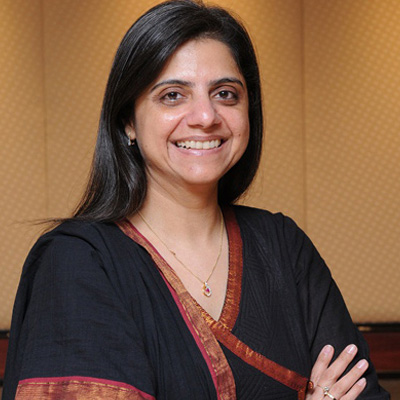
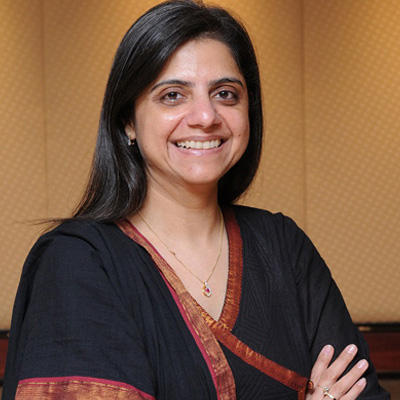
  • ‘Segmentation in kids TV genre makes biz sense in digital era’ : Viacom18 EVP & business head – Kids Cluster Nina Elavia Jaipuria

    ‘Segmentation in kids TV genre makes biz sense in digital era’ : Viacom18 EVP & business head – Kids Cluster Nina Elavia Jaipuria

    Kids channels, bogged down in an analogue cable TV environment, suddenly find space to grow. Segmented channels is the new mantra. After launching an action and adventure channel Sonic in 2011, Viacom18 has launched another dedicated offering in the form of Nick Junior, a preschool channel targeted at 2-6 years.


    Nickelodeon‘s move follows Disney‘s foray into the preschool space and Zee‘s entry into the kids broadcasting space with the launch of its edutainment channel ZeeQ. The common thread between the three channels is that they are pay-driven, unlike the earlier ad supported models.


    Nick Jr. makes its arrival at a time when India is moving towards mandatory digitisation of cable networks.


    In an interview with Indiantelevision.com‘s Javed Farooqui, Viacom18 EVP & business head – Kids Cluster Nina Elavia Jaipuria shares her enthusiasm about why she is bullish about the preschool segment and the impact that digitisation will have on the kids TV genre.


    Excerpts:


    Preschool blocks had existed on kids channels. Now we are seeing full-fledged channels being launched targeting preschoolers. How has the business climate changed?
    The biggest change is digitisation. We are seeing that happen now. The segmentation in the kids TV genre makes more business sense now because we will have transparency. Subscription revenues will also increase.


    Does digitisation make more sense for segmentation in the kids TV genre primarily because of carriage being corrected or you see a substantial gain in subscription revenue as well?
    It‘s both. It will allow us to try very focussed segmentation which we could have not done in analogue cable TV environment. Today in digital, we can segment as much as we can. Carriage payouts will no longer be a deterrent and pay revenues can only grow. So we are all riding the wave of digital right now and hoping that while we cater to need gaps, we also make business sense.


    That is not to say the launch of Nick Junior is a sudden development. Since I started working with Nickelodeon, I always wanted to bring Nick Jr. to India. But then it had to make business sense for everyone.


    Are we in a situation where full-run preschool programming on a channel is not yet commercially viable?
    I don‘t think so.


    Why then did BBC shut CBeebies in India despite knowing that digitisation of cable TV networks is happening?
    Actually, I am very suprised that it happened so abruptly. I am sure they have their reasons for moving out of the country.


    Why do you then have this dual slot (Nick Jr. and Teen Nick) on Nick Jr.?
    We could have gone either way — done a 24-hour channel or have the model of preschool content till 7 pm and teenage programming after that. We have the product and the content that is our own, so it‘s just a matter of dishing it out to them.


    But we seriously believe that towards the evening this channel will get switched off as most toddlers and their mothers are winding down for the day. So it‘s a good idea to use a frequency that is going to be switched off and wanting to keep them switched on. We are also assuming that in a one television household you always have younger siblings and older siblings and when the younger siblings go away, the older siblings take care of the remote.


     ‘We will see a lot of localised content as digitisation picks up. In all this, what will continue is animation. No matter how hard you try, live action can never help children to transport to their imaginary world. We will stick to animation‘

    How do you differentiate Teen Nick from Nickelodeon?
    Nick is hardcore animation and will run from 6 am to 7 pm. Teen Nick, on the other hand, is only live action and has all the sitcoms and dramas that are rocking internationally. Most of the kids in India are watching them on YouTube. So you will have Victorious and Unfabulous and those kind of shows which have made it really big in the West but haven‘t really got the chance to come to India. They are very teenager shows because they are based on college, music, internet, digital and a lot of comedy. So there are sitcoms and drama that are very different from Nick.


    Since Nick Jr. is targeting 2-6-year-olds, wouldn‘t the upper end of this age group want to watch television even after seven in the evening?
    We have seen that post 7 pm, kids are winding down; most of the remotes are also not in toddlers hands. Even at dinner time, it‘s not the toddler that has the remote. I don‘t think even the kids category has the remote post 7 because it‘s the GECs and News channels that take over. You have this trend in a single television household. That way the battle for remote will continue across every segment.


    What kind of research went into launching this channel?
    There was no rocket science really about the research. To me every parent would like to do what is best for their child and in today‘s competitive world you want your child to learn and develop fast. Therefore, parents are doing everything they possibly can to ensure that their kids are learning and developing and this (Nick Jr.) is filling that need gap to my mind. There certainly was a gap there and there was no offering. The research to that extent is that there is a need gap and parents are looking for this kind of learning and development. What happens in school is hardcore education. We are only complementing that with edutainment.


    What is researched is the content and we do this internationally. It‘s content that is made worldwide, so the curriculum is set in place. Every show, therefore, teaches a particular skill . So if you look at Team Umizoomi, it‘s really maths.


    And you must remember that we are getting our international content here. There is even research going on there before they produce any preschool content. We are very careful in keeping Nick Jr. a destination for safe viewing with no violent content.


    How important is the preschool segment within the kids genre?
    It‘s very important from perspectives. One is it allows you to cater to the entire range of kids right from zero to teenage which is what we are now looking at. This was the missing gap that we had in Viacom18. But it‘s also important from the consumer products business point of view. We all are trying to create ancillary revenue streams for ourselves outside of ad sales and outside of subscription. Nick Jr. will play a very large role in driving this part of the business.


    Will it be an ad-free channel?
    Currently it is an ad-free channel, but I don‘t think we can continue to be ad-free. Despite everything being said about digitisation, the ratio of subscription-to-ad sales is still skewed. In the Western world, subscription contributes about 65 per cent of the revenues and in India we are not even half of that. However being a responsible broadcaster, we will be very selective of how much and what ads we put.


    How much is the subscription revenue for kids channels?
    It is under-indexed, I don‘t think it will even hit Rs 200 crore (Rs 2 billion).


    What kind of an upside do you see with digitisation?
    Nobody has any answer to this question.


    Why is Nick Jr. only in English?
    It is inherent in India for every parent to learn English. This is an aspirational channel which teaches your child English. If we do this in regional languages, it will defeat the very purpose of being aspirational. The shows are very easy to understand. So when Dora teaches to say A for Apple, that is what causes the child to learn.


    So is Dora the link between Nick and Nick Jr.?
    Dora has been on Nick and we will keep her there as well because that is the driver show. It also help us from the consumer products perspective.


    Will you have local productions for Nick Jr.?
    No, because we believe that for this kind of a product there is no boundary. In fact, even as kids grow older it doesn‘t matter to them whether it‘s a Japanese show or an American show. Therefore you will see a lot of animation featuring on normal kids category. There is no need to create so much desi content and the pipeline we are creating for Nick where we have Keymon Ache and Motu Patlu for this audience is done after a lot of research. It takes a lot of time to make a show.


    Disney also launched its preschool channel. What impact will competition have on the genre?
    It will only grow the category as there will be more choice. It‘s the best thing that can happen to the category. It will only grow the preschool category that was almost non-existent until all of us launched.


    How do you see segmentation within Nick?
    Nick is the mother brand and it delivers a very core need of a child, which is humour. Nick will continue in that space. While we talk about Nickelodeon audience being very universal, I think it‘s 4-14 years, so I never like to box it at any level. I think the core really lies at 6-12 if you really ask me and we will continue to cater to them in humour and comedy.


    Within comedy, you have action comedy, family comedy, silent comedy and slapstick comedy. The character either becomes a role model or a superhero and it‘s the character that takes over after a point. As you move along, you will see newer episodes of Ninja coming in and that‘s how we drive our viewership. You will see the mother brand engaging on the television platform and outside the platform. The Keymon game had 3 million downloads on Nokia Ovi, so we are dealing with what I call the ‘screenagers‘. It‘s all about staying ahead of the curve and engaging with kids across various screens.


    Will Nick have more localised content?
    I see more localisation happening on that front. But that is also a chicken and egg situation and we have to look at the investment-to-revenue ratio. We don‘t know when the subscription revenues will start getting corrected. After that happens, you will see more focus on local content. But having said that, we have two shows and we have a third in the pipeline; you will see a lot more progress on that front. In all this, what will continue is animation. No matter how hard you try, live action can never help children to transport to their imaginary world. We will stick to animation.


    Will we see more movies coming out?
    We had Keymon Ache & Nani in Space Adventure movie
    and you will see movies from Motu Patlu because Bollywood and Hollywood have become not just kids but also family entertainment. As we move from kids to family, you will see more extensions happening.


    But till now Nick has not been airing movies?
    Series is the bread and butter for us. Kids like to watch, as Farah (Khan) was saying, repetitive content. They want to watch more of the same, so that‘s what we give in the weekend as well. We don‘t miss not having movies on the channel.


    Has ad growth stayed flat for the kids genre this year?
    Ad revenue will grow anywhere between 10 to 14 per cent. If you look at the last five years, the CAGR is 14 per cent.


    Isn‘t the space tough as we have 12 channels fighting for Rs 2.5-3 billion ad revenue market?
    It is a hugely under-indexed market. From viewership perspective, we have eight per cent genre share while ad revenue share is just two per cent. Correction is bound to happen. A few years back, this revenue share was just one per cent. So we are growing, although we don‘t get what we deserve.


    Do you see room for local players entering this space?
    We saw UTV launch Hungama years ago. Zee has already made an entry. Let digitisation complete, then only there will be space. In the current scenario, it will be a tough proposition for local players.

  • ‘Max will see 15-20% ad growth this year’ : Executive Vice-President and Business Head of Max and Sony Mix Neeraj Vyas

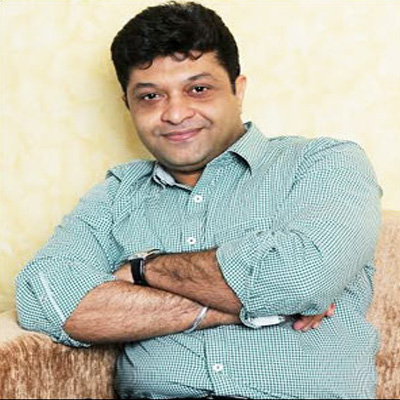
    ‘Max will see 15-20% ad growth this year’ : Executive Vice-President and Business Head of Max and Sony Mix Neeraj Vyas


    Neeraj Vyas, the Executive Vice-President and Business Head of Max and Sony Mix, is excited with the way the year went for Max, the Hindi movie channel from Multi Screen Media (MSM) stable.


    As the head of Max and Mix, Vyas has two challenges before him. The first is to take Max to the top position. The channel‘s strategy will be to acquire as many blockbuster movies as possible but at the same time remain judicious with the acquisition prices.


    The second challenge for Vyas is to grow Sony Mix, the music channel that was launched last year to widen the bouquet. The key for Mix, which operates in a tough genre, is to differentiate itself from other music channels through its programme offering while at the same time control costs to become viable.


    In an interview with Indiantelevision.com‘s Javed Farooqui and Urvi Malvania, Vyas shares his thoughts about the two channels and the way forward.


    Excerpts:


    Has the rise of Star Gold and the launch of its sibling channel affected the existing movie channels?
    Strictly from the ratings point of view, barring the first two months and post the IPL, it has been good for us. If you look at the ratings that were available three weeks back for the first 8-9 weeks, there is very little difference between the three of us – Star Gold, Zee Cinema, and Max. We have also had a successful movie acquisition year.


    How dependent is Max on big-ticket movie acquisitions as it has a premium positioning?
    Movie channels are completely driven by the library they have. Max has managed to have a premium image. It‘s completely by design and not by default because it‘s the way we want the channel and it‘s the way we present the channel. It‘s everything that you see on-air — the entire movie experience and our packaging. We want to set ourselves apart from others and hence did Extra Shots last year, a property where you get your trivia during the break and also put that into a half-an-hour show. This year we did something called Dirty Khabar.


    Does the premium positioning help Max get higher ad rates?
    It has helped us to extract premium from the advertisers. There are a lot of lifestyle brands, a lot of brands that are very conscious of the kind of environment they are seen in from an imagery point of view. If the advertisers have a choice between two or more channels, then Max will always be preferred.


    Did the ad slowdown have an impact on Max‘s revenues?
    There was no ad slowdown. In fact, we will see at least 15-20 per cent growth this year. The ad market for Hindi movie genre is a little under Rs 1,000 crore (Rs 10 billion).


    ‘The music genre accounts for about Rs 4 bn and is growing at 15% annually mainly due to new channel launches. We have set a 3- year period to break even‘

     
    What is driving this growth?
    There is money in the market, brands are being launched, and there are marketing activities. So there is no slowdown in my opinion. It (the slowdown) was a myth that was being created. At least till November or probably mid-December, we are tight on our inventory and are completely sold out.


    But there are broadcasters who have felt the pinch of ad slowdown?
    You tell me which broadcaster has slowed down in terms of content. Has anybody pulled back any shows? Despite no ratings, every GEC is going ahead with their biggest shows. There are two-three reality shows running on all the channels which are hugely expensive properties to produce. GECs are doing one-hour specials of their fiction shows and movie channels like us are marketing and putting more blockbusters on-air. Why would people do all these things if there was no money in the market? Give me a reason. I think the same people (who talk about a slowdown) need to answer this question.


    After a lull last year, has there been a spate of movie acquisitions this year?
    Yes, there was a lull. The way it (acquisition) works is if I have to acquire a film, I have to do it a good year-and-a-half before the film is released. If a producer doesn‘t get the price he wants, he waits for the box office performance of his film. Depending on the success or failure of the film, the price gets decided. The trend these days is strange as you have to acquire movies upfront. It sometimes works for you and sometimes it doesn‘t, so you have to be judicious.


    Has there been a price correction in acquiring movies?
    Unfortunately, what happens is that this industry is driven only by seven to eight stars. Unless we have more stars it will continue to be dominated by these 7-8 stars and it‘s essentially these men who lead the prices — the Khans, Akshay Kumar, Ajay Devgn and Ranbir Kapoor. If the price is going to be determined by these 7-8 stars, then their films will be sold at a premium.


    But a large number of movies go unsold?
    That is because the films of only these 7-8 guys get the ratings. For example, a film like Vicky Donor was liked by many but on television it won‘t get you a rating of even 1.5 TVR. Ratings for most GECs and time spent for channels like us come from the interiors of the country and the audience in the interiors is for films like Singham and Rowdy Rathore. That‘s the reality.


    Do you think acquiring movies on the basis of box office success is the criteria to follow?
    Honestly, that can be misleading. For example, Barfi is a brilliant film but put it on TV… probably it will get a rating of 2-3 TVR in the first airing, but it‘s not a movie that will get sustained ratings. Movie channels have a different model. When a film airs on television 10 times a year it has to give a certain yield and it has to give certain GRPs. As I said, the viewership comes from the interior.


    Zee walked out of the Barfi deal because at such high price point the monetisation becomes impossible. A correction is needed. It‘s a no-brainer. Zee‘s refusal to acquire Barfi rights was a step in the right direction. It also serves as a wake-up call for the producers or the corporates producing high-budget films. They have to get the pricing right irrespective of the box office collection because that is not connected to the success of the film on TV.


    Many networks have also experimented by premiering movies on GECs rather than the movie channel?
    That is a calculated gamble. Sometimes it pays off, sometimes it doesn‘t. It‘s a high-risk game because the price points of both the genres are hugely different. A GEC would trade at a certain level. Unfortunately movie channels have been under-priced since the beginning. By the time we start doing corrections, it is going to take time. The kind of money we recover on GECs will be far higher than on a movie channel. The yield is higher on GEC which is why we as an organisation have taken a decision to air certain movies like Paan Singh Tomar on Max but movies like Ek Tha Tiger and Rowdy Rathore will always be on Sony from a monetary point of view and its working for us. Once Sony has its one or two runs, it comes to Max and it really doesn‘t make a difference. What this does is safeguard our revenues and we manage our ratings better.


    How long does it take for a broadcaster to recover costs?
    For us it probably takes a little lesser time because we premiere on Sony. Our recovery is higher. It takes anywhere between two to three years to recover the costs. We acquire movies for a minimum of five years. We have a library of 800 movies and all of them are exclusive.


    Next year, IPL won‘t be there on Max since it will move to Sony Six. So what is your strategy going to be?
    We are a Hindi movie channel and we are happy that IPL is moving out. IPL moving out is a blessing for Max since we will get an opportunity to do a lot of things in the Bollywood space.


    Most Hindi movie channels also have dubbed content. How is it working?
    Almost 25-30 per cent of the content is dubbed and it is working. The prices of dubbed movies have also gone up although I can‘t give a number. The dubbed content adds variety to the channel. People in UP and MP don‘t know the actors but they love the action. Most of the South Indian films are in the realm of vendetta, revenge, high octane action, family values and so on. These are qualities that fit very well with the sensibilities of the heartland. Indian movies are Indian movies. People might look different but the basic ethos will always remain the same. The trend in Bollywood is that every big film that is going to come will be a remake of some or the other Southern language film. Everyone has acquired remake rights whether it is Salman Khan, Akshay Kumar or Aamir Khan.


    What implications will digitisation have on the genre?
    We are governed by the reality of libraries that we own. We will be able to run a large number of movies that we have not telecast. Hopefully, we will also get the opportunity to reach out to slightly more premium audiences. Also films like Silsila, Kabhi Kabhi, Rocket Singh and Saawariya which are rotting in our library will be able to see the light of the day.


    Coming to Sony Mix, how do you differentiate the channel from the other players in the genre?
    We decided to be a channel that is musical and understands the mood of the people. Our programming corresponds to the time of the day. So we have Surili Subah in the morning, Ishq Vishq in the afternoon, Mix Adda in the evening right up to Raina Beeti Jaaye, which is the slot for the retro songs. The promise of the channel is that we understand viewer‘s mood at different times of the day. We also went ahead and bought more music than anybody else simply because we wanted variety. So when other channels were playing the free plays and the new music launches, we went ahead and did deals with Yash Raj and Sony Music.


    What about your original content?
    We have a property called Mix Solos which has singers like Javed Ali, Roop Kumar Rathod and Shafqat Amanat Ali doing acoustic solos for the channel between songs. Then we have something called Mix Tippani where the channel suggests which song to listen to in which situation. We also have a show called Picture Abhi Baki hai. Here we take bytes from the actors, directors, music composers, singers etc — all with focus on the music and nothing else. It is like a sneak peak with focus on the music of the movie.


    These are the things that set us apart and we want to continue doing them. We want to do Harmony again which was on Sony 10 years back. We would love to revive that and have a show that has pure unplugged music. We also had a show “Yun Bana Yeh Song” with Swanand Kirkire where he explained how a song was made and took the viewers through the journey of the song. We have also brought back a lot of videos from the 90s that were huge back then. You see, you have to have a Mix of music for a music channel to be called a music channel.


    What is your primary TG? And what was your strategy when you launched Mix?
    Our primary TG is 15-24 age group, while our secondary TG is the 25-34 age group. We would never dilute our focus on the secondary TG. We firmly believe that you can‘t just cater to the youth which is why we have a Raina Beeti Jaaye at night. Music transcends age and we are going against the grain and not doing what everyone else is doing in the genre. Our belief is that it will pay off with digitisation and people wanting to make a choice.


    How tough is it to sustain a Hindi music channel?
    If you control your costs, then it is viable to have a music channel. But it is a tough game. We make use of our synergies with Sony Music and YRF. The challenge lies in how you programme your day as everyone has the same content in this genre. The brick of three songs before you go into an ad has to be so strong that it appeals to the audience.


    How is the revenue split between distribution and advertising?
    Distribution is negligible as a source of revenue right now. It‘s completely dependent on ad revenue. We have a wide range of advertisers come to us due to our programming. We have a broad base of viewers and though we are packaged as young and happy, our appeal is across age groups. You have to build the proposition based on the core values. The music genre accounts for about Rs 4 billion and is growing at 15 per cent annually mainly due to new channel launches. We have set a three-year period to break even.

  • ‘BCCI rights great opportunity to build Star’s sports biz’ : Star India CEO Uday Shankar

    ‘BCCI rights great opportunity to build Star’s sports biz’ : Star India CEO Uday Shankar

    Just over a year old, UTV Stars is banking on revenue growth from advertising, syndication and distribution to achieve operational break even this fiscal.


    The launch of UTV Stars last August has expanded the Bollywood lifestyle TV genre, created by Zoom and E24. The core target audience of the channel is upscale youth in the age group of 15-24 years.


    In an interview with Indiantelevision.com‘s Javed Farooqui, UTV Stars business head Nikhil Gandhi talks about the channel‘s progress, its differentiated content and the challenges in the space.


    Excerpts:
     

    Does UTV Stars get a competitive advantage by being the child of Disney-UTV?
    We definitely have an edge as we have got a thriving motion pictures business. This allows us to do that much more compared to our competitors. Our access to the big Bollywood stars such as Shah Rukh Khan, Salman Khan, Kareena Kapoor or a Hrithik Roshan is much easier. If you see the kind of news content that we create, we are credible.

     
    Since UTV Stars‘ sister arm also produces movies, doesn‘t that also present a conflict of interest while covering Bollywood news?
    Once you have established yourself as a credible player in the space, I don‘t think any star or film producer would think that there is a conflict of interest. They, in fact, would want to promote their films that much more. Moreover, our editor is Manish Dubey who was with Aaj Tak and has credible bondage with the movie stars. Also, our correspondents as well as special features editors have professional relationships with all the big superstars.

     
    Isn‘t differentiation very thin in this kind of genre?
    When we started, we positioned UTV Stars as the official channel of Bollywood. We were also known as being the intimate insider to Bollywood. We got all the big stars to endorse and that reflected in our launch campaign. We did a big chat show with Priety Zinta. We also did a show called ‘Live My Life‘ which is coming up for its second season after the channel‘s first anniversary on 19 August. Our channel is also available in High Definition, taking the viewing experience to a whole new level.

     
    How is your content mix different from other rival channels?
    On a daily basis, we have three and half hours of original content while the others offer three hours. So we have half-an-hour of additional content. This is largely because we have original long format shows, giving our channel a differentiated value. You won‘t see big ticket reality shows on other channels.


    We run Bollywood music and movies but news and shows form a large portion of our prime time content. We play music in non-prime time because the TG loves it and because Bollywood music lends itself well with the channel. 


    ‘On a daily basis, we have three and half hours of original content while the rival channels offer three hours. So we are half-an-hour of additional content‘
     

    How would you define your target group?
    We are in the youth space but have a definite skew towards Bollywood. In terms of demographics, our core target group is 15-24 SEC AB. Bollywood stars influence the youth of India a great deal. In that sense, the kind of content that we have created caters to the Indian youth. So even though Bollywood content cuts across age groups, we are going to focus on youth particularly after the kind of success that we have seen online.

     
    Could you elaborate on the online growth?
    We have almost half a million fans on Facebook. We are also the largest content provider for Bollywood content on YouTube and have already got 30 million views. We power the UTV group content engine on YouTube per se including UTV Motion Pictures. We have got 10,000 hours of content that we had shot last year. All this gives us a cutting edge.

     
    What is the break even period that you have set for yourself?
    We are looking at an operational break-even next year (FY‘ 13). With the kind of control that we have on our costs and if the markets start improving, we should be able to reach that milestone.
     

    What impact did ad slowdown have on your revenues?
    We experienced a bit of a volume loss but our big shows also get a premium. The advertising community is also appreciating the kind of content that we have been able to create and they are now talking to us for annual deals going forward.

      
    Who are your big advertisers?
    We have all the top advertisers that occupy the youth space. Like in FMCG, we have Hindustan Unilever, P&G and L‘Oreal. We run about 10 minutes of commercial in one hour of programming, which can go up to 12 minutes. 

     
    What are the major revenue streams for UTV Stars?
    Currently, ad revenues contribute 60-75 per cent of our overall revenues. But we would like to bring this down to 50-55 per cent and with digitisation we are hopeful that this shift will happen. We are also looking at syndication opportunities overseas as well as in India. We are already syndicating in-flight entertainment across big airlines. Our business model includes distribution, syndication, video on demand, ad revenue and on-ground events.

     
    You have been quite aggressive with on-ground properties?

    So far as ground connect goes, we have been able to rope in partners who are in the lifestyle and Bollywood space. So we had partnered People magazine to do the ‘People Best Dressed‘ show; we had also partnered Cosmopolitan to do ‘Free Fearless Awards‘. Besides, we also did ‘F1 After Parties‘ with Arjun Rampal.


    However, the biggest property we did was ‘Walk of the Stars‘ at Bandra Bandstand (Mumbai) where we had the biggest stars giving their hand impressions. It‘s like the Hollywood Walk of the Fame. We got the Walk of the Stars branded as UTV Walk of the Stars as a permanent structure and it has also got statues and benches of legendary stars from Raj Kapoor to Shammi Kapoor and now Rajesh Khanna. We are taking it to Delhi next year and it‘s going to be available at Kingdom of Dreams. We tied up with IIFA Awards this year and took this property to Singapore. 

     
    What big shows are on the anvil?
    There is ‘Nirma Lifestyle‘ season 2 that is coming up in the quarter beginning October. We have another show called ‘Gods of Style‘ coming up where we are going to showcase top 10 style icons in Bollywood. We have four more shows in the pipeline about which I can‘t reveal much at this stage.


  • ‘We will post robust double digit growth’ : Disney UTV executive director and Disney kids network business head Vijay Subramaniam

    ‘We will post robust double digit growth’ : Disney UTV executive director and Disney kids network business head Vijay Subramaniam

    The kids television market in India is a tough nut to crack. Disney UTV executive director and Disney kids network business head Vijay Subramaniam, however, believes that the brand-driven media conglomerate has got the right formula to break the nut.


    Two of the channels have succeeded to penetrate the ratings. Disney Channel houses its global brands like MickeyMouse and is growing these franchises. Hungama is a fun-filled channel and works on Japanese anime content. TheWalt Disney Company India is now pulling its resources behind Disney XD to make the comedic action channel popular in the Hindi speaking markets.


    The company‘s strategy is two-fold: offer a wide spread of content that entertains not just kids but also the family; support this with strong activation to connect directly with the TG through multiple touch points.


    The challenge is to expand the advertising revenue which is pegged at Rs 2.5 billion. The genre is under indexed and the growth in audiences is not translating to a corresponding increase in advertising monies.


    Disney is waiting for digitisation to develop other genres that will yield more subscription revenues. The company is determined to find potential in live action and has three shows in development stage. Local animation is another genre that it wants to explore actively. The superhero genre is also to be exploited as an opportunity.


    In an interview with Indiantelevision.com‘s Javed Farooqui, Subramaniam talks about the potential the kids genre has amid tough revenue challenges.


    Excerpts:

    What is the challenge the kids broadcasting genre faces today?
    Some of the challenges that existed earlier even prevail today. Distribution, for instance, was a hard game to play when we launched in 2007. That situation continues and India is still one of the most expensive markets to procure distribution. So that definitely is a challenge. But we hope things will better with digitisation.


    Another challenge that has stuck around is that the kids market is highly under indexed. You can take a five year trend and you will find it is still under indexed, despite the fact that viewership on kids channels have grown overall. It’s a Rs 2.5-2.7 billion ad market. If you take the viewership, the total number of GRPs in 2007 was about 400-450 and currently it’s at about 700 GRPs. Every year this has been one genre that has added consistent growth, but it stays under indexed.

    Is that because the genre is highly fragmented?
    The question that advertisers need to ask is where the quality of viewership is and are they leveraging it. Going by the science of the marketplace, I don’t think advertisers have still realised the full potential of this audience.

    What could be done to overcome this hurdle?
    There are three things that we consistently do from a Disney kid’s networks standpoint and we believe it’s increasingly giving us returns. One is to have entertainment content that is completely family inclusive with the kid at the centre of it.


    Two, every single marketing activity that we have undertaken as a network has driven a very strong engagement value building loyalty through several intangibles. These become the talking points for advertisers and, more importantly, it deepens the relationship between the consumer and the channel. Take Jet Set Go as an example. We got six million entries from across the country and the best thing is that the contest was completely driven through Disney channels without cricket and Bollywood.


    Thirdly, we are constantly engaged in educating the advertising fraternity of the increase in value that the kids centric family brings. Yes, that’s a long journey to cover still. But the fact is that new categories of advertisers are walking in. Kids channels reach about 85 per cent of the genre’s universe.


    We are the leading kids network with 43 per cent share and we bring the power of terrific story telling through our franchises. The activations that we do are pretty wholesome and these are things that can be easily leveraged for value by brands. Having said that, it is a very competitive marketplace. And I don’t see enough attention being given to this segment when people strategise.

    So in an ideal situation what should be the size of the ad revenue market considering the audience delivery?
    That would be a hard one to say. I am of the view that brands that invest in kids channels should have a long-term view of building partnerships. We in Disney believe in evolving with the consumer and it’s important that brands demonstrate similar partnerships and evolve with us as we evolve with consumers. To illustrate a point, the engagement that we brought with Jet Set Go is something that money can’t possibly buy. Just imagine 33 families coming together and nobody knowing each other as they set out to experience the whole thing together at Disneyland. So these kinds of opportunities can be created by us. It’s more of a strategy that is driving this investment as opposed to asking ‘Can you spend a little more’? It’s not just about how you spend; it’s about how much you are staying invested with this important target audience.

    ‘The segment that we are going to drive as an opportunity as well as a strategy is the superhero genre. We have got the Marvel Universe premiering on Disney XD. That’s our first foray and we have got Marvel as a part of Disney‘

    Disney has been positioning itself as family entertainment channel. Do you think that works when you have to compete in the kids genre?
    The kids channel label is what prevents us from looking at family as a unit. If you look at it from the lens of a television professional, then that’s a limitation. But if you look at consumers in general and brand Disney in particular, we are a family entertainment channel worldwide. There are enough adults who buy Disney merchandise and then there is Disneyland which will give you an indication of just how big the Disney brand is.


    Agreed we are a young brand in India and we have not been here as long as the brand has been in other countries. But that said Disney stands for family entertainment. Secondly, if you look at consumers, they have at least one meal together and even as we live individualistic lives, the meaning of family is still very strong. We believe that Disney is a brand that provides the environment for families to come together. Yes, its kids centric but it’s something that is enjoyed by the family. And we believe that we have some of the best family comedy shows.

    But isn’t it still animation that works for kids channels?
    Agreed that animation is the staple diet for all kids channels. But it does not for a minute mean that the two cannot co-exist. In fact, there should be a healthy balance of the two.


    We will continue to invest on live action and we are very clear that we want to make it work. Ok, let me change the perspective and ask the same question about Satyamev Jayate. When you bring in a new format in a new slot, you will have people who will be very enthusiastic and supportive and there will be people who will be at the fence. As leaders, it is important to bring these new formats to the country. We have to drive it in a manner that Indian audiences find it most entertaining and relevant. We started with live action two years ago with Ishaan and we have three shows under development stage now. We genuinely believe that this is an added dimension for both kids and their families.


    Live action is fun but it is harder to do. We are fortunate that we have the repertoire of successful stories that have been scripted and aired successfully internationally.

    What is the ratio between live action and animation on Disney Channel?
    It’s between 15-19 per cent with just two shows – Suite Life of Karan and Kabir and Best of Luck Nikki.

    What is your content strategy for the three channels? Any specific genres that you are planning to experiment with?
    One segment that we have identified clearly is live action. It’s very rich and is something to which we are committed strategically and financially; we are going to drive that to build significant volume for us.


    We see huge opportunity in preschool content and have ambitious plans for it. Frankly, it’s a function of right timing because it can’t be driven using the ad sales model. This is a far younger audience and requires a lot more responsibility in managing it. This is one genre we would like to explore once we see where this digitisation piece is moving.


    The third genre that we want to play a role in is local animation. Indian animation has come a long way and we believe that there are lots of dimensions that are still to be explored. A day in the life of a kid is also an opportunity to explore much more; it doesn’t necessarily need to be mythology. So that’s the piece we are keen on.


    Musicals is something which is at the heart of everything we do. It is another interesting genre, but the challenge is how do we do so because development in some of these things is very difficult to do in an environment that is not necessarily seen as an opportunity through the eyes of the kid.


    Comedic action and adventure is an interesting genre that we are going to contribute significantly in.


    Lastly, the segment that we are going to drive as an opportunity as well as a strategy is the superhero genre. We have got the Marvel Universe premiering on Disney XD with Spiderman and Iron Man-Armored adventures on Saturday. That’s our first foray and we have got Marvel as a part of Disney. There are interesting stories to be built around them.

    How are Disney Channel, Hungama and Disney XD positioned?
    Disney Channel is the home of Disney brand and everything it stands for. All the Disney franchises are housed under this channel. Micky Mouse Clubhouse, Winny the Pooh and Phineas and Ferbs will be championed by Disney Channel as will the live action production that I spoke of – Suite Life of Karan and Kabir, Best of Luck Nikki and Art Attack (an art and craft show).

    Hungama is a brand aimed at the 4-14-year-olds. It is a total unbridled fun channel, so Japanese anime is the content expression there.

    Disney XD is an action and comedic brand channel targeting boys in the age group of 8-14 years.

    Hasn’t Disney XD been the weak link in your network?
    I would say Disney XD required the maximum amount of work among the three channels that we have in India. We have got Disney Channel and Hungama sitting pretty but our work is not finished yet. We have to stay on top of the live action game, something that I keep emphasising on. It has to be truly entertaining because that is what differentiates Disney from other entertainment products. Hungama is going to stay fun and enjoyable.


    With Disney XD, we are sure we will be able to take it to the position the other two are in. That’s really the game plan.

    What direction are you going to give Disney XD?
    Disney XD is a channel that has traditionally done well in the South and HSM (Hindi Speaking Market) was not a focus area. We are at a stage where we are going to focus a lot of our resources on Disney XD to make it strong in the HSM. We have made encouraging beginnings but we have a long way to go. We are pretty confident of reaching there. Prior to January, we were 30 odd GRPs, which is really nothing. But currently we hold about 60 GRPs on an average and are confident that it will be a 100+ GRP channel in the coming months, given that we have a whole lot of initiatives planned to give it the push.

    What are the growth projections for Disney network?
    I am not at liberty to share financials, but they are robust double digit numbers. The growth will be delivered by consistency of performance due to high quality programming and a discerning advertiser who is placing a premium on both brand value as well as consistency. As far as break-up of revenues is concerned, its 50-50 for us between distribution and ad revenue. Licensing and merchandising is a separate business altogether.

    How important is new media in the scheme of things?
    New media in most media companies is an extension of the linear product. But for us it’s a full-fledged digital universe onto itself. Disney is a unique brand that tells great stories and then disseminates them through as many platforms and environments as possible.


    We have Disney Interactive Media Group. Like DisneyConsumer Products, it is a separate company altogether that works across the length and breadth of the digital universe. When we did the Princess movie festival on the channel, we also built a game on mobile and they then fed it to over 7-8 million consumers. So that’s the scale we can build for our stories across platforms.

  • ‘We have been growing at 9-10 per cent every year’ : Viacom18 EVP and GM Sonic and Nickelodeon India Nina Elavia Jaipuria

    ‘We have been growing at 9-10 per cent every year’ : Viacom18 EVP and GM Sonic and Nickelodeon India Nina Elavia Jaipuria

    Nina Jaipuria, the EVP and GM for Sonic and Nickelodeon India, is bullish about the kids genre despite the challenges that exist. Jaipuria, who has been at the helm of Nick for more than five years, is hopeful that the channel will bounce back to its 2009 position when it topped the genre.


    In an interview with Indiantelevision.com‘s Javed Farooqui, Jaipuria says that Sonic, the action and adventure channel that launched in December last year, will also witness growth. She sees the viewership of kids channels going up in the Southern market, where the local GECs still hold a stranglehold on family viewing.


    Excerpts:

    You have been at a GEC (Sony) and since last six years, you are handling kids channel. Which genre do you find more challenging?
    Both the genres are equally challenging. But to my mind, capturing the kids is more challenging as they get bored faster. Kids have shorter attention span. Saas-bahu serials can run for 10 years and you don’t get bored but try doing that with children. It’s impossible… which really means that you have to innovate that much more quickly and stay ahead of the curve.


    Unlike GEC where you need non-fiction to get the eyeballs and then the fiction takes care of your bread and butter, I think there is no such concept in kids genre. I think it’s a tougher category also because we have huge pipeline issues and the timelines. A GEC channel can produce a show in two months but for us it will take two years because it is animation. So the pipeline is so much tougher and therefore we have to plan that much in advance. Having said that, the GEC category is also difficult because we are talking about a scale that is very large and thanks to competition, the risk there only gets higher.


    However, if you build kids loyalty, then it is about how you keep them going. Your challenge is how you can bring them to the channel day after day.

    Despite being third in the pecking order, why does the kids genre not command the kind of ad revenues it should?
    It is hugely under-indexed and that has been going on for a long time. We were given for free and there is a CPRP benchmark that no advertiser is willing to pay that much.


    However, advertisers have started believing that kids have a lot of peer pressure, purchasing power and influence on family purchases. And, therefore, you see advertisers coming to the kids category. But it is growing slowly and steadily. Five years back, the market was Rs 1.4 billion and today it has grown to Rs 2.5 billion.

    Will slowdown have an impact on ad spends?
    In 2009, when there was a slowdown, we did not really witness it as much because a large portion of advertisers who advertise on kids channels are FMCGs, food & beverages and toys, which did not cut back that much compared to radio or print because they have more local advertisers and more of retail and finance.

    Coming to Nick, position wise the channel has slipped to No. 2 or 3. How do you plan to get back on top?
    We are the number two or number three player in the category. Summer has been good and thanks to all the new content that has gone on the channel, we will continue to retain our number there position.


    We retained the top position for two years and I think that is a long enough time. We hope to come back (to the top position). Everything that goes up has to come down, these are all cyclical vagaries of the business.

    ‘Sonic and Nick are two different brands. While Nick is humour and little of action, Sonic is a hardcore action and adventure brand‘

    Oggy and the Cockroaches was one of your tentpole properties. This has now shifted to Cartoon network. What do you think about your other properties?
    My tentpole property is Ninja Hattori and I would have also said Oggy and the Cockroaches but it has now moved to Turner (Cartoon Network). But Oggy gave us a good result for the three years that it was with us. So with all due respect, these are vagaries of the business and we are planning to build our own properties. We have Keymon Ache, of which we have already done 26 episodes and have greenlighted the second season of the show.


    We launched Power Rangers and now we have new Power Rangers coming back. Then after Samurai, we have Super Samurai. We have the third one as well in 2013. Thus, we will have a lot of Power Rangers as a property to build. Then there is Kung Fu Panda that we will build. So we will have a lot of solid shows post the Oggy also.

    What are the genres you are looking to build content for Nick?
    When we started, it was a mix of humour, comedy and various strands of it – slapstick comedy, silent comedy, family comedy shows and Keymon kind of shows.


    Kung Fu is a mix of comedy and action which according to me is the only show of its kind which had comedy and action put together. But slowly we realised that our kids are moving towards action even from a category point of view. Look at what’s happening with video games. So we believe that there is a little bit of action required on Nickelodeon. The only action show we are showing on Nick is Power Rangers Samurai so that those kids who want action don’t go anywhere.

    What about Sonic?
    Sonic and Nick are two different brands. While Nick is humour and little of action, Sonic is a hardcore action and adventure brand. So we have shows like Ultraman, Jackie Chan, Super Strikers, and Ghost at Schools.


    Sonic has done very well to get 8 per cent share in a difficult category as children are slow to changing habits. I think there was a gap in the market as no channel was offering 24X7 action and adventure as a proposition. So kids had to go to MTV Roadies, Fear Factor or once on a while they would go to play video games or watch movies like Dabangg. This gap we fixed with Sonic.


    When kids are growing up, they are shying away from watching kids’ channels. But they were not big enough to go to MTV or Vh1. So we found out a nice gap as well as target audience. In fact, Sonic is doing very well in Mumbai, Delhi and Kolkata. We have got an eight per cent market share within six months and 22 per cent reach in 85 minutes of time spent, as of last week.

    What are your revenue expectations from the two channels?
    We have been growing at 9-10 per cent every year and I hope that we continue to grow at that range. From revenue perspective, ad sales is the big brother. Subscription is not significant at this stage but should grow post digitisation. After that comes licensing and merchandising, but they are taking only baby steps.

    How are you growing the L&M biz?
    We are increasing our character base and with that we are increasing our product range. We have 55 licensees on board this year across categories. We can grow this with depth and width. What I mean by width is that we increase characters. Every single character grows into every single product category. When I talk about depth, we look at every single category in the life of a kid.


    We have launched footwear with Metro shoes, we also have toys of popular characters like Dora, Ninja and Spongebob. TI Cycles is going to offer co-branded Dora The Explorer and Ninja bicycles. We also have DVDs and VCDs coming for Keymon and Dora.

    Talking about content, still most of the content on your channel remains animation. Why is it so?
    Except Power Rangers and Ultraman, almost all of our content is animation. The reason we do so much animation is because kids come to the category for two reasons: one is to get rid of boredom and second is get rid of all pressures. And animation is the only alternate universe, which allows them to enter the fictionary and imaginary world which allows them to get rid of boredom. Try to do that with live action and you can never achieve it as it is as real as it can be. Because we are a tailor-made category for children, animation will always be the fulcrum.

    But kids’ channels are experimenting with Hindi movies also.
    Even I don’t understand that. I put movies on Sonic because I think adventure as a genre is served with movies. But we put on kids’ movies like Jurassic Park that are catering to that genre.

    But is it to prevent them from shifting to other genres?
    I think they are passive viewers. They are captive audiences to what they watch and, therefore despite fragmentation, the category continues to grow. The fact is that kids continue to come back to the category because the content is tailor-made for them. The only reason why the viewership hasn’t grown to the extent it should have is because India is largely a single television household.

    To what extent did the IPL impact the genre?
    Fortunately for us, we don’t have a fixed prime time slot. And it never had much of an impact because for us we have viewership throughout the day and IPL matches were at 4 pm and 8 pm. It’s not like a GEC where 8 pm is prime time.


    We do have 12-3 pm and 6-8 pm as primetime slots. And the best thing about the country is that in some cities, kids go to school in the morning and in some cities in the afternoon. So somebody is watching us at all hours of the day.

    While the kids genre is seeing growth in the HSM, the same cannot be said about the South market. Why?
    That is because all of us are late entrants to the South market. We launched our Tamil and Telugu feed for Nick one year back. Also, kids in those markets have been watching the local content for very long in their own language. But it’s picking up.

    How much do you focus on digital medium for connecting with your target audience?
    To me, digital is important because our TG is more digital savvy than you and me put together. Interactivity has become a large part in the kids’ space today because they have access to mobile and internet. They communicate with us on nickindia.com or sonicgang.com. We also have Power Rangers games on both these websites, besides downloads and wallpapers. There is a lot of interactivity that is happening there. Then we have contests happening on Facebook. The Keymon game on Nokia has got two million downloads. We have over 200,000 fans for Nick on Facebook and over 100,000 fans for Sonic.

    What are your plans for the year?
    We have two big shows coming up on Nick – Cedric and Tony and Alberto. Cedric is about a boy who is mischievous and wants his grandfather to help but normally they are more in trouble than out of it. Tony and Alberto is about the story of a boy and a dog. Both are very mischievous and funny shows talking about the 9-10-year-old boys. The shows will be coming on air in July. We have two new shows coming on Sonic as well – Ghost at Schools and Teenage Mutant Ninja Turtles.

  • ‘We are looking at 20% revenue growth this year’ : India Cements joint president marketing Rakesh Singh

    ‘We are looking at 20% revenue growth this year’ : India Cements joint president marketing Rakesh Singh


    IPL franchise Chennai Super Kings has been slowly and steadily building its brand over the past four years on the back of its iconic captain Mahendra Singh Dhoni. The sustained efforts of the last four years are beginning to show result as the franchise looks at a 15-20 per cent revenue growth this year.


    By retaining its key players, the franchise has managed to build a loyal fan base not just in Tamil Nadu but also among the Tamil diaspora. The two time IPL champions is leaving no stone unturned as far as engaging with fans is concerned and is stepping up efforts on the merchandising front to grow this revenue stream.


    In an interview with Indiantelevision.com’s Javed Farooqui,India Cements joint president marketing Rakesh Singh shares the franchises journey so far and the growth path ahead.


    Excerpts:

    Isn‘t Chennai Super Kings targeting a revenue of Rs 1.7 billion this year? What is the break-up?
    We did Rs 1.40 billion last year and are looking at a 15-20 per cent increase this time. It’s difficult to give a break-up for the simple reason that a major chunk of revenue comes from the central pool. There are components in our revenue pool – one is central pool which to my mind was Rs 60 crore (Rs 600 million) plus last year; then there are our sponsors and gate collections.

    Have you reached operational break even?
    In the first IPL edition, we broke even. We lost money in the second season (due to shift to South Africa). While we made marginal profits in the third IPL, we widened that in the fourth edition.

    How has IPL season 5 been for CSK?
    The IPL season has been good for us. Our total number of sponsors have gone up. Aircel is our main sponsor. Gulf Oil is our principal sponsor and then we have Life Ok and Washington Apples as new sponsors. We also have Amrapali Group, Hercules, and Usha International as sponsors.


    While our revenue continues to grow at a steady pace, what we are also trying to do is step up the merchandising efforts. We plan to grow merchandising by positioning it as a lifestyle brand so that fans not only buy CSK T-shirts during the IPL season but also wear them during the non-IPL season.

    How did the deal with a Hindi GEC like Life Ok happen with a team franchise from the South?
    There is a study done by one agency which says that 46 per cent of the fans support Chennai Super Kings andMumbai Indians. Now if that is the case, anybody who wants to take full advantage of the IPL needs to come to one of us. For somebody who wants make a Hindi GEC popular, it is a nice way of riding on the popularity of Chennai Super Kings. Another thing is that while we are the most popular team in Tamil Nadu, in most other cities we turn out to be the second most popular after the home franchise. I think that is because of the kind of team that we have with four Indian players – MS Dhoni, Suresh Raina, Ravindra Jadeja and R Ashwin.

    ‘We had made Rs 1.4 billion last year with revenue from central pool contributing over Rs 600 million. We have got new sponsors in Life Ok and Washington Apples‘

    The IPL has seen a lot of sponsor switches. How did CSK manage to retain its sponsors?
    We believe in consistency and that is the reason we don’t believe in changing our players. We don’t change our management and we don’t believe in changing sponsors. That has clicked because that does not confuse the fans. We treat our sponsors well and we give them a value for their money for at the end of the day sponsors look at RoI.

    There are reports that title sponsor DLF is not sure of continuing its IPL sponsorship?
    I don’t know about that but what I would like to say is that when the BCCI terminated the Nimbus contract, everybody was saying that the BCCI won’t get Rs 31.25 crore (Rs 312.5 million) per match. But ultimately the rights were sold for a much higher price. I think it has become a favourite time pass for everybody to talk ill of the only sporting brand that India has today.

    So are the team loyalties settling down?
    I think so. If you see the matches where Mumbai or Chennai are involved, the viewership will be high due to team loyalties. That is also the case globally where matches involving Man-U or Chelsea will have higher viewership as compared to other smaller teams. In the first three IPLs, most of the matches were 8 pm matches and the number of teams were less. But now we have more teams and the number of matches have gone up.

    What do you think is CSK’s USP?
    Our USP is that we always focus on cricket, unlike other teams who are focussed on glamour and parties. Not to say that these things don’t work but IPL at the end of the day is a cricket tournament. We have a disciplined team; so whether its on-field or off-field, our team carries a certain character. We have a very strong fan following in Tamil Nadu and Chennai in particular. As per one survey report, 96 per cent of Chennaites support Chennai Super Kings, which is the highest for any franchise in their home city. Mumbai Indians come second with 86 per cent fan support.

    How did you engage with fans?
    Besides youngsters between 15-24 age groups who form our vital fan base, we believe that we have also get a lot of support from families. If you look at our merchandise, there is a lot of emphasis on women and children – it’s not just the typical male cricket fan. A lot of families come to watch our matches in the stadium. To reach out to our fan base, we have also tied-up with Radio Indigo besides The Hindu and Dina Thanthi. Our media tie-ups is a cash plus barter deal. But the barter part is helping us a lot on activation. That is something that was missing last year. What it has done is bring down our marketing cost.


    We also launched a new video ‘Wave your hands” which has got one lakh views within no time that it was uploaded on YouTube. We launched this campaign sometime in the first week of April, and by the third week we already have one lakh views on YouTube. Earlier we had done “Whistle podu” which was also a big hit. Every fan wants to do something to support his or her team, so that way we are channelising their energy into doing something to support the team.

    How is licensing and merchandising doing?
    We have been giving merchandising a big push since last year, but it takes time. For example, we got almost Rs 4 crores (Rs 40 million) through merchandise sales last year but what comes to us is only 10-15 per cent after excluding the costs. What we are seeing is that it is a good platform to engage with fans. But in terms to revenue contribution, it is only about five to seven per cent. But internationally this percentage is 60 per cent and that is what our goal is: how to grow this stream. This year we have opened an exclusive in the Chennai airport where you get all kinds of stuff. We have also partnered UniverCell for distribution of merchandise in North America and Europe.


    In terms of licensing, for the first time we have partnered with Café Coffee Day to make it a hub for Chennai Super Kings fans. Similarly Park Sheraton has converted their lounge into a CSK Bar. So we want to see how these deals work and whether we can make it a yearlong thing. We are working on a fixed fee basis wherein licensees can use our name and do certain things. This year we aim to double our licensing and merchandising revenue.

    How has been the response been to ticketing? There were lots of empty seats during your home matches?
    There are three stands in the stadium which, due to certain clearances issues, the state government has not allowed us to use. On the rest of the stadium, we are overselling. Till we get the clearance, we won’t be able to sell tickets for those stands.

  • ‘Premier League Soccer will have $20 mn revenues in year 5’ : Celebrity Management Group executive Director Bhaswar

    ‘Premier League Soccer will have $20 mn revenues in year 5’ : Celebrity Management Group executive Director Bhaswar

    After hosting big names in football like Diego Maradona in 2008 and Lionel Messi last year when the star Argentinean footballer toured India for an international friendly game against Venezuela played in front of a record crowd in Kolkata, Kolkata-based sports management company Celebrity Management Group decided to kick-start a venture like the Premier League Soccer, modeled on the lines of America’s successful Major League Soccer.


    An initiative of Indian Football Association (West Bengal), the governing body of football in the state, and CMG, the league has turned world’s attention towards Indian football which has been slowly realising its true potential as a marketable sport.


    Testament of the league’s potential is the fact that leading sports media company, MP & Silva, has bought the international media rights excluding South Asia. The organisers are targeting total revenues of $5-6 million from the inaugural season of the league.


    In an interview with Indiantelevision.com’s Javed Farooqui, Celebrity Management Group executive Director Bhaswar Goswami, the brain behind the project, shares his vision behind launching the league and its commercial prospects.


    Excerpts:


    What was the thought process behind launching Premier League Soccer?

    The day we brought Diego Maradona to Kolkata, we realised that we wanted to do something for Indian football which be different. We started looking at different options; we organised exhibition matches, got coaches down for clinics. But these were one-off activities. We decided to do something that is a combination of all these activities but is held on a regular basis and is part of the Indian football system. That’s when this idea came to us and we shared it with IFA (Indian Football Association); they immediately accepted (the proposal) and asked us to start working on how it should happen and what are the modalities.


    We studied global football from different perspectives, looked at MLS (Major League Soccer), EPL (English Premier League), and were sure that the franchise model is what we are going to follow. During this time, IPL (Indian Premier League) also happened in India and the cricket league was a roaring success. The inspiration was the MLS.


    The I League was going nowhere; it had no vision. It is India’s premier domestic football but only in words; it did not had any effect on the football scenario of India. So we thought we should do something which would create buzz across the nation and catch the imagination of the fans, the sponsors and everybody who loves football. We decided that we should bring the biggest names in football to come and play for our teams. That is how it started.


    How difficult was it to get international players like Cannavaro and Crespo to come and play in the PLS?

    It took us seven-eight months to put together these six big names because the first time when we sounded them out, they thought we were crazy; they didn’t understand what we were talking about. They had a long and illustrious career and have been sold and transferred from one club to another. But we came up with a proposal that they would have to sign an MoU and would be put up for auction for a base price which is acceptable to both of us. We also told them that their participation in the league would go a long way to develop football in India. They bought into our vision and accepted our offer. We are happy that we will have some of the big names being part of Indian football for the first time.


    Why did you restrict yourself to West Bengal rather than launching a pan-India league?

    I definitely want it spread across the country. But you need to have the endorsement of the AIFF (All India Football Federation) to organise a pan-India league. As AIFF has taken IMG Reliance as its marketing partner, they couldn’t have agreed to our proposal. And in case we want to do something, we have to go through them


    The reality is that there are more fans of Manchester United in India than East Bengal and Mohun Bagan put together. So then why can’t our clubs from Siliguri or Barasat have fans across India and beyond? It’s not just the name of the club but also how you create content. We believe that in the era of television, if you have the right product, content and packaging, it’s only a matter of time that it will travel across the world. You will have a winning brand and a winning combination. It doesn’t matter where the matches are played. If the content is seen in North America, South America and Europe besides India, I think we are up for a great future ahead for PLS.


    What will drive this league?

    We have the best combination of legends in the world of football who will actually come together and play with our young boys in India. I think the quality of soccer played will be much better than what we see in India now. Each of the teams will be headed by a world-class coach. And in football, we all know coaches play a huge role.


    Imagine a young local footballer from one of the catchment areas passing the ball to Crespo for a goal. I mean, just the thought of it excites me! What it will do is bring our young footballers to the global scene. This will become an inspirational story for a number of talented footballers.


    Also for the first time in India, a league will be telecast across the globe in Europe, in Americas and Africa. You never know what will happen in five years time – perhaps, there will be an Indian footballer who may end up with a contract in Europe. So the marketing ability goes up.


    The market has already expanded. In the last few days, we have mopped up around Rs 1.05 billion that is being invested in teams and overseas players in the PLS. That money was always waiting to come into Indian football. The Indian football market will continue to grow.

    ‘The Indian football market has already expanded. In the last few days, we have mopped up around Rs 1.05 billion that is being invested in teams and overseas players in the PLS. That money was always waiting to come into Indian football’
    Don’t you think that the PLS will compete with I League?
    I League will continue to be the premier domestic competition in India. But I do believe that the PLS will be popular.


    Will it be more popular than I League?

    I hope so, that’s what my target is. A large number of television audiences watch EPL and I want them to watch our Indian league; that’s where my target audience is. If you look at Tam figures, in 2010 there were 155 million television viewers that watched football. I want most of them to watch the PLS.

    I also think that the PLS will complement the I League. It will be a talent supply source that the I League can tap.


    While the PLS will have big foreign names, will Indian players be able to participate?

    The I League players will not be eligible to participate in the PLS. We are talking about the other guys. The Kolkata Football League, which is one of the strongest leagues in India, has 16 teams in the premier division. Both Mohun Bagan and East Bengal have been beaten by four teams in the league. This proves that there are a lot of good footballers outside these I League clubs. Similarly, in Goa there are a lot of good footballers in the local league. So it’s actually these footballers who will get to showcase their talent in the PLS.


    A lot of I League clubs have been shut down in the recent past due to lack of returns. Many have blamed these clubs for not investing in talent development and marketing. Do you have commitment from the franchises that they will invest in talent development and help in marketing the league?

    One of the terms in the tender mandates each of the franchises to run U-13, U-16, and U-19 coaching camps. It is in the interest of the franchises to nurse talent. Because if you have a footballer who is worth being exported to one of the clubs in Europe, you might earn millions. The commercial opportunities in developing a footballer are enormous.


    What is your business model and how are revenues to be shared between PLS and the franchises?

    PLS has a central revenue pool which includes commercial rights. The broadcast and other media rights form part of this. Fifty per cent of that will be distributed among franchises. They also hold the marketing rights for their own teams; they have ticketing, merchandising and licensing rights. We are sure that the franchises will make profit.


    When do you expect the league to be profitable? What is the break-even period for the league as well the franchises?

    The league will be profitable in year one because of the model. In a franchise system, you cannot make loss because you are paid a fee. Then you will sell the commercial rights packages, out of which you share 50 per cent with franchises. So your earnin is the franchisee fee (which is Rs 75 million and is expected to reach Rs 85 million with the addition of the sixth franchise). And if you have $6 million from commercial rights in year one, you will make another $3 million from there (after sharing 50 per cent with franchises). We are also sure that each of the franchises will make profit in year two.


    What kind of investments you are making to organise the league?

    We will be investing around $3 million. A large part of that will go into developing infrastructure at all the venues. There will be floodlights in all the stadiums; upgradation will also be done.


    Do we have stadias in each of the franchise cities?

    The franchise cities itself were chosen on the basis of whether they have stadias and hotels.


    What do you think is the revenue potential of this league?

    I am expecting the league to reach $20 million in revenues during the fifth year. So far as the franchises go, if they do a consolidated P&L account they will earn a profit of at least $15-20 million.


    Why have fixed the expense cap for the franchises at $2.5 million?

    We don’t want them to over-spend. This cap will, however, change each year after discussing with the franchises.


    What about your broadcast partner for India?

    We are in talks with three of them. We are still evaluating what kind of deal we want to have. We are looking at a broadcaster who would help us in promoting the league. We want the matches to be shown live.


    Will you have a local broadcaster in West Bengal besides a South Asian rights holder?

    We are not looking at a local broadcaster at this point, but you never know what happens. We are looking to sell a South Asian package. I want my league to be a pan-Indian product.


    How many sponsors are you looking to sign in?

    We will have a title sponsor, six on-ground sponsors and one referee sponsor. We haven’t started looking out for sponsors yet, but we will sign them very soon.


    Will slowdown have an impact on PLS?

    I am not looking at billions of dollars, so I am not bothered about slowdown.


    What are your marketing plans for the league?

    We are in talks with leading agencies who will work with us on marketing the property. We are seeing presentations from a lot of them. We will have a 360-degree marketing strategy.