Tag: Jasmine Sachdeva

  • India shifts to a new socio-economic classification system ISEC, women education is one of the key definers of social capital

    India shifts to a new socio-economic classification system ISEC, women education is one of the key definers of social capital

    Mumbai: India’s sole and autonomous market research industry body, Market Research Society of India (MRSI) announces the adoption and implementation of its latest Socio-economic Classification System, ‘ISEC’. The current Socio-economic Classification (SEC) being followed in India is based on ownership of consumer durables and vehicles. The growth in GDP and income, penetration of consumer durables, and ownership of vehicles has witnessed a significant increase, leading to the current socio-economic classification becoming less discriminatory and more volatile. The need to redefine the key variables led to the formation of a more stable, and more robust construct, ‘ISEC.’ Among the various industry stakeholders on track to adopt ISEC are The Indian Society of Advertisers (ISA), research users of various organisations such as ITC, Hindustan Unilever Limited, Marico, Dabur India, etc., research agencies including Kantar, IPSOS, as well as key media agencies.

    On rolling out the new socio-economic classification system, Market Research Society of India director general Mitali Chowhan said, “Socio-economic classification is the base of any targeted consumer understanding. At MRSI we recognise the need for an evolved SEC structure and ISEC is a system that is highly relevant. ISEC was developed by the industry, for the industry and unlike any previous classification system, it considers women’s education as a key definer of social capital, an attribute that is highly pertinent in current day. As an industry body, we are deeply invested in our stakeholders and the launch of ISEC is in line with our commitment to help our industry grow and evolve.”

    Socio-economic classification enables brands and agencies to understand their target audience’s behaviour and profiles and set price points. Updates to the current socio-economic classification is critical given the changing landscape of Indian households. ISEC addresses this with classification using household education and occupation profiles.

    In line with the roll-out of ISEC, MRSI organized a panel discussion that reaffirmed the importance of an evolved Socio-economic classification system to target consumers. Reinforcing ⁠their thoughts were senior industry leaders Amit Adarkar, CEO of IPSOS India, ⁠Jasmine Sachdeva, Managing Partner of Wavemaker India, ⁠Muralidhar Salvateeswaran, Chief Operations Office, Insights APAC at Kantar, ⁠Rajiv Dubey, Head of Media at Dabur India, ⁠Vivek Malhotra, Group CMO of India Today Group and Vinay Virwani, Head – Consumer Insights at Dabur India. The panel that was moderated by MRSI’s General Secretary, Shuvadip Banerjee, Chief Digital Marketing Officer of ITC Ltd. discussed the increased need for a deeper understanding of consumer behaviour, media targeting, and challenges the industry is faced with given the existing NCCS construct.

    Stressing on the need for a robust SEC system, IPSOS India CEO Amit Adarkar said, “Socio-economic classifications are the starting point of any planning or decision-making, impacting almost all industries. Following a SEC system that is relevant, evolved and representative is hence critical. NCCS was introduced at the time when digitisation was gaining momentum and women representation in household decisions was marginal. Our country has evolved greatly since then and it is essential that we follow a SEC that is equally evolved.”

    Concurring with Adarkar, Worldpanel Division managing director South Asia K Ramakrisnan Kantar said, “The challenges that companies are faced with these days are innumerable with the current SEC system adding to these challenges in terms of targeting and understanding behaviours. ISEC is a robust system that works well in both urban and rural India. It has more distinctiveness, a better distribution and it gives us the confidence that its structure will benefit brands and their decisions.”

    Unlike NCCS that only factored the education of the chief earner and the presence of certain consumer durable items in the household, MRSI’s ISEC takes on a more advanced approach by including the occupation of chief earner, education of highest educated male adult as well as education of highest educated female adult. Created by a team of seasoned experts and professionals from across the research and insights industry using National Council of Applied Economic Research (NCAER), the Worldpanel division, Kantar, Indian Readership Survey (IRS), and referencing data from VTION,  ICUBETM, among others.

    Speaking on the new SEC, Sunil Kataria, chief executive Officer – Raymond Lifestyle – India & International, and chairman of The Indian Society of Advertisers said, “The development and progress of our economy is at a rapid pace. At such a pace it is even more important for us as advertisers and spenders to understand our consumers and their behaviour. ISEC is representative, relevant and robust. It gives us a holistic view of our audience segment and how they are equipped to make decisions. We welcome this new socio-economic classification and will continue to work with MRSI to further strengthen this system as and when required.”

    ISEC makes way for improved distribution and sharper and refined targeting. It is considerably more stable than NCCS, hence omitting the need for frequent updates.  ISEC’s discriminating quality is visible with each of the class/tier behaving differently, thus being more relevant as the economy develops with improvements in standards of living, increased asset ownership, infrastructure development and government interventions. Moreover, social capital in India can be defined by the education of the female and this parameter helped improve ‘discrimination’.

    Speaking on the implementation, IPG Mediabrands India CEO Shashi Sinha, further added, “A better and deeper understanding of consumer cohorts is always appreciated. It equips brands the opportunity to identify and target consumers in a sharper manner and opens up avenues for sharper communications. ISEC is highly discriminatory which is also crucial in current times. The implementation was long due and we are certain that this will help the industry considerably going forward.”

    “Following a socio-economic classification system that is representative of the population ensures that the industry is marching forward with efficiency. It ensures that the money spent is being spent correctly and more effectively. ISEC gives us that confidence and we are certain that this is a step forward in the direction of economic growth and development.” added India Today group CMO Vivek Malhotra.

    Representative of India’s social-economic strata, ISEC works equally well for urban and rural, is straightforward and quick and is not intrusive to administer.  A classification system spanning 1 to 12 tiers, ISEC is an open-source system and is available for all industry stakeholders

    SEC systems are used by all research companies, advertisers, and measurement bodies to target households. 

  • Wavemaker India bolsters its North leadership team

    Wavemaker India bolsters its North leadership team

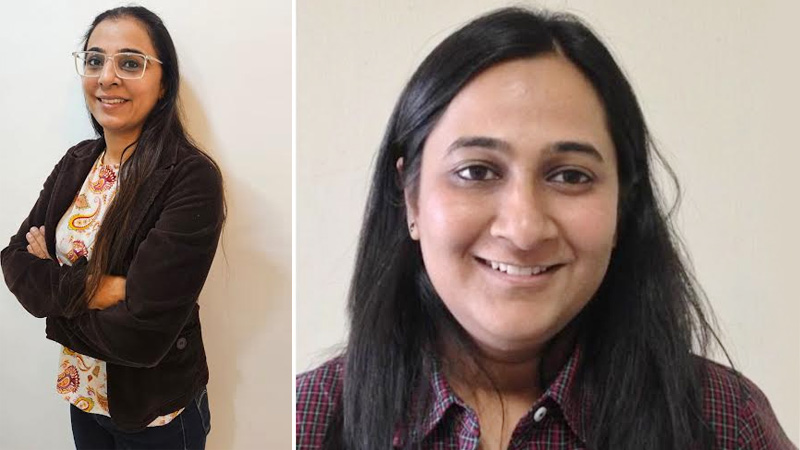
    Mumbai: Wavemaker India, GroupM’s most awarded agency, has announced key appointments to further strengthen its North leadership team. The agency has appointed Jasmine Sachdeva as managing partner and Dipika Bhasin as head for Team Reckitt.  

    The move is aimed at strengthening the agency’s position in the region and enhancing its capabilities to deliver impactful solutions to clients.

    Sachdeva, a highly experienced media professional with over two decades of industry expertise joins back at GroupM after a short stint with Publicis Media. She is a skilled strategist with expertise in crafting integrated media strategies, audience planning, and designing ROI-focused campaigns. She has a remarkable track record of spearheading award-winning campaigns for brands such as Nestle, Haleon, MamaEarth, Hero Moto Corp, Google, and Airtel.

    Bhasin, a media and marketing expert, has played pivotal roles across agencies including Dentsu, Omnicom Media Group and Carat. With over two decades of experience, she has successfully led media practices for renowned brands such as Apple, LG, Vivo, Royal Enfield, HP, Perfetti Van Melle, Maruti, Snapdeal, Nissan and many more.

    Wavemaker CEO – South Asia Ajay Gupte said, “Wavemaker India is currently on a strong growth trajectory. Our goal is to drive positive provocation within the industry and continue to expand our reach across the landscape. I am delighted to welcome two highly experienced leaders to take on critical roles within the organization and drive further growth. Their unwavering focus on clients and people development is truly commendable.”

    Commenting on the appointment, Wavemaker India chief client officer & office head – West, North & East Shekhar Banerjee  said, “I am excited to welcome Jasmine and Dipika to the Wavemaker family. Their impressive industry experience and diverse skill sets make them a valuable addition to our organization. We are confident that their expertise will contribute significantly to our ongoing efforts to drive innovation, excellence, and transformation for our clients. We look forward to achieving great success together”.

    In their new roles, both Sachdeva and Bhasin will be reporting to Banerjee.  

  • CAMM Summit 2022: ‘Retention is relevant through the customer journey’

    CAMM Summit 2022: ‘Retention is relevant through the customer journey’

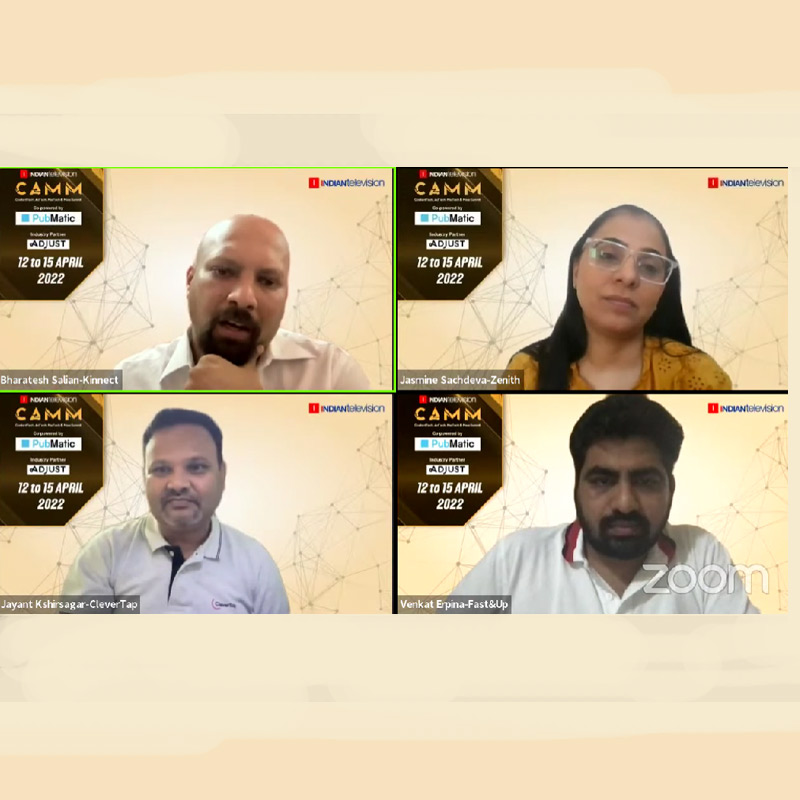
    Mumbai: Retention is no longer just about the last phase of the customer journey anymore. In a traditional organisation such as a bank, retention would only come into question when the customer would close their account. But in the digital natvive business model, where the customer goes through five phases starting from acquisition followed by activation, retention, referral and revenue, retention is relevant through the latter four phases.  At the Content-Tech, Ad-Tech, Mar-Tech and More (CAMM) Summit and Exhibition 2022 organised by IndianTelevision.com co-powered by PubMatic and industry partner Adjust, experts from agency, SaaS startup, marketing deep dived into a conversation on ‘Decoding User Experience and Retention.’

    The session was led by Kinnect senior vice president marketing science and CX Bharatesh Salian who was joined by Zenith senior vice president Jasmine Sachdeva, Fast&Up vice president marketing Venkat Erpina and CleverTap senior vice president marketing Jayant Kshirsagar.

    The last two years of the pandemic have changed the conversation around user experience and retention. Marketers’ decisions are more guided by data as customers. “Earlier, when the consumer was on digital or offline, we were guessing what they wanted,” said Zenith’s Jasmine Sachdeva. “We leveraged static data such as the Indian Readership Survey to understand who the customer is and where the probability is of finding them. Today, tools like AI and machine learning are supporting us to be able to predict customers’ future behaviour and connect with them. We’ve moved from guessing to predictive customer journeys.”

    Fast&Up’s Venkat Erpina spoke about using purchase data to better understand the customer’s preferences. “Two years back, we entered the sports nutrition category with our product. If you have a strong retail customer base then it is easier to leverage them for future growth. So, we focused on customer satisfaction in terms of delivery time, packaging communication in various instances of product delivery and product quality. Then we segmented our customers into various cohorts. If a customer falls into a relevant cohort for a new product then we reach out to them and acquire new consumers,” he said.

    The panellist suggested that there is a limit to how much you can nudge a customer towards a new product. The idea is to give customers value over selling them more products to drive retention. SaaS startups such as Clevertap are leveraging first party data to help brands create a seamless customer experience and purchase journey.

    “All our customers are B2C companies with a digital native business model,” said Clevertap’s Jayant Kshirsagar. “Almost all of them have created a unique experience for their customers. Now they are focusing on creating value through experience.”

    “They are refraining from spamming the customer instead they are personalising. Clevertap has created a platform where we use data, analytics and recommendations. Retention is important in terms of safeguarding the consumer base as every five per cent increase in retention helps operating margins by 40-70 per cent. The cost of acquiring a customer is far higher than the cost of retaining a customer. Offering experience plus value using technology is the key to retaining customers,” he added.