Tag: Japan

  • LinkedIn appoints Nishant K Rao as country manager

    LinkedIn appoints Nishant K Rao as country manager

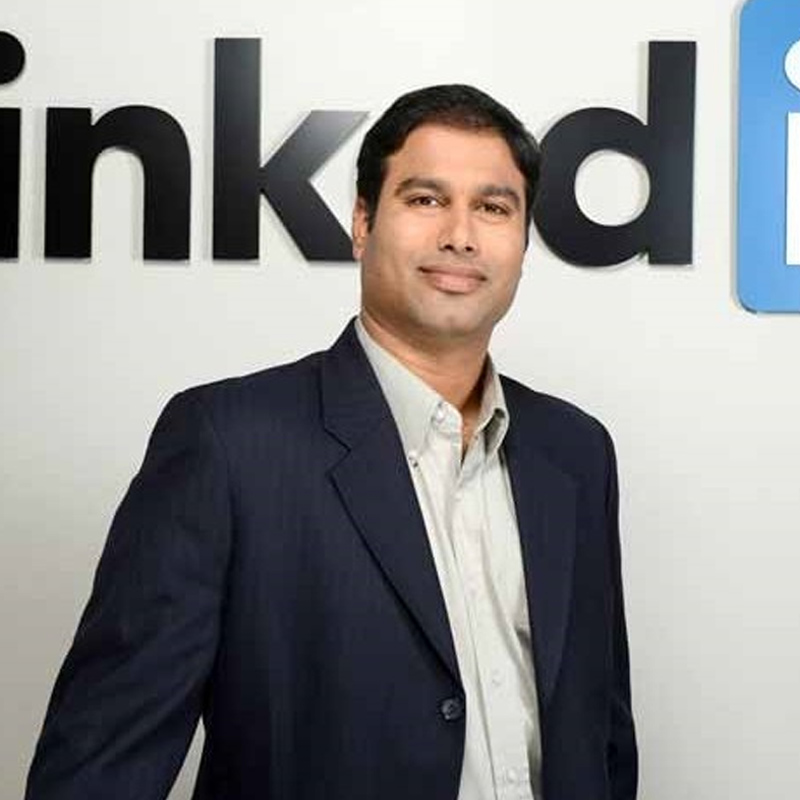
    MUMBAI: LinkedIn has appointed Nishant K Rao as the new Country Manager for India.

    Rao‘s appointment at LinkedIn India comes following the promotion of former country manager Hari V Krishnan into a larger role as managing director of Asia Pacific and Japan.

    In his new role, Rao will focus on scaling up operations and staying committed to LinkedIn‘s value proposition of connecting India‘s professionals to make them more successful and productive and helping enterprises hire, market and sell effectively, the company said.

    Rao said, "With a member base of 18 million professionals, India is one of our fastest growing markets and the largest outside of the US. Indian marketers and recruiters are fast realising the potential of LinkedIn‘s affluent member base and are leveraging the platform for targeted and thought leadership oriented campaigns. I am excited about the opportunity to work with the LinkedIn India team to serve our customers and members in India."

    Prior to being appointed as LinkedIn India‘s Country Manager, Rao was director, business operations – head of global sales strategy at LinkedIn‘s headquarters in Mountain View.

    He has been with LinkedIn since September 2011.

    Rao has over 10 years of industry experience with a healthy mix of sales, strategy management and entrepreneurship. He has held leadership positions with companies such as McKinsey and ARIBA Inc and was also one of the founding members of Epicentre Technologies, one amongst India‘s first call centers.

  • Madagascar 3 still reigns overseas box office

    Madagascar 3 still reigns overseas box office

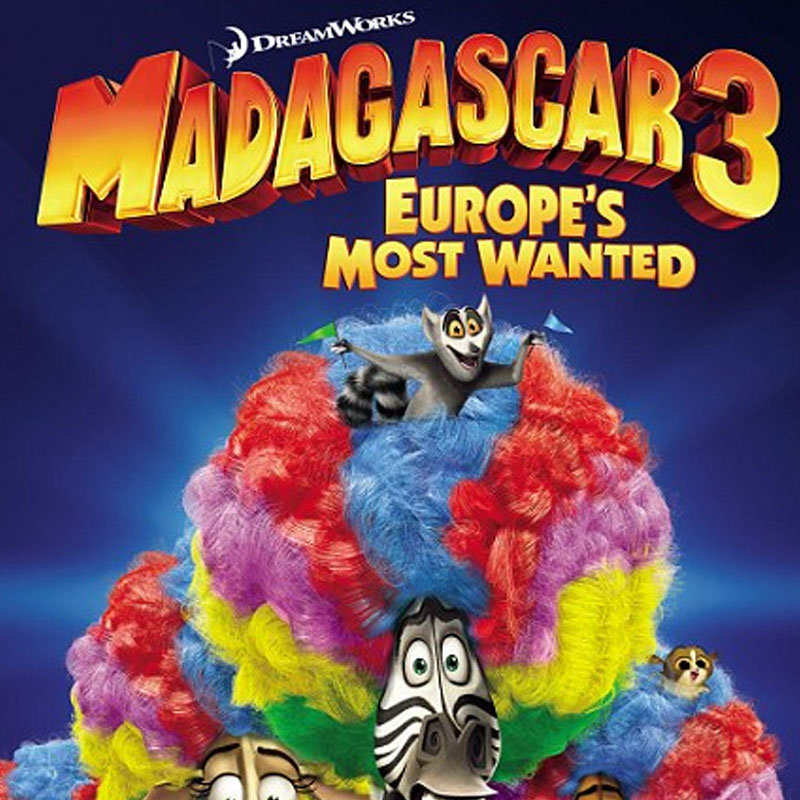
    MUMBAI: Madagascar 3: Europe‘s Most Wanted stood at its No. 1 position for the third consecutive week after it drew $30.1 million from 11,250 locations in 44 territories in the foreign box-office circuit.
    The DreamWorks Animation film has surpassed the $200-million total gross mark ($208.4 million) since opening overseas on 6 June.
    Complementing its No. 1 domestic opening, Pixar‘s Brave made its debut overseas after generating $13.5 million in its launch in 10 markets. As per its distributor Disney, the collection comes from 17 per cent of the international market.
    The top-ranking territory of the film was Russia where the gross was $5.6 million representing a 42 per cent market share. Australia came in with a No. 2 ranking with $3.6 million while the film‘s China debut took 17 per cent of the market with $2.2 million. Overall, the film ranked as the weekend‘s No.3 title.

    Finishing outside the top five was 20th Century Fox‘s Abraham Lincoln: Vampire Hunter that opened offshore to $8.1 million at 2,656 venues in 17 markets for a per-site average of a little more than $3,000. This Civil War-set action fantasy, starring Benjamin Walker, drew $3.9 million in Russia from 1,482 situations.
    The weekend No. 2 title was Universal‘s Snow White and the Huntsman, which took the top spots in France, Japan, Australia and New Zealand and collected $22.6 million overall at 6,780 sites in 60 territories.
    Dropping to the fourth place was Fox‘s Prometheus drawing $12.7 million from 6,911 situations in 61 territories. With the film yet to open in key places as Japan, Germany, Italy and Spain, the sci-fi/action film has grossed more than $150-million ($152.9 million) to date on the foreign circuit.
    Standing at fifth spot was Men In Black III that drew $10.5 million from 7,660 sites in 75 markets with Japan leading the cumulative pack with $35.4 million.

  • Director Kaneto Shindo dies at 100

    Director Kaneto Shindo dies at 100

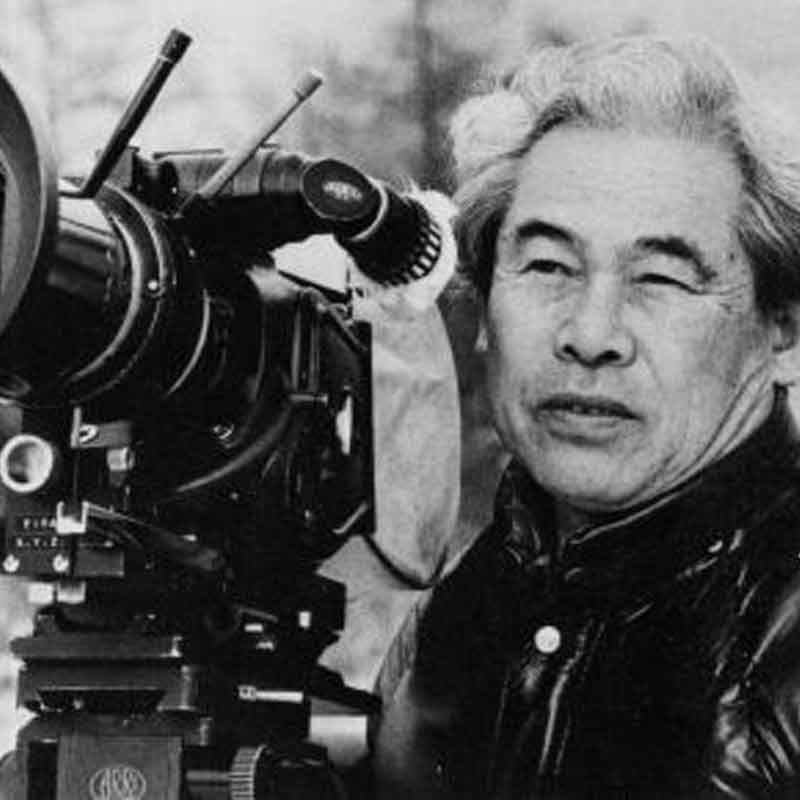
    MUMBAI: Director Kaneto Shindo, whose last film Postcard was Japan‘s foreign language Oscar entry this year, passed away at his home in Tokyo yesterday morning. He was 100.

    Postcard was based partly on the director‘s own experience in World War II when he was one of only six survivors of a unit of 100 middle-aged men called up toward the end of the conflict. He shot Postcard at the age of 98, despite being wheelchair-bound and suffering from failing eyesight.

    “The crew had worked with him many times before, so they understood what his vision was. It was very emotional when they finished shooting as he knew it would be the last time they worked together,” Jiro Shindo, the director‘s son who acted as producer for Postcard had reportedly said late last year.

    Born in Hiroshima, Shindo entered the film business when he was 22, later working under legendary director Kenji . His career spanned nine decades, during which he directed 48 films and wrote 238 scripts.

  • Men In Black dislodges The Avengers as no.1

    Men In Black dislodges The Avengers as no.1

    MUMBAI: Upon release, Men In Black 3, took over the reigns of the foreign box office grossing $132 million opening at 22,435 venues in 103 territories. Thus it dislodged The Avengers as the No. 1 film overseas.

    Co-starring Will Smith, Tommy Lee Jones and Josh Brolin, the film premiered at No. 1 in 101 markets with China leading the list with $20.6 million drawn from 6,073 screens while Russia came in second with an intake of $18.8 million from 1,547 sites.

    According to Sony, MIB 3 grossed more than $52.2 million in Asia. Japan ($7.98 million at 980 venues) and South Korea ($8.53 million at 950 spots). In the UK, the film‘s intake was $4.96 million from 1,242 locations while in France, the film roped in $5.64 million from 889 situations.

    IMAX screens playing MIB 3 drew $6.1 million from 195 screens through Monday, said IMAX senior vp worldwide distribution, Phil Groves. IMAX‘s international box-office total is expected to be $7 million.

  • 46 films to screen in 8th IAWRT Asian Women’s Film Festival

    46 films to screen in 8th IAWRT Asian Women’s Film Festival

    MUMBAI: Forty six films from 16 countries will be screened in the 8th IAWRT Asian Women’s Film Festival to be held New Delhi from 5 to 7 March. The programme includes three curated packages of films from Japan, Turkey and Hong Kong.

    24 filmmakers from 10 countries will also be present to lead the discussions following the screening of their films. These films would be shown at the India International Centre Auditorium at Alliance Française on 6 March.

    Apart from the film screenings, there will be a seminar on ‘Representing Children’s Worlds: Gender, Media and Society’ on 5 March.

    A panel discussion on ‘Does Nuclear Power have a Future?’ will be held on 6 March.

    The festival is being organised by IAWRT – India, in association with the India International Centre, Sangat South Asia, Japan Foundation and Alliance Française.

  • ‘Challenge in the digital world is to make content that lasts longer’ : Turner Entertainment Interactive Media executive director Benjamin Grubbs

    ‘Challenge in the digital world is to make content that lasts longer’ : Turner Entertainment Interactive Media executive director Benjamin Grubbs

    As new media usage grows, broadcasters are trying to find ways to leverage it. Turner is no exception and has been creating tools like games for kids. The idea is to use new media as a brand extension for Cartoon Network and Pogo.


    New media is not just a marketing tool but a place where kids spend a serious amount of time engaging with their favourite characters and shows mainly through gaming. The challenge in the digital world is to make content that becomes stronger and lasts longer.


    As Turner has worked aggressively on new media to ensure that it co-exists strongly with the traditional media, it has kept a firm eye on maintaining scale for such products across markets.


    Turner has also created facilities that develop local content for new media in places like Japan, Korea, China and Southeast Asia. The R&D team in Mumbai, for instance, creates products for the Indian platforms. The aim is to develop the local market and also make product innovations that can be exported.


    In an interview with Indiantelevision.com’s Ashwin Pinto, Turner Entertainment Interactive Media executive director Benjamin Grubbs talks about how the media conglomerate has used new media to hook kids and build their content brands.


    Excerpts:


    How does Turner approach new media?

    New media and traditional media complement one another; they co-exist in the market. The consumption of TV content increases as digital media usage increases. Consumers have an affinity for those brands that we create and they consume them across platforms. They watch an episode of a TV show; online they play a game involving a character from that show. Then at retail they buy a toy or a T-shirt.


    There is a three-pronged approach of the Turner interactive business – Create, Play and Edu-tain


    -Create: Games like Toon Creator let kids create their own cartoons. Toon Creator has over 469,000 animations developed by kids and 5.6 million views. Another example is Game Creator where kids can create their own games. It has 402,000 kids making games, there are 1.6 million games developed by kids and 429 million games have been
    played.


    – Play: Cricket Club is an excellent example. There are estimated 10 million game plays in 2011


    – Edu-tain: Cartoon Network partnered with Prudential Asia to launch Cha-Ching, an initiative that encouraged kids to learn money management skills by a simple four-part process – ‘Earn, Save, Spend and Donate’. An interactive website hosting games, music videos, applications, etc. was created.


    How does the business model work?

    For broadcasters, there could be different business models. At Turner we package content on channels and sell them to cable companies who pay us a fee. We sell advertising on our channel and websites. We have consumer products and also do live events.


    In the pay-TV market, there is more demand for compelling content that continues to do well. In the digital economy, new revenue streams are emerging. It has only been in the last couple of years where we have seen smart phone usage. The method of monetisation is not just advertising but also buying products like a game. You can buy a game on the phone or buy items within a game. It is not transferring one business model to another. You open up business models that are complementary to your core business.


    How much revenue do you get from new media?

    We don’t break down the percentage of revenue that comes from different business segments. But the digital business growth rates are high.


    Which are your top properties that have been monetised through new media?

    The Ben 10 franchise is a good example. This is content that started with television. Then it became a successful global consumer product IP. We license it out. Then in the digital space we have developed online games and mobile products. There is also video content available online. We have monetised it in different ways.


    ‘We have a R&D team in Mumbai that develops products for the Indian platforms. The aim is to develop the local market and also make product innovations that can be exported’


    You have done online gaming for properties like Ben 10. How effective has it been as a brand extension tool?

    What we are seeing in some markets is that people who do not have cable television at home just consume our content through digital media. In some markets across the Asia Pacific, the cable market penetration may not be as high as what it is in India. We see a percentage of people who only consume content on digital. Digital has been a positive development for Turner over the last five to 10 years.


    Have you done research to show how kids in India and Asia perceive and use new media?

    There is similarity in terms of how Indian kids and other kids use new media. They look for games first when they go online. We launched Cricket Club here on Pogo. We then took it to Australia. We will take it to every cricket nation.


    For the last 10 years, we have been running a New Generation study. Many kids become more active consumers of technology than their parents; they get initiated at a very young age. The time spent on our site is 25-30 minutes per visit. It is a very engaged audience and they come back quite often. This results in high affinity for the brand. It is not a matter of them spending a couple of minutes online.


    They spend as much time in an online visit as they do on a TV episode.


    How is new media impacting the way kids consume traditional television?

    Like I said, it is complementary. It is not a zero sum game where because you grow digitally, the traditional media consumption goes down. The data we are seeing is that both grow in parallel.


    Interestingly, girls are heavier gamers than boys.


    An estimated 25-30 million kids are online. There were approximately 12.1 million users in 2011 across www.cartoonnetworkindia.com and pogo.tv. 79 per cent of kids (ages 4-14 years) are mobile phone users.


    The number of Indian kids who own their own mobile phone is growing.


    Are costs rising in creating content for digital media?

    Yes! On television you make content by spending a year to two years developing a series. In the digital world you could spend the same amount of time developing a game. The investments going into doing some of the larger online games are rising and is almost the same as making a TV show.


    The challenge lies in extracting the right returns. In the digital space when we put content out we immediately get feedback. So the team makes conscious decisions about adapting and evolving content. For us it has been a big learning as you have larger investments around digital content. A game has people registering profiles and creating profiles. They have an online identity. Friends come into this environment and they communicate and share content.


    What is the challenge in making digital content?

    The challenge is to make an offering that will stick with the consumer. The challenge in the digital world has become more apparent over the past couple of years – as you put out games and get active users, there is an immense amount of data that you start collecting. You need to look at what data is relevant and use it to optimise and enhance the platform.


    The big effort is not making the content but what happens after you launch it. This is how it becomes better, stronger and lasts for a longer period of time. The online and mobile games that we make now we expect to be in the market for several years. Our aim is not for the product to be in the market for two weeks. These are not campaigns which go away after a couple of months. We want the products to last for two years and we want to see continual growth in that product over a period of time. This is the guideline.


    How does the process of creating new media applications work?

    This starts with consumer insights. It is about conversations we have with consumers and through our focus groups or through a survey. We blend that data with what we see on our own platform. Then we see trends and try to predict where things are going. If it takes a year to develop a game, we have to think about what is going to resonate with consumers a year down the line.


    You have tablets and smart phones. We don’t just make content for the PC or Internet. The consumer has to be able to access the content across multiple devices and platforms. This informs the decisions that we make and the technologies that we invest in. When things become multiplatform, you have an extension of the brand experience. Then you look at genres, the market in terms of if there is wide open space that we can go and play into. We also look at how a product can get scale across markets.


    Could you give me an example of an innovative project recently done?

    We worked on something last year. It started with deep consumer insights. We looked at the market and found that there was nothing that addressed an insight that we stumbled upon. So we decided to develop a product.


    A guy in my team wrote a 16-page background story and dreamed up characters and plotline. This was for an online game. It was similar to someone writing a treatment and background explaining what a film is all about. He had visualised the game platform and how it would grow over time. We looked at it in order to visualise the creative

    concept. We had to then step back and make a calculated bet as there is no guarantee of success.


    We also recently came out with an online racing game. What we are seeing is that there is great adoption of multiplayer racing games among youth. While there were compelling games already present, they were larger console titles or larger massive multiplayer online games that target an older segment. There was an open space for a younger age segment. We developed it for Asia at a studio in China. We talked it out with our counterparts in Europe, Latin America and the US.


    They were excited and wanted to co invest. We got scale from our investment and the product will launch this quarter in the US first. Then it will go all over. It started in Asia and found it resonating everywhere. We want to do more of this. If you boil it down to some of the building blocks and basics, products are not so different from one market to another. We also allow for some scope to localise but the main core of it should be similar across regions. It allows for better ROI.


    Ben 10 is huge among boys. Storylines for digital products are evolving. We made a storyline for Ben 10 that was not told on TV. We hired the writers from L.A. to give us a story arc. The crux of this story is coming out in a movie that premieres in March. Things have come full circle.


    How much R&D goes into creating new media services?

    We have a team in Mumbai that develops products for the Indian platforms. Cricket Club was developed here. The aim is to develop the local market and also make product innovations that can be exported.


    We do research all the time. A lot of data is collected that informs our decisions. We have facilities that develop local content for new media in Japan, Korea, China and Southeast Asia.


    Is allowing kids to create their own content becoming more important?

    Yes! The platforms we develop have been successful. This has surpassed all expectations. Game Creator has been the biggest one. Kids can create their own games. We have different versions of Game Creator. It is about brand engagement.


    What are the ways in which content owners can work with advertisers online to produce results?

    In some cases we sit down and have a conversation. The advertiser can show a business challenge and we find an addressable opportunity. On the other end of the spectrum, we talk about complete custom creation of a new product or service that is done with an advertiser. We have found that 63 per cent of car purchases in India are influenced by kids. Half of the shampoo purchases are also influenced by kids.


    Is the lack of an effective measurement system a challenge?

    There are third party research tools from parties like Nielsen and comscore that advertisers, agencies and publishers like ourselves subscribe to. Turner also has its own research systems and tools. We develop content that we market to the market. We also want transparency in data. We can see what the response rate is from consumers. ROI comes from things like registration, an online purchase and filling out an online form. We can track this user funnel so that we can better optimise it.


    There is a continuous dialogue that happens. The digital space moves fast. A couple of years ago we weren’t talking about smart phones. We want to have dialogue with other marketers so that we can evolve.


    What role do social networks play in reaching kids?

    The reality is that people are on social networks. Facebook is a way for us to distribute content. When people are on Facebook, that is where their experience lives. But for us leveraging Facebook means staying on the platform; it is not about providing marketing messages that take users off Facebook. It is about providing content within that platform. This is where our investments have been going. Among social networks that kids use Facebook dominates.


    Is the economic slowdown having an impact on broadcasters pursuing aggressively their new media plans?

    No! It is accelerating growth. What I mean by this is that during a fiscal crunch you might want to look at ways to do things that are more effective and efficient. In the digital world things change at a very fast pace. There is a need for constant dialogue to stay on top of changes. In new media with barriers falling, it might make more financial sense to do something now compared to earlier.
  • Third Eye Fest ends with Rang Rasiya

    Third Eye Fest ends with Rang Rasiya

    MUMBAI: The 10th Third Eye Asian Film Festival, that got underway on 22 December, screened as many as 100 feature films and 50 short films.


    The films were selected from among over 400 entries received from different Asian Countries including Iran, China, Japan, Israel, Philippines and Indonesia.


    The festival that had Turkey as the focus country, promoted and showcased several Turkish films like My Marlon And Brando, Uzak ( Distant) and Yamurta (Egg) that were earlier appreciated at other festivals around the world.


    The seven-day affair paid tributes to departed film luminaries like Ashok Kumar and Dev Anand whose cult film Guide was screened in the presence of his son Suniel. Tributes were paid to Ashok Kumar by screening of his B R Chopra-starrer Gumrah.


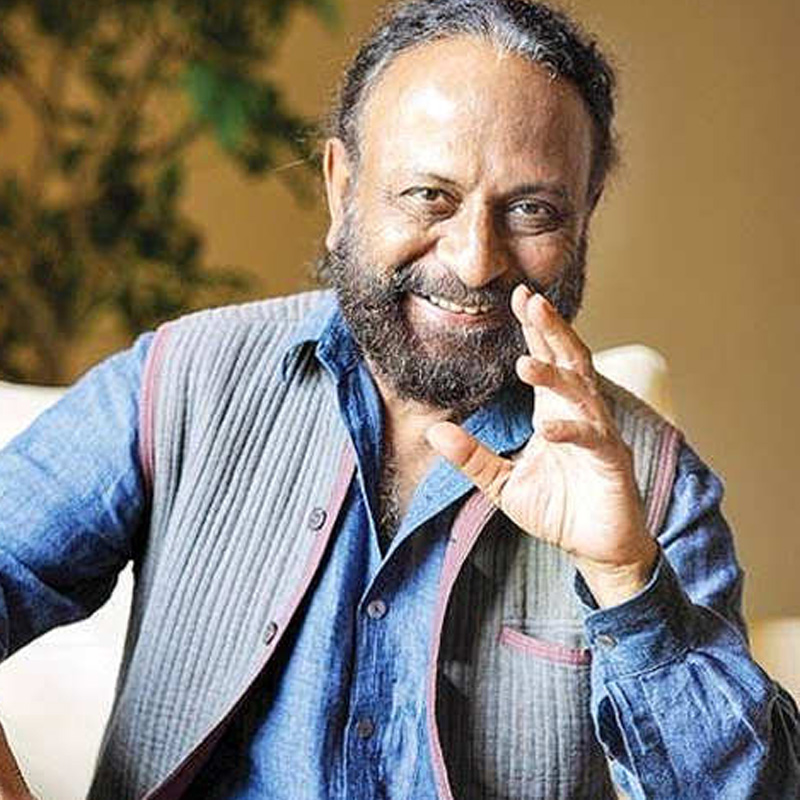
    The festival, that rolled with the premiere of the Chinese film 11 Flowers, ended with Ketan Mehta‘s Rang Rasiya.

  • Fifa Women’s World Cup sets new TV viewing records

    Fifa Women’s World Cup sets new TV viewing records

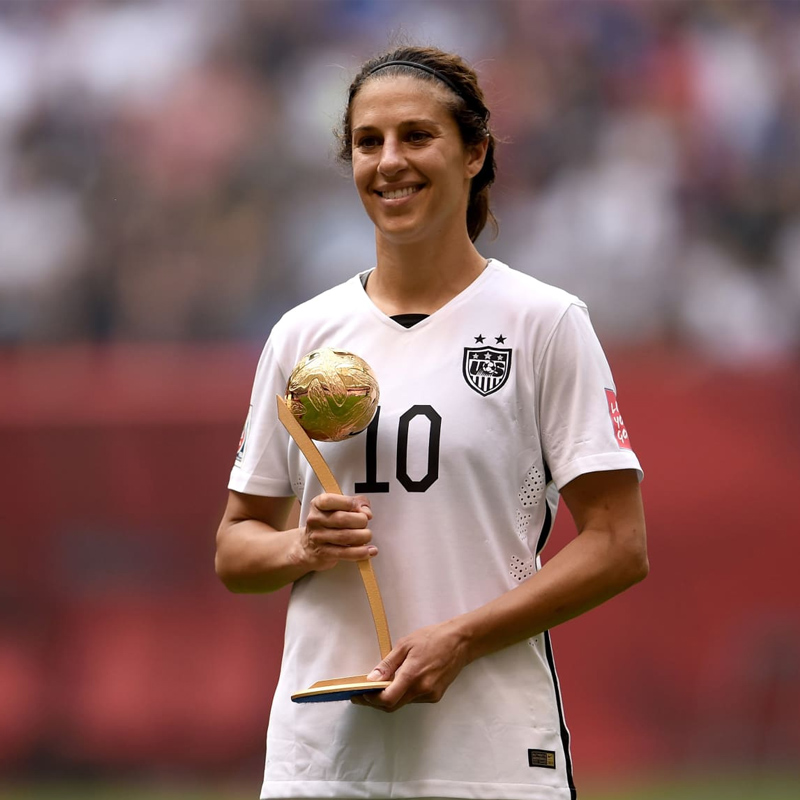
    MUMBAI: Soccer’s governing body Fifa has announced that the Women’s World Cup Germany 2011 has set a new benchmark for the sport after viewers around the world tuned in en masse and smashed several TV audience records along the way.


    This was particularly notable in the host nation Germany, the defending champions twice over, as well as in the countries of the two finalists, the USA and Japan.


    The four games featuring the German team all gained average audiences of more than 14 million, with their final three matches attracting averages of over 16 million viewers nationwide – by far the highest audiences on record for Fifa Women’s World Cup matches in Germany.


    An average audience of over 17 million people watched Germany bow out to Japan, representing nearly a quarter of the German population.


    To put these figures into context, an average German audience of 15.5 million watched the recent Klitschko v. Haye World Championship boxing match in Hamburg, Germany, and an average of 14.8 million watched Germany v. Serbia at the 2010 Fifa World Cup South Africa.
     
    The German audiences for the Fifa Women’s World Cup are also the highest audiences for any sporting programme in the market since the final in 2010.


    Fifa TV director Niclas Ericson said, “These are solid figures on their own, but when you put them into context with other major sports events they emphatically underline that the FIFA Women’s World Cup was an exceptionally popular spectacle for TV viewers.”


    In the US, an average audience of over 14.1 million watched the final between the US and Japan.


    ESPN delivered the large majority of the audience, reporting an average of close to 13.5 million and a peak audience during the penalty shoot-out of over 21.1 million. This is ESPN’s highest-ever audience for a football match and ranks as the second-highest audience for a daytime telecast in US cable history (behind the 2011 Rose Bowl). These audiences were also over three times higher than the US average audience for the final round of golf’s Open Championship on Sunday, as well as nearly 10 per cent higher than the audience for baseball’s All Star Game last week.


    Newly crowned world champions Japan also achieved record audiences at home for the final despite the match airing in the early hours of Monday morning. An average audience of 10.4 million watched Japan beat the USA, while a peak audience of over 15 million witnessed the penalty shoot-out. This audience is more than three times higher than the previous record for a women’s football match in Japan set by the semi-final last week, and it is more than 50 per cent higher than the audience in Japan for the final of the 2010 Fifa World Cup South Africa. This also compares favourably to Japanese audiences for other major sporting events, including The Masters golf tournament.


    In France, a record audience was set for the France v. USA match, with an average audience of over 2.3 million tuning in. This is more than double the previous record for a women’s football match in the market, which had been set for the France v. England quarter-final earlier in the tournament. The audience in France peaked at nearly 3.3 million towards the end of the France v. USA match.
     

  • ‘As there is no clear No. 2 sport in India, NBA has an opportunity to take that spot’ : Emilio Collins – NBA senior VP international development & partnerships

    ‘As there is no clear No. 2 sport in India, NBA has an opportunity to take that spot’ : Emilio Collins – NBA senior VP international development & partnerships

    Cracking the Chinese wall, the National Basketball Association (NBA) plans to break into the Indian market and become the No. 2 sporting power within five years.


    Last week the NBA inaugurated a dedicated basketball court at Nagpada in Mumbai, the first in a series of courts that it plans to develop in line with its long term commitment to grow the sport in India.


    For the first time, the NBA also opened up its live matches to the online viewers in India.


    In an interview with Indiantelevision.com’s Ashwin Pinto, NBA senior VP international development and partnerships Emilio Collins talks about the other plans that the company has to grow the market for basketball in India.


    Excerpts:

    Could you talk about the strategy NBA has employed to grow its reach globally over the last couple of years?
    Our strategy starts with media. This means getting television reach and forming partnerships with other digital outlets to grow the reach of the NBA brand. Post this, we focus on building the sport out. This is done by creating more basketball opportunities. We aim at providing more access to the game like infrastructure development.

    Which are your top five markets outside the US and where does Asia fit in this?
    China is our biggest market. It represents 40 per cent of our international business. Over the last six years, there has been substantial growth in that market. Philippines, Korea and Japan are the other key Asian markets where the basketball population is very high.


    In Europe there is tremendous relevance in Turkey, Spain, Italy, the UK and Russia. A lot of our international players come from Europe and so the relevance is very high. Latin America is a big priority for us, especially Mexico and Brazil. We have recently started to look at the Middle East.

    Did the NBA see good revenue growth last year?
    The NBA is growing at a significant clip at 20 per cent a year. I cannot talk about numbers, though. Asia contributes a little over 50 per cent while Europe accounts for 35 per cent. Latin America makes up the rest.

    How much do television license fees contribute?
    Media license fees contribute 50 per cent. This is followed by sponsorship and consumer products.

    Why didn’t you push NBA into the Indian market earlier and how big a market opportunity do you see here now?
    The biggest challenge that we face at the NBA as far as our international business is concerned is how to size up opportunities simultaneously. We wanted to ensure first that we managed China correctly. A lot of resources went there.


    India is one of our focus markets now, along with the Middle East and Latin America. The emerging middle class provides a big opportunity for us here. Basketball can play a big role in the development of sports infrastructure. The appetite for sports and entertainment is growing which has been proven with the success of the IPL. The NBA also fuses sports and entertainment. The IPL has successfully tapped into this combination.

    How do Indians perceive the NBA as a brand?
    The brand value is very high. We are in the unique position where the best basketball players from around the world play in the NBA. So if you grow up and get exposed to basketball, you automatically aspire to be a part of the NBA. Our players are global icons and by the sheer nature of the presentation of our game, players become larger than life personalities and figures; they are fused into the world of pop culture and entertainment. This has enhanced the status of the NBA brand.


    How tough is India as a market for the NBA to grow, particularly since it is a one-sport nation?
    This, in fact, marks an opportunity for us as we want to be number two. In a market where there is no clear number two, there is an opportunity for growth side by side with the number one sport that is cricket.


    Our strategy revolves firstly around building the sport. We want to provide more access to the sport through infrastructure development. Then we want to get involved with the community and develop activities around it with our local partners. We can use basketball as a means to contribute to the community. Thirdly, we plan to expand the reach of NBA Lifestyle and offer opportunities to fans to experience the NBA. This can be done through basketball competitions, interaction with players and most importantly through broader media distribution.


    Where do you see the NBA in India five years down the line?
    The NBA has a long-term development plan for India. Our goal is to make basketball the No. 2 sport in India in the next five years.

    Outside the US, China is our biggest market. It represents 40% of our international biz. Philippines, Korea and Japan are the other key Asian markets where the basketball population is very high. India is one of our focus markets now

    You have successfully grown the NBA in countries like China and Japan. Are there any learnings from that brand building process which you would want to apply to India?
    We have learnt the most from China. It all starts with spreading the NBA brand through television. This is then followed up with on-ground activities mixed with community initiatives. To make a court for the Nagpada neighbourhood and make this the epicenter of social and physical activities for them would make a difference to the community. This is critical to all the markets where we operate.


    Secondly, we want to introduce the sport to new audiences. This means going into schools and teaching basketball fundamentals through a Junior NBA initiative. We also want to create participation. We can use the Nagpada court to have tournaments there.


    We bring the NBA Lifestyle experience to the market. In the USA, we will be going into malls over the summer and bringing the experience to fans like slam dunk on a small court. One can play NBA videogames. You can meet NBA players and really feel the NBA experience.


    Finally, we want to bring the NBA competition to India. We will bring NBA teams to compete in an exhibition game. But before doing this, the infrastructure in India has to develop at a faster pace.

    How is the deal with Star Sports working out?
    They have partnered with us for many years – in fact, since 1993. In addition to showing our games live on Fridays and Saturdays, they are also increasingly showing repeats during primetime. This is very important in terms of broadening the awareness of the NBA. We go beyond this by offering highlights and condensed programming that allow fans to connect.


    Then there is behind the scenes programming. We focus on what our players are doing in the community and on what our teams are doing day in and day out. We look at contributions teams make in their key markets. It is about capturing what the NBA brand is about in different markets across the US.


    Is there interest from other Indian and Asian television broadcasters as well for the NBA content?
    There is significant interest from other Indian and Asian television broadcasters for NBA content. We are in discussions with various local Indian media outlets to distribute our content in different ways to appeal to Indian fans.


    Does the NBA do a lot of tie ins for film and TV shows?
    The NBA works with a variety of TV broadcasters and film studios to tie in the League’s content – from product placement to guest appearances by NBA players, etc. The NBA brand and its players are a significant part of pop-culture and films and TV shows leverage the League as a platform to reach its target audiences.


    Would this avenue be explored in India?
    Integrating NBA content within TV and film is an important component in creating local relevance for our brand in India. We are developing strong relationships with broadcasters and film studios in India to showcase the lifestyle and pop-culture appeal of our League, teams and players. We have already begun to integrate with Bollywood. This past November, the NBA hosted two Bollywood stars – Lara Dutta and Dino Morea – for an all-access VIP weekend in L.A. NBA Entertainment documented their experience and produced a 30 minute program which aired on ESPN in India on Christmas Day last year.


    Are you looking at specials which can serve as value adds?
    In a game played by LA Lakers, Dino Morea and Lara Dutta took part in many activities around the Staples Centre. We produced a half-hour special with ESPN Star Sports. We will do more activities like this down the road. It helps if that many Bollywood celebrities are fans of basketball. We can create shows on the experiences of Bollywood celebrities with the NBA.


    In addition, there are opportunities for reality-based content. There could be a talent search contest about finding the next great Indian basketball player. We are talking with ESPN Star Sports in this regard as well as with other platforms.

    What kind of content does NBA offer on the mobile?
    It is crucial in India as there are hundreds of millions of subscribers in India. We need our content using this platform. Photos, ringtones, wallpaper and then as 3G comes in, we would offer highlights. This will all be in addition to standard scores and statistics.

  • ‘It is a good time to launch specialised channels as they help break through the clutter’ : Rahul Johri – Discovery India senior VP

    ‘It is a good time to launch specialised channels as they help break through the clutter’ : Rahul Johri – Discovery India senior VP

     Discovery is in restructuring mode. Earlier this year, it announced a reshuffle at the top to handle India operations. And the India office, which was reporting directly in to the Discovery headquarters at Silver Spring, Washington DC, will now come under Singapore as part of the integration strategy.


    On the content front, Animal Planet introduced a Hindi feed in April to increase penetration. Discovery Travel and Living is eyeing to put its personality-driven shows at the 10 pm slot.


    The company is also adding new channels like Discovery HD to grow the market in India.


    Indiantelevision.com’s Ashwin Pinto caught up with Discovery India senior VP, GM Rahul Johri to find out more about the company’s aggressive plans in India.


    Excerpts:

    What is the main reason behind the restructuring that took place in Discovery recently?
    Discovery went into local markets in Europe a few years back, and this yielded very good results. Applying the same model, the Asia Pacific region has been broken up into six – the Saarc countries which include India, China, Japan, North Asia, Australia/New Zealand and South East Asia (Thailand, Malaysia, Indonesia, Singapore).


    In India, people have moved up a level. I have management responsibility for India while Rajiv Bakshi looks after marketing. Then there is a regional managing director who sits in Singapore.


    We now work and coordinate with Singapore. The response time is much quicker.


    Earlier when we reported to Washington, the time zones were different. Also, what is a priority for us may not be as important for them. Now operations are easier in terms of taking decisions and getting clearances.

    How does the new operational structure help Discovery India?
    Discovery Asia has a strong infrastructure. This will now be more accessible to us. We can approach opportunities on an Asia wide basis as opposed to simply focussing on one country. For instance if a local production is being done out of India or Singapore, it can then be expanded to include other Asian countries. Solutions can be provided to enable this. On the client side also, we can provide solutions more easily so that they get visibility across the region and not just in one country.

    What are the key focus areas for India?
    Collaborating with the other regions in Asia to drive growth will be important. Sharing of content and resources will be key. We will also strengthen the branding of our channels by making the content more definitive. We will keep refreshing content across all the channels so that audiences get what they want to watch.

    Are you looking at growth through launch of more channels?
    Yes! As the Indian television market matures, it is a good time for specialised channels to launch as they help break through the clutter.


    We have 14 channels and we will bring what we feel will click the best. Discovery HD is definitely a channel we are keen on bringing to India. Discovery Science is another channel that we feel would work well here. Of course, it is also important for cable to go digital. Otherwise getting carried gets difficult.

    Discovery has launched Planet Green, a new channel for environment, in the US. Do Are there plans to launch in India?
    The channel has just launched in the US. A band of the channel will launch in Southeast Asia. We will see how viewers respond to it. We will test the programming in India and then decide on whether or not to launch the channel here.

    Starting Hindi feed worked for our two channels as there is a lot of commentary. This won’t work in Discovery Travel and Living

    In terms of revenue, how important is India within Asia?
    India is one of the top markets along with Japan, Australia and New Zealand. Subscription plays a key role everywhere. In India there has been strong growth in ad sales.

    How is Animal Planet faring after going Hindi?
    The most important thing was the Hindi feed being introduced in April. Now we are able to compete better with National Geographic. Going Hindi was, thus, a progressive step. We play to the core strength of the channel which is focussing on the animal kingdom. We also have hosted shows.

    Will you be doing a Hindi feed for Discovery Travel and Living?
    No! It worked for our other two channels as there is a lot of commentary. In Discovery Travel and Living, though, it will not be natural to see, for instance, two Chinese people speaking in Hindi.

    How has Discovery Travel and Living evolved as a brand since launching four years back?
    DTL is perceived as being a distinctive lifestyle channel for upmarket viewers. People are now familiar with our anchors like Nigella Lawson. They also identify with individual shows like our biker content. We keep refreshing our programming. We bring new shows regularly.

    What have been the programming highlights for the channel this year?
    We did a show with Manish Arora. We are doing two more India productions which will premiere later this year. Our big show now is Cheese Slices. Food is a popular genre for us. So we will kick off a show, Indian Food Made Easy, which will be hosted by Anjum Anand.


    We will be launching a multimedia campaign to push our 10 pm slot. This is because our viewers tune in a little later. Personality-based shows will air at this time, seven days a week. The message of the campaign is that at this time you will see hosts like Nigella Lawson, Ian Wright and Anthony Bourdain; the campaign theme will focus on the most recognisable faces on the channel. This will be the largest campaign ever done for the channel.

    Is the aim to bring in appointment viewing?
    This is one of the goals. The campaign will showcase our biggest properties. We are hoping that it will help expand the reach of the channel and drive in new viewership. It is important that our campaign not focus on just one show. By pushing a band, the recall will be high among viewers.

    In what way is the programming strategy being fine tuned for local audiences?
    When we started, we had very little India content. We now produce shows from India. Every global show that is being produced, has a segment on India. So if Anthony Bourdain does a new season, he will visit India as well. This is how the relevance of India is growing. Ian Wright used to just host Globetrekker which is about backpack travel. Most of our viewers do not do that. So we tweaked it and now Wright does VIP Weekends. He visits the best hotels globally.

    Has the thematic weekend concept worked?
    It has done well and the thematic weekends are continuing. But over time our aim is to build a theme across a day – rather than having one theme continuing everyday. Our aim is to strengthen the genres. For instance if you take shows like Anthony Bourdain and Cheese Slices, it is not just about food. It is also about travel, visiting new places. Different genres get intertwined.

    What do you look for in a local show?
    We always look out for good local concepts. Our aim is to have a definitive show in a certain genre. Once we have decided on this, then we go with the best talent. So we roped in Manish Arora to do a fashion show. He is suited for television as he is so colourful.


    Our shows have to have an individual and distinctive personality. They need to be of the same class and quality as the other shows that we air. There can’t be any compromise as the same shows travel abroad and showcase India to the world.

    What are the other time bands that DTL is developing outside the 10 pm slot?
    We are also looking at the midnight to 1 am time slot. People watch us at that hour. I think that some channels are missing out on viewership by not concentrating on this audience. They simply run repeats at this hour. Many people work till late and then watch television.
    Is it difficult to get clients to commit serious monies for Discovery Travel and Living with the economy in a downturn?
    Our market is on an upswing. Our TG has not been impacted by the downturn. We have over 600 brands with us including L’Oreal and the car companies. Volkswagen is starting a marketing campaign and they are using our channel as a vehicle. Packaged good companies also advertise with us. Companies that want to target the premium audience cut out wastage completely when they come to us.

    What are the tentpole properties coming up for Discovery?
    Ultimate Olympics is a show that we will air. It looks at the work that has gone behind putting the Olympic Games together. The show gets over a day before the Games start. Another show that will air is Download. This focusses on stories from the internet like the competition between EBay and Amazon.


    We will also celebrate Nasa’s 50th anniversary with a show When We Left Earth. Nasa has given us footage of the Apollo Missions. This is the first time that Nasa has done this.

    What is Discovery’s new media strategy?
    We already have our website. For the mobile, 3G has to happen; the phones have to support rich media content. Right now one is still with ring tones and music tones.