Tag: Japan

  • The future is about reinventing and recasting: Rohit Ohri

    The future is about reinventing and recasting: Rohit Ohri

    Dentsu created waves early this year when the Indian National Congress chose the agency to handle its creative mandate for the 16th Lok Sabha elections. The country’s oldest party might have lost in the elections but the communication was the talking point among industry as well as people.


    Rohit Ohri’s nearly twenty-four year journey in advertising communications, began with the Tata Son’s Marg Publications, but he soon moved to JWT, first Kolkata and then Delhi. Under his leadership and strategic direction, JWT Delhi’s top-line doubled, making it the largest branch office of any advertising agency in India, the largest and most profitable JWT office in Asia Pacific and the third largest JWT office in the world.


    In August 2011, Ohri, a golfer at heart with a seasoned sense of humour, joined Dentsu India Group as executive chairman. Today, he has additional responsibilities on his shoulders as its CEO in APAC (south).


    Indiantelevision.com’s Meghna Sharma caught up with the man to know more on how his term has been with the agency so far and what can be expected from it in the coming months.


    Excerpts…


    The year started with the great Indian political tamasha. How was the experience especially when the party blamed the agency for the debacle?


    The congress party had organised a pitch wherein 16 agencies were pitching, which included JWT and McCann and another six to seven top agencies. We won the business on the basis of our merit. We made over 16 pitches before we actually won the business, so everybody saw the quality of work and what we could deliver before being chosen.


    We had absolutely no problems with the congress party at all. None, whatsoever. And this blame game is a media created story. We have got letters from the party’s head of the communication cell that they are very happy with us especially for the quality of work that we delivered and the professionalism with which we worked. Congress party is not blaming us at all, it is an absolute lie.


    The first phase of campaign that we had created was really strong and worked really well. The fact is everybody we talked about the campaign, told us that it was strong and strategically correct.


    I think the issues are much larger and advertising campaigns are at best support but there has to be an overall positivity behind a candidate or the party. Unfortunately, it was a tough election.


    I would say the year started off pretty well for us. As an agency, and it was on the basis of merit and I am quite proud of it. Most of the bigwigs in politics believe that election campaigns are won on the ground. What a party does at the ground-level with the party workers makes a great primary for a win.


    We did not do the Delhi campaign; it was done by JWT and McCann. But see what happened to Sheila Dixit government.


    The real thing is what the need of the nation is.


    And then came the debate over the new Airtel ad?


    I think it is fantastic. The Airtel ad is about connectively and if the ad itself creates conservations then what more do you want?


    Everything generates two or more different point of views. So, if the ad shows new dynamics of relationships, it is bound to generate buzz. Change is not accepted easily. Today, we all are creating content that everyone wants to talk about and viralise. So, here it did the same. We had Barkha Dutt doing a show on it and people were logging on to just see the advertisement. So, which client will be unhappy with it?


    You will complete three years in the agency, soon, how has the journey been so far? What have been the high and the low points?


    I haven’t had any low points. When you look at cultural transformation in an organisation, I think when I look back and then see today’s Dentsu, it is in a much stronger place than when I had joined. I think that is an enormously gratifying feeling.


    So, I do feel that agency works very well in terms of where it wants to go in the future. Lot of things in terms of our acquisitions, not just of the company, the talent, and how we build within the Dentsu agencies and how we have integrated well with Taproot and WebChutney matters. And now on a larger level, with the entire Dentsu Aegies Network how we are leveraging the strength across the entire network. We have come a long way and I think we are very happy about that.


    It wasn’t very difficult for you to merge the cultural differences between the various Indian and international agencies?


    No not at all. If you fundamentally look at a few values of the network, it is about the focus on the quality of creative, integration and on collaborative model of working together. These are things that Dentsu Inc holds very close to its core in Japan.


    Example, today everybody talks about integration. It has really turned a new paradigm for advertising and communication agency. Almost 12 years back, Martin Sorrel started the whole thing of unbundling. It created individual interest versus brand interest dominations. In many ways what happened was that fragmentation was created between advertising and marketing and the agency structure was going somewhere else.


    That is the reason Dentsu never unbundled itself. It always stayed as an integrated agency firm from day one. The network saw this happening internationally and as the world’s largest advertising agency, could pretty well have gone the same way but decided not to do.


    Agencies within the Dentsu Aegis Network collaborate around a particular client saying that if a particular client needs x, then we will work around that particular client. So that the client’s interest is served before anything else. There is certain liquidity in the network and the network is dependent on the basis of client’s needs.


    With four creative agencies under the belt, how do you make sure that there isn’t any overlapping?


    The fact is that from a philosophy perspective it is one Dentsu; each one of the agency with the exception of Taproot. We have three Dentsu branded agencies and then Taproot which is our acquisition. There is one thinking around all of them. Physically three separate entities have been created so that there is absolutely 100 per cent confidentiality with each and every client.


    How has the partnership deal with Aegis Media helped Dentsu in escalating its position?


    The partnership with Aegis Media has been perfect for us. Primarily, because Denstu’s core vision, philosophy and point of view on advertising has been about innovation and integration. If you look at that, to deliver integration we need the best in class services across the whole wide number of platforms.


    We now have various offerings and all those capacities ready to take to the clients’ saying that ‘with all our entities, we can actually empower your brand.’


    In many ways Denstu has completed Aegis and Aegis has completed Dentsu. Now we are a full service integrated brand solution company.


    You have said that digital ad campaigns will drive Denstu’s next big initiatives. So, in the future, do you see brands being lead by chief marketing officer or chief technology officer?


    For Dentsu, the core of the brand is really about the intersection between creativity and technology. Technology is not just a lap over but technology is something we use as point of view. Technology is needed to reach out to new consumers and empowering them. Dentsu has a rich heritage of harnessing technology for brand communication in a creative and interesting manner.


    Going forward, it is a marriage of the two – creativity and technology. It’s not that human beings have become robots. Human beings will be human beings. There will be hearts; emotions and softer side that you need to connect with. It is important for us to say that technology is the enabler. So, how can we make it seamless to form connect with the consumers. It should be able to connect across multiple screens. Seamless connectivity is the idea and technology is letting it happen.


    Now that you are talking about seamless connectivity, there has been an increase in penetration of smartphones and tablets. But do you think brands know utilising that medium effectively especially in the rural India?


    As smartphones penetrate deeper and deeper into the socio-economic gratification, we will see a phenomenal rise of it.


    When mobile phones came, they changed the way we connected. Smartphones are the next level of it in the transformation. The power is in our hands it is only multiplying. One can watch videos, work, buy products etc all by a click on the device in my hand.


    However, one of the biggest challenge in front of the brands is that how to use that powerful device. Mobile is a great way to pole-vault over the lack of infrastructure. Where roads can’t reach, voice can reach. So, there is a huge opportunity for brands especially e-commerce because a large part of commerce comes from small towns where premium brands don’t have stores. The whole democratisation of luxury has happened so everyone has access to every brand. And this is what technology is doing.


    Also, there is a democratisation of creativity. Competitor of a creative agency is not another creative agency but it is the consumer. Today, individuals create content and upload it which sometimes become viral. As a brand/marketer, I will have to create something which people want to share and watch.


    One of your favourite digital campaign is…


    We saw many wonderfully crafted campaigns at Cannes Lion, this year. One campaign where Sweetie, a 3D CGI created child, from the Philippines working in the online sex industry was the perfect honey trap. It proves that how technology can be used to innovate for the betterment of the society.


    Dentsu has made a number of acquisitions in the country. So, will we see a lot more in the near future? Is that the way forward?


    India is a very important market for us and hence, we will look at more acquisitions here. We have a long-term strategic plan for the country and globally also. For us, it is all about a constant process of excellence, so we keep looking out for companies and opportunities. We want to build the Dentsu Aegis Network’s vision that is to build a complementary network – a network of complementary services rather than a network of competitive services. So, we want to have a collaborative culture within a network and it is very important to be complementary to each other. Because when two competing brands come together, brands don’t benefit from it but in a complementary set up clients benefit.


    Seeing that digital is the way forward, is acquiring digital agencies on priority list or creative?


    Currently, we have a very strong digital presence in India. We have iProspect, Isobar, Webchutney, which are complementary in the way they work but each has its own core competence. So when the three come together we have a powerful offering for the clients to leverage.


    We always look at bringing services – creative, digital, OOH, activation or any other – that are cutting-edge. That is how we look at organic and inorganic growth.


    How has the performance been on the financial and people front?


    Last year, for instance, our creative network grew at 65 per cent which made us the fastest growing Dentsu-branded agency anywhere in the world.


    It is a fantastic testimony of the fact that we have really come a long way and that Dentsu’s evolution and cultural changes bought in internally and externally have really worked for us. We may want to be anything but what you want to be, has that been bought by clients? That has been a very clear case for us.


    Touchwood, in the last three years the senior management lost nobody. Talent has always been my first and foremost agenda. We are a talent business so one has to bring in talent through collaborations, direct hiring or partnership.


    What can we expect from Denstu in the coming years?


    One of the things which we are really forward to bringing in for our clients is some of the technology platforms we have in Denstu Inc to India. We are already in a very advanced stage of conversation with one of our clients.


    We want to fundamentally change the paradigm of engagement with the consumer and when you interphase creativity with technology then you have a whole new paradigm of engaging with consumers at a deeper, meaningful and intimate communication. That’s what I’m excited about.


    As we go forward, it is about reinventing and recasting which advertising promised to do but has not really done for a long time.

  • Asian campaigns win six awards at the Festival of Media Global Awards

    Asian campaigns win six awards at the Festival of Media Global Awards

    MUMBAI: Asian campaigns impressed many at the Festival of Media Global Awards.


    The function which was held in Rome saw campaigns from India, Taiwan, Japan, and the Philippines take away with a combined total of six awards.


    Indian campaigns won Gold in two categories, with Gillette India’s ‘Soldier for Women’ winning Best Engagement Strategy and Kaan Khajura Teshan’s ‘Mobile Entertainment Box’ bagging the Best Use of Mobile award, as well as a Bronze in The Effectiveness Award category with Parachute’s ‘Convincing Consumers to Become Our Sales Force’ campaign.


    UHP’s ‘First Step to Livelihood’ in the Philippines was awarded a Bronze for Best Engagement Strategy, and Red Bull’s ‘Soapbox Race’ in Taiwan also won the Bronze for Best Event/Experiential Campaign. In Japan, ‘Carrie Call’ by Movie picked up the Bronze in the Best Use of Mobile category.


    UM Australia walked away with both Agency of the Year and Campaign of the Year for their innovative social media campaign ‘XTL’, which encouraged Australian teens to call out disrespectful or inappropriate online behaviour with the hashtag #XTL (crossing the line). Produced by UM for the Department of Families, Housing, Communities and Indigenous Affairs, ‘XTL’ won the Gold for Best Social Media Strategy, as well as the Silver in Best Targeted Campaign and Bronze for The Utility/Public Service Award. The 90 per cent of teens surveyed reported using #XTL in the right context.


    UM also won awards for two other campaigns in Australia: News Corps’ ‘Fast Front Pages’ (Silver, Best Communications Strategy) and ING Direct’s ‘Spend Your Lunch Well’ (Gold, Best Entertainment Platform).


    “The XTL campaign was particularly impressive because it showed that creativity and effectiveness is not just the domain of big brands, but that government departments can also be at the heart of great campaigns. XTL was a serious, socially responsible campaign that used modern technology to reach a modern audience,” says Heineken global media director Tom Gill, who was also one of the judges.


    Starcom MediaVest Group won Best Agency Network of the Year, with nine campaigns across seven different countries winning various awards, including UHP’s winning campaign in the Philippines. Independent agency Forsman & Bodenfors were responsible for two of Sweden’s wins for their work with Volvo Trucks on two campaigns. ‘The Epic Split’ (Bronze, Best Content Creation Award) and ‘Live Test Series’ (Bronze, Best Digitally Integrated Campaign).


    For the first time ever, this year’s awards introduced tiered judging of Gold, Silver and Bronze awards to honour even more entries than ever before. The shortlisted entries were highly contested, with the judges going through several rounds of voting for many of the categories before deciding on winners.


    This year’s winners come from 19 different countries around the world, including Canada, (Gold, Best Event/Experiential Campaign, with Budweiser’s ‘Red Light’); the United Arab Emirates (Gold, Best Digitally Integrated Campaign, for ‘Mapped Out’ by Etihad); and Hungary (Gold, Best Use of Technology, for Telekom’s ‘Sky Gallery’).


    GlaxoSmithKline head of global media and chair of the 2014 Awards Jury Sameer Singh, comments: “It’s truly fascinating to see so many campaigns like ‘XTL’ using social media for focused, targeted outreach, and actually succeeding in changing people’s behaviour and opinions. More than ever before, marketers are seeing the value of reaching out to specific audiences through social media – brilliant propositions and clever execution rule in the entries we judged from all over the world.”


    A panel of 25 industry experts judged the 191 shortlisted entries to decide upon the winners, and the awards were announced at a gala dinner on 8 April, the final night of the Festival of Media Global 2014.

  • Star CJ Alive is a big hit in Kolkata

    Star CJ Alive is a big hit in Kolkata

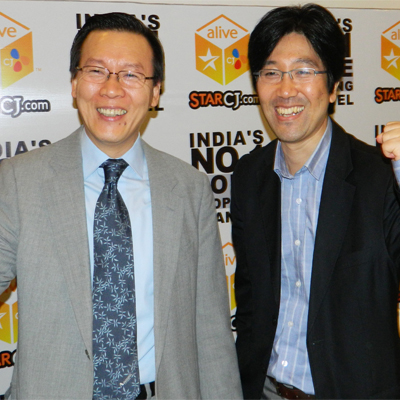
    KOLKATA: The people in Kolkata seem to be addicted to the new ways of shopping. Star CJ Alive, a home shopping channel from the house of STAR CJ Network India (a joint venture between STAR Asia and the South Korean home shopping major, CJ O Shopping) recently conducted a survey in the target markets. The result of the survey was interesting as it revealed that the consumers of Kolkata in the fiscal 2012-2013 have bought 26.63 lakh sarees, 23.83 lakh tablets, 21.87 pieces of jewellery and 18.82 lakh handsets.


    One of the supposed reasons for the growth of the channel is the ‘Global O’ Shopping Day’ that was celebrated by the channel at the beginning of the year 2013, in India along with eight other countries – South Korea, Japan, China, Indonesia, Thailand, Turkey, Philippines and Vietnam. It featured global products and resulted in 110 per cent hike in orders as compared to the average daily order figure.


    “Kolkata is one of our biggest markets and we are delighted to give our customers the best deals. Our goal is to serve our customers better,” said Star CJ Network CEO Kenny Shin while in the city Kolkata. He also said that the channel that was launched around four years ago is one of the fastest growing shopping channels in the country.


    The channel offers an array of products including fashion, lifestyle, home appliances, kitchenware, digital devices, jewellery, beauty products among others. The channel’s target markets includes Delhi, Pune, Ahmedabad, Lucknow, Ghaziabad, Bangalore, Ludhiana, Surat, Gurgaon, Hyderabad, Chandigarh, Vadodara, Amritsar, Faridabad, Gautam Buddha Nagar, Jaipur, Chennai, Nagpur and Nashik among others.

  • Kentaro Kimura joins Adfest 2014

    Kentaro Kimura joins Adfest 2014

    MUMBAI: Japan’s most acclaimed advertising executives, Kentaro Kimura, will head up next year’s direct lotus & promo lotus category as its jury president.


    Hakuhodo Kettle executive creative director and co-CEO Kimura joined the agency he founded in 2006 after joining Hakuhodo in 1992. “The more ways we have to communicate, the more important human nature becomes. What moves people? Why do people take action? It may be an activity for social good, moving content, or a platform for experiences. There are a lot of possibilities for activating people. It is these inventions to move people that make the Direct Lotus and Promo Lotus categories so exciting,” he said.


    Kimura says the theme of Adfest 2014, ‘Co-Create the Future’, gives him a positive, hopeful feeling.


    “In the next 10 years, we will face more change than we did in the last 10 years. Our industry will also change a great deal. We communication professionals will be able to do more than ever before. Today, a truly brilliant campaign can cross borders and influence millions of people. We cannot only adapt ourselves to a given future, but also create our own future,” said Kimura.


    Adfest president Jimmy Lam said, “Many of the campaigns created by Hakuhodo Kettle Inc. have changed the way people think about advertising. Kimura is a visionary when it comes to using technology to forge new ways of communicating with consumers, making him the perfect choice to lead the Direct Lotus and Promo Lotus jury next year.”


    Adfest 2014 will take place on 6-8 March at the Royal Cliff Hotels Group in Pattaya, Thailand.

  • Bing releases the top search trends of 2013

    Bing releases the top search trends of 2013

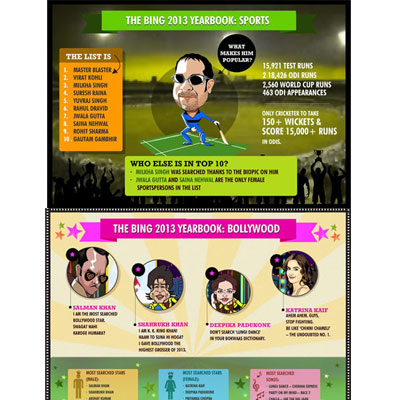
    MUMBAI: Women are on top, literally! The 2013 search trends released by Bing that includes search data from Australia, Brazil, Canada, China, France, Germany, India, Italy, Japan, Spain, the U.K. and the U.S, reveal that women ruled and were in the top searches. In eight of the 12 participating countries around the world, women were the most searched. Beyoncé reigned in the US, while Miley Cyrus’s highly publicised twerking made her the top-searched person in both Australia and Canada.

    Former flames Justin Bieber and Selena Gomez were the most-searched people in the U.K. and Germany, respectively. Actress and actors Bruna Marquezine, Wen Zhang and Salman Khan were the most-searched people in Brazil, China and India, while singers Rihanna and David Bisbal ranked at the top for France and Spain, and gorgeous TV personalities Danmitsu and Belen Rodriguez were favorites in Japan and Italy.

    It was also a year of American songs, superhero movies, Facebook love, high-end designer brands, controversial sports stars, European getaways and fierce women.

    Bing search trends, found at  www.BingTrends.com, indicate what has most captivated people around the world in 2013.

    However, when it came to the top searches in India, surprisingly, it was not the master blaster Sachin Tendulkar, who bid adieu to international cricket in 2013, who was searched the most. He was at number four, only after Salman Khan, Shah Rukh Khan and Katrina Kaif. 

    While he may have led the search among actors, Salman’s films did not feature in the top ten most searched films. The fast paced action flick Race 2 bagged top honours followed by Shahrukh starrer Chennai Express. And the surprise package among the top 10 Hindi movies was Nasha, starring Poonam Pandey. And Shah Rukh Khan may have missed top spot in the most searched actor and film, but his Lungi Dance from Chennai Express made it to the top of charts as the most searched song in India. This was followed by Party on My Mind from Race 2 and Challa from Jab Tak Hai Jaan.

    Sports stars too were popular. While Sachin Tendulkar was the most searched among sports stars, young and feisty Virat Kohli too made it to the top ten. However, the surprise entry was sprinter Milkha Singh, proving that the biopic on him did arouse curiosity about him in the country. Shuttlers Jwala Gutta and Saina Nehwal made sure that their sport was represented in the top ten dominated by cricketers.

  • Docomo to launch one-day international data service

    Docomo to launch one-day international data service

    MUMBAI: Docomo has announced that it will offer a one-day (24-hour) flat-rate data communications billing plan for customers traveling overseas beginning 2 December.
    The service, called “Global 1 day Pake,” will vary in cost (980 yen, 1,280 yen or 1,580 yen) depending on the country or region of use. For example, the cost will be 980 yen for South Korea, 1,280 yen for UK and 1,580 yen for the US mainland and Hawaii.


    The flat rate will apply to the 24-hour period that begins once the customer activates the service. Activation simply requires tapping a button on a dedicated app, or dialing a dedicated number. At the end of the 24-hour period, the packet communication feature in the user’s mobile device will automatically turn off to avoid unintended data usage, providing peace of mind to users concerned about using roaming services overseas.


    Customers can apply for the service at Docomo’s sales channels, including Docomo shops and Docomo information centers.


    Customers of Docomo’s existing international flat-rate data service, Global Pake-hodai, can flexibly use this service or the new service depending on their handset or other conditions.


    Docomo also plans to introduce a roaming service for LTE-based packet communication services outside of Japan by the end of March 2014.

  • Fox International productions, Ivanhoe Pictures in co-finance deal for Asian films

    Fox International productions, Ivanhoe Pictures in co-finance deal for Asian films

    MUMBAI: Production company Ivanhoe Pictures was launched in Toronto earlier this year by Ivanhoe Capital Corporation principal Robert Friedland, GreeneStreet president and co-founder John Penotti, and Beijing-based Ray Chen, founder and chairman of Beijing Premiere Media Company. At launch, the company said it would finance and produce film and TV projects that have broad global audience appeal, initially seeding opportunities in America and Asia, focusing on China, India, Korea and Japan.


    Fox International Productions, which has a lucrative local-language business in Asia and elsewhere, is now teaming with Ivanhoe in a four-year, multi-picture co-financing deal for homegrown movies in India, Korea, China, Japan and Taiwan. The pact will kick off with Ivanhoe investing in 10 FIP-produced films in varying stages of production. The investment from Ivanhoe signifies the strength of FIP’s local-language business which is also active in Latin America and Europe.
     

  • CareerBuilder Releases Striking Differences in Typical Workdays Around the World

    CareerBuilder Releases Striking Differences in Typical Workdays Around the World

    MUMBAI :  A new global study from CareerBuilder shows that a typical day in the office is not so typical across the globe: When you look at the average workday in the 10 largest economies around the world, you begin to see how alike workers can be—and also where they differ the most. The global survey, conducted online by Harris Interactive© from May 9 to June 5, 2013, included more than 5,000 hiring managers and human resource professionals in countries with the largest gross domestic product.

    INFOGRAPHIC:http://cb.com/1gnMhxK

    Driving vs. Public Transportation

    While the 10 countries surveyed have the largest economies on the planet, they also have some of the largest populations, but instead of taking public transportation or using other ways of getting to work, the majority of workers indicate they drive themselves to work every day,
    •    U.S. 82%
    •    Brazil: 74%
    •    China: 69%
    •    Germany: 63%
    •    France: 62%
    •    Italy: 60%
    •    Russia: 60%
    •    U.K.: 58%
    •    India: 52%
    •    Japan: 44%

    Suit and tie optional

    Of the 10 surveyed countries, India is the only place you’ll see the majority of workers in business formal attire (50 percent), such as suits. In every other surveyed country, business casual (e.g., slacks, button-down shirts, sweaters) is the standard dress code as below
    •    U.S. 64%
    •    Brazil: 57%
    •    Italy 51%
    •    UK: 51%
    •    Russia: 50%
    •    China: 49%
    •    France: 45%
    •    Germany: 45%
    •    Japan: 42%
    •    India: 36%

    Communication preference

    Although everyone might seem to be glued to their smartphones, tablets and laptops these days, face-to-face conversations still rule the workplace. In all 10 surveyed countries, in-person communication beat electronic messages such as emails, texts and instant messages by large margins, with phone conversations being the least used.

    •    U.S.: 
    o    Face-to-face: 59%
    o    Digital: 30%
    o    Phone: 10%
    •    UK:
    o    Face-to-face: 68%
    o    Digital: 20%
    o    Phone: 11%
    •    France:
    o    Face-to-face: 79%
    o    Digital: 15%
    o    Phone: 6%
    •    Germany:
    o    Face-to-face: 73%
    o    Digital: 15%
    o    Phone: 13%
    •    Italy:
    o    Face-to-face: 66%
    o    Digital: 23%
    o    Phone: 11%
    •    Russia:
    o    Face-to-face: 80%
    o    Digital: 10%
    o    Phone: 9%
    •    India:
    o    Face-to-face: 60%
    o    Digital: 23%
    o    Phone: 17%
    •    China:
    o    Face-to-face: 81%
    o    Digital: 16%
    o    Phone: 2%
    •    Japan:
    o    Face-to-face: 42%
    o    Digital: 32%
    o    Phone: 27%
    •    Brazil:
    o    Face-to-face: 45%
    o    Digital: 32%
    o    Phone: 23%

    Socializing with coworkers

    Socializing with coworkers outside of office hours can be a good way to learn about your colleagues or relax after a hard day at work. Yet, not everyone is eager to participate. Workers in China and India are more than twice as likely to attend social events than workers in Germany and the U.S.When asked do you socialize with coworkers, the following said yes,
    •    China: 98%
    •    India: 93%
    •    Brazil: 76%
    •    Russia: 68%
    •    Japan: 66%
    •    France: 64%
    •    UK: 55%
    •    Italy: 53%
    •    US: 41% 
    •    Germany: 38%

    Hours spent at work each week

    The number of hours workers spend at work is pretty consistent around the world, but while Chinese workers spend slightly less time at work each week, they report (29 percent) bringing work home with them at least once a week, higher than the other countries.
    How many hours do you work each week?
    •    31-40: U.K. (47%), China (46%)
    •    41-50: Japan (48%), U.S. (47%), India (46%), Germany (44%), Brazil (43%), Italy (42%), Russia (40%), France (37%)


    How often are youbringing work home?
    •    US: 
    o    1 Day a week: 18%
    o    Never: 26%
    •    UK:
    o    1 Day a week: 17%
    o    Never: 30%
    •    France:
    o    1 Day a week: 19%
    o    Never: 32%
    •    Germany:
    o    1 Day a week: 19%
    o    Never: 39%
    •    Italy:
    o    1 Day a week: 25%
    o    Never: 43%
    •    Russia:
    o    1 Day a week: 25%
    o    Never: 39%
    •    India:
    o    1 Day a week: 26%
    o    Never: 29%
    •    China:
    o    1 Day a week: 29%
    o    Never: 30%
    •    Japan:
    o    1 Day a week: 18%
    o    Never: 59%
    •    Brazil:
    o    1 Day a week: 22%
    o    Never: 30%

    Taking vacation

    When asked how many days they took off from vacation, workers had strikingly different answers depending on where they live. Italian workers took off the fewest days, with the nearly two-thirds majority taking 7 days or fewer (64%). Forty-six percent of Japanese workers took more than 35 days off, more than workers in any other countries.
    •    0-7 days:
    o    Italy: 64%
    o    UK: 29%
    o    Brazil: 20%
    •    8-14 days:
    o    India: 34%
    o    U.S.: 27%
    •    15-21 days:
    o    China: 28%
    •    22-28 days:
    o    Russia: 35%
    o    France: 25%
    •    29-35 days:
    o    Germany: 30%
    •    35+ days: 
    o    Japan: 46%

    Survey Methodology

    This survey was conducted online within the U.S., Brazil, China, France, Germany, India, Italy, Japan, Russia and the U.K. by Harris Interactive©on behalf of CareerBuilder among400 to 2,279 hiring managers and human resource professionals (employed full-time, not self-employed, government and non-government) in each country between May 9 and June 5, 2013 (percentages for some questions are based on a subset, based on their responses to certain questions). With pure probability samples ranging from 400 to 2,279, one could say with a 95 percent probability that the overall results have a sampling error between +/- 4.9 and +/-2.05 percentage points. Sampling error for data from sub-samples is higher and varies.

  • IRF 2013: James Cridland: Indians love their radio

    IRF 2013: James Cridland: Indians love their radio

    James Cridland is a radio futurologist and managing director of Media UK and Radio DnS. He was the Digital Media Director for Virgin Radio in London in 2001; in 2007 he joined the BBC to work on the BBC iPlayer for Radio; he also worked at PURE, Audioboo, UK Radioplayer. He is a trustee of the Radio Academy, and sits on the International Radio Festival Advisory Board.

    At the recently concluded International Radio Forum (IRF 2013) at Zurich, Cridland had a session on “How People Are Listening to Radio in Today’s Multiplatform World – and what your station needs to do about it.” This is part I of a two part summary of Cridland’s session by The Indian Television Dot Com Pvt. Ltd. group South India Head Tarachand Wanvari. Excerpts:
    New Broadcast Format

    Cridland began by saying,”Let us talk about how people are tuning into radio in today’s world. There is the internet, FM and AM, there is a new broadcast format – DAB+ or HD radio and then radio broadcast through the TV that is strongly visible in a many of countries. The UK is one of the countries that broadcast radio in all the four formats like most European countries. In terms of popularity, FM is first; internet is the third most popular in terms of number of people tuning into live radio, but it’s alongside TV as well.”

    Cridland revealed that based on the latest figures, for the first time ever in the UK’s radio history internet streaming of radio stands way above radio over TV. “This counts anything and everything that anybody classifies as being a radio station. This is from a pretty robust census survey. We have noticed something interesting here, FM radio is broadcast radio, TV is broadcast, DAB is broadcast, as is HD and there is a real story here in terms of the continuing strength of broadcast.”

    However, Cridland admitted that both AM and FM have seen slow decline over the last five years while DAB in the UK has had a slow increase as have TV and internet radio, but the last two were still very small.

    “There is an awful lot of talk about how internet radio is the future of radio. The reality right now is that internet is a quite small part of radio consumption at present. But no predication can be made for next 5-10 years. Right now broadcast is preeminent in terms of radio consumption,” said Cridland.

    “In the UK, only 20 per cent of radio listening is in car, DAB is pre-installed in 33 per cent of all new cars. In the UK we have no pure play radio stations that are internet only. One of the reasons is a very strong public service broadcaster (BBC), and also the music rights in the UK are expensive”, said Cridland.

    “The US is quite different, where comparatively, 50 per cent of all radio listening is in cars. Pandora is preinstalled in a third of all new cars, and if it were a radio station. It would have a seven percent of the market share in the US. Over fifty percent of Pandora’s consumption is on mobile. HD radio is preinstalled in thirty percent of all new cars and Sirius XM is pre-installed in a number of new cars, but a majority of people actually don’t buy the service once the free period lapses”, further revealed Cridland.

    Comparing the various landscapes

    “Actually when you start looking at the US for radio consumption, then it is very different, because the US has a very different media landscape. HD radio works brilliantly in the US. It should work brilliantly in Canada and in Mexico as well,” said Cridland.

    “In the UK, the owners of the radio ratings service are all radio stations. The same happens in Belgium in France and across most of Scandinavia. The US is a very competitive radio market and all the players don’t work together. That’s why, HD, a good protective technology works brilliantly for the US and fits in with the differences in media consumption there. “

    “In Europe it is a different story and in India too it’s even more different. In India, they love their radio. Radio has a future there because 94 per cent of the listeners in Mumbai tune into radio on mobile phone, only 16 per cent on radio receiver. So radio consumption is very different, depending on where you go across the world,” said Cridland.

    New broadcast platform

    Cridland said, “New broadcast platforms create choice. You can see that if you are a program maker, all of a sudden there is a bunch of additional choices that you can actually have. Loads of additional choice is great news if you are making content because it means that there are more places that want to buy and air your content that enables you to be heard by more people”
    “You can see that all of a sudden we have radio stations for specific niches. Planet Rock is one good classic example of a Rock station that never gets onto FM. Then a religious radio, Premiere Christian Radio and the United Christian Broadcasters; we have got additional music choice from services such as Absolute Radio which is actually growing their business and additional the public service broadcasters business as well.”

    Taking a quick look at broadcast versus internet, Cridland said, “I believe podcasting and on-demand content is where radio has headed. On-demand is a great way of getting more people tuning in, but we can only forget about the power of live radio at our peril.”

    Countries exploring new broadcast platform

    “There are a number of examples where internet and broadcast are working together. For example, Kronehit -a CHR station in Austria. They have a bunch of additional services online-from Kronehit Love which plays love songs to Kronehit Balkan Bees, because they have a lot of people from the Balkans who’ve moved over into Austria so they have produced a radio station especially for them. They can’t do this on FM because they can’t get additional licenses, but they can do it on things like DAB+ and on the internet world, and they also have their own personalised music,” informed Cridland.

    “Similarly if we go to Australia, Southern Cross Austereo- one of the largest radio groups in the world broadcast has a bunch of radio stations across Australia in FM, AM and DAB+. They also have Songl which is their equivalent of Spotify,” added Cridland.

    “In Turkey – Spectrum Medya runs a bunch of radio stations. You have to register if you wish to listen to those radio stations online. Once you have registered then the ad-breaks online contain specific advertising for your type of demographics. It is a great way of making additional revenue, but only possible on the internet,” opined Cridland.

    “In the US there’s a company called Entercom that runs a bunch of radio stations. They work with a company that helps them sell advertising online for which you don’t need to register. All you have to do is to visit their websites and listen. They have teamed up with a company that knows the websites that you have been to. So,if a person has booked a flight to New York, they’ll give him an ad for hotels in New York. It is a great way of earning more cash from your advertiser,” felt Cridland.

    “The cost of broadcasting on the internet to a larger audience is significantly more than broadcasting over FM or HD or DAB+. There is a pretty low threshold where the internet suddenly becomes quite expensive. I am not saying that internet is a bad thing. In fact, internet and broadcast do work together really well, but it is going to be a long time before internet gets even to twenty percent of the listeners” revealed Cridland.

    Elaborating further on the way radio and internet work together, Cridland said, “The States have really cracked this. There’s Nextradio, it uses FM to get the audio from an FM station with a ludicrous name of Hack FM and it is using the internet to get additional information on a mobile device. One can click to play this song and click to get more information and more actions such as sharing and liking. All of this is available through HD radio.”

    “Analogue FM will never die out. It’s a noble aim for any country to try and phase out FM, I can’t see it happen. If I was a pirate radio broadcaster, I’d be rubbing my hands in glee at that prospect. FM does a great job if you can get an FM license.”

    Radio receivers

    “The problem is that radios are rubbish. In a typical radio, when you turn it on, it asks you if you want FM radio or DAB+ or do you want internet radio. It is almost as if it is a set of different radios in one unit sharing one speaker and they all work differently which is bizarre. The TV industry has completely got the user experience sorted out.”

    Speaking on standards on radio receivers, Cridland said that there were no standards. If someone was to buy an FM radio in the US and brought it to Europe, it wouldn’t pick up half the radio stations and the ones that it did pick up would sound rubbish. In Japan, European FM radio would probably pick up half the radio stations there, they used a different waveband. Cridland said that AM works differently in the US as compared to Europe. There were no worldwide standards. “We need to have a continental standard, and the continental standard for Europe is DAB+, and a DAB radio stations is also available on a DAB+ receiver.”

    (Part II, about how people are listening to radio on the mobile, will be published soon…)

  • Balaji Motion Pictures ropes in Sujoy Ghosh

    Balaji Motion Pictures ropes in Sujoy Ghosh

    Balaji Motion Pictures has acquired the Hindi film adaptation rights to the book, The Devotion of Suspect X to be made into a major motion picture.


    The Devotion of Suspect X, a novel by Keigo Higashino, is the third in his cult Detective Galileo series and his most acclaimed work so far. The novel won the 6th Honkaku Mystery Grand Prize, one of the most prestigious awards in the mystery novels category in Japan.


    The English translation of the novel was nominated for the 2012 Edgar Award for Best Novel and the 2012 Barry Award for Best First Novel. More than a jaw-dropping two million copies of the best-selling book have been sold worldwide so far.


    Acclaimed director Sujoy Ghosh, whose previous release was the blockbuster Vidya Balan starrer Kahaani, has been signed to direct the feature.


    The writing is underway and the cast is still to be finalised. The principal photography is expected to commence in early-2014.