Tag: Jane Gorard

  • “We are targeting internationally minded people with an interest in world politics, news and business” : Seema Kotecha BBC World head of marketing

    “We are targeting internationally minded people with an interest in world politics, news and business” : Seema Kotecha BBC World head of marketing

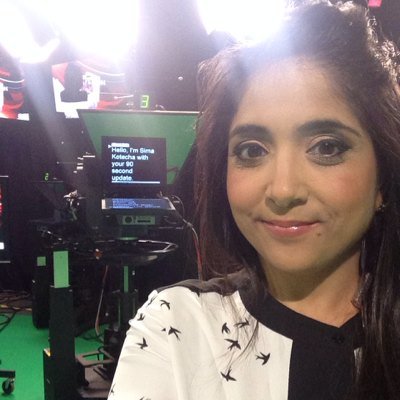
    BBC World has appointed Seema Kotecha as the new head of marketing based in London. Kotecha will work closely with BBC’s director of marketing Jane Gorard and will be responsible for developing marketing strategy for the channel’s international teams in London, Singapore and Delhi

    Kotecha worked as marketing controller at BSkyB in London, where she was responsible for developing, implementing the annual marketing plan and focusing on increasing subscribers. She had also worked for the airline industry prior to this stint with BSkyB.

    Kotecha is a linguist – fluent in French, Spanish and Gujarati. She has a degree in European Studies and Languages from Manchester Metropolitan University and the University of Granada. She has also worked as an intern in the European Commission in Brussels.


    Kotecha responded to indiantelevision.com’s Ashwin Kotian‘s queries and outlined her plans.


    Excerpts -.

    What are the challenges in developing marketing strategies for a channel such as BBC which means so many different things to different people in markets such as India, the UK, Singapore?

    Well, you have identified one of the challenges already, which is marketing the BBC World brand and product consistently to some very diverse markets.


    It is important to understand the cultural, linguistic and political differences in these markets, as well as the television market place and competition.


    Other challenges include reaching our target audience efficiently and cost effectively. BBC World’s audiences are very internationally minded people who often travel overseas, so we have to look for new and innovative ways in which to reach them whilst keeping our budgets in check.


    Furthermore, they are an audience that is frequently targeted by advertisers – it’s a constant challenge to reach them with a message that stands out enough to grab their attention and interest.

    How do you ensure that the brand retains its common values and relevance across markets?

    In terms of the product, BBC World is a global channel providing global news and programming for a genuinely global audience.


    It is only in South Asia that we create customised programming specifically tailored for a country so there is commonality between all markets.


    With the branding however, this can be a challenge. We ensure the brand retains consistency across all markets through maintaining very strong communication links between our overseas marketing colleagues and the central marketing team in the UK.


    We have a clear centralised brand strategy for BBC World, which we ensure, is cascaded to all marketing staff worldwide. We speak with our international colleagues on a daily basis, share creative and best practice and meet as often as practical.


    The trick is balancing strong communication with locally based marketing colleagues whilst allowing them the autonomy to ensure relevance to their market place. We also have fantastic support in our advertising and media agencies worldwide.

    What kind of differences are there in BBC ad spends in these different markets – Delhi, UK, Singapore? What were the ad budgets in each markets last year? How much increase will the ad spends witness in this year?

    I am afraid that I can’t divulge our marketing budgets, but I can tell you that India, East Asia and Europe are our key markets so we do invest considerably in these markets. There is little difference between the regional budgets.

    “An example of a successful ground promotion we have organized is the HARDtalk tour of India last year where we turned the tables on Tim Sebastian and invited senior media to interview him”

    What kind of differences are there in BBC spends in below the line activities (ground promotions, direct mail, events) in these different markets? What kind of events has BBC World organised?

    We invest in a variety of below the line activities and there is no significant bias in our spend between direct mail, promotions and events. It just depends on which activity we feel is the best solution to meet the brief.


    An example of a successful ground promotion we have organized is the HARDtalk tour of India last year where we turned the tables on Tim Sebastian and invited senior media figures to interview him. The tour visited the cities of Delhi, Mumbai and Bangalore.

    What are the other ways in which you target the core audience? How do you expand the audience base? Which are these new audiences which BBC is targeting?

    We use advertising – largely press and outdoor, events, direct marketing, PR and promotions. We expand the audience base by using a combination of brand marketing to increase an overall awareness of the channel with programme specific promotion to create an appointment to view. We are targeting internationally minded people with an interest in world politics, news and business.

    “Fortunately, BBC World has developed reputation for providing impartial coverage of the news and received many compliments on our recent coverage of the Iraq war”

    How do you manage to fight perceptions “that BBC also could be endorsing the political point of view” – a recent example is the US-Iraq conflict?

    Fortunately BBC World has developed a reputation for providing impartial coverage of the news and received many compliments on our recent coverage of the Iraq war. We give our audiences every side of the argument and allow them to make up their own minds about the situation and form their own point of view. These values of balance, accuracy and integrity are absolutely key to BBC World’s editorial output and are the very essence of the BBC brand.

    What kind of efforts are being made to popularise the BBC brand on the Internet and target “surfers”?

    The BBC News and BBC World websites are very well known around the world and receive millions of visits every day. However, we understand the importance of maintaining the loyalty of our online users as well as attracting new users, so will be placing greater emphasis on Internet marketing in 2003-4 than in the past. We will be looking at online advertising, sponsorship, e-marketing and partnerships.

    How does BBC World use public relations to supplement the other marketing efforts?

    PR is an integral part of BBC World’s international marcom (marketing and communications) strategy, complementing and supporting key communications objectives at every level. BBC World has a full time PR team based in capital cities such as Delhi, which are responsible for generating consistently major amounts of coverage, through profile raising events and media relations.

    What is your take on 360 degrees marketing – backing programming content with on ground events with the help of sponsor-partners?

    This is obviously the ideal way we would look to promote any programming on BBC World. With a relevant sponsor/partner, we would look to create an event to build awareness of the programme and create some hype. We would look to support this with other promotion such as advertising, direct mail and Internet marketing as appropriate.

    “We will be placing greater emphasis on Internet marketing in 2003-4 than in the past. We will be looking at online advertising, sponsorship, e-marketing and partnerships”

    What kind of plans do you have to connect with the trade? Especially in the case of countries such as India where the unorganised cable distribution network has paucity of place (to accommodate channels on the prime band)? How often do you conduct seminars and workshops?

    BBC World has strong advertising and network development teams who continuously reach out to the trade and keep them updated of new initiatives and developments. Our network development teams seek to maximise our distribution currently reaching 15 million homes.


    We hope to build on these existing relationships and reach not only our broad audiences but niche groups such as university or management students, corporates, British councils and like minded associations by below the line initiatives and on ground events.

    How often do you travel to the different markets in order to get a feel of the consumer behaviour?

    Well, as I have only been here five weeks I haven’t made any travel plans as yet! I have visited and worked with many of our markets in the past with my role at Virgin so am quite familiar with the consumer behaviour already.


    However, it is important to meet with my marketing colleagues overseas and understand the television marketplace in each region so I will be visiting them in the near future.

    “BBC World conducts regular surveys of its viewers – the Horizon survey profiles India’s professionally qualified executives and was conducted by the NFO”

    What kind of research is conducted to understand consumer/viewer/trade/psyche? What kind of investment does BBC make in this kind of research?

    Like other broadcasters, BBC World subscribes to syndicated audience measurement from TAM, and other studies such as the IRS and TGI.


    In addition, BBC World conducts regular surveys of its viewers – the Horizon survey profiles India’s professionally qualified executives and was conducted by the NFO. Other recent surveys include the ‘Ad Avoidance’ study with Initiative Media which explored viewers’ receptivity to commercials. We also looked at attitudes towards the recent war in Iraq, as well as a regular tracking survey and qualitative research exploring attitudes towards the channel.


    We are planning a survey to understand attitudes towards the current boom in news channels.

    Are there any plans to change the look/feel/format of the various shows? What about signature tunes? How do you make them relevant to different markets – or is it common and part of the BBC package?

    There are no set plans to change the look or format of any existing shows at present. However, the shows are constantly under review and we will make changes as and when we feel they are necessary. We do ensure all shows are made relevant to the different markets.


    A good example is Mastermind. In the UK, questions on the programme will be more Western or European in nature whereas Mastermind India will obviously need to contain questions more specifically linked to India.

    What learnings (from the airline industry) will you bring and apply to the TV/broadcast sector?

    The target audience for an international airline such as Virgin is actually very similar to that of BBC World, so I will definitely bring with me a very good understanding of our audiences and how to reach them.


    Furthermore, working in the airline industry meant working across very similar markets as BBC World – India, East Asia, South Africa etc. This gave me the experience of not only promoting an international brand abroad (whilst competing with strong local and often longer established carriers), but also the experience of marketing in such culturally diverse markets, each in a different stage of maturity.


    Finally, similar to global news, the airline industry is unpredictable and fiercely competitive. Consequently, I am very accustomed to working through nights and weekends to respond to a competitor marketing campaign or to adapt our strategy in response to an event like 9/11.


    In a similar way, at BBC World, no two days will be the same and I have already started to familiarise myself with our global and local competitors and develop ways to differentiate BBC World to increase our audiences and market share.

    Tell us your hobbies? Do you watch TV? What are your favourite programmes?

    My hobbies include sport, yoga, theatre, travel and film. I do watch TV and needless to say I am a big fan of news! Other current affairs programmes I enjoy are Question Time and Panorama. To unwind, I love watching travel shows like Holiday.

  • S Kotecha is BBC World’s new marketing head

    S Kotecha is BBC World’s new marketing head

    NEW DELHI: BBC World has appointed Seema Kotecha as head of marketing based in London. Kotecha will work closely with BBC’s director of marketing Jane Gorard and will be responsible for developing marketing strategy for the channel’s international teams in London, Singapore and Delhi.
     

    A press release quoted Gorard as saying: “We are delighted to have someone of Seema’s calibre join out team. In marketing terms, we are facing some great challenges in a number of markets and I am confident that Seema’s experience in the fields of broadcasting and international travel will be a great asset.”

    According to the release, Kotecha worked as marketing controller at BSkyB in London, where she was responsible for developing, implementing the annual marketing plan and focusing on increasing subscribers. She had also worked for the airline industry prior to this stint with BSkyB.

    The release adds that Kotecha is a linguist – fluent in French, Spanish and Gujarati. She has a degree in European Studies and Languages from manchester Metropolitan University and the University of Granada. She has also worked as an intern in the European Commission in Brussels.

  • New “brand” world – in a brand new world

    New “brand” world – in a brand new world

    MUMBAI: Content aggregators including TV channels have failed to convert products to long-lasting brands. There is lack of consistency and an inherent failure in marketing good content across multiple platforms due to a lack of proper strategy developed at the conceptualization stage. These words by Lowe’s Initiative Media (IM) president Ashish Bhasin at the Ficci FRAMES 2003 seminar on “Branding across platforms – have we given it a thought?” set the tone for the future!

    The session was moderated by Genesis CEO Prahlad Kakkar and had eminent personalities such as MTV India MD Alex Kuruvilla; Bennett Coleman’s response director Bhaskar Das; BBC World marketing director Jane Gorard; and Equitor Consulting CEO Ramesh Thomas.

     
    The following were some of the views expressed by the panelists who advocated the need for 360 degrees marketing and consistency of brand messages across media platforms. The panelists called this trend the “village idiot syndrome” as the fragile loyalty of the consumer is towards the content and not towards any particular medium as such.

    Initiative Media president Ashish Bhasin
    · Serial makers and film makers mar good content by using shabby posters, unplanned outdoor media and sensationalism.
    · Channels must market themselves as a distinct personality as well as leverage their programmes.
    · There is lack of consistency and application across multi media platforms
    · In this era, the consumer is bombarded with media – in the 16 hours of waking state, the consumer watches TV for 64 minutes; reads print for 22 minutes; listens to radio for 17 minutes; visits cinema theatres five times an year; sees 15 outdoor panels in a month.
    · There is a need for building relationships and pull in traffic by leveraging content.
    · There is nothing like an universal entertainment programme. Cross branding synergies must be explored by channels not just for themselves but for their programmes as well. The same holds true for other content aggregators.
    · Proper channels and other media must be used for promoting content in sync with the values associated with the content.
    · Aamir Khan Productions and Sony Entertainment Television (SET) have done a good job with the block buster Lagaan. In fact SET’s Lagaan Maaf contest actually raised eyebrows. Lagaan also leveraged merchandising options such as the Britannia contest, stationery, billboards and comic books.
    · Connect with the relevant consumer with relevant messages.
    · Create synergies for brand experience and brand extensions.
    · Below the line promotions for TV channels is a must considering the fact that the conditional access system will be implemented soon.

    MTV India MD Alex Kuruvilla
    · The audiences have gone everywhere in today’s scenario. If you are not everywhere, you are nowhere.
    · There has to be a method in the madness and entertainment brands are not built by accident but through a properly thought out method.
    · These media brands can be built by using multimedia, people, ground events, trade and multiple platforms. The clear need is to give consumers a chance to see, hear, wear, interact, experience and leverage.
    · MTV India’s online website has 1.5 million registered online members; MTV Citibank’s co-branded credit card won accolades for marketing and promotions; MTV tied up with Virgin to provide the first piece of convergence marketing; MTV tied up with Mattel to create Bakra toys; MTV’s 50 hour longest party in Delhi entered the Guinness Book of World records; MTV Style has set fashion trends.
    · On the anvil are new products such as MTV deodorants and MTV’s Tight Slap interstitial.
    · MTV has also promoted social causes as AIDS awareness events and programmes.

    Equitor Consulting CEO Ramesh Thomas
    · The Indian media and entertainment industry hasn’t realised the value of branding.
    · More than 93 per cent of India’s capital is channelised in destroying value. The cost of acquiring and retaining customers takes away the bulk of budgets and resources.
    · Customer franchise is an economic compulsion and effort must be made to develop financial value (quality and stability of future earnings).
    · There is a need for disruptive thinking and developing an ability to question existing ground realities, relationships across geographies.
    · Marketers must seek a compelling idea which they can possess and own for the rest of their life.
    · There is a need to galvanise the entire organization behind the essential ingredients and unique selling proposition of the media brands. Breakthrough culture would entail the following – the need to externalize training and internalize branding!
    · There is a need to adopt an integrated approach to marketing and identify maintenance, control and manipulate brand connects with ruthless attention to detail.
    · A brand is a relationship which secures and creates future earnings.

    Bennett Coleman and company’s response director Bhaskar Das
    · Entertainment brands are ruled by frugality of tenure; fragile brand loyalty; constant need for buzz and hype; need for consistent renewal or freshness.
    · Everything around us is a medium and the consumer is highly opinionated due to availability of multiple options.
    · Brand management has evolved from the inside-out syndrome to link management.
    · The prism theory wherein one beam gets converted into a spectrum holds true in the case of media brands.
    · There is a need to straddle the consumer’s mind and tech space.
    · Sensory marketing should transform itself into experiential marketing.
    · Move from point of contact to point of impact

    BBC marketing director Jane Gorard
    · The challenges in marketing involves consistency of branding messages across platforms.
    · One should communicate the essential elements across geographic locations.
    · Strike an emotional chord with audiences.

    Well, the writing is on the wall! Its a “brand” new world in the brand new world!

  • Cricket and cocktails, BBC serves up a heady mix

    Cricket and cocktails, BBC serves up a heady mix

    NEW DELHI: Hype is a necessity and parties are results of that. Sounds like a Sidhuism? With India catching the cricket fever, why not? Not to forget that cricket, glamour and hype make a deadly cocktail and an enjoyable one too.

    Rock group Silk Route performs at the BBC World India’s party held at Ssteel bar in Ashoka Hotel, Delhi. So last Thursday, BBC World’s India office invited some page-three types, a few media people and had a live performance by a rock group at Delhi’s latest hotspot, the Ssteel bar at the Ashoka Hotel. MF Hussain, for a change seen wearing shoes, was thrown in as an additional sop. All this to announce that beginning Monday (3 February), BBC World would have cricket-related programmes.

    In between music, liquor and constant cheek kissing, indiantelevision.com caught up with TV News Channels of BBC News commissioning editorNarendhra Morar.

    BBC World is changing the concept of India-specific programming in the sense that instead of getting a programme to run for weeks, the news and current affairs channel is looking at shorter runs for such programming.

    Narendhra Morar, Sanjay Manjrekar and Jane Gorard at the party held by BBC World to announce cricket-related programmes that start airing from 3 February 2003.
    According to Morar, BBC World is looking at India-specific programmes that is different from the run of the mill stuff. For example, Morar is looking for programmes like Business Bazaar, a programme that is far-removed in treatment from the likes of India Business Report.

    “We haven’t yet commissioned the programming, but are looking for new business programmes too,” Morar said, adding, “It can be a six-part documentary, for instance.”

    But try as much you like, beyond this Morar, nor his colleague Jane Gorard, director of marketing at BBC, would add much on business programming.

    BBC World is finalising another quiz show to go on air. However,Master Mind India hosted by Siddharth Basu, who incidentally is fine-tuning a mega show for Doordarshan as well, continues to be a key property for BBC World with avid audience response.

    That BBC World is going in for changes in programming is evident from the fact that even the old war-horse like the Karan Thapar hosted Face to Face is getting revamped and the new look would be unveiled some time in April after the hype and hoopla over cricket subsides.

    Without revealing much, Morar said, “It (Face to Face) will be different as will be the new quiz show.”

    Asked the oft-asked question on competition, CNN that is, Morar dismissed it as a non-issue. Almost. “Where are they (CNN in India)?” Morar counter-punches and then with a smile pregnant with many thoughts, retorts, “They have also done shows which are copies of shows that we had done earlier.”

    Certainly Morar and BBC World were in a combative mood. But they can afford to be – India is one of the very few markets where BBC is far ahead of CNN in terms of market share. May be some part of India’s long-standing association and fascination for BBC radio has rubbed off on the television venture too.

    Ask Morar or Gorard about financial details and they would start giving those sweet smiles that are almost akin to the traffic red light – not beyond this point. You probe a bit harder and what you get from Morar is: the programming budget for India has remained constant, though as a commissioning editor I would like more.

    Addressability in Indian cable homes, of course, would not affect BBC World as it would continue to be a free to air channel. That’s certain.

    For the records sake, the cricket fever would get unleashed on BBC World from 3 February and lined up are fare like the Sanjay Manjrekar hosted interactive chat show Captains Call, Young Turks, India Calling and Africa Calling. Not content, BBC World has also managed to convince Thapar of Face to Face to do cricket specials with Rahul Dravid and loudmouth Navjot Singh Sidhu. And as a final sop, there is India Business Report that over two editions looks at the business of cricket and the big moolah involved – all for a deeper understanding of cricket. That should provide some competition fro CNBC India, which is doing a series called Business of Cricket.

    And, if this correspondent has missed out on any other aspect, then you and BBC can blame it safely on Ssteel and its spirited atmosphere.

  • BBC World to launch new Pakistan based current affairs show

    BBC World to launch new Pakistan based current affairs show

    MUMBAI: After HARDTalk Pakistan that launched in May, BBC World is launching another weekly current affairs programme focused on the pressing issues of the day. 

    Question Time Pakistan that begins this Friday at 10 pm will be hosted by prominent Pakistani journalist Mahreen Khan and will provide a platform for a studio audience of over 100 people to quiz a four member panel on various issues. Khan will moderate the posers put up by the audience to the panel during the 50 minute show, produced by the Karachi based Telebiz. 

    Three of the panelists will, wherever possible, represent prominent political parties while the fourth panelist will be a political commentator, analyst or journalist, who will provide the independent perspective. BBC World marketing director Jane Gorard says the 13 week series will give the people of Pakistan the chance to express and discuss their views in a frank and open forum. “In addition, we are a commercial channel and wish to maximize upon the new opportunities for attracting advertising and sponsorship that are becoming available across the region,” she says.