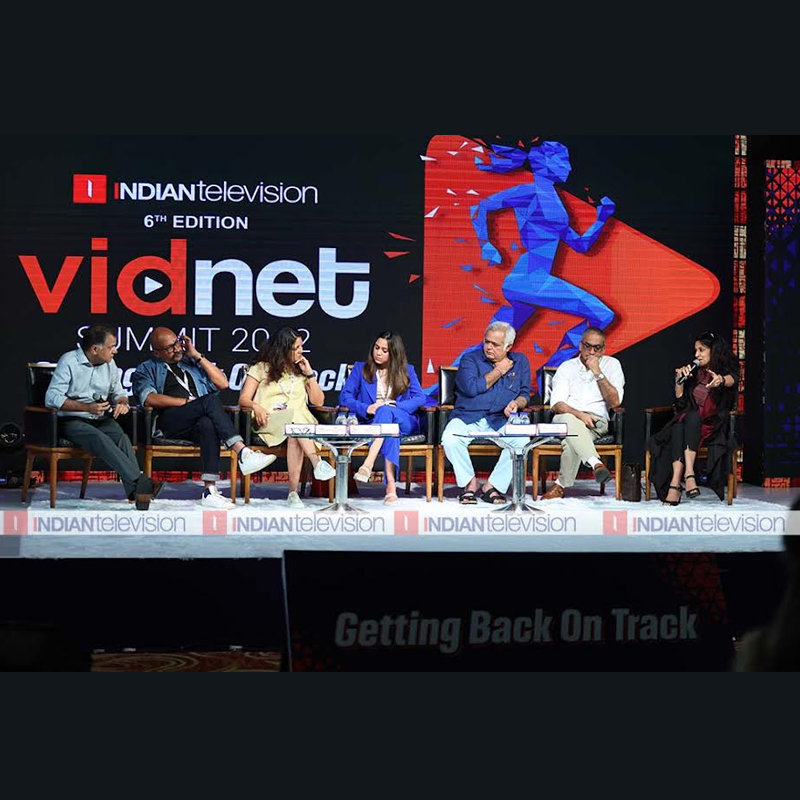
Mumbai: India has entered a new era of creative storytelling. Whether it is the hegemony of Hindi-language content or big-name stars driving audiences to films, the rules that determined successful content have been broken. The focus in storytelling is on good writing that hearkens back to the 80s and 90s Doordarshan era with fine shows like “Wagle Ki Duniya,” “Hum Log,” or “Nukkad” to name a few. During a panel session on ‘Era of Creative Storytelling’ held recently at IndianTelevision.com’s VidNet Summit 2022, panellists affirmed that while content is governed by certain rules, the ones that have been breakthroughs have always upturned the rules.
The two-day industry event was supported by technology partners Dell Technologies and Synamedia, summit partners Applause Entertainment and Viewlift, industry support partners Gupshup, Lionsgate Play and Pallycon, community partners Screenwriters Association and Indian Film and Television Producers Council and gifting partner The Ayurveda Co.
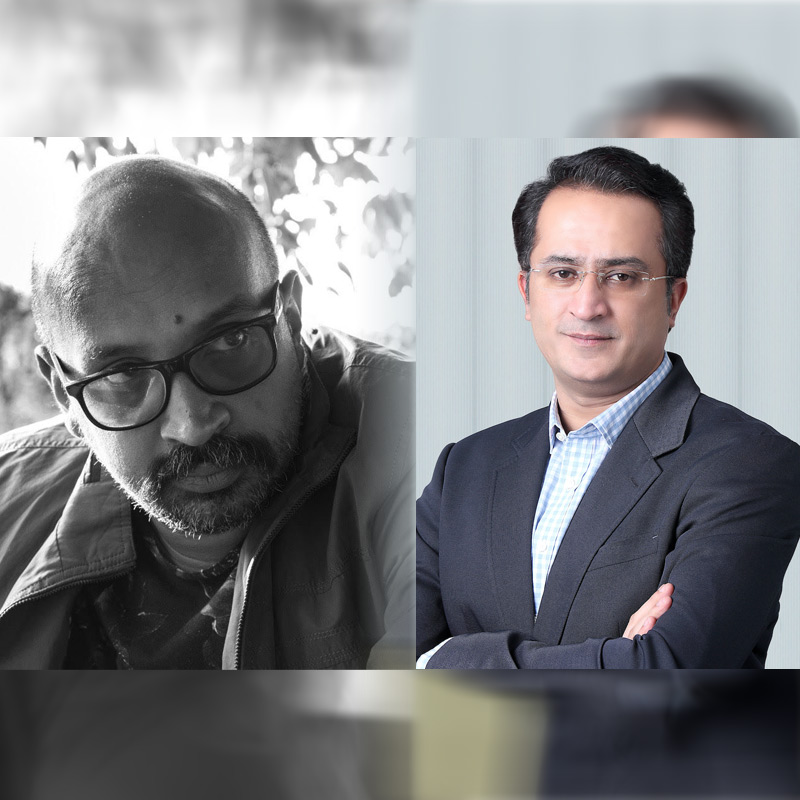
The session was joined by director, writer and producer Suresh Triveni, Excel Entertainment producer Rucha Pathak, Applause Entertainment head of content Deepak Segal, Banijay Asia executive vice president – business and content Mrinalini Jain, film director, writer and producer Hansal Mehta, and Zee Studios head of content Ashima Avasthi Chaudhuri. The discussion was led by House of Cheer founder and CEO Raj Nayak.
We’ve all heard of the Korean show “Squid Game” but few consumers outside of India have heard of an Indian original production that is not a film. Raj Nayak started off the discussion by asking creators why India’s content has not travelled as much as we would like?
“I believe that stories have to stay authentic to where they originate from,” said Zee Studios Ashima Avasthi Chadhuri. “Do I need to make a story in English language for it to be accepted globally? No. Do I need to shoot the story in an international setting to make it appealing? No. It is not the language or budget of a production that determines whether the story travels but rather the emotion which must be universal.”
“Scam 1992” director Hansal Mehta believed that, too often, creators of a show get caught up in figuring out the end result i.e., revenues. They ask complicated questions like ‘is the show accessible to a global audience?’ or ‘projected box office earnings for a film during the weekend’ rather than investing in the creative process. “When we made ‘Scam 1992,’ we didn’t think if we’re making it for Netflix or Amazon Prime Video. Nobody commissioned us to create it. We sold it after the cuts were made and it was picked up by a young OTT platform (SonyLiv). Its success proved that good content is greater than the platform and will find its way to the audience.”
Suresh Triveni, who directed “Jalsa,” was also of the view that producing the film first and then selling it to the platform (Amazon Prime Video) gave him the creative freedom to tell the story that he wanted. But the question whether commissioned or acquired content works better is something that every creator needs to answer for themselves, he noted.
TV and film producers were putting content back in the box, figuratively, by looking at metrics like weekend box office projections and weekly TV ratings, according to Chaudhuri. “Film producers were looking at the Friday (weekend box office) result and TV broadcasters were looking at the Thursday result (TV ratings). OTT is a brilliant platform because the content is here to stay and the audience will find the story at some point in time.”
There’s also the fact that writers on OTT are becoming more fearless, observed Banijay Asia’s Mrinalini Jain. “We do all sorts of shows and some have a structure that works and others are scripts that we take a punt on. There are writers who are still finding their voices and don’t have a lot of work behind them but they have the conviction. That gives me confidence that maybe I should take a punt on them. There has to be space for flaws and being judged in storytelling because that’s the society we’re living in. Fearlessness in writing is the best thing I’ve come across in the evolution of OTT storytelling.”
Adding further, Triveni observed that movies and TV shows have been following the business of trends. “I think there is a lack of appreciation of literature in India. We’re not reading enough or going regional in terms of finding our stories. The industry that resides in Bombay is in an echo chamber and we’re busy churning out content. Our variety will come through our literature that genuinely needs to be explored.”
Addressing the view that there is not enough variety of content on OTT platforms, Excel Entertainment’s Rucha Pathak felt that OTT platforms will undergo the same change in perspective that film creators realised many years ago. “When I was in the studio side of the business, everyone was making films with big name stars and studios realised that to differentiate the script is really important. The film industry saw a merging of commercial and non-commercial cinema and I think the same will happen in the OTT world. Now that I’m on the producer’s side, I know that a good story really depends on the showrunner’s, director’s and writer’s vision.”
The most asked question during the session was how can writers pitch their ideas to studios and OTT platforms? Applause Entertainment Deepak Segal replied stating, “The writer who comes to pitch their story to us must have conviction. Secondly, as a studio if I’ve put out three crime thrillers then I’m not looking to create another one. During the pitching stage, we also need to understand the myriad factors that the story will bring to the table. Then it is up to the platform or studio to decide whether they have the wherewithal to do the show.”
Speaking from personal experience, Segal also remarked, “Don’t pitch a story by saying that it is a big project because then we’ll say I’m not the studio to make this happen. Studios are never looking to undercut creators and will pay whatever cost is required to make the show. Also, don’t ever pitch a film script and say it can also be turned into a web series. There’s a different way of writing a feature film versus a web series versus a TV show. Luckily, we learnt about character arcs and tropes that are being used in the web series format from the adaptations that we created.”