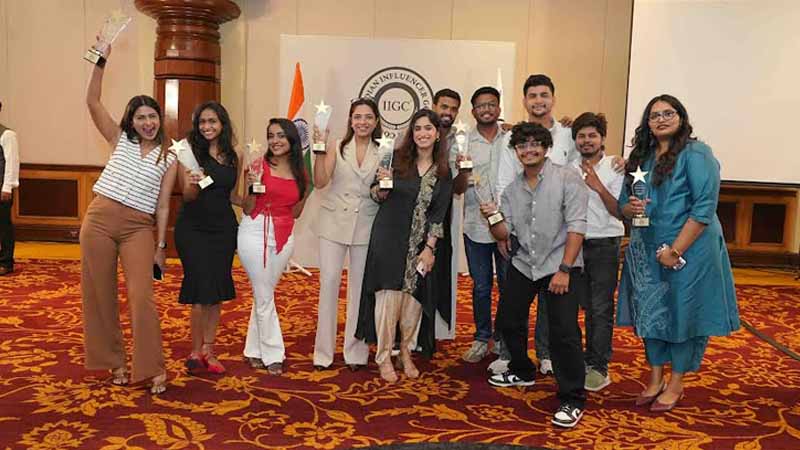
MUMBAI: The Indian Influencer Governing Council (IIGC) turned up the volume on India’s booming creator economy with its third official chapter, held at Taj Bangalore, and used the stage to make a headline-grabbing declaration: December 2 will now be observed as World Influencer Day.
The high-energy gathering brought together over 100 voices from the creatorverse—marketing heads, digital honchos, platform leaders, and star content creators. It wasn’t just selfies and speeches, though. The event introduced IIGC Protect, a major initiative focused on legal literacy and mental wellness for influencers, in collaboration with Trilegal, United We Care, and Adayu (Fortis).
Among the key speakers were Nikhil Sachdeva (partner, Trilegal), Rana Atheya (VP – business, United We Care), Sachin Baliga (advisor – neuromodulation, Fortis), and creator Aneri Thakkar, who addressed the growing need for psychological and legal safeguards in what remains an unregulated digital jungle.
Adding teeth to its governance efforts, IIGC also launched a Taskforce and outlined a Code of Standards for brands and creators. Key voices like Varun Oberoi (VP, marketing & comms, Nissin), Jaikishin Chhaproo (head – media & PR, ITC Ltd), Gaurang Thosani (head – digital & e-sales, Royal Sundaram), and Aparajita Mukherjee (head – brands in culture, Diageo) shared best practices on responsible influencing.
BBC Media Action Tej Prakash Yadav said, “Influencers have the power to spark change, ignite conversations that matter, and build something bigger than a brand: a movement. Influencing for Good adds depth to social capital, strengthens credibility, and shows the world the human behind the handle.”
Gunjan Taneja (@Gunjanshouts), added, “Being an influencer is not about the number of followers or views, but the impact we are able to create. We need to consider that with our every word, action and recommendation one or several of our followers will buy the product or service with their hard earned money. Which is why it is our responsibility as creators to be cautious of what we say, with maturity and sensibility before we put out content.”
IIGC chairman & founding member, Sahil Chopra led the felicitation ceremony that honored board members, as well as winners of the Indian Influencer Ratings Weekly Picks, which recognizes both “Trendsetters” and emerging “Underdoggs.”
With three power-packed chapters under its belt, IIGC continues its mission to professionalise, protect, and celebrate India’s creator economy—one policy push, one punchline, and one post at a time.
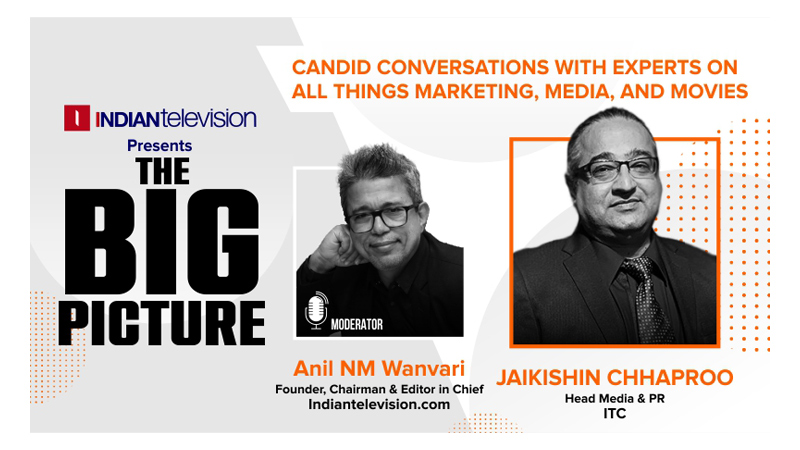
Mumbai: The power of movies on television often referred to as the ‘big picture’ has impacted how we consume entertainment, making it an essential part of our lives. Not only that, the synergy of movies and TV has also grown to be lucrative for brands who want to reach India at large and impact the general consumers’ daily lives. In a series of chats with marketers and media veterans, Indiantelevision.com founder, CEO & editor-in-chief Anil NM Wanvari discusses all things related to marketing, media and especially movies with ITC Ltd head of media & PR Jaikishin Chhaproo.
Edited excerpts
On early life and experiences
I was born and brought up in Mumbai and did my schooling, and college here as well. I am also an engineering graduate. Then I realised that I can’t do this for the rest of my life. My friends were preparing for MBA and in the office during lunch hours they used to grab their food in 10-15 mins from the window and then they used to appear for the prep test for CAT. Once I was alone and one of my colleagues was doing this test, I picked up a book from the table and gave one aptitude test. When the test got over and this guy started rating me and he was like you have got beginner’s luck and you have scored better than me; also you did one level more advanced whereas I haven’t reached there. So I just took his notes and photocopied them like it used to happen in those days. I then appeared for my entrance exam, got admission and got into my MBA. I cleared from Somaya in ‘97. Somewhere during my MBA course, I decided that I have to make a career in advertising and choose media as a field. Out of 27 years that I have been working almost 17-18 years I’ve been at FMCG. Sometimes in broadcast and sometimes in e-com and telecom.
The experience is good so far, nothing to complain about. Even today it’s said that if you enjoy your work it doesn’t look like work. For me every day is like a fun time even if I’m sitting at my home and opening up my laptop, the moment I get into my work it’s like I am a different person and for most of my friends, the worst person to call during working hours is me because most of the time my answer is I will call you back later.
On engineering background helping your media career
Somewhere education helps you everywhere and aids you in whatever you do. Having a background in engineering helps you be more analytical in numbers. From that perspective, it has been a comfort to be in the media. The newer experience helps you, being the best teacher.
On your milestones so far
In the last 27-odd years, I have been lucky enough to work in very good organisations and the bosses that I was put under. So I started with a company called Star Plus Channel which falls into the production of TV serials. I was into backend research and acquisition for new serials that the company would air. It was fun to work on the movies which were aired on Friday nights on DD. Then I moved to Wipro where it was undergoing a change of corporate identity to the new sunflower logo. Then I moved to Godrej, Unilever and then continued with Star in the middle east and continued to work there, moved back to India with Star and then Snapdeal and ITC.
I remember one statement where one of my ex-bosses used to say that if you are really good at your work then you should work for Unilever. And the day I joined Unilever, I dropped a message to him saying I joined Unilever today.
On being part of some memorable campaigns
We did a first-of-a-kind advertiser-funded feature for one of the brands. At that time Surf had a tagline called “Each child has a right”. There was this concept that came from a renowned filmmaker and we just tweaked it around and released a movie around it. That was a satellite release.
On being a movie buff and watching Hindi cinema
I’m a hardcore movie buff. There are plenty of times I would pick up references from Hindi cinema, probably people would have watched it but when you kind of narrate that example and you are like “oh ya ya I remember this” stuff like that and I will remember songs on contextual incidents or some situations or stuff like that. Right now the definitions from movies has changed. Long there was a scenario where movies were used to showcase the reflection of the society. So you kind of have a situation where you are kind of taking inspiration from movies, at the same time learning from them. I think it works both ways.
On leveraging movies in marketing by brands due to record-breaking box office title films
There are two or three approaches. One is that some of the titles will not let themselves to allow you to do films in time, because some of the stories are cut in some manner that you wouldn’t want the brand to be seen in that space. The other thing is to do an association within the promotional level of the movie wherein you have co-branded promo with your brand, you end up promoting that and you have access to the stars and other things for getting a customized brand message. Then you support it in the cinema screens when the movie is being released.
On TV being important for creating brand awareness
Television continues to be an important medium for us. While digital is picking up and gaining traction, television still continues to kind of hold the roof for us. Another thing is, while digital is growing leaps and bounds it is also having its own set of challenges for marketers whether it’s for FMCG or non-FMCG. Everything needs proper syndicated data and ROI calculation to come in. Today on digital one of the key challenges continues to be that the maker, checker, and executor is the same person. If I have a plan to deliver 10 million impressions, I start an activity and I am still dependent on the platform to execute the campaign when it gets over. Also, the moment you start getting into a bit of sharp targeting, the challenges come in terms of frequency because you operate a frequency of 6 say for example, and you end up seeing the frequency reach is going to two or three digits. So those are the challenges that the media keeps facing. However, television over a period of time has evolved and you know that the data is not too wrong.
On dividing market spends between all of these as prices are not that high
There is no winning formula or a template for breaking down your spirit because depending on the category you’re operating in, If you’re in a mass category, your mix is most likely to be around 60 to 65 per cent television and the balance would be driven by digital today, you can kind of shave off two – three to five per cent, for some other activities, whether it’s print, whether it’s out of home or whatever. Within television, you can follow basic breakdown, again, depending on your category or breakdown could be parked 10 to 15 per cent for tactical buys, 5 to 10 per cent for your impact buys, and balances for your GRPs if I will put it that way. But as I said there’s no rule for anything. So if your TV spend is 100 rupees in total, ideally about 10 to 12 per cent is parked for an impact. 5 to 10 per cent is parked for tactical buys or something that you want to kind of consume as things happen. So, I would say about 75 to 80 per cent is your regular buys is that your regular plan.
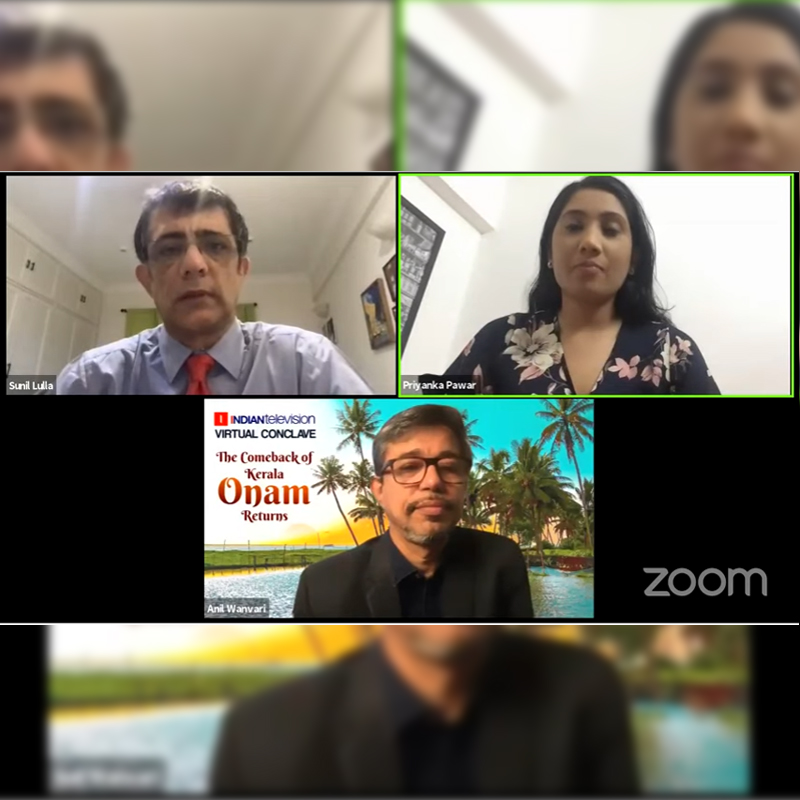
NEW DELHI: Indiantelevision.com’s marquee virtual conclave exploring the scope of growth in Kerala ad market during the upcoming festive season, starting Onam, “The Comeback of Kerala: Onam Returns” wrapped up Wednesday noon with an impressive lineup of speakers sharing their deep insights into the market. The show expressed great hopes and positivity towards markets across the country picking up post-Onam but with a certain air of caution in people’s minds.
The virtual event kickstarted with a riveting address by Indiantelevision.com Group founder, CEO, and editor in chief Anil Wanvari following which BARC India CEO Sunil Lulla presented exclusive data on the market highlighting some of the key pre-Covid2019 and Covid2019 trends and an overview of the previous three Onams in the state.
He indicated that as Kerala has already started witnessing a growth in ad volumes, going 10 per cent up in the month of July’20 as compared to Jan’20, the trend will continue to be so if the production-supply chains keep picking up. However, for ad revenues to grow, it will take some more time, probably the market will reach pre-Covid2019 levels in 2021.
After Lulla’s insightful presentation, next in agenda was a panel discussion on “Unlock 3.0: The National Perspective–Are Brands And Consumers Ready ” moderated by TAM Media Research Pvt Ltd CEO LV Krishnan. Sitting on the panel were ITC Ltd head media and PR Jaikishin Chhaproo, Godrej Consumer Products Ltd head of media Subha Sreenivasan, Initiative CEO Vaishali Verma, Wavemaker India VP Kishan Kumar Shymalan and Zenith India CEO Jai Lala.
Chhaproo shared that despite Onam being just around the corner, there hasn’t been any noticeable spike in sales and the market is still dealing with logistical issues. Sreenivasan, however, showed positivity indicating that things will slowly pick up.
Lala opined, “The need of the hour is to work together ever before. We need to get information at the ground level. The engagement has to be very deep; TV and newspapers have been impacted which need to get back to their pace."
The panel agreed that digital is set for double-digit growth this year while for other sectors it is going to be a slow trail in the coming months.
Kumar Shyamalan said, “The H2 impact will be far lesser, and the next three months will be extremely critical to see how many opportunities we have while working together.”
The next panel discussed the retail and local perspective within the Kerala market as Unlock 3.0 begins. The session was moderated by Star Regional Business EVP ad sales Dev Shenoy and had Popular Motor World Pvt Ltd CEO Sujith Chandran, LG Electronics GM Sheebu David, Seematti CEO Beena Kannan, Maitri Advertising Works (P) Ltd director-operations Raju Menon, Mplan Media CEO and founder Parag Masteh, and Pittappillil Agencies MD Peter Paul Pittappillil.
Addressing the challenges faced by various industries in terms of consumer behaviour, the panel noted that the biggest issue is restricted mobility, to address which they are investing in digital solutions. Masteh shared that this has led to a boom in e-commerce, especially in apparel and consumer electronics.
Pittappillil shared that while the overall sentiment around Onam is positive, he is not expecting performance similar to previous years. Kannan said that they are expecting 20-30 per cent growth. According to Menon, real estate is also showing positive movement in the middle-level.
The final panel “Unlock 3.0: Understanding the Overall Brand Sentiments” delved into the greater local and national insights into the shifts expected to happen in the marketing and advertising markets in the coming few months. The panel was made interesting by some thought-provoking inputs shared by Blue Star Ltd VP–sales and marketing for cooling and purification products division C Haridas, Mathrubhumi Group national cluster head Sunil Nambiar, Lodestar UM IPG Mediabrands EVP Laya Menon, Asianet News Network Pvt Ltd VP Unnikrishnan BK, Malayala Manorama VP–marketing Varghese Chandy, and Zee Entertainment Enterprises Ltd south cluster head Siju Prabhakaran, moderated by Kalyan Jewellers independent director and L&K Saatchi and Saatchi former CEO and managing partner Anil S Nair.
Haridas noted that though there is an air of caution, people will surely start spending from Onam but they will need the right kind of value and motivation.
Speaking about sentiments felt in the rest of the country and Kerala cluster Prabhakaran said, “Kerala showed the way to the rest of the country in terms of how to handle this crisis. Brand Kerala is in a very strong position. It has always managed to be in the national limelight. TV was only the choice so viewership was on the rise, but it couldn’t be monetised. Kerala was first to start the production, but I think we have seen a lot of resilience shown by us.”
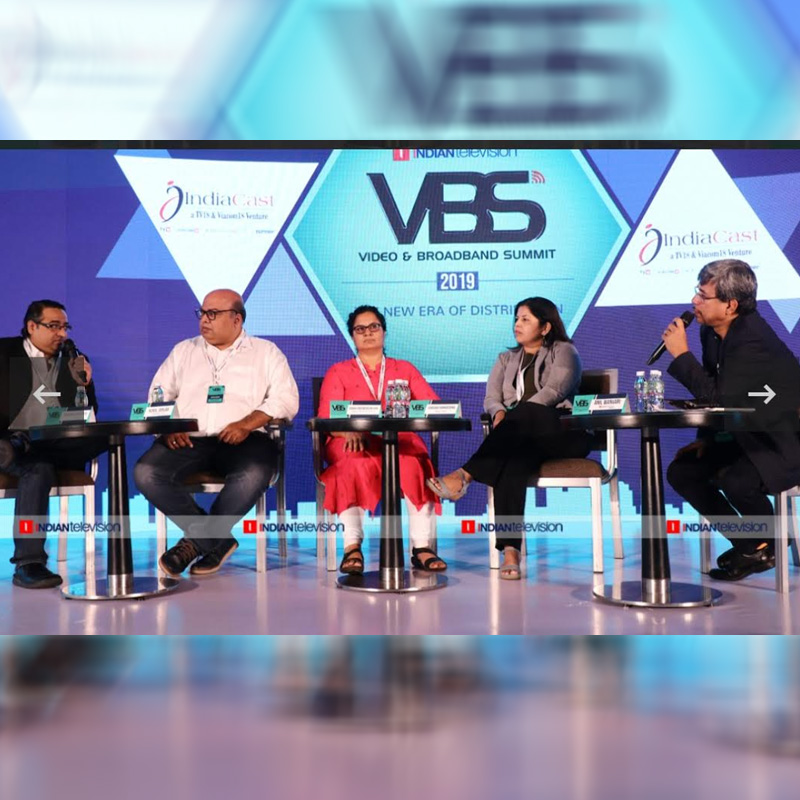
MUMBAI: Economic slowdown in 2019 brought the country, as well as the media industry, to a standstill. It visibly impacted advertising spends. This view was shared by advertisers present during the sixteenth edition of the Video and Broadband Summit 2019 that took place on 11 December in Mumbai.
The panel was moderated by indiantelevision.com founder, CEO and editor-in-chief Anil Wanvari, with panellists ITC Ltd head media and PR Jaikishin Chhaproo, Havas Media Group managing partner west and south Kunal Jamuar, Godrej Consumers Pvt Ltd VP and head of media services Subha Sreenivasan Iyer and Madison Media vice president Vandana Ramkrishna.
Chhaproo, in his opening statement, said, “There has been a yo-yo syndrome since January 2019 and the only two media-mela events (Indian Premier League and World Cup) in the first half of the financial year saw some advertisement growth.”
He further added that since June people have been quite cautious about advertisement spend.
Agreeing to Chhaproo’s perspective, Jamuar said, “2019 has been something like that of 2008 double dip. And, with respect to advertisement spend on television is as similar as of last year.” Many of Havas Media Group’s clients are from the auto and finance sectors.
All of the four panellists were of the view that along with other sectors, the advertisement spends on television has also been slow and has hardly seen any growth this year.
Accepting the slowdown in the market, Iyer said, “This year had made us re-look at all our advertising plans due to lack of resources and we have been far more prudent in terms of evaluating the need for further spend with quantifiable ROI."
Meanwhile, Ramkrishna believes that one of the reasons for the slowdown could be because of the poor performance of world economies.
According to Ramkrishna, her agency being associated with retail brands, the festive season has not turned up to be a happening one. Adding further, she said people are very cautious on spends and there’s a fear that the economy is going to crash.
However, despite facing a slowdown, Iyer said that in terms of volume, the company’s growth is very strong, which is a positive sign. This goes with competitors as well, especially, in the FMCG sector.
She added, “Consumers are not completely cutting down on their basic essentials, especially in segments where value for money is core.”
In the same context, ITC’s PR head said, “Consumers seek value for money and this is what is happening in the current economic situation. Moreover, there have been steady volumes all over.”
Ramkrishna, talking about NTO’s impact on advertising spend, said, “GEC and movie channels continue to be there and the new order has hardly affected the brands' television spends.” However, she pointed out that the smaller set of channels will certainly have an adverse effect.
GPCL’s media head said there has been a vast difference between DTH and cable networks in data capturing granularity and that helps brands to decide on advertising spends on television.
Havas Media’s managing partner questioned the importance of a proper measurement of audiences’ rating that has seen improvement after DTH’s existence. He said, “Today, niche channels are offering niche content, making the existing eco-system a bit difficult.”
Iyer said that companies are ready to test any medium, just that accurate third party data is needed.