Tag: Jai Lala

  • Zenith India wins the digital media mandate for LG Electronics

    Zenith India wins the digital media mandate for LG Electronics

    Mumbai: Zenith, the media agency under Publicis Groupe India, has won the digital media mandate for one of the largest electronics brands, LG Electronics. Zenith won this business in an intense and competitive multi-agency pitch process which saw leading groups participate.

    Zenith’s differentiated and integrated planning approach stood out among competitors making it the natural, first choice for the brand. As per the mandate, the agency will handle end-to-end digital AOR mandate for LG, including D2C performance marketing, digital branding and marketplace commerce.

    The scope of work will focus on full-funnel delivery using multi-channel tools, tech prowess and integrated workflow management furthermore strengthening LG’s digital media presence in the Indian market.

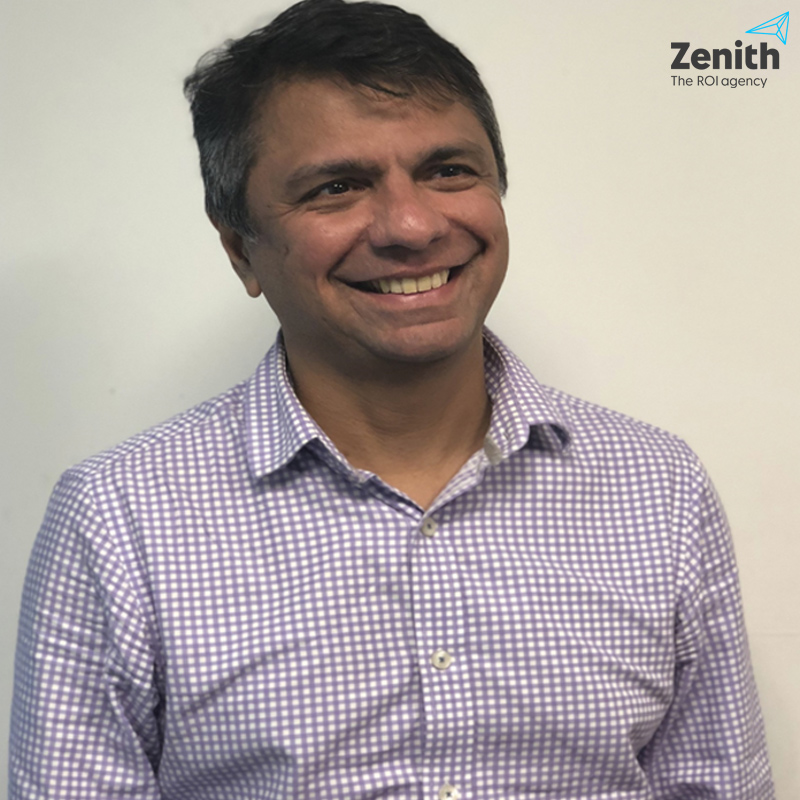
    Speaking on the win, Zenith India CEO Jai Lala said, “We are delighted to be partnering with LG Electronics, one of the largest electronics brands worldwide and one which needs no introduction. Zenith through its strong ROI proposition and exceptional expertise in digital marketing will fortify LG’s digital media presence in India. Through our strong data and tech capabilities, we look forward to unlocking new opportunities for the brand and contributing to its expansion in India.”

    LG Electronics India corporate marketing leader Tahir Saify Hakeem said, “It was a comprehensive pitch process and Zenith’s unique ROI approach to drive business outcomes was very impressive. We as a brand are always looking for innovative, differentiated and fresh ideas that match our working style and product proposition and we are confident that the agency through its dynamic and strong media capabilities will help us maximise the consumer journey and aid in business growth.”

  • Zenith India names Trishul Bhumkar as managing partner

    Zenith India names Trishul Bhumkar as managing partner

    MUMBAI: Zenith India, the media agency under Publicis Groupe India has appointed Trishul Bhumkar as its managing partner.

    Trishul will be reporting to Jai Lala and will spearhead business growth and momentum for Zenith India and its clients. He will strengthen client relationships further and mobilise with agility Publicis Media services including Content, Data, Analytics, Activation and Trade to maximise opportunities, visibility and ROI for brands.

    He brings with him a wide spectrum of experience on pedigreed brands including Coca-Cola, Vodafone, Marico, Danone, Pepperfry and Disney. His previous stints include Madison, erstwhile Maxus and GroupM Motivator and most recently saw him as Strategic Business Unit (SBU) head for Motivator (West).

    Zenith India CEO Jai Lala said, “Trishul is a dynamic leader with a track record that speaks for itself. He has been instrumental in new business success, fortifying relationships with clients and partners and driving exceptional growth and ROI for brands. In an ever-evolving market scenario, he brings strong thought leadership, strategic insights and substance to every brand conversation and is perfectly placed to partner with me in leading the agency into the next phase of growth and expansion.”

    Trishul said, “I am delighted at the opportunity. This is an exciting time to be joining Zenith India when the agency is witnessing strong momentum on new business and delivering outstanding performance on existing client businesses. I look forward to building further on the scale of operations, client delivery and leveraging Zenith India’s unique strengths in data, technology, content, and analytics to bring in unsurpassed growth for brands.”

  • Zenith India retains Nestlé’s media business

    Zenith India retains Nestlé’s media business

    Mumbai: Publicis Groupe-owned media agency Zenith India  has retained the media business of Nestlé India, according to the company’s statement.

    The business was won in a highly competitive multi-agency pitch which began in April 2022. The mandate includes the full range of duties i.e., offline media, online media, commerce, SEO and analytics.

    Zenith was the natural choice of partner, given that Nestlé was looking for holistic solutions across the board and powerful personalised communications. The agency has been handling Nestlé’s media planning and buying business, across all segments, for 17 years. It was appointed as the packaged goods company’s agency of record (AoR) back in 2005.

    Zenith India’s CEO Jai Lala said, “We are delighted that Nestlé has once again chosen us as their media partner and it’s a clear endorsement of our strong ROI approach and ability to deliver marketing excellence and innovation. The retention is testament to the rock-solid working relationship we share with Nestlé and indeed we are proud of the industry-leading work we’ve produced for them over the course of many years. Zenith has a deep and inherent understanding of Nestlé’s business needs and the strategic direction of its brands. Our teams were able to demonstrate unique insights, integrated approaches and data-driven decision -making. We look forward to harnessing the best of our capabilities, talent, technology and partnerships and helping Nestlé build even more powerful consumer connections.”

  • Tele-wise Marathi: Discussing Media Planning and Buying for the Marathi viewer

    Tele-wise Marathi: Discussing Media Planning and Buying for the Marathi viewer

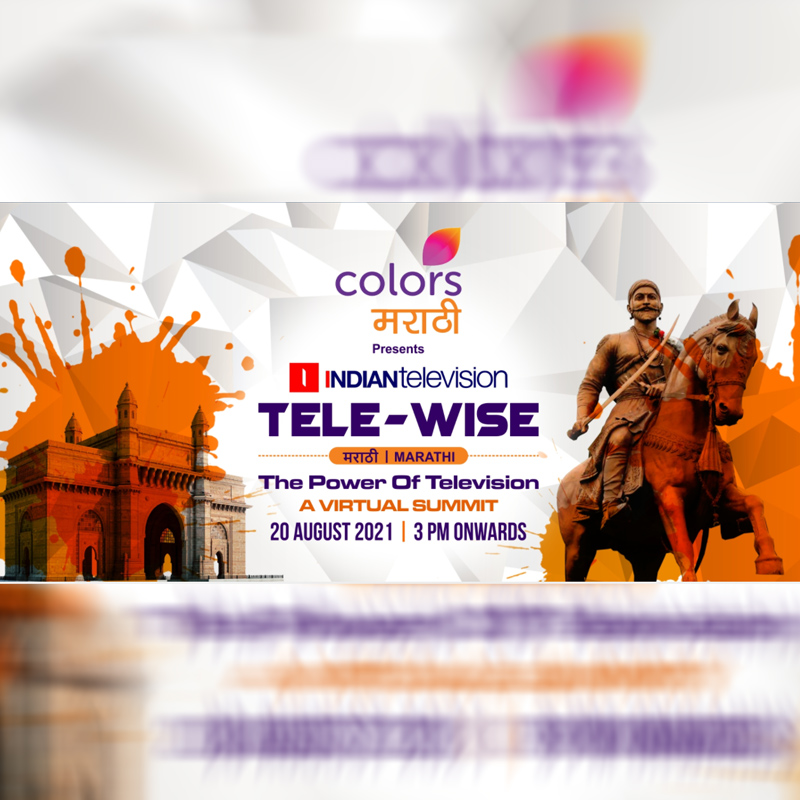
    Mumbai: With 12 per cent of total TV homes, Maharashtra is the biggest market in India in terms of the market share. Even though the number of marketers and brands as well as the exclusive viewership and advertising have registered the healthiest growth since 2019, the Marathi AdEx doesn’t seem to be adding up, pointed out experts at the recently concluded ‘Tele-wise Marathi: The Power of Television’, a virtual summit organised by Indiantelevision.com to demystify the Marathi television landscape. The event was presented by COLORS Marathi.

    During the session on ‘Media Planning and Buying for the Marathi Viewer,’ Mindshare COO – Amin Lakhani, Zenith CEO – Jai Lala, and Dentsu X India, managing partner (trading) – Vaibhav Jadon, tried to the address the fundamental question as to why despite its massive potential, the Marathi television market is still valued between Rs 1200 and 1400 cr as opposed to the over Rs 2000 cr South markets, and what needs to be done to accelerate growth in this direction.

    The discussion outlining the challenges of communicating to the affluent yet discerning Marathi viewer who is not limited to any one media or language was moderated by Indiantelevsion.com founder, CEO and editor-in-chief, Anil Wanvari.

    Beginning with the contention that the comparison between Marathi and South markets is untenable, Zenith’s Jai Lala said, “Unlike the South markets which were already regionalised probably two decades ago, Maharashtra is still growing, and the biggest challenge with it is that the audience speaks and understands Hindi in addition to the local language. This leads to a huge spill over. From a strictly numbers standpoint, brands can reach Maharashtra with national GECs and other channels. However, Marathi channels start making a lot more sense when the aim is to establish an authentic connect with the Marathi audience.”

    Lakhani and Jadon joined Lala in defining the Marathi viewer as being “spoiled for choice” and “exposed to a lot more distractions than an average TV audience elsewhere.”

    To put things in perspective, with 12 per cent of total TV homes, Maharashtra is the biggest market in India in terms of market share. It also has the highest share among the HSM. The state’s contribution to the overall TV viewership is 13 per cent, of which 5 per cent comes from the 25 local Marathi channels. There has been a 44 per cent swell in ad volumes over 2019 in Marathi channels alone, as compared to the total TV ad volume increase of 14 per cent. Even though the number of marketers and brands as well as the exclusive viewership and advertising have registered the healthiest growth since 2019, the Marathi AdEx doesn’t seem to be adding up.

    Expressing confidence in the positive trends witnessed over the last 18 months, Lakhani said, “While Marathi AdEx, GRPs and other metrics are on the rise, and it will continue to be so, the money spent on Hindi channels within Maharashtra needs to be factored in because eventually it is also on the back of Marathi audiences.”

    Defending the advertisers and planners on whether they are doing enough to catch up with the trends, he stressed upon the fact that the onus of growing a particular market/genre lies more with the broadcasters and content creators.

    “The flow of advertising monies into any genre has always been commensurate with the eyeballs it generates, and not the other way around. Even though the Marathi market will always be faced with the challenge of national brands wanting to deliver at an overall level, with clients going increasingly granular in approach, regional is surely assuming greater relevance but only when backed by numbers. Maharashtra is an important market; not a choice anymore. All we need is great stickiness, great viewership, great time spent and great brand solutions.”

    Lala agreed with Lakhani on the sequence of AdEx following GRPs being inviolable. “Content owners need to invest in getting eyeballs. Maharashtra did not exist as a media market ten years ago. It’s because of the networks investing in it that today we are in this space,” he remarked.

    The five new Marathi channel launches last year notwithstanding, Jadon also believes that there’s huge scope for more channels, and hence more content which specifically communicates with the Marathi audience in their own language.

    Discussing the role of media planning in furthering growth in Maharashtra, Lala shared that while planners have traditionally been taught to use a national first approach, Zenith has recently been experimenting with reverse planning which builds on a regional base instead. Elaborating on the complexities of the methodology, he noted, “Depending on the priority markets and budgets we have initiated this plan for select clients, one of them being Nestle. The approach is better suited if the priority markets are leaning towards Maharashtra and West Bengal, and not as much for a market like Delhi. It is also a little expensive, though the returns need to be evaluated in relation to the objective. If an advertiser wants numbers in terms of reach, frequency, GRPs etc. then this is not the solution he is looking for, but when it comes to building a connect with the audience, this could be the best approach.”

    However, both Lala and Lakahni cautioned that these are simply two different schools of thought, and there’s as yet no data to ascertain or establish which one works better. Jadon too shared his experience of having used the regional first approach successfully for a big FMCG client. “Gone are the days when you would just need Marathi as a top up; it is an integral part of the media plan, but in what way, that is something we as planners, buyers and marketers must decide. Buying GRPs in Maharashtra alone is not economical. Due to the basic consolidation that has happened there are no quality reach drivers or GRPs that we can buy at lower values,” he pointed out.

    On the buying side of the equation, Lala suggested having a different pricing strategy for the top-down and bottoms-up approaches in a manner which incentivises advertisers opting for the latter, as one of the ways of attracting more AdEx. Ruing the complacency that has already set in on the broadcaster front despite Maharashtra being a young and growing market, Lakhani opined, “even if a broadcaster is the market leader, it will have to be mindful of how its property is priced in relation to someone who can deliver the same kind of numbers through a national channel, failing which, it will never be able to catch the buyers’ attention.”

    Jadon emphasised on the need for augmenting supply to encourage healthy competition among players, which will eventually lead to market expansion. Summarising the discussion, he said, “Maharashtra which used to be a single-channel market until a few years back, has now become a two-horse race with both of them charging similar prices because of which the advertiser ends up paying twice or thrice the price for the same GRPs. If I were to optimise my plan, I would instead buy more Hindi GRPs to reach the exact same viewer who is watching me on Marathi as well as Hindi channels. So, while there is enough demand from clients, my belief is that the market needs to expand, there needs to be a lot more channels and a lot more GRPs to be bought. That’s the only way Marathi AdEx can grow.”

  • Telecoms’ ad spend to return to 2019 levels of spending in 2022: Zenith

    Telecoms’ ad spend to return to 2019 levels of spending in 2022: Zenith

    New Delhi: Telecom advertising will grow at an average rate of 4.5 per cent a year till 2023, as the sector recovers from an 8.7 per cent decline it suffered in the pandemic-ravaged 2020, according to Zenith’s Business Intelligence – Telecommunications report published on Monday.

    The agency predicts that as spend by telecom companies in the 12 key global markets, including India, will rise from $17.8 billion in 2020 to $18.7 billion in 2021, and then return to its pre-pandemic level of $19.5 billion in 2022.

    Smartphone sales will start to spring back this year once consumers feel more confident in their future. Consumers are becoming more willing to finance and purchase handsets independently from their network providers, giving manufacturers and retailers a greater incentive to advertise handsets themselves. Meanwhile, the networks will seek to recoup their investment in 5G licences and infrastructure through new services and more expensive data packages. According to Zenith, all these trends will help fuel healthy growth in telecoms advertising over the next three years. It predicted that telecoms adspend will grow 4.7 per cent in 2021, 4.4 per cent in 2022 and 4.3 per cent in 2023.

    Traditionally, telecoms brands are known to spend more on television and radio advertising than the average brand – in 2020 they spent 42 per cent of their budgets on television and radio, while the average brand spent was 30 per cent. Their ad spend in digital is relatively less than average. In 2020, 49 per cent of their budgets went to digital channels, compared to 56 per cent for the average advertiser, but digital advertising is also the only channel in which telecoms adspend is increasing.

    However, Zenith's estimates show that as audiences migrate online, telecoms companies will be refocusing on communicating their brand narratives to mass digital audiences and, by 2023, digital advertising will account for 54 per cent of all telecoms advertising. As per the forecast, telecoms brands will increase their digital adspend at an average rate of five per cent a year between 2019 and 2023.

    "Telecoms companies have been the unsung heroes of the pandemic, shifting our lives online and keeping us connected to entertainment, work and commerce. Their challenge is to go from being unsung to being acknowledged and appreciated for their efforts. The spread of 5G and the reality of our new-found virtual lives give telecom brands the opportunity to move into the limelight,” said Zenith global chief strategy officer Ben Lukawski.

    The analysis also showed that telecoms brands are cutting back their spending on traditional television and radio as their reach declines, but less rapidly than brands in most other categories. Zenith forecasts that between 2019 and 2023, telecoms brands will reduce their television adspend by an average of 2.0 per cent a year, compared to a 3.5 per cent annual reduction across all categories. They will also reduce their radio adspend by 2.8 per cent a year, compared to 4.1 per cent a year for the market as a whole.

    It also predicts that India will be the fastest-growing market for telecoms advertising between 2020 and 2023 by some distance, with 11 per cent annual growth. According to eMarketer, only 31 per cent of the population currently has a smartphone, but this proportion is rising rapidly due to  launch of low-price handsets such as the JioPhone.

    “The telecom sector in India in 2021 is anticipating a robust growth on the basis of an increase in tariff pricing, demand for data, growing number of mobile users and hopefully the launch of 5G in the last quarter. This will lead to a substantial increase in media investments by the key players especially on television and digital,” said Zenith India COO Jai Lala.

    Russia is another market with relatively low but fast-growing smartphone penetration, and here telecoms adspend is forecast to rise rapidly too, by eight per cent a year. Most of the other markets  in this report except for France are forecast to grow by between three per cent and six per cent a year to 2023.

    “The rollout of 5G services will allow mobile operators to supply bundled voice, data and entertainment services to the home and compete directly with landline broadband,” said Zenith head of forecast Jonathan Barnard. “This will spur greater competition to put together the most attractive services at the best prices and help stimulate a sustained recovery in telecoms ad spend to at least 2023.”

    The report covered 12 markets – Australia, Canada, China, France, Germany, India, Italy, Russia, Spain, Switzerland, the UK and the US, which between them account for 73 per cent of total global ad spend.

  • Zenith India creates new COO & CCO roles

    Zenith India creates new COO & CCO roles

    MUMBAI: Jai Lala has joined for the newly created position of chief operating officer (COO) at Zenith and will oversee operations, structure and expansion in addition to the scaling up of specialised, future-facing offerings for the agency. The focus will be on areas where Zenith is already market-leading such as data, dynamic content, tech, analytics, performance and programmatic.

    In addition, Zenith has elevated its managing partner and head, West & South Ajit Gurnani to the newly created role of chief client officer. He has already had a great role in firming up client relationships for Zenith and will continue to interface with key clients, bringing in new and critical perspective on businesses and enhancing Zenith’s overall strategic product and delivery.

    Jai Lala has over two decades of experience across media planning, buying, research & sales. He is has worked in organizations such as UTV, ESPN Star Sports and leading media agency groups. His last stint was with MediaCom as chief strategy & growth officer. He has serviced clients across the country such as Unilever, PepsiCo, GSK, ICICI, Castrol, Lenovo, USL, Coke, Marico and many more in various capacities. He has created multiple & unique trading practices in the industry.  Jai is also a visiting faculty at ISB & MICA.

    Elaborating on the appointments, Zenith India group CEO Tanmay Mohanty said, “ Zenith stands at an important growth juncture; we have witnessed an absolutely spectacular year so far in terms of new business wins and performance on key client businesses. In our endeavour to build further on our ROI+ offering, delivering transformational growth to our clients, we are announcing two big appointments at senior levels. Jai Lala needs no introduction and has over 20 years’ experience in media planning and buying. He will aid me in client deliveries,  keeping up the scale and momentum of operations,  integration of existing talent and new hires and the expansion in the overall footprint for Zenith. Ajit, on the other hand, has been with us for over three years and brings in huge expertise and value to every client conversation. He has transformed the way we deliver to clients and will shape our client relationships further. Both these appointments will help Zenith put out passionate, exciting and compelling work.”

    Jai Lala said, “I am delighted at this opportunity. Zenith has market-leading expertise in data, technology and innovation. Offering a strong, long-term consultative approach to clients, Zenith is already working on what lies at the corner tomorrow; whether it is automation, machine learning or artificial intelligence. Its pedigreed A-list clients, outstanding work and motivated teams make me excited about the possibilities.”

    Ajit Gurnani says, “ Zenith with its ROI push and accent on business deliverables, truly leverages the power of integrated communications and media-neutral solutions.  As part of my role, I will look to cement and enhance Zenith’s existing client relationships in addition to forming new connections.  I look forward to driving results, and creating award-winning, business -building work.”

    Ajit Gurnani has 20 plus years of work experience across client leadership, brand management and media investment management.  He has worked as a brand and media custodian at Marico and IIFCO, and has driven media investment management for The Aditya Birla Group and its companies, Mercedes-Benz, NIVEA, Zee TV, Unilever and Colgate Palmolive in previous stints with agencies. At Zenith, he has led the media investment mandate for businesses such as Parle, Toyota, Singapore Airlines, Singapore Tourism Board, HDFC Life among others.

  • Piracy notwithstanding, English Entertainment genre charts growth story

    Piracy notwithstanding, English Entertainment genre charts growth story

    MUMBAI: That there are as many as 20 English entertainment channels in India today is alone testament to the fact that there is a chunk of audience out there who are happily lapping up English shows and movies on television. In a country where Hindi and regional general entertainment channels (GECs) account for almost 49 per cent of the total viewership pie, the English GECs and movie channels genre survive on a measly 0.9 per cent.


    Notwithstanding, overhear snatches of conversation of today’s youngsters and you’re most likely to hear show names such as Orange is the New Black, Homeland, House of Cards and Game of Thrones. However, a couple of pertinent questions to ask here are: Where are they consuming this content from and whether there is much scope for a genre like this to grow in a country as diverse as India?


    Even as piracy is rampant specially for English entertainment content, Indian broadcasters are going around with a fine-tooth comb in order to offer viewers the best content in order to feed their insatiable demand.


    The English Entertainment Growth Story


    According to the FICCI-KPMG 2015 report, English entertainment genre, which includes both English GECs and English movie channels, accounted for 0.9 per cent viewership in 2014 as compared to the 1.1 per cent in 2013.


    With the recent addition of Viacom18’s Colors Infinity and Colors Infinity HD, the number of English entertainment channels in India today has touched 20, as per TAM Media Research data. Of these, there are seven HD channels with the first half of 2015 alone seeing as many as five HD launches.


    Speaking to Indiantelevision.com, Times Network CEO and managing director MK Anand says, “With DAS phase I and II complete, as we go to phase III and IV, the potential to launch more and more niche channels and to reach out to specific people has become better and cheaper. With analog one could reach 100 channels through a network, whereas with digital we can technically and theoretically reach 500 channels.”


    While the niche English entertainment genre has seen content acquisition cost rising almost three-fold in the last couple of years, the fact remains that the advertising rates are nothing to write home about. Even as media planners suggest that there has been close to 43 per cent jump in the commercial time sold on English entertainment channels, the ad rate for the genre ranges from Rs 500 to Rs 2,500, which is considerably below the rates that Hindi GECs command. In a scenario like this, the question that looms large is whether it is even profitable to enter the space?  


    Viacom18 EVP head – English Entertainment Ferzad Palia says that close to 250 million Indians now are English literates, which was anywhere between 25-30 million, 10 years ago. Not just this, English entertainment genre currently reaches to 200 million consumers, with close to 60 per cent of English entertainment consumption coming from non-metros. While currently, the genre has only 4.6 per cent AdEx share of the whole television pie, Palia feels that the genre is lucrative from an advertiser’s perspective, as English entertainment consumers have 35 per cent higher disposable income.


    While the above figures and the liking for high quality content by youngsters justifies the many new launches in the English entertainment space, what is interesting to note is that networks today are investing not just on an English entertainment channel, but are also looking at catering to their HD audiences, by simultaneously launching the HD feed of the channel or only coming up with an HD channel.


    The HD Push


    GroupM head – trading & partnerships Jai Lala believes that there is scope for more HD channels in the market as the viewing pattern is changing. “With better TVs, and better availability of content, people want to watch the content in HD. The way we had SD, over a period of time, people would want to move to HD and that is where the opportunity exists,” he says.


    Digitisation and the growing emphasis of direct to home (DTH) players on HD is another reason for broadcasters concentrating on strengthening their HD bouquet. “The HD part is extremely small right now and at a very nascent stage. With an increase in the seeding of HD set top boxes, things will change. While currently HD penetration is mainly in SEC A cities, over a period of time, it will become mass,” opines Lala.


    Increasing penetration of premium, ad free channels like HBO Hits, HBO Defined and Star World Premier has given a major fillip to subscription revenues significantly for the English entertainment genre. Premium HD channels last year recorded 10X topline growth with DTH accounting over 95 per cent of the premium channel subscriber base.    


    The advertising revenue from HD channels, according to media experts is approximately Rs 250 crore. Lala estimates the English general entertainment HD market to be in the tune of Rs 100 crore.  


    Agreeing that the genre currently is not profitable, Madison Media Omega chief operating officer Dinesh Rathore says, “There is so much content available internationally and it is quite popular. Thanks to digitisation and digital penetration that people are watching this content through different avenues. This gives an impression that there is a demand for such content, but this is specialized content meant for a niche audience.”


    Giving examples of channels like Big Thrill and CBS, Rathore says that these did not work because they were not viable monetarily. “Today, every network wants to be available in every genre and with better quality. It is like building a portfolio in order to cater to your clients in every niche,” he opines.


    The Road Ahead


    While the English entertainment channels genre currently is a small player in the vast broadcast game, it has a chance to pick up with growing digital homes. Once a strong pipe is created, broadcaster will have to concentrate on bringing good quality content to viewers, preferably at the same time as its US release. They will also have to create enough room for sampling of content by viewers.    


    The key area of concern for English entertainment genre in India still remains that of piracy. According to Palia, the habit of ‘torent’ing amongst viewers has been inculcated by broadcasters themselves. “We have forced consumers to go and download. Research shows that people do not download just because they want to watch content immediately after the US launch. The real reason is that they aren’t getting enough content that they should be. There is a plethora of content that is not even brought to the country,” Palia had earlier said. 


    Media analysts are of the opinion that the English entertainment genre in the country should pick up in the next two-three years. Moreover, the huge time gap between the US and India release of a show is what eventually leads to downloading. If broadcasters can deal with this issue and develop appointment viewing amongst customers, the genre, which has immense potential given India’s high youth and English speaking population, stands to bloom.

  • GroupM elevates Jai Lala and Sidharth Parashar

    GroupM elevates Jai Lala and Sidharth Parashar

    MUMBAI: GroupM has elevated two of its senior executives of the Central Trading Group (CTG). The company elevates Sidharth Parashar as head, Pricing & Investments, and Jai Lala as head, Trading & Partnerships.


    Both Lala and Parashar will report to CTG south Asia managing partner Prasanth Kumar.


    Prior to his promotion, Parashar was the agency buying head for Maxus, for over five years, where he was a valued member of the leadership team, working on media mandates for brands such as Google, Nokia, Vodafone to name a few. In his new role Parashar will be responsible to facilitate and execute GroupM investment mandates across media. His key focus will be on the GroupM trading products that should continue to offer the edge to our clients. All the GroupM agency trading heads and cluster heads will now report in to Praashar.


    Prior to Lala’s elevation, he was the agency trading head for Mindshare, where he worked on media mandates for clients such as Pepsi, GlaxoSmithkline, ICICI, Aditya Birla Group and Nike. Going forward Lala will be managing all trading mandates at GroupM. He will also be heading a team of all the heads across verticals: Proprietary media, DTH, Xaxis, Syndication, GME and Special projects and maximize value for our clients. He will also work closely with Parashar and the agency trading heads on delivering the maximum ROI on media investments.


    Speaking on the new structure, Kumar said, “As we move into a growth phase largely driven by converging synergies across the group and driving client satisfaction it has become critical that we create more focus, especially in the area of media investment. With the development of new concepts of integrated media, merging traditional and digital media, we are also looking at reforming the way we plan our investments as a central hub. This new structure in our core function will deliver unparalleled client delight and value.”

  • The Mumbai Marathon lures media professionals

    The Mumbai Marathon lures media professionals

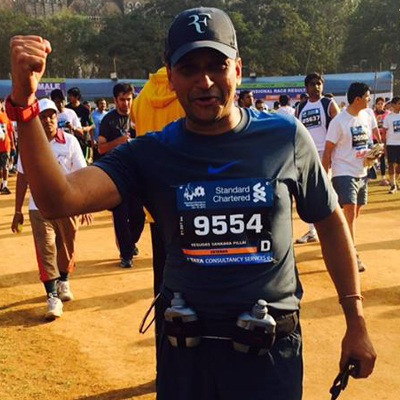
    MUMBAI: The 2014 edition of the Standard Chartered Mumbai Marathon drew media professionals like a fish to water. A  whole bunch of executive right from broadcast to media agencies to marketers to advertising professionals donned their sports shoes, and pinned their numbers to their T-shirts, and pounded the streets as they joined 40,000 other runners to test either the Dream Run, the half marathon or the entire distance.


    Among those who woke themselves early on 19 January included: Meenakshi Menon (she and 10 others ran for an NGO Vanashakti), Suki Dusanj, Times Television Network CEO Sunil Lulla, former Indiagames CEO Vishal Gondal, Mindshare’s Jai Lala, Vizeum India head S. Yesudas, Sahara group’s Kailashnath Koppikar, Sapna Bhavnani, MindShare’s Rajit Desai, Sony Entertainment’s Deep Drona, Star India’s  Kevin Vaz, Lashmi Narasimham, Bharat Kapadia, Mindshare’s Amin Lakhani, Paritosh Joshi, HDFC Life’s marketing head Sanjay Tripathy, CNBC TV18 marketing head Suranjana Ghosh Aikara.


    Some of them ran for charity; some to challenge themselves. Their facebook accounts and twitter posts were replete  with their individual experiences and how they bettered their previous best times. Or how they braved aches and pains to complete the course they had set for themselves.


    Rajit Desai completed his first half marathon in 2 hours 47 minutes, a feat which he felt was not spectacular, but “satisfying for a debut.” Jain Lala wore the number 34377 on his jersey and had all his colleagues and friends going ga-ga over him. Sony’s Deep Drona ran his half marathon in 2 hours 4 minutes and 9 seconds. Said he: “Bettered last year by 2 mins. Great result compared to the work put in this year.”


    Viacom18 Pictures Ajit Andhare ran with his friends from the times of his GE days and also to promote the studios upcoming Abhay Deol film. Yesudas hit the  asphalt for the half marathon, adding to the tally of long distance races he has participated in. Entertainment Network India Ltd (ENIL – Radio Mirchi) CEO Prashant Panday completed his half marathon in 1 hour 53 minutes, which is by all standards a good time for a non-professional runner.


    Media industry veteran and now marketing consultant Bharat Kapadia says he ran his seventh consecutive half marathon and completed it in 2 hours 17 minutes.

    Viacom18 Media group CEO Sudhanshu Vats, on his part, ran the full marathon in a classy time of just under four hours. 

    Times TV’s Sunil Lulla did well too. Said he: ” Mumbai Half Marathon, 2014. My first and I am grateful to complete it in. 1 hr: 54 mins: 29 sec , ranking 650 overall and 78 in Veteran. I pledged a healthy sum of money to CMCA, and am glad I could deliver on my promise. Thank You.”


  • Digital the silver lining amid dark ad clouds

    Digital the silver lining amid dark ad clouds

    MUMBAI: As the industry braces itself for the impending slowdown, there might actually be a sector that is preparing to manage an increased workflow. Digital marketing is expected to maintain its pace or even speed up this year as advertisers look to scale back spends on expensive mediums like print and hoardings.

    Experts say there will be no major deviation from Mindshare‘s early year forecast that digital would grow at 30 per cent in 2012, in the same rate as the earlier year.

    Maxus, part of WPP group, agrees that digital will not see any specific slowdown this year. “It should grow at 30-31 per cent from the first part of the year trends,” says Maxus South Asia head of digital Unny Radhakrishnan.

    In fact, insurance companies like HDFC are looking at increasing their digital spends this year.

    Says HDFC Life EVP marketing and direct channels Sanjay Tripathy, “I only see the spends going up because the whole media pie has been asymmetric all this while. If you look at the reach frequency formula and compare it to TV, print, radio and then digital, you will agree with me. There are more people spending time on digital in comparison to other traditional media touchpoints. I only see the digital percentage increasing in the overall pie.”

    With India‘s economy slowing and the bottom line of companies coming under pressure, advertising spends are bound to become increasingly result oriented. This is where digital scores over its media counterparts as it allows for more targeted marketing and better measurable RoI.

    Says Brandlogist CEO Saurabh Parmar, “Digital offers clients an ease in measuring RoI and helps target a wider demographic. What is more important is that digital offers an economic advertising to the small and medium-sized businesses that aspire to advertise among the masses but do not have the budgets of TV and print.”

    As consumers tighten up their purse strings, they would want to carry out detailed research as well before they arrive at a purchase making decision. The Internet is becoming the research tool of choice for several consumers, offering brands the opportunity to become more visible and interactive.

    In the wake of such trends, Parmar feels that the percentage of ad spends dedicated to digital will see a spurt to 11 per cent in 2012, up from 3-5 per cent last year.

    While building brands take a backseat in times of slowdown, it is an exercise that can‘t also be neglected.

    Admits Mindshare principal partner Jai Lala, “Digital, specifically social media, offers brands a platform to interact with its customers. This serves a two-pronged benefit of getting feedback and enhancing the brand image by being responsive and interactive. This is one of the main reasons why digital is growing so rapidly.”

    Also Read:

    Ad Slowdown Looms

    Signals are for a mild ad slowdown: Mindshare‘s Lala

    Slowdown to impact outdoor advertising