Tag: Jaguar

  • Jaguar Land Rover to lay off a third of India workforce

    Jaguar Land Rover to lay off a third of India workforce

    NEW DELHI: Tata Group-owned Jaguar Land Rover (JLR) is undertaking its biggest ever retrenchment drive in its India operations, slashing its workforce by nearly a third, according to a report by Business Today.

    The layoffs, which have already started and are expected to continue through this month, are part of its global strategy to shed about 2,000 non-manufacturing jobs by next fiscal, reported two weeks ago. JLR had also reduced its global headcount by 1,000 in 2018 and another 4,500 in 2019. These are part of its ongoing restructuring drive Project Charge+ through which it aims to save about £2.5 billion.

    The news of restructuring was a "shocker" to the automaker's India workforce, who believed that they would be spared due to the small market JLR has in the country, Business Today quoted a source as saying. Moreover, there was a false sense of complacency that because JLR's parent firm Tata Motors is an Indian entity, it would not touch its Indian employees.

    JLR issued a statement clarifying that the layoffs were being undertaken to increase efficiency in a bid to find the right cost structure for its workforce. It did mention the number of employees being retrenched, details of the severance package being offered to them, or whether the salaries of the top management have been slashed.

    JLR is considered a straggler in the Indian luxury car market, which itself has not grown by much in the last five years. The British brands saw their sales decline by 74 per cent in 2020 and a loss of market share of 10.62 percentage points. In comparison, the biggest in the business – Mercedes Benz – saw a 43 per cent decline, BMW by 32 per cent and Audi by 63 per cent.

    Last month, JLR's global CEO Thierry Bollore, who took over the reins of the company only last September, said the Jaguar brand would move away from its iconic high-performance internal combustion engines entirely and produce only electric vehicles by 2025, while Land Rover will have its first fully electric SUV by 2024.

  • Deepika Padukone dazzles in new ad for Jaguar lighting

    Deepika Padukone dazzles in new ad for Jaguar lighting

    MUMBAI: Jaquar Lighting, the lighting vertical from Jaquar Group has rolled out campaign with brand ambassador, Deepika Padukone.

    Jaquar Group promoter and director Rajesh Mehra says, “Jaquar Group has always believed in creating products with the highest quality standards, an attribute that’s synonymous with our products. Taking this philosophy forward with Jaquar Lighting and leveraging the popularity of Deepika as our brand ambassador, we have doubled the turnover of the brand to 200 Crores.”

    The narrative interestingly weaves in the discovery of Jaquar Lighting’s wide range by Deepika’s character as she follows the ‘light’ cues of a mystery friend! Pegged somewhere on the threshold between a metaphor for life and a product showcase, the idea of how Deepika is led into the light – the light of friends and relationships, as well as Jaquar Lighting’s products. Visualised through the story of discovery where her family and friends want to surprise her by playing a game of turning on lights that lead to a surprise welcome party for Deepika!

    Crescent Communication executive vice president Rajesh Laikh adds, “The creative thought behind the film was to present Jaquar Lighting in a completely fresh avatar and at the same time remain true to the brand’s guiding philosophy-Complete LED Lighting Solutions.We have tried to capture the joys of life and celebration enabled through Jaquar Lighting. Deepika Padukone, the brand ambassador, apart from ensuring high visibility lends credibility and magical aura to the brand.”

    Jaquar Lighting’s 360-degree marketing campaign will amplify the film targeting mediums across the board including television, print, electronic, outdoor and digital media. The campaign also highlights Jaquar Lighting’s distinctive strengths and design sensibilities.

    The brand’s innovative technology combined with its unique support like Light Planning and pan-India customer service to deliver unmatched quality, will catapult them to become market leaders in this category as well.

  • Discovery Turbo launches new series with Brian Johnson as host

    Discovery Turbo launches new series with Brian Johnson as host

    MUMBAI: Discovery Turbo has unveiled a new series called Cars That Rock with the lead singer of the rock ‘n’ roll band AC/DC – Brian Johnson as the host. The series, which went on air from 7 September, airs every Monday at 10 pm.


    The series will have Johnson at the steering wheel, navigating through a bevy of the most amazing, exhilarating and iconic mean-machines.


    In the new series Johnson, with his colourful sense of humour, delves into the rich heritage and, of course, gets behind the wheels of the most iconic cars in history. From the sleek Jaguar, illustrious Alfa Romeo, famous MG and iconic McLaren to the classic Landrover and exhilarating Nascar, Johnson explores their fascinating histories, visits the factories and meets the makers of these fine motoring stallions.


    Each week Johnson will explore the fascinating history of these, four-wheeled -cruisers, by visiting the factories and meeting the makers of these automobiles.

  • Jaguar launches #FeelWimbledon campaign

    Jaguar launches #FeelWimbledon campaign

    MUMBAI:  Jaguar has launched its #FeelWimbledon campaign, which uses cutting edge sensors to analyse and celebrate the unique spectrum of emotions associated with the world’s number one tennis tournament.


    As part of this multi-sensory fan experience at Wimbledon, selected members of the crowd enjoying tennis this year will be provided with biometric wristbands capturing the excitement at SW19, whilst atmospheric, in-ground sensors monitoring the energy around the courts, and global sentiment on social media will be analysed.


    Information from the atmospheric sensors – which will collate crowd movement, audio levels and infrared – biometric wristbands – that capture heart rate, movement and location around the grounds – and sociometric tracking – following the conversation amongst fans around the world on Facebook, Twitter and Instagram – will provide a unique level of insight and present a completely new perspective on the greatest Grand Slam of them all.


     Every day during Wimbledon, tennis fans can access live updates of the mood and crowd emotions down at SW19 across Jaguar’s UK social media channels, and by visitingwww.feelwimbledon.co.uk.   


    All England Lawn Tennis and Croquet Club committee member Tim Henman said, “There’s no other tournament like Wimbledon and the experience gets better each year. The drama, passion and excitement, shared by both players and fans alike, is what makes Wimbledon the number one tennis tournament in the world, and it’s great to see Jaguar celebrating these unique qualities as part of their #FeelWimbledon campaign.”


    Jaguar Land Rover UK marketing director Laura Schwab stated, “Wimbledon evokes lots of emotions and captures our imaginations in so many different ways, so we’re very excited to celebrate what makes Wimbledon so special through our #FeelWimbledon campaign.”


    AELTC commercial director Mick Desmond added, “Jaguar’s #FeelWimbledon campaign supports our commitment to communicate with our fanbase and ensure the best possible brand experience for supporters attending The Championships, watching at home, or engaging via our digital channels and on social media.”


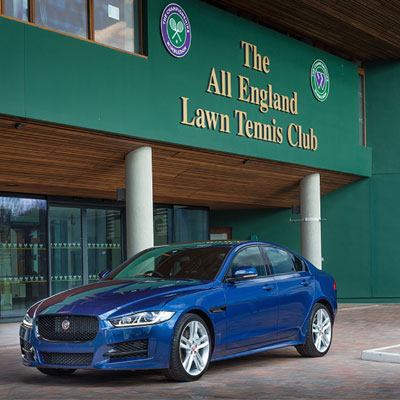
    Jaguar Land Rover will supply 170 luxury, high performance vehicles to support tournament operations. The fleet of luxury chauffeur vehicles includes the new Jaguar XE, which are now on sale at Jaguar UK retailers.


    Schwab added: “With 500,000 people attending Wimbledon this year, it provides Jaguar with incredible exposure in London, and a fantastic platform to showcase our products, especially the Jaguar XE.”

  • Sam Ahmed moves on from Rediffusion Y&R

    Sam Ahmed moves on from Rediffusion Y&R

    MUMBAI: After only an eight-month stint, the Rediffusion Y&R vice chairman and CCO Sam Ahmed has decided to go back to film making.

    He will leave the agency in December this year.

    Ahmed was brought on board early January this year from Y&R Dubia where he had worked for 14 years on brands such as Ford, P&G, Nestle, Pepsi, Colgate-Palmolive, Citibank, Skoda, Land Rover, Jaguar, Sony Ericsson, HTC, Apple and World Gold Council.

    Rediffusion Y&R made noise recently for its catchy campaign for Tata Nano, which repositioned the product as an ‘awesome’ youth brand.

    Ahmed has also won over 200 international awards, which include Epica, Clio, Cannes Lions and New York Festival.

  • Jaguar launches new global brand strategy

    Jaguar launches new global brand strategy

    BANGALORE: Jaguar today announced a new future-looking global marketing and brand strategy that it says will add fresh impetus to its evolving product-led revitalisation programme.

    Simultaneous with the unveiling of a new Jaguar logo and corporate identity, the launch of a new marketing campaign aims to increase awareness of the brand amongst a new audience in line with the marquee‘s ambitious future plans, says the company.

    The new Jaguar global marketing campaign is the result of collaboration with SPARK44, the international communications agency that‘s part-owned by Jaguar Land Rover, and will feature print, television, outdoor and digital advertising. The campaign is designed to capitalise on the existing emotional pull of Jaguar‘s cars and challenges consumers to answer: ‘How alive are you?‘

    Said Jaguar Cars Global Brand Director Adrian Hallmark: “Jaguar‘s current range already represents an enviable combination of luxury, innovation and seductive performance, and we‘re working hard to build on those existing strengths by developing exciting new models and derivatives – some of which you will see very soon. As that product-led revitalisation continues, now is also the perfect time to re-energise the Jaguar brand, both to underline how ambitious we are, and to reach a new and enlightened customer base that is rightly demanding of the cars it buys.

    “Our fresh corporate image and the new global marketing campaign both underline the confidence we have in our existing products, and set the tone for our future expansion.”

    The basis for the new strategy is the marque‘s existing product range – the sporting XK, and the XF and XJ saloons.

  • ICICI with $14.9 bn is lone Indian in Brandz top 100 list

    ICICI with $14.9 bn is lone Indian in Brandz top 100 list

    MUMBAI: India‘s largest private bank, ICICI, appeared for a second consecutive year in the BrandZ Top 100 ranking, at No. 53, with a brand value of $14.9 billion.

    Also, with a rise of 27 per cent in brand value to $8.2 billion, Infosys was one of the most valuable technology brands in the world and is expected to soon rank among the Top 100 Most Valuable Global Brands across all sectors.

    The sixth edition of BrandZ Top 100 Most Valuable Global Brands study had a special section dedicated to brand India. In this section, the study commissioned by WPP and conducted by Millward Brown Optimor described the factors fuelling the growth.
     
    Although, along with all the praises to brand India, the study warns that Indian inclination to look to the past or to the West for inspiration might restrain the growth of “Brand India”.

    The study claims, however, that the Indian brands will surge ahead, powered by a combination of positive fundamentals – economic vitality, a diverse and enterprising population and a cohesive, stable, muddled democracy.

    According to the study, the appearance of Indian banking and technology brands in the BrandZ ranking reflects both the prominence of these sectors in fast-growing markets and an expansion in brand literacy particular to India.

    Brands that many Indians until recently saw only in the suitcases of relatives returning from North America or Europe are now encountered every day in local shop windows.
     
    Indians appreciate the opportunity to own brands as living circumstances in India steadily improve. Perhaps drawn by the novelty of the brand explosion, Indian consumers even enjoy advertising, the study remarks.

    In a multiplier effect, the more Indian consumers are exposed to brands, the more they desire them. The expanding middle class of educated young people, often employed in technology, contribute to the purchasing power.

    The economic progress, particularly leadership in information technology, has altered India‘s image of itself as well as the world‘s postcard view of India as simply colorful and exotic.

    Elaborating this aspect the report said the international reach of ICICI, Infosys and large Indian conglomerates, such as Tata, which operates in more than 80 countries and gains annual revenue of almost $68 billion from businesses including steel, chemicals, hospitality and communications, has done their bit to change India‘s image.

    The acquisition of Jaguar Land Rover made Tata a player in the luxury end of the international car business.

    “Energy, confidence, creativity and purpose characterise “Brand India” today and point to its potential”, the study asserts.
     
     
    Choice brings challenges

    The study says that “sometimes, Indian brands are seen as too available and insufficiently inspirational”. This factor leads to stiff competition from international brands.

    The report claims Indian conglomerate brand Godrej exemplifies this trend. Despite being well respected across many product categories, the brand faces international competition from LG, Samsung and Whirlpool, in its appliance business.

    In cars, Maruti (the Indian brand of Suzuki) faces increased competition from international contenders including Honda, Toyota and BMW.

    Some of the Unilever and P&G brands, long established in India and seen as local, now are emphasising their global credentials, the WPP report claims.

    Advertising for Dove, for example, features not only Indians, but also women from across the globe. Consumers view brands like L‘Oréal or Garnier as international and delivering the quality that implies, the study asserts.

    Large Indian conglomerates, such as Bharti, Godrej, Reliance and Tata, occupy an influential and secure place in the minds of consumers. Trusted, even revered, these conglomerate brands regularly introduce consumers to new product categories.

    Although a conglomerate may itself be new to a category, its brand guarantees competence and compensates for any lack of experience, the report clarifies.

    Major brands evoke trust

    Indians rely on these conglomerate brands for relatively risk-free introductions to new products and experiences, the study states.

    Citing the example of Godrej Nature‘s Basket, it said that consumers immediately accepted the new retail format, because it came with a reassuring brand.

    Talking about Tata and ITC, the report says a conglomerate brand becomes especially important in high-risk, high-investment ventures.

    Tata moved into real estate – from high-rises in Bangalore to housing developments in Delhi, while ITC began diversifying its portfolio during the past decade because of the health issues and regulatory challenges faced in its core business, cigarettes.

    ITC now markets food, hotels, personal care and cosmetics and other fashion-focused products and services.

    In a country known for conventional mom-and-pop stores, the conglomerates are introducing modern retailing, the study quips.

    For example, Reliance, India‘s largest private-sector enterprise, operates in many retail channels, including food, apparel, footwear, home improvement and consumer electronics.

    Brand India: Colorful, confident and creative

    Discussing about India‘s international agreements, the study mentioned Tata‘s joint venture arrangement with Tesco, the global hypermarket chain based in the UK and Bharti‘s JV with Walmart.

    Culture and values

    The success of Indian brands stems from India‘s cultural peculiarities, the study asserts.

    Elaborating these particularities in an interesting way, the report says, in making some of life‘s major decisions – whom to marry or whom to vote for – Indians are especially aware of the “power behind the throne.”

    In marriages, that notion means knowing the background of the in-law family. In voting, it means understanding the influencers in the political parties. This understanding in part drives the growth of brands like ICICI and Infosys, the report says.

    ICICI (formerly Industrial Credit and Investment Corporation of India) projects trustworthiness and comfort in its banking business. In insurance, ICICI emphasises the joy of life in a category often associated with the possibility of death.

    The brand ICICI projects warmth. Its use of the color red in branding evokes the red band that an Indian bride wears in her hair to signify lifelong bonding, the study quips.

    The Infosys culture is egalitarian in its approach to the workforce. Infosys is known for its generous employee stock-sharing programme, and it is closely associated with government programmes to improve the national welfare, the report remarks.

    Wipro, a competitor, has a similar story, with a major presence in education and social welfare. Both Infosys and Wipro are values-driven, knowledge-based companies. Both companies are entrepreneurially led.

    Indian brands derive strength from these deep-rooted values as they build commercial success while at the same time attempting to transform a nation of 1.1 billion people, the study concludes.
     

  • ‘Asia contributes 25-28 per cent of our ad revenues out of which 10 per cent comes from India’ : Jonathan Davies – CNN International exceutive VP ad sales

    ‘Asia contributes 25-28 per cent of our ad revenues out of which 10 per cent comes from India’ : Jonathan Davies – CNN International exceutive VP ad sales

     As the television landscape in India gets more fragmented, channels try to come up with customised solutions for clients by trying to understand their business requirements better. Such is the case with CNN International.


    CNN says that more revenue is coming out of India, particularly with local companies going global. The tie up with IBN has also been a big help in this regard.


    Indiantelevision.com’s Ashwin Pinto caught up with CNN International executive VP ad sales Jonathan Davies to find out more about the international news network’s prospects in India.


    Excerpts:

    How has CNN International fared over the last couple of years?
    We have fared strongly. In the last five years, we have recorded double digit growth. There aren’t many channels operating in mature markets that have seen this kind of growth level.


    There are three key drivers for us. Our digital businesses have grown rapidly. The website has been able to monetise eyeballs; we are also seeing growth in developing markets like in Asia, Africa and Middle East; the area of sponsored content has also grown in terms of collaborative partnerships.

    In terms of CNN’s overall ad pie how much do Asia and India contribute?
    About 25-28 per cent of our revenue comes from Asia, out of which India contributes 10 per cent. This has seen a huge growth over the last five years. India used to contribute two per cent of the revenue from Asia.


    In the Asian market, CNN International is seeing quick growth in Japan and Korea.

    How has the tie-up with IBN helped CNN in India?
    It increases the profile of the CNN brand among the Indian advertisers. The IBN deal was not designed to be a huge revenue earner but to establish brand saliency. Advertisers in India have become more familiar and comfortable with CNN as a result of our alliance with IBN.


    As more Indian companies want to be present on the world stage, they require a global platform to reach out. We can provide the global platform. Already you have a situation where the Tatas have bought out Jaguar and Land Rover. The more this happens, the more CNN will benefit in the coming years.


    Besides manufacturing and consulting, Indian companies in sectors like BPOs are moving up the value chain globally. We are looking to tap these sectors.

    Which are the key advertiser categories for India?
    Tourism is one of the key categories. We are also looking to tap conglomerates like ABG. Airlines are also important as they are looking to go global. However, India is still an under-developed market for us. But through the CNN IBN tie up, we are laying the foundations for a market that will take off in the coming years.


    India will follow a similar pattern like the Gulf States. Over the five years Abu Dhabi, Dubai, Qatar and Bahrain have seen huge growth in terms of clients.

    Apart from travel and tourism, which are the categories that are emerging in Asia?
    The financial segment, consumer electronics and airlines like Singapore Airlines are growing.

    India is still an under-developed market for us, but through the CNN IBN tie up we are laying the foundations for a market

    The Indian market is getting more fragmented with a plethora of launches in the news space and other genres. How has this impacted CNN?
    Fragmentation works in our favour. With the marketplace getting more confusing, clients tend to go to those places that they know and trust – like CNN. Our levels of churn have gone down. Rolex has been with us for 11 years. Cathay Pacific has been with us for 15 years. We also add new clients in different parts of the world, which is encouraging for the future. Trust is becoming an increasingly valuable commodity for brands. I am not just talking about news channels here. It also applies to governments and the financial sector, among others.

    Besides the ‘Eye On India’ initiative, is CNN International looking at more local Indian content that would allow you to attract more advertisers in the sub-continent?
    It is not necessarily that we will do only those stories that gets revenue for us. We highly place value on interesting stories. India is an interesting country. We have invested in more newsgathering resources in India. We have got people in Chennai. Now that we have more people in India we can generate more stories from this country.


    Currently we are doing an Eye On initiative. This will focus on in-depth stories from India. Investment companies will tie up with us for this initiative.

    One major initiative from CNN International was the launch of the Task Group late last year. What was its purpose?
    The travel and tourism sector is important for us. The aim is to offer expertise to any client in that industry. We give them the tools and ammunition to make their campaigns more effective. We work in a consultancy role so that a travel board can explain to their state about why they are taking marketing steps. They can explain that an ad showing beaches will create economic growth. We help film commercials for tourism organisations.


    We have worked with the Indian ministry of tourism. We helped them expand their business and offerings in other regions. In the latter part of 2006, we had in an initiative to promote India around the world in association with India’s ministry of tourism, produced a series of six advertorials.


    The vignettes aired for several months. We look at a country and understand the dynamics of their business. We then help them market it better.

    From a brand building perspective how important was CNN’s eco-tourism event in India in December?
    The environment has been the key theme in CNN programming for many years. Countries wanted to know more about eco tourism and it’s potential. Our event helped educate state tourism ministers on what eco tourism is all about.


    Horizons 2007 was organised in conjunction with ministry of tourism. We got local and international experts offering their views. Next year we will be doing an initiative around the infrastructure business, which is related to tourism. The event will also be held in India.

    Could you shed light on innovations done with clients that go beyond the 30-second ad spot?
    With Nokia we did an initiative that spanned different platforms. Phones of our journalists had a Nokia widget, which could be tracked on our site as they traveled across the world. Journalists submitted blogs from their locations. This was a marrying of technology with our editorial interests. We have worked with Suzlon to embed their brand in our environmental solutions content. The perception and understanding of this company has gone up as a result.


    We have a show called Principal Voices, which is sponsored by Shell. It looks at developmental issues around the world. We bring experts whether it is education or environment or in other areas from around the world to have a debate.

    How has CNN changed in regards to perception among clients?
    If you go back to a little over a decade, people felt that CNN offered an American view of the world. Research shows that perception about CNN has changed. It is now seen as a channel that offers a global perspective. We offer programming from around the world. While our CNN US network is a strong resource, we use it only when relevant like the US Elections. Clients see that global issues like credit crunch and food crises are tackled in an objective manner with multiple perspectives, which attracts viewers.

    Is CNN packaged with the other Turner channels or is it sold separately?
    No, we work with our sister channels in other areas but not in advertising. That is because the CNN audience is very different from the audience of the other Turner channels. The news audience tends to be more upscale. Other Turner channels get clients who are more mass market focussed.

    Does CNN do roadshows, events for clients?
    Yes, we do. However we try to make it more client-specific as opposed to exposing them to the whole world of CNN. We are introspective. We look at our business offerings and see how clients can benefit from being associated with us. We try to show people what we can do as opposed to telling them about our capabilities.
     

    We did an initiative with the Clinton global Initiative a few years back. We did a film on this and invited clients to watch CNN in action and see the kind of people that the CNN brand can bring together. Clients met Bill Clinton, which was a good endorsement for CNN.

    Now social media sites like Youtube and Facebook are competing with traditional media for eyeballs and ad revenue. How is CNN adapting to this?
    We launched ireport.com earlier this year. It is a separately managed organisation, which allows any viewer from around the world to upload video programming. This is a viewer-moderated initiative. They can discuss key issues. The best ones that are done by citizen journalists are put on CNN.