Tag: Jagjit Singh Kohli

  • Jagjit Singh Kohli returns with connected TV app Free TV

    Jagjit Singh Kohli returns with connected TV app Free TV

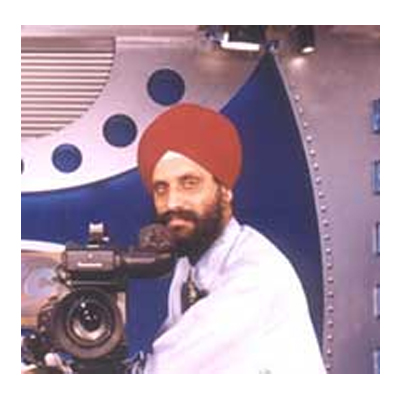
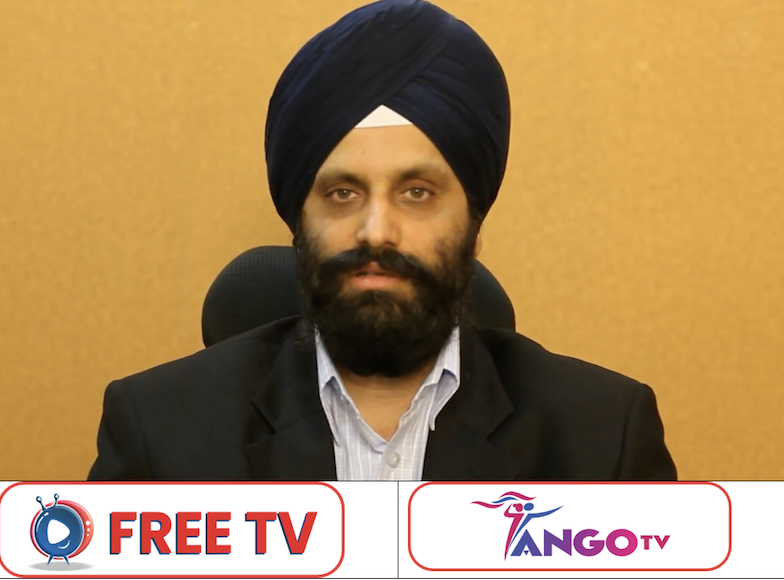
    MUMBAI: Indian  cable TV pioneer Jagjit Singh Kohli is back. This time he is doing the tango with the world of streaming and connected TV apps. The entrepreneur has used the celebration of Guru Nanak’s birthday on 15 November  to announce the launch of Tango Plus Services and its  “transformative Free TV app for the connected TV universe.” 

    The new app, currently available through select ISP partners, will be made available on Google Play Store, Apple App Store, Samsung Tizen, and LG Web OS within the next few weeks.

    The free TV app is set to revolutionise the way consumers access and interact with television content, offering a seamless, subscription-free, and diverse entertainment experience for millions globally, says a release from the company. The app will be made available on mobile app stores by end November.

    Tango TV’s Free TV, the press release states, has a thousand plus free-to-air live channels, replicating the traditional cable/DTH interface but with added convenience and flexibility. From news to sports, lifestyle to infotainment, users can access a wide array of live TV content with an intuitive channel guide and easy navigation. It offers 20,000 plus free movies in multiple languages, Free TV, says it will cater to every movie buffs’ taste. 

    Users can pause, rewind, or fast-forward content, ensuring they enjoy the best in entertainment at their own pace. All movies will be made available in 4K resolution, offering a cinematic experience without the premium cost. It will offer a global range of specially curated series and music, offering diverse genres and stories from international creators. To top that, Tango TV has integrated educational resources that are both fun and informative. Students from nursery to Class XII can access study materials, learning videos, tutorials, and more—bridging the gap between entertainment and education.

    Says Tango TV managing director JS Kohli: “We are incredibly excited to introduce Tango TV to the global market. Our mission has always been to deliver innovative, accessible, and high-quality digital solutions, and with the launch of Tango TV, we are setting a new benchmark in the entertainment industry. This app is a game-changer, offering consumers a free, seamless, and enriching viewing experience that aligns perfectly with today’s digital-first lifestyle. We believe Tango TV will not only revolutionise how users access content, but also create new opportunities for businesses to engage with their audiences in meaningful ways. As we continue to innovate and expand, we look forward to shaping the future of entertainment alongside our partners and users.”

    Kohli adds that for businesses  and partners, Free TV offers built in free access to premium entertainment which can be seamlessly integrated  and delivered to customers at no extra cost. A  unique revenue-sharing model has been built in to the service. 

    “By offering premium content or exclusive features, businesses can tap into new income streams without sacrificing the core value of free entertainment. The revenue-sharing model is designed to benefit partners, giving them the opportunity to monetise Tango TV’s access to a vast content library while keeping the service free for users. This opens up opportunities for brands, telecom providers, smart TV manufacturers, ISPs, cable operators, and other stakeholders to tap into a new, scalable revenue source,” he reveals. 

    He is also quite gung-ho about the premium Tango TV Plus app which he says will offer exclusive ad-free content in terms of TV shows, movies and series, not accessible on the free version, along with additional features such as personalised recommendations, cloud storage, and more.

  • Bombay HC may hear Digicable license cancellation case next week

    Bombay HC may hear Digicable license cancellation case next week

    KOLKATA: The Bombay High Court may hear the Digicable Network license cancellation case next week most probably on Monday.

    Earlier as well, the Bombay HC had granted relief to the multi-system operator (MSO) when it extended the order cancelling its permanent registration till 5 November. “The case was adjourned as the MIB counsel had sought around four weeks’ time to file replies in the matter,” says an analyst.

    Jagjit Singh Kohli-promoted Digicable Network, which challenged the Ministry of Information and Broadcasting’s order on 13 September, had earlier got an ad interim stay against the order till 6 October.
    “The hearing has been postponed for the next two to three days,” said Kohli.


    The MSO had approached the court in September post which it got an ad interim stay till 6 October and subsequently till 5 November. The MSO had challenged the basis on which the security clearance was denied to the MSO.


    A similar case is being heard in the Kolkata High Court on the petition filed by its JV -Digicable Comm on its licence cancellation. That case has been postponed to 28 November. The Kolkata based MSO has got a stay order on its cancellation twice and this being the third time. The court observed that when the MSO received its DAS licence in 2013, it was subject to security clearance from Home Ministry and the same has been denied in the order passed in September 2014.


    In July, the ministry of information and broadcasting had cancelled the licences of Digicable Comm while in September the same was done for Digicable Network, on the basis of denial of security clearance by the Home Ministry.


  • Digicable files police complaint against Hathway in Mumbai

    Digicable files police complaint against Hathway in Mumbai

    MUMBAI: Jagjit Singh Kohli is furious. The cable TV industry veteran and promoter of Digicable  has  reportedly filed a police complaint against Hathway Cable and a distributor Santosh Ankolekar.  The police complaint – a copy of which is with indiantelevision.com – names Hathway promoter Viren Raheja,  western region in charge and President finance Milind Karnik, an executive Rajendra Rane and Ankolekar as the guilty parties.


    JSK – as he is known in the industry – is seeking justice. The reason for him taking such a drastic step is because the latter – who was a distributor of Digicable – did a deal with India’s leading cable TV MSO  as part of which he allegedly sold his  network to it. Ankolekar,  according to Digicable sources – was a small local cable operator  with a network of around 1,500 subscribers in the Andheri east area of Mumbai. Ankolekar grew rapidly  after his appointment as a distributor by Digicable in 2007. According to the MSO, he was given about 50,000 STBs to seed to local cable operators in the area and convert them to Digicable subscribers, which he did.


    “But the network was not really his,” says Kohli. “It was owned by Digicable, and we offered to show the documents to the Hathway management but they were not bothered about facts and continued using our network.”


    According to Kohli, Hathway swapped the Digicable boxes  for its own and when his team asked them to return them to him, it was not done. “The point is they may have inadvertently made a mistake but then they have to make amends which they are refusing to do,” says  Kohli.


    Hathway officials deny any wrongdoing. They state that it was Ankolekar who came to the MSO seeking help.


    “Digicable had not been able to make payments to broadcasters for quite sometime and his signals were consistently getting switched off,” says a senior Hathway executive. “When he came to us we offered to give him Hathway boxes as we were getting a large territory in the heart of Mumbai. And we would be in a position to provide consistent services to subscribers as our deals with broadcasters are in place.”


    The executive states that there was no swapping of boxes or anything of that sort. “Digicable had given the boxes to local cable operators,” says he. “We did too. But we did not take the Digicable boxes back  from the LCOs. If the boxes are with the LCOs, then Digicable should take them back from them.”


    The MSO stated – at the time of writing – that the company was unaware of Karnik or Viren Raheja being named in the FIR. “We would have got a call from the police station,” says a senior executive. “To the best of our knowledge only Rane and Santosh are named in the FIR and no one else. “


    Digicable had earlier had a run-in with Hathway last year when it had alleged that its former CEO Amit Nag had colluded with the latter  in “hijacking” its network in Kolkata.

  • WWIL likely to raise $100 million via QIP

    WWIL likely to raise $100 million via QIP

    MUMBAI: Wire & Wireless India Ltd (WWIL), Zee Group’s demerged cable company, is likely to raise $100 million through qualified institutional placement (QIP) to fund its expansion programme including digitalisation and acquisition of cable operators.

    “WWIL is likely to raise $100 million via QIP as part of its fund raising programme but will take a final decision on this soon. Everything will depend on the market conditions,” a source close to the company says.

    When contacted, WWIL managing director Jagjit Singh Kohli said the exact amout and instrument has not yet been decided. “I will be able to comment after we have decided and taken the shareholders’ approval,” he added.

    WWIL is making a preferential issue of convertible warrants to Jayneer Capital, a promoter group company, up to Rs 1.31 billion as part of its fund raising programme. This will translate to around 5 per cent equity in WWIL. The conversion price of the warrants into equity shares will be at Rs 122. The company has convened an EGM (Extra Ordinary General Meeting) on 26 February for shareholders’ approval on the issue of preferential warrants.

    “The dilution, along with the warrants, will be around 20 per cent at the current prices if WWIL takes up the $100 million mopping up exercise through QIP,” the source says.

    WWIL has aggressive plans to expand its digital cable business and had earlier projected a fund requirement of Rs 7.14 billion over two years.

    The company recently announced that it would seek shareholders’ approval for raising up to $250 million (approximately Rs 11.25 billion). The board which met on Monday considered all the fund raising options including issue of ADR (American depository receipt), GDR (global depository receipt), equity, debt, debentures, FCCB (foreign currency convertible bond), QIP (qualified institutional placement) and convertible warrants.
     

  • WWIL Q3 net loss at Rs 159 million

    WWIL Q3 net loss at Rs 159 million

    MUMBAI: Wire And Wireless India Limited (WWIL), Zee Group’s demerged cable company, has posted a consolidated net loss of Rs 159 million for the third quarter ended 31 December 2006.

    The consolidated revenues stood at Rs 513 million for the quarter and Rs 1.5 billion for the nine-month period. Operating losses were at Rs 33 million after expensing Rs 38 million for office infrastructure. Being the first year of operations for WWIL, the previous period figures are not available.

    Commenting on the results Zee chairman Subhash Chandra said, “WWIL has just begun its rollout of digital cable services in the three metros of Mumbai, Delhi and Kolkata and it is encouraging to learn that we have been able to capture almost half of the market in these areas. Our analogue cable business continues to lead industry in connecting millions of television homes. The business initiatives of WWIL towards digitization of cable homes and upgrading of cable infrastructure would become visible in the performance from FY2008 onwards.”

    Added WWIL MD Jagjit Singh Kohli, “There is more than expected demand for set top boxes in Mumbai, Delhi and Kolkata. We expect that the industry will need at least 6 million set top boxes for complete roll out in these three metros. Demand for digital signals is equally strong in other cities, not notified under CAS. We see cable providing lot more value added services through digital mode. WWIL is heading towards its goal at an accelerated pace.”

    WWIL claims to have deployed 200,000 boxes. Said Kohli, “We believe there is a vast opportunity in cable TV industry, which is going through a rapid phase of consolidation and digitization simultaneously. Our goal is to add 3.4 million subscribers in next two years. Looking ahead, we are confident that continued execution of our distribution strategy would result in a revenue growth faster than that of industry.”

  • Cas: MSOs strain to meet demand for boxes

    Cas: MSOs strain to meet demand for boxes

    MUMBAI/DELHI: Multi-system operators (MSOs) are under stress and strain to meet the demand for set-top boxes (STBs) as conditional access system (Cas) has come into effect in the notified areas of Mumbai, Delhi and Kolkata.

    “We are moving 5000-6000 STBs a day in Mumbai,” says IndusInd Media and Communications Ltd. director-in- charge Ravi Mansukhani.

    Wire & Wireless India Ltd CEO Jagjit Singh Kohli says that while he can’t give a number in terms of the number of boxes being seeded, business has been brisk and smooth. “There have not been any technical glitches. The Cas deployments in the notified areas by all the cable operators has so far been much more than what direct-to-home (DTH) has achieved in these pockets.”.

    For those who are taking the boxes, MSOs are providing all the pay channels for a trial period of 15 days. “We want to give them some time before they can decide on the channels that they want to pay for. After this period, they can choose what they want and they will be billed only for what they have decided to take,” says Mansukhani.

    Adds WWIL executive vice president Arvind Mohan: “This is a transition period, so we are giving all the channels to all the STB subscribers. The processing of the forms being filled up takes some time. We are giving the subscribers a free run of all the channels. By 15 January, the entire system will be in place, and billing will be for the month depending on the channels they have selected.”

    So how long does it take once a consumer orders for a STB? With so many people wanting a box at the same time, the maximum time it would take to get the system installed is a day as it has to be fed into the smart card and billing system, says Mansukhani.

    Interestingly, there are indications that at the ground level there is some confusion in terms of pricing. For instance, this writer, residing in the Colaba area of South Mumbai, paid Rs 2000 on 1 January for a box while the MSO had recently announced a reduction in the price to Rs 1500. “There are some confusions still prevailing on the ground about the prices and packages on offer,” admits a local cable operator.

    Speaking on behalf of the broadcasters, Star India’s distribution head Tony D’Silva says that it is too soon to comment on the adoption rate. “We had expected that there would be some confusion. We are adopting a wait and watch policy. In a few days time the situation should be clear.”

    Zee Turner CEO Arun Poddar says that there is certainly a demand and supply mismatch across all the MSOs. He concedes some last mile operators would not be communicating adequately with consumers, thus leading to confusion.

    Despite some confusion, the Cas rollout in South Delhi is happening steadily as there is a rush for the STBs.

    SN Sharma of Hathway denied that there is any shortage of boxes. “This is a continuous process and we are getting consignments from our Korea company on a daily basis. There is a lag of time for getting connected because the local cable operator has a manpower shortage,” he says.

    The time between a request coming in and a box being connected is about an hour, he adds. “The LCOs have about five or six people working, who have to attend to calls for repairs, collect payments and also deploy the boxes. So the connection giving ability is in the same ratio as the staff strength.”

    According to RWA president GS Gulati, most of the residents in Delhi were still waiting and have not subscribed to either cable or DTH operators. “The cable operator has left a box for me at my shop, but I have not got connected, because we do not know what is better, this or DTH.”

    In some areas, people complained about technical glitches. Sometime during the evening of 1 January, Cas boxes in some areas of south Delhi went blank for about 10 minutes first, and then intermittently for shorter durations about three times.

    “This should not be the case, because the boxes are highly efficient. This must be some fault like a loose connection or a person tinkering too much with the remote control, as people do with all new things,” Sharma says.

  • ‘Cable ARPUs in Cas areas to touch Rs 400 in five years’ : Jagjit Singh Kohli

    ‘Cable ARPUs in Cas areas to touch Rs 400 in five years’ : Jagjit Singh Kohli

    Subhash Chandra is betting big on his cable TV business. Wire & Wireless Ltd (WWIL), the demerged entity of Zee Group, plans to invest Rs 7.14 billion over two years. A major chunk of this will be consumed by set-top boxes (Rs 3.28 billion) and customer acquisition (Rs 1.14 billion) as he attempts to hold grip in the distribution business.


    When WWIL gets listed sometime in January-February, investors will have a touch and feel of the valuation that cable business will enjoy in the digital era.


    Launching the aggressive drive, WWIL CEO Jagjit Singh Kohli says he has ramped up 250,000 customers at an average valuation pegged at Rs 2000 per subscriber. The ambitious target in year five: 9.6 million.


    In an interview with Indiantelevision.com’s Sibabrata Das, Kohli elaborates on the steps WWIL is taking to emerge as a leading multi-system operator (MSO) with plans to launch Headend-In-The-Sky (HITS) and STBs that have internet and VoIP (Voice over Internet Protocol) capabilities.


    Excerpts:

    Is WWIL close to roping in a strategic investor?

    We are in talks with both strategic as well as financial investors. They have shown interest in our business. We would go with anybody who gives us the maximum valuation.

    What is the valuation WWIL is now getting?

    The investors are discussing of valuations in the range beyond $600 million. Our expectations are higher. We are likely to get listed by mid-January or early February. The true valuations will come out then.

    Are investors valuing the cable TV business based on the number of subscribers or future revenues?

    In India, it is too early for a subscriber-based valuation. Investors are using the discounted cash flow method. The valuations are obviously based on our future target of touching 9.6 million subscribers. There are two reasons why we will get valued more: we are doing Headend-In-The-Sky (HITS) and we are using set-top boxes (STBs) designed by Pacenet which will offer multiple usages like internet and VoIP (Voice over Internet Protocol).

    MSOs will have to make major investments on STBs. Is it going to comprise as high as 46 per cent of your overall investments?

    We are planning to invest Rs 7.14 billion in the business over two years. For STBs, our fund requirement could be Rs 3.28 billion. We are planning to pump in Rs 2.21 billion towards hardware. Another area where we will be aggressive is customer acquisition. We plan to put in Rs 1.14 billion for this.

    What is the debt to equity ratio and how are you meeting the initial fund requirement?

    The ratio will be firmed up once we know the price WWIL quotes after getting listed in the exchange. That in a way will determine how much debt component we would require to raise. Our initial fund requirement is Rs 5 billion. We have lined up a debt of Rs 2.15 billion. We have already got Rs 500 million from Infrastructure Development Finance Corporation (IDFC).

    WWIL is on a drive to acquire customers. What is the price of acquisition?

    We are offering to cable operators a valuation of Rs 2000-3000 per subscriber. While WWIL will be a 51 per cent partner, the balance 49 per cent will be with the operators. We have already ramped up 250,000 subscribers in recent months through aggressive acquisitions.

    What is the average valuation for acquiring 250,000 subscribers?

    The average valuation works out to Rs 2000 per subscriber.

    Won’t you have to handle too many operators by doing JVs with them?

    We are making proposals to networks with decent size. In Mumbai, for instance, 12 local operators are creating a company and entering into a JV with us. We want to reduce the number of JVs. Otherwise, it will be impossible to manage.


    In some of our acquisition models, we make MSOs buy out the local cable operators.


    We have set a target of ramping up our direct subsciber base to 9.6 million within five years. We expect 7.6 million to receive digital cable. Our aim is to have 4.4 million through our own digital cable service and an additional 3.2 million through our HITS platform. We will have two million through analogue acquisitions. We have expanded operations from 35 to 43 cities. We plan to be in 66 cities in three years.

    WWIL has a thin presence in Mumbai. Even in the lucrative market of South Mumbai, which is a Cas notified area, you have a negligible presence. What are you doing to correct this?

    We have linked up optic fibre and have commissioned a digital headend a few days back at Worli. We will be in the Cas notified area of south Mumbai and several operators from rival MSOs are joining us. We have acquired control over 5 Star which operates in Andheri, a western suburb of Mumbai. We have also poached a few operators from Incablenet in Andheri East and others from rival MSOs are joining us.

    The average valuation of acquiring 250,000 customers works out to Rs 2000 per subscriber.

    How are you expanding your footprint in Delhi?

    In Delhi, we have acquired a 51 per cent stake in Satellite Channels. We have also signed up with Spectranet and Sanjay Cable Network. All these MSOs were disqualified for Cas as they were found not ready by the Telecom Regulatory Authority of India (Trai) for making the switchover to addressable system by 31 December. As for Kolkata, we are very much a dominant player after buying out Indian Cable Net (formerly RPG Netcom), a leading MSO, in May 2005.

    What is the price of the STBs?

    While the cost of the basic box is Rs 2000, the one with internet is Rs 2500 and internet plus VoIP Rs 3000. Customers can enjoy interactive games and online share trading through this. We are looking at a monthly fee of Rs 70 for internet and Rs 75-100 for movie-on-demand. Subscribers will have to pay Rs 1499 as deposit and Rs 45 as monthly rent. We haven’t, though, arrived at the final pricing. We plan to introduce the internet-enabled boxes after two months and those with VoIP sometime in April.

    Who are your STB vendors?

    We have Korean and Chinese vendors who will be supplying us the boxes. We have also ordered 200000 STBs from Bharat Electronics Limited (BEL).

    Earlier, in 2003 when Cas was to be introduced, Pacenet had ordered STBs from TVS Electronics. Why haven’t you included them in the list?

    We are also considering them. But at this stage it makes more business sense to import the boxes.

    Were you doing some tests with BSNL for VoIP?

    We were testing out whether our technology would work on BSNL’s network. The tests were successful.

    Is WWIL serious on launching a HITS platform or is it a mere hype?

    We are going to do HITS and have expressed our intent to broadcasters. This will provide us a national footprint and hasten the pace for digitisation in the country. We can tap cable operators even in places where WWIL has no presence. We have booked four transponders on Thaicom satellite with effect from 1 January, with the option of taking three more. We plan to launch HITS before the end of February.

    Do you see ARPUs (average revenue per user) falling in a Cas regime?

    For one year, it may come down. Let us not forget that cable TV rates have been suppressed for artificial reasons for too long. But by deploying STBs, this scenario is going to change. We may start off with an ARPU of Rs 250 per month, but like in case of cinema theatres with the launch of multiplexes, this will go up. By year five, we may be looking at ARPUs in the region of Rs 400.

    Hathway Cable & Datacom has come out with bouquet packages along with the a la carte choices. Will you offer something similar?

    We will be introducing a combo package where consumers who buy STBs on outright purchase and take annual subscription will be offered an attractive subsidy. This scheme will make available 100 TV channels. We will be offering under this at least 20 pay channels. We will be subsiding the boxes.

    Unlike DTH, broadcasters will have to make their pay channels available on an a la carte basis at a maximum rate of Rs 5 on cable networks in Cas areas. Will this mean that they will do content deals where they give their bouquets to MSOs at lower cost than to DTH service providers? Otherwise, MSOs can create bouquets picking and choosing the best channels and dumping the weaker ones in the bouquet.

    Yes. If broadcasters don’t do that, they will always be faced with the dilemma that the MSOs can pick and choose the stronger channels in their bouquet while ignoring the rest. The other reason why we should get better costs than DTH is because we have to share the revenue with the distributors and local cable operators across the value chain.

    How does cable compare with telecom operators in triple play service?

    Indian cable systems are ready to do telephony. They have pipes already laid including ethernet. The cable architecture throughout the country is in a position to provide triple play. All that is required is the box and IP can provide the return path for voice, data and interactive services.


    The public sector telcos, on the other hand, require strong compression technologies and ADSL2+ signals are good only for distances up to 1.5 km. The private sector telcos do not have a system suitable for large scale deployment and will require a high capital cost of $300 per line, even if we take the fact that their network is ready for IPTV (which is not the case). IPTV could have happened in markets where ARPUs are high. But India is not a high ARPU market.

  • WWIL to pump in Rs 3 billion over 2 years in STBs

    WWIL to pump in Rs 3 billion over 2 years in STBs

    MUMBAI: Wire & Wireless India Ltd. (WWIL), the demerged cable outfit of Zee Group, is planning to invest Rs 3.28 billion on set-top boxes (STBs) over a period of two years to spread its presence in digital cable.

    This will comprise 46 per cent of its overall funding requirement of Rs 7.14 billion. The next big expenditure will be towards hardware. The multi-system operator (MSO) has earmarked Rs 2.21 billion for investments in hardware during the two-year period.

    “We have planned such investments for two years. We are bullish about digitalisation,” says WWIL CEO Jagjit Singh Kohli.

    Another area where WWIL will be pumping in big money is customer acquisition. The company plans to put in Rs 1.14 billion towards this. “We are aggressive on customer acquisition. We have ramped up 250,000 subscribers in recent months through aggressive acquisitions,” says Kohli.

    WWIL has made MSO acquisitions in Lucknow, Shimla, Agra, Nagpur, Pune Jalgaon and Indore. It is under negotiations with 15 MSOs in places like Meerut, Allahabad, Jaipur, Noida and Kohlapur.

    The company is planning to launch a headend-in-the-sky (HITS) platform and has booked transponders on Thaicom satellite. It has already lined up a debt of Rs 2.15 billion and plans to make an initial investment of Rs 5 billion.

    WWIL recently set up a digital headend at Worli in Mumbai. “We already have nine digital headends,” says Kohli.

  • WWIL lines up Rs 2 billion debt, rebrands digital cable as Galaxzee

    WWIL lines up Rs 2 billion debt, rebrands digital cable as Galaxzee

    MUMBAI: Zee Network’s Wire & Wireless India Ltd. (WWIL) is in the process of lining up a debt of Rs 2 billion for funding its digital initiatives and acquisition of cable operators.

    “We have already got Rs 500 million from Infrastructure Development Finance Corporation (IDFC). We are already in the process of tieing up a debt of Rs 2 billion,” WWIL CEO Jagjit Singh Kohli tells Indiantelevision.com.

    The company plans to invest Rs 7.40 billion over two years and Rs 8.50 billion within five years. “The debt to equity ratio will be firmed up once we know the price it quotes after getting listed in the exchange by February-March 2007. That in a way will determine how much debt component we will require to raise,” Kohli says.

    The company is in talks with strategic and financial investors but conclusive agreement will take place only after the listing. “We are not necessarily looking at a strategic investor. We want somebody who will give us the maximum valuation,” Kohli says.

    WWIL, the de-merged entity of Zee Telefilms’ cable TV business, has set an ambitious target of ramping up its direct subsciber base to 9.6 million within five years. “We expect 7.6 million to receive digital cable. Our aim is to have 4.4 million through our own digital cable service and an additional 3.2 million through our Headend-In-The-Sky (HITS) platform. We will have two million through analogue acquisitions,” says Kohli.

    WWIL claims to have added 250,000 subscribers in recent months through aggressive acquisitions. The multi-system operator (MSO) has also expanded operations from 35 to 43 cities. “We plan to be in 66 cities in three years,” Kohli says.

    WWIL will deploy several models of set-top boxes (STBs) aimed at various subscribers. Apart from the basic box, it plans to introduce a STB which will enable internet facilities on TV. “Customers can enjoy interactive games and online share trading through this. We are looking at a monthly fee of Rs 70 for internet and Rs 75-100 for movie-on-demand. Subscribers will have to pay Rs 1499 as deposit and Rs 45 as monthly rent. We haven’t, though, arrived at the final pricing. We plan to introduce these boxes after two months,” says Kohli.

    The basic STB is available on a refundable deposit of Rs 250 and rent of Rs 45 per month or a refundable deposit of Rs 999 with a monthly rent of Rs 30.

    WWIL will also deploy a STB through which it can offer VoIP (Voice over Internet Protocol) sometime in April, according to Kohli. The MSO is also poised to offer HITS which will enable it to tap cable operators at a national level even in places where WWIL has no presence, he adds.

    GalaxZee will be the brand under which WWIL will offer its digital cable service. “We have commissioned a digital headend two days back at Worli. We will be in the Cas (conditional access system) notified area of south Mumbai and several operators from rival MSOs are joining us,” Kohli says.

  • Zee to buy out broadband services provider Pacenet

    Zee to buy out broadband services provider Pacenet

    MUMBAI: Zee Telefilms Ltd (ZTL) is buying out broadband services provider Broadband Pacenet, which is promoted by Jagjit Singh Kohli, Yogesh Shah and Yogesh Radhakrishnan.

    Kohli, who is the CEO of Siti cable, is an immediate beneficiary of the proposed demerger of India’s largest multi systems operator (in terms of size) and the cable related business of Zee Telefilms Ltd. He is being given a 2 per cent stake in the new company, Wire and Wireless (India) Ltd, which he will be heading.

    A detailed business plan is being prepared for Wire and Wireless which will venture into triple play services as well, Zee Telefilms chairman Subhash Chandra said, while addressing analysts here today.

    Pacenet will be merged with Wire and Wireless and Kohli’s partners will also be given shares in the new entity. “We have agreed to buy out Pacenet. The valuation is under progress. The existing shareholders of Pacenet will be given shares in Wire and Wireless,” Chandra said.

    Broadband Pacenet offers broadband services using the cable network infrastructure of its franchisees and claims to be servicing over 25,000 home subscribers apart from many corporates.