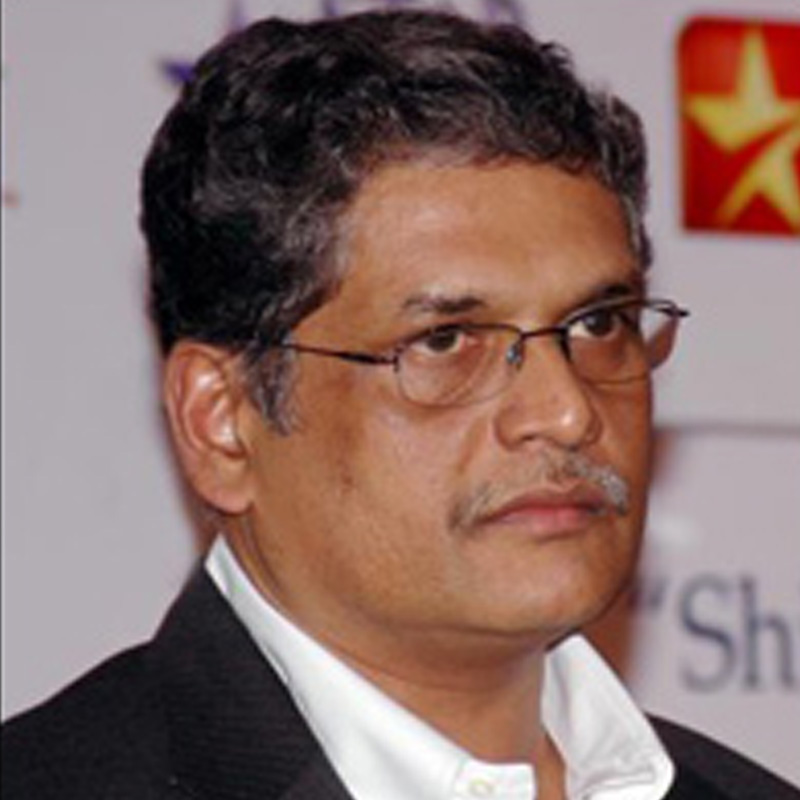
Tag: Jagdish Kumar

  • No more extensions on CAFs, expect phased switch-offs

    No more extensions on CAFs, expect phased switch-offs

    MUMBAI: The Telecom Regulatory Authority of India (TRAI) has put its foot down this time on the issue of non collection of customer application forms (CAFs). The decision taken by the regulator is: no more extensions for CAFs in the DAS areas of Mumbai and New Delhi.

    As is known, the meeting between TRAI and leading MSOs was scheduled today. And Indiantelevision.com learns that the regulator has mandated the switch-off of all the non-complying customers.

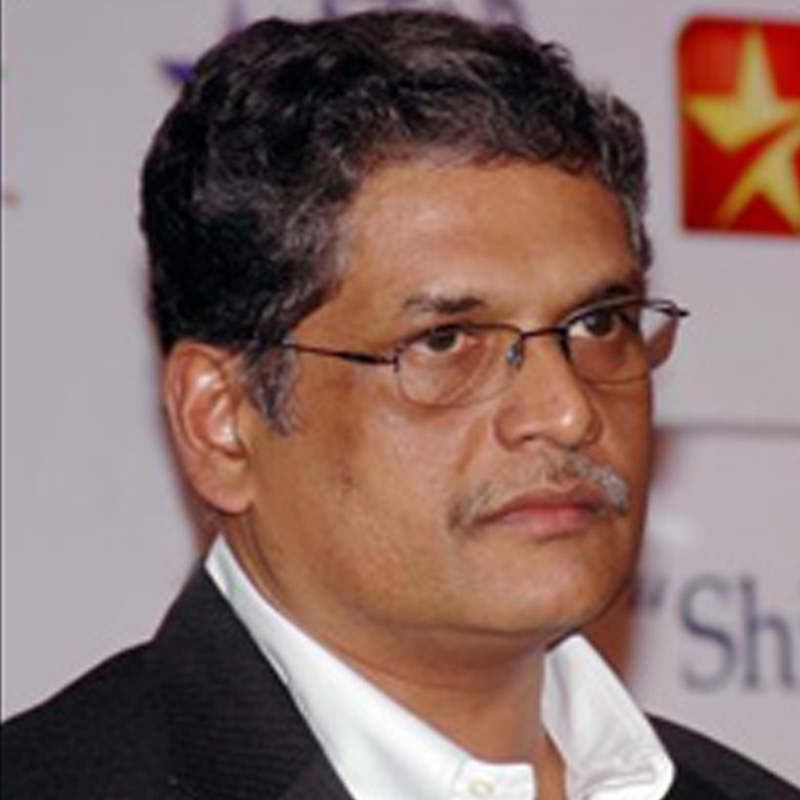
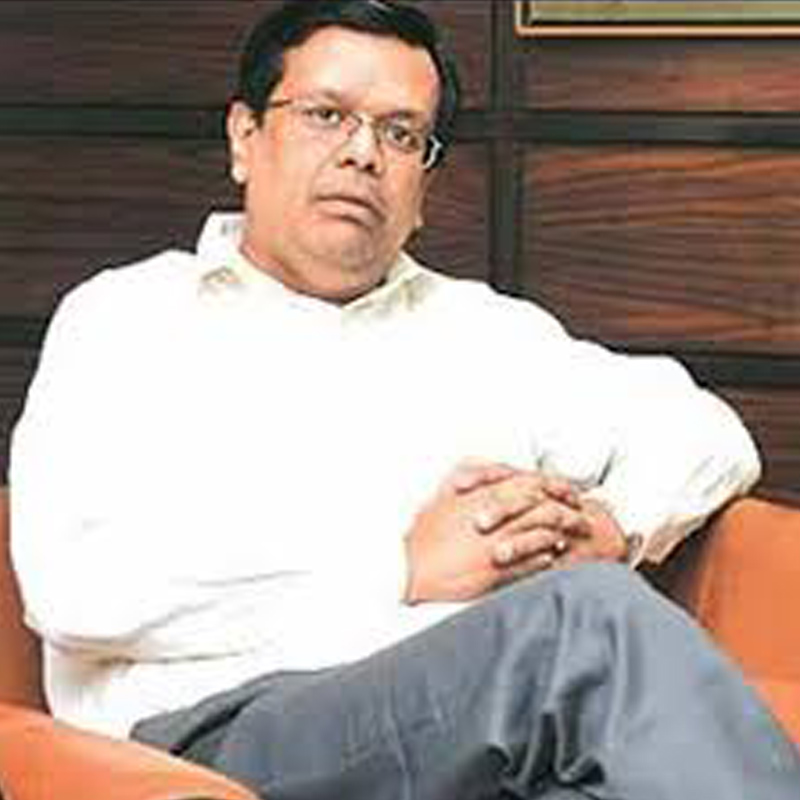
    “We will be complying with the law of the land” says Hathway Cable CEO Jagdish Kumar. “Starting tomorrow we plan to downgrade all those subscribers who haven‘t submitted the forms. We will only be providing them with free-to-air channels till 15 July and post that we will be disconnecting those who don‘t send in their forms even after that warning completely by switching off their service.”

    The cat and mouse game between the regulator and leading MSOs has finally come to an end. The final decision is: no slack from the local cable operators and customers would be entertained anymore. There is a grace period of five days that the LCOs have to make the final round of collections, post which the switch-offs would commence.

    DEN Networks COO MG Azhar says: “We have collected 86 per cent CAFs in Delhi, but starting tomorrow we will be downgrading the non-complying customers to base packs.”

    The phased switch-offs begin from tomorrow. Apparently, digitisation‘s progress cannot be stalled any further.

  • Hathway ropes in K V Anand as president – digital platforms

    Hathway ropes in K V Anand as president – digital platforms

    MUMBAI: Hathway Cable & Datacom Limited has appointed former Tata Sky chief service officer (CSO) K V Anand as president – digital platforms.

    Anand will be part of core senior management team and will work across functions like revenue enhancement, subscriber management, CRM capability and leveraging infrastructure across cable and broadband platforms.

    “We are very excited with the opportunities and challenges that will come our way during our transition from a wholesale business to a retail consumer business. We welcome K V Anand who will be part of the core senior management team at Hathway and will work across functions to develop strategies for Revenue Enhancement, Subscriber management, CRM capability and leveraging our infrastructure across Cable and Broadband platforms to introduce new products, services and enhancing customer experience as we begin our journey to be a customer centric organisation,” says Hathway Cable and Datacom MD and CEO Jagdish Kumar.

    Anand comes with rich and varied experience spanning 18 years in the Media/Pay Television industry where he held senior positions in Star TV across Asia and Middle East regions, a short stint at BSkyB in the UK and a long stint at Tata Sky.

    His expertise straddles strategy, design, execution and delivery across all Customer Facing functions relating to CRM, Products /Services management, Billing & Subscriber management, Consumer marketing, Field Services and IT.

    K V Anand was part of the core start-up team that launched Tata Sky‘s DTH service and held the position of CSO at Tata Sky prior to joining Hathway.

  • Stage set for a court battle on DAS in Bengaluru

    Stage set for a court battle on DAS in Bengaluru

    MUMBAI: A battle royale is set to take place in the Karnataka High Court tomorrow. On the one hand are national and Karnataka‘s multi system operators (MSOs). And on the other side is the Karnataka Cable TV Operators Association (KCTVOA). The former are are all set to challenge the petition filed by the latter seeking extension of DAS (digital addressable system) in Bengaluru.

    Putting up a united front, the MSOs led by Hathway Cable & Datacom, InCable, Den Networks, Siti Cable and Atria Convergence Technologies will request the High Court to dismiss the writ petition filed by the KCTVOA.

    The MSOs have been made respondents to the petition filed by KCTVOA president V S Patrick Raju. The MSOs are expected to file their responses when the case comes up for hearing before the court tomorrow.

    Hathway Cable & Datacom MD and CEO Jagdish Kumar asserted that the MSOs will request the HC to strike down the KCTVOA‘s writ petition seeking extension of digitisation deadline.

    Kumar feels that there is no need for a stay on DAS in Bangalore as almost 75 per cent of the television households have already been seeded with STBs. The MSOs, he said, are equipped to seed STBs in the remaining 25 per cent homes.

    The Karnataka HC had had on 31 March extended DAS in Bengaluru till 5 April on a petition filed by Raju. The KCTVOA had requested the HC to postpone digitisation in Karnataka‘s capital city as there was no clarity on the set top boxes (STBs).

    Raju says that he had filed a RTI request with the nodal officer in Bengaluru 10 days ago, seeking information on the extent of set top box seeding in the city, but he had not got a response as yet. He says that the entire digitisation process will result in cable TV operators becoming a bill collector and the revenue share of 65:35 in favour of the MSO is not acceptable at all. “We have invested so much in our cable TV networks and by collecting Rs 1,400 for a set top box, the MSO will get our subscriber who is asking us for bills for the set top box, for warranty for mobility to other areas of the city,” he says. “Also the MSOs have not given us a rate card for the channels that they want us to carry.”

    The sunset date for phase II of digitisation covering 38 cities was 31 March however the Information & Broadcasting ministry on 2 April allowed a 15 day grace period to the industry to allow smooth transition from analogue to digital cable.

    The HC is also expected to hear tomorrow a petition filed by Mysore Cable TV Operators Association seeking extension in Mysore due to shortage of STBs.

  • Industry airs views on Phase II digitisation “grace period”

    Industry airs views on Phase II digitisation “grace period”

    MUMBAI: What does the industry think about the government‘s decision to allow a grace period of 15 days for the rollout of phase II digitisation in some cities? Well, we at indiantelevision.com decided to find out by speaking to a cross section of industry to find out.

    Indian Broadcasting Foundation (IBF) president and Multi Screen Media (MSM) CEO Manjit Singh, who is in Kolkata for the first match of the IPL, is clear that “as a broadcaster I would have preferred the government not giving any grace period. But since the ministry is more aware of the ground situation, I will go with its decision.”

    Hinduja Ventures Ltd whole time director Ashok Mansukhani believes that “if the government wanted to give a grace period of 15 days, it should have been after consultation with the MSOs who have been entrusted with the task of majorly implementing digitisation. Where it has been substantially implemented, there was no need to give a grace period. Where deployment is below 20 per cent, discussion could have been held on a longer timeline than 15 days.”

    Mansukhani adds that he would like the digitisation numbers of Phase II which are being released to be revisited for some localities. “There is some dispute about the numbers,” he says.

    He highlights that the objective of digitisation is to end under-declaration by cable TV operators. “If DAS Phase II deployment is uneven then government could have taken a two step process where pay TV channels could have been switched off first and the free to air channels later to allow for a smooth transition,” he says.

    Hathway Cable & Datacom MD & CEO Jagdish Kumar is of the opinion that from his network‘s perspective he would have preferred not to have a grace period at all. “From our perspective, we are well prepared with the ability to deploy set top boxes to almost 90 per cent of our and our joint venture networks,” he says.

    He points out that the lack of initiative on the part broadcasters to sign “digital agreements for phase II towns has been disappointing. We are working with broadcasters to get them moving. Basically, the industry is toying with a fixed fee or cost per subscriber deals.”

    DEN Networks COO M.G. Azhar is of the view that it was good the government has given the grace period keeping the consumers in mind. “Where set top boxes (STBs) have not been deployed effectively, the consumer should not face an analogue blackout,” he says.

    Tata Sky MD & CEO Harit Nagpal has the final word. Speaking to Indiantelevision.com yesterday, he had said that there was “no need for a grace period as the DTH operators are more than equipped to meet the STB demand wherever there is a shortage.”

  • Dainik Bhaskar exits cable biz, Hathway takes full ownership of JV

    Dainik Bhaskar exits cable biz, Hathway takes full ownership of JV

    MUMBAI: Dainik Bhaskar Group has exited the cable TV business ahead of digitisation, selling its 49 per cent stake to joint venture partner Hathway Cable & Datacom.

    Hathway has taken complete ownership of the JV company, Hathway Bhaskar Multinet, which has cable TV distribution networks in Bhopal, Indore and Jaipur.

    "We have bought out Bhaskar‘s stake. Hathway Bhaskar Multinet now becomes a wholly owned subsidiary of our company," says Hathway Cable & Datacom managing director and chief executive Jagdish Kumar.

    Dainik Bhaskar Group‘s exit comes at a time when cable companies are required to make massive investments in digital set-top boxes (STBs). The government has mandated cable TV digitisation across the country in four phases by 31 December 2014.
    In 2008, the Bhaskar Group sold controlling stake in their cable TV company to Hathway.

    "There has been a fall in valuation since then as Hathway Bhaskar Multinet lost ground to rival multi-system operators Den and Digicable. Though the acquisition amount is not disclosed, it is certain that it has dipped," a source familiar with the development said.

    The enterprise value of Bhaskar Multinet in 2008 was around Rs 600 million, the source added.

    After taking full charge of Bhaskar Multinet, Hathway is planning to fortify its presence in these three cities.

  • Jayaraman resigns from Hathway Cable & Datacom

    Jayaraman resigns from Hathway Cable & Datacom

    MUMBAI: K Jayaraman, long serving chief executive officer and recently appointed vice chairman of Hathway Cable and Datacom, has put in his papers.

    In a restructuring last month, Hathwayappointed former Reliance Media and Entertainment President Jagdish Kumar as MD and CEO of the company, while Jayaraman was made vice chairman. Kumar was directly reporting to the board.

    “Jayaraman has put in his papers. But his resignation has not been accepted. He will have to serve a six-month notice period,” says a source.

    Indian cable companies are in the midst of a transition from analogue to digital mode of delivery. The first phase of digitisation kicked off in November and the second phase across 38 cities is from 1 April.

    Also read:

    Jagdish Kumar new Hathway Cable CEO; Jayaraman made vice chairman

  • Jagdish Kumar new Hathway Cable CEO; Jayaraman made vice chairman

    Jagdish Kumar new Hathway Cable CEO; Jayaraman made vice chairman

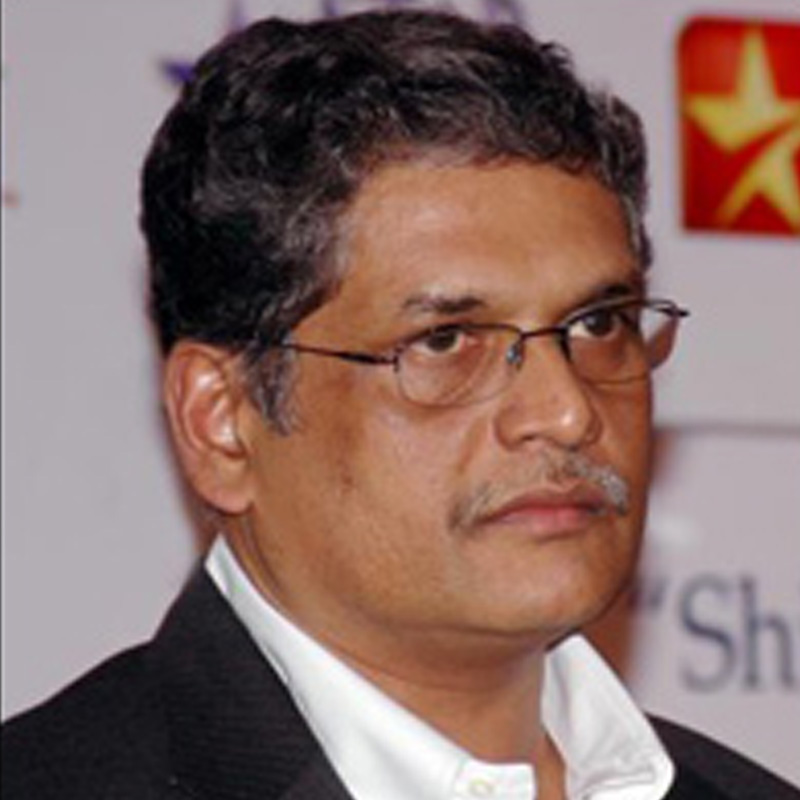
    MUMBAI: In a major reshuffle, Hathway Cable & Datacom has appointed Jagdish Kumar as the new managing director and CEO of the company. He joins with immediate effect.

    K Jayaraman, who was occupying this chair, moves to the position of vice chairman.

    Kumar will report directly to the Hathway board, sources say.

    In his earlier stint, Kumar was the president of Reliance Industries Limited‘s (RIL) media and entertainment business.

    Before RIL, Kumar had a 16-year stint at Star India where he was involved in several key initiatives including the media company‘s direct-to-home (DTH) venture and acquisition of regional broadcasting company Asianet.

    Incidentally, Kumar was on the board of Hathway Cable & Datacom as a representative from Star. Earlier this year News Corp had exited Hathway by selling its 17.3 per cent stake in Hathway for Rs 3.58 billion.

    Kumar was also made Star India chief operating officer when Uday Shankar was made chief executive officer.

    In his last assignment at Star, Kumar was given the operational charge of Kannada general entertainment channel Suvarna. This was in addition to his earlier functions as Star India president – South.

  • Coming Soon- A Tsunami of Creativity: Reliance Industries Ltd President of media and entertainment Jagdish Kumar

    Coming Soon- A Tsunami of Creativity: Reliance Industries Ltd President of media and entertainment Jagdish Kumar


    Year 2012: “I missed the TV show last night but watched the TV show on my IPad later”, a friend informs me.

    On the face of it, that statement looked perfectly normal. But wait…just think a bit more on that statement. Why should a video show be known as a “TV show” and be tagged only to television, which is but a mere technical device for watching video content?

    Extending this argument further why should the TV programming industry, which is a thriving and flourishing content industry, be known by only one of the many consumption devices which consumers use for watching video content? Nomenclatures like “Television industry” and “Film industry” is rapidly becoming meaningless; it is time to rename these industries by a label, which truly reflects their character: ” Content Industry”.

    Circa (not too far in the distant future): There will come a time when the same friend will tell me  “My IPad is not working but I watched the video on Television ” or ” I surfed the Internet on my smart TV”.

    Now for some statistics to set the background to the point, I am attempting to make on creative forces: On last count we are a nation with a population of 1200 million people. For a country of our size that prides itself for the progress we have made in the IT industry, it is a shame that broadband penetration is currently abysmally low at 1 per cent with 12 million broadband connections!

    The figure for broadband penetration will be embarrassingly smaller when we consider at least 1 Mbps as the cut-off to define a real broadband connection instead of the current definition of 256 Kbps. The network effects of ubiquitous real broadband connectivity on a nation‘s economy are well proven and demonstrated. Various research studies have shown that a 10 per cent increase in broadband penetration can increase GDP by 1.5 per cent. It is estimated that India lost approx. $100 billion in GDP due to the failure in achieving the broadband penetration target of 40 million by 2010 set by the National Broadband Plan, 2004.

    Thankfully various initiatives, both private and public, are at work to rectify this anomaly. The stated target of the Indian government is to reach a level of 100 million broadband connections by 2014. Given current indications and trends, we will hopefully surpass this target by a large margin, mainly driven by portable broadband connectivity devices like Tablets and Smartphones.

    Now back to the topic under discussion: The current state of the video industry is characterised by nearly homogenous content which panders to the overwhelming demands of a vast majority while completely ignoring the diversity and plurality of our nation. There is no system, which incentivizes and encourages creativity and innovation. All players in this space, be it moviemakers or producers of other forms of video entertainment, have been drugged by a market system which panders to the lowest common denominator. Viewers are narcotized into a cloistered environment by a constant barrage of award ceremonies, high-cost and alien format shows, “scripted” reality shows and highly emotive and blingful performances masquerading as social drama.

    The tyranny of weekly programme ratings and vagaries of an advertising based business model coupled with the imperfections in the content distribution system by way of under-declared subscribers and carriage fees has shackled the content industry. Resource allocation is governed by businesses, which are sustained on the principle that puts a disproportionate focus on combating competition to maintain pole positions in the weekly ratings charts rather than creating innovative content for the consumer. Add to this the vanities of the participants and ego clashes between creative personalities, we have a potent mix that has drawn the content industry into a vicious vortex trapping all the players: creators, artists, managers, media agencies,advertisers, distributors and consumers.

    What does the future hold for the content industry? I foresee a combination of 4 forces that will define the way forward for the content industry:
    a) The proliferation of DTH connections
    b) The last mile digitisation drive by the Government of India
    c) The growth in broadband connectivity and
    d) The unleashing of creative forces that can easily find avenues for exhibition.

    Digitisation enabled by the above mentioned forces would equip content providers with the ability to reach their target audience with minimal intervention from intermediaries. Content creation will become more consumer focused and not get distracted by short-term demands of the current system. Content will not fall into strait jacket formats of half hour episodes or three-hour movies; even a one-minute video can deliver a compelling and riveting story provided it has the ability to reach relevant viewers, who will be more than willing to attribute value for good quality.

    Consumers will be the winners in a digital environment. They will not be treated like sheep who are shepherded to watch content which is pushed down to them without any consideration to their time, needs or preferences. They will be freed from the clutches of the vanity of channels and their programming schedules.

    The technique for making videos is fast becoming easily accessible to the common man. Every person who has a smartphone with a camera has the potential to create a video to strike a primordial chord and become as sensational as the recent song, Kolaveri Di. Such smartphones are rapidly becoming a necessity rather than an item of luxury.

    In my view, the fourth force mentioned above, “unleashing of creative forces”, is going to be the surprise element in the future. With the inherent creativity and “jugaardness” in Indians, I am betting that we will witness some ingenious form of content, application or service, which ignites a primal human instinct and becomes a rage in a short time. Facebook is an example that springs to mind; Facebook tapped into a primary human need for social interaction and created an enterprise that has reached a value of nearly $100 billion in a short span of 8 years! Such an enterprise is waiting to happen in India in the content space.

    A word of caution to people who think that television as a device for media consumption is losing the battle for eyeballs. Evidence from developed markets has shown that newer media consumption devices like Tablets and Smartphones supplement television viewing. Research has shown that proliferation of newer devices has not cannibalized television viewing; it has actually increased overall media consumption. People watch television while simultaneously interacting with other devices to enhance their viewing experience.

    Like all other industries, the content industry is also akin to a living organism facing relentless forces, which may be either headwinds or tailwinds to the players in varying proportions. And like living organisms, the content industry will learn to adapt and change.

    The race to get to the Consumer is getting exciting. Thankfully, it is a never-ending race with only one permanent winner who has no rival… the Consumer!!

  • Whither, or Wither, Cable TV industry? Star India President (South India) Jagdish Kumar

    Whither, or Wither, Cable TV industry? Star India President (South India) Jagdish Kumar

    Circa 1994: Star Movies decides to convert from a free-to-air service to become the first pay TV channel in India. Negotiations between the pay channel and cable operators went thus:

    Pay channel executive (prosperous looking and suited executive): “You have to pay to receive Star Movies”.

    Operator (not very prosperous looking and ordinarily dressed): “Only some of my customers watch Star Movies and my customers pay only Rs 150 per month. After meeting my operating expenses, how much can I pay?”
     
    Pay channel executive: “I have a budget to achieve. I don‘t have a lot of time to negotiate. I have a flight to catch to get to headquarters. My target for this town is Rs 10000 and I have decided your share is Rs 1000. I will send you our standard agreement shortly. That‘s it- no further negotiations”.

    Circa 2010: There are 154 pay channels registered with the Telecom Regulatory Authority of India (Trai) and the negotiations between channels and cable operators go thus:

    Pay channel executive (casually dressed): “You have to increase your payment by 20 per cent to receive our bouquet of channels”.

    Operator (very prosperous looking and attired in designer brands): “Only some of my customers watch your bouquet and my customers pay only Rs 150 per month. After meeting my operating expenses, how much can I pay?”

    Pay channel executive: “Please understand, I have a budget to achieve to get my bonus. My growth target for this town is 20 per cent. However as an exception, only for you, I can work with a special growth rate of 5 per cent. Please agree to settle for Rs 1500. I will separately organise a foreign tour for you.”

    Operator: “Thank you. But I would also like to inform you that there is a huge demand for bandwidth and you have to pay Rs 750 as carriage fees”.

    Fortunes of the players have reversed since the beginning of pay TV services in India 16 years ago. While many channels are limping financially, operators have achieved prosperity beyond their imagination. Should we grudge the good life that operators are enjoying? Definitely not! During the last two decades India has witnessed incredible growth in C&S TV connectivity to the current level of about 95 million homes mainly driven by the entrepreneurism of the operators.

    There are two elements which have remained constant between 1994 and 2010:

    • The retail price of pay TV services have stagnated at around Rs 150 per month ( India has the cheapest pay TV service in the world) and
    • Incrementalism and myopic pay TV revenue targets set by channels.

    There seems to be near unanimity of opinion that the current abysmal state of the cable TV business in India is the result of under-declaration of subscribers by operators. While there is truth in that conclusion; it is not the whole truth. There is one truth which gets lost in the din of consultation papers, conferences, workshops and digital summits – The tyranny of incrementalism and the short-term nature of pay TV revenue targets of channels.

    The community of pay TV executives in India straddles two different worlds- Cable TV networks and corporate meeting rooms. The former world has a law of its own driven by native intelligence and the latter is a world of power- point presentations driven by business school intelligence. These two worlds have a love-hate relationship and a pay channel executive has to acquire skills to navigate between both these worlds. Both these worlds meet periodically either during contract renewal negotiations or during incentive jaunts in the sand dunes of Dubai/ blue waters of Bali/alleys of Amsterdam. They sometimes also have acrimonious meetings in the dreary environs of Sastry Bhavan or Sanchar Bhavan in Delhi.

    From the beginning, due to the lack of addressability, agreements between channels and operators for pay TV services are settled by the hustling power of the negotiators. Annual contract renewal discussions are sting operations full of obfuscations, sophistry, innuendos, threats, rumours and sometimes emotional outbursts which would put some of our TV programmes to shame! Only oblique references are made to the core matter of the negotiation, viz., connectivity numbers and price. Actual subscriber numbers and price is normally a by-product of the main negotiation primarily to satisfy computerised billing software programmes of the channels and regulatory filings.

    Over a period of the last two decades, pay TV executives were relentlessly handed down incremental targets set on an annual basis by the Board rooms of the channels. Based on these incremental targets, pay channel executives begin their contract signing campaign with operators with all the possible wit and wisdom at their command. Sometimes these contractual negotiations become weapons in the pay channel executive‘s hands to demarcate network operating areas between competing operators. In case of disagreements during the negotiations, a competing “rebel” operator is encouraged by the pay channel executive to encroach into the incumbent operator‘s area. This practice has led to chaotic conditions in the last mile with each area being serviced by more than one operator and all players perfecting the art of brinkmanship.

    Introduction of the MSOs into the distribution chain during the last decade was meant to professionalise and consolidate the last mile. However, territory wars amongst MSOs and a period of easy capital availability for new entrants has resulted in the opposite. The industry has fragmented irreversibly.

    We are confronted with dismal scenarios when we crystal gaze into the future of the analog cable TV industry in India. However, I believe all is not lost. Ironic though it may seem, the threat of DTH has thrown open a door of opportunity to the cable TV industry – Digitalisation. An additional shot in the arm for the cable TV industry is the latest initiative by I&B Ministry and Trai to mandate full digitalisation in India by 2015 with intermediate time bound milestones.

    The ambitious digitalisation objectives as stated by the I&B Ministry requires massive deployment of financial and technical resources. Let‘s hope all stakeholders of the cable TV industry step up to the challenge.

    Here is my wish list for 2011 for the cable TV industry:

    ” All MSOs to arrive at an amicable settlement by demarcating territories of operations and cease encouragement of migration of last mile operators between MSOs. ” MSOs/LCOs to gear up financially and technically to meet the challenges of the ambitious digitalisation targets proposed by the I&B Ministry.

    • Pay channels to temper their incremental short term revenue targets during the investment phase of digitalisation to reap the benefits of addressability later.
    • MSOs to reduce their dependence on carriage fees as the main source of revenue and generate subscription revenues from the last mile as their primary revenue source.
    • Government to give “Infra-structure” status to the cable TV industry to enable institutional financing and provide fiscal incentives /concessions to facilitate digitalisation.
    • Government to withdraw from pricing controls over the cable TV market and allow market forces to drive consumer choice and price.
    • Broadcasters to catalyze digitisation by providing channels/programmes which can be accessed only through an addressable digital box.

    We are at a critical juncture where the cable TV industry should take a pro-active role in the implementation of the proposals initiated by the Government to digitalise. The only option for survival is to go Digital, anything else will spell Doom!

  • Challenger channels are emerging in South India – By Star India president (South) Jagdish Kumar

    Challenger channels are emerging in South India – By Star India president (South) Jagdish Kumar

    2009 began ominously with dark clouds looming in the aftermath of the meltdown of financial markets in the US. In the midst of this turbulence, Star India was on the verge of concluding a very significant and strategic deal in its history – the acquisition of Asianet channels in South India.

    Having worked on the deal negotiations and complicated regulatory processes for over a year, it was frustrating to hear many doomsday prophets questioning the rationale for making large investments in an under developed media market when businesses across the world were experiencing a severe liquidity crunch. Conventional wisdom said corporate USA will conserve cash and any new investment proposal will either be deferred or cancelled.

    However defying conventional wisdom, we just got the deal done! Star India‘s long term commitment to the media market in India was reinforced when on 9 January 2009 Star network‘s footprint expanded to cover all of South India with the acquisition of channels in Malayalam, Kannada and Telugu. This step from Star truly represents the adage: when the going gets tough, the tough get going! There was never a doubt in any of our minds that the value we derived from acquiring Asianet far out-weighed the price we paid for it.

    Hence while most media companies in India started 2009 with either downscaling/terminating of operations or approaching the market with hesitation and extreme caution, Star started the year with renewed vigour and hope. With its expanded footprint over non-Hindi regional language markets, Star is currently the biggest television network in India with access to 130 million viewers.

    South India is home to 45 per cent of the cable & satellite homes in India. The region is witnessing tremendous economic progress with per capita incomes far higher than the national average. For various reasons, Star had been guilty of ignoring the South Indian market with the exception of Tamil Nadu where its Tamil language channel Vijay TV has been delighting Tamil viewers with innovative content. The network of channels in Star‘s current portfolio consists of a mix of businesses at varying positions in each of the markets:

    In Malayalam, Asianet is the leading channel

    In Tamil, Star Vijay is a challenger channel with its own distinctive brand

    In Kannada, Suvarna is fighting a close battle with the leading channels

    In Telugu, Sitara is still taking baby steps.

    What have we learnt from 2009?

    When one looks back at the year gone by, there are 5 themes which strike out:

    1. South India is not one market; it consists of numerous distinct markets:
    Each of the language markets in Kannada, Malayalam, Tamil and Telugu have distinctive characteristics which sets them apart from each other significantly. Even within the main language markets, there are internal differences which cannot be ignored by television broadcasters.

    Karnataka is a good example to illustrate the multi-faceted features of the market. Besides Kannada language speakers, Karnataka is also home to people who speak Coorgi, Tulu and Konkani. Each of these languages is spoken by people who are proud of their own long history and culture. Furthermore parts of Karnataka in northern, eastern and southern borders of the state have a large populace who are influenced by Marathi, Telugu and Tamil respectively. The capital city Bengaluru has developed into a microcosm of India with people from all over the nation making it their home. Kannada language speakers are a minority in Bangalore.

    Television broadcasters have to factor in the diversity of the market in all their programming and marketing decisions. It is perilous to consider the market as homogenous.

    2. Content needs constant innovation with a blend of tradition and contemporariness:
    The significant earning and consuming populace of the region (25 years and above) are people who grew up in the traditional and conservative environment of the 1980s and 1990s. At the same time they are also modern and contemporary in their attitudes which come along with the economic prosperity the region is experiencing. Television viewers who are entertained by religious/mythological content are also equally captivated by a talk show which is anchored by a transgender host.

    Television broadcasters have to master the art of being a jack of all trades and master of none.

    3. It‘s distribution, distribution and distribution:
    South Indian states have always had the highest penetration of cable & satellite homes in India. With increasing importance of the tier 2 and tier 3 towns, distribution presents immense challenges.

    Each of the regional markets in the South have numerous competing local channels which are backed by political interest and local businessmen. This has created a huge demand and supply mis-match for analogue cable bandwidth. While the distribution market is trending towards consolidation, it is still characterized by territory wars between the major multi-system operators (MSOs). Local cable operators (LCOs) are offered television signals either free or with huge discounts. Such predatory pricing by competing MSOs results in blockage of subscription revenues at the LCO level. In order to compensate for lack of subscription revenues, MSOs are forced to charge exorbitant prices for carriage and placement.

    Television broadcasters face huge challenges in getting distribution. The pay TV market is fraught with risks associated with poor cash collections.

    4. Today’s leader could be tomorrow’s challenger:
    For a long period of time, each of the markets had a dominant leader and a there was a huge distance between the leader and second ranked channels. The Sun network channels dominate the markets in Tamil Nadu, Andhra Pradesh and Karnataka and the Kerala market is dominated by Asianet.

    With the proliferation of channels in each of the markets, the gap between the leader and the challengers is decreasing. With the exception of Tamil Nadu where Sun TV continues to maintain a massive lead over the next best channel, the other markets are witnessing healthy competition in the leadership stakes. Incumbent leading channels in non-Tamil markets are experiencing viewer fatigue with long running fiction serials and audiences are willing to experiment with fresh concepts.

    Television broadcasters have to plan “disruption” in programming and scheduling in order to make inroads into the market. The audience is ready for the next big idea.

    5. Movies can make or break channels:
    South India has a prolific movie industry. 70 per cent of the annual production of approximately 1000 movies in India is produced in South Indian languages. Movies constitute more than 50 per cent of the GRPs of most of the channels. All major networks in South India have created entry barriers by acquiring movie libraries on a long term basis.

    Movies are an essential weapon in a broadcaster’s armoury. Movies are extensively used to attract audiences; thwart competition; promote programming and boost ratings.

    Crystal gazing into 2010

    2010 promises to be an exciting year for the Star network in South India. We are looking forward to strengthening our presence in South India. The challenges in 2010 for television channels in South India will be the following:

    1. Diversified distribution due to the increased penetration of digital boxes (cable and DTH):
    Increasing penetration of digital boxes by DTH players led by Sun Direct will provide numerous opportunities for television channels to reach their audiences. This will open avenues for content providers to monetize niche content. Competition from DTH players is also driving cable networks to install digital boxes to cable subscribers. The surge in addressability by the penetration of cable and DTH digital boxes augurs well for television channels.

    2. Shorter lifecycle of programs and increasing churn of audiences:
    Television audiences are becoming increasingly impatient and the days of long running serials are coming to an end. The market is waiting to see freshness and innovation in content. Television channels have to constantly look to renew their offerings.

    3. MSOs will start consolidating and reduction of territory wars in cable:
    MSOs are entering a period where their equity masters (private and public) are pursuing positive cash flows. Hence the era of easy money availability for network acquisition/operations will come to an end. This implies that MSOs will have to consolidate and entrench themselves deeper into their own territories rather than encroach on other MSOs‘ territories.

    4. Talent wars:
    Good talent in all aspects of the television business will be scarce. Finding and retaining talent will make the difference between leaders and challengers.