Tag: Jackie Shroff

  • Surrogate liquor advertising: Time for change?

    Surrogate liquor advertising: Time for change?

    MUMBAI: Remember the famous ‘‘Oh la la la la…Le O’’ jingle by Kingfisher for its calendar, the “No.1 Yaari” catchphrase by McDowell’s for its club soda or the “Men will be men,” a 19-year old prominent tagline for Seagram’s Imperial Blue CDs?

    What do all of these brands have in common? A lot, and nothing!

    While all these brands are prominently into selling liquor and spirits, they position and market themselves for the products/services that contribute insignificantly to their sales.

    And, why is that you ask?

    Well, since there is a ban on advertising alcohol, tobacco and cigarettes in India, liquor companies leverage the power of surrogate advertising to convey their brand identity/message.

    First things first! Let’s understand surrogate advertising to begin with and its prominence in the Indian advertising industry. Surrogate advertising is a form of advertising which is used to promote banned products, such as cigarettes and alcohol, in the guise of another product.

    India has held a strong stance on the ban of advertising tobacco and liquor products on all media platforms since 1995. The ban was enforced after extensive research from the Indian ministry of health found that cigarettes and liquor have adverse effect on a person’s health.

    However, the increase in population saw the sales of tobacco and liquor increase at an exponential rate. Therefore, companies were forced to seek alternative means of advertising, which lead to the eventual creation of surrogate advertising in India, and that is why we see major liquor brands promoting and advertising themselves for their club sodas, mineral water, CDs or playing cards to hammer the brand name into the heads of consumers.

    public://63yqljiy.jpgBagpiper was one of the earliest brands that took to surrogate advertising. The brand introduced the slogan of “Khoob jamega rang jab mil bhaitenge teen yaar. Aap, main aur Bagpiper” in 1993 and got the-then famous Bollywood celebrities such as Dharmendra, Jackie Shroff and others to feature in its ‘soda’ campaigns.

    Today, India is the third largest liquor market in the world, with an overall retail market size of US$ 35 billion per annum. The annual consumption rate has been increasing steadily over the past six years, and stands at 8.9 per cent as of 2017.

    But how has the marketing and advertising evolved for such brands with time?

    Earlier, marketing for these brands involved largely print and television where they communicated a lifestyle and an attitude but consumers today have multiple personalities, and are more evolved, resulting in brands using digital and social media platforms in a big way to communicate and be in tune with the audience.

     “Today, it’s the age of everyday heroes rather than mega celebrities and alcoholic brands and tobacco brands are increasingly leveraging this trend,” says WATConsult AVP – strategy and account planning Sabiha Khan. “Additionally, sponsorship of events was used earlier to reach the mass audience, but now brands are directing energies towards acquiring audiences via targeted messages online.”

    United Breweries Limited (UBL), which manufactures India’s most loved Kingfisher beer, controls 60 per cent of the total manufacturing capacity for beer in India and is the market leader with the national market share in excess of 50 per cent; which explains the company’s major investments and association with various events, sports and other entities.

    Marketing head Samar Singh Sheikhawat affirms that the marketing spends in the industry for spirits and beer have gone up because all players are leveraging major platforms to connect with the consumer but television still works best since it creates a better chance of brand visibility and salience. UBL gets its biggest revenue from sponsorships and associations with various events and gigs and spends typically about six to seven per cent of its net revenues on marketing in a year.

    While surrogate advertising may work for leading brands that have been in the Indian market for years and have big bucks to spend on advertising, sponsoring events, fashion tours and sports, it is the new entrants and smaller players who run the risk of missing out on brand communication and visibility.

    “It is a challenge for the new entrants and the agencies because, as a new brand, they first have to create brand awareness, inform about the product details, flavour, taste and brand ethos and spirit which they want to convey to the consumers. A new player will not be able to communicate well with surrogate and takes years to build the brand image — first through word of mouth promotion,” adds iProspect India branch head – south Krishna Kumar Revanur.

    Surrogacy has come around in a big way to support promotion of liquor brands but it has its own diluted drawback. You would not want to market something as prominent as Blender’s Pride just for its fashion tour or Royal Challenge as merely bottled water. The core challenge for agencies while creating a campaign for such brands lies in not damaging the brand image and managing to promote it to the right audience.

    Dentsu Webchutney creative strategist — general management Pranav Sabhaney notes, “No creative person ever wants to be told that this is the boundary that you have to work around but it is an interesting challenge for the creatives as they know they have to work with restrictions yet find the best communication possible. The constraint might irritate creatives at some point as spirits is an interesting sector to work on but they don’t have an opportunity to do anything.”

    Giving a brand’s point of view, Sheikhawat adds, “It is complex and challenging since we are not allowed to display the product, mention the word liquor or beer or show consumption in the campaign, and that is the reason why agencies that work on such products have been agencies that work with those brands for the last 20-25 years. It’s a very complex, hard task and takes a lot of money to build brand imagery in India as opposed to the other parts of the world.”

    Is there a need for the rules to be more accommodating and liberal so that brands can promote and advertise the products in a better way?

    With an opinion that adults should be given the freedom to be adults and to make their own choices, Publicis Worldwide managing director and chief creative officer Bobby Pawar says: “The fake rules and regulations by the government for the liquor industry are not great, and while I do understand that when you advertise these products freely, underage people will get to see it but the government needs to find a way around it. It is sheer hypocrisy of the government which states that you can sell liquor and build your brand but you can’t advertise it.”

    Adding on to Pawar’s point, Krishna Kumar mentions: “If the government allows the product to be sold in the country but not advertise it, that means the government is following dual standards.

    United Breweries spends 20 per cent of its marketing budget on television and a mere 10 per cent on digital but that is changing, and the company now has a separate team assigned for digital along with a separate digital agency on board. The company leverages all social media and digital platforms while also creating user-generated content. “The audience today is not interested in brand advertising or brand stories but are only interested in stories that suit their line of thinking, and are looking for content and narratives that involve them,” concludes Sheikhawat.

    Whether the ban on displaying alcoholic products will ever be lifted or not is a story for another day but brands and agencies do know how to work around the restrictions and create some of the most memorable ads that click with the audience right away.

    McDowell’s No.1 soda TVC:

     

  • Sarkar 3…Flogging a dead horse

    The trend of making sequels seems to be more pronounced of late owing to the bankruptcy of ideas and imagination. Sarkar 3 carries the taking-the-audience-for-granted culture to a ridiculous level. Sarkar, the first installation was sort of a cross between The Godfather and the life and persona of Shiv Sena supremo, Bal Thackerey.

    Sarkar released in 2005 and boasted of some known names in its cast like Katrina Kaif, Kay Kay Menon and Anupam Kher, along with Abhishek Bachchan and Amitabh Bachchan. Sarkar Raj, the sequel, followed in 2008, with Manoj Bajpayee and Jackie Shroff added to the cast along with Aishwarya Rai Bachchan but, while the first one promised some novelty and managed to pass muster, the sequel did not find favour with the audience.

    Well, if Sarkar Raj was rejected, why then make Sarkar 3, that too with a star cast that can hardly stand up to the protagonist, Sarkar — Amitabh Bachchan?  Amith Sadh is dropped into the proceedings at the onset as Bachchan’s grandson from his son, Abhishek Bachchan. Abhishek was killed in an earlier instalment and only his life-sized portrait adorns this film.

    The character of Amitabh Bachchan is still the Sarkar, the man with the remote control, who runs the local government while the CM and all others in office are his puppets. The CM, in this case, is also Bachchan’s spy and informant; he keeps Bachchan posted on the activities of his enemies. Bachchan also has two loyal men at his back and call, played by Ronit Roy, and another one who can’t speak. Bachchan is not a don, he is a messiah. Millions in the city of Mumbai love and respect him. But, Mumbai is a goldmine for realtors. As there is little left of this aspect to be exploited, the Dubai-based don, played by Jackie Shroff, eyes the biggest opportunity available, the acres of land over which Dharavi is spread.

    Jackie may operate from Dubai but he pulls strings of many of his puppets based in Mumbai. One of them is a big builder who is asked to meet Bachchan for his help to vacate the settlement with force without resettlement or compensation for the occupants. Jackie’s pawn, supposed to be a big-time builder, comes across as a pygmy in front of Bachchan and his two aides but when he approaches Bachchan with a line—‘we can do it without your help too as we have the system in our pocket’—You know this is a lost plot.

    The film is riddled with problems as it goes on introducing multiple side-tracks without relevance to the plot. Looks like the only way to making money and survive in Mumbai for the villains is to eliminate Bachchan!  Manoj Bajpayee’s character wants to be the next CM, but the character of Yami Gautam has a grouse against him too, and some Shetty guy as well as a nondescript small timer also plans to kill him.

    As the film comes to the end of its first half, you realise that nothing has happened yet. And, it has been about 75 minutes. In the second half, it goes haywire. Just about everybody is betraying the other. Everybody wants to be the Sarkar in place of Sarkar! There are shootouts, people killed, one is blamed but the other has done it but the viewer does not know that, only those involved do!

    The film ends like an old time murder thriller where the protagonist decides to explain the whole muddle you were subjected to for over two hours!

    Talking of a muddle, that is what the script is. It has no substance, a routine one-liner as a story which it expands at convenience by adding unnecessary characters and Jackie’s PJs with his girlfriend (surprisingly, for a big shot Don in Dubai, he has only one with DUH written all over her). As for direction, it is all about ‘technology’ Ram Gopal Varma style, to no avail. Thankfully, the film has no songs though the background score is out of sync and loud as if to distract you from the glitches on screen. Dialogue lacks punch. Editing is poor.

    As for performances, Amitabh Bachchan does his usual best this being the third instalment of playing Sarkar. Manoj Bajpayee is becoming a caricature of himself. Ronit Roy is impressive but you don’t want to see him shed tears! Amit Sadh is okay, trying to play the Bachchan of the Deewaar era. Yami Gautam has nothing to do in this film. Jackie Shroff seems to be on a holiday throughout.

    Producers: Rahul Mittra, Anand Pandit, Gopal Shivram Dalvi, Krishan Choudhary.

    Director: Ram Gopal Varma.

    Cast: Amitabh Bachchan, Jackie Shroff, Manoj Bajpayee, Yami Gautam, Amit Sadh, Ronit Roy, Rohini Hattangadi, Bharat Dabholkar.

    Meri Pyaari Bindu: An unromantic love tale

    There was a trend a few years ago to name films after a popular old hit number. Meri Pyari Bindu takes it from the hit song from Mahmood’s comedy film, Padosan. If that gives anybody an idea that this one is going to be another romantic comedy, nothing like that is going to happen.

    Meri Pyaari Bindu is a love story. The character of Ayushmann Khurana falls in love with his new neighbour, played by Parineeti Chopra (Bindu), as a child, in the city of Kolkata. They study together and complete their education sharing the same set of friends.

    Ayushmaan has now become a writer of cheap fiction thrillers. Staying away from Kolkata, Ayushmann has been called back home to Kolkata by his parents on a false pretext of their divorce. Initially, he is angry about this prank but coming back to his childhood home reminds him of Parineeti and his love for her. He has always been pining for her.

    The film then resorts to number of flashbacks going between Ayushmann’s past memories and present. This scenes spring up suddenly and you need to follow the timeline printed at the bottom. This makes for trying watch.

    Parineeti on the other hand is all about herself. She is never sure about herself. For her, Ayushmann is just a friend. And, what links them together is their interest in old songs. Parineeti’s ambition is to become a singer and cut her own album and Ayushmann helps her all the way.

    An attempt has been created to effect anxiety when Parineeti decides to migrate to Australia when her mother is killed in an accident due to her drunkard father’s rash driving. Eventually to return.

    The script creates confusion as it traverses back in time and present. Where it fails totally is that there is no romance since the love is one sided throughout the film so no scope to create a chemistry. Direction is average at the best. Editing is slack. Visually, too, there is not much to please the eyes. The medley of old songs provides some relief.

    Ayushmann does not quite make the romantic hero cut. Parineeti’s characterisation provides her no scope. In brief roles, Rajatava Dutta and Aparajita Adhya are good.

    Meri Pyaari Bindu has opened to poor response and shows little prospects of catching up.

    Producer: Adityya Chopra.
    Director: Akshay Roy.
    Cast: Ayushman Khurana, Parineeti Chopra, Rajatava Dutta, Aparajita Adhya.

  • Zee Classic refreshes in attempt to attract mass audiences

    Zee Classic refreshes in attempt to attract mass audiences

    MUMBAI: The Punit Goenka-led Zee Entertainment Enterprises Ltd (ZEEL) has got into a hyper-refresh mood, revamping its channels, one after the other. First, it announced the relaunch of Zindagi, and now it’s the turn of Zee Classic.

    Known for showcasing movies from the sixties, seventies and eighties and nineties era, the channel is being revamped on 3 October with a new positioning and programming line-up. The reason: it has ambitious plans to expand its target audience, and thus its viewership.

    The management says it has come up with a disruptive programming idea: catalogue movies from each era into a separate time band. The channel claims that the Zee Classic is the first Indian Hindi movie channel to initiate this, and has roped in the Bollywood heartthrob Arjun Kapoor to be the channel’s ambassador.

    “At Zee, we have the largest library of movies, and now Zee Classic is adopting a strategic time-band approach instead of the the routine FPC approach,” say Zee Hindi movie cluster business head Ruchir Tiwari. “This strategy is a result of meticulous planning, acquisition and programming for an entire year which will ensure that Zee Classic caters to all kinds of viewers.”

    The library that Tiwari is referring to is 500-plus strong and includes movies over four decades – possibly catering to three generations – and hence, the channel’s proposition “Woh Zamaana, Kare Deewana”, and the revamp campaign theme “Aaj Ka Classic.”

    The time bands that have been introduced include:

    The ‘Best of 80s and 90s’ that will showcase hits from decades that saw the emergence of more than 10 superstars ranging from Jackie Shroff, Sunny Deol, Mithun Chakraborty, Anil Kapoor to the three Khans, Govinda and Akshay Kumar.

    ‘The ’70s Mix’ will showcase blockbusters from the 1970s, an era that reflected the nuances of the society, but turned out to be preeminently a decade of the ‘angry young man’, action movies and melodious music.

    ‘Shaandar Sixties’ will present movies of the 1960s, a decade that saw the rise of the popular romantic genre. The golden era of ‘Black and White’ that set the foundation of the Hindi film industry will include masterpieces that will transport spectators back in time.

    Highlighting this shift, will be exclusively curated movie festivals like Jhakaas Kapoor Festival, Har Din Bachchan, Shah Rukh Khan B’day Special, among many others and specials like ‘Timeless Asha.’

    Earlier, Zee Classic was targeted at mature adults – which served as a niche – but it attracted younger audiences too. The channel has now dissected its viewers into the connoisseurs of golden cinema, the middle-aged adults, the new-age classic as well as contemporary young adults. “From the channel’s perspective, the core, however, will be the 25- 45 years age group,” says Tiwari. “UP is the biggest market, and for us the northern belt is a priority.”

    From 2004 to 2010, Zee Classic recorded a two per cent viewership share in the Hindi movie genre. This, according to Tiwari, has risen to six per cent over the past year. The idea is to now take that up to 10 per cent. “We see the channel catering to mass audiences in its specific space. It has the potential to compete with the top rated channels in the genre. It’s a strategic call that we took,” explains Tiwari. “We have to buy the films accordingly, and also plan (in that manner).”

    Zee Unimedia chief operating officer Ashish Sehgal reveals, “Zee Classic contributes a massive 15 per cent revenue share in the Zee Hindi movies cluster among the SD channels – Zee Cinema, &pictures, Zee Classic, Zee Action and Zee Anmol Cinema. In the last three to four years, Zee Classic’s revenue has grown more than four times, and as it’s evolving; currently it commands a premium rate even at its existing ratings.”

    The introduction of time bands is also expected to appeal to FMCG and other advertisers automobiles, mobile handsets, telecom and take revenues up further. “The Zee Classic viewer is comparatively more involved than on any other Hindi movie channel. For the brand campaign ‘Aaj Ka Classic,’ we have locked in three channel partners including SC Johnson, Hindustan Unilever and Dabur across all the time bands,” says Sehgal.

    The look and property of the Zee Classic logo has been designed by Zee TV’s in-house team, while the entire Aaj Ka Classic marketing and promotional campaign has been executed by FCB Ulka. Print, TV, digital and outdoor media are to be used in an aggressive manner. The TVC has been created keeping in mind the grandeur of the Indian cinema as well as the taste of the movie buff. Iconic memorabilia comprising the friend cap, musical instruments like accordion, classic movie posters, collection of books, DVDs and many more have been used to relive the various decades of cinema.

    Rights owner and film distributor Goldmines Telefilms director Manish Shah is all praise for Zee Classic. Says he: “Right now there are only two channels Zee Classic and Max 2, which are looking towards old movies. Zee Classic has a good library of classic movies. However, sometimes it resorts to airing Zee Cinema type movies to get viewership numbers.”

    And, he cautions that the tack of airing too many repeats and expanding audiences through the revamp may not really work. “We need to understand that Classic reaches to a niche audience, it is not mass audience, and if you keep repeating those movies, the viewership eventually will fall.,” he explains. “Also, if it is looking for 90s and NFDC films, then these are the kinds of movies which Classic audience doesn’t want to watch.”

    Be that as it may, the ZEEL team is pretty enthusiastic about Zee Classic’s shift. As is the brand ambassador Arjun Kapoor. Says he: “I am thrilled to be a part of ‘Aaj Ka Classic’. I have grown up loving cinema and classics have defined my choices as a viewer as well as an actor. My grandfather, father, and uncle have contributed to Hindi films for years, and I have fond memories of going on the sets and film trial shows. These movies will always be a reference point, always at the back of my mind. I am happy that Zee Classic gave me the opportunity to be a part of this campaign and I appreciate their initiative of introducing such time-band-led programming on their channel.”

    Will Zee Classic viewers too show similar appreciation?

  • Zee Classic refreshes in attempt to attract mass audiences

    Zee Classic refreshes in attempt to attract mass audiences

    MUMBAI: The Punit Goenka-led Zee Entertainment Enterprises Ltd (ZEEL) has got into a hyper-refresh mood, revamping its channels, one after the other. First, it announced the relaunch of Zindagi, and now it’s the turn of Zee Classic.

    Known for showcasing movies from the sixties, seventies and eighties and nineties era, the channel is being revamped on 3 October with a new positioning and programming line-up. The reason: it has ambitious plans to expand its target audience, and thus its viewership.

    The management says it has come up with a disruptive programming idea: catalogue movies from each era into a separate time band. The channel claims that the Zee Classic is the first Indian Hindi movie channel to initiate this, and has roped in the Bollywood heartthrob Arjun Kapoor to be the channel’s ambassador.

    “At Zee, we have the largest library of movies, and now Zee Classic is adopting a strategic time-band approach instead of the the routine FPC approach,” say Zee Hindi movie cluster business head Ruchir Tiwari. “This strategy is a result of meticulous planning, acquisition and programming for an entire year which will ensure that Zee Classic caters to all kinds of viewers.”

    The library that Tiwari is referring to is 500-plus strong and includes movies over four decades – possibly catering to three generations – and hence, the channel’s proposition “Woh Zamaana, Kare Deewana”, and the revamp campaign theme “Aaj Ka Classic.”

    The time bands that have been introduced include:

    The ‘Best of 80s and 90s’ that will showcase hits from decades that saw the emergence of more than 10 superstars ranging from Jackie Shroff, Sunny Deol, Mithun Chakraborty, Anil Kapoor to the three Khans, Govinda and Akshay Kumar.

    ‘The ’70s Mix’ will showcase blockbusters from the 1970s, an era that reflected the nuances of the society, but turned out to be preeminently a decade of the ‘angry young man’, action movies and melodious music.

    ‘Shaandar Sixties’ will present movies of the 1960s, a decade that saw the rise of the popular romantic genre. The golden era of ‘Black and White’ that set the foundation of the Hindi film industry will include masterpieces that will transport spectators back in time.

    Highlighting this shift, will be exclusively curated movie festivals like Jhakaas Kapoor Festival, Har Din Bachchan, Shah Rukh Khan B’day Special, among many others and specials like ‘Timeless Asha.’

    Earlier, Zee Classic was targeted at mature adults – which served as a niche – but it attracted younger audiences too. The channel has now dissected its viewers into the connoisseurs of golden cinema, the middle-aged adults, the new-age classic as well as contemporary young adults. “From the channel’s perspective, the core, however, will be the 25- 45 years age group,” says Tiwari. “UP is the biggest market, and for us the northern belt is a priority.”

    From 2004 to 2010, Zee Classic recorded a two per cent viewership share in the Hindi movie genre. This, according to Tiwari, has risen to six per cent over the past year. The idea is to now take that up to 10 per cent. “We see the channel catering to mass audiences in its specific space. It has the potential to compete with the top rated channels in the genre. It’s a strategic call that we took,” explains Tiwari. “We have to buy the films accordingly, and also plan (in that manner).”

    Zee Unimedia chief operating officer Ashish Sehgal reveals, “Zee Classic contributes a massive 15 per cent revenue share in the Zee Hindi movies cluster among the SD channels – Zee Cinema, &pictures, Zee Classic, Zee Action and Zee Anmol Cinema. In the last three to four years, Zee Classic’s revenue has grown more than four times, and as it’s evolving; currently it commands a premium rate even at its existing ratings.”

    The introduction of time bands is also expected to appeal to FMCG and other advertisers automobiles, mobile handsets, telecom and take revenues up further. “The Zee Classic viewer is comparatively more involved than on any other Hindi movie channel. For the brand campaign ‘Aaj Ka Classic,’ we have locked in three channel partners including SC Johnson, Hindustan Unilever and Dabur across all the time bands,” says Sehgal.

    The look and property of the Zee Classic logo has been designed by Zee TV’s in-house team, while the entire Aaj Ka Classic marketing and promotional campaign has been executed by FCB Ulka. Print, TV, digital and outdoor media are to be used in an aggressive manner. The TVC has been created keeping in mind the grandeur of the Indian cinema as well as the taste of the movie buff. Iconic memorabilia comprising the friend cap, musical instruments like accordion, classic movie posters, collection of books, DVDs and many more have been used to relive the various decades of cinema.

    Rights owner and film distributor Goldmines Telefilms director Manish Shah is all praise for Zee Classic. Says he: “Right now there are only two channels Zee Classic and Max 2, which are looking towards old movies. Zee Classic has a good library of classic movies. However, sometimes it resorts to airing Zee Cinema type movies to get viewership numbers.”

    And, he cautions that the tack of airing too many repeats and expanding audiences through the revamp may not really work. “We need to understand that Classic reaches to a niche audience, it is not mass audience, and if you keep repeating those movies, the viewership eventually will fall.,” he explains. “Also, if it is looking for 90s and NFDC films, then these are the kinds of movies which Classic audience doesn’t want to watch.”

    Be that as it may, the ZEEL team is pretty enthusiastic about Zee Classic’s shift. As is the brand ambassador Arjun Kapoor. Says he: “I am thrilled to be a part of ‘Aaj Ka Classic’. I have grown up loving cinema and classics have defined my choices as a viewer as well as an actor. My grandfather, father, and uncle have contributed to Hindi films for years, and I have fond memories of going on the sets and film trial shows. These movies will always be a reference point, always at the back of my mind. I am happy that Zee Classic gave me the opportunity to be a part of this campaign and I appreciate their initiative of introducing such time-band-led programming on their channel.”

    Will Zee Classic viewers too show similar appreciation?

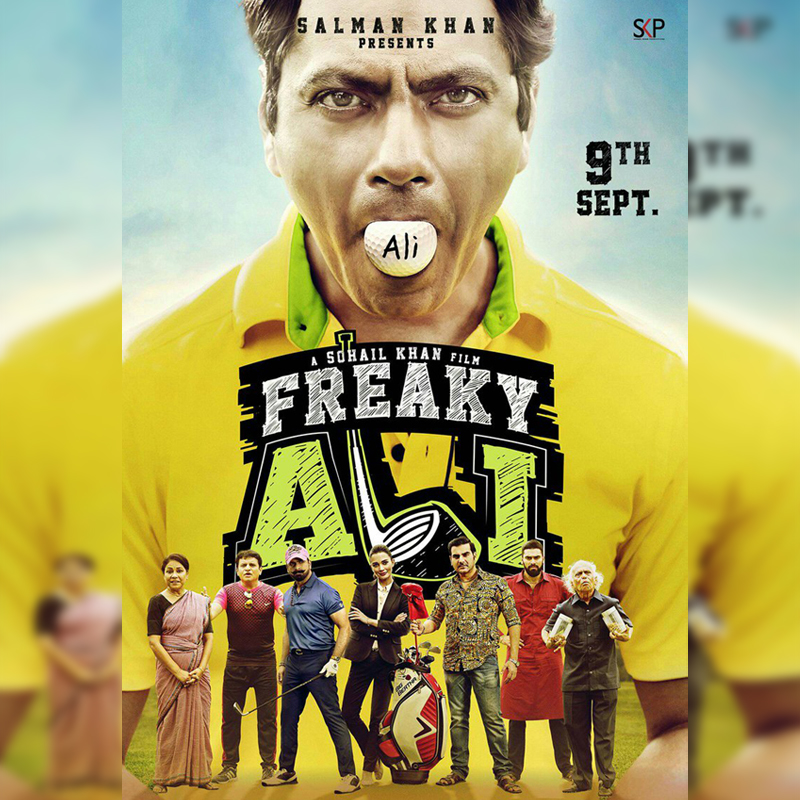
  • Freaky Ali….A slapstick, forced comedy

    Freaky Ali….A slapstick, forced comedy

    We have had some sports films which dealt with the theme of an underdog making it to the victory podium after a lot of struggle and toil besides, of course, the glory and honour of the nation. However, the sport has been the one which our people identify with.

    Freaky Ali is a love sports story. The sport is golf, a sport purely the domain of the rich. It is also about an underdog but not of the usual kind. In fact, he is a kind of character one would not even expect to see anywhere near a golf course.

    Golf is a sport alien to most common people anywhere in the world as it is in India. But, when a film about an independent sport like this is inspired by a Hollywood film, the sport can’t be changed from golf to cricket, a team sport.

    Nawazuddin is a debt collector along with Arbaaz Khan. Nikitin Dheer is their boss. This, Nawaz thinks, is the way to make a fast buck. The duo works for the kind the ‘finance institutions’ that existed not long ago in India to recover monies lent to retail borrowers who were not readily forthcoming with repayments.

    Earlier, in the movie, Nawaz had tried his hand at selling undergarments. But, when it came to the girl he loved the most, his proposal was rejected because of his profession.

    Nawaz lands up on the golf course during one of his loan recovery rounds. Here his boast leads him to try the sport. And, as the film stories can fit in anything, Nawaz surprises all. His latent talent in noticed by a caddie, Asif Basra, who decides to help him hone his skills.

    Abracadabra. Nawaz is now a golf champion of international standards. He is soon doing the professional circuit. He goes on a winning spree much to the discomfiture of his rival Jas Arora. Also, working against Nawaz’s interest is Nikitin, who wants him to lose at any cost.

    With success comes love — Amy Jackson.

    The film loses the battle when it borrows the idea of the sport of golf and an underdog. The comedy is forced instead of emanating naturally from the situations, and falls flat. Direction in the movie is weak to state the least and editing is slack.

    Dialogues in the movie are good at some places, especially the lines written for Nawaz. The cinematography is okay. The songs don’t entertain at all. The qawwali, Ya Ali Murtaza, is the only saving grace.

    Nawaz shines even in this mundane comedy. Arbaaz Khan manages with his limited acting skills. Asif Basra is okay. Amy has too little to do to make a mark. Jackie Shroff plays a cameo to no avail.

    Freaky Ali lacks appeal even for the growing breed of Nawaz fans.

  • Freaky Ali….A slapstick, forced comedy

    Freaky Ali….A slapstick, forced comedy

    We have had some sports films which dealt with the theme of an underdog making it to the victory podium after a lot of struggle and toil besides, of course, the glory and honour of the nation. However, the sport has been the one which our people identify with.

    Freaky Ali is a love sports story. The sport is golf, a sport purely the domain of the rich. It is also about an underdog but not of the usual kind. In fact, he is a kind of character one would not even expect to see anywhere near a golf course.

    Golf is a sport alien to most common people anywhere in the world as it is in India. But, when a film about an independent sport like this is inspired by a Hollywood film, the sport can’t be changed from golf to cricket, a team sport.

    Nawazuddin is a debt collector along with Arbaaz Khan. Nikitin Dheer is their boss. This, Nawaz thinks, is the way to make a fast buck. The duo works for the kind the ‘finance institutions’ that existed not long ago in India to recover monies lent to retail borrowers who were not readily forthcoming with repayments.

    Earlier, in the movie, Nawaz had tried his hand at selling undergarments. But, when it came to the girl he loved the most, his proposal was rejected because of his profession.

    Nawaz lands up on the golf course during one of his loan recovery rounds. Here his boast leads him to try the sport. And, as the film stories can fit in anything, Nawaz surprises all. His latent talent in noticed by a caddie, Asif Basra, who decides to help him hone his skills.

    Abracadabra. Nawaz is now a golf champion of international standards. He is soon doing the professional circuit. He goes on a winning spree much to the discomfiture of his rival Jas Arora. Also, working against Nawaz’s interest is Nikitin, who wants him to lose at any cost.

    With success comes love — Amy Jackson.

    The film loses the battle when it borrows the idea of the sport of golf and an underdog. The comedy is forced instead of emanating naturally from the situations, and falls flat. Direction in the movie is weak to state the least and editing is slack.

    Dialogues in the movie are good at some places, especially the lines written for Nawaz. The cinematography is okay. The songs don’t entertain at all. The qawwali, Ya Ali Murtaza, is the only saving grace.

    Nawaz shines even in this mundane comedy. Arbaaz Khan manages with his limited acting skills. Asif Basra is okay. Amy has too little to do to make a mark. Jackie Shroff plays a cameo to no avail.

    Freaky Ali lacks appeal even for the growing breed of Nawaz fans.

  • Houseful 3……Happy hours!

    Houseful 3……Happy hours!

    MUMBAI: Houseful 3 follows Sajid Nadiadwala’s Houseful (2010) and Houseful 2 (2012), both of which saw varying degrees of success. This instalment too follows the same pattern of many characters filling the screen with silly gags and actions that are meant to keep the viewer occupied. In short, it is a leave-your-brain-at-home film that does not require a script.

    Boman Irani is a kind of shipping tycoon based in UK with three daughters, Jacqueline Fernandez, Nargis Fakhri and Lisa Haydon who he assumes to be simple, sanskari girls living according to their names: Ganga, Jamuna and Saraswati. He has some superstition about women in his family marrying because there are instances of bad happenings in the aftermath.

    However, unknown to Boman as well as to each other, all three sisters have a man in their life. These are Akshay Kumar, Abhishek Bachchan and Riteish Deshmukh. These three pretend to be in love but their real aim is to pocket many millions of wealth that vests between these three sisters.

    Boman has sought the help of Chunky Pandey, playing Aakhri Pasta in all the films, who comes dressed as a fortuneteller and predicts that the marriage of each girl bodes ill for Boman, who will die the moment the each sister’s man sets eyes on him, or steps into the house or utters the first word to Boman, respectively.

    For the comedy and buffoonery to happen, most of the characters have to be under one roof. The girls and guys devise a plan. Akshay, an aspiring footballer, comes over on a wheel chair, he is incapable of stepping down or walking so Boman is safe on that count. Abhishek, dreaming of becoming a rapper, enters the house as a mute so there is no question of uttering a word to Boman. Riteish, who is raring to become a formula one driver, pretends to be blind; he can’t set eyes on Boman and hence even the third bad omen is ineffective.

    Now enter three more suitors for these girls in Nikitin Dheer, Sameer Kochhar and Arav Chowdhary. Just out of jail, they are presented as Boman’s choice for the girls. Jackie Shroff enters the scene. An ex-don of Mumbai, Jackie is also just out of jail and decides to meet his underling, Boman in London. When jailed, Jackie had transferred Boman along with all his wealth to London. He also agrees with Boman’s choice of boys.

    For Dheer, Kochhar and Chowdhary, the hitch is that though Boman and Jackie prefer them for the girls, but the girls love Akshay, Abhishek and Riteish. After some more one-upmanship duels between the two groups, the good have to win over the evil. The idea is toraise some laughter and, hence, the battles have to be won with wit, not hand-to-hand fights.

    The film does not have to adhere to a particular script. It resorts to gags to follow a loosely woven story and anything can be turned or twisted at will. On that count, Sajid and Farhad do a fair job. The film has passable musical score despite a number of lyric writers and composers; however, the choreography is executed in an entertaining manner. Photography captures lush London locations very well.

    As for performances, Akshay Kumar, playing one with a split personality, excels in this film with his varied expressions and deadpan timing. Abhishek and Riteish play the perfect foils. Jacqueline, Nargis and Lisa add to the glamour quotient. Boman and Jackie do well. Of the three villains, Nikitin towers over the rest while Kochhar and Chowdhary are okay.

    Houseful 3 is a fair entertainer to hit the cinemas after a long draught. The film caters to all kind of audience and should manage a decent stay at the box office.

    Producer: Sajid Nadiadwala.

    Directors: Sajid, Farhad.

    Cast: Akshay Kumar, Abhishek Bachchan, Riteish Deshmukh, Jacqueline Fernandez, Nargis Fakhri, Lisa Haydon, Boman Irani, Jackie Shroff, Chunky Pandey, Nikitin Dheer, Sameer Kochhar, Arav Chowdhary.

  • Houseful 3……Happy hours!

    Houseful 3……Happy hours!

    MUMBAI: Houseful 3 follows Sajid Nadiadwala’s Houseful (2010) and Houseful 2 (2012), both of which saw varying degrees of success. This instalment too follows the same pattern of many characters filling the screen with silly gags and actions that are meant to keep the viewer occupied. In short, it is a leave-your-brain-at-home film that does not require a script.

    Boman Irani is a kind of shipping tycoon based in UK with three daughters, Jacqueline Fernandez, Nargis Fakhri and Lisa Haydon who he assumes to be simple, sanskari girls living according to their names: Ganga, Jamuna and Saraswati. He has some superstition about women in his family marrying because there are instances of bad happenings in the aftermath.

    However, unknown to Boman as well as to each other, all three sisters have a man in their life. These are Akshay Kumar, Abhishek Bachchan and Riteish Deshmukh. These three pretend to be in love but their real aim is to pocket many millions of wealth that vests between these three sisters.

    Boman has sought the help of Chunky Pandey, playing Aakhri Pasta in all the films, who comes dressed as a fortuneteller and predicts that the marriage of each girl bodes ill for Boman, who will die the moment the each sister’s man sets eyes on him, or steps into the house or utters the first word to Boman, respectively.

    For the comedy and buffoonery to happen, most of the characters have to be under one roof. The girls and guys devise a plan. Akshay, an aspiring footballer, comes over on a wheel chair, he is incapable of stepping down or walking so Boman is safe on that count. Abhishek, dreaming of becoming a rapper, enters the house as a mute so there is no question of uttering a word to Boman. Riteish, who is raring to become a formula one driver, pretends to be blind; he can’t set eyes on Boman and hence even the third bad omen is ineffective.

    Now enter three more suitors for these girls in Nikitin Dheer, Sameer Kochhar and Arav Chowdhary. Just out of jail, they are presented as Boman’s choice for the girls. Jackie Shroff enters the scene. An ex-don of Mumbai, Jackie is also just out of jail and decides to meet his underling, Boman in London. When jailed, Jackie had transferred Boman along with all his wealth to London. He also agrees with Boman’s choice of boys.

    For Dheer, Kochhar and Chowdhary, the hitch is that though Boman and Jackie prefer them for the girls, but the girls love Akshay, Abhishek and Riteish. After some more one-upmanship duels between the two groups, the good have to win over the evil. The idea is toraise some laughter and, hence, the battles have to be won with wit, not hand-to-hand fights.

    The film does not have to adhere to a particular script. It resorts to gags to follow a loosely woven story and anything can be turned or twisted at will. On that count, Sajid and Farhad do a fair job. The film has passable musical score despite a number of lyric writers and composers; however, the choreography is executed in an entertaining manner. Photography captures lush London locations very well.

    As for performances, Akshay Kumar, playing one with a split personality, excels in this film with his varied expressions and deadpan timing. Abhishek and Riteish play the perfect foils. Jacqueline, Nargis and Lisa add to the glamour quotient. Boman and Jackie do well. Of the three villains, Nikitin towers over the rest while Kochhar and Chowdhary are okay.

    Houseful 3 is a fair entertainer to hit the cinemas after a long draught. The film caters to all kind of audience and should manage a decent stay at the box office.

    Producer: Sajid Nadiadwala.

    Directors: Sajid, Farhad.

    Cast: Akshay Kumar, Abhishek Bachchan, Riteish Deshmukh, Jacqueline Fernandez, Nargis Fakhri, Lisa Haydon, Boman Irani, Jackie Shroff, Chunky Pandey, Nikitin Dheer, Sameer Kochhar, Arav Chowdhary.

  • Films Division complex can become a hub for Indian cinema: Mukesh Sharma

    Films Division complex can become a hub for Indian cinema: Mukesh Sharma

    NEW DELHI: Actor Jackie Shroff – the brand ambassador of the Mumbai International Film Festival for Documentary, short and animation films – could not have a better 59th birthday.

    After attending an Animation Workshop and between eating pieces of cake, Jackie gushed: “You know, I spent my birthday today attending a class in animation filmmaking by Italian filmmaker Luca Rafaelli and India’s Dhwani Desai.”

    Shroff was addressing a mid-fest press meet yesterday with Festival Director Mukesh Sharma who had surprised him with a birthday cake. The Press Information Bureau which put up the Media Centre also gave him a separate cake.

    Speaking at the press meet, Sharma said that he was convinced that the festival could do with several changes but he would consider these after the Festival was over. “There is always scope for improvement,” he added.

    Sharma said there were several impediments but he and his team overcame these one by one. He said with the Museum of Indian Cinema getting ready by the next MIFF, the Films Division complex could become a very good hub of cinema.

    The simultaneous screenings of national films as part of the MIFF Zone in nineteen cities had been very encouraging. He would also explore starting the weekly FD Zone in Delhi.

    He said in answer to a question that Prasar Bharati had assured him about considering the suggestion for a separate documentary

    Shroff  said the Festival had been a learning for him. Animation was very close to his heart and he had seen several good films at the Festival. He wanted filmmakers to work towards oneness.

    He also felt MIFF should be an annual Festival and not come every two years.

  • Films Division complex can become a hub for Indian cinema: Mukesh Sharma

    Films Division complex can become a hub for Indian cinema: Mukesh Sharma

    NEW DELHI: Actor Jackie Shroff – the brand ambassador of the Mumbai International Film Festival for Documentary, short and animation films – could not have a better 59th birthday.

    After attending an Animation Workshop and between eating pieces of cake, Jackie gushed: “You know, I spent my birthday today attending a class in animation filmmaking by Italian filmmaker Luca Rafaelli and India’s Dhwani Desai.”

    Shroff was addressing a mid-fest press meet yesterday with Festival Director Mukesh Sharma who had surprised him with a birthday cake. The Press Information Bureau which put up the Media Centre also gave him a separate cake.

    Speaking at the press meet, Sharma said that he was convinced that the festival could do with several changes but he would consider these after the Festival was over. “There is always scope for improvement,” he added.

    Sharma said there were several impediments but he and his team overcame these one by one. He said with the Museum of Indian Cinema getting ready by the next MIFF, the Films Division complex could become a very good hub of cinema.

    The simultaneous screenings of national films as part of the MIFF Zone in nineteen cities had been very encouraging. He would also explore starting the weekly FD Zone in Delhi.

    He said in answer to a question that Prasar Bharati had assured him about considering the suggestion for a separate documentary

    Shroff  said the Festival had been a learning for him. Animation was very close to his heart and he had seen several good films at the Festival. He wanted filmmakers to work towards oneness.

    He also felt MIFF should be an annual Festival and not come every two years.