Tag: Jabong

  • Jabong appoints Rahul Taneja as CBO

    Jabong appoints Rahul Taneja as CBO

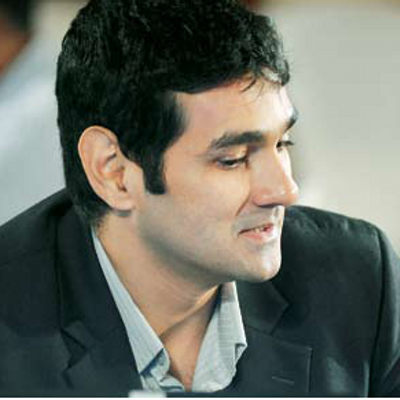
    MUMBAI Online fashion destination Jabong has announced the appointment of Rahul Taneja as the company’s Chief Business Officer. He will report directly to the CEO, Sanjeev Mohanty and will be responsible for overseeing Category management, pricing, creative campaigns and offline / brand marketing.

    On this appointment Mohanty said, “Rahul has a tremendous ability to manage categories and build brands. With his addition to the leadership team, we can now focus on growing the business using core category strengths instead of discounts as a lever and bring in consumer focus on growth categories which could result in profitable growth. I am very sure that Jabong now has one of the best e commerce teams in the country with a very balanced, online and offline experience and a very diverse background in scaling businesses profitability. This now completes the leadership hiring which directly reports to me. We are now ready to go full throttle on the task at hand.”

    This is the fifth top management appointment in Jabong under Mohanty’s leadership.

    Jabong had recently announced the appointment of Muralikrishnan B as its Chief Operating Officer and Deepa Chadha as its Chief Human Resource Officer. The company had previously strengthened its leadership by appointing Ranjan Kant as Chief Marketplace Officer and Kalyan Kumar as Chief Merchandising Officer.

  • Jabong appoints Rahul Taneja as CBO

    Jabong appoints Rahul Taneja as CBO

    MUMBAI Online fashion destination Jabong has announced the appointment of Rahul Taneja as the company’s Chief Business Officer. He will report directly to the CEO, Sanjeev Mohanty and will be responsible for overseeing Category management, pricing, creative campaigns and offline / brand marketing.

    On this appointment Mohanty said, “Rahul has a tremendous ability to manage categories and build brands. With his addition to the leadership team, we can now focus on growing the business using core category strengths instead of discounts as a lever and bring in consumer focus on growth categories which could result in profitable growth. I am very sure that Jabong now has one of the best e commerce teams in the country with a very balanced, online and offline experience and a very diverse background in scaling businesses profitability. This now completes the leadership hiring which directly reports to me. We are now ready to go full throttle on the task at hand.”

    This is the fifth top management appointment in Jabong under Mohanty’s leadership.

    Jabong had recently announced the appointment of Muralikrishnan B as its Chief Operating Officer and Deepa Chadha as its Chief Human Resource Officer. The company had previously strengthened its leadership by appointing Ranjan Kant as Chief Marketplace Officer and Kalyan Kumar as Chief Merchandising Officer.

  • PayU’s Saranjeet Singh: The growth of the payment gateway market is inevitable

    PayU’s Saranjeet Singh: The growth of the payment gateway market is inevitable

    MUMBAI: Be it Snapdeal, Flipkart, Shopclues, Jabong or Myntra,  most of the successful eCommerce merchants in the country are at a strategic investment phase and haven’t still broken even. The Indian e-Commerce business is not yet at a point when the players can think of profits, the players are still focused on the customer delight factor. Besides price, a huge part of this customer delight factor directly depends on the ease with which customers can pay for their purchases. Therefore, payment gateways facilitating such transactions have become crucial to the digital age and the businesses of this era.

     
    Though various digital wallets such PayTM, Mobikwik and Oxygen enable online transactions, businesses would be literally crippled without payment gateways.  In order to understand this emerging market better, Indiatelevision.com  spoke with PayU India digital marketing head Saranjeet Singh.
     
    “The growth of the payment gateway market is inevitable,” says Singh. “More people are using the internet beyond just social media and have discovered the joy of doing business online. Soon they will understand that it is important for the ease of business to accept money online as well, and that is where payment gateways will come in.”
     
    Currently PayU India commands a lion’s share of the market with 80 out of the top 100 eCommerce merchants subscribed to its PayU Biz product.  Apart from the premium clientele, the brand also caters to small and medium enterprises in the country through PayU Money. At present, its SME clientele  base is  about 1.5 lakh strong.
     
    Where effective marketing for a product like PayU is concerned, Singh reveals that he is focusing on B2B communications through  digital media that allows him to identify potential merchants who could benefit from online payment and then showcasing the service to them.
    “There are several online merchants who are unaware of their need for a payment gateway. Our job is to identify them and observe and learn where they can apply our services. Unlike several other payment service providers, we don’t believe in the cash back formula. We’d rather concentrate on developing a credible and wholesome product that caters to all the clients’ needs,” Singh reveals.  
     
    Given the competitive market, the three things that every online merchant, (especially the bigger eCommerce players) wants the most from a payment gateway are: highest rate of successful transactions; largest coverage by all the modes of payment; and the most number of banks. Online payment opens up a whole new vista for merchants operating digitally, right from an addition to a ‘call to action’ feature on their portals/ websites, to the measurability factor. “All our clients put a heavy emphasis on the online transaction data and analytics that we provide them. It works as a strong consumer behaviour insight for them which they can later use in marketing or even product or service development,” Singh informs.
     
    In spite of a strong demand for payment gateways, there are several factors that prevent their penetration in the market. Singh feels that there is still a lot of room for improvement. Elaborating, Singh explains, “The industry is in a dire need of behavioural change. People are more used to cash, and therefore merchants, especially SMEs are taking a while to adapt to accepting money online. But just like how people had once migrated from cash to credit and debit cards, they will soon migrate to online payments as long as there is a value.”
     
    Another drawback is the lack of ease of transactions led mainly by poor and erratic internet coverage that sometimes forces consumers to put off a purchase.  Added to this is a very complicated government security procedure that every payment gateway must comply with. “We understand the shortcomings that come from the current uneven internet coverage throughout the country. Considering that, we have launched PayU One Tap for our high end clients that lets their consumers go through the transaction in one go by saving their card details for future payments to the same merchant,” says Singh.

    Wouldn’t that jeopardize security of the cardholders and make their information vulnerable to hackers? Singh reassures that the new OneTap product is Payment Card Industry Data Security Standard (PCI DSS) certified, which is an RBI security clearance certification that every Payment gateway must undergo to enter the market.  
     
    He says, “While we understand why people crib about the heavily secure payment gateways in India that can make consumer upset, it is necessary to protect them. I guess it depends on how your market is placed. If you compare the Indian market to that of a developed country’s market, the Indian market is still very immature. Therefore a sense of security needs to be built first if everyone is to adopt digital money transactions”. As far as incomplete transactions are concerned due to over complicated security process, OneTap allows users to continue their payment right from where they left off with the use of powerful algorithms.”

    Continuing further, Singh speaks about another general concern that is often raised by users and in turn by PayU’s clients – the inability to complete transactions through international cards. Acknowledging the importance of setting up an inclusive payment structure that welcomes foreign business, Singh shares that currently there are restrictions on foreign card holders to purchase from Indian eCommerce merchants. But the issue is being looked into, with the eCommerce players increasingly insisting that their payment gateways also cater to international customers. Singh says that PayU  has several clients that accept international payments. 

    Going forward Singh foresees a surge in online traffic thanks to 4G networks coming in in 2016, and more people taking to the Internet to shop for products and services. Payment gateways will not only be the first choice for new age businesses, but through a gradual transition most SMEs and old school businesses will also adapt to payment gateways.


  • PayU’s Saranjeet Singh: The growth of the payment gateway market is inevitable

    PayU’s Saranjeet Singh: The growth of the payment gateway market is inevitable

    MUMBAI: Be it Snapdeal, Flipkart, Shopclues, Jabong or Myntra,  most of the successful eCommerce merchants in the country are at a strategic investment phase and haven’t still broken even. The Indian e-Commerce business is not yet at a point when the players can think of profits, the players are still focused on the customer delight factor. Besides price, a huge part of this customer delight factor directly depends on the ease with which customers can pay for their purchases. Therefore, payment gateways facilitating such transactions have become crucial to the digital age and the businesses of this era.

     
    Though various digital wallets such PayTM, Mobikwik and Oxygen enable online transactions, businesses would be literally crippled without payment gateways.  In order to understand this emerging market better, Indiatelevision.com  spoke with PayU India digital marketing head Saranjeet Singh.
     
    “The growth of the payment gateway market is inevitable,” says Singh. “More people are using the internet beyond just social media and have discovered the joy of doing business online. Soon they will understand that it is important for the ease of business to accept money online as well, and that is where payment gateways will come in.”
     
    Currently PayU India commands a lion’s share of the market with 80 out of the top 100 eCommerce merchants subscribed to its PayU Biz product.  Apart from the premium clientele, the brand also caters to small and medium enterprises in the country through PayU Money. At present, its SME clientele  base is  about 1.5 lakh strong.
     
    Where effective marketing for a product like PayU is concerned, Singh reveals that he is focusing on B2B communications through  digital media that allows him to identify potential merchants who could benefit from online payment and then showcasing the service to them.
    “There are several online merchants who are unaware of their need for a payment gateway. Our job is to identify them and observe and learn where they can apply our services. Unlike several other payment service providers, we don’t believe in the cash back formula. We’d rather concentrate on developing a credible and wholesome product that caters to all the clients’ needs,” Singh reveals.  
     
    Given the competitive market, the three things that every online merchant, (especially the bigger eCommerce players) wants the most from a payment gateway are: highest rate of successful transactions; largest coverage by all the modes of payment; and the most number of banks. Online payment opens up a whole new vista for merchants operating digitally, right from an addition to a ‘call to action’ feature on their portals/ websites, to the measurability factor. “All our clients put a heavy emphasis on the online transaction data and analytics that we provide them. It works as a strong consumer behaviour insight for them which they can later use in marketing or even product or service development,” Singh informs.
     
    In spite of a strong demand for payment gateways, there are several factors that prevent their penetration in the market. Singh feels that there is still a lot of room for improvement. Elaborating, Singh explains, “The industry is in a dire need of behavioural change. People are more used to cash, and therefore merchants, especially SMEs are taking a while to adapt to accepting money online. But just like how people had once migrated from cash to credit and debit cards, they will soon migrate to online payments as long as there is a value.”
     
    Another drawback is the lack of ease of transactions led mainly by poor and erratic internet coverage that sometimes forces consumers to put off a purchase.  Added to this is a very complicated government security procedure that every payment gateway must comply with. “We understand the shortcomings that come from the current uneven internet coverage throughout the country. Considering that, we have launched PayU One Tap for our high end clients that lets their consumers go through the transaction in one go by saving their card details for future payments to the same merchant,” says Singh.

    Wouldn’t that jeopardize security of the cardholders and make their information vulnerable to hackers? Singh reassures that the new OneTap product is Payment Card Industry Data Security Standard (PCI DSS) certified, which is an RBI security clearance certification that every Payment gateway must undergo to enter the market.  
     
    He says, “While we understand why people crib about the heavily secure payment gateways in India that can make consumer upset, it is necessary to protect them. I guess it depends on how your market is placed. If you compare the Indian market to that of a developed country’s market, the Indian market is still very immature. Therefore a sense of security needs to be built first if everyone is to adopt digital money transactions”. As far as incomplete transactions are concerned due to over complicated security process, OneTap allows users to continue their payment right from where they left off with the use of powerful algorithms.”

    Continuing further, Singh speaks about another general concern that is often raised by users and in turn by PayU’s clients – the inability to complete transactions through international cards. Acknowledging the importance of setting up an inclusive payment structure that welcomes foreign business, Singh shares that currently there are restrictions on foreign card holders to purchase from Indian eCommerce merchants. But the issue is being looked into, with the eCommerce players increasingly insisting that their payment gateways also cater to international customers. Singh says that PayU  has several clients that accept international payments. 

    Going forward Singh foresees a surge in online traffic thanks to 4G networks coming in in 2016, and more people taking to the Internet to shop for products and services. Payment gateways will not only be the first choice for new age businesses, but through a gradual transition most SMEs and old school businesses will also adapt to payment gateways.


  • NBA India sees 200% jump in e-commerce sales

    NBA India sees 200% jump in e-commerce sales

    MUMBAI: Basketball, which introduced breakfast viewership in India, is growing at a rapid pace in all departments. From the beginning the National Basketball Association (NBA) India had a long-term vision to grow the game and build the league’s fan base in the market. It initiated many grassroots programmes to build on ground attraction and plans to extend the base and reach by expanding it to multiple cities.

    What’s more, the growing venture NBA India, which is still exploring various opportunities to generate revenue, has seen a 200 per cent jump in its e-commerce sales over the last one year. The NBA’s primary business lines globally are media, sponsorship and merchandising.

    Speaking exclusively to Indiantelevision.com, NBA India managing director Yannick Colaco says, “We continue to work with our global and local merchandising partners to bring the best NBA merchandise to our fans. We launched NBAStore.in, our local e-commerce site in partnership with Jabong, a little over a year ago and the response has been amazing. NBA merchandise has been delivered to over 400 cities across India and our e-commerce sales have grown 200 per cent over the last year. The league will continue to engage with like-minded brands to create partnerships to grow the game and bring the NBA experience closer to our fans. We currently have fantastic partnerships with Reliance Foundation, Jabong, adidas, Samsonite, Nike and SAP.”


    Plans for 2015-2017:

    Sharing his vision Colaco throws light on the plans to improve the sport’s reach and viewership in the country. “Over the next three years, the NBA will continue to grow the game and deliver NBA experiences and content to our fans across the country. We plan to expand our grassroots programs to more cities so that the youth across the country can learn and enjoy the game. We will continue to train coaches across India and provide them the tools and resources to grow the game in their communities.”


    Viewership:

    Multi Screen Media’s (MSM) sports venture Sony Six is the official broadcaster of NBA in India. 61.8 per cent of All India 1 lakh + television audience in India has the opportunity to see Sony Six. The viewership rating has witnessed constant growth in recent past and finals of 2015 secured the most. “Our partnership with Sony Six in India has been fantastic. Viewership of the NBA has skyrocketed in the last few seasons due to their commitment to bring two live games per day and other compelling NBA programs to our fans. Viewership of NBA programs increased significantly over last and our fan base on social media has grown 400 per cent in the last year,” says Colaco.


    Aspirations of youth and initiatives taken by NBA to support it:

    “There is great appetite for high quality basketball programs from schools, coaches, parents and youth across the country. These initiatives are essential because basketball is a great form of exercise and teaches youth important life lessons such as teamwork, discipline, sportsmanship and communication. Over one million youth have participated in the Reliance Foundation Jr. NBA program since 2013 and over 1,000 coaches have been trained across eight cities. In addition, over 15,000 basketballs have been donated and 300 rims installed at participating schools. We anticipate these figures to double as we expand the program later this year,” asserts Colaco.


    Satnam Singh’s inclusion in NBA draft:

    Recently India born Satnam Singh created history by getting a place in NBA as The Dallas Mavericks introduced 19-year-old as the first-ever Indian NBA draft pick in Dallas. And that can enthral tremendous energy in basketball aspirants in India. On Singh’s inclusion and its influence on the youth, Colaco says, “Our hope is that Satnam’s story will continue to inspire youth across India to participate in our great game. We will provide fans in India the opportunity to follow Satnam’s journey by showcasing his experiences across our digital and social media platforms as well as on Sony Six.”

    In India most of the basketball courts are used to play cricket, skate or play football, now it remains to be seen if Colaco and his team manages to popularise basketball and drive the youth’s interest to the sport.

  • TO THE NEW Digital sponsors NodeSchool

    TO THE NEW Digital sponsors NodeSchool

    MUMBAI: TO THE NEW Digital, a premium digital services company sponsored NodeSchool, an open source project run by volunteers with an aim to evangelize Node community. The event was held at TO THE NEW Digital’s Noida office and was attended by over 80 Node and JavaScript enthusiasts from companies like Paytm, Jabong, Magic Software, BluePi, UrbanClap, etc.


    NodeSchool was a full day event comprising various interactive learning sessions and in-person hosted workshops. The event started with a keynote speech by Shweta Sharma, AVP, TO THE NEW Digital. She talked about Node.js and how it is taking the industry by storm.


    The first session on Node Streams was presented by Kushal Likhi, Founder, Innox Technologies. He shed light on different types of streams and their power in Node.js and how streams in modern web applications can be used to build highly scalable applications. Another power packed session was delivered by Kashish Gupta and Deepak Vishwakarma, Software Consultants, TO THE NEW Digital. They discussed hapi.js, a rich framework for building API driven applications and services and also demonstrated various plugins.


    The event also included few interactive workshops on ‘learnyounode’ and ‘stream-adventures’ which gave hands on learning to attendees.


    TO THE NEW Digital AVP Shweta Sharma said, “We must keep organizing such events where professionals from different companies come together and share their views to upgrade the current ecosystem. NodeSchool is a perfect medium to expand our community and welcome suggestions required to initiate topics on regular intervals. These events help in interconnecting the community and new opportunities surface regularly.”  

  • Jabong founders invest $2 million in laundry services start-up Wassup

    Jabong founders invest $2 million in laundry services start-up Wassup

    MUMBAI: Chennai based on-demand convenience brand Wassup, has raised $2 million from Jabong founders Arun Chandra and Praveen Sinha.


    Wassup, which is co-founded by Balachandar.R and Durga Das, will continue to offer on-demand expediency services as well as expand focus on marketing and customer acquisition activities in Chennai, Bangalore and Delhi and also add two more cities Pune and Cochin to their market presence.


    The brand currently offers services like laundry, dry cleaning, shoes and bag refurbishments in the above mentioned cities. For the consumer’s convenience, the company has about 30 pickup points called “Aggregating Hubs”. The company is adding 30 more hubs in the next 6 months. In the next three years, the brand intends to be in 100 cities with a customer base of 1 million.


    Globally, the industry is estimated to be at $9 billion, while the laundry market is estimated to be valued at INR 200,000 crore annually, 95% of which is the unorganized market.


    Wassup co-founder and CEO Balachandar R said, “We are looking to service the daily laundry requirements of middle class Indian consumers, which is currently being addressed by a maid servant or by self-wash. The potential to move unorganized offline business to organized online convenience is huge. We are seeing a good opportunity and want to be the market leaders in the segment in India and are happy to have Arun and Praveen onboard with us on this journey to be the leading brand in convenience services. We will be adding additional interesting convenience services in the near future.”


    Wassup co-founder and managing director Durga Das, who has 20 years of Silicon Valley experience behind her, added, “Technology is going to be the true enabler, which will foster customer delight. We have built a technology platform that integrates the consumer app, point of sale, tagging and tracking system and the CRM solution. Additionally, we are adding analytics, a marketing performance platform and an efficient logistics management to ensure the customer gets an unrivalled experience in convenience. Mobile is going to be central to our tech development.”


    Jabong’s Mohan and Sinha said, “The on-demand convenience industry is revolutionizing commercial behaviour in cities around the world and the growth of the industry in India is exponential given the perennial growth in the per-capita of the country. The consumer behaviour is witnessing a steady change and this is the best time to contribute in the same. We are elated to be a part of this riveting market opportunity like Wassup. It has immense potential to become a catalyst in the evolution of consumer behaviour. We have bestowed our complete trust upon the model and would lend out the desired support to the co-founders for a hindrance-free growth.”


    The company’s expansion plans include adding the personal care, home care, car care, pet care and handyman services to their portfolio.

  • Jabong unveils new ad campaign celebrating individuals

    Jabong unveils new ad campaign celebrating individuals

    MUMBAI: Online multi-brand fashion website Jabong.com has unveiled a new promotional campaign with the tagline – “This is who I am. This is what I believe in.” Jabong took up the task of encouraging people to embrace their uniqueness, last year, with its 360 degree campaign – Be you.


    This season however, it goes a step further and shows what ‘Be You’ means for different individuals. The three TVCs, which will be aired across various channels, have been creatively scripted and shot across length and breadth of India. They capture aspirations, dreams, thoughts and personal styles for people who have chosen to break free from the norm and followed their own style and passion.


    The TVC, which will be aired across channels, has been innovatively shot featuring the life stories of young individuals from different walks of life. The TVC reiterates the idea of self-direction and freethinking, unescorted by the stringent norms of the society. It inspires lateral thinking and affirms fashion as a mode of unorthodox expression.


    Jabong.com founder and managing director Praveen Sinha said, “Post tasting success with the launch of ‘Be You’ campaign last season, our team decided to take the winning streak forward and give a different dimension to it in the second season. Jabong.com is constantly innovating to churn out something new for its customers; we let out a spark of individualism last season and we plan to sustain it with this TVC in its second inning. The TVC is very simple in terms of the message it plans to send out, chase yourself, not the word.”


    Created by Bang in the Middle, with different films, weaving different stories, this year’s plan is much grander and bolder. Instead of just telling people to follow their own star and break free, it shows the stories of people who dared to be themselves.


    Bang in the Middle COO Prathap Suthan added, “Last year around when we launched the philosophy of ‘Be You’, we were pretty much convinced that it gave enough and more encouragement to young India to be proud of themselves and to go ahead and be what they wanted to be. Jabong being the one brand that would support and inspire them on their self-discovery and conviction with the widest range of fashion. Ready with ideas to help express themselves across the days and nights of their journeys. The campaign was a balanced act of liberation, and pushed people to go beyond the shallow definition of fashion, and gave them the freedom to stand up and be themselves: beLeaders instead of followers.”


    “This time around, instead of a common philosophy, we are bringing to life stories of individuals, how they choose to live their lives and how they use their minds to create a niche for themselves. More importantly, these ads also surf the top of emerging social trends and try to present the changing faces of the country. Young India is a more confident, globally conscious, and empowered lot of people. And all you have to do is look around to find youngsters living life the way they want and successfully at that. Jabong is at the cusp of being the one positive pat on the back for these millions of dreamers and thinkers and doers who will do India prouder than ever,” added Suthan.


    Bang in the Middle CSO Naresh Gupta said, “Today fashion is just not an external style statement, it is how you live, the choices you make, the statement you want to make. It is not about rebelling, or being different for sake of being different, it is about living by your own conviction. We started the journey with the previous campaign; we are making an even stronger statement with this seasons campaign. We have tried to capture the new ethos of the young trendy Indians to make the brand the real fashion choice for them.”


    This campaign is a mouthpiece for the youth that has risen above the herd and retained its true identity. Jabong, with these new ads, exemplifies what ‘Be You’ means. The TVC includes a 30 second couplet narrating the tale of a young couple in a live-in relationship, defying the societal customs and avowing to stay true to their individual beliefs.


    An additional 60-second film is shot for digital promotion encapsulating the dreams of young India and how they are pursuing their unique entities, away from the social orders. Two more commercials chronicling journeys of the protagonist follow as well this season.


    The TVC is an ode to triumphant success Jabong has consolidated in a short span of time owing to a noteworthy response it has amassed since its inception.
  • Payback inks strategic partnership with MobiKwik

    Payback inks strategic partnership with MobiKwik

    MUMBAI: India’s multi-brand loyalty program Payback has tied-up with mobile wallet MobiKwik to extend the strengths of the two platforms to more than 50 million consumers. This partnership will provide MobiKwik’s 15 million customers value from Payback-enabled loyalty benefits for their transactions at MobiKwik and all other Payback partners.


    The mobile industry in India is growing at an increasing rate and M-Wallets are the next big trend. The partnership between the two promises to reach out to the customers by offering them with loyalty points.


    Payback India CEO and MD Rahul Rana said, “Mobile wallets are a fast growing category as India embraces technology and witnesses strong growth of e-commerce. People prefer to store their cash digitally and use it seamlessly via mobile and online transactions. This partnership will allow MobiKwik customers to earn rewards when an online transaction is made. Further Payback customers also get access to a seamless payment experience with wide merchant coverage. Our endeavor is to continue to partner with newer categories in online and offline commerce such that Payback Customers can have greater choice in earning and redeeming their rewards at the click of a button.”


    MobiKwik provides a user friendly, app-based interface for recharges, bill payments, shopping, and money transfer to friends and family, through the MobiKwik wallet. MobiKwik’s wide merchant coverage ensures that existing Payback customers can redeem their points for MobiKwik wallet balance, and thus use MobiKwik at coffee shops, to make e-commerce purchases, buy bus, flight, and movie tickets, recharge mobile phones and DTH. MobiKwik is now enabled across more than 20,000 merchants including Café Coffee Day, Jabong, Snapdeal, BookMyShow, Domino’s Pizza, eBay, HomeShop18, Infibeam, Purplle, MakeMyTrip, Naaptol, Pepperfry, ShopClues, TastyKhana, and JustEat.


    MobiKwik CEO and founder Bipin Preet Singh added, “We are happy to be associated with Payback as it will benefit the MobiKwik users at large. The aim behind this partnership is to create loyalty for MobiKwik users and attract Payback users to adopt MobiKwik as their mobile wallet option. With this increase in our network strength we are confident of leveraging on economies of scale to deliver higher value to our customers.”