Tag: J S Mathur

  • MIB claims 90.44% DAS success; MSOs tell Task Force no shortage of STBs

    MIB claims 90.44% DAS success; MSOs tell Task Force no shortage of STBs

    NEW DELHI: The first meeting of the Task Force held after implementation of Phase III of Digital Addressable System (DAS) covering all urban areas was informed that the percentage achievement had increased from 76.45 per cent as on 30 December.2015 to 90.44 per cent as on 15 February. 2016.

    It was also claimed that the seeding of set top boxes (STBs) by multi system operators (MSOs) increased from 6.91 mIIIion to 12.43 mIIIion for the same period.

    An Indian Conditional Access System (iCAS) developed by Department of Electronics and Information Technology wIII be initially available to indigenous STB manufacturers for three years at a nominal fee of $0.5 per STB. Twelve MSOs are reported to have deployed it in their headends.

    Bharat Sanchar Nigam Limited (BSNL) had been asked by the Department of Telecom to provide required connectivity links to MSOs for taking TV signals in Phase III and Phase IV areas. This follows complaints in the last meeting held at the end of December by MSOs about the problems of connectivity links in some Phase III areas.

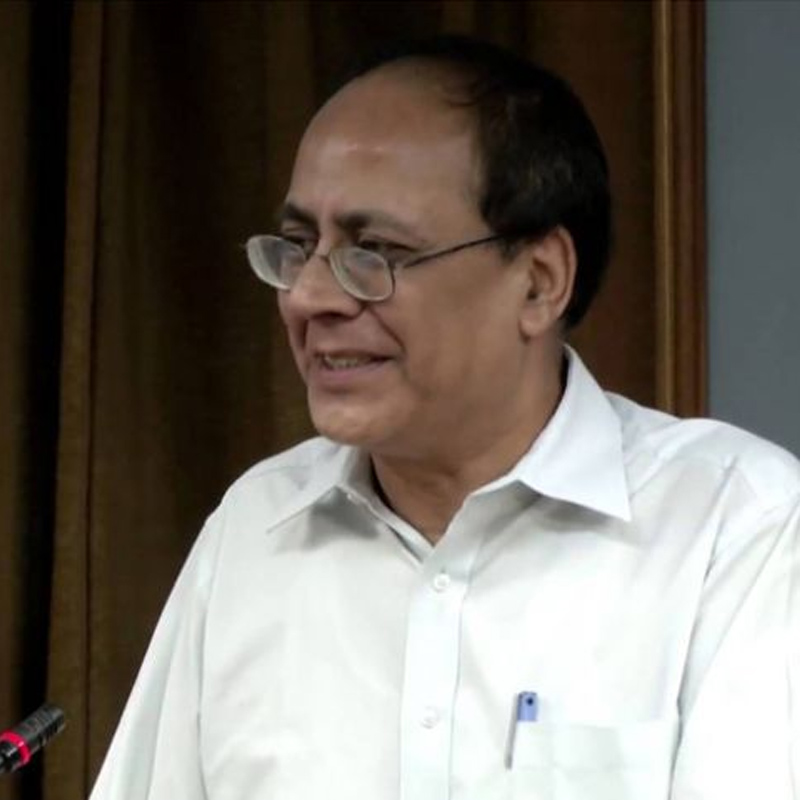
    Addressing the 14th meeting of the Task Force on implementation of Phases III & IV of DAS in cable TV networks on 16 February, Information and Broadcasting Ministry Special Secretary J S Mathur claimed that the progress achieved was very good in spite of several court cases filed in various courts for extension of the cut-off date.

    Mathur remarked that from the stay granted in some court cases it should not be construed that the digitisation would be put on hold. He emphasised that digitisation is a reality now and cannot be stopped. He said broadcasters and MSOs should spread this message. He said according to a report, the number of MSO dark areas have decreased considerably. He said there was need to find out whether the MSOs who have been granted registration recently have placed orders for STBs.

    Joint Secretary (Broadcasting) R Jaya in an overview of progress of DAS Phase III & IV said a total of 19 cases had been filed in various courts in the country for extension of cut-off date for Phase III. The Ministry was contesting all cases for immediate vacation of stay granted in these cases. The Ministry had filed a petition in the Supreme Court for transfer of these cases for immediate hearing in the Apex court.

    She said 695 MSOs had been granted DAS registration and 164 applications were under process while 240 applications have been received with incomplete information.

    She said the Regional Units (RUs) set up for implementing digitisation in Phases III & IV were fully functional. All RUs are in regular correspondence with MSOs in their regions.

    She claimed that about 300 to 500 calls were received daily on the toll free help line for cable TV digitisation for Phases III & IV.

    Jaya also said that 340 MSOs headends for Phase III & IV have been inspected by Prasar Bharati so far and 109 MSOs head ends of these have been reported to be non-operational.

    The Ministry had requested State Governments to furnish a list of Phase IV areas in their states. Except from Himachal Pradesh and Jammu and Kashmir (which has furnished list of one division only), lists are awaited from other States.

    A representative of J&K Government said some areas in Phase III in the State have still not been covered due to non-availability of STBs with MSOs. It was not known whether and when these MSOs have placed orders for STBs.

    A representative of the Telengana Government said only 30 to 35 per cent Phase III areas had been covered in the State so far and MSOs may require some time to complete their targets.

    Several representatives of MSOs claimed they had sufficient boxes but referred to other problems. The Hathway representative said local cable operators were resisting taking STBs from them for installation due to extension granted by various courts. Another representative of an MSO, the Indusind Media, said in view of the extension granted by courts and analogue transmission still running in some Phase III areas, the broadcasters should charge them on analogue rates according to earlier agreements. The Siticable representative also claimed the problem of stocking the boxes. He added that the MSO had about one million STBs in stock. He remarked that MSOs were required to plan the procurement of STBs in advance which the newly registered MSOs appear to have not done. A representative of GTPL Hathway said some orders of STBs were in transit but it had sufficient stocks.

    An Andhra Pradesh Government representative said there had been no complaint of non-availability of STBs in the State. But the representative of Uttarakhand said there have been reports of STB non-¬availability in some areas. He added that they are holding district level meetings to implement digitisation in the State.

    During discussions it emerged that some MSOs who have not even applied for registration had filed cases for extension in courts. Cases had also been filed by some MSOs who are not technically ready.

    The Telecom Regulatory Authority of India (TRAI) representative said in one court case, local cable operators had been directed by the court to send requests for STBs to MSOs. He suggested that State Governments should seek data from MSOs regarding availability of STBs. He informed that TRAI has recently written to the Chief Secretaries of State / Governments on the benefits accruable from digitisation to State Governments.

    A representative of LCOs from Maharashtra said some DAS Phase IV areas, which had been getting feed from control room in Phase III areas were switched off by MSOs. He added that digitisation is not looking at the consumer and whether he can afford to buy a set top box – particularly in Phase IV areas. 

    Mathur said the entire digitisation is in the interest of consumers and it has to take place as per the timelines. He advised that the stakeholders should encourage people to go for digital.

    A point was made that MSOs should be given freedom to fix the rates of STBs. A representative of TRAI mentioned that TRAI has not fixed any price for STBs and emphasised that the conditions given in tariff orders issued by TRAI on supply and installation of STBs by MSOs to consumers have to be complied and there can be no compromise on the rights of the consumers.

    A representative of CEAMA claimed that the number of companies manufacturing STBs had doubled in last one year; STB production has increased 100  per cent in last one year; one Chinese company is likely to start manufacturing STBs in India; and STB orders are being received from small MSOs. MSOs should place orders in time keeping into view that about two months time is required for integration of CAS in STBs. CEAMA is a member of iCAS.

    Jaya said CEAMA should reach out to MSOs to inform them about iCAS and STBs manufactured by them. The CEAMA representative said it would very soon have a meeting on iCAS in which it will also invite DeitY, iCAS developer and MSOs. Mathur said indigenous manufacturing of STBs should be a priority keeping in view the Make in India programme of the Government.

    The Indian Broadcasting Foundation (IBF) representative, who referred to its appeal in the Supreme Court, said broadcasters are running scrolls on channels that Ministry has not extended deadline for phase III.

    Mathur said the Ministry has requested State Governments to furnish list of Phase IV areas in the State so that progress of digitisation in these areas is monitored. It was mentioned that the information is available with State Governments at various levels viz. hamlets, panchayats and blocks. It was decided that the information at block level would suffice.

    Jaya impressed on stakeholders to start publicity campaigns for Phase IV areas to gain the momentum of digitisation in these areas. It was also noted that though Phase IV covers the entire country, a list of areas was required for knowing the progress of seeding as well as MSO dark areas.

    Mathur asked MSOs and broadcasters to commence work without waiting for the cut-off date for Phase IV. He said those who are yet to apply for MSO registration should apply now keeping into view that about four months are required for processing of applications. He asked the members to inform the MSOs to apply for DAS registration immediately. He added that an advertisement in newspapers is also being issued for registration of MSOs for phase IV areas. In addition, MSOs must also prepare themselves on the STB front. He also stressed upon the issue of MSOs continuing with their seeding activity as the Ministry has already moved the courts; for transfer of all petitions in State High Courts, for vacation of stays granted. It was imperative that the remaining areas of phase III be covered early.

  • MIB claims 90.44% DAS success; MSOs tell Task Force no shortage of STBs

    MIB claims 90.44% DAS success; MSOs tell Task Force no shortage of STBs

    NEW DELHI: The first meeting of the Task Force held after implementation of Phase III of Digital Addressable System (DAS) covering all urban areas was informed that the percentage achievement had increased from 76.45 per cent as on 30 December.2015 to 90.44 per cent as on 15 February. 2016.

    It was also claimed that the seeding of set top boxes (STBs) by multi system operators (MSOs) increased from 6.91 mIIIion to 12.43 mIIIion for the same period.

    An Indian Conditional Access System (iCAS) developed by Department of Electronics and Information Technology wIII be initially available to indigenous STB manufacturers for three years at a nominal fee of $0.5 per STB. Twelve MSOs are reported to have deployed it in their headends.

    Bharat Sanchar Nigam Limited (BSNL) had been asked by the Department of Telecom to provide required connectivity links to MSOs for taking TV signals in Phase III and Phase IV areas. This follows complaints in the last meeting held at the end of December by MSOs about the problems of connectivity links in some Phase III areas.

    Addressing the 14th meeting of the Task Force on implementation of Phases III & IV of DAS in cable TV networks on 16 February, Information and Broadcasting Ministry Special Secretary J S Mathur claimed that the progress achieved was very good in spite of several court cases filed in various courts for extension of the cut-off date.

    Mathur remarked that from the stay granted in some court cases it should not be construed that the digitisation would be put on hold. He emphasised that digitisation is a reality now and cannot be stopped. He said broadcasters and MSOs should spread this message. He said according to a report, the number of MSO dark areas have decreased considerably. He said there was need to find out whether the MSOs who have been granted registration recently have placed orders for STBs.

    Joint Secretary (Broadcasting) R Jaya in an overview of progress of DAS Phase III & IV said a total of 19 cases had been filed in various courts in the country for extension of cut-off date for Phase III. The Ministry was contesting all cases for immediate vacation of stay granted in these cases. The Ministry had filed a petition in the Supreme Court for transfer of these cases for immediate hearing in the Apex court.

    She said 695 MSOs had been granted DAS registration and 164 applications were under process while 240 applications have been received with incomplete information.

    She said the Regional Units (RUs) set up for implementing digitisation in Phases III & IV were fully functional. All RUs are in regular correspondence with MSOs in their regions.

    She claimed that about 300 to 500 calls were received daily on the toll free help line for cable TV digitisation for Phases III & IV.

    Jaya also said that 340 MSOs headends for Phase III & IV have been inspected by Prasar Bharati so far and 109 MSOs head ends of these have been reported to be non-operational.

    The Ministry had requested State Governments to furnish a list of Phase IV areas in their states. Except from Himachal Pradesh and Jammu and Kashmir (which has furnished list of one division only), lists are awaited from other States.

    A representative of J&K Government said some areas in Phase III in the State have still not been covered due to non-availability of STBs with MSOs. It was not known whether and when these MSOs have placed orders for STBs.

    A representative of the Telengana Government said only 30 to 35 per cent Phase III areas had been covered in the State so far and MSOs may require some time to complete their targets.

    Several representatives of MSOs claimed they had sufficient boxes but referred to other problems. The Hathway representative said local cable operators were resisting taking STBs from them for installation due to extension granted by various courts. Another representative of an MSO, the Indusind Media, said in view of the extension granted by courts and analogue transmission still running in some Phase III areas, the broadcasters should charge them on analogue rates according to earlier agreements. The Siticable representative also claimed the problem of stocking the boxes. He added that the MSO had about one million STBs in stock. He remarked that MSOs were required to plan the procurement of STBs in advance which the newly registered MSOs appear to have not done. A representative of GTPL Hathway said some orders of STBs were in transit but it had sufficient stocks.

    An Andhra Pradesh Government representative said there had been no complaint of non-availability of STBs in the State. But the representative of Uttarakhand said there have been reports of STB non-¬availability in some areas. He added that they are holding district level meetings to implement digitisation in the State.

    During discussions it emerged that some MSOs who have not even applied for registration had filed cases for extension in courts. Cases had also been filed by some MSOs who are not technically ready.

    The Telecom Regulatory Authority of India (TRAI) representative said in one court case, local cable operators had been directed by the court to send requests for STBs to MSOs. He suggested that State Governments should seek data from MSOs regarding availability of STBs. He informed that TRAI has recently written to the Chief Secretaries of State / Governments on the benefits accruable from digitisation to State Governments.

    A representative of LCOs from Maharashtra said some DAS Phase IV areas, which had been getting feed from control room in Phase III areas were switched off by MSOs. He added that digitisation is not looking at the consumer and whether he can afford to buy a set top box – particularly in Phase IV areas. 

    Mathur said the entire digitisation is in the interest of consumers and it has to take place as per the timelines. He advised that the stakeholders should encourage people to go for digital.

    A point was made that MSOs should be given freedom to fix the rates of STBs. A representative of TRAI mentioned that TRAI has not fixed any price for STBs and emphasised that the conditions given in tariff orders issued by TRAI on supply and installation of STBs by MSOs to consumers have to be complied and there can be no compromise on the rights of the consumers.

    A representative of CEAMA claimed that the number of companies manufacturing STBs had doubled in last one year; STB production has increased 100  per cent in last one year; one Chinese company is likely to start manufacturing STBs in India; and STB orders are being received from small MSOs. MSOs should place orders in time keeping into view that about two months time is required for integration of CAS in STBs. CEAMA is a member of iCAS.

    Jaya said CEAMA should reach out to MSOs to inform them about iCAS and STBs manufactured by them. The CEAMA representative said it would very soon have a meeting on iCAS in which it will also invite DeitY, iCAS developer and MSOs. Mathur said indigenous manufacturing of STBs should be a priority keeping in view the Make in India programme of the Government.

    The Indian Broadcasting Foundation (IBF) representative, who referred to its appeal in the Supreme Court, said broadcasters are running scrolls on channels that Ministry has not extended deadline for phase III.

    Mathur said the Ministry has requested State Governments to furnish list of Phase IV areas in the State so that progress of digitisation in these areas is monitored. It was mentioned that the information is available with State Governments at various levels viz. hamlets, panchayats and blocks. It was decided that the information at block level would suffice.

    Jaya impressed on stakeholders to start publicity campaigns for Phase IV areas to gain the momentum of digitisation in these areas. It was also noted that though Phase IV covers the entire country, a list of areas was required for knowing the progress of seeding as well as MSO dark areas.

    Mathur asked MSOs and broadcasters to commence work without waiting for the cut-off date for Phase IV. He said those who are yet to apply for MSO registration should apply now keeping into view that about four months are required for processing of applications. He asked the members to inform the MSOs to apply for DAS registration immediately. He added that an advertisement in newspapers is also being issued for registration of MSOs for phase IV areas. In addition, MSOs must also prepare themselves on the STB front. He also stressed upon the issue of MSOs continuing with their seeding activity as the Ministry has already moved the courts; for transfer of all petitions in State High Courts, for vacation of stays granted. It was imperative that the remaining areas of phase III be covered early.

  • Print media should adapt itself to digital technologies: Jaitley

    Print media should adapt itself to digital technologies: Jaitley

    NEW DELHI: In the rapidly growing digital era, the print media needs to accept the challenges put forth by the Digital and Information age according to Information and Broadcasting Minister Arun Jaitley.

    The internet revolution and fast changing technology presented a big challenge to the Print Media across the world to maintain its presence and sustained growth. However, India remained an exception wherein Print registered growth owing to an increasing demand and subscriber base for regional newspapers. 

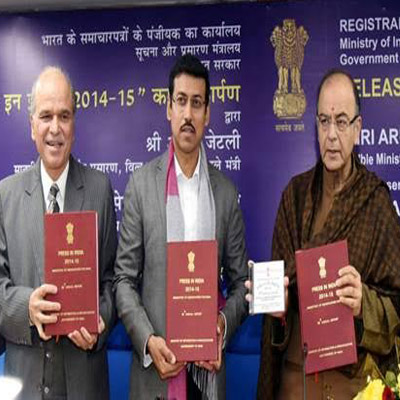
    Releasing the 59th Annual Report on Print Media – “Press in India 2014-15” – prepared and compiled by Registrar of Newspapers for India here today, Jaitley said that Print Media had to contend with the information flow disseminating from electronic media which weakened the dividing line between news and opinion. 

    The emerging viewpoint had brought certain shrillness in the debates and discussions. Print Media, thus, had a role to play in maintaining objectivity and preserving the sacred nature of news. It was important to also understand that emerging viewpoints surfaced due to the vastness of the media universe where different perspectives were put forth on a given issue.

    Minister of State for I&B Rajyavardhan Rathore was also present during the event.  

    The Minister said that it was time for magazine journalism to reinvent itself since the options for the readers were expanding due to alternatives such as digital and social media. Jaitley said the worldwide trends show that many popular magazines had shifted to the online digital edition, since it’s time for instantaneous news with fast changing world, news and technology. Hence, the shelf life for news being collated in magazines was considered outdated.

    Special Secretary J S Mathur gave an overview of the publication and highlighted the journey of Press through history. He also touched upon the changes being brought forth in the media space, especially the Print Media.

    The Annual Report “Press in India- 2014-15” was prepared on the basis of analysis of annual statements filed by the registered publications. The report provided broad analysis of the general trend of the Indian Press based on the claimed circulation.

    The print media registered a growth of 5.80 per cent over the previous year as a total of 5,817 new publications were registered during 2014-15 and 34 publications ceased their operation. Out of the total 1,05,443 publications registered as on 31 March, 2015, the largest number of newspapers and periodicals registered in any Indian language was in Hindi with a figure of 42,493 publications followed by English with 13,661 registered publications. Out of 1,05,443 registered publications, 14,984 were dailies and bi-tri weeklies and remaining 90,459 were of other periodicities. 

    State-wise analysis shows that Uttar Pradesh with 16,130 publications was at top position at the end of 2014-15. Maharashtra with 14,394 publications and Delhi with 12,177 publications were at second and third position respectively.

    The total claimed circulation of publications stood at 51,05,21,445 in 2014-15 as against 45,05,86,212 copies per publishing day in 2013-14. The number of Annual statements received in RNI for the year 2014-15 was 23,394 against 19,755 in 2013-14 registering an increase of 18.42 per cent. As per report, circulation-wise, Hindi Publications continued to lead with 25,77,61,985 copies per publishing day followed by English with 6,26,62,670 copies and Urdu with 4,12,73,949 copies per publishing day.

    The report also carried different Chapters viz. ownership of newspapers, analysis of daily newspapers, language wise study of the press and analysis of registered newspapers.

    Main highlights of the Indian Press in 2014-15 are as follows:-

  • TRAI to meet stakeholders to discuss DAS issues on 18 December

    TRAI to meet stakeholders to discuss DAS issues on 18 December

    NEW DELHI: The Telecom Regulatory Authority of India (TRAI) has called a meeting of stakeholders – primarily broadcasters and multi system operators (MSOs) – on 18 December to sort out any problems relating to agreements in order to ensure a smooth transition to Phase III of Digital Addressable System (DAS) by 31 December, 2015.
     
    This information was given to the 12th DAS Task Force meeting presided over by its chairman and Information and Broadcasting Ministry special secretary J S Mathur this week. Joint Secretary (Broadcasting) R Jaya was also present.
     
    Broadcasters and MSOs were told categorically that there would be no extension of the deadline for Phase III and analogue signals should be switched off from 1 January, 2016 in all urban areas of the country. The final phase covering the rest of India will be completed by 31 December, 2016.
     
    TRAI had earlier asked all stakeholders to apprise it of any problems arising out of finalising agreements amongst various stakeholders.
     
    While Jaya referred to public awareness campaigns carried out by the Ministry, the broadcasters presented a report about the publicity campaigns that they have been carrying on both television and radio.
     
    TRAI also informed the Ministry about the meetings held with stakeholders since the last Task Force meeting on 22 September.
  • Broadcasters ready to extend existing analogue agreements in view of tardy pace of agreements, DAS Task Force told

    Broadcasters ready to extend existing analogue agreements in view of tardy pace of agreements, DAS Task Force told

    New Delhi: With less than three months to go for the deadline of Phase III of Digital Addressable System, the Indian Broadcasting Foundation has said that broadcasters are ready to extend the existing analogue interconnect agreements with multisystem operators for transition from analogue to digital service in view of the slow progress in signing of interconnect agreements.


     The commitment was made in the last meeting of the Task Force set up by the Information and Broadcasting Ministry in its meeting on 22 September. The minutes of the meeting were placed on the Ministry website today.


    The meeting was presided over by special secretary J S Mathur who asked the Telecom Regulatory Authority of India (TRAI) to convene a meeting of broadcasters and MSOs resolve issues. (It may be recalled that TRAI had earlier asked both broadcasters and MSOs to approach it in case of any problems with regard to interconnect agreements.


    Referring to the low number of interconnect agreements, Mathur remarked that without signing of agreements between broadcasters and MSOs, the progress on digitisation was not possible.


    Agreeing there had been slow progress in signing of agreements with major MSOs as the latter were awaiting the decision in a case before the Telecom Disputes Settlement and Arbitration Tribunal, the IBF said broadcasters had signed provisional agreements with many applicant operators, who have digitised their networks under the condition that they would get registered as MSOs for DAS operation before the cut-off date for Phase III.


    IBF was asked to submit an area-wise list indicating the status of signing of agreements to the Ministry. The meeting was told that just 62 of the 300-odd multi system operators had signed agreements with broadcasters.


    Mathur expressed his gratitude to the Indian Broadcasting Foundation for developing the advertisement on cable TV digitization in Phase lll areas and airing it on their member channels. He said All India Radio and Doordarshan were already giving advertisements on cable digitisation on their channels and they need to scale it up. The IBF representative said the Ads had been planned in bilingual format but IBF will consider making it multilingual as requested.


    Joint Secretary (Broadcasting) R Jaya said as a next step towards publicity awareness campaign, broadcasters and MSOs should now inform the cable TV users in Phase III areas through scroll messages on their channels to get STBs installed in their homes before the cut-off date.


    Jaya mentioned that MSOs registration by the Ministry was open. In case broadcasters have entered into agreements with non-registered operators they should ensure that they have applied for MSO registration with MIB. She advised broadcasters to impress upon these operators to immediately register themselves as MSOs with the Ministry failing which they cannot operate digital services.


    Meanwhile announcing that the toll free help line is expected to start operating soon, Jaya told the meeting that seven regional workshops had been held so far with Nodal officers in different cities, and these officers had been advised to provide the right of way (RoW) to the MSOs/LCOs under the provisions of the Cable Television Networks (Regulation) Act 1995 and also give details of those Phase III areas in their districts where no registered MSO is operating.


    The nodal officials were told to disseminate a clear message that the cut off dates are final and the analogue cable viewers should change to digital before the cutoff date.


    She said twelve regional units including the central unit in Delhi have been established for monitoring the implementation of DAS Phase III areas under Mission Digitisation project.


    Referring to the fact that seven regional workshops had been held so far, she said Nodal officers were being advised to provide the right of way (Row) to the MSOs/LCOs under the provisions of the Cable Television Networks (Regulation) Act 1995 and, also intimate Phase III areas in their districts where no registered MSO is operating. The nodal officials were also told to disseminate a clear message that the cut off dates are final and the analogue cable viewers should change to digital before the cutoff date.


    The workshops have been held at Chandigarh, Lucknow, Ahmedabad, Jaipur, Bhopal, Shillong and Hyderabad. A workshop at Patna had to be cancelled due to elections in the state. The workshops had been successful in sensitizing the state nodal officers about their role and responsibilities In the pre and post digitization period in phase lll areas.


    The Siticable representative said broadcasters have not responded to their requests for interconnect agreements for phase III areas so far and so they are unable to fix the channel package rates and get the SAF and CAF forms filled up from subscribers as required under DAS regulations. He questioned the propriety of running of digital cable service by cable operators without first getting registered from MIB as per the DAS regulations,


    The representative of the Telecom Authority of India said it was up to broadcasters and MSOs to continue existing interconnect agreement even after transition from analogue to digital. He added that there was no impropriety in running the digital service by an operator before the cutoff date without registration from the Ministry.


    The representative of IMCL said it had signed 60% of interconnect agreements with broadcasters in Phase III areas. Regarding interconnect agreements with other broadcasters they requested TRAI to intervene.


    The representative of MOCF mentioned that MSOs were not signing interconnect agreements with LCOs and TRAI should intervene and prescribe a standard interconnect agreement.


    A representative of the cable operator association from Assam said since no agreements were being signed in Assam despite requests from MSOs, broadcasters should nominate a nodal officer to deal with the issue at regional level.


    ASSOCHAM said it had along with a Cable Operators Federation already started a Chetna Yatra which was planned mandatorily to cover 450 cities sensitizing the consumers and operators alike about the cable digitisation in Phase III areas by 31 December. He added that a comprehensive report on this will be submitted to the Ministry.


    Members made various suggestions about the awareness campaign. A representative of the local cable operators association from Assam said that to make this effective, the TV Ads should be in regional languages. He wanted to know whether the Chetna Yatra planned to cover north east also.


    A representative of ARTBI said it did not have the facility to dub the ad in different regional languages but said its member channels would run it if this was provided to them.

  • Senior BSNL official being moved as Member (Finance) in Prasar Bharati

    Senior BSNL official being moved as Member (Finance) in Prasar Bharati

    NEW DELHI: Senior Indian Administrative Service Officer Rajiv Kumar Singh is expected to join the Prasar Bharati Board as member – finance early next week.


    Prasar Bharati sources told indiantelevision.com that Singh was being moved from the Bharat Sanchar Nigam Ltd (BSNL).


    With this, the source said that the list of permanent members in the Board will be complete as Suresh Chandra Panda assumed office late last month as member (Personnel).


    With this, the permanent members of the Board are CEO Jawhar Sircar, J S Mathur who is additional secretary in the Information and Broadcasting Ministry, and director general F Sheheryar and C Lalrosanga of All India Radio and Doordarshan respectively who are ex officio members. Dr A Surya Prakash is chairman of the Board.


    Part-time members are filmmaker Muzaffar Ali and Professor S K Barua of the Indian Institute of Management in Ahmedabad.


    It is learnt that the Selection Committee headed by Vice President Hamid Ansari is to meet shortly to fill the four vacancies of part-time members in the Board.


  • MSO’s request govt to set up regional units to facilitate DAS registrations

    MSO’s request govt to set up regional units to facilitate DAS registrations

    NEW DELHI: Even as the government has agreed to consider extension of four to five weeks for registration of multi system operators (MSO), who want to opt for phase III of the Digital Addressable System (DAS), the government has been asked to consider setting up regional units to facilitate such registrations.

    Speaking at the task force meeting last week, several stakeholders also wanted online registration for MSO’s wanting to enter their names for phase III.

    Ministry additional secretary J S Mathur, who chaired the meeting, also said that meetings were being organised between manufacturers of indigenous set top boxes and the Ministry of Information and Technology.

    Mathur responding to queries from some MSO’s wanted them to prepare a list of areas in phase III which were currently not being reached by cable television. A member had pointed out that a Headend In The Sky (HITS) platform could be used in such areas.

    Some consumer organisations which are part of the task force, said they will need to organise workshops in different parts of the country to help people understand DAS.  

    The Confederation of Indian Industry (CII) representatives said that the association was planning such workshops in Kerala and Guwahati. Mathur asked CII to give him details of the workshops when they are scheduled.

    Mathur regretted that the number of stakeholders attending the meetings was very minimal and expressed hope that later meetings will be attended by larger number of members.

    In the last meeting it had been announced that the task force would meet every month to ensure deadlines are met and phase III of DAS comes into operation by December 2016.


  • Inter-ministerial group to study Trai recommendations

    Inter-ministerial group to study Trai recommendations

    MUMBAI: An inter-ministerial group headed by J S Mathur, additional secretary in the Information and Broadcasting (I&B) Ministry, will examine the Telecom Regulatory Authority of India‘s (Trai) recommendation against allowing government or government entities in television broadcasting and distribution.

    The I&B Ministry has already cleared a proposal for the setting up of an inter-ministerial group, which would in fact function as an institutional mechanism to study all the recommendations made by Trai.

    The I&B Ministry will take a view on the recommendations of Trai after the inter-ministerial group gives its views. This could mean a decision on the application by The Tamil Nadu Arasu Cable TV Corporation for a digital addressable system (DAS) licence for Chennai would be delayed.

    Any prolonged delay in deciding on Arasu‘s application, which was submitted in July, could also have an implication for implementation of digitisation in Chennai.

    Mumbai and Delhi have already switched over to digital delivery of television channels, while Kolkata is almost through.

    The I&B Ministry had in November made a reference to Trai to re-examine its 2008 recommendations which said government, government entities and government-owned companies should not be allowed in television broadcasting and distribution. Trai stuck to its 2008 views and also reiterated that any government entity allowed in television distribution should be allowed an exit route.

    Apart from central government ministries, the governments of Andhra Pradesh, Gujarat and Punjab also have expressed intentions of launching their own television channels.