Tag: J S Khehar

  • Swamy seeks transparency in IPL media rights through SC

    Swamy seeks transparency in IPL media rights through SC

    NEW DELHI: The Indian Premier League, which saw a brief lull in controversy with Lalit Modi preferring to remain overseas, appears to be in for another storm, this time over broadcast rights.

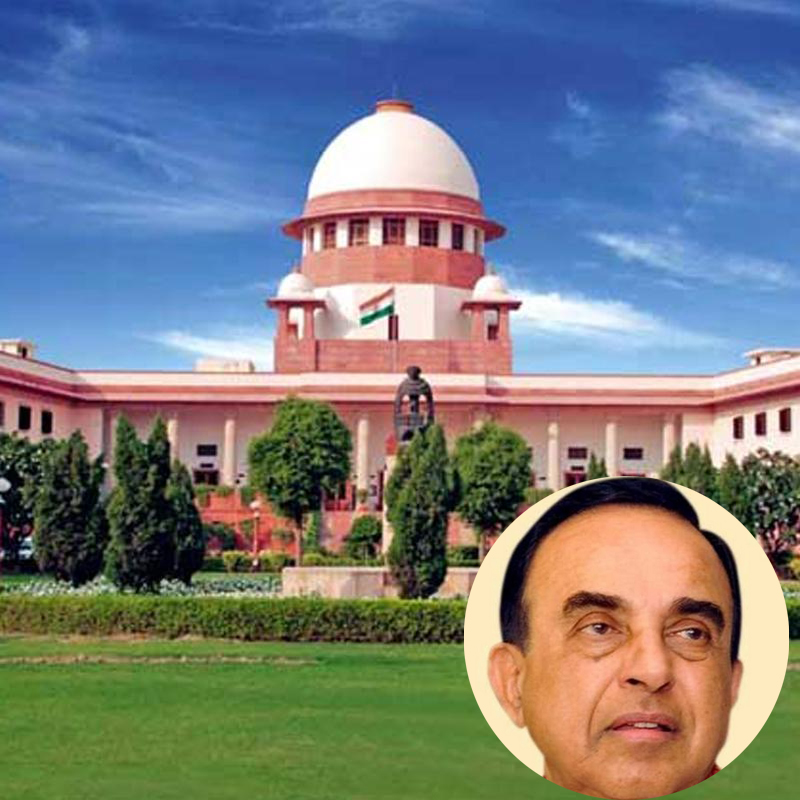
    Bharatiya Janata Party member and Rajya Sabha MP Subramaniam Swamy has moved the Supreme Court seeking a transparent mechanism for auction of telecast rights of IPL cricket matches for the next five years. The auction is slated for 17 July 2017.

    Swamy told indiantelevision.com that his petition for e-auctioning of IPL media rights was expected to come up for hearing on Friday this week or Monday next week. He said that there is a requirement of non-discriminatory and transparent method, with the best international practices, to be adopted for distribution of the valuable media rights so as to ensure the maximum revenue in the larger national interest.

    The petition questioned the manner in which the rights worth Rs 250 billion to Rs 300 billion were being distributed by the Board of Control for Cricket in India (BCCI).

    Seeking a stay of the present system, he said the huge investments make it mandatory to have the auction process robust, completely transparent in order to maximise the revenue and prevent vested interest from making undue gains.

    Swamy mentioned the matter before the bench headed by Chief Justice J S Khehar for early hearing of the matter as the BCCI next week.

    A lawyer himself, Swamy cited various orders of the apex court after finding irregularities committed by country’s apex cricket body. He said that as the BCCI was found having irregularities, illegalities, misappropriation and asymmetries in the functioning, the Supreme formed the Mudgal Committee as an investigator and then the Justice R M Lodha Committee was formed on 22 January 2015 by the Supreme Court.

    The Supreme Court on 30 January 2017 appointed a four-member committee of administrators headed by former Comptroller and Auditor General of India Vinod Rai to run the affairs of the BCCI and implement court-approved recommendations of the Lodha panel on reforms.

    Also Read :

    Vivo wins IPL title rights for Rs 21.9 bn

    IPL ’18 media rights decision likely in July, player recruitment norms to be tweaked

    Sports channels ratings dive in week 26

    IPL: Oppo, Vivo, Jio & Amazon ads ruled

  • Surrogate ads by liquor companies not disallowed by SC

    MUMBAI: The apex court of India has denied entertaining a plea that sought a ban on surrogate advertisements such as soda TVCs and ads by liquor companies. Surrogate advertising is a form of advertising that is used to promote products such as cigarettes and alcohol for which advertisements are prohibited.

    A bench headed by Chief Justice J S Khehar dismissed the plea filed by a law student who had also sought a direction to the central government to frame guidelines to disallow such advertisements, PTI reported.

    The bench that also comprised Justices S K Kaul and D Y Chandrachud wondered if the petitioner thought the soda advertisements mad people drink alcohol more, and that they disagreed.

    The apex court was hearing a plea filed by Kartikey Bhatt, a Rajasthan resident, who claimed that the Cable Television Networks Rules stated that no advertisement shall be permitted which indirectly or directly promotes production, sale or consumption of any intoxicants such as liquor.

    However, the government has failed to carry out its duty of ensuring implementation of the law, and surrogate advertisements were being illegally telecast on cable services without seeking prior permission, the plea said.

    Also Read

    CBFC won’t ‘chill’; Pan Bahar ‘Bond’ ad banned

    ASCI upheld complaints against 67 out of 141 advertisements for violating code

  • Why can’t pvt FM channels have news, SC asks govt

    Why can’t pvt FM channels have news, SC asks govt

    NEW DELHI: The Supreme Court has asked the government to explain the continuing prohibition on FM radio stations and community radios from airing news and current affairs at par with private TV channels and the print media.

    The observation by the chief justice of India J.S. Khehar and Justice D.Y. Chandrachud came on a public interest litigation filed in 2013 by Common Cause, and the Court asked why the government wanted to control news on radio, which covers almost the entire population including the rural masses.

    The court directed the government to explain in four weeks the series of orders passed between 2008 and 2013 preventing private radio from airing their own news and current affairs broadcasts.

    The government’s prohibition, Common Cause argued, was in clear violation of the Supreme Court’s landmark verdict in 1995 in the Ministry of Information & Broadcasting vs Cricket Association of Bengal when the court had held that “airwaves are public property to be used to promote public good and expressing a plurality of views, opinions and ideas”. That judgment had led to the passing of the Cable TV Networks (Regulation) Act 1995.

    Common Cause counsel Prashant Bhushan and Kamini Jaiswal said that policy Guidelines and of the Grant of Permission Agreements framed by the government which prohibit private FM radio stations and community radio stations from broadcasting their own news and current affairs programmes clearly violate the fundamental right of the freedom of speech and expression as guaranteed under Article 19 (1) (a) of the Constitution.

    For more details: Why can private FM channels not have their own news bulletins, Supreme Court asks Govt.

    Also Read :

    ‘Risk’ in FM stations airing news, apprehends Prasar head

    TRAI: FM Radio ad revenues move up in Q2-17

    Big Ganga strengthens weekend programming; four shows planned in Jan

  • Why can’t pvt FM channels have news, SC asks govt

    Why can’t pvt FM channels have news, SC asks govt

    NEW DELHI: The Supreme Court has asked the government to explain the continuing prohibition on FM radio stations and community radios from airing news and current affairs at par with private TV channels and the print media.

    The observation by the chief justice of India J.S. Khehar and Justice D.Y. Chandrachud came on a public interest litigation filed in 2013 by Common Cause, and the Court asked why the government wanted to control news on radio, which covers almost the entire population including the rural masses.

    The court directed the government to explain in four weeks the series of orders passed between 2008 and 2013 preventing private radio from airing their own news and current affairs broadcasts.

    The government’s prohibition, Common Cause argued, was in clear violation of the Supreme Court’s landmark verdict in 1995 in the Ministry of Information & Broadcasting vs Cricket Association of Bengal when the court had held that “airwaves are public property to be used to promote public good and expressing a plurality of views, opinions and ideas”. That judgment had led to the passing of the Cable TV Networks (Regulation) Act 1995.

    Common Cause counsel Prashant Bhushan and Kamini Jaiswal said that policy Guidelines and of the Grant of Permission Agreements framed by the government which prohibit private FM radio stations and community radio stations from broadcasting their own news and current affairs programmes clearly violate the fundamental right of the freedom of speech and expression as guaranteed under Article 19 (1) (a) of the Constitution.

    For more details: Why can private FM channels not have their own news bulletins, Supreme Court asks Govt.

    Also Read :

    ‘Risk’ in FM stations airing news, apprehends Prasar head

    TRAI: FM Radio ad revenues move up in Q2-17

    Big Ganga strengthens weekend programming; four shows planned in Jan