Tag: ITC Foods

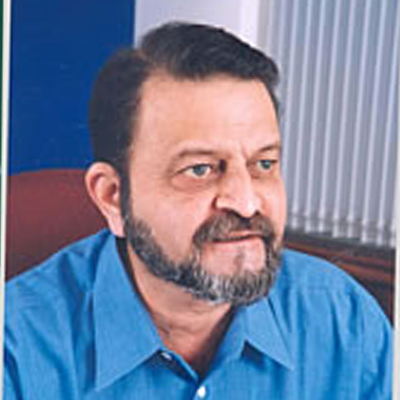
  • Dileep Ashoka joins McCann to head South India operations.

    Dileep Ashoka joins McCann to head South India operations.

    MUMBAI: Dileep Ashoka has joined McCann to head South India operations.  He is credited with establishing McCann’s significant presence in the south region during his earlier stint with McCann before he took a break from advertising for personal reasons.

    Announcing Dileep’s appointment McCann Worldgroup India chairman APAC and CEO Prasoon Joshi said, “I am delighted to have Dileep back in the McCann family. He is an organisation builder and I am sure he will take our south operations to newer heights.”

    McCann vice chairman and MD Partha Sinha shared his joy about the decision, “It’s great to have Dileep back in the system. South is strategically important for us and having someone as reputed as Dileep coming back here is really significant. I am looking forward to this office doing great things under his leadership.”

    Commenting on this appointment Dileep said,”Ït is a matter of great pride and joy for me to return to McCann after a few years away from the industry. The sentiment is old but the task, team and challenges are new. This is a heady mix and I am looking forward to my new stint”.

    Dileep is an advertising veteran. A Bangalore University alumni, he has been one of the key architects of some significant brands like TVS, Britannia, Tata Tea and ITC foods to name a few. He is an accomplished percussionist, is passionate about the business and a great team builder.


  • Interactive Television: Throwing light at cinema advertising

    Interactive Television: Throwing light at cinema advertising

    MUMBAI: In the country where cricket and movies are more than a pastime, for Ajay Mehta films meant more than just a family business.

    Brought up in a household of film distributors, Mehta decided to do much more than that for the same industry. “I wanted to do something related but not join the family business and working with advertisers sounded exciting and fun,” he recalls.

    Founded in 1996 in New Delhi, Interactive Television, was set up as a marketing agency which provides cinema advertising and marketing services in multiplexes, malls, and shopping chains.

    However, the journey wasn’t a smooth one even though he belonged to the film fraternity. “The biggest challenge was to convince people of the medium without any data and in fact the cinema industry still does not offer enough data to advertisers,” says Mehta while adding that in the digital age that is simply unacceptable.

    Even though everyone knows that cinema is like a religion in India but without viewership data and demographics, advertisers are investing in the dark, highlights Mehta. To counter this, Cinema Audit Monitoring (CAM) was launched, which according to him was the first step in making the medium transparent and accountable.

    Today, working across 9000 screens in India, the company is country’s only integrated entertainment and retail marketing company, releasing CAM report each month, which gives comparative analysis of cinema advertising and movie marketing throughout the country.

    Satisfied with the journey so far, Mehta feels that the process of establishing a medium which was not in any major advertisers plans to one which is included in every major plan has been tremendous. “High point have been many, every conversion of a client is a high point especially the non believers, every innovation is a high point as it feels special to create an idea which has not been thought off before, advertising for Indian clients in international markets like the USA, UK and the UAE has been a high point as Indian movies now have a global reach and can offer a platform for clients trying to reach out to the Indian diaspora.”

    Seeing the potential, WPP had acquired the company, but it remains an independent company. “They have been fantastic shareholders and we have learnt a lot from them, apart from access to clients, we have learnt a lot on systems, processes, accountability   to clients.  The business has benefited from the insights which they have brought and we have managed to scale up the business post them coming on board,” informs Mehta.

    Started with just three people, the company now employees more than 70 in six cities which helps it to create exclusive packages for its clients. “Our people are our biggest strength and come from diverse backgrounds like cinema chains, media agencies, logistic companies, research agencies and ad sale houses. This is unmatched in the industry and gives us deep understanding of what clients want from their media investments and also gives us insights into how the cinema channel thinks. This ability to understand the entire landscape of cinema advertising is our biggest advantage.” The  company  has  been  responsible  for  immense  value  adds  to  promotions  for corporates like Samsung, HLL, ITC Foods, Reckitt Benckiser, Vodafone, Star Network, and many more.

    On the current market trend, Mehta believes that single screens have a lot of potential for advertisers trying to reach out to the mass market and categories such as FMCG, telecom, BFSI etc can leverage the reach and impact offered by the largest screen in the world i.e. the movie screen. “Digital cinema is an enabler for it and today new content reaches smaller cities on the same day as the Delhis and Mumbais of the world, this means piracy is controlled and newer audiences are embracing cinema. Till today, advertisers found advertising on single screens in small cities logistically difficult but this has changed completely with digital cinema. We think digital cinema will be the growth driver for the whole cinema advertising industry and we at Interactive want to lead this transition,” he pinpoints.

    As for the future plans, the agency wants to lead the process of making this medium more transparent and accountable through newer tools and Big Data. “We also think cinema is more than just the screen and is the only medium where one can have a live engagement with the audiences, off screen advertising is still pretty much a virgin territory and we want to ensure that gets its value,” concludes Mehta.

     

  • ‘Size of ready to eat market Rs 700 m.’ : Ravi Naware – ITC Foods Division CEO

    ‘Size of ready to eat market Rs 700 m.’ : Ravi Naware – ITC Foods Division CEO

    ITC Foods, the foods division of ITC Limited has built many brands and sub brands through aggressive advertising and marketing moves. This year the foods division is expected to add about Rs 10 billion to ITC’s annual turnover. ITC has recently announced the launch of their sub brand of biscuits – Sunfeast Sachin’s Fit Kit under their flagship and umbrella brand Sunfeast to coincide with the World Cup that will be played over the next few weeks in the West Indies.

    ITC Foods Division CEO Ravi Naware shared some insights into the various aspects of the business with Indian Television Dot Com’s Tarachand Wanvari. Excerpts from the interview.

    Excerpts:

    The promotion spends in the World Cup, what would be the proportion for them vis-?-vis your annual spends? You must have a separate budget for the World Cup. Could you share the figures?

    Of course, we have budgeted a specific amount for the World Cup. The World Cup is expensive so it’s a fairly decent percentage.

    You have said that a major portion of the World Cup spends budget will be towards promotion of Sachin’s Fit Kit, could you speak some more on this?

    I think if we don’t put money behind this brand, we’ll be doing a disservice to ourselves. We have launched the brand with Sachin’s name associated with it. On its own it’s going to be high profile from the reception point of view. I don’t mean that we are doing a razzmatazz kind of a launch. Sachin’s Fit Kit and the World Cup, the whole thing matches.

    How big is the ready to eat market?

    I really don’t have a number, because I find that the ready to eat market is not very well defined. You get tinned rasgollas. Will you include them in ready to eat? Some people do, because that is ready to eat, processed, cooked and packed. The definition is not very clear on that segment. If we stick to ‘so to say’ dinner table items, but then rasgollas can also be a part of the dinner table item, we’re talking primarily about vegetable curries, paneer, chicken, birayanis, dals, this is the kind of market we construct, then we have close to 48 per cent market share. But then you go and ask someone else, they are very likely to say that claim is too high.

    By your definition, who would be number two and three in the ready to eat market?

    No 2 would be MTR Foods, next would be Kohinoor. But then there could be disputes too, because I also make halwas like gajjar ka halwa, moong dal ka halwa, we include those. Comparatively, biscuits or soft drinks have become well defined markets. So you won’t include potato chips in the biscuit segment. You don’t include fruit juices with soft drinks. Its undefined, but not a huge category.

    What about your Kitchens of India brand of ready to eat? How does it compare with Aashirvaad ready to eat?

    Both would be about equal in size. Plus, we have a fairly large export market, which add a fairly large proportion to our sales. Only Kitchens of India are exported.

    So what is the size of the ready to eat market?
    It’s approximately Rs 600-700 million, the way we look at it.

    If you are building a branded business, the brand must acquire power, stature and then you can generate the consumer pool from that

    How are your Pastas doing?

    We’ve got some very, very loyal customers who are quite happy with the performance. We’ve launched Benne Vita. Many people know how to make good pasta sauce, but the pasta is difficult to make. Earlier one had to buy imported pasta, now they can buy our Benne Vita 400 gm pack.

    You are competing with Nestle’s Maggi in terms of noodles with your pasta? Has it reached anywhere near that stage?

    Well I suppose in terms of the mental space we are competing with Maggi. But we are small and Maggi is large. It is a different product, which by now is a fairly standard one. There are lots of unbranded noodles also available in the market, maybe a similar genre, because that’s become a very popular item. Others are also getting into it.

    Compared to the existing players, you are new, just four or five years into foods Aren’t you spreading yourself with so many products?

    In 2002, when we entered the food business, if you wanted to enter almost any food product you would have competition that had already established itself. Nestle had a fairly large range of products, they have been in India about 60 years, Parle is about 60-70 years old, Britannia has been around for almost a 100 years. Then take tea or coffee, you had Tata, HLL or instant mixes, there was MTR and Gitz.


    Pasta has been introduced by us for the first time in India. If you say that we compete with noodles, then noodles have been around for 25 years or more. We are late entrants which is a fact of life. And as a late entrant you don’t want to get into chocolates. Cadbury and Nestle are already there in that space. You name any category, dairy products – you have Amul and several others already there. In that sense, there was hardly any totally new “New category” where we could enter.


    We decided to enter into those categories where we felt that we had some inherent competitive advantage. For example, when we entered atta (wheat flour), we said that we’d leverage our entire e-choupal connection. Having entered into atta and this area, we thought that we would enter into the wheat vertical space. So we got into biscuits, we got into pastas, and there are other products ideas based on wheat which would be relevant.


    Through e-choupal we buy larger and larger quantities of wheat, and at that stage, there are scale economies which give us benefits, selectivity, we can choose the right kind of wheat for the right kind of product and so on. Secondly we got into confectionaries because India has 3 million cigarette selling shops. ITC was present in those shops for the last several decades. Most of these cigarette selling shops also sell candy. So we thought that we’d have that advantage in distribution.


    This is how we chose the broad categories that we would enter where we felt that we had some competence, some in-house capabilities.


    For Kitchens of India, we had all the great recipes from our hotels. So we could make a Dal Bukhara, we could make a Chicken Chettinad, we could make a Paneer dish and so on. That was how we selected the products, otherwise, for me it was impossible to find a completely new line that we could get into.

    Do you have advantages because of your e-choupal initiative?

    We do have some advantages, we are able to source wheat through e-choupal for our atta (wheat four). We are market leaders with 15 per cent market share in the branded atta segment, which is upwards of Rs 30 billion in India. The market size `is across all brands, not just the ones that advertise. This means regional brands too.

    So what about bread, that too is a wheat vertical, isn’t it?

    Bread is a very, very difficult industry. It also requires specialized distribution. Just having a distribution network is not enough. You need to have trucks that need to got out at 3 in the morning, then you go distribute the bread, on the return you collect money. There are spoilages in bread, maybe 10-12 per cent of the bread gets spoilt, the manufacturer has to take it back. It requires a completely different distribution channel and method.


    Pepsi and Coke were already into handling bottles and liquids, they have given out coolers to their retailers, for them it was a natural entry into drinking water. Their distribution and the storage at the retail end fitted in well with their existing setup so they could launch the Aqua Fina and the Kinleys drinking waters. We didn’t find that kind of synergy with what we had for bread. I think it’s a multi local industry or a national brand industry. Each locality has its own famous bakery.

    Over the five years that you have been here, are you satisfied with all genre’s of products, or do you feel that you could have done better somewhere?

    I am very happy and very satisfied with the progress. Of course some things move much faster, some move slower. I think in Sunfeast we have had a very good run so far. Today we’re clearly the number 3 player and there is a very apparent and a visible gap between no. 3 and no. 4. A year ago that gap wasn’t so very visible. Apart from a size of 8 per cent, I think Sunfeast as a brand has acquired a good standing, a good stature in the market and in the consumers mind. And that to me is a prerequisite for building a business. If you are building a branded business, the brand must acquire power, stature and then you can generate the consumer pool from that.