Tag: IT Minister

  • Digital Media Ethics Code will make publishers accountable: I&B Jt Secy Vikram Sahay

    Digital Media Ethics Code will make publishers accountable: I&B Jt Secy Vikram Sahay

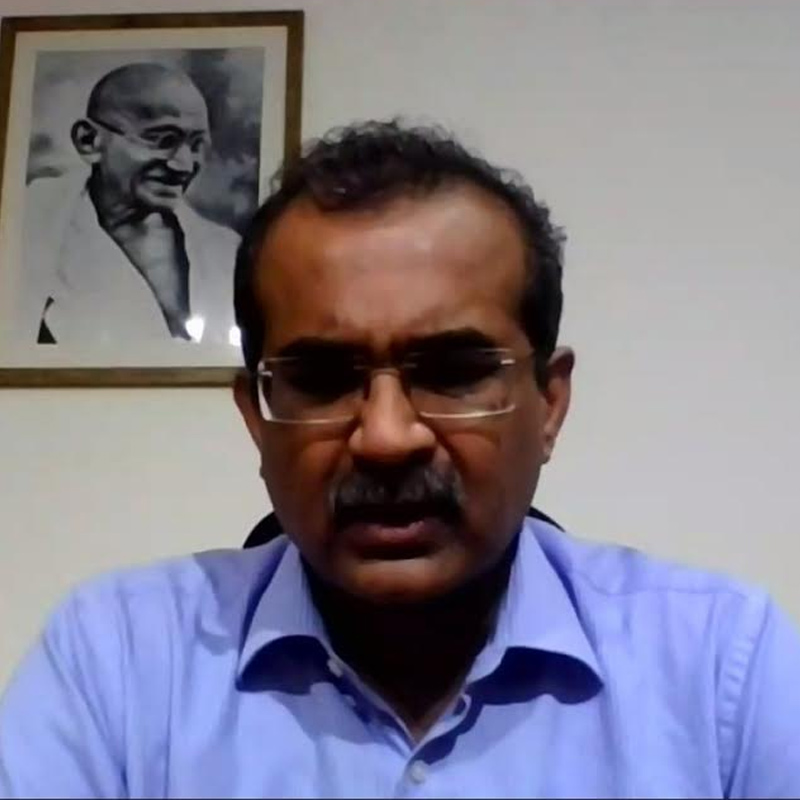
    New Delhi: As the government’s stand-off with a few social media companies continues over the new IT rules, ministry of information and broadcasting joint secretary Vikram Sahay said that Digital Media Ethics Code is aimed at addressing the grievances of the common man, and should be viewed as a ‘citizen-centric legislation’.

    “Digital Media Ethics Code is aimed at stopping transmission of content which is objectionable to women or harmful to children. Presence of a regulatory body can control and stop the spread of fake news as well as make the publishers accountable. It is essentially citizen-centric legislation,” he said on Tuesday.

    The MIB joint secretary was speaking at a webinar on ‘Digital Media Ethics Code’ organised by Press Information Bureau, Maharashtra and Goa for improving stakeholder understanding of Part III of the Information Technology (Intermediary Guidelines and Digital Media Ethics Code) Rules, 2021, that came into effect on 26 May.

    India is the world’s fastest growing OTT market and the market is expected to reach $2.9 billion by 2024 which is an annual growth of 28.6 per cent. Sahay said the new rules become all the more important, amid this recent explosion of digital content. “The purpose of the Digital Media Ethics Code is to stop transmission of content which is objectionable to women or harmful to children,” he added.

    Elaborating on how the online news portals are the major source of news among Indians under 35 years of age and that there is a 41 per cent increase in time spent on such news apps, Sahay said, “When there are content regulators like Press Council of India for newspapers and Cable TV Network Act, 1995 for News on TV there has been no such regulation for news on digital platforms. Similar is the case for OTTs which do not have a regulation unlike that of Cinema Halls or Television.”

    The new rules notified on 25 February, came into effect on 26 May recommend a three-tier mechanism for the regulation of all online media. According to the new IT Rules, social media and streaming companies will be required to take down contentious content quicker, appoint grievance redressal officers and assist in investigations. The rules also seek to regulate the functioning of online media portals and publishers, over-the-top (OTT) platforms and social media intermediaries.

    “There will be an inter-departmental committee to deal with unresolved complaints by news publishers or regulatory bodies and for that it is imperative that disclosure of information in public domain regarding grievance redressal by publisher and self-regulating body is done,” said the joint secretary.

    Sahay also added that the I & B ministry will collect basic information about people working on news portals or OTT platforms, in a prescribed format by the stakeholders. “More than 1800 of people working on news portals or OTT platforms have already submitted their details to the ministry, where most of them have submitted voluntarily,” he added.

    Digital news publishers, representatives of film industry, Over the Top (OTT) platforms and online content producers attended the webinar, along with academicians, researchers, students and officers of state government of Maharashtra and Goa.

  • Govt. bows to votaries of free social media, withdraws controversial draft on Encryption Policy

    Govt. bows to votaries of free social media, withdraws controversial draft on Encryption Policy

    NEW DELHI: Following protests by votaries of a free social media, the government today withdrew a draft of an encryption policy, thus exempting mass use encryption products, which are currently being used in web applications, social media sites, and social media applications such as Whatsapp, Facebook, Twitter, etc


    In a statement, the Department of Electronics and Information Technology said that it had “noted public sentiments viz-a-viz this draft. It is clarified that the above mentioned draft is not the final view of the Government on the matter.”


    The draft had been prepared by a High-level Committee as part of an attempt to ensure secure transactions in Cyber Space for individuals, businesses and Government and prepare a National Encryption Policy. 


    The statement said the Department had also taken note of the ambiguity in some portions of the draft that may have led to misgivings. “Hence, the draft has been withdrawn and will be put up for consultation after appropriate revision.” 


    The removal of the draft also amounts to exemptions to SSL/TLS (Secure Sockets Layer/ Transport Layer Security) encryption products being used in Internet-banking and payment gateways as directed by the Reserve Bank of India and SSL/TLS encryption products being used for e-commerce and password-based transactions.


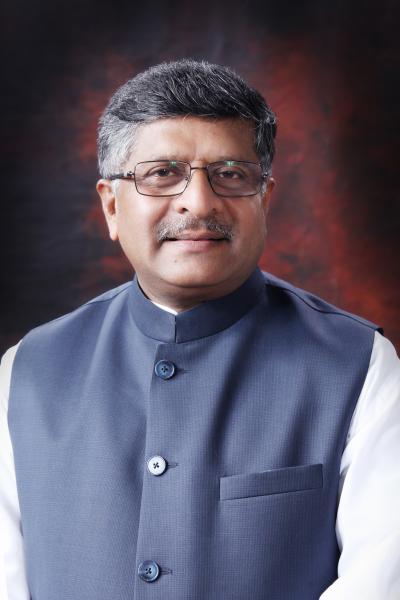
    Communications and IT Minister Ravi Shankar Prasad told newspersons that the draft was not the final view of the government. “The policy will consider the views of the public,” he said.


    Under the draft, which has now been withdrawn, every message that is sent through e-mail, Whatsapp or SMS was required to be stored in plain text format for 90 days from the date of transaction and made available to the law enforcement agencies on demand.


    The draft was to help introduce a New Encryption Policy under Section 84A of the Information Technology Act, 2000, and had called for public comments by 16 October.


    The stated mission of the policy is to provide confidentiality of information in cyber space for individuals, protect sensitive or proprietary information, ensure reliability and integrity of nationally-critical information systems and networks.


    “Users or organisations within B2B group may use encryption for storage and communication. Encryption algorithms and key sizes shall be prescribed by the government through notifications from time to time… On demand, the user shall be able to reproduce the same plain text and encrypted text pairs using the software or hardware used to produce the encrypted text from the given plain text,” the draft said.

  • Sibal says some nations are indulging in cybercrime

    Sibal says some nations are indulging in cybercrime

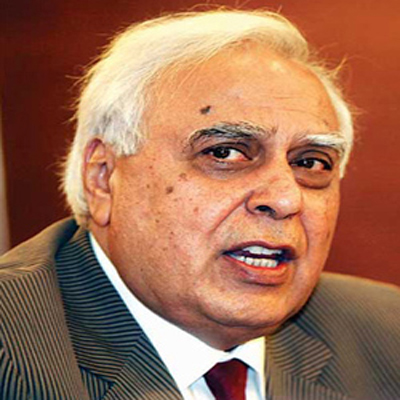
    NEW DELHI: Communications and IT Minister Kapil Sibal says some nations are found to be indulging in cybercrime, or are employing individuals who are not directly linked to them for carrying out such practices.


    Sibal said: “Now, what is happening today is that we know for a fact that nations have organised themselves to indulge in cyber crime. We know for a fact that they work sometimes through individuals far removed from them and from spaces that may not be even cited in their own country and part of the attack may come from somewhere else.”


    Speaking at an IT-ITeS body Nasscom event here, the minister said that there is a need to create a global standard to fight cybercrime. “Now, the internet world today does not allow us to find where the attack came from and who attacked us, nor does it allow us to disclose the identity of the attackers. We need to develop global rules for that. We need a global accord for that and we then need a system of cyber justice,” he added.


    Sibal said it is important to evolve rules so that internet freedom does not deteriorate into lawlessness. “So in that situation how do we evolve rules to deal with those issues? If we don’t do that we will have lawlessness. Freedom and lawlessness are two sides of the same coin. If freedom is not exercised with a sense of responsibility, then it results in lawlessness. So, freedom becomes its own enemy in the absence of accountability. It is a very dangerous proposition and we can’t let that happen,” he added. 

  • Next version of Aakash tablets to be ready by January 2014

    Next version of Aakash tablets to be ready by January 2014

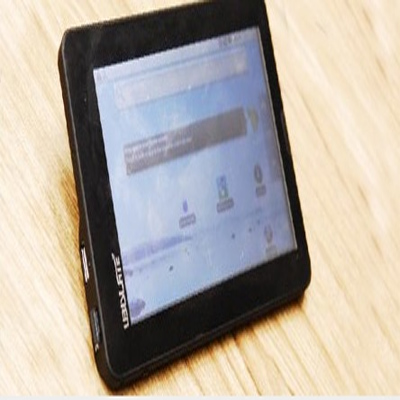
    NEW DELHI: The government has finalised specifications of next version of low-cost tablet Aakash which would be ready by January 2014, Telecom and IT Minister Kapil Sibal has said.


    “The generation four Aakash is ready, all the specifications are frozen,” Sibal said while addressing at the Telecom Summit.


    The minister also said that around 12 manufacturers from around the world are ready to make the tablet in India.


    “There is no problem in terms of manufacture. In fact lines are ready for manufacture, what they need is orders. Now that specifications are frozen, we hope that the Aakash will be available to the people of India by January 2014,” he said.


    The Directorate General of Supplies and Disposals (DGS&D) will start the process for orders, he added.


    Under the proposed specifications, the latest version of Aakash should be capable of supporting 4G services, phone calling features, 4 GB in built storage and Bluetooth connectivity.