Tag: ISRO

  • Govt claims it invoked security considerations, says it is studying PCA order against Antrix in Davos case

    Govt claims it invoked security considerations, says it is studying PCA order against Antrix in Davos case

    NEW DELHI: The Permanent Court of Arbitration (PCA) in The Hague has said that the annulment of the agreement between Devas and Indian Space Research Organization’s commercial arm Antrix in 2011 which resulted in denying Devas commercial use of S-band spectrum constituted an expropriation.

    PCA administers cases under the arbitration rules of the United Nations Commission on International Trade Law (UNCITRAL).

    In a reaction, the Government of India reiterated that it had invoked the essential security interests through a well reasoned, valid and proper CCS decision. The award of the Tribunal is being examined and legal recourse, as deemed fit, will be taken.” We also remain committed to pursue our larger national interests including sovereign strategic security interests in this matter”, it said.

    This ongoing case with Mauritius-based Devas Corporation over sharing of spectrum on satellites may result in huge payments as compensation to Devas.

    The order said by this action, the Indian Government expropriated the investments of Devas’s foreign shareholders and also acted unfairly and inequitably, thus making it liable to pay financial compensation.

    (In a statement, the Government of India said The Tribunal had said it’s essential security interest provisions of the Treaty do apply in this case to an extent. The limited liability of compensation shall be limited to 40% of the value of the investment. The precise quantum has not been determined as yet. The Tribunal has dismissed the Claims as regards violation of other provisions of the Treaty viz., (i) unreasonable or discriminatory measures; as also (ii) Most Favoured Nation treatment, it said.

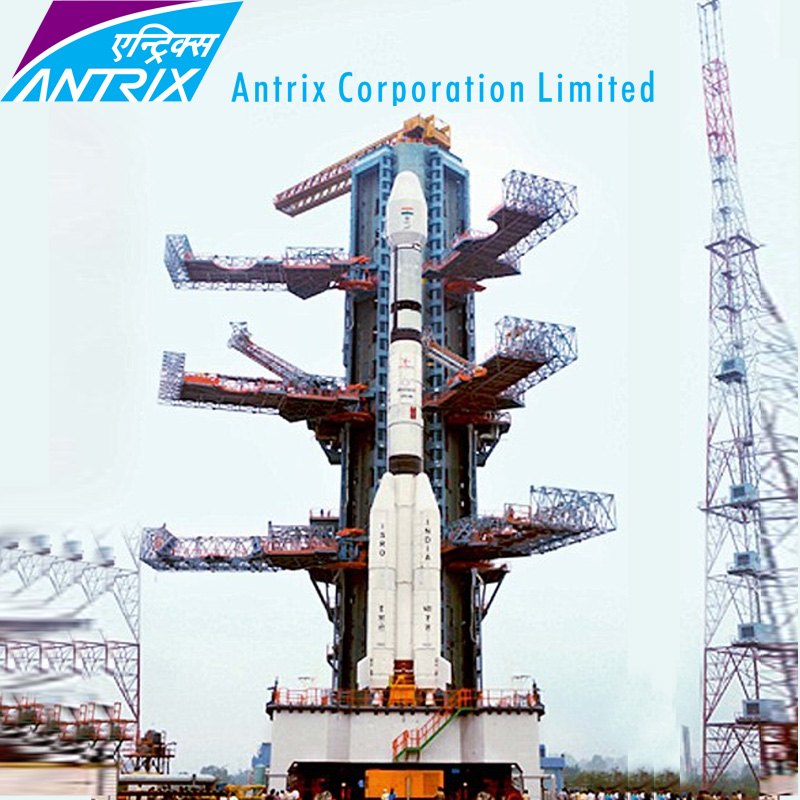
    In 2005 Antrix and Devas entered into an agreement for the long-term lease of two ISRO satellites operating in the S-band. The deal was for 70 MHz of S-Band frequency used to provide multimedia services by leasing most of the transponders on the GSAT-6 and GSAT-6A satellites for 12 years. Devas was to pay $300 million over the said period.

    However, the government annulled the contract after reports of unilateral process and presumptive loss to exchequer due to the deal. Following this the US investors in Devas moved a case against Antrix.

    In 2015 the International Chamber of Commerce (ICC) tribunal ruled that the Antrix’s annulation was unlawful and awarded Devas damages and pre-award interest of approximately $672 million, plus post-award annual interest accruing at 18 per cent until the award is paid in full.

    Devas Multimedia, based in Bangalore, was set up by former ISRO scientists and some U.S. investors. According to Devas website investors included Deutsche Telekom AG, Columbia Capital LLC, and Telcom Ventures LLC.

    Meanwhile, the Enforcement Directorate, has issued a show cause notice to Devas for violation of Foreign Exchange Management Act 1999 and are further investigating the case under Prevention of Money Laundering Act 2002. The Directorate has issued show cause notice to Devas for contravention to the provisions of FEMA 1999.

    The CBI has filed an FIR against, inter-alia, M/s Devas Multimedia Pvt. Ltd, Bangalore; and other unknown public servants of M/s Antrix/ISRO/DOS. This case is presently under investigation.
  • Govt claims it invoked security considerations, says it is studying PCA order against Antrix in Davos case

    Govt claims it invoked security considerations, says it is studying PCA order against Antrix in Davos case

    NEW DELHI: The Permanent Court of Arbitration (PCA) in The Hague has said that the annulment of the agreement between Devas and Indian Space Research Organization’s commercial arm Antrix in 2011 which resulted in denying Devas commercial use of S-band spectrum constituted an expropriation.

    PCA administers cases under the arbitration rules of the United Nations Commission on International Trade Law (UNCITRAL).

    In a reaction, the Government of India reiterated that it had invoked the essential security interests through a well reasoned, valid and proper CCS decision. The award of the Tribunal is being examined and legal recourse, as deemed fit, will be taken.” We also remain committed to pursue our larger national interests including sovereign strategic security interests in this matter”, it said.

    This ongoing case with Mauritius-based Devas Corporation over sharing of spectrum on satellites may result in huge payments as compensation to Devas.

    The order said by this action, the Indian Government expropriated the investments of Devas’s foreign shareholders and also acted unfairly and inequitably, thus making it liable to pay financial compensation.

    (In a statement, the Government of India said The Tribunal had said it’s essential security interest provisions of the Treaty do apply in this case to an extent. The limited liability of compensation shall be limited to 40% of the value of the investment. The precise quantum has not been determined as yet. The Tribunal has dismissed the Claims as regards violation of other provisions of the Treaty viz., (i) unreasonable or discriminatory measures; as also (ii) Most Favoured Nation treatment, it said.

    In 2005 Antrix and Devas entered into an agreement for the long-term lease of two ISRO satellites operating in the S-band. The deal was for 70 MHz of S-Band frequency used to provide multimedia services by leasing most of the transponders on the GSAT-6 and GSAT-6A satellites for 12 years. Devas was to pay $300 million over the said period.

    However, the government annulled the contract after reports of unilateral process and presumptive loss to exchequer due to the deal. Following this the US investors in Devas moved a case against Antrix.

    In 2015 the International Chamber of Commerce (ICC) tribunal ruled that the Antrix’s annulation was unlawful and awarded Devas damages and pre-award interest of approximately $672 million, plus post-award annual interest accruing at 18 per cent until the award is paid in full.

    Devas Multimedia, based in Bangalore, was set up by former ISRO scientists and some U.S. investors. According to Devas website investors included Deutsche Telekom AG, Columbia Capital LLC, and Telcom Ventures LLC.

    Meanwhile, the Enforcement Directorate, has issued a show cause notice to Devas for violation of Foreign Exchange Management Act 1999 and are further investigating the case under Prevention of Money Laundering Act 2002. The Directorate has issued show cause notice to Devas for contravention to the provisions of FEMA 1999.

    The CBI has filed an FIR against, inter-alia, M/s Devas Multimedia Pvt. Ltd, Bangalore; and other unknown public servants of M/s Antrix/ISRO/DOS. This case is presently under investigation.
  • Antrix earned Rs 230 crore during 2015-16 through commercial launch services

    Antrix earned Rs 230 crore during 2015-16 through commercial launch services

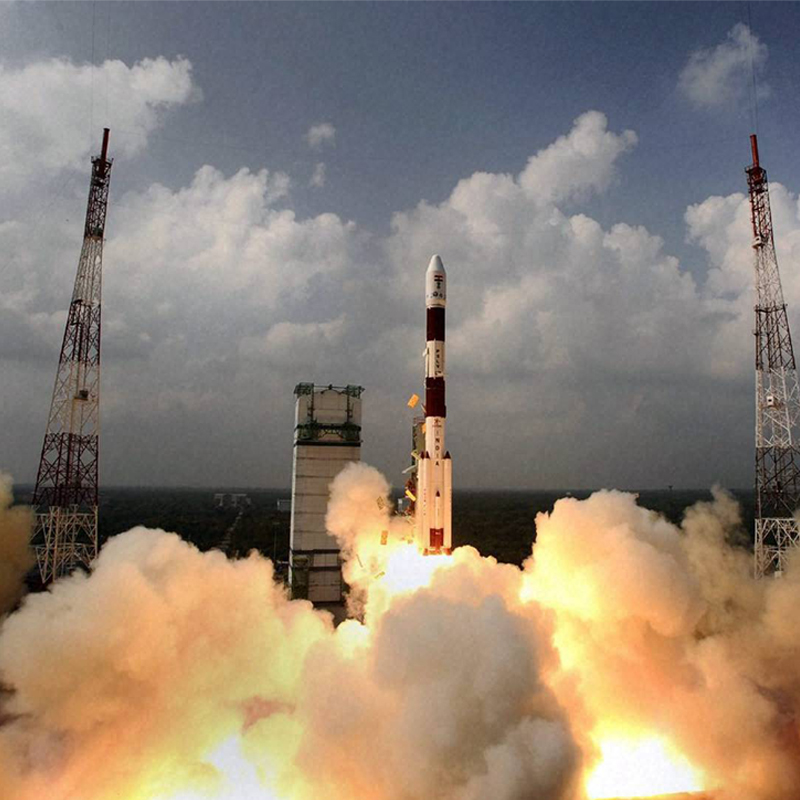
    NEW DELHI: Antrix, the commercial arm of the Indian Space Research Organisation (ISRO), earned revenue of approximately Rs 230 crore during 2015-16 through commercial launch services, which is about 0.6% of the global launch services market.

    The average annual revenue over the last three years according to the published reports available in the public domain on the international satellite market is approximately $200 billion (Rs 13 lakh crore), which includes the launch services market (Rs 0.37 lakh crore), satellite manufacturing (Rs 1.07 lakh crore), ground equipment (Rs.3.85 lakh crore) and satellite services (Rs. 8.17 lakh crore).

    Department of Space Minister Jitendra Singh told Parliament recently that ISRO is providing the launch capacity, when available, for launching satellites on a commercial basis through Antrix Corporation Limited.

    In order to meet the enhanced national requirements for launching satellites for earth observation, communication & navigation, ISRO is taking steps to increase the launch capacity. ISRO will continue to provide the launch capacity, when available, for commercial launch services. Towards stepping up the launch capacity, ISRO is in the process of exploring the possibility of enhanced involvement of Indian industry. Besides meeting the national demand, the industry can explore the opportunities for commercial launch services.

    India joining Missile Technology Control Regime (MTCR) would benefit India’s space development programme in strengthening international cooperation activities in high technology areas with other space faring nations, he said in reply to another question in Parliament.

    This will ease the procurements and supplies of export controlled high/ advanced technology items, components, materials, and equipment from other countries, especially MTCR partner states; and enhance commercial ventures in terms of export of sub-systems, satellites and commercial launch services etc.

    India as a major space faring nation and as a partner state in MTCR could play critical roles in various international fora such as UNCOPUOS, UN Conference on Disarmament (CD) and other space related international fora in major policy decisions relating to space applications, space security topics. India, as a Partner State of MTCR, can take part in the decision making process in ensuring non-proliferation of sensitive space technology related items, which are controlled through a list (called Technical Annex) and reviewed & revised annually through Technical Experts Meetings.

  • Antrix earned Rs 230 crore during 2015-16 through commercial launch services

    Antrix earned Rs 230 crore during 2015-16 through commercial launch services

    NEW DELHI: Antrix, the commercial arm of the Indian Space Research Organisation (ISRO), earned revenue of approximately Rs 230 crore during 2015-16 through commercial launch services, which is about 0.6% of the global launch services market.

    The average annual revenue over the last three years according to the published reports available in the public domain on the international satellite market is approximately $200 billion (Rs 13 lakh crore), which includes the launch services market (Rs 0.37 lakh crore), satellite manufacturing (Rs 1.07 lakh crore), ground equipment (Rs.3.85 lakh crore) and satellite services (Rs. 8.17 lakh crore).

    Department of Space Minister Jitendra Singh told Parliament recently that ISRO is providing the launch capacity, when available, for launching satellites on a commercial basis through Antrix Corporation Limited.

    In order to meet the enhanced national requirements for launching satellites for earth observation, communication & navigation, ISRO is taking steps to increase the launch capacity. ISRO will continue to provide the launch capacity, when available, for commercial launch services. Towards stepping up the launch capacity, ISRO is in the process of exploring the possibility of enhanced involvement of Indian industry. Besides meeting the national demand, the industry can explore the opportunities for commercial launch services.

    India joining Missile Technology Control Regime (MTCR) would benefit India’s space development programme in strengthening international cooperation activities in high technology areas with other space faring nations, he said in reply to another question in Parliament.

    This will ease the procurements and supplies of export controlled high/ advanced technology items, components, materials, and equipment from other countries, especially MTCR partner states; and enhance commercial ventures in terms of export of sub-systems, satellites and commercial launch services etc.

    India as a major space faring nation and as a partner state in MTCR could play critical roles in various international fora such as UNCOPUOS, UN Conference on Disarmament (CD) and other space related international fora in major policy decisions relating to space applications, space security topics. India, as a Partner State of MTCR, can take part in the decision making process in ensuring non-proliferation of sensitive space technology related items, which are controlled through a list (called Technical Annex) and reviewed & revised annually through Technical Experts Meetings.

  • ISRO mulling over using private enterprise for satellite launches

    ISRO mulling over using private enterprise for satellite launches

    NEW DELHI: The Indian Space Research Organzation (ISRO) is considering the possibility of involving Indian industry in a greater role to meet the increased national requirements and possible commercial demand for launch services.

    Discussions are being held with the Indian industry towards formulating a plan & strategy to enhance the capacity and capability of managing the Polar Satellite Launch Vehicle (PSLV) programme on an end to end basis.

    Space Minister Jitendra Singh told Parliament today that ISRO has been pursuing a conscious approach of building up and nurturing the industrial capabilities in the country to maximally support the Indian Space Programme.

    Through appropriate transfer of technology and hand-holding, ISRO is making focused efforts to consolidate and enhance participation of Indian industries for manufacturing and production of space related hardware such as rocket engine & stages, propellant tanks, spacecraft structures, solar panels, thermal control systems, electronic packages etc., required for satellites and launch vehicles.

    A provision exists for private players to operate communication satellites on their own in the country through an established mechanism called Committee for Authorising the establishment and operations of Indian Satellite Systems (CAISS).

  • ISRO mulling over using private enterprise for satellite launches

    ISRO mulling over using private enterprise for satellite launches

    NEW DELHI: The Indian Space Research Organzation (ISRO) is considering the possibility of involving Indian industry in a greater role to meet the increased national requirements and possible commercial demand for launch services.

    Discussions are being held with the Indian industry towards formulating a plan & strategy to enhance the capacity and capability of managing the Polar Satellite Launch Vehicle (PSLV) programme on an end to end basis.

    Space Minister Jitendra Singh told Parliament today that ISRO has been pursuing a conscious approach of building up and nurturing the industrial capabilities in the country to maximally support the Indian Space Programme.

    Through appropriate transfer of technology and hand-holding, ISRO is making focused efforts to consolidate and enhance participation of Indian industries for manufacturing and production of space related hardware such as rocket engine & stages, propellant tanks, spacecraft structures, solar panels, thermal control systems, electronic packages etc., required for satellites and launch vehicles.

    A provision exists for private players to operate communication satellites on their own in the country through an established mechanism called Committee for Authorising the establishment and operations of Indian Satellite Systems (CAISS).

  • ISRO seeks industry co-operation for space-based services

    ISRO seeks industry co-operation for space-based services

    NEW DELHI: India’s space agency, ISRO, has sought industry’s help and co-operation to realize India’s growing need for space-based services.

    ISRO Chairman and Department of Space (DoS) Secretary AS Kiran Kumar yesterday said in Bengalaru that to meet the increased demand for space-based services, it was imperative that ISRO joined hands with industries in an effort towards enhancing capacity.

    Kumar was speaking at a “Make in India” Conference on Enabling Spacecraft Systems Realisation through Industries (ESSRI- 2016) organised on June 23, 2016 at ISRO Satellite Centre, Bengaluru.

    An official government statement quoted Kumar as telling delegates that almost all the government departments and ministries had evinced keen interest in applying space technology for carrying out their mandates.

    He also emphasized on India’s great potential to capture a sizeable portion of the business in the international space market.

    ISRO earlier in the week put in space 20 satellites that included many belonging to foreign countries, including the US.

    The conference was organised to elicit industry support for spacecraft realisation on an end-to-end basis to meet the rapidly increasing national demand for space based services and the realisation of Prime Minister’s objective of “Make in India”.

    The government statement further added that over the years, a number of Indian industries have been actively participating in realising various sub-systems of spacecraft. A variety of models have been adopted by ISRO in outsourcing jobs to these vendors, but end-to-end realisation of spacecraft has not yet been realised. The Conference aimed to fill this gap.

    ISRO has announced that the Expression of Interest (EoI) for realising spacecraft on an end-to-end basis has been hosted on ISRO/ISAC websites and invited the industry to respond to it.

    During the conference, senior executives of ISRO gave an insight into the requirements of ISRO with respect to hardware, technologies, quality and delivery schedule and what was essential for them to be qualified vendors of ISRO.

    About 110 industries in aerospace business participated in the conference.

    However, as far as leasing out satellite capacity to Indian customers go, ISRO has been lagging behind in meeting the demands for KU-band transponders, while restricting foreign satellite companies’ access to the Indian market.

    In a report on satellite capacity over Indian skies versus demand, released in March 2016, Hong Kong-based Asian industry organization CASBAA had noted that over the last three years, for example, the number of transponders contracted by DTH operators have gone up from 73 to 78 with the share of transponders supplied by foreign operators going up to 75% as ISRO/Antrix has not been able to meet the need through domestic launches.

  • ISRO seeks industry co-operation for space-based services

    ISRO seeks industry co-operation for space-based services

    NEW DELHI: India’s space agency, ISRO, has sought industry’s help and co-operation to realize India’s growing need for space-based services.

    ISRO Chairman and Department of Space (DoS) Secretary AS Kiran Kumar yesterday said in Bengalaru that to meet the increased demand for space-based services, it was imperative that ISRO joined hands with industries in an effort towards enhancing capacity.

    Kumar was speaking at a “Make in India” Conference on Enabling Spacecraft Systems Realisation through Industries (ESSRI- 2016) organised on June 23, 2016 at ISRO Satellite Centre, Bengaluru.

    An official government statement quoted Kumar as telling delegates that almost all the government departments and ministries had evinced keen interest in applying space technology for carrying out their mandates.

    He also emphasized on India’s great potential to capture a sizeable portion of the business in the international space market.

    ISRO earlier in the week put in space 20 satellites that included many belonging to foreign countries, including the US.

    The conference was organised to elicit industry support for spacecraft realisation on an end-to-end basis to meet the rapidly increasing national demand for space based services and the realisation of Prime Minister’s objective of “Make in India”.

    The government statement further added that over the years, a number of Indian industries have been actively participating in realising various sub-systems of spacecraft. A variety of models have been adopted by ISRO in outsourcing jobs to these vendors, but end-to-end realisation of spacecraft has not yet been realised. The Conference aimed to fill this gap.

    ISRO has announced that the Expression of Interest (EoI) for realising spacecraft on an end-to-end basis has been hosted on ISRO/ISAC websites and invited the industry to respond to it.

    During the conference, senior executives of ISRO gave an insight into the requirements of ISRO with respect to hardware, technologies, quality and delivery schedule and what was essential for them to be qualified vendors of ISRO.

    About 110 industries in aerospace business participated in the conference.

    However, as far as leasing out satellite capacity to Indian customers go, ISRO has been lagging behind in meeting the demands for KU-band transponders, while restricting foreign satellite companies’ access to the Indian market.

    In a report on satellite capacity over Indian skies versus demand, released in March 2016, Hong Kong-based Asian industry organization CASBAA had noted that over the last three years, for example, the number of transponders contracted by DTH operators have gone up from 73 to 78 with the share of transponders supplied by foreign operators going up to 75% as ISRO/Antrix has not been able to meet the need through domestic launches.

  • India, Canada MOU to explore outer space

    India, Canada MOU to explore outer space

    NEW DELHI: The Department of Space / Indian Space Research Organization (DOS/ISRO) and the Canadian Space Agency (CSA) have entered into a Memorandum of Understanding on cooperation in the field of outer space.

    The Union Cabinet chaired by Prime Minister Narendra Modi was apprised yesterday that the MoU was signed in Ottawa, Canada on 15 April 2015. 

    The MoU would lead to establishment of a joint team, drawing members from ISRO and CSA, which will further work out the plan of action including examination and defining cooperative projects and the time-frame. This will also provide opportunities for diverse research in the field of peaceful uses of space technologies. 

    The successful space cooperation is being pursued through two Implementing Arrangements in the field of Satellite Tracking Network Operations, and in the field of the ultra Violet Imaging Telescope (UVIT) Detector Subsystem, in support of the ASTROSAT astronomy mission in December 2003 and June 2004 respectively.

    It is aimed at future cooperation in and use of outer space for peaceful purposes to reinforce scientific and technological development and the ties between two countries at government, industrial and academic levels. 

  • India, Canada MOU to explore outer space

    India, Canada MOU to explore outer space

    NEW DELHI: The Department of Space / Indian Space Research Organization (DOS/ISRO) and the Canadian Space Agency (CSA) have entered into a Memorandum of Understanding on cooperation in the field of outer space.

    The Union Cabinet chaired by Prime Minister Narendra Modi was apprised yesterday that the MoU was signed in Ottawa, Canada on 15 April 2015. 

    The MoU would lead to establishment of a joint team, drawing members from ISRO and CSA, which will further work out the plan of action including examination and defining cooperative projects and the time-frame. This will also provide opportunities for diverse research in the field of peaceful uses of space technologies. 

    The successful space cooperation is being pursued through two Implementing Arrangements in the field of Satellite Tracking Network Operations, and in the field of the ultra Violet Imaging Telescope (UVIT) Detector Subsystem, in support of the ASTROSAT astronomy mission in December 2003 and June 2004 respectively.

    It is aimed at future cooperation in and use of outer space for peaceful purposes to reinforce scientific and technological development and the ties between two countries at government, industrial and academic levels.