Tag: ISRO

  • ISRO’s ‘South Asia Satellite’ to carry 12 ku-band transponders

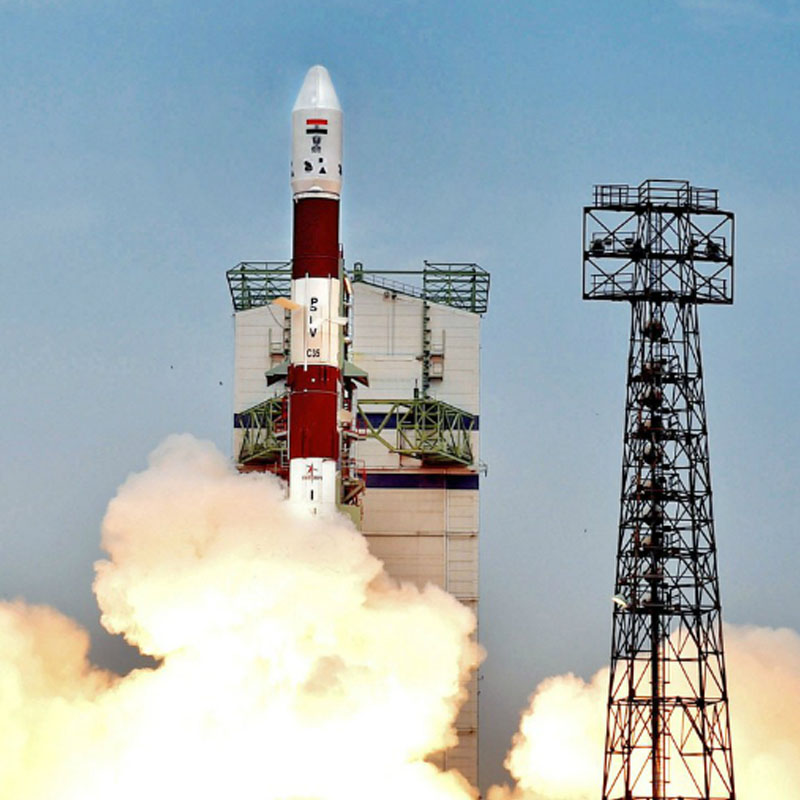
    MUMBAI: India has planned to launch the ‘South Asia Satellite’ on 5 May which will benefit all the neighbouring countries, except Pakistan, which is not a part of the project. Indian Space Research Organisation (ISRO) chairman A S Kiran Kumar told PTI that the launch would take place in the first week of May.

    ISRO scripted history in February 2017 by launching 104 satellites, including India’s weather observation Cartosat-2 Series, in a single mission onboard its dependable Polar rocket. So far, ISRO has launched 226 satellites, including 179 belonging to foreign countries.

    ISRO sources said that the launch of this communication satellite (GSAT-9) has been scheduled on board the space agency’s rocket GSLV-09 from Sriharikota spaceport. Kumar said, the satellite, with a lift-off mass of 2,195 kg, would carry 12 ku-band transponders. Sources said the satellite has been designed for a mission life of more than 12 years.

    The satellite is meant for providing communication and disaster support, connectivity among states (countries of South Asia region). It will provide a significant capability to each of these participating states in terms of DTH, certain VSAT capacity plus linking among the states for both disaster information transfer and also in terms of library type of things.

    “So, there is a significant amount of inter-linking possible among the states (countries),” Kumar added. According to ISRO officials, there is a potential for each participating country to use a dedicated transponder with a capacity of 36 to 54 Mhz for its own internal use. Each country would be responsible for content generation and its use, the officials said.

    Also Read:

    MIB: No DPO request for infra sharing, DTH ops’ transponder demand up

    ISRO ready for nexGen vehicle, GSLV can launch 2.2 tonne satellites to GTO

    ISRO world record in 104-satellite launches on a single flight    
     

  • MIB: No DPO request for infra sharing, DTH ops’ transponder demand up

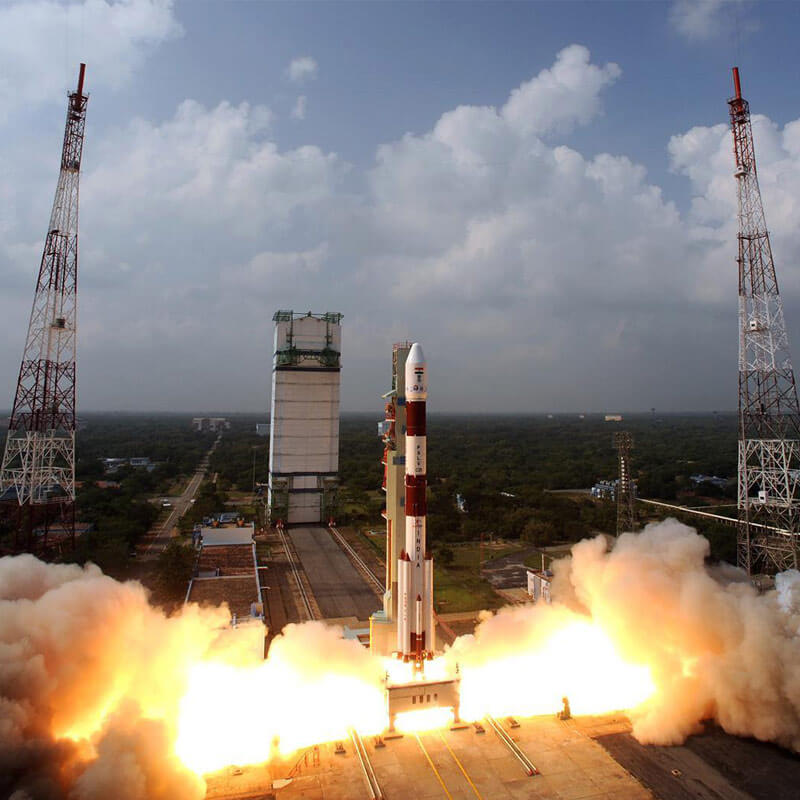
    NEW DELHI: Though there is a committed demand from DTH service providers for 68 more satellite transponders, Ministry of Information and Broadcasting (MIB) hasn’t yet received any proposal from any players to share amongst themselves satellite capacity or other distribution infrastructure.

    MIB minister M Venkaiah Naidu yesterday informed Parliament that DTH operators were presently using 104 Ku-band transponders, while there were additional needs as, according to Department of Space, demand for transponder capacity for DTH services has gone up with increase in introduction of high definition (HD) TV channels.

    The growth of usage of satellite transponders by DTH service providers in India, as listed out by MIB, over the last five years is as follows: March 2013 — 76; March 2014 — 77; March 2015 — 78; March 2016 — 87 March 2017 — 104.

    The Minister, acknowledging that sector regulator TRAI had given a set of recommendations on sharing of broadcasting infrastructure amongst players on a voluntary basis by tweaking certain rules, added that his ministry had not received any proposal from platform operators for sharing of satellite transponders and/or earth station facilities.

    The Telecom Regulatory Authority of India issued recommendations on sharing of infrastructure in television broadcasting distribution sector on 29 March 2017. These recommendations are available on TRAI’s website www.trai.gov.in.

    The objectives of these recommendations are to enable a policy environment for facilitating sharing of infrastructure in TV broadcasting distribution sector, on a voluntary basis. The sharing of the infrastructure is expected to enhance available distribution network capacities leading to reduction in capital and operative expenditure for the service providers, thereby bringing down the price of broadcasting services to subscribers.

    In addition, it would lower the entry barriers for new service providers and provide more space on broadcasting distribution networks for niche channels.

    India’s six private-sector DTH operators uplink signals of TV channels to different Indian and foreign satellites located at different orbital slots. Majority of the channels transmitted by operators are replicated across multiple platforms. This creates capacity constraints and also is a significant cost for each operator, thus making the service expensive, TRAI had observed while pushing for infrastructure sharing amongst distribution platforms.

    Hong Kong-based media industry advocacy group CASBAA in a report, issued in March 2016, had pointed that the DTH sector in India would grow in coming years as would demand for KU-band transponders and, while ISRO has been doing a commendable job, it’s unlikely to meet the market demands on Indian satellites, which will have to be provided for on foreign satellites.

    In the report, titled `Capacity crunch continues: Assessment of satellite transponders’ capacity for the Indian broadcast and broadband market’, CASBAA, amongst other things, had observed that to keep the vibrancy in the Indian broadcast sector alive, foreign transponder contracts need to be of longer durations (10–15 years) to allow Indian companies to leverage on cost economics and provide cost protection to DTH operators and allowing direct contracting for DTH operators to secure incremental capacity with existing satellite providers already authorized (by ITU and ISRO) to provide them service.

  • ISRO ready for nexGen vehicle, GSLV can launch 2.2 tonne satellites to GTO

    NEW DELHI: India, which already has the capacity to launch 1700 kg to Sun Synchronous Polar Orbit (600 km) with its Polar Satellite Launch Vehicle (PSLV), is all set to launch the next generation launch vehicle Geosynchronous Satellite Launch Vehicle (GSLV MkIII) with indigenous high thrust cryogenic stage to launch 4 tonne class of communication satellites to GTO.

    The Indian Space Research Organization is all set to make the first developmental flight in the second quarter of 2017, the space minister Jitendra Singh told the Parliament. The development of Semicryogenic engine has also been undertaken to further enhance the GTO payload capability of GSLV MkIII to 6 tonnes.

    The PSLV has proven its versatility in launching multi-satellite/multi-orbit missions as well as lunar (Chandrayaan-1) and interplanetary missions (Mars Orbiter Mission).

    Until now, PSLV has completed 38 consecutive successful missions, during which it has launched 46 Indian satellites (weighing ~ 43.2 tonnes) and 180 foreign satellites (weighing ~ 6.3 tonnes). It has already established itself as a preferred launch vehicle, in its class, in the global market for launch services, especially for smaller satellites.

    The GSLV, with indigenous cryogenic upper stage, has the capability to launch satellites up to 2.2 tonnes to Geosynchronous Transfer Orbit (GTO). GSLV has demonstrated its reliability through three consecutive successful missions in the past three years.

    The maximum GTO capability of other space launch agencies to launch satellites are: European Space Agency (ESA): 10.5 tonnes, US: 13.8 tonnes, Russia: 6.5 tonnes, China: 14 tonnes, and Japan: 8 tonnes.

    ISRO has proved the level of efficiency in the area of space science through – (i) planning, development & execution of Lunar mission ‘Chandrayaan-1’ and High resolution imaging & Systematic topographic mapping of the Moon; (ii) successful insertion of Mars Orbiter Mission (MOM) around the planet Mars in very first attempt, achieving all planned objectives and continuing the operations of MOM beyond its designed mission life of 6 months; (iii) placing India’s first observatory in space ‘Astrosat’, which enables simultaneous multi-wavelength observations (Ultraviolet to X-Ray) to study Stars and Galaxies; (iv) indigenous development & validation of several new technologies viz. autonomy, deep space communication, scientific instruments in space science missions.

    Future missions in space science include second mission to Moon ‘Chandrayaan-2’, consisting of an indigenous Orbiter, Lander & Rover and mission for solar studies ‘Aditya-L1’ to study the solar corona in different wavebands.

    The capability to set up a space station needs capability of lifting heavy payloads into space. While there is no specific plan for space station, ISRO is working towards this capability through launch vehicles using cryogenic and semi-cryogenic engines.

  • ISRO world record in 104-satellite launches on a single flight
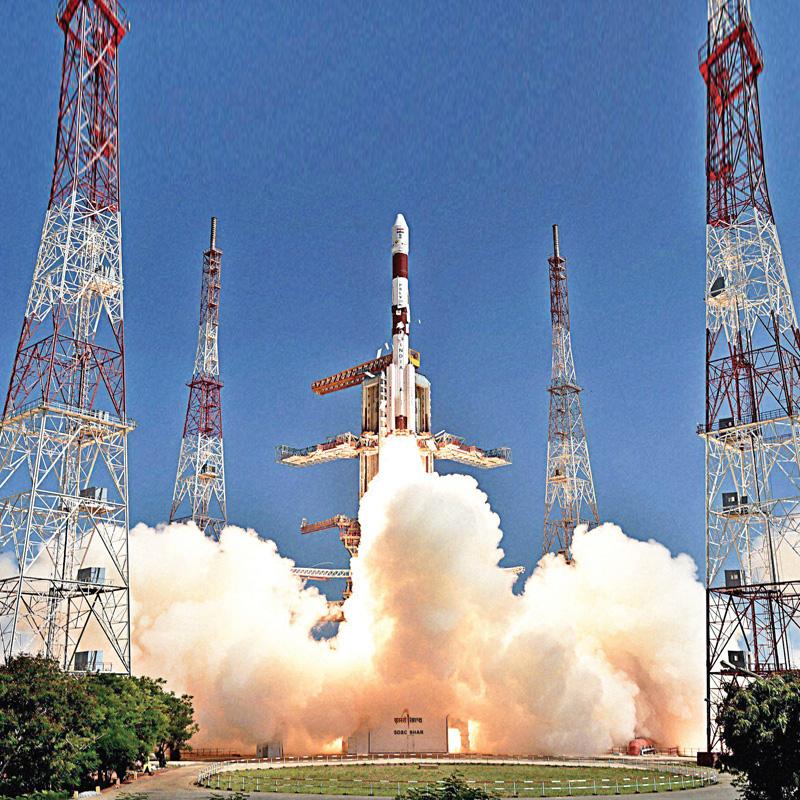
    MUMBAI: The Indian Space Research Organisation (ISRO) has set a world record by launching 104 satellites on a single rocket, including India’s earth observation satellite Cartosat-2 series.

    The Indian rocket Polar Satellite Launch Vehicle (PSLV-C37) was lifted off successfully from the Satish Dhawan Space Centre SHAR, Sriharikota. This is the highest number of satellites ever launched in a single mission. This is the thirty eighth consecutively successful mission of PSLV. The total weight of all the 104 satellites carried on-board PSLV-C37 was 1378 kg.

    Earlier, the Russian Space Agency had launched 37 satellites in one go. ISRO had earlier launched 23 satellites in a single mission in June 2015.

    ISRO Chairman A.S. Kiran Kumar announced, “All 104 satellites successfully placed in orbit. My hearty congratulations to the entire ISRO team for the wonderful job they have done.”

    Prime Minister Narendra Modi has congratulated ISRO on successful launch of PSLV-C37 and CARTOSAT satellite together with 103 nano satellites.

    Modi said, “Congratulations to ISRO for the successful launch. This remarkable feat by ISRO is yet another proud moment for our space scientific community and the nation. India salutes our scientists.” India’s President Pranab Mukherjee also congratulated ISRO on carrying a record 104 satellites.

    In a message to ISRO chairman and department of space secretary A.S. Kiran Kumar, the President has said, “I extend my sincere congratulations and best wishes to you and your team at the Indian Space Research Organisation (ISRO) on the successful launch into space of PSLV – C37, carrying a record 104 satellites.”

    Of the 103 co-passenger satellites carried by PSLV-C37, two – ISRO Nano Satellite-1 (INS-1) weighing 8.4 kg and INS-2 weighing 9.7 kg – are technology demonstration satellites from India.

    The remaining 101 co-passenger satellites carried were international customer satellites from USA (96), The Netherlands (1), Switzerland (1), Israel (1), Kazakhstan (1) and UAE (1).

    With today’s successful launch, the total number of customer satellites from abroad launched by India’s workhorse launch vehicle PSLV has reached 180.

  • Satellite Communication among various studies by ISRO and Japanese JAXA

    Satellite Communication among various studies by ISRO and Japanese JAXA

    NEW DELHI: Indian Space Research Organisation (ISRO) and the Japanese Aerospace Exploration Agency (JAXA) are to jointly collaborate in the exploration and use of outer space exclusively for peaceful purposes in accordance with the laws and regulations applicable in each country and their international obligations.

    A memorandum of understanding was signed between the two agencies in Tokyo and the Cabinet chaired by the Prime Minister Narendra Modi was apprised of this.

    This MoU provides scope for pursuing cooperation in various areas of space science technology and applications including: eearth observation, satellite communication and navigation; exploration and space sciences; Research and development (space systems and space technology); and Space industry promotion.

    ISRO and JAXA will bear the costs of their respective activities under this Memorandum, unless they decide otherwise in writing. Ability to fulfil their respective roles and activities under this Memorandum and its relevant separate Implementation Arrangement is subject to their respective funding procedures, the availability of appropriated funds and their respective national laws.

    Framework MoU would lead to joint activity in the field of application of space technologies for the benefit of humanity. Thus all sections and regions of the country will get benefited.

    India and Japan have been pursuing space cooperation for more than five decades and carried out studies in the field of atmospheric study, observation of universe and scientific investigation in remote sensing. With the formation of JAXA in 2003, an “arrangement concerning the considerations of potential future cooperation in the field of outer space” was signed in October 2005 between ISRO/ Department of Space (DOS) and JAXA.

    Subsequently both agencies have signed cooperative documents addressing lunar exploration, satellite navigation, X-ray astronomy and Asia Pacific Regional Space Agency Forum (APRSAF).

    During the ISRO-JAXA bilateral meeting held at New Delhi on April 05, 2016, both sides stressed the need for updating the contents of ‘2005 Arrangement’ with enhanced scope of cooperation. Accordingly, both sides have arrived at the draft of new ‘Memorandum of Understanding (MoU) between ISRO and JAXA concerning cooperation in the field of outer space’ and got it signed on November 11, 2016 at Tokyo during the visit of Prime Minister of India to Japan.

  • Satellite Communication among various studies by ISRO and Japanese JAXA

    Satellite Communication among various studies by ISRO and Japanese JAXA

    NEW DELHI: Indian Space Research Organisation (ISRO) and the Japanese Aerospace Exploration Agency (JAXA) are to jointly collaborate in the exploration and use of outer space exclusively for peaceful purposes in accordance with the laws and regulations applicable in each country and their international obligations.

    A memorandum of understanding was signed between the two agencies in Tokyo and the Cabinet chaired by the Prime Minister Narendra Modi was apprised of this.

    This MoU provides scope for pursuing cooperation in various areas of space science technology and applications including: eearth observation, satellite communication and navigation; exploration and space sciences; Research and development (space systems and space technology); and Space industry promotion.

    ISRO and JAXA will bear the costs of their respective activities under this Memorandum, unless they decide otherwise in writing. Ability to fulfil their respective roles and activities under this Memorandum and its relevant separate Implementation Arrangement is subject to their respective funding procedures, the availability of appropriated funds and their respective national laws.

    Framework MoU would lead to joint activity in the field of application of space technologies for the benefit of humanity. Thus all sections and regions of the country will get benefited.

    India and Japan have been pursuing space cooperation for more than five decades and carried out studies in the field of atmospheric study, observation of universe and scientific investigation in remote sensing. With the formation of JAXA in 2003, an “arrangement concerning the considerations of potential future cooperation in the field of outer space” was signed in October 2005 between ISRO/ Department of Space (DOS) and JAXA.

    Subsequently both agencies have signed cooperative documents addressing lunar exploration, satellite navigation, X-ray astronomy and Asia Pacific Regional Space Agency Forum (APRSAF).

    During the ISRO-JAXA bilateral meeting held at New Delhi on April 05, 2016, both sides stressed the need for updating the contents of ‘2005 Arrangement’ with enhanced scope of cooperation. Accordingly, both sides have arrived at the draft of new ‘Memorandum of Understanding (MoU) between ISRO and JAXA concerning cooperation in the field of outer space’ and got it signed on November 11, 2016 at Tokyo during the visit of Prime Minister of India to Japan.

  • Indian, French space agencies sign pact; team up on moon mission, space launchers

    Indian, French space agencies sign pact; team up on moon mission, space launchers

    MUMBAI: Indian Space Research Organisation and French Space agency (CNES) have signed a partnership agreement in satellite launch technology. The pact was inked between ISRO chairman Kiran Kumar and CNES president Jean-Yves Le Gall in the presence of the visiting French Minister of Foreign Affairs Jean-Marc Ayrault.

    Space cooperation between India and France spans over 50 years and is a cornerstone of the Indo-French strategic partnership. Joining forces with Team Indus on this maiden private mission to land a rover on the moon, CNES is sending the French technology for the first time on lunar terrain.

    With the new pact, India and France will improve cooperation on an upcoming lunar rover and future space launchers. Strengthening the CNES-ISRO partnership will enable France to benefit from the Indian model of streamlining the costs of space programmes.

    Ayrault, accompanied by the French delegation, was given a guided tour of ISTRAC (ISRO Telemetry Tracking and Command Network) by the Kumar, according to a French Consulate release, PTI reported.

    ISTRAC monitors Indian space missions, including the two Indo-French satellites currently in orbit for collecting data to track climate change. ISRO is the second partner of CNES, in terms of volume, after NASA. Of comparable size and sharing similar objectives, the space programmes of both countries are complementary, it was noted.

    Later, Ayrault met Indian “NewSpace” start-up CEO Rahul Narayan. This start-up put forward TeamIndus, the only Indian team competing for the Google Lunar XPRIZE, a global competition for engineers and entrepreneurs to develop low-cost methods of robotic space exploration.

    Also Read:

    ISRO to launch 103 satellites early Feb


  • Indian, French space agencies sign pact; team up on moon mission, space launchers

    Indian, French space agencies sign pact; team up on moon mission, space launchers

    MUMBAI: Indian Space Research Organisation and French Space agency (CNES) have signed a partnership agreement in satellite launch technology. The pact was inked between ISRO chairman Kiran Kumar and CNES president Jean-Yves Le Gall in the presence of the visiting French Minister of Foreign Affairs Jean-Marc Ayrault.

    Space cooperation between India and France spans over 50 years and is a cornerstone of the Indo-French strategic partnership. Joining forces with Team Indus on this maiden private mission to land a rover on the moon, CNES is sending the French technology for the first time on lunar terrain.

    With the new pact, India and France will improve cooperation on an upcoming lunar rover and future space launchers. Strengthening the CNES-ISRO partnership will enable France to benefit from the Indian model of streamlining the costs of space programmes.

    Ayrault, accompanied by the French delegation, was given a guided tour of ISTRAC (ISRO Telemetry Tracking and Command Network) by the Kumar, according to a French Consulate release, PTI reported.

    ISTRAC monitors Indian space missions, including the two Indo-French satellites currently in orbit for collecting data to track climate change. ISRO is the second partner of CNES, in terms of volume, after NASA. Of comparable size and sharing similar objectives, the space programmes of both countries are complementary, it was noted.

    Later, Ayrault met Indian “NewSpace” start-up CEO Rahul Narayan. This start-up put forward TeamIndus, the only Indian team competing for the Google Lunar XPRIZE, a global competition for engineers and entrepreneurs to develop low-cost methods of robotic space exploration.

    Also Read:

    ISRO to launch 103 satellites early Feb


  • ISRO launches RESOURCESAT-2A Remote Sensing Satellite

    ISRO launches RESOURCESAT-2A Remote Sensing Satellite

    NEW DELHI: The 1,235-kg RESOURCESAT-2A Satellite was launched successfully yesterday morning by the PSLV-C36, ISRO’s Polar Satellite Launch Vehicle, in its thirty eighth flight from the Satish Dhawan Space Centre SHAR, Sriharikota.

    This is the thirty seventh consecutively successful mission of PSLV.

    With this, the total number of satellites launched by India’s workhorse launch vehicle PSLV including today’s RESOURCESAT-2A has now reached 122, of which 43 are Indian and the remaining 79 are from abroad.

    After PSLV-C36 lift-off at 10:25 am IST from the First Launch Pad with the ignition of the first stage, the subsequent important flight events, namely, strap-on ignitions and separations, first stage separation, second stage ignition, payload fairing separation, second stage separation, third stage ignition and separation, fourth stage ignition and cut-off, took place as planned. After a flight of 17 minutes 05 seconds, the vehicle achieved a polar Sun Synchronous Orbit of 824 km height inclined at an angle of 98.725 degree to the equator (very close to the intended orbit) and 47 seconds later, RESOURCESAT-2A was separated from the PSLV fourth stage.

    After separation, the two solar arrays of RESOURCESAT-2A deployed automatically and ISRO’s Telemetry, Tracking and Command Network (ISTRAC) at Bangalore took over the control of the satellite. In the coming days, the satellite will be brought to its final operational configuration following which it will begin to provide imagery from its three cameras. The data sent by RESOURCESAT-2A will be useful for agricultural applications like crop area and crop production estimation, drought monitoring, soil mapping, cropping system analysis and farm advisories generation.

    Like its predecessors RESOURCESAT-1 and 2, RESOURCESAT-2A has a unique 3-Tier imaging system with Advanced Wide Field Sensor (AWiFS), Linear Imaging Self Scanner-3 (LISS-3) and Linear Imaging Self Scanner-4 (LISS-4) cameras. The AWiFS provides images with a sampling of 56 metres, a swath of 740 km and a revisit of five days whereas the LISS-3 provides 23.5 metre sampled images with 141 km swath and a ‘repitivity’ of 24 days. LISS-4 provides 5.8 metre sampled images with 70 km swath and a revisit of five days.

    Meanwhile, the Parliament was told yesterday that ISRO successfully carried out the first experimental mission of Reusable Launch Vehicle – Technology Demonstrator (RLV-TD) on 23 May 2016 from Sriharikota. In this mission, critical technologies such as autonomous navigation, guidance & control and reusable thermal protection system have been successfully demonstrated.
    The space minister Jitendra Singh said the Development of Reusable Launch Vehicle is a technical challenge and it involves the development of many cutting edge technologies. Presently, it is in the preliminary stage of total developmental process. A series of technology demonstration missions would be required before it is made operational.

  • ISRO launches RESOURCESAT-2A Remote Sensing Satellite

    ISRO launches RESOURCESAT-2A Remote Sensing Satellite

    NEW DELHI: The 1,235-kg RESOURCESAT-2A Satellite was launched successfully yesterday morning by the PSLV-C36, ISRO’s Polar Satellite Launch Vehicle, in its thirty eighth flight from the Satish Dhawan Space Centre SHAR, Sriharikota.

    This is the thirty seventh consecutively successful mission of PSLV.

    With this, the total number of satellites launched by India’s workhorse launch vehicle PSLV including today’s RESOURCESAT-2A has now reached 122, of which 43 are Indian and the remaining 79 are from abroad.

    After PSLV-C36 lift-off at 10:25 am IST from the First Launch Pad with the ignition of the first stage, the subsequent important flight events, namely, strap-on ignitions and separations, first stage separation, second stage ignition, payload fairing separation, second stage separation, third stage ignition and separation, fourth stage ignition and cut-off, took place as planned. After a flight of 17 minutes 05 seconds, the vehicle achieved a polar Sun Synchronous Orbit of 824 km height inclined at an angle of 98.725 degree to the equator (very close to the intended orbit) and 47 seconds later, RESOURCESAT-2A was separated from the PSLV fourth stage.

    After separation, the two solar arrays of RESOURCESAT-2A deployed automatically and ISRO’s Telemetry, Tracking and Command Network (ISTRAC) at Bangalore took over the control of the satellite. In the coming days, the satellite will be brought to its final operational configuration following which it will begin to provide imagery from its three cameras. The data sent by RESOURCESAT-2A will be useful for agricultural applications like crop area and crop production estimation, drought monitoring, soil mapping, cropping system analysis and farm advisories generation.

    Like its predecessors RESOURCESAT-1 and 2, RESOURCESAT-2A has a unique 3-Tier imaging system with Advanced Wide Field Sensor (AWiFS), Linear Imaging Self Scanner-3 (LISS-3) and Linear Imaging Self Scanner-4 (LISS-4) cameras. The AWiFS provides images with a sampling of 56 metres, a swath of 740 km and a revisit of five days whereas the LISS-3 provides 23.5 metre sampled images with 141 km swath and a ‘repitivity’ of 24 days. LISS-4 provides 5.8 metre sampled images with 70 km swath and a revisit of five days.

    Meanwhile, the Parliament was told yesterday that ISRO successfully carried out the first experimental mission of Reusable Launch Vehicle – Technology Demonstrator (RLV-TD) on 23 May 2016 from Sriharikota. In this mission, critical technologies such as autonomous navigation, guidance & control and reusable thermal protection system have been successfully demonstrated.
    The space minister Jitendra Singh said the Development of Reusable Launch Vehicle is a technical challenge and it involves the development of many cutting edge technologies. Presently, it is in the preliminary stage of total developmental process. A series of technology demonstration missions would be required before it is made operational.