Tag: ISRO

  • MIB reverts to earlier norms of seeking nod from ISRO on uplink/downlink of TV channels

    MIB reverts to earlier norms of seeking nod from ISRO on uplink/downlink of TV channels

    NEW DELHI: At a time when one arm of the government is said to be exploring review of usage norms for satellite frequencies for users of satellite services, Ministry of Information and Broadcasting has cancelled an earlier order — which simplified clearances for uplinking and downlinking of TV channels on permitted teleports and satellites — and reverted to an older tradition of also getting an okay from Department of Space (DOS), which could make the process lengthy.

    In a recent official communiqué, MIB stated DOS observed that by not referring TV channels’ applications relating to uplink/downlink to it, certain “key aspects” provided by the applicant were “not getting examined” and which could “create interference issues and difficulties in coordination with Indian satellites” at a later stage.

    Pointing out that a policy decision taken earlier by it has been reviewed

    in the light of DOS observations, MIB added, “It has been decided to revert to the erstwhile practice of referring all applications, seeking uplinking permission/change of teleport and/or satellite in respect of TV channels, to DOS for its no-objection with reference to proposed satellite’s coordination with Indian satellites.”

    A prior nod from DOS for uplink/downlink of TV channels on teleports and satellites, already permitted by MIB, was considered “duplication” of the clearance process and, thus, done away with by MIB in February 2017 as part of PM Modi-led government’s bid to ease norms of doing business in India. DOS, managed directly by the Prime Minister’s Office, oversees activities of Indian Space and Research Organisation (ISRO), an organization responsible for Indian satellites.

    MIB, while withdrawing its early-2017 order, said its decision comes into effect immediately.

    Interestingly, according to government sources, Wireless, Planning and Co-ordination (WPC) division, under Ministry of Telecoms, is exploring a review of clearance norms for users of satellite services in India and also optimizing value of satellite frequencies.

    At present, for a customer of satellite services, whether on Indian or foreign satellite, getting clearance for satellite capacity is a lengthy and time consuming process involving green signal from multiple government organizations, including DOS/ISRO and WPC.

    Telecoms and broadcast regulator TRAI has suggested a couple of times, in lengthy set of recommendations, that with an explosion in communications services, it was time India ought to explore an Open Sky Policy relating to satellite services; especially in KU-band category.

    ALSO READ:

    ISRO stresses on indigenization; TRAI for Open Sky policy

    Prasar Bharati, Dish TV, Star, Zee and BES bat for KU-band open-sky policy

    Will foreigners buy into easing of FDI in cable TV, DTH?

  • Selective, snackable, short episodes, niche mktg vital, says Manav Sethi as ALTBalaji ranks among top OTTs

    Selective, snackable, short episodes, niche mktg vital, says Manav Sethi as ALTBalaji ranks among top OTTs

    MUMBAI: The consumer who is on the move doesn’t consume long-form content. Snackable content is crucial. Every show is split into 10-12 episodes ranging between 20-30 minutes. Ninety per cent of the marketing spends is on digital. These are some of the critical insights Indiantelevision.com gleaned from an expert at ALTBalaji, which has ranked third among 34-odd India-based revenue-grossing video streaming apps, within six months of its existence.

    Online video (OTT) platform for original and exclusive shows ALTBalaji has been ranked amongst the Top 3 as per ‘State of  Video Streaming Apps in India’ report compiled by App Annie Intelligence — the ranking is a combination of iOS App Store and Google Play Store for H1 2017 period.

    The report focuses on the state of video streaming apps in Asia-Pacific region including emerging markets such as India, China and Thailand, among other. Since its launch in April, ALTBalaji has had more than 10 million mobile downloads with more than 1M+ web viewers. The ad-free, subscription-based platform is available in over 80+ countries, catering to the need of Indians and Indian diaspora spread across the globe. It is offering content in various Indian regional languages — Bengali, Tamil, Punjabi and Gujarati, etc.

    About the traction ALTBalaji gets, CMO Manav Sethi opened up with his geographical analysis: “Our Tamil show ‘Maya Thirrai’ not only garnered the southern audience but also has gathered traction from countries such as Singapore and the middle east because of the largest Tamil-speaking diaspora there.”

    He added: “Within 24 hours of announcement and trailer upload of our Bengali show ‘Dhimander Dinkaal,’ we observed spike from Dhaka (Bangladesh). From the regional standpoint, we are glued to the areas where internet bandwidth is available and the language-speaking diaspora has the acceptability of new-age content. This also helps in picking particular language and genre.”

    The video streaming app currently offers 10 active shows of various genres such as romance, mystery, drama, and comedy. ALTBalaji will soon launch more shows on the app.

    Sethi said, “In the last six months, we had 10 original shows which nobody including Amazon and Netflix had been able to launch in India. We are working on 50+ concept which are at various stages in our release pipeline. And, when a show goes live, it never goes on TV. By the exit of March 2018, we are committed to have 200-250 hours of original show content.”

    Sethi said, “Our content clarity and customer acquisition strategy worked for us to grow in such short time. We have never made content for the small universe, we have always endeavoured to create it for bigger universe. The shows that ALTBalaji put on the app are mainly in Hindi and other Indian languages. If we look at the top-rated GECs, news channels and circulated trends, English is a very miniscule component of consumption.” He further added with an example of YouTube that “YouTube claims to have 200 million unique monthly users consumption, wherein the part of English consumption is just 12 per cent.”

    One of the major reasons behind the growth of ALTBalaji is Ekta Kapoor, said Sethi, adding, “Ekta’s strength in identifying the stories and the narratives which have never been told in the past, and TV as a medium can’t handle it, holds a big part of our growth strategy. We did ‘Romil and Jugal’ where two boys fall in love with each other, ‘Dev DD’ where we have showcased a female as Devdas then ‘The Test Case’ with Nimrat Kaur which was about women in combat role, are some examples of stories never heard and told.”

    An interesting subject to know is whether ALTBalaji would now redesign their content strategy structure. Commenting on the strategy, Sethi said, “Our content strategy will remain the same. We will be creating more content in Hindi and in Indian languages. We have launched the Tamil and Bengali shows, and currently we are doing an epic show ‘Bose: Dead or Alive’ starring Rajkumar Rao which is releasing soon.

    Sethi added: “We are working on a new show ‘Mangalyaan’ which will revolve around three women, and will talk about various aspects of the Mars Orbiter Mission at ISRO. We have announced a Gujarati and Punjabi show each as well. We have already released an original comedy series ‘Pammi Aunty’ with Ssumier S Pasricha. From today (4 October), people will see stand-up comedy in four languages including Marathi and Tamil.”

    According to Sethi, the consumer was always on a move and did not consume long-form content on mobiles. “So, from a marketing standpoint, we have created snackable content which is easily downloadable across thin bandwidth,” he said. He further describes that their every show was split into 10-12 episodes which ranges between 20-30 minutes each.

    About the growth, Sethi said, “We were cautious in our advertising and marketing spends. Ninety per cent of our spends is focused on digital. Also, when we launched ALT as an OTT platform in April 2017, we did four weeks’ campaign on TV, which resulted in creating the awareness and launching it as a brand. But, since then, we are largely focusing on digital.”

    Also Read:

    Rajeev & Surveen’s digital debut on ALTBalaji’s Haq Se

    ALT Balaji announces Dhimaner Dinkaal – its  first Bengali original

    ALTBalaji is essentially everything that Balaji on TV is not: Sameer Nair

    ALTBalaji welcomes Pammi Aunty & family

  • Private sector enters satellite building with ‘IRNSS replacement’ launch today

    Private sector enters satellite building with ‘IRNSS replacement’ launch today

    MUMBAI: India’s success in space exploration has been growing tremendously.

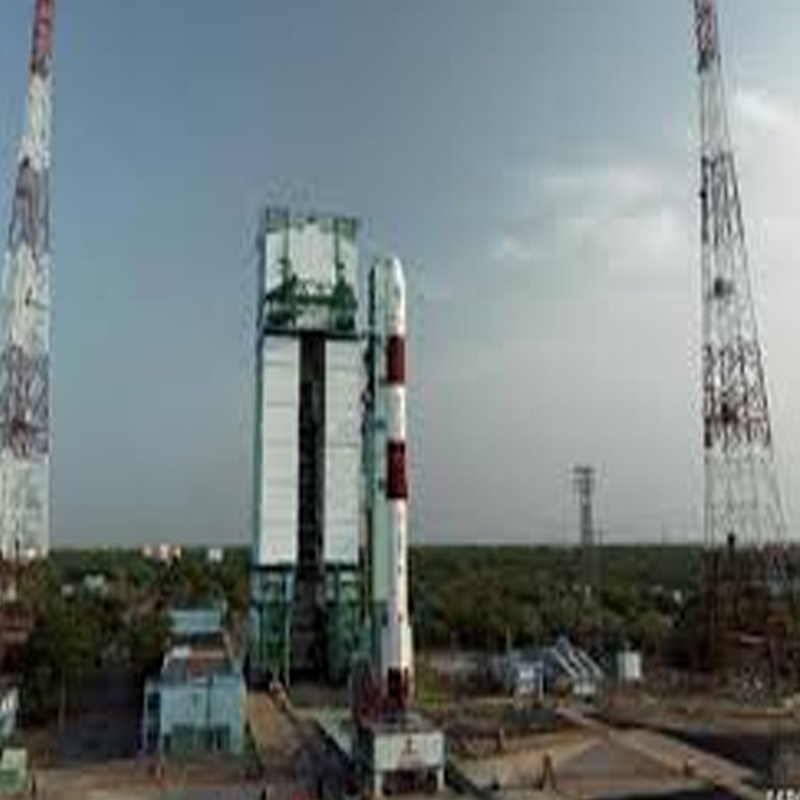
    One of the seven satellites in the constellation, as three rubidium atomic clocks on board had stopped functioning, the IRNSS- 1H satellite, weighing 1,425kg, will be launched from the second launch pad of the Satish Dhawan Space Centre at Sriharikota (Andhra Pradesh), on the ISRO’s launch vehicle PSLV-XL.

    The launch of India’s eighth navigational satellite IRNSS- 1H scheduled at 19:00 hrs today will mark the first time the private sector got actively involved in assembling and testing of a satellite. In the past, the private sector has supplied components for satellites, it has now been involved in the actual assembly.

    The Indian Regional Navigation Satellite System (IRNSS) is an independent regional navigation satellite system developed by India on par with US-based GPS. The system that offers services like terrestrial and marine navigation, disaster management, vehicle tracking and fleet management, navigation aide for hikers and travellers, visual and voice navigation for drivers, was named ‘NavIC’ (Navigation with Indian Constellation) by the prime minister Narendra Modi.

    The launch vehicle PSLV-C39 will use the ‘XL’ version of PSLV equipped with six strap-ons, each carrying 12 tons of propellant.

    ISRO chairman S Kiran Kumar said that a private company was for the first time involved in the integration of a satellite. Progressively, more such companies would be involved, he added. Subsystems of the payload and launch vehicle were being developed in collaboration with the industry, Kumar said.

    Around 25 per cent of the IRNSS-1H development work was successfully completed by a consortium led by Bengaluru-based Alpha Design Tecnologies, under the guidance of ISRO scientists.

    The need to launch this satellite came up after three atomic clocks on board ISRO’s first navigational satellite IRNSS-1A, launched in 2013, had stopped functioning. Imported from European aerospace manufacturer Astrium, the clocks are used to provide accurate locational data used in several earth-based applications, such as navigation and monitoring.

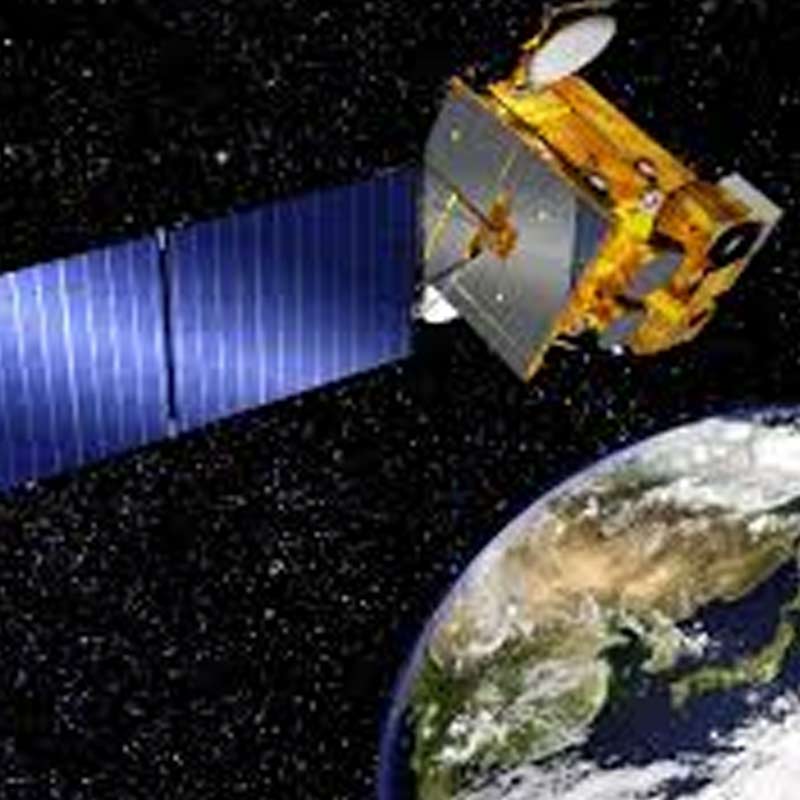
    The IRNSS-1H will be launched into a sub geosynchronous transfer orbit after which two solar panels of the satellite will be automatically deployed, and the master control facility at Hassan will perform orbit raising manoeuvres of the satellite.

    NavIC is useful for merchant ships in navigation and also during search and rescue operations. NavIC helps commuters to traverse distances and also enable transport operators to track their vehicles. The system is also helpful for railways in tracking trains and also giving an alert in the case of unmanned level crossing.

    NavIC is also used for other applications like location-based services, survey and alignment, time synchronised services. It provides two types of services — standard positioning service and restricted service.

  • 15 operational sats for communication, 26 under development

    NEW DELHI: Fifteen of the 42 currently operational satellites are being utilised to meet the requirements of the communication industry, the minister of state in the department of space Jitendra Singh has said.

    Singh told the Parliament that the operational satellites in orbit comprise 18 earth observation (including meteorological), 15 communication, seven navigational and two Space Science satellites. Another 26 satellites are currently under various stages of realisation.

    The minister said that a plan is in place to suitably augment the space infrastructure to ensure continuity of services and to meet further requirements in these areas.

    Satellite-based data and services are being used by various ministries/departments in planning, monitoring and evaluation of developmental activities in various sectors, which include agriculture, forestry and environment, water resources, urban and rural planning, asset mapping, mineral prospecting, ocean resources, meteorology, satellite communication, location based services, tele-education, tele-medicine and disaster management support.

    In order to step up the building of satellites, the Indian Space Research Organisation is involving a consortium of industries for assembly, integration and testing (AIT) of satellites, and the sub-systems and infrastructure are being provided by ISRO. The AIT of a navigation satellite is in progress and the satellite is getting ready for launch in second half of this year.

    In order to accelerate the use of satellites and its services, an outreach facility has been established in Hyderabad to cater to the requirements of capacity building in space-based applications. This facility caters to several activities like training, information kiosks, content generation, outsourcing and mass communication. The facility comprises a large number of thin client systems providing access to satellite data and various software tools for building applications for various developmental activities.

    ALSO READ :

    Communication facilities increased with 7 satellites in last 3 years

    TV channels’ failure to start in a yr: 18% permits cancelled

    Telangana govt. wishes to own satellite to air TV channels

    Transponder leasing yields Rs 7.5 bn for communication satellites

  • Telangana govt. wishes to own satellite to air TV channels

    NEW DELHI: Now, an Indian state wants to own a satellite and broadcast TV channels espousing Indian values. The Telangana government would like to have its own satellite in orbit to telecast (TV) channels with good content, state IT minister K T Rama Rao said in Hyderabad on Wednesday.

    Speaking after the launch of T-SAT network of two television channels (Vidya and Nipuna) of the state government, which telecast content on distance learning, agriculture extension, rural development, tele-medicine and e-governance, the minister, as quoted by a PTI report from Hyderabad, said, “Today, we are broadcasting two channels by using satellite technology. But, eventually the goal is…not today… we should have our own special satellite in the orbit.” 

    The state government can telecast good content by having some channels at a time when the negative impact of western culture is being seen in the society, he said as per the news agency report.

    public://Telangana-Map-Home-Page.png

    “Through that satellite, if necessary, not two, but the state government would work actively (on) some 10 to 12 channels. Today, we see the developments in society. We see the impact of western culture. We can do many types of programmes on behalf of the government,” Rao said, recalling that India’s space agency ISRO had recently launched a record 104 satellites in a single mission.

    Educational content used to be telecast under the brand name of ‘Mana TV’ in undivided Andhra Pradesh, but the state government sought to expand its programming, Rao said, adding that the newly launched channels aim to offer content in different areas, including health and agriculture, for the benefit of the masses, the minister added.

    Such assertions once again highlight why TRAI’s suggestions on media ownership and barring government and government-backed bodies from getting into business of broadcasting and cable TV distribution should be adopted at the earliest by the Ministry of Information and Broadcasting. Or else, soon every state in India may want to `own’ satellites, TV channels and then get into distribution, thus creating potential local monopolies, an industry observer opined.

    Sector regulator TRAI’s exhaustive set of recommendations on media ownership, issued and updated from time to time and last made in 2014, can be found here http://www.trai.gov.in/release-publication/recommendation.

    ALSO READ:

    TRAI releases recommendations on media ownership

  • Arianespace to launch ISRO-built DTH & telecom satellites

    MUMBAI: Preparations are afoot to launch two satellites aboard Arianespace’s workhorse Ariane 5 rocket for delivery to GTO (geosynchronous transfer orbit). Hellas Sat 3 / Inmarsat S EAN and GSAT-17 have been scheduled to lift off from the spaceport in Kourou, French Guiana, on 28 June (Wednesday), during a 77-minute window opening at 20:59 GMT (4:59 p.m. EDT).

    Encased in the 17-meter (55.8-foot) tall RUAG-manufactured fairing are the GSAT-17 and Hellas Sat 3 / Inmarsat S EAN satellites. GSAT-17, a 3,477-kg (7,665-pound) telecommunications satellite built by and for India, will launch in the lower position of the SYLDA payload adapter, Space Flight Insider reported.

    One of the aims of the Ariane 5 mission is the launch of two satellites on a single vehicle. On the top of the around 54.8-meter (180-foot) rocket is a pair of satellites destined to provide telecommunications and direct-to-home (DTH) television services to their respective markets.

    Sharing a single ride to orbit offers cost saving opportunities to the customers and is something at which Arianespace has become very adept. The France-based MNC has indeed been a leader in launching two large satellites to GTO for around 20 years.

    GSAT-17, which has been built by the Indian Space Research Organization (ISRO), is constructed on the indigenous I-3K satellite bus. The chassis is outfitted with twin solar panels, capable of producing up to a total of 6,500 watts of DC power, tapering to 5,200 watts at the end of its 15-year design life. The satellite will provide telecommunications services, as well as support data relay and government functions, from its position at 93.5 degrees East via multiple C-band transponders.

    The first, Hellas Sat 3, was built for and will be operated by Hellas Sat. It will provide telecommunications and DTH television services to customers in Europe, the Middle East, and Sub-Saharan African countries.

  • ISRO gears up for GSAT-19, GSLV Mk III launch today

    MUMBAI: Another rocket will be turbo-charged into space today with its 3,136 kg payload (the GSAT-19 satellite) from India’s space launch site in Sriharikota in Andhra Pradesh. The only difference, when the GSLV Mk III takes off at 17:28 pm, it will place the Indian Space Research Organisation amongst a select few agencies which can launch satellites of up to 4,000 kg into geostationary orbit.

    The GSLV Mk III is a three-stage heavy lift launch vehicle developed by ISRO. The vehicle has two solid strap-ons, a core liquid booster and a cryogenic upper stage. At 640 tonnes, it is India’s heaviest but shortest rocket at 43 metres

    GSLV Mk III is designed to carry four ton class of satellites into geosynchronous transfer orbit (GTO) or about 10 tons to low earth orbit (LEO), which is about twice the capability of GSLV Mk II.

    The two strap-on motors of GSLV Mk III are located on either side of its core liquid booster. Designated as ‘S200’, each carries 205 tons of composite solid propellant and their ignition results in vehicle lift-off. S200s function for 140 seconds. During strap-ons functioning phase, the two clustered Vikas liquid engines of L110 liquid core booster will ignite 114 sec after lift -off to further augment the thrust of the vehicle. These two engines continue to function after the separation of the strap-ons at about 140 seconds after lift -off.

    Its payload, the GSAT 19, is configured around the ISRO’s standard I-3K bus. GSAT-19 carries Ka/Ku-band high throughput communication transponders. Besides, it carries a geostationary radiation spectrometer (GRASP) payload to monitor and study the nature of charged particles and the influence of space radiation on satellites and their electronic components. GSAT-19 also features certain advanced spacecraft technologies including miniaturised heat pipe, fibre optic gyro, micro electro-mechanical systems (MEMS) accelerometer, Ku-band TTC transponder, as well an indigenous Lithium-ion Battery.

  • Tata Sky has spectrum glut, adding five more HD channels

    MUMBAI: Leading DTH operator Tata Sky is reportedly planning to add five more HD channels and take its total high-definition offering to 86. DTH operators in India mostly provide only 45-65 HD channels, while cable operators provide between 30-50 HD channels.

    The channels that are reportedly being added are MTV HD+, Surya (Malayalam), DSports, Udaya (Kannada) and Gemini Movies (Telugu). With 86 HD channels, the operator plans to further consolidate its position as the largest provider of high-definition content in India. Tata Sky hugely benefitted owing to an oversupply of spectrum after one of ISRO’s satellites failed to ‘terminate’ as scheduled.

    In the Indian subcontinent content delivery, Tata Sky was reportedly using 432 MHz of spectrum on INSAT-4A and was backing Dish TV, which had 648 MHz and Videocon D2h, which has 540 MHz. INSAT-4A was expected to reach ‘end of life’ this year, for whose replacement ISRO sent GSAT-10 to the same orbit.

    Both satellites however are working simultaneously. Owing to ISRO’s reported dilemma of neither being able to sell capacity on its new satellite nor on the old (about to die) satellite to a new player, Tata Sky has been allowed to use both satellites, and adds up to about 828 MHz of spectrum at its disposal, which is almost two times of what DTH operators have in India.

  • ISRO launches into space GSAT-9 & India’s S. Asian space diplomacy

    MUMBAI: Prime Minister Modi’s Rs 450 crore (Rs. 4,500 million) Asian space diplomacy took flight today with the launch of South Asia Satellite GSAT-9 by Indian Space and Research Organization (ISRO) on Friday. Pakistan is not participating in this initiative.

    The satellite, when it finally gets commissioned, would provide services specific to individual countries as per their own needs and priorities as also common services. Each country would be allocated one transponder each. The South Asian nations that would benefit from this Indian initiative include Afghanistan, Bangladesh, Bhutan, Maldives and Nepal.     

    The South Asia Satellite has 12-KU band transponders, which India’s neighbors can utilize to increase communications. However, the on-ground infrastructure for the usage of satellite capacity will have to be built by each respective country, though, according to an official government statement, India is willing to help them do that too.   

    According to a report in the Economic Times newspaper, each of the participating South Asian nation could benefit up to USD 1.5 billion over the 12-year lifespan of GSAT-9.

    The satellite will facilitate DTH television, VSAT links, tele-education, telemedicine and disaster management support. It will provide critical communication links in times of disasters such as earthquakes, cyclones, floods, and tsunamis.

    Congratulating ISRO for the development and launch of the satellite, PM Modi, while conferring with the heads of participating nations via video conference, said, “As governments, our most important task is to secure growth, development and peace for our people and communities. And, I am convinced that when we join hands and mutually share the fruits of knowledge, technology and growth, we can speed up our development and prosperity.” 

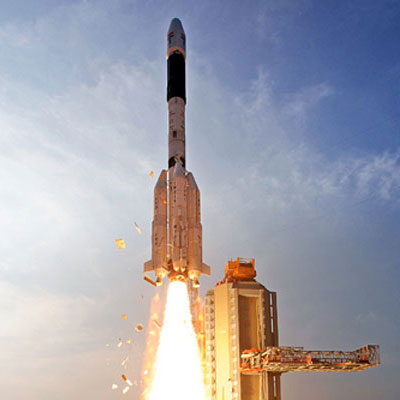
    The vehicle is designed to inject 2- 2.5 ton class of satellites into space. The overall length of GSLV-F09 is 49.1 m. GSLV-F09 was launched on May 5, 2017 from the Second Launch Pad (SLP) at Satish Dhawan Space Centre SHAR (SDSC SHAR), Sriharikota, the space port of India.

    GSLV-F09 vehicle configuration, including the CUS, is similar to the ones successfully flown during the previous three missions — GSLV-D5, D6 and F05 — in January 2014, August 2015 and September 2016, respectively. GSLV-D5 and D6 successfully placed two communication satellites, GSAT-14 and GSAT-6, while GSLV-F05 placed India’s weather satellite INSAT-3DR in the intended GTOs.
    Also Read:

    ISRO’s ‘South Asia Satellite’ to carry 12 ku-band transponders

    ISRO world record in 104-satellite launches on a single flight


  • DTH satellite GSAT 9 (South Asia Sat) blasts off today

    MUMBAI: The countdown clock is ticking away. Come 5:30 pm IST, the evening of 5 May, and the Indian Space Research Organisation (ISRO) will have added another feather to its cap as  its indigenously developed satellite GSAT-9 lifts off from the second launch pad at the Satish Dhawan Space Center in Sriharikota  for its journey into geosynchronous orbit  as a payload on the Geosynchronous Satellite Launch Vehicle Mk II (GSLV-F09).

    The cost of the launch is estimated at around Rs 450 crore (USD 70 million)

    Labeled South Asia Sat, the 2,230 kg weighing satellite boasts 12 Ku-band transponders that will result in a swelling of capacity for India’s DTH television operators  and facilitate TV signal distribution  for its neighbors Nepal, Bhutan, Maldives, Sri Lanka, Bangladesh and Nepal (members of the South Asian Association for Regional Cooperation – SAARC).  

    The satellite also carries India’s fourth GPS aided GEO Augmented Navigation (GAGAN) payload that delivers correction signals for aircraft navigation systems to increase navigation accuracy to three meters, assisting in air traffic management and landing in tough weather and challenging terrain.

    GSAT 9 will be located at 48 degrees east and has a scheduled mission life of around 12  years.

    Also Read :

    ISRO’s ‘South Asia Satellite’ to carry 12 ku-band transponders

    MIB: No DPO request for infra sharing, DTH ops’ transponder demand up

    Could India blocking ABS’ FTA TV signals lead to breach of ITU norms?