Tag: ISRO

  • ISRO’s Gsat-11 sent back from space centre ahead of May-end launch

    ISRO’s Gsat-11 sent back from space centre ahead of May-end launch

    NEW DELHI: In what was being touted as probably the last Indian satellite launch by a foreign space agency, ISRO’s heavy-duty GSAT-11 communications satellite has been sent back to India for “unexplained” reasons from the Europe-based launch pad, according to a media report from Paris.

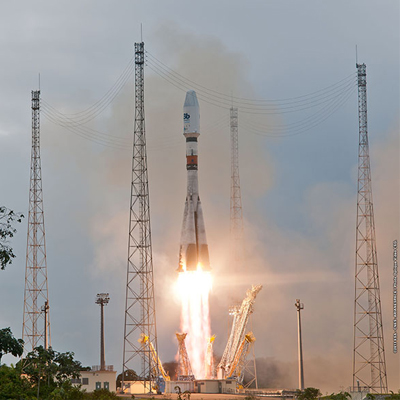
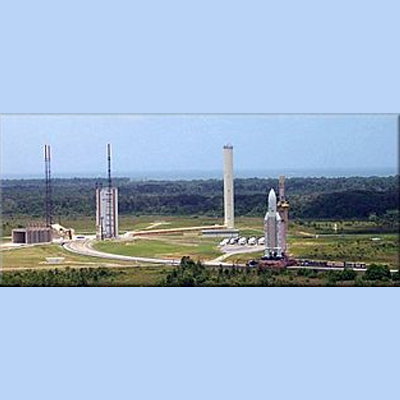
    “India’s GSAT-11 high-throughput satellite, which arrived at Europe’s Guiana Space Center spaceport on March 30 in preparation for launch on an Ariane 5 rocket, has been returned to India following unexplained issues encountered at the spaceport, industry officials said,” SpaceIntelReport.com tweeted on 23 April 2018, adding the satellite was to be launched late-May via Ariane 5 that was scheduled to carry some other birds, too, including the Azerspace-2/Intelsat-38 satellite.

    However, till the time of writing this report, no confirmation or any additional information was available from India’s space agency ISRO, which has very ably been charting the country’s space policy and the visions of policy-makers and space scientists.

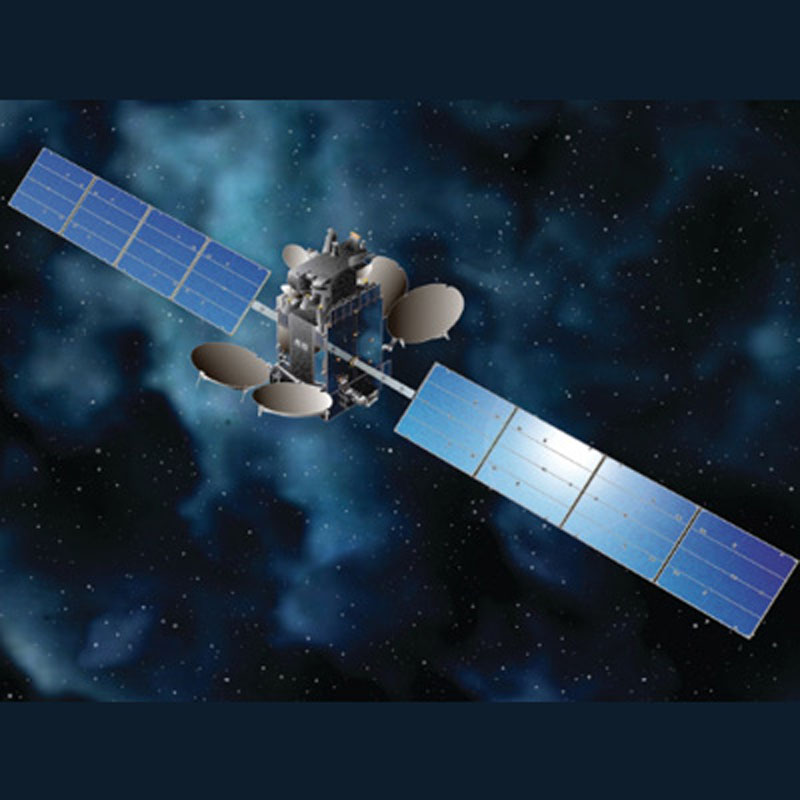
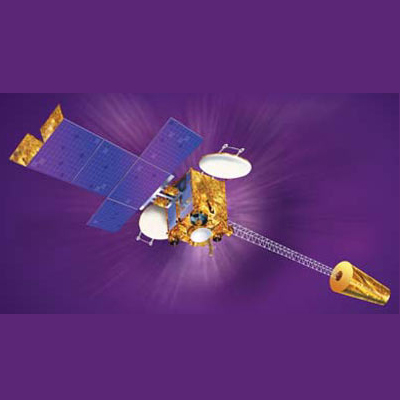
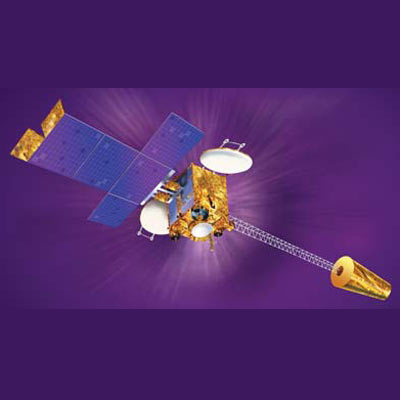
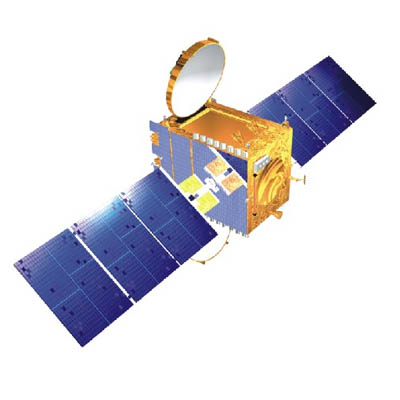
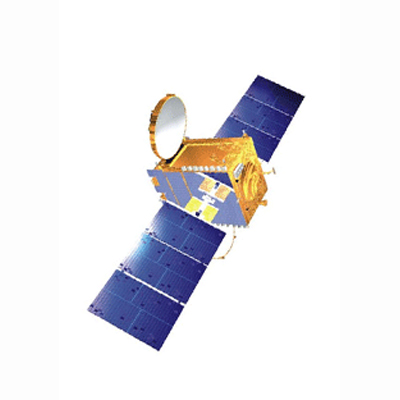
    GSAT-11, according to information put out by ISRO earlier, is a multi-beam high-throughput communications satellite operating in Ka and Ku bands employing a new bus. It provides 32 user beams in Ku band and eight gateway beams in Ka band, which would have gone a long way in strengthening India’s all-round communications, including TV and broadband services. The payload includes Ka x Ku band forward-link transponders and Ku x Ka band return-link transponders. According to Wikipedia, GSAT-11’s cost will be Rs 500 crore (Rs 5 billion).

    In a news report few days back, Times of India said that GSAT-11 was “so massive that each solar panel is over four metres long” and quoted ISRO chairman Dr K Sivan as saying that the heavy-duty Gsats would “provide high-bandwidth connectivity” of up to 100 gigabit per second and “high-speed internet connectivity in rural areas as well and help bridge the digital divide.”

  • MIB says ISRO upping capacity to facilitate migration from foreign satellites

    MIB says ISRO upping capacity to facilitate migration from foreign satellites

    NEW DELHI: The Indian government has admitted that inadequate capacity on Indian satellites has compelled domestic direct to home (DTH) operators to use a large number of transponders on foreign satellites and that India’s space agency Indian Space Research Organisation (ISRO) is gearing up to meet growing demands owing to proliferation of HD TV channels.

    “Presently DTH services are being supported by 42 transponders on indigenous satellites (INSAT/GSAT) and about 69 transponders on foreign satellites. There is a registered demand of additional about 64 transponders for immediate future,” junior minister at Ministry of Information and Broadcasting (MIB) Rajyavardhan Rathore informed fellow parliamentarians in Lok Sabha or the Lower House of Parliament recently.

    Without stating it in so many words though, Rathore said that as ISRO increases its satellite capacity to be able to meet the demands of Indian DTH operators, a migration from foreign satellites would become a reality — a move that MIB and Department of Space are slowly implementing to nudge users of satellite services, especially TV channels, to move away from non-Indian birds.

    “It is expected that over a period of next three years adequate capacity would be added through Indian satellites to facilitate migration of foreign capacity to Indian [satellite] capacity,” the minister said, adding, according to Telecom Regulatory Authority of India (TRAI) data, there has been a significant growth in the number of high definition (HD) satellite TV channels. The number has grown from three in 2010 to 83 in 2017.

    Dwelling on TRAI’s recommendations on sharing of infrastructure on a voluntary basis, Rathore clarified that till date MIB has not received any proposal from DTH operators for sharing of satellite transponders and earth station facilities with another such player or distribution platforms. “Enabling sharing of infrastructure may address the issue of demand-supply mismatch and reduce capital and operating expenditure of the service provider to an appreciable extent,” he added.

    Meanwhile, addressing another set of queries raised by parliamentarians relating to DTH, the minister said a total number of 1922 complaints/grievances against private DTH service providers were received through monitoring systems of the government and TRAI over the last three years on various issues ranging from technical/financial/policy matters to delay or improper installation, malfunctioning of STBs, issues of interoperability, disruption of signals during bad weather, improper billing, channel packaging, FTA channels, etc. As many as 1811 complaints were addressed by MIB till date.

    As soon as complaints are received, they are brought to the attention of the DTH operator concerned and later a follow-up action too is undertaken to evaluate compliance and whether the problems were resolved or not, the minister explained.

    According to the minister, sector regulator TRAI had issued last year a set of tariff guidelines to boost healthy competition among DTH service providers and bring down the subscription prices for consumers. The guidelines were legally contested by some stakeholders and are awaiting judicial advice, he added.

    ALSO READ:

    MIB admits no DTH infra sharing permission sought

    MIB, DoS nudge TV channel to use Indian satellites

    MIB to collect data on satellite capacity needs, digital chatter

    MIB, TRAI allay industry fears on sat capacity leasing & content regulations


  • ISRO launched 8 communication satellites over 4 years

    ISRO launched 8 communication satellites over 4 years

    NEW DELHI: Eight communication satellites were launched by India’s space agency ISRO over the last four years that carried transponders in various frequency bands of C, extended C, Ku, Ka and S for telecommunications, broadcast and mobile communication services.

    Navigation satellites were part of the indigenous constellation NavIC, India’s own regional navigation system. Navigation satellites carried navigation payloads in L and S-bands for providing position, navigation and timing services.

    Earth Observation satellites are used for deriving inputs for natural resource management, disaster management, cartographic applications, weather, climate and ocean studies.

    Communication Satellite

    8

    Navigational Satellite

    7

    Remote Sensing Satellite

    5

    Meteorological satellite

    2

    Science Satellite

    1

    Technology Demonstration/ Student Satellite

    9

    Astrosat (science payload) is a unique multi wavelength observatory in space, providing an opportunity for observation of celestial sources in ultra-violet, optical and X-ray wavelength bands.

    ISRO has also launched satellites for technology demonstration and student satellites to encourage the young generation to work in the field of space.

    This information was provided by the Minister of State in the Prime Minister’s Office for Personnel, Public Grievances and Pensions, Atomic Energy and Space, Dr Jitendra Singh, in Lok Sabha (Lower House of Parliament) on Wednesday.

    Also Read :

    ISRO readies GSAT-6A satellite for launch

    ISRO, DoT turf wars delaying connectivity reach: govt official

    ISRO to double annual satellite launch

  • ISRO readies GSAT-6A satellite for launch

    ISRO readies GSAT-6A satellite for launch

    MUMBAI: Indian Space Research Organisation (ISRO) is set to launch its high-power GSAT-6A communications satellite onboard GSLV Mk-II (GSLV F08) on 29 March 2018. The government-funded organisation will use one of its rockets for the launch, from the Sriharikota island site in Andhra Pradesh province on the edge of the Indian Ocean.

    The satellite is equipped with C-band and S-band transponders, which ISRO says will provide a platform for developing technologies such as demonstration of its massive 6m S-Band deployable antenna (the largest launched by India), which can then be used for mobile phones, vehicular communications and network management techniques as well as multimedia applications.

    It will be placed at 83 degrees East and have a life of nine to 10 years.

    This will be the Geosynchronous Satellite Launch Vehicle’s 12th flight and sixth flight with indigenous cryogenic stage. The rocket will take off from the second launch pad at the Satish Dhawan Space Centre.

    According to ISRO, GSAT-6A, weighing 2140kg, is a high-power S-band communication satellite, just like its predecessor GSAT-6.

    Also Read :

    ISRO, DoT turf wars delaying connectivity reach: govt official

    ISRO eyes 100th satellite on 12 Jan; GSAT-11 launch in April

    ISRO to double annual satellite launch

  • ISRO, DoT turf wars delaying connectivity reach: govt official

    ISRO, DoT turf wars delaying connectivity reach: govt official

    MUMBAI: India builds low-cost satellites but has the most expensive bandwidth, a senior Indian government official said on Tuesday, blaming turf wars between ISRO and Department of Telecoms (DoT) for delays in taking connectivity to far-flung areas.

    DoT special secretary N Sivasailam also flagged issues of costs and said that the Indian Space and Research Organisation (ISRO) should do more in order to take the charges at par with global experience.

    “Here is the paradox. We produce the cheapest satellite but the costliest bandwidth,” Sivasailam was quoted by PTI as saying in a report, adding that India required more transponders on satellites. He was speaking at the ongoing FICCI-Frames 2018 here at a session on ‘Digital India: Sparking the Access Revolution.’ The session also had a talk by ISRO director for the satcom and navigation programme office, K Sethuraman, who dwelled on the agency’s vision for satellite programme of India.

    Sivasailam said there is a “problem of domains” between the DoT and the ISRO that has impacted, for the last 20 years, the roll-out of connectivity in the far flung areas of the country. 

    “The problem is of domains. We [DoT] don’t want to leave our domain [of spectrum allocation]. ISRO doesn’t want to leave its domain. It is a domain related problem…I do not see people coming together and negotiating this aspect out,” he said. Admitting that there is “politics”, which “makes things difficult”, PTI reported, adding that Sivasailam pitched for both the agencies getting over the problems for an overall benefit. 

    “It is time it stopped because it is hurting business development and ultimately people are not getting [benefited],” he said. On the critical issue of pricing, he asserted it will cost around Rs 150 to serve one user with the current cost structure in the country, whereas in the US, it costs $1 or Rs 65. “If the US is getting it for $1 for the same bandwidth for the life of the satellite, I should be getting it at the same rate. There is no reason why it should not happen in India. That is my refrain,” he said.

    Conceding that ISRO helps take satellite connectivity to 5240 far-flung locations in the country, including 4300 in North-East India, Sivasailam elaborated that the cost of satellite, bandwidth and spectrum makes “operations unviable”. 

    “If you have the volume of business, we should be able to provide at the rates internationally available and that is a matter of some concern for us. We have been working on it, but not necessarily successful on this,” he said, stressing that the industry will have to find solutions on this and DoT and ISRO also need to work together on this issue.

    Speaking of self-regulation in over the top (OTT) services, he said it cannot substitute regulation. “When you talk of regulator’s way of looking at regulations, it lies on consumer side and that’s where self-regulation in itself will fail,” he said, pointing out that while it is particularly important in the telecom sector with issues of call drop and number portability, it may not be applicable too much in the broadcasting sector.

    Sivasailam also spoke of the Telecom Regulatory Authority of India (TRAI) recommendation on in-flight connectivity, which will be taken to the Telecom Commission “sooner than later” and it “could be a reality soon”. On 20 January 2018, the TRAI came out with recommendations suggesting that airlines should be allowed to offer in-flight connectivity over Indian airspace, including broadband services. The Civil Aviation Ministry, Department of Space and DoT now have to act on the suggestions to make it a reality. 

    The Telecoms Ministry official said there are discussions within the department on whether to allow both voice and data on flights or restrict it to voice connectivity alone. The new telecom policy will also be out “very soon,” he said.

    Also Read :

    M&E stakeholders need to collaborate for growth: Sudhanshu Vats

    Broadcasters see positive future for TV in India

  • MIB to collect data on satellite capacity needs, digital chatter

    MIB to collect data on satellite capacity needs, digital chatter

    NEW DELHI: The Indian government has not only embarked upon data collation of the satellite capacity needs of TV channels in India but is also preparing to get real-time insights on digital chatter.

    In a letter sent earlier in January to Broadcast Engineering Consultants India Ltd or BECIL, the Ministry of Information and Broadcasting (MIB) has asked the sister government organisation to collect data on capacity requirements by TV channels on Indian satellites as also the life of foreign satellites catering to Indian customers.

    Pointing out that the data was needed on an urgent basis, the MIB has directed the BECIL to consult industry associations such as the IBF and the News Broadcasters Association, apart from DTH and HITS players, on information relating to “total estimated requirement” of the broadcasting sector on Indian satellites and “end of life period of foreign satellites”.

    Though MIB hasn’t spelt out the need to collate such data, nudged by the Department of Space and ISRO, the ministry, in the recent past, has been obliquely hinting TV channels to shift to Indian satellites before various government permissions being sought could be given.

    Most foreign satellite companies operating in India, however, have been conveying to the government and regulator TRAI (one such meeting happened in New Delhi about a week back when TRAI called for feedback on NTP 2018) that ISRO has been doing a great job in flying high India’s flag in the space but the dream of Digital India, as envisaged by PM Modi, could get a major fillip if foreign satellites, too, could be used to provide broadband and other related services to Indians.

    Meanwhile, the BECIL has also floated a tender seeking vendors to set up a ‘Social Media Communication Hub’ that would help the MIB keep a tab on trending news and act as the eyes and ears to get insights into digital chatter mostly involving the federal government’s flagship schemes.

    “The tool should have the capability to crawl [the] worldwide web and social media to monitor and analyze various trends emerging, as well as to gauge the sentiments amongst netizens. The tool should be comprehensive with the capability to generate reports and do customizations as per the requirements of [the] Ministry of Information and Broadcasting,” the tender floated by the BECIL stated.

    The platform or the hub sought to be set up should facilitate creating a 360-degree view of the people who were creating the buzz across various topics with an ability to analyse as well as visualise large volumes of data across diverse digital platforms in real time.

    The broad features that are required for this social media monitoring tool, as enumerated by the BECIL, are following:

    — Listening and responding capabilities: The platform is expected to not only listen to the standard digital channels listed below but also enable easy extension to integrate proprietary data sources such as the mobile insights platform.

    — The tool should be able to interface with Facebook, Twitter, YouTube, Google+, Instagram, LinkedIn, Play Store, emails, news blogs, forums and complaint websites for the purposes of monitoring.

    — Real-time integration for Facebook and Twitter needs to be demonstrated. Also, the platform will need to demonstrate the ability to configure data collection, insights and response for the platform.

    — The platform should have support for Indian languages such as Hindi, Urdu, Telegu, Malayalam, Kannada, Bengali, Punjabi, Tamil, along with English.

    “This software tool should be able to perform like [a] search engine, which will work both as web crawler and social media crawler, and would be able to search various hash-tags [and] keywords across the social media platforms,” the tender document stated, adding that the tool/software should be able to identify fake news with particular focus on such conversations on social media and specialised websites.

    For this hub, MIB is looking at a 20-member strong team (scalable later) of SM analytics and domain experts in social media analysis with experience in handling tools such as Oracle CRM and Brandwatch to be stationed on the premises of the ministry.

    Also Read :

    MIB, DoS nudge TV channel to use Indian satellites

    MIB reverts to earlier norms of seeking nod from ISRO on uplink/downlink of TV channels

    MIB bumps up TV channel processing fee

    MIB categorises all non-Hindi and non-Eng TV channels as regional

  • TRAI clears path for broadband, voice services aboard planes

    TRAI clears path for broadband, voice services aboard planes

    NEW DELHI: Broadband connectivity and making voice calls from 32,000 feet above sea level while flying may soon become a reality over Indian space if broadcast and telecom regulator TRAI’s recommendations are accepted by some other government organisations, including ISRO.

    TRAI, while giving an in-principle green signal to in-flight connectivity (IFC), has suggested use of both domestic and foreign satellite systems for providing such services onboard airplanes and has dangled as an incentive levying of a token annual license fee of Re 1 on the service provider that could be reviewed at a later stage.

    TRAI has also recommended that the gateway for providing the IFC be located in India and that such a deployment will provide an effective mechanism to lawfully intercept and monitor the in-cabin internet traffic while the aircraft is in Indian airspace.

    Pointing out that onboard Internet traffic’s routing must be made obligatory via a satellite gateway on Indian soil, TRAI on Friday in a series of guidelines said, “The IFC service provider should be permitted to use either (Indian) INSAT systems or foreign satellite capacity leased through Department of Space (DOS) or foreign satellites outside INSAT systems in the Indian airspace (coordinated by ITU).”

    The Telecom Ministry had requested TRAI to furnish recommendations on licencing terms and conditions for provision of IFC for voice, data and video services, including those related to entry fee, licence fee and spectrum allocations.

    Making a case for creating and registration with the government a “separate category” for IFC service provider, TRAI said the operation should be permitted with minimum height restriction of 3,000 meters in Indian airspace for its compatibility with terrestrial mobile networks. Internet services through wi-fi onboard should be made available when electronic devices are permitted to use only in flight/ airplane mode, it added highlighting the IFC provider need not necessarily be an Indian entity.

    According to TRAI, the IFC service provider should be permitted to provide services after entering into an arrangement with unified licensee(s) having appropriate government authorisation.

    “If IFC service provider partners with… the licencee (that) also has commercial VSAT CUG service authorisation, it can provide the satellite links also. Alternatively, unified licencee with national long distance service authorisation can provide the satellite links,” the regulator suggested, adding, the regulatory requirements should be same for both India and foreign-registered airlines for offering IFC services in Indian airspace.

    https://ssl.gstatic.com/ui/v1/icons/mail/images/cleardot.gif

    Some of the other recommendations include the following:

    — Spectrum neutral approach should be adopted, subject to the condition that the frequency bands have been harmonized and coordinated for their use at the ITU.

    — It would facilitate the IFC services in all the bands (L, Ku and Ka) in which IFC services are currently being provided.

    — The framework recommended for IFC services in Indian airspace should be made applicable to all types of aircrafts such as commercial airlines, business jets, executive aircrafts etc.

    — There should not be any difference in the charges to be levied for domestic and foreign airlines in Indian Airspace

    — Satellite operators should be permitted to use of bandwidth already assigned to satellite operators for the use of IFC services also.

    — In case of multiple spot beam satellite, an aircraft may pass through many beams. In such a scenario, DOS should consider not charging for individual beams, but evolve the charging mechanism based upon the actual usage of the bandwidth.

    Also Read:

    TRAI says all stakeholders responsible to protect user data

    Trai to make recommendations on net neutrality today 

    TRAI releases recommendations on net neutrality 

  • ISRO eyes 100th satellite on 12 Jan; GSAT-11 launch in April

    ISRO eyes 100th satellite on 12 Jan; GSAT-11 launch in April

    NEW DELHI: The Indian Space Research Organisation (ISRO) will launch its 100th satellite along with 30 others, including those from other countries, in a single mission on 12 January 2018 from Sriharikota It will be a milestone event in the country’s space history even as communications satellite GSAT-11 is being prepared for an April launch.

    ISRO said it was “back in the game” with the launch, the first Polar Satellite Launch Vehicle (PSLV) mission after the unsuccessful launch of the navigation satellite IRNSS-1H in August last, PTI stated Tuesday in a report from Bengaluru.

    “The 31 spacecrafts, including weather observation Cartosat-2 series satellite, will be launched by PSLV-C40,” ISRO Satellite Centre (ISAC) director M Annadurai said. Stating that 28 of the satellites were from other countries, the official noted that the launch of three Indian satellites during the mission would mark the roll out of the 100th satellite from ISRO.

    “When the last satellite is ejected out it will become the hundredth satellite…the first century we have done. It is the maiden century. So PSLV-C40 marks maiden century of Indian satellite….we are eagerly waiting for that,” the official was quoted in the PTI report as saying.

    PSLV-C40 will launch the 710 kg Cartosat-2 series satellite for earth observation and 30 co-passengers (together weighing about 613 kg) at lift-off on 12 January 12 at 9.28 am, ISRO said. It will be launched from the first launch pad of the Satish Dhawan Space Centre at Sriharikota, about 100 km from Chennai.

    The co-passenger satellites include one micro and nano-satellite each from India. Three micro and 25 nano satellites from six countries, (Canada, Finland, France, Republic of Korea, the UK and the USA) make up the other payload. Referring to the PSLV-C39 failure, Annadurai said ISRO had understood it and repeated tests had been conducted to ensure that such problems did not reoccur.

    On 31 August 2017, India’s mission to launch its backup navigation satellite IRNSS-1H on board PSLV-C39 failed after a technical fault in the final leg following a perfect launch. ISRO then said the heat shield did not separate and, as a result, IRNSS-1H got stuck in the fourth stage of the rocket.

    The total weight of all the 31 satellites carried on board PSLV-C40 is about 1323 kg.

    Regarding plans for the year, Annadurai said Chandrayaan-2 or Mission Moon was in the final stage of testing and integration of the orbiter, lander and rover, and was expected for launch this year.

    Also, IRNSS-1I, a follow-on satellite will be the first satellite whose assembly, integration and testing will be fully done by the private industry, he said, adding “we are enabling the private industry”.

    GSAT-11, a six-tonne class communication satellite, he said, was at the final leg of testing, and the launch target was April.

    ALSO READ:

    ISRO to double annual satellite launch

    Arianespace to launch ISRO-built DTH & telecom satellites

    ISRO gears up for GSAT-19, GSLV Mk III launch today

    ISRO stresses on indigenization; TRAI for Open Sky policy

  • ISRO to double annual satellite launch

    ISRO to double annual satellite launch

    NEW DELHI: The Indian Space Research Organisation (ISRO) plans to increase its satellite capacity by upping launches from next year to keep pace with demands from users and is also releasing request for proposals (RFP) for 30 satellites, top Indian government officials said. Five of these will be communication satellites catering to the TV and radio industry.

    According to ISRO chairman AS Kiran Kumar, who was speaking at a conference on the space industry eco-system here on Monday, the organisation would be doubling its launch frequency from 10 to approximately 20 in a year as the “space industry in India is significantly short of capacity” and behind “intended goals”.

    One of the aims was to increase transponder capacity to transmit more TV channels. Currently, 15 communication satellites are in orbit.

    He emphasised that with the increasing volumes, which are on offer by ISRO and other space agencies, it is an ideal opportunity for the industry to be a part of the global supply chain.

    “The world of space is rapidly changing with technological advancements and disruptive innovation. The key to success is to significantly reduce the cost of access to space in what will prove to be an immense opportunity for the Indian and global industries,” Kumar said.

    Pointing out that ISRO presently has 42 operational satellites and has set new benchmarks in lunar and Mars explorations, he said that in future the challenge will be to decrease the cost of access to space for optimal advantage of common people. Kumar added that India has demonstrated to the entire world its capabilities in satellite launch with comparative cost advantage compared to other foreign space agencies.

    While Kumar dwelt on efforts to augment satellite capacity, his colleague and ISRO Satellite Centre director Dr Annadurai announced, “RFP for 30 satellites will be released today (Monday)”, laying stress on the role of space technology in achieving sustainable development goals, disaster management and improving important governance objectives.

    Apart from other services, satellites are used by TV channels and telecoms service providers to beam their services to and fro from India. Though C-band satellite capacity is not so regulated, the KU-band capacity procurement on non-Indian satellites is restrictive. Indian direct to home operators at times have found it difficult to expand channel capacity in the absence of adequate KU-band transponders on Indian birds and long procedural delays encountered in acquiring capacity on foreign satellites – a scenario that has eased in recent times.

    ISRO has come a long way from setting up its first independent communication satellite of foreign origin in 1981 to becoming indigenous today.

    Japan Aerospace Exploration Agency (JAXA) president and Glavkosmos (Russia) deputy director-general also gave special addresses during the inaugural session reiterating their commitment to work with India in the space sector.

    The event, organised by FICCI, is being attended by key players and representatives from ISRO, the Indian space industry, Commerce Ministry’s DIPP, Ministry of External Affairs, Department of Space and international agencies from Japan, Russia, Singapore, USA, Germany, France and Thailand.

  • MIB, TRAI allay industry fears on sat capacity leasing & content regulations

    MIB, TRAI allay industry fears on sat capacity leasing & content regulations

    MACAU: Indian government officials on Tuesday used an international platform of CASBAA Convention 2017 here to allay some of the industry fears on regulatory challenges involving satellite capacity leasing on foreign satellites and possible content regulations, while stating the country strives to be vibrant, living up to PM Modi’s stated policy of ease of doing business.

    “The improvement in India’s ease of doing business global ranking to 100 is not just eyewash. It represents real changes,” Ministry of Information and Broadcasting (MIB) secretary NK Sinha said here, adding that though general talks with the department of space and Indian space agency ISRO were continuing to ease policy restrictions for Indian customers to lease capacity on foreign satellites, a meeting on some specific issues were yet to take place.

    “Prime Minister Narendra Modi’s mantra is perform, reform, transform,” Sinha said stressing on the message that efforts were on to remove bottlenecks to doing business in India’s thriving broadcast and cable sectors and that technology was critical for both communications and content.

    Telecom Regulatory Authority of India (TRAI) chairman RS Sharma chipped in to state the regulatory body had recommended to the government to adopt an open sky policy. “These (ISRO issues) are not issues of principle, but of operation,” he added.

    “The issue also affects broadband provision. To ensure affordable broadband in rural areas, India will need to use satellites to provide this (service),” Sharma elaborated, adding that TRAI was presently studying stakeholders’ comments on its consultation paper on ease of doing business in the broadcast sector “to resolve the matters raised” by the industry.

    The two top Indian regulatory officials involved in matters of broadcast and media were responding to a question from the audience on whether they were aware that it was increasingly becoming challenging for Indian customers (like broadcasters, Vsat and teleport operators, for example) to lease capacity on foreign satellites in the wake of a maze of clearances and paperwork sought by ISRO.

    It must be clarified here that though TRAI has been repeatedly suggesting an open sky policy related to satellite capacities (both C and KU bands), the nodal ministry governing ISRO was yet to take an official stand on the regulatory body’s recommendations.

    public://CASBAA-RS_Sharma.jpg

    In what would — or could — bring smiles on the faces of many in the Indian broadcast and content business, the top MIB official also batted for self-regulation as a way forward, hinting that irresponsible behavior from stakeholders, however, would not be tolerated.

    “Happy with (present) self /co-regulation. Future will be self-regulation. The volume of content is going to explode exponentially. It will not be possible to pre-check each bit of data (but) citizens must be responsive and responsible,” Sinha said responding to another audience query on whether the government proposed to bring in a content regulatory body.

    At present, both the News Broadcasters Association and Indian Broadcasting Foundation have frameworks for self-regulation governing their member-companies. However, there are many out of the 800+ licensed TV channels that are not members of these industry organisations.

    He further pointed out that there needs to be a mechanism to ensure self-regulation comes back on track if it “strays”, though “pre-certification” didn’t look to be the future.

    Earlier speaking at a session themed `View From India’ on Tuesday, both Sinha and Sharma gave a snapshot of the Indian broadcast and media industry to a primarily international and Indian audience at the ongoing three-day CASBAA Convention 2017 here. They highlighted that India thrives as the second largest TV market with  183 million TVHH, 900 TV channels, 310 FM radio stations, 60,000 LCOs, 1,500 MSOs, 360 broadcasters, expanding reach of Doordarshan’s FTA DTH service, multiple DTH platforms, one HITS and several IPTV platforms, apart from OTT services.

    The chief of TRAI, which regulates the carriage and tariff segments of the broadcast sector and delivery platforms, in his address said the industry had grown at the rate of 15 per cent CAGR for the last five years and is projected to grow a shade less at 14 per cent for the next five years.

    While skirting a direct reference to TRAI’s new tariff regime for the broadcast and cable sectors being legally challenged by some industry players and presently being debated in Indian courts, Sharma mentioned the regulatory body had announced a framework that was “fair, transparent and non-discriminatory”.

    “Centralised distribution audits will ensure all broadcasters get audit information. This will reduce the burden on distributors and broadcasters,” he highlighted as an example of its regulatory fairness vis-a-vis multiple audits of customers being presently done draining human and financial resources of stakeholders.

    Dwelling on the ambitious multi-million Indian rupee national fibre optic network project or Bharat Net, Sharma said it was now a public-private venture not only for broadband, but also for delivering TV services. “Come, analyse and invest in the Indian broadcast sector,” he exhorted the global investment and media community.

    ALSO READ:

    MIB reverts to earlier norms of seeking nod from ISRO on uplink/downlink of TV channels

    MIB secy Sinha, Viacom18 CEO Vats to speak at CASBAA convention in Nov