Tag: ISRO

  • National Geographic to take viewers behind-the-scenes of Chandrayaan 2 from ISRO’s Command Centre

    National Geographic to take viewers behind-the-scenes of Chandrayaan 2 from ISRO’s Command Centre

    MUMBAI: Taking further its proven legacy of always being in forefront of space content, National Geographic will set the benchmark high once again as it narrates the incredible story of India’s bold attempt to reach the moon’s south pole.

    Eleven years after the country’s first expedition to the moon, India is all set to explore the unchartered part of space with its second lunar exploration Chandrayaan-2. Developed by Indian Space Research Organization (ISRO), the  Chandrayaan-2 will attempt to soft land the lander -Vikram and rover- Pragyan on the moon’s South Polar Region in Sep 2019. Celebrating India’s most ambitious space mission yet, National Geographic, in an endeavor to give unprecedented access to the viewers, has announced an upcoming live show based on the Chandrayaan 2 which will divulge the touchdown of the lander.

    The live show scheduled in September, will slowly drum up the excitement by giving the viewers deeper insights into the historic moment.

    The show will be an interesting interplay of live coverage and pre-shot stories narrating the iconic nature of the mission and interview of the experts of the field to talk about India’s ambitious second Mission to the Moon.

    Programming will originate from ISRO’s Command Centre , where  National Geographic will share live updates, while the Mission 2 Moon attempts to soft land on the surface of Moon. The live show will capture the excitement of will it, wont it as National Geographic brings unheard and unseen perspectives from the heart of action.

    An effort by ISRO, the mission aims to improve their understanding of the Moon — discoveries that will benefit India and humanity as a whole. These insights and experiences aim at a paradigm shift in how lunar expeditions are approached for years to come — propelling further voyages into the farthest frontiers.

    The mission attempts to foster a new age of discovery, increase understanding of space, stimulate the advancement of technology, promote global alliances, and inspire a future generation of explorers and scientists.

  • India’s communication satellite GSAT-31 launched successfully from French Guiana

    India’s communication satellite GSAT-31 launched successfully from French Guiana

    MUMBAI: India’s latest communication satellite, GSAT-31 was successfully launched from the Spaceport in French Guiana during the early hours today.

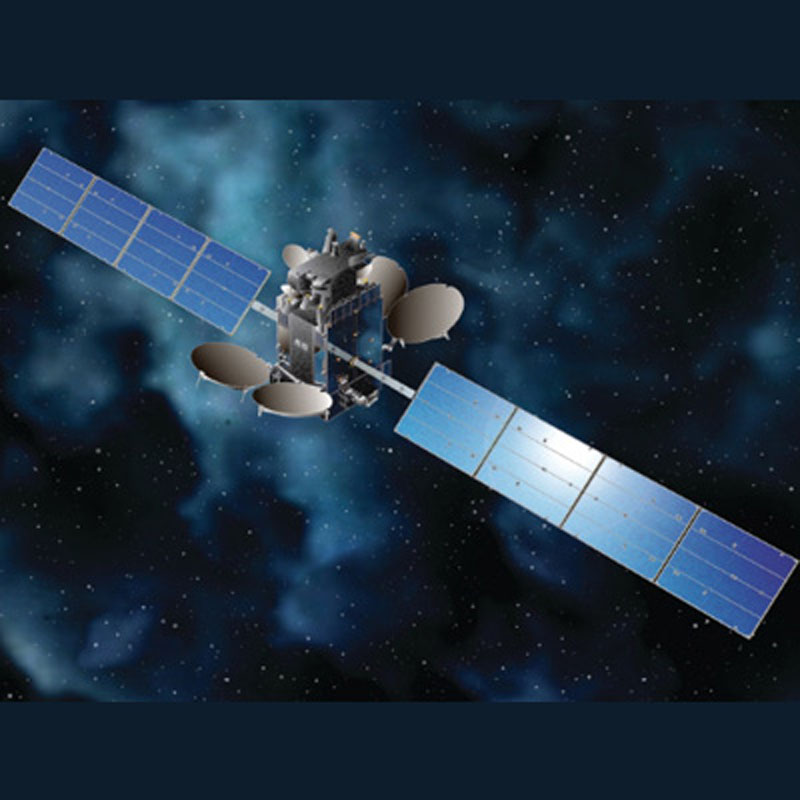
    With a lift-off mass of 2536 kg, GSAT-31 will augment the Ku-band transponder capacity in Geostationary Orbit. The satellite will provide continuity to operational services on some of the in-orbit satellites. GSAT-31 derives its heritage from ISRO’s earlier INSAT/GSAT satellite series.

    ISRO Chairman Dr K Sivan said, “GSAT-31 has a unique configuration of providing flexible frequency segments and flexible coverage. The satellite will provide communication services to Indian mainland and islands.”

    Dr. Sivan also remarked that “GSAT-31 will provide DTH Television Services, connectivity to VSATs for ATM, Stock-exchange, Digital Satellite News Gathering (DSNG) and e-governance applications. The satellite will also be used for bulk data transfer for a host of emerging telecommunication applications.”

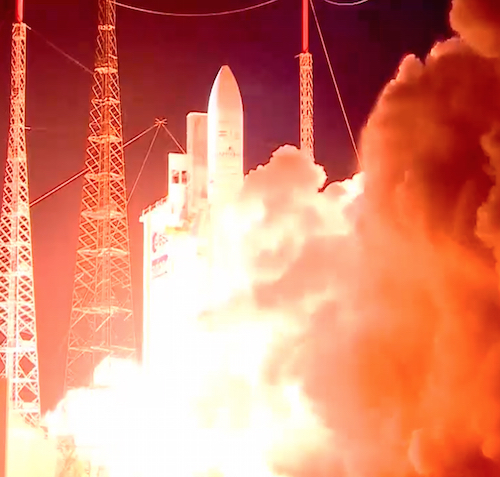
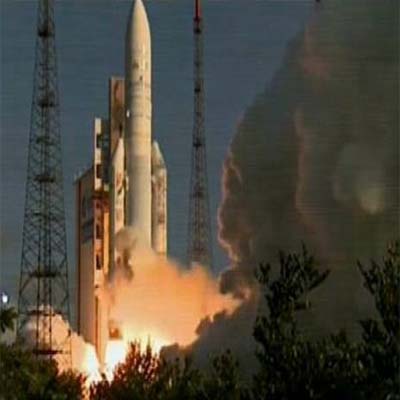
    The launch vehicle Ariane 5 VA-247 lifted off from Kourou Launch Base, French Guiana at 2:31 am (IST) carrying India’s GSAT-31 and Saudi Geostationary Satellite 1/Hellas Sat 4 satellites, as scheduled.

    After a 42-min flight, GSAT-31 separated from the Ariane 5 upper stage in an elliptical Geosynchronous Transfer Orbit with a perigee (nearest point to Earth) of 250 km and an apogee (farthest point to Earth) of 35,850 km, inclined at an angle of 3.0 degree to the equator.

    After separation from Ariane-5 upper stage, the two solar arrays of GSAT-31 were automatically deployed in quick succession and ISRO's Master Control Facility at Hassan in Karnataka took over the command and control of GSAT-31 and found its health parameters normal.

    In the days ahead, scientists will undertake phase-wise orbit-raising manoeuvres to place the satellite in Geostationary Orbit (36,000 km above the equator) using its on-board propulsion system.

    During the final stages of its orbit raising operations, the antenna reflector of GSAT-31 will be deployed. Following this, the satellite will be put in its final orbital configuration. The satellite will be operational after the successful completion of all in-orbit tests.

  • Indian M&E saw mix of regulations change the game in 2018

    Indian M&E saw mix of regulations change the game in 2018

    MUMBAI: If TRAI’s tariff regime for the Indian broadcast and cable sectors did not occupy top mind space of the industry in 2018, the year just gone by could also boast of some other major regulatory exploratory moves that could have deep impact on the sector in the near future; especially those relating to data protection, digital communication policy and online content that, according to some critics, is on a freeway with no checks and balances.

    Though many would say that the Indian media sector continues to be a challenging market (a polite euphuism for high level of regulation) offering tantalising opportunities because of sheer numbers on offer, Indian policy-makers have always had to counter such perceptions and, like their peers in many other parts of the globe, have at times found themselves outpaced by technology.

    Increasing protectionism aka economic nationalism around the world, led by the likes of US, the UK and China, resonates very well with Indian politicians and policy-makers too. And, such a trend is led more by regulations.

    Year 2018 has seen an interesting mix of regulations (some are still in the formative stages) for the Indian media and entertainment sector. Here we try to capture some of the annual highlights.

    Telecom Regulatory Authority of India

    Broadcast carriage regulator Telecom Regulatory Authority of India (TRAI)’s new tariff regime that had been embroiled in legal tangles hogged the limelight throughout 2018 with judicial directions clearing some hurdles. The last part relating to the 15 per cent discount cap was also dismissed as withdrawn in the Supreme Court.

    Issued early 2017, tariff regime aims to do away with bundling of TV channels and offering them on a la carte basis to consumers, apart from other directions like caps on discounts to consumers and distributors of content. The regulation’s main aim was to empower further a consumer who has primarily grown up on a diet comprising free meals. I-should-have-access-to-200-TV-channels-and-best-content-but-will-pay-a-nominal-monthly-fee attitude has over the years definitely spoilt the Indian consumer and part of the blame does lie with the industry that has been subsidising costs in a mad race for numbers.

    Now that TRAI wants to break those shackles of the consumer, industry stakeholders also have been pushing back against changes in the status quo. If content aggregators or broadcasters are to be blamed for subsidising costs, distributors, especially LCOs, too should be blamed for refusing to change with time and technology that have now brought them to the precipice where saying no to technological changes and upgradation could only hurl them towards closure. Lack of proper awareness and education of consumer too has created a vote bank of sorts that wants to consume global dishes at Indian rates.

    TRAI could be blamed for many things, but certainly not for lack of transparency. One of the most transparent regulators in the country, not only does it hold wide ranging discussions with stakeholders and industry, but has made some good recommendations too. For example, the regulator’s suggestions on ease of doing broadcast business, a new DTH policy and even use of foreign satellites or Open Sky Policy are not only radical but progressive and industry-friendly.

    However, many such nuggets are not implemented by nodal ministries like the Ministry of Information and Broadcasting, Department of Telecoms and Department of Space.

    In 2019 it is to be seen the stand TRAI takes on issues like proposed changes in audience measurement, OTT platforms (excluding video content) and the fast disappearing boundaries between telecom and traditional media companies as business interests converge.

    Ministry of Information and Broadcasting

    For MIB the year 2018 has been a roller-coaster ride with a former minister making more news than policies it has framed and rolled back. Whether it was a purported crackdown on social media and online journalists or handing out diktats to Indian TV channels to shift to Indian transponders or face the music or planning a social media hub within the ministry to track Indians’ digital footprints, TV-actress-turned-politician Smriti Irani has been in the limelight too often… till a Cabinet reshuffle saw her relinquish her MIB responsibilities to her junior minister Rajyavardhan Rathore in the first quarter of the year.  

    Irani waded into controversies because of her largely perceived unpopular move to create a panel in April 2018 to explore regulations for online media/news portals and online content. It did not help her or the government’s cause as this announcement, though being hinted at for several months, came close on the heels of a widely protested move to cancel accreditation of journalists if found peddling fake news, while the government did not define clearly what constituted fake news.

    Though the order was rescinded at the behest of the PM’s Office, the move had antagonised not just online journalists, but also social media players (many of whom are backed and funded by government’s sympathisers) and video-on- demand portals. That the responsibilities have been now passed on to Ministry of Electronics and Information Technology (Meity) tells how hot a potato it had been — and still continues to be with the latter being able to only partially address some of the issues.

    It would be an understatement to say that the past two years have been a difficult period for the Indian media and entertainment (M&E) sector what with after-effects of demonetisation of high value currency notes late 2016 and a new tax regime of GST rolled out last year. The story remains the same for ease of doing business in the sector as well.

    MIB is still to focus on the recommendations made by TRAI on 'Ease of Doing Business in Broadcasting Sector’ and implement them in letter and spirit. A unilateral decision by the previous leadership of MIB to impose a processing fee of Rs 100,000 per day/channel on temporary live uplinking of events (such as sports) and the same amount for seeking minor amendments (like change in name, logo, etc) is still causing heart burns.

    What was the rationale behind such moves to review processing fees? Allegedly non-revision for several years and that such a move could bring in some revenue for the government. But, should a government use licensing/permission fee as means of revenue maximisation? Probably, no.

    Towards the end of 2018, a proposal to amend the mandatory sports sharing rules to allow all distributing platforms to re-transmit sports programmes on Doordarshan’s terrestrial network where the rights lie with a private sector TV channel is unlikely to please those broadcasters who have invested billions of dollars in getting premium content for the Indian region. Giving up exclusivity would hurt the business, the sports broadcasters have chorused. It is to be seen how the MIB reacts to criticism of such a proposal.

    A revision of the DTH policy too is hanging fire as is an overhaul of the film certification processes as suggested by the Shyam Benegal committee. Interestingly, clearances for new TV channels too slowed down in 2018.

    Ministry of Electronics and Information Technology (Meity)

    For the Indian M&E sector, Meity gained importance in 2018 as proposals to regulate OTT platforms like WhatsApp, Facebook, YouTube, etc fell in its lap as has the proposal to frame content guidelines for the country’s burgeoning digital sector.

    If online video distribution is growing in India, so has the demand for content regulation. Even as Indian policy-makers struggle to understand the business model(s) for digital players, the cry for regulation to suit Indian sensibilities (or lack of it) too has increased. Netflix Indian original Sacred Games is still fighting out a legal case, while informal warnings have gone to other Indian OTT platforms too to tone down edgy programming being streamed.

    Bouncing amongst several government organisations (MIB, TRAI and Meity), the issue of online content regulation was a hotly debated topic in India with a large section of the industry pushing for self-regulation like those prevailing for TV content.

    If not in 2018, some sort of content regulation for online video will definitely come. With general elections round the corner in Q1 of 2019, Meity has preferred to sit over the issue of online content regulations.

    In response to a question asked by Congress Party’s Dr AM Singhvi few days back, the government informed Rajya Sabha or Upper House  that it has no proposal to introduce a legislation to codify web media and news portals or to introduce legislation for mandatory registration of web news portals. So, it’s truce for the time being.

    Department of Space

    Indian Space Research Organisation (ISRO) over the years has done some incredible work, including making the country an important player in the realm of global space industry. But in its zeal it has also ended up with several conflicts of interest — most importantly being a player and a gatekeeper or a regulator too.

    Thus, despite PM Modi’s government claiming it has eased norms for doing business in India, the foreign players in the space sector will always say otherwise. Year 2018 was no change from previous years as DoS and ISRO continued to push for increased reliance on Indian satellites for delivering broadcast and telecoms services while having inadequate capacities to match ballooning domestic demand.

    That satellites can play a critical role in deployment of broadband in remote places in India makes it imperative that a collaborative outlook on Indian and foreign satellites is taken. However, a new space policy, drafted in 2018 and likely to be brought in Parliament sometime in 2019, has left most foreign players and investors with an uneasy feeling as early readings suggest restrictive norms.  

    Department of Telecoms

    One of the biggest telecoms market in the world, India’s total subscriber numbers are a shade over 1191.40 million, while the wireless segment clocked a subs base of 1,169.29 million end of September 2018 as per data collated by TRAI. And, this humungous growth in mobile tele density has been fuelled by cheap feature phones and data packages at throwaway prices, though the internet infrastructure continues to be patchy.

    And, one of the biggest policy decisions of 2018 has been the formulation of the National Digital Communications Policy (NDCP), 2018 that seeks to unlock the transformative power of digital communications networks to achieve the goal of digital empowerment by attracting investments of about $ 100 million over the next few years.

    The NDCP 2018 aims to accomplish the strategic objectives by 2022 of broadband for all, creating four million additional jobs in the digital communications sector, enhancing the contribution of the digital communications sector to 8 per cent of India’s GDP from 6 per cent in 2017 apart from several other aims.

    The NDCP will aim to have more synergies amongst various government organisations, stopping just short of creating an over-arching communications regulatory body for broadcast, telecoms and digital realms.

    In some ways every new beginning comes with a mix of hope and fear, but India’s telecoms, broadcast, cable and digital sectors do have many upsides to look out for in 2019. That is, if policy-makers do uphold their part of the bargain of easing norms for doing businesses even while empowering the consumer and making the country an investor-friendly destination.

  • Gsat-11, India’s heaviest comms satellite, launched

    Gsat-11, India’s heaviest comms satellite, launched

    NEW DELHI: Indian Space Research Organisation (ISRO)’s heaviest and most-advanced high throughput communication satellite GSAT- 11 was successfully launched from the Spaceport in French Guiana during the early hours of today.

    The launch vehicle Ariane 5 VA-246 lifted off from Kourou Launch Base, French Guiana at 2.07 am (IST) carrying India’s GSAT-11 and South Korea’s GEO-KOMPSAT-2A satellites, as scheduled. Ariane 5 is one of three launch vehicles operated by Arianespace along with Soyuz and Vega.

    After a 30-min flight, GSAT-11 separated from the Ariane 5 upper stage in an elliptical geosynchronous transfer orbit. The achieved orbit was very close to the intended one.

    The 5,854-kg GSAT-11 will provide high data rate connectivity to users of Indian mainland and islands through 32 user beams in Ku-band and 8 hub beams in Ka-band.

    “GSAT-11 will boost the broadband connectivity to rural and inaccessible gram panchayats in the country coming under the Bharat Net project, which is part of Digital India programme,” ISRO chairman Dr K Sivan said.

    The Bharat Net project aims to enhance the public welfare schemes like e-banking, e-health, e-governance and entertainment services among others.

    Sivan said GSAT-11 will act as a forerunner to all future high throughput communication satellites. “Today’s successful mission has boosted the confidence of the entire team,” he added.

    This 10th mission in 2018 reflects the availability and flexibility of Arianespace, which has performed a launch every two weeks since 6 November, the European company said on its website, adding since the launch of India’s APPLE experimental satellite on Ariane Flight L03 in 1981, Arianespace has won nearly all of India’s geostationary orbit launch contracts opened to non-Indian launch vehicles, and has signed 24 launch contracts with the Indian space agency.

    GSAT-11 is the 22nd satellite from ISRO to be launched by Arianespace, and the largest and heaviest satellite ever built by India’s space agency. Arianespace has two other ISRO satellites in its order book to launch: GSAT-30 and GSAT-31. The latter, GSAT-31, will be lifted by Arianespace early next year.

    GSAT-11 was initially planned for launch on 25 May 2018 but was rescheduled with the ISRO citing the need for additional technical checks.

  • GSat29, India’s communication satellite, launched

    GSat29, India’s communication satellite, launched

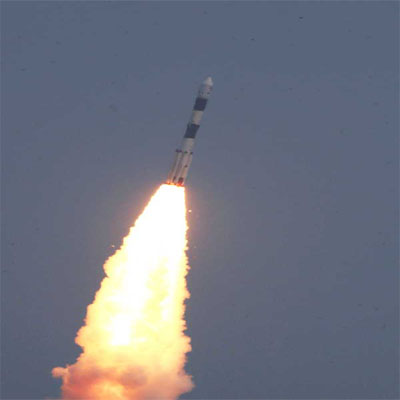
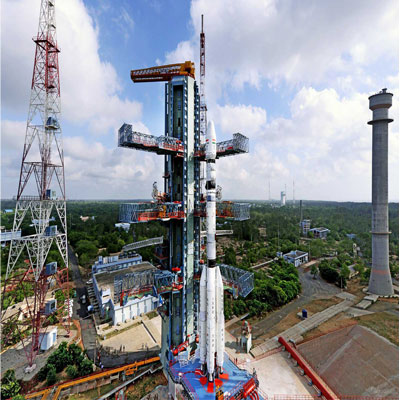
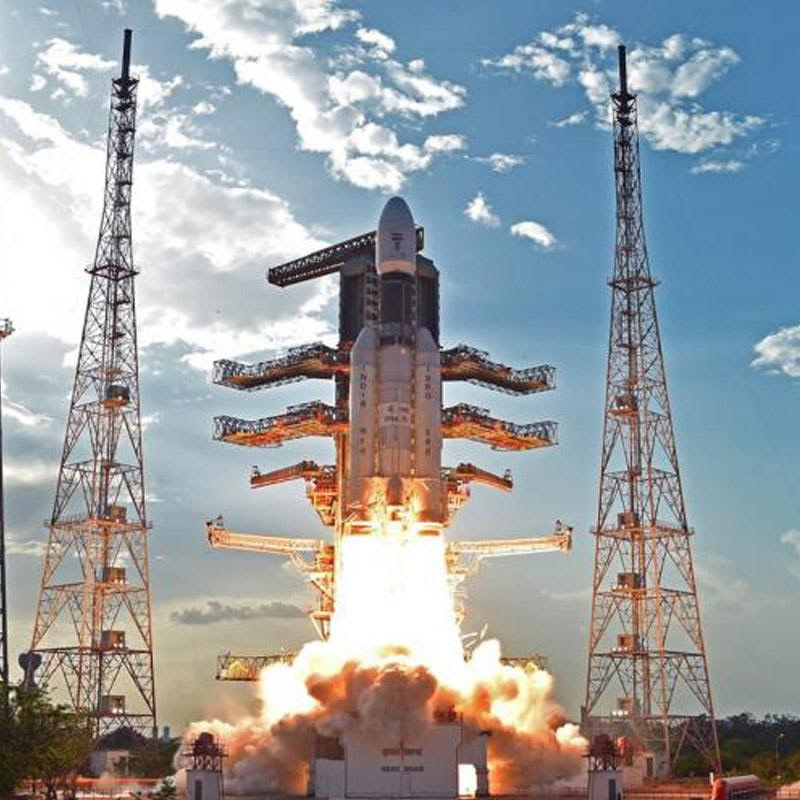
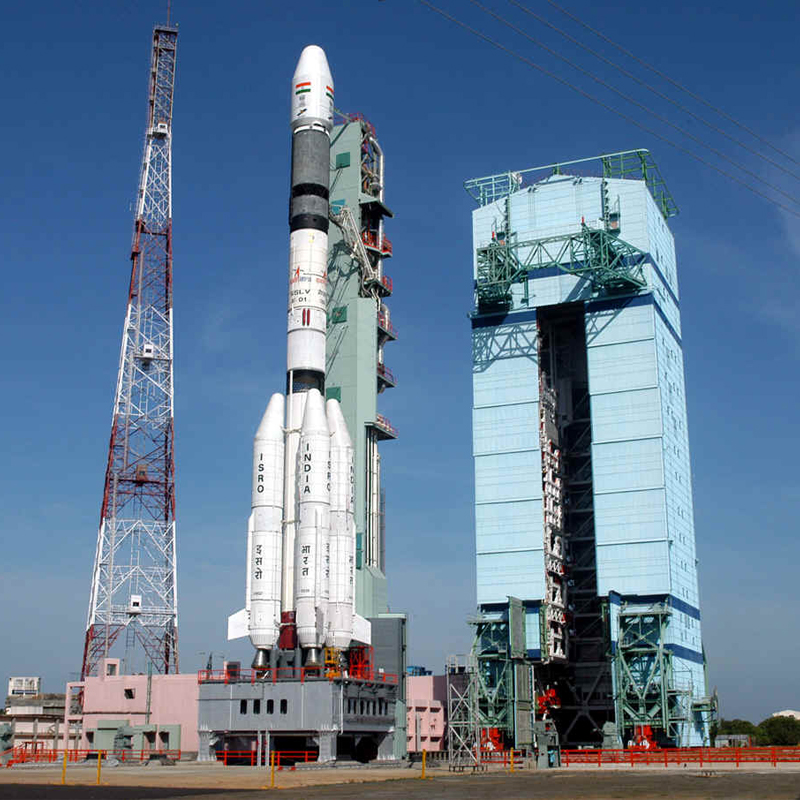
    MUMBAI: Precisely at 5.08 p.m. Wednesday the GSLV-Mk III rocket on its second developmental flight began its ascent with a strong deep growl that reverberated like a thunder roll breaking free from the second launch pad at the Satish Dhawan Space Centre (SDSC) in Sriharikota carrying communications satellite GSat29.

    The Indian space agency had flown a similar rocket on June 5, 2017, with GSAT-19 satellite. Prior to that ISRO had flown another rocket with 3.7-tonne dummy payload in 2014 to test its in-flight structural stability and aerodynamics, according to wire agency reports.

    According to Indian Space Research Organisation (ISRO), GSat29 with a life span of 10 years is a multi-beam satellite that carries Ka/Ku-band high throughput communication transponders intended to meet the communication requirements of users including those in remote areas.

    In addition, several new technologies such as Q/V-band payload, data transmission through optical communication link will be demonstrated. This will help in realising future advanced satellites, ISRO said.

    ISRO chairman K. Sivan said the launch was one of the “very important missions and a milestone” for India’s space programme.

    “This is GSLV-MkIII-D2 second developmental flight. It is going to launch very important and high throughput satellite GSAT-29. The satellite will be useful in Jammu and Kashmir and North East region for providing connectivity under the Centre’s Digital India programme”, Sivan was quoted by agencies as saying.

    According to the ISRO, the GSat29 satellite is intended to serve as a test bed for several new technologies. It is specifically designed to cater to communication requirements of users from remote areas of the country.

  • ISRO to launch 3 satellites for high-speed bandwidth connectivity

    ISRO to launch 3 satellites for high-speed bandwidth connectivity

    MUMBAI: To provide high-speed bandwidth connectivity to rural areas, the Indian Space Research Organisation (ISRO) will launch three more satellites as a part of the government’s digital India programme, according to a report by the Press Trust of India.

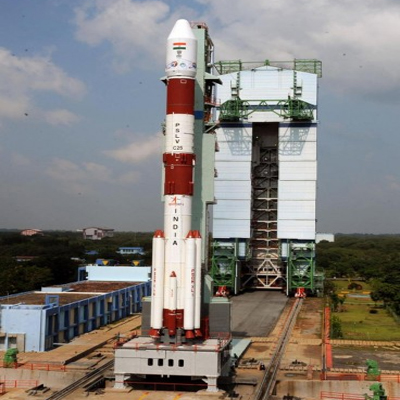
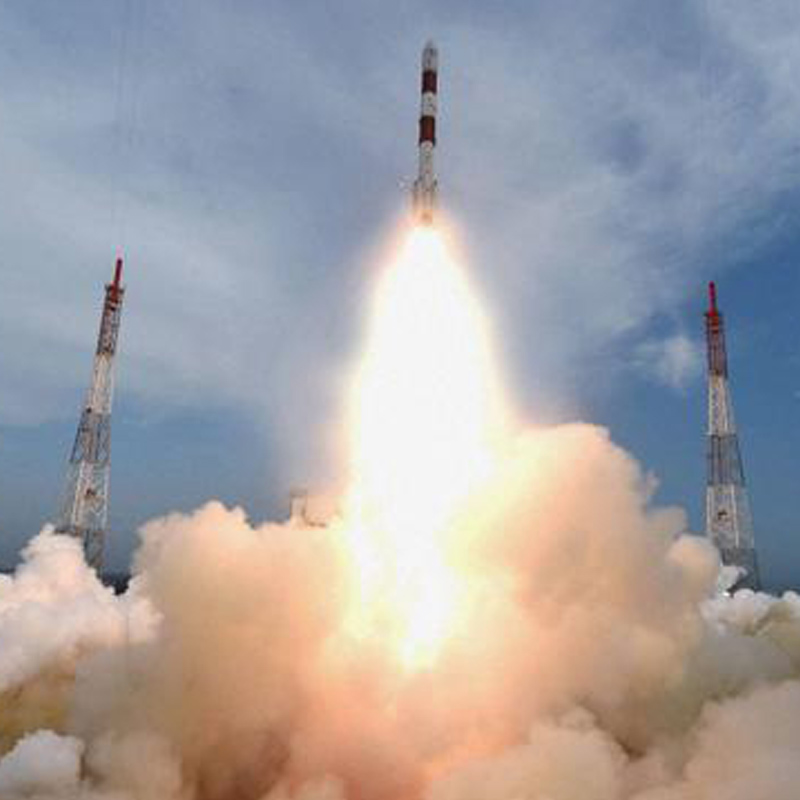
    After the successful launch of two UK satellites by Indian rocket Polar Satellite Launch Vehicle (PSLV) on Sunday, ISRO Chairman K Sivan said, “The ISRO will launch three more satellites, which together will provide international level bandwidth speed.”

    According to Sivan, the satellites are AGSAT 20 (to be launched next year), GSAT 11, and GSAT 29. GSAT 19 has already been launched.

    Sivan informed that the space agency had planned a series of launches over the next six months. There will be a rocket launch mission every second week.

    Sivan also said earth observation satellites will also be launched in addition to the communication satellites. The much-awaited moon mission will happen next January.

    “The launch window for Chandrayaan-2 mission is planned between 3 January and 16 February 2019. We are aiming for 3 January. We do not expect any delay in the Chandrayaan-2 mission,” Sivan said.

    Sivan said that ISRO will be the certifying agency for the rocket carrying Indian astronauts.

    According to Antrix Corporation, chairman-cum-managing director S Rakesh, the revenue from the launch of two UK satellites is over Rs 220 crore. Sivan said that the ISRO would like to get the expertise of other countries in this regard.

    India on Sunday night successfully put into orbit British earth observation satellites NovaSAR and S1-4 in copybook style.

    The two satellites belonged to Surrey Satellite Technologies Ltd (SSTL), UK.

    Queried about the next commercial launch, Sivan said, “The next PSLV rocket will carry 30 small satellites from third parties apart from carrying an Indian satellite.”

  • Parliamentary IT report cites high charge by Antrix as hurdle to satellite connectivity

    Parliamentary IT report cites high charge by Antrix as hurdle to satellite connectivity

    MUMBAI: Despite the Department of Telecommunications (DoT) citing high cost of satellite-delivered bandwidth to reach remote areas for providing broadband services, parliament’s committee on IT has observed that prohibitive cost should not come in the way of availing of the services as adequate funds are available, including those from Universal Service Obligation Fund (USOF).

    Earlier also DoT special secretary N Sivasailam blamed the turf war between the ministry and Indian Space and Research Organisation (ISRO) for delays in taking connectivity to far-flung areas.

    While in phase I of BharatNet project, satellite connectivity was taken up only in one gram panchayat (GP), but in phase II, more than 6407 GPs are planned to be connected. 4938 GPs are in North Eastern Region, 885 GPs in Jammu & Kashmir and 584 GPs are in the rest of the country. 1407 GPs were supposed to be provided with broadband connectivity through satellite by June 2018 by BSNL and the rest were to be completed by December 2018 through a bidding process. BSNL was expected to have completed connectivity to 1407 GPs by now.

    Shortage of satellite bandwidth and huge operational cost charged by “Antrix” are cited as the impediments associated with connectivity through satellite. The high operational cost is due to ISRO’s monopoly and the DoT has informed the committee that with the availability of more bandwidth in two to three years, sufficient capacity shall be available.

    “The capital cost of satellite is very little. But the recurring cost is prohibitive. We provide satellite connectivity on a very small bandwidth to Andaman and Nicobar and it costs us something like Rs 300 crore for that small population to be able to pay for bandwidth. It is typically because of the monopoly of ISRO. In India, satellite communication is 300 times more expensive than in the US. So, satellite is prohibitive. We are going for it only in areas where it is not technically feasible to do any other thing,” DoT secretary stated.

    Areas like Jammu and Kashmir, Uttarakhand, Himachal Pradesh and the North Eastern states have had basic challenges halting the project’s timely implementation. “The committee recommends that sincere efforts be made to achieve the target of providing connectivity through satellite to all the identified 6407 GPs covering above states,” the recommendation adds.

    When the committee questioned the DoT on the issue of availability of sufficient bandwidth, the representative of the department stated, “We want higher bandwidth for which the USOF and the Bharatnet can make the payment. But the bandwidth is not available. They are going to put two satellites in the orbit this year. With that more bandwidth would be available. But right now, there is a crunch of bandwidth with ISRO in these difficult areas, particularly in Jammu and Kashmir and North-East. So, the issue with the ISRO is availability of bandwidth and the cost is very high. It is higher if we compare it with the international rates.”

    Since heavy investment is involved, the committee even questioned if providing connectivity through satellite will be sustainable in the long run. To this the department stated that with the availability of more bandwidth in two to three years of time especially through High Throughput satellites in Ka-Ku band and Ka-ka band from DOS/ISRO sufficient capacity shall be available. ISRO is planning to launch series of satellites in near future to make available the enhanced satellite bandwidth.

    BharatNet project can enhance the lives of thousands giving them access to information available online and enhanced communication with the privileged part of the country. The ISRO and DoT issue needs to be resolved on priority basis to put an end to the delayed implementation.

  • ISRO gives nod to 27 satellites for future DTH, science demands

    ISRO gives nod to 27 satellites for future DTH, science demands

    MUMBAI: Indian Space Research Organisation (ISRO) has allowed three industries (two private and one government-run firm) to build 27 satellites in the next three years. This is to protect future demands for satellite capacity for DTH broadcasting and scientific missions as well.

    “The contract is for each of the three to make nine 1.6 tonne to 2-3 tonne satellites, which means they’ll make a total of nine every year and 27 by the end of three years,” according to a source from ISRO, as quoted by TOI.

    Alpha Design consortium that includes six SMEs- Newtech, Aidin, Aniara, DCX, Vinyas and Exseed Space- defence PSU Bharat Electronics Limited (BEL) and Tata Advanced systems make three satellites each per annum for the next three years as per the ISRO contract for satellites.

    The contract has the option of extending the same for another two years, which will add 18 more satellites to the count.

    Alpha Design CMD HS Shankar was quoted stating, “We signed similar agreements as the Tatas and BEL and I hope that creates the ecosystem to allow more industries in the future.”

  • Launch of SES-12 to assist Digital India vision

    Launch of SES-12 to assist Digital India vision

    MUMBAI: The successful launch of SES-12, which provides coverage over Asia will assist the acceleration of the country’s push towards a digital India and financial inclusion initiatives, according to a leading satellite industry expert as per a report by the Press Trust of India from London.

    SES Video EVP global sales Deepak Mathur said, “The successful launch of SES-12 recently would help support India’s growing direct-to-home (DTH) TV market, as more and more consumers in rural India embrace the medium.”

    The government’s vision to digitally empower India and transform connectivity in the country will see a push through the launch of the satellite, Mathur informed.

    The senior executive at SES, one of the world’s leading satellite operators, also pointed out that the satellite’s concentrated beams could also provide highly cost-effective capacity to enable in-flight connectivity services in line with the recent directive to allow mobile and internet services in Indian airspace by Telecom Regulatory Authority of India.

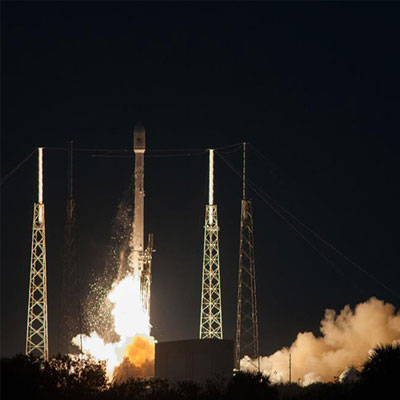
    SES-12, which is uniquely designed with state-of-the-art wide beams and high throughput beams, was successfully launched onboard a flight-proven SpaceX Falcon 9 rocket from Cape Canaveral in Florida, US, on 4 June 2018. Together with SES-8, it is expected to reach 18 million homes.

    This satellite will provide coverage from the Middle East to Australia. The combination of two satellites will offer powerful Ku-band wide beams for broadcast and media applications, and high throughput spot beams for providing internet connectivity, reliable cellular services and content targeted at specific language groups.

    The ever-increasing demand of audience will be addressed by the pay-TV operators as the satellite will provide reliability and scalability to elevate the viewing experience by adding more content and delivering good picture quality for high definition (HD) and ultra HD content.

    Mathur explained, “With its dual capabilities of both wide beams and high throughput spot beams, SES-12 will serve to enhance connectivity for people and businesses in remote and unconnected parts across Asia, where providing rural connectivity and eliminating the digital divide is a key priority for many governments. SES-12 also brings augmented capacity to enable satellite broadcasting and DTH services across Asia-Pacific.”

    Specifically over India, SES has five satellites – NSS-12, SES-8, NSS-6, SES-7 and SES-9 – currently operational. SES-12 will be replacing NSS-6 as the largest satellite to offer services and capacity over India.

    The company’s primary customer in the Indian market is Antrix, the commercial arm of the Indian Space Research Organisation (ISRO), with whom it has worked to help augment the enormous demand for satellite connectivity over India.

    Mathur also mentioned that ISRO has a pivotal role to play in the development of new space technologies and in making space more accessible, and affordable. SES is also exploring potential areas of collaboration with Indian partners to see how they both can work together to advance the development of space technologies.

  • ISRO/DoS relent on use of foreign satellites; MIB starts processing applications

    ISRO/DoS relent on use of foreign satellites; MIB starts processing applications

    MUMBAI: India’s Department of Space, overseeing the Indian Space Research Organisation (ISRO), has eased up on its hitherto hard stance on Indian TV channels and teleports using foreign satellites’ capacity — if the Indian customer has a long-term contract.

    In a communication to Ministry of Information and Broadcasting (MIB), DoS/ISRO combine has advised that applications may be processed — for the time being — without insistence on migration to an Indian satellite or asking the time frame for doing it. 

    According to government sources, it has been suggested to MIB that it could start granting permissions to TV channels proposing to use foreign satellites for uplinking purpose if they are going in for a contract of three years or more. If an applicant company, having existing government permissions, has long-term capacity contract on foreign satellites, it too should be allowed to continue with its services.

    However, there’s a caveat to ISRO/DoS’ latest softening of stance. Any company that has existing permission from MIB to start a TV channel or communications service (like teleports) and is using foreign satellites should give the Indian space agency at least three-month notice for space on an Indian satellite when its contract with a foreign satco is ending. Same holds true for all fresh permissions for TV channels given by the government.

    The DoS/ISRO communication referred to over 35 applications that were kept pending by MIB as Department of Space had been insisting on migration to Indians satellites. MIB had also issued letters earlier this year asking companies seeking name change, for example, as to when they proposed to shift to an Indian satellite. Out of these cases highlighted by ISRO/DoS, at least 10 have long-term contracts for capacity on foreign satellites.

    Last month MIB cleared applications of three new TV channels in Indian languages under Aastha brand name. The Aastha channels are owned by a company controlled by Balkrishna, a close associate of yoga-guru-turned-entrepreneur Ramdev who’s Patanjali FMCG venture is giving even multinational companies sleepless nights, if revenues and sales growth are to be believed.

    Government nods recently were also given for name and logo change to some big broadcasting companies. Incidentally, some of the Aastha TV channels use foreign satellites for uplinking activity.

    In recent times, ISRO has been facing minor setbacks regarding launch of communications satellites, including Gsat-11, which returned to India just few days before launch from a European launchpad. 

    Still, it needs to be seen how long the government continues allowing Indian customers facilities of foreign satellites.

    MIB Expands Areas for Online Applications

    In a new advisory put out yesterday, MIB has expanded the services for which applications could be made online, something that the government has been insisting on in an effort to reduce processing time.

    The online module for submitting applications on www.broadcastseva.gov.in extends to cases relating to change in details of a company, annual permission fee for teleport companies and company-specific changes being sought to be made by teleports.

    The government has also reiterated an earlier stand of accepting online payments for various processing and annual permission fee, adding such payments should be made on time failing which action could be taken against companies concerned under existing regulations.

    Also Read :

    MIB clears TV channel applications; Rathore calls for stakeholder meets

    MIB, DoS nudge TV channel to use Indian satellites

    MIB says ISRO upping capacity to facilitate migration from foreign satellites

    Comment: 3 areas that new MIB minister Rathore needs to target