Tag: ISRO

  • Discovery+ launches new original ‘Gaganyaan: Bharat ki Antariksh Udaan’

    Discovery+ launches new original ‘Gaganyaan: Bharat ki Antariksh Udaan’

    Mumbai: ISRO prepares for Mission Gaganyaan, India’s voyage of this astronomical achievement that will be showcased in Discovery+’s newest original – “Gaganyaan – Bharat ki Antariksh Udaan.”

    India etches its place in the highest echelons of human history, as ISRO prepares to send Indian astronauts into space aboard the first self-manufactured space rocket. With a pedigree of featuring successful and immensely popular cosmological titles like – ‘India’s Space Odyssey,’ ‘How The Universe Works,’ ‘Morgan Freeman’s Through The Wormhole,’ ‘Space Titans: Musk, Bezos, Branson’ and many more, discovery+ will exclusively premiere the new original on 18 May.

    As the clock counts down to “Mission Gaganyaan,” the documentary will feature three eminent astronauts namely, Rakesh Sharma, the first Indian to go into space, the elite record-holding woman astronaut of NASA – Sunita Williams, and Russian Cosmonaut – Oleg Kotov. Along with them, various experts namely, Dr G Madhavan Nair (former chairman, ISRO); Air Cdre (Rtd) Ravish Malhotra (former test pilot, IAF); Asif Siddiqi (space historian); Dr Brigitte Godard (flight surgeon, European astronaut centre); and other distinguished professionals will be lending their expertise on the subject.

    Produced by Miditech Studios, “Gaganyaan – Bharat ki Antariksh Udaan” charts the audacious and challenging journey of India’s human space flight programme, from developing the country’s state of the art cryogenic engine, testing of flights, rigorous astronaut training to the final preparations and anticipation before its launch in 2023. Supporting with archival footage, modern graphical representations of the complex processes and tremendous dangers of human space flight, this fascinating original will also recap the ground-breaking engineering that enabled India to successfully test the crew capsule launch & re-entry in 2014.

    Warner Bros Discover original content head- South India Sai Abishek said, “With rapid developments in space exploration, we are excited to present an inspiring documentary for our superfans of science and space programming which highlights the daunting journey undertaken by some of India’s brightest minds and space scientists. Through this special title, our objective is to celebrate and showcase the unique viewpoint to the progress India has made so far, in their endeavor of sending Indian astronauts into space and ensuring their safe return home on a made-in-India space shuttle.” He further added, “We are proud to be the first OTT platform to bring to our audience this historical journey which will put India on the world stage with other space faring nations.”

  • ‘India’s Space Odyssey’ is the story of ordinary people doing extraordinary work: director Pria Somiah

    ‘India’s Space Odyssey’ is the story of ordinary people doing extraordinary work: director Pria Somiah

    Mumbai: ‘India’s Space Odyssey’, the all-new discovery+ Original currently steaming exclusively on the platform celebrates the 60-year-long successful journey of India’s space programme pioneered by the Indian Space Research Organisation (Isro).

    Produced by Miditech Studios and narrated in Hindi by actor and space enthusiast R Madhavan, the documentary depicts how this mission started by Dr Homi Bhabha and Dr Vikram Sarabhai was taken forward by their able successors including the former president of India Dr APJ Abdul Kalam, Prof Satish Dhawan, and Dr G Madhavan Nair.

    The documentary captures landmark achievements of India’s Space Programme which help in understanding the tough circumstances under which Isro scripted its success story beginning with SLV3, and more recently the ‘Chandraayan’ and ‘Mangalyaan’ missions as well as the Organisation’s most ambitious ‘Gaganyaan’ programme which will be India’s first manned mission to space.  

    However, beyond the triumph and celebration is a story of sheer grit and determination that kept the mission going in the face of tribulations, limitations as well as condescension from certain quarters, and this is what director Pria Somiah intended to capture in the 48-minute-long documentary.  

    Somiah is an award-winning film-maker, having won a Green Oscar and several accolades at New York Festivals World’s Best Television & Film Award, UNICEF Asia Pacific Child Rights Award – Hanoi, International Gold Panda Award, Sichuan TV Festival, Cine Golden Eagle Awards, USA and World Media Festival for documentaries such as ‘Mangalyaan: India’s Mission to Mars’, ‘Megafloods: Kerala’, ‘Mumbai Attack’, ‘IC 814 Hijack’, ‘Silent Screams: India’s fight against rape’, ‘Megastructures: Mumbai’s Chattrapati International Airport’, ‘Skeleton Lake’, ‘Inside: Asia’s Largest Prison’, ‘India’s Game Changers’, ‘Undercover Asia: Girls for Sale’, and ‘Freedom to Love (Honour Killings)’.

    As the executive director at Miditech Studios, the television production company with which she has been associated for over 28 years, Somiah is responsible for content strategy and business development for a variety of content formats for internet platforms and international broadcasters such NatGeo, Discovery Channel, BBC World, Disney, Turner, UN Organisations, as well Indian Government Ministries, to name a few.

    In this candid interview, Somiah takes us through the making of ‘India’s Space Odyssey’ as well as the thrill and challenges of documenting monumental events that strengthened India’s resolution of becoming a leader in space exploration.

    Edited Excepts

    On the idea behind India’s Space Odyssey

    With new and ambitious missions like Gaganyaan being planned, and the encouragement of the private sector to enter Space Tech, India’s Space program is a highly topical issue. We felt the story of how we got here is an important one to tell.

    While documenting the Mars Mission for NatGeo a few years ago, I was involved with a lot of research during which I learnt that 1962 was when India’s space programme actually started and it’s going to be 60 years in 2022. Because this coincided roughly with 75 years of the country’s independence, it was also the perfect timing I thought. And that’s when we pitched the idea of doing a commemorative film to Discovery.

    On building the narrative

    With India’s Space Odyssey we wanted to put out not just facts, but a holistic understanding of how events unfolded at Isro through national and global events that impacted our space programme, and other significant factors such as India’s policy of non-alignment. So we built the narrative around three themes – scientific milestones, the impact of global events, and then visualising all of this through archive material, biographies, photographs etc.

    EMBED: ISO Poster

    On the process and elements involved

    We waded through archive material from different sources in India as well as Nasa and Roscosmos and interviewed experts from Isro, Nasa, and Glavkosmos to get an Indian and international perspective of how different events unfolded; a sort of anecdotal telling in parts.

    Asif Siddiqi, the space historian, and professor at Fordham University, New York, helped context the impact of global politics on India’s space program.

    As a storytelling device, hand-drawn animation was used to bring alive a moment in history. These were created by well-known animation director Prakash Moorthy. Especially composed music by Shantanu Sudame set the mood of events as they unfolded. 3D animation done by Purple Monkey was used to visualise the big missions to Moon and Mars. The script was written by Joshua Whitehead.

    On the biggest challenge of telling this story

    It’s a challenge to tell the story of 60 years in a one-hour documentary so we chose turning points in the history of India’s Space program, e.g., the choice of Thumba, Kerala, as a Rocket launch site and how it was officially designated a UN International Scientific Facility in 1968. This got the world’s space scientists to Kerala and Indian scientists greatly benefited from those interactions as one saw these relationships grow over the decades to come.

    Another turning point came with the ability to launch our own satellites. The SLV 3 story, with its initial problems and subsequent success, exemplifies the dedication and innovative, never-say-die spirit of Isro’s scientists.

    On the most elating experience while making the documentary

    Through this documentary, we have tried to capture the spirit of Isro and the culture of critical analysis it has nurtured over the years where even a junior scientist can question the project director.

    These are people without fancy degrees; they come from provincial engineering colleges and have really worked their way up. They have grown within the Isro system working with indigenous technology. The most well-known example is that of one of Isro’s most senior scientists and directors – SATCOM, TK Anuradha who began as a graduate. ‘India’s Space Odyssey’ is thus the story of ordinary people doing extraordinary work.

    On the role of media in India’s Space Diplomacy

    Whether it’s putting up a fleet of satellites or sending a mission to Mars, these are huge scientific endeavours involving mindboggling complexity. India’s space story is pretty unique in that, unlike certain other organisations we did not have large resources at our disposal. Despite these challenges we are among the top six space agencies in the world today – a victory considered impossible by some around the world.

    So, yes, these stories need to be told. After IT, space tech is one of our strengths, and now with the Prime Minister encouraging private players, it will definitely emerge as a big growth area for India. The media has a very big role to play in documenting successes like these. 

  • discovery+’s new original documents India’s space programme

    discovery+’s new original documents India’s space programme

    Mumbai: Streaming platform discovery+ is coming up with its all-new original titled “India’s Space Odyssey.” The documentary premiering on 7 October, celebrates the 60-year-long successful journey of India’s space programme. 

    Produced by Miditech Studios, “India’s Space Odyssey” features former chairman of the Indian Space Research Organisation (ISRO) Dr G Madhavan Nair, along with other ISRO experts and space historians and researchers. 

    Using a combination of expert interviews, archive footage and graphic representations, the film documents India’s journey to pioneering space technology and becoming a leader in space exploration that was started by Dr Homi J Bhabha and Dr Vikram Sarabhai, and how their able successors like former president of India Dr APJ Abdul Kalam, Prof Satish Dhawan, and Dr G Madhavan Nair scripted the success story with the SLV3- India’s first individual rocket launch vehicle, and more recently the ‘Chandraayan’ and ‘Mangalyaan’ missions.

    “Since its inception the Indian Space programme has achieved significant feats, thanks to the contribution of all the people who have worked on it. We are delighted that a platform like Discovery is taking these initiatives to the people in an attempt to encourage and inspire them,” stated ISRO chairman and DOS secretary Dr K Sivan.

    The docu-film will showcase the different technologies developed by ISRO including the Polar Satellite Launch Vehicle (PSLV) which recorded a success rate of 95 per cent and is the workhorse of ISRO’s satellite launch programme, and its most ambitious ‘Gaganyaan’ programme which will be India’s first manned mission to space.  

    The actor and space enthusiast R Madhavan will narrate the film in Hindi. “Curiosity has brought humans to where we are today, and it will continue to do so. I thank Discovery India for this wonderful learning opportunity, and I feel honoured to have lent my voice to a project that could inspire future generations to embark on their quest to explore space,” said the actor.

    “Discovery is invested in being a worldwide leader of original edutainment with an immersive range of space-related documentaries and is now bringing a detailed and truly inspirational documentary on the much-appreciated Indian Space Programme,” said Discovery Inc South Asia original content head Sai Abhishek. “We believe India’s Space Odyssey will delight Discovery fans and draw in all the space enthusiasts from across the country.”

  • How Broadcoasters’ LED screens are lighting up the Mumbai coastline

    How Broadcoasters’ LED screens are lighting up the Mumbai coastline

    MUMBAI: What started as a seed of an idea to explore India’s vast coastline as a marketing medium led to a whole new and unique concept of having LED hoardings over water. Launched in 2017, Zen Digital Media is an Indian start-up co-founded by Sanjay Raval and Payal Raval and Broadcoasters is one of its first products to go live this month.

    The novel OOH set-up uses a customised, self-propelled vessel to carry high resolution LED screens with auto-brightness sensors along India’s coastal areas as an advertising platform, showcasing various formats of eye-catching static and video content. 

    While the start-up had the first-mover advantage in the segment, it did bring its fair share of challenges too. Right from designing the vessel according to the specifications mandated by the Indian Register of Shipping and customising it to support the weight of huge LED screens, combining high-tech tools with mobility while taking into account the wind pressure – the team had the whole thing planned down to a tee.

    “A lot of effort has gone into creating this kind of infrastructure. What we have done is make a platform that is very future tech-ready in terms of new technologies like VR, AR at our back end and infrastructure. So tomorrow if any gaming or tech companies want to take over the platform to screen gaming finales or have people interact with the screen, we will be ready for that too,” Zen Digital Media head of marketing Varun Ramrakhyani told Indiantelevision.com.

    Though capital-intensive and cost-heavy, Ramrakhyani believes the platform is different enough to warrant a new category in itself, and not be compared to other out-of-home (OOH) advertising media. “We are essentially broadcasters who can relay anything we want on our space, in addition to operating on the coast, hence the name Broadcoasters,” he quipped.

    The first Broadcoaster vessel was launched and anchored at Mumbai’s Bandra Worli Sealink promenade on 15 March. The next launch is scheduled across the beautiful coastline of Juhu-Versova Beach this month. It is a cyclical industry which can only operate in the ocean for eight months – between October and May – in a year, as they have to be out of the waters during the monsoon.

     “While there have been a few global precedents of having LEDs on water, we have opened up the platform to a lot of participants in a lot of different ways,” said Ramrakhyani. “It is new-age storytelling where brands can flex their creative muscles, play around with light, animation, VFX special effects, and long-form videos. The Brihanmumbai Municipal Corporation (BMC), Mumbai police and ASCI (Advertising Standards Council of India) are already participating and using the platform to educate people and relay their messages very creatively.”

    For the Juhu launch, the team has selected a five-kilometre stretch wherein the vessel will keep plying to and fro. The second vessel is accordingly designed to carry dual screens while moving from point A to point B and back, all while using heavy animation, VFX, and full-length videos.

    Zen Digital also plans to use the screens to highlight important events and achievements, such as an Olympics victory for India or an ISRO launch. “So, the entire idea is to engage, entice, educate and excite the audience in a way that has never been done before,” he remarked.

    Several brands such as Amul, MG Hector, Skoda, Tata Motors, Volvo, Mercedes, Kotak, HSBC, Amazon Prime, and non-government bodies such as ASCI are already on board. The start-up has also tied up with five-star properties along Juhu beach to conduct full-scale events.

    Its second initiative, ‘Beach and You’ is modelled along the lines of “Equal Streets” of Bombay, wherein it will showcase content which people coming to the beach can make use of, like Zumba or yoga. This will be executed with the help of tie-ups with health and fitness companies to air fitness sessions.

    But what of the profitability and feasibility aspects of this hitherto unexplored segment in India?

    “No capital-intensive business can be profitable from day one. We believe it will take its own sweet time to give returns. The traditional industry is very RoI-centric, and everything has to be measured. But creativity is very subjective and cannot be measured. Brands that want to test the market with creativity come to us,” summed up Ramrakhyani.

  • #Throwback2020: Success in space and satellites

    #Throwback2020: Success in space and satellites

    NEW DELHI: The pandemic may have slowed down life on earth, but it could not deter the world from looking beyond. As most activities came to a sudden halt, the space agencies across the globe persevered through the crisis. Some had to push back their crucial space missions, others struggled to keep them on track, while a few managed to script history.

    Indian Space Research Organization (ISRO) began the year with the launch of a high-powered communication satellite GSAT-30 on-board a European rocket from French Guiana. It replaced the aging INSAT 4A to continue providing high quality television, telecommunication, broadcasting services to the Indian subcontinent with extended coverage over Asia and Australia.

    The lockdown ensured no further launch took place for the next ten months, until November, when India’s premier space agency returned to the launch pad to inject EOS-01–an earth observation satellite—into space along with nine other customer satellites. This was soon followed by the launch of the country's forty second communications satellite CMS-01 in December which replaced the aging GSAT-12.

    While ISRO managed to keep its regular satellite launches on track, the pandemic cast a shadow on its bigger space missions. This included a fresh bid to achieve a successful soft landing on the moon which Chandrayaan-2 had failed to achieve last year, and first of the two unmanned missions of Gaganyaan, India’s first human-spaceflight programme which was expected to take off this December. 

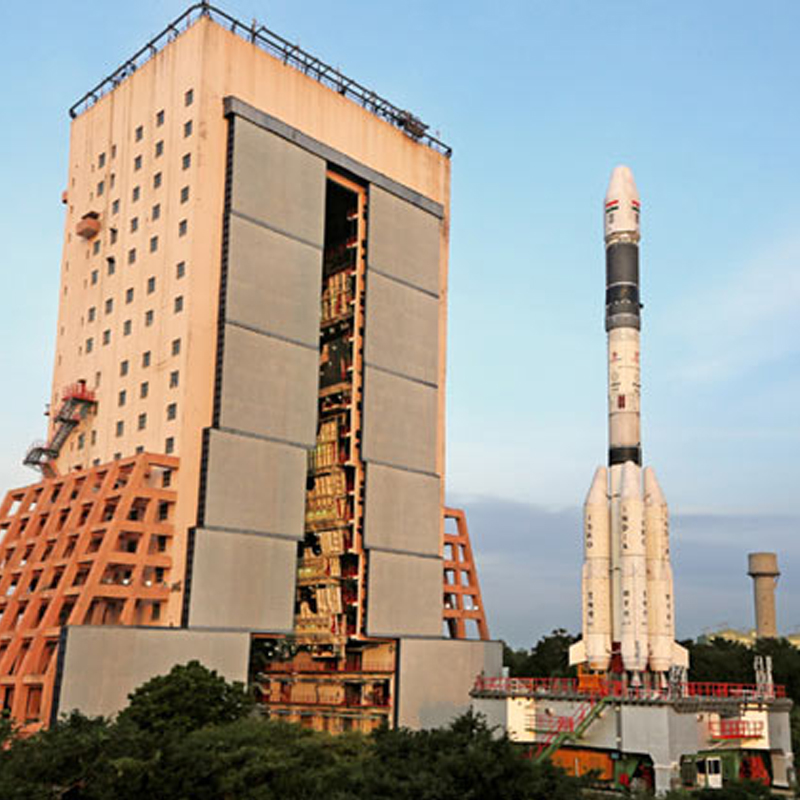
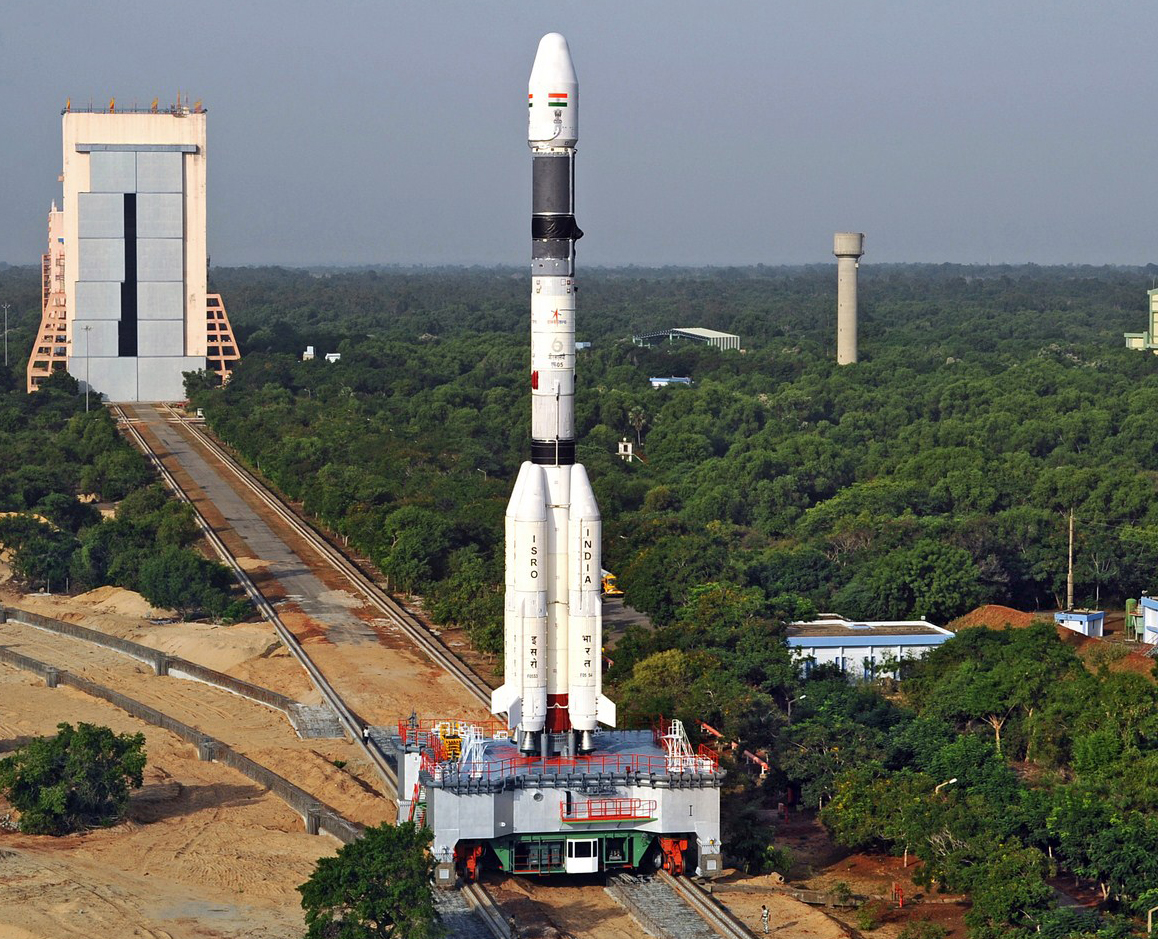
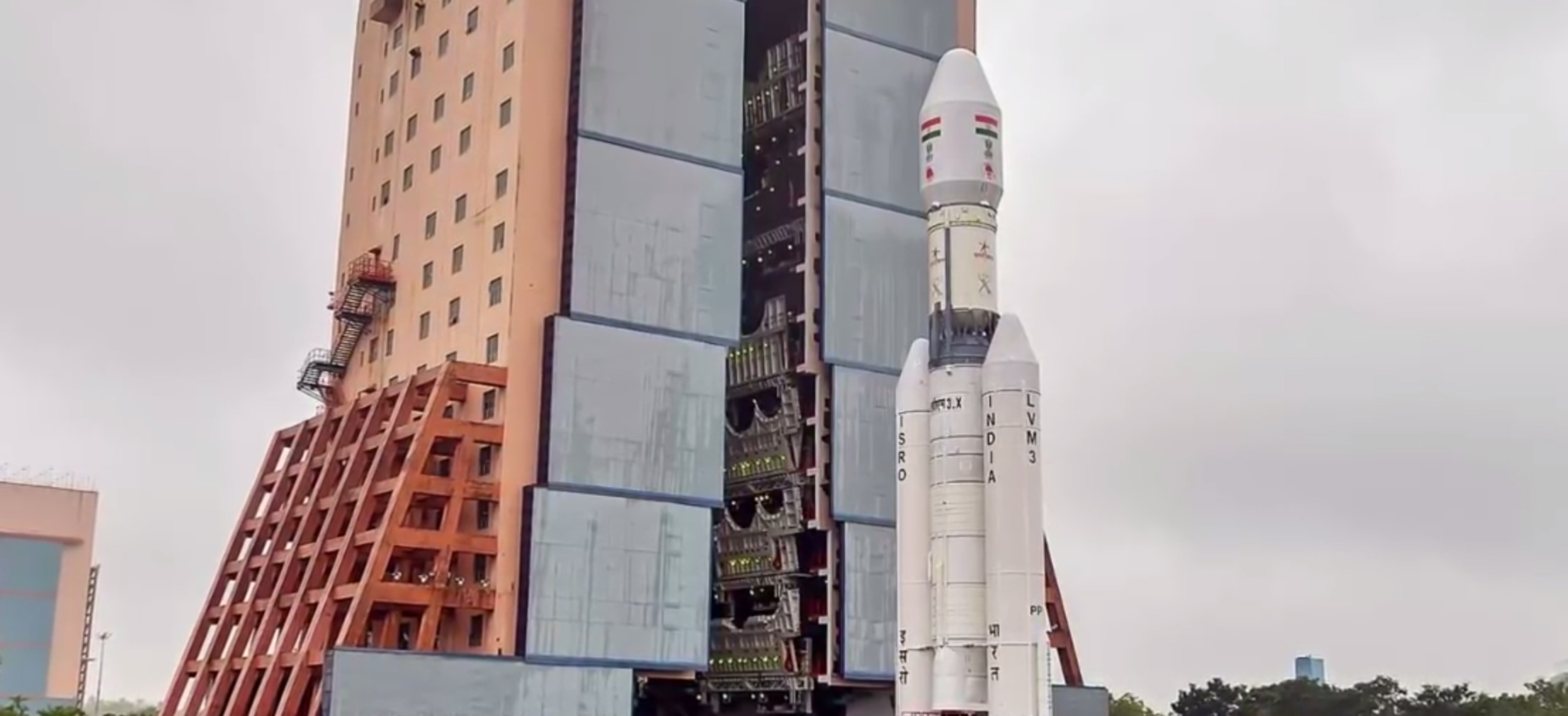
    Nonetheless, the groundwork for the 2022 Gaganyaan mission continued. The agency completed the selection of the astronauts and began their training. The process of human rating for GSLV MkIII selected for the historic mission also remained in progress. 

    Globally, as many as 101 orbital launches took place in this turbulent year. The US was top of the leader board with 40 successes out of 44. China came next with 33 successful launches out of 37 attempted. Russia had a perfect score with 16 satellites reaching their orbital locations. Ditto with Japan which had four immaculate launches, and Europe had four clear takeoffs and one failure with Iran and India acing it with two successes each.

    A large share of the launches were accounted for by low earth orbiting birds which were meant for earth observation, technology demonstration and to provide internet in select areas.

    Amongst the big communications birds which were sent into space included: Tiantong 1-02 (mobile communications, China), Galaxy 30 (Intelsat, communications, North America), BSat4b (Broadcasting Satellite System Corp, communications, Japan), Ekspress 80 and Ekspress 103 (Russian Satellite Communications Co, communications, Russia), Apstar 6D (APT Holdings; communications, China), JCSat 17 (Sky Perfect JSat Corp; communications, Japan), GSat30 (ISRO, communications, India, Kourou), and Eutlesat Konnect (Eutelsat, communications, Africa & Europe). Palapa N1 – a satellite owned by Palapa Satelit Nusantara Sejahtera, a joint venture between Indosat Ooredoo and Pasifik Satelit Nusantara, or PSN – met with a fiery end after its launch vehicle the Long March 3B had engine failure.

    The year will be noted for the achievement by the Mission Extension Vehicle MEV-1 which became the first telerobotically-operated spacecraft to service another satellite on-orbit when in February 2020 it completed the first phase of a five-year mission to extend the life of the Intelsat 901 (I-901) satellite. It was brought back from the graveyard orbit to a geosynschronous one by April 2020, opening up a future where human intervention is not needed for on-orbit satellite servicing, like it was for dealing with the Hubble telescope in the early 2000s.   

    2020 also marked the first time a private company successfully undertook a crewed mission into the low earth orbit. Elon Musk's SpaceX achieved the feat after it was able to put two astronauts into space aboard its spacecraft Crew Dragon, heradling a new chapter in commercial space operations. It was a busy year for the American aerospace manufacturer which injected as many as 26 satellites into space. The company is racing to get its Starlink constellation in operation to provide high speed internet connection from the skies.

    The year also witnessed the return of UK based broadband satellite communications company, OneWeb which put a total of 36 communication satellites into space on board a Russian Soyuz rocket. The satellite operator which recently emerged from bankruptcy is eyeing to build a massive constellation of over 650 satellites to beam internet service to people. Early this year, India’s Bharti Global had picked up a 45 per cent stake in the company.

    In the global space arena, Mars continued to allure the space agencies and three countries managed to keep their date—a brief time window which comes around every two years.

    The first was the United Arab Emirates (UAE) which scripted history with the successful launch of its spacecraft named Hope— the first-ever interplanetary mission by any Arab country. It was followed by the launch of Tianwen-1 by China in July and Perseverance rover by the United States a week later. All three spacecraft are expected to enter the Martian orbit early next year.

    However, the pandemic marred Europe and Russia's joint Mars mission and the launch of its first Mars rover, Rosalind Franklin probe, was postponed to 2022.

    Among other ground-breaking missions of 2020 was China’s Chang'e-5 lunar capsule which returned to Earth carrying fresh samples of moon rocks. China has now become just the third country to explore the moon's surface, after the US and the former Soviet Union, and the first to successfully return from the moon since Soviet Union’s Luna 24 spacecraft in 1976.

  • ISRO successfully launches communication satellite CMS-01

    ISRO successfully launches communication satellite CMS-01

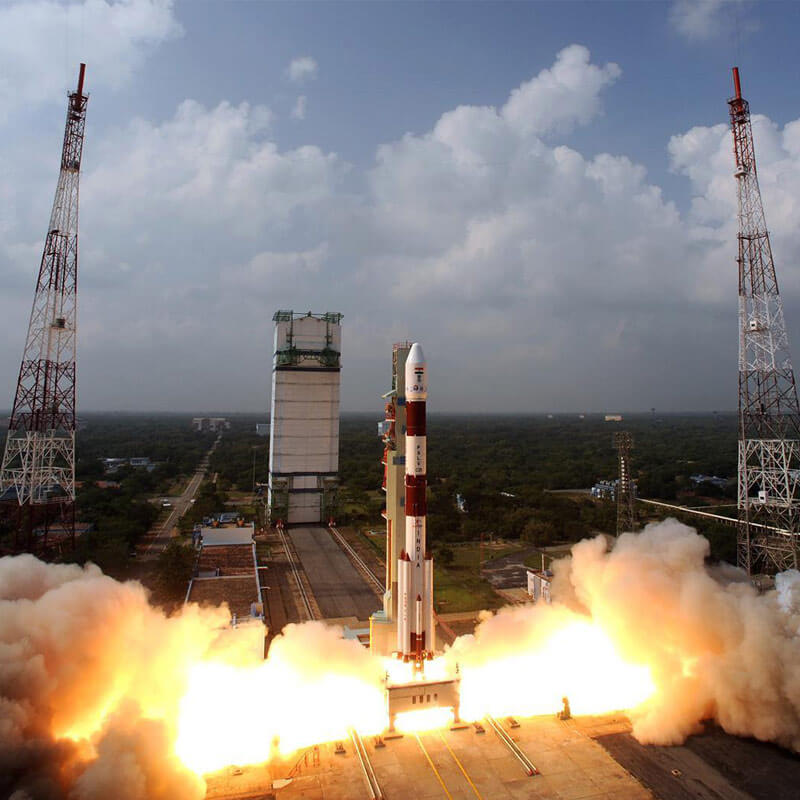
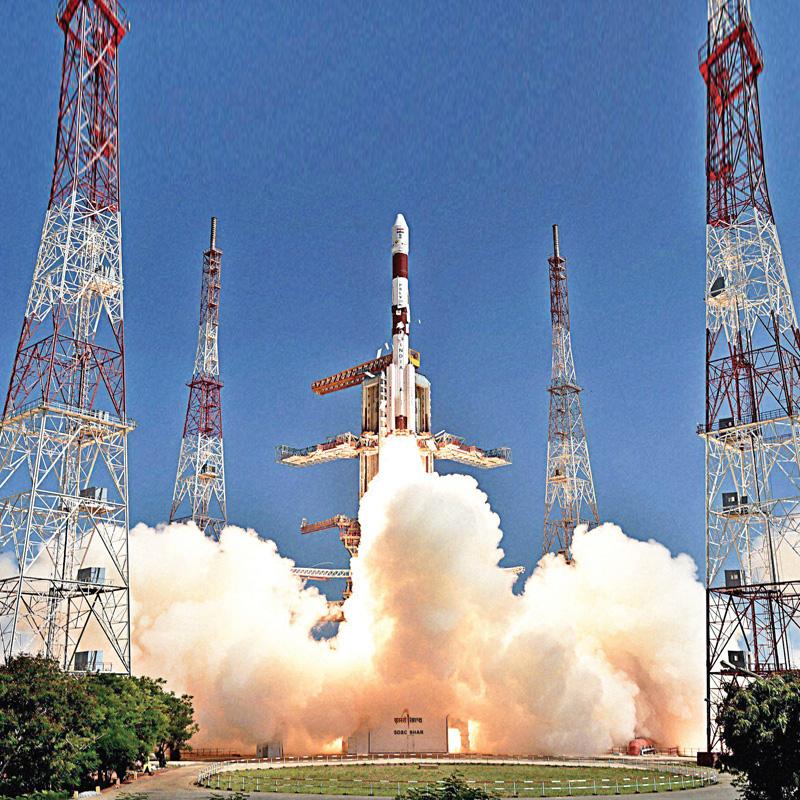
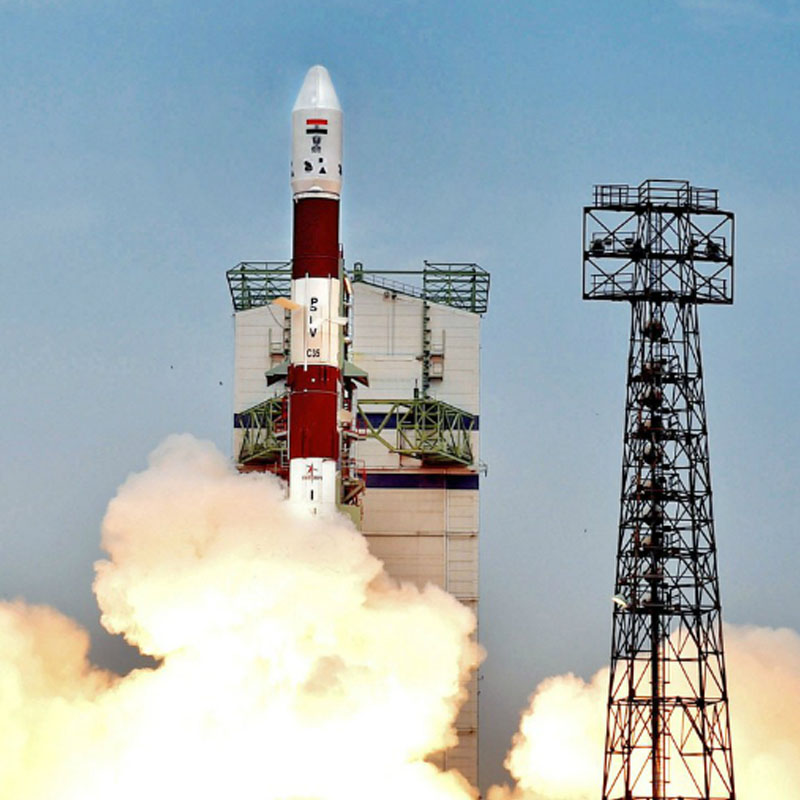
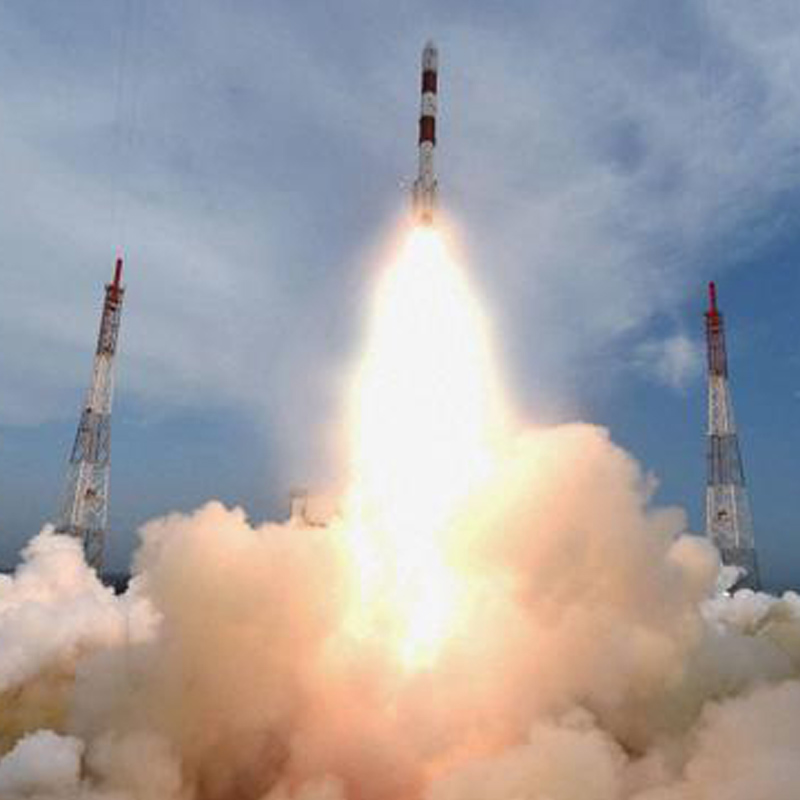
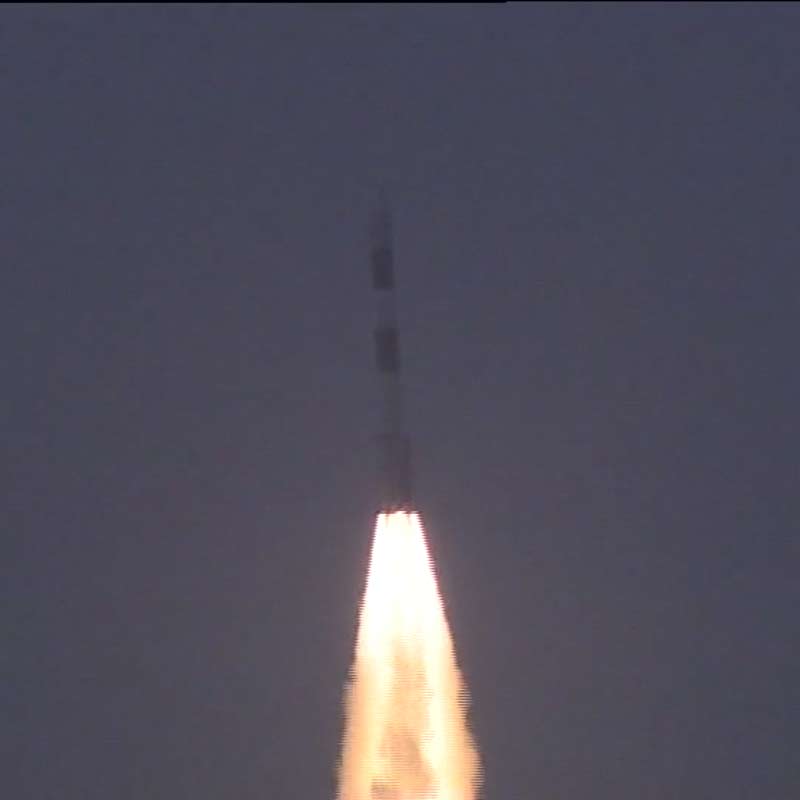
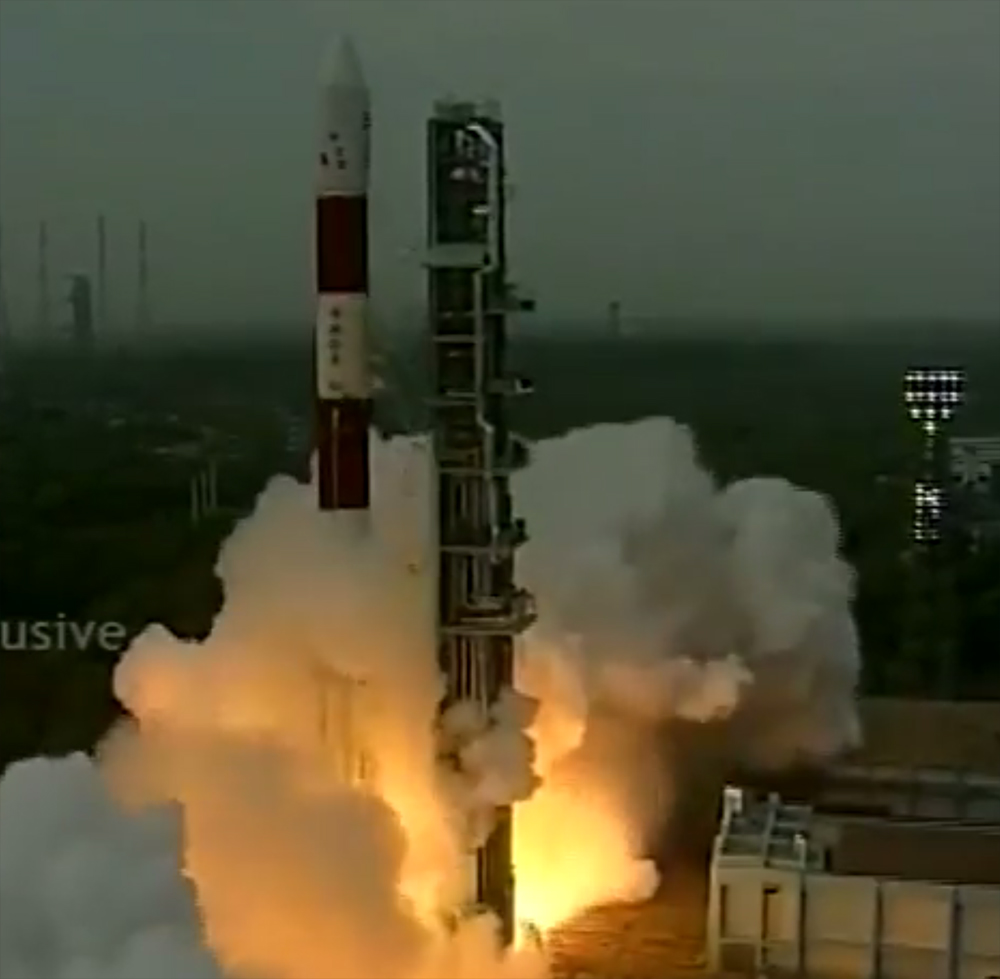
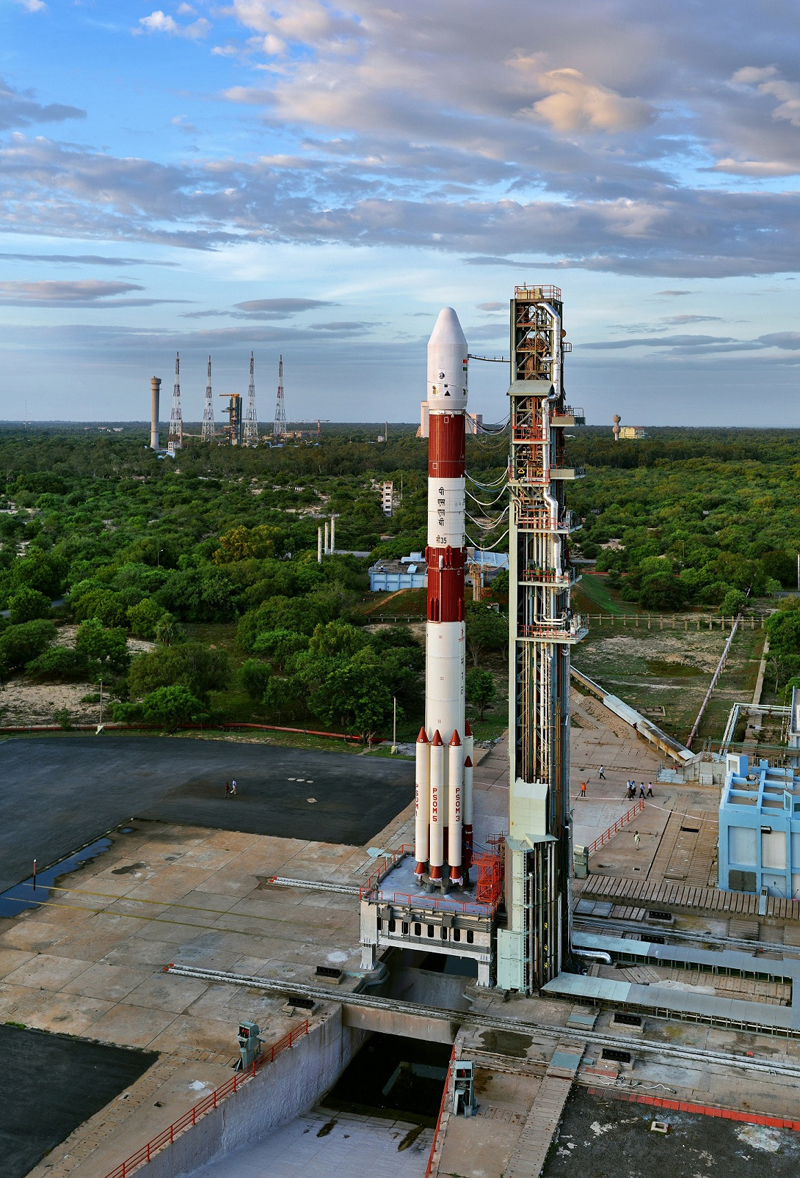
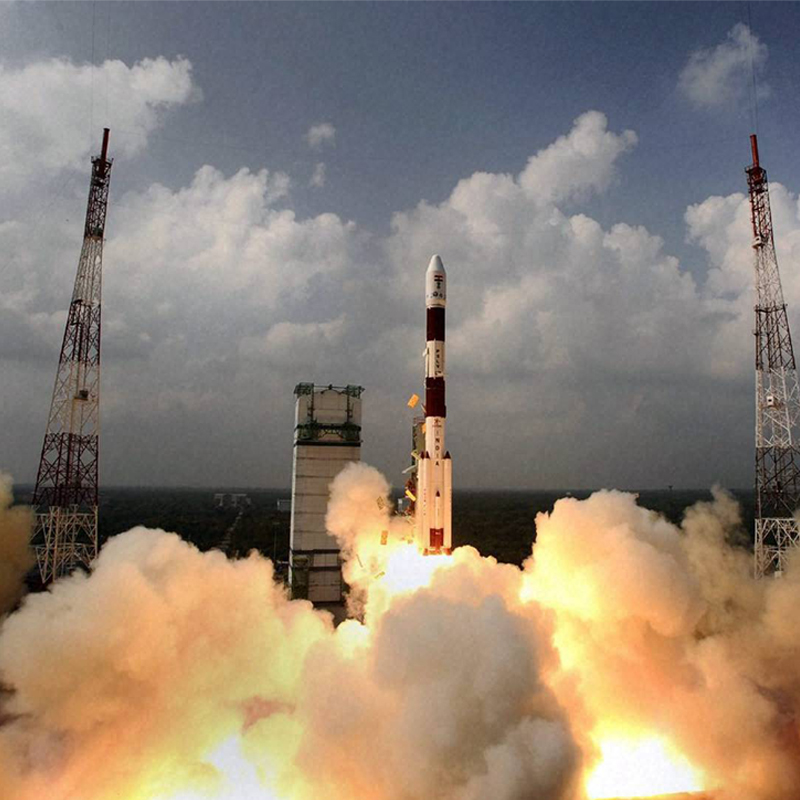
    NEW DELHI: The countdown before liftoff is always a heart-stopping moment during a satellite launch. And it was no different today at the Indian Space Research Organization's (ISRO's) second launch pad at Satish Dhawan Space Centre, Sriharikota. The space agency's scientists looked on nervously at their old workhorse, Polar Satellite Launch Vehicle, which had its forty second communications satellite CMS-01 as its payload.  However, at 3:41 pm, the  spacecraft took off as planned — in an almost picture perfect, blemish-free blastoff. And even more good news was to follow: 20 minutes after launch, the satellite separated successfully from the fourth stage of the rocket and was injected into   geosynchronous transfer orbit.

    "The satellite is functioning well and it will be placed in a specified slot in the next four days. Teams worked very well and safely under Covid2019  pandemic situation," said ISRO chairman Dr K Sivan.

    CMS-01 carries 12 Extended C band transponders which will strengthen the country's telecommunication services. The extended C band uses 3.4 to 3.7 GHz for downlink and 6.425 to 6.725 GHz for uplinks of the signals and is relatively less susceptible to rain fade and weather interference.

    With a mission life of seven years, the bird will provide coverage to the Indian mainland, Andaman &  Nicobar and Lakshadweep Islands. It will replace the ageing GSAT-12 which was launched in 2011.

    The space agency had chosen the ‘XL’ variant of the 44m high PSLV with six strapons for its fifty second  flight. In the normal configuration, PSLV is a four stage/engine expendable rocket powered by solid and liquid fuels alternatively with six booster motors strapped on to the first stage to give higher thrust during the initial flight moments.

    The premier space agency is now preparing for the launch of new small rocket Small Satellite Launch Vehicle (SSLV) which will carry EOS-02 (Earth Observation Satellite). It will be followed by the launch of Geosynchronous Satellite Launch Vehicle-F10 (GSLV) which will carry EOS-3 in space.

    The other Indian satellites that are ready for launch are GISAT and Microsat-2A. The launch of GISAT-1  was earlier slated for 5 March, but was postponed due to technical reasons 24 hours before D-Day. 

  • ISRO gears up for PSLV’s fifty second flight

    ISRO gears up for PSLV’s fifty second flight

    NEW DELHI: The Indian Space Research Organization (ISRO) is all set to launch its forty second communication satellite from Sriharikota, on Thursday afternoon, subject to weather conditions.

    The launch is scheduled at 3:41 pm when the space agency’s old workhorse, the Polar Satellite Launch Vehicle (PSLV) will lift off from the second launch pad of the Satish Dhawan Space Centre, Sriharikota.

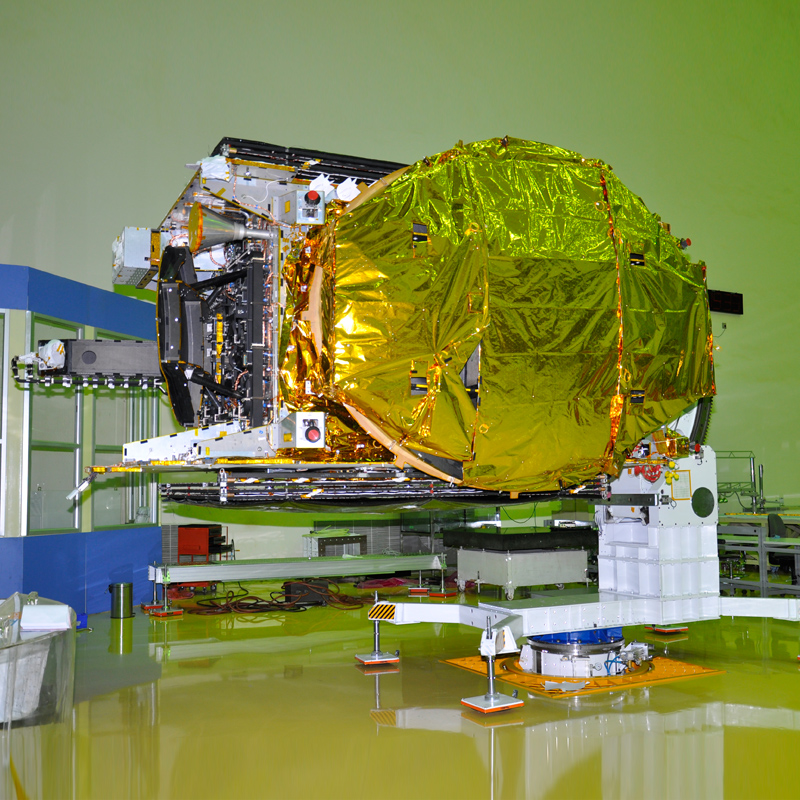
    The satellite on board is CMS-01, which carries 12 extended C band transponders to strengthen various telecommunication services. The Extended C band uses 3.4 to 3.7 GHz for their downlink and 6.425 to 6.725 GHz for uplinks of the signals and is somewhat less susceptible to rain fade and weather interference.

    It will provide coverage to the Indian mainland, Andaman and Nicobar, and Lakshadweep Islands and is expected to replace the aging GSAT-12 which was launched in 2011. The satellite weighs 1,410 kg and will be injected in the geostationary orbit. It will have a mission life of seven years.

    The space agency has chosen the ‘XL’ variant of the 44m high PSLV with six strap ons for its fifty second flight. In the normal configuration, PSLV is a four stage/engine expendable rocket powered by solid and liquid fuels alternatively with six booster motors strapped on to the first stage to give higher thrust during the initial flight moments.

    After the mission, ISRO will begin preparing for the launch of new small rocket Small Satellite Launch Vehicle (SSLV) which will carry EOS-02 (Earth Observation Satellite). It will be followed by the launch of Geosynchronous Satellite Launch Vehicle-F10 (GSLV) carrying EOS-3, ISRO chairman K Sivan had earlier told the media.

    The other Indian satellites that are ready for launch are GISAT and Microsat-2A. The deployment of the GISAT-1 satellite was earlier slated for 5 March, but was postponed due to technical reasons a day before the liftoff.

  • Arianespace launches GSAT-30 successfully

    Arianespace launches GSAT-30 successfully

    MUMBAI: In the early hours of 17 January 2.35 am IST, Arianespace the commercial arm of the European Space Agency, successfully and flawlessly lifted off its two payloads Eutelsat Konnect and ISRO's GSAT-30, into space from the spaceport of Kourou, French Guiana using its Ariane 5 rocket.

    The 51.04 meter tall vehicle used for Arianespace’s VA251 flight had a mass of 780  tonnes and utilised 2.9 million tonnes of thrust from its solid fuel boosters and core engine as it powered its way through the earth’s atmosphere. It broke the sound barrier and was travelling at Mach 1 one minute into the launch.

    Almost two tonnes of fuel propellant were burnt per second, taking the rocket on its upward trajectory 70 km above earth in two minutes. Following this, the boosters fell away, with the Vulcan engine now kicking in taking the rocket higher still. Six minutes later this too detached, and the upper stage HM7B engine lit up, keeping the payloads going for another 17 minutes.

    28 minutes or so into the flight, and Eutelsat Konnect which is an electric satellite, was separated and placed in orbit 1000 km above the earth’s surface above Africa.

    10 minutes later it was the turn of the Indian satellite to be successfully separated to the loud cheers of all present in the control station at the spaceport near south America.

    The satellite will now be in the hands of ISRO scientists who will finally take it to its geostationary orbital location over the next month or so.

    GSAT 30 is set to replace Insat4A and provide DTH and telecommunications services through the 12 C band and 12 Ku band transponders it has on board.

    UR Rao Satellite Centre (URSC) director P Kunhikrishnan director who was present in Kouru during the launch was evidently happy at the flawless deployment of the satellite into space by Arianespace. Said he: “Isro has opened 2020 successfully with the launch of GSAT-30 by Arianespace; we did the same with GSAT 31 and Arianespace in 2019 as well. GSAT-30 joins the 18 satellite stream of ISRO. What is great, that the entire ISRO team put together the satellite in less than a year.”
    He specifically complimented the efforts of GSAT-30 project director V Ramanathan and his team.
     

  • ISRO to replace INSAT-4A with GSAT-30

    ISRO to replace INSAT-4A with GSAT-30

    Mumbai: The location: Kourou, French Guiana. The date: 17 January 2020. The time: 02:35 am IST. Indian Space Research Organisation (ISRO) scientists will be at their consoles, their brows creased in concentration as the countdown for the liftoff off its new generation communication satellite GSAT 30 off Arianespace’s Ariane 5 rocket begins. Weighing 3,375 kg, GSAT-30 is set to replace one of the early birds in the ISRO fleet, the ageing Insat 4A.

    Insat-4A was launched in 2005 with a lifespan of at least 12 years and has been operational way beyond that. Even though it is functioning fine, ISRO has decided to put in a replacement with advanced features and network strength. Amongst the two major  occupants and users of transponder capacity on Insat 4A are Tata Sky and Star India group.

    Along with GSAT 30, Arianespace will also be putting into orbit global operator Eutelsat’s Konnect satellite on the same launch vehicle. GSAT-30 is the lower passenger in the Ariane-5 spacecraft, with Konnect its copassenger being released first.  This will be Arianespace’s 107th Ariane 5 mission.

    To be positioned at a longitude of 83° East, GSAT-30 will provide high-quality television, telecommunications and broadcasting services over Indian mainland and islands. GSAT-30 is configured on ISRO’s enhanced I-3K platform to provide communications services from geostationary orbit in C- and Ku-band for a lifetime greater than 15 years. Last year, Arianespace had delivered the GSAT-31 into orbit.

    GSAT-30 will provide extended coverage in C-band to Gulf countries, a large part of Asia and Australia. The move will help Indian broadcasters beam their content to Gulf countries, large parts of Asia and Australia, as well as the Indian mainland.

    The GSAT-30 was speculated to launch in June last year, but was postponed to 2020 as India’s pioneer space agency got busy in launching military satellites in space in order to boost strategic assets in space as well as its moon mission.

    In its GSAT-30 launch kit, ISRO said: “GSAT will be extensively used for supporting VSAT networks, Television uplinking and teleport Services, Digital Satellite News Gathering (DSNG), DTH-television services cellular backhaul connectivity and many such applications”.

    Eutelesat Konnect on the other hand will offer total capacity of 75 Gbps and by next autumn will allow Eutelsat to provide Internet access services for companies and individuals alike at up to 100 Mbps. The satellite will help to fight against the digital divide by bringing broadband Internet across 40 countries in Africa and 15 countries across Europe.

    Produced by Thales Alenia Space, it is the first to use the company’s Spacebus NEO platform developed under the Neosat Partnership Project conducted by the European and French space agencies (ESA and CNES). Eutelsat Konnect will weight approximately 3,620 kg. at liftoff and is to operate from an orbital slot at 13 degrees East.

    The proceedings will of course be telecsast live online as well on DD. To watch a live, high-speed online transmission of the launch (including commentary in French and English from the launch site), go to arianespace.com or to youtube.com/arianespace on 16 January 2020, beginning 20 minutes before liftoff.

  • ISRO sees rise in third party satellite launches

    ISRO sees rise in third party satellite launches

    MUMBAI: The Indian Space Research Organisation (ISRO) is slowly but surely making its mark as far as its satellite launch services are concerned. Consider: in 2018-19 it pocketed Rs 324.19 crore courtesy its launch capabilities as against Rs 232.56 crore in the year before. That’s a decent 35 per cent plus growth in income from launches.

    This information was given out in a reply to a question raised in the Rajya Sabha to union minister for atomic energy and space Jitendra Singh late last week.

    Singh further disclosed that ISRO earned Rs 1,245.17 crore during the last five years by launching satellites from 26 countries. Additionally, it has signed contracts with 10 countries –  the US, the UK, Germany, Canada, Singapore, Netherlands, Japan, Malaysia, Algeria, and France  over the same period under commercial arrangements.

    India has till date put into orbit 319 foreign satellites.