Tag: ISRO

  • Satellite woes bog down Tata Sky’s Harit Nagpal

    Satellite woes bog down Tata Sky’s Harit Nagpal

    MUMBAI: Tata Sky Managing director Harit Nagpal is extremely irate. The reason: he has not been able to expand his DTH service’s offerings for sometime now. And for no fault of his or his company’s, he says.

    Eight years ago, his company had contracted to use the government owned Indian Space Research Organisation’s (ISRO) satellite Insat 4A, with a proviso thrown in that if he needed more capacity, the satellite organisation would make the transponders available to him within two years of his request.

    In 2007, his organisation wrote in asking for more capacity. By then, Tata Sky was having about two million subscribers with dishes pointing in the sky towards where the Insat 4A satellite is located in orbit.

    Isro was slated to launch its Gsat-10 satellite with communications capabilities and Tata Sky had booked 12 transponders on it. The launch was delayed on account of something or the other. It finally, got into space in September 2012 off an Arianespace launch vehicle from Kourou in French Guiana.

    The launch gave him some relief, but what has dumbfounded him, is the fact that the transponders have not been made available to him almost eight months since launch.

    Since then, it has been a constant to and fro for his company. “We have been in touch with ISRO for a long time. We have written 100 emails to the ISRO chairman, met at least three to four times in the past six months. I know he wants to move things,” says Nagpal. “But despite his wanting nothing is.”

    Nagpal has been told Tata Sky’s allocation is stuck with the Space Commission currently. Prior to that, it was held up with the Insat Coordination Committee for a few months. He has even written to the Prime Minister’s Office which has then forwarded his request to ISRO. And the yo-yoing has been going on since.

    “It’s extremely frustrating,” says Nagpal. “I am a customer with a contract that entails me to pay Rs 50-60 lakh a month per transponder to the government as a rental. And I don’t have the government sticking to its contractual obligations.”

    But why is this happening? “I guess it is inertia,” says Nagpal. “Like everything has been stuck in bureaucracy. Even on this front no one is taking a decision as yet. Our contract is stuck in bureaucratic limbo.”

    Each of the 12 Ku-band transponders on GSat-10 have 36 MHz usable bandwidth with a footprint covering the Indian mainland with a power of 51.5 dBW. It is located at 83.0 degrees east in the same orbital location as Insat 4A and another Isro satellite GSAT-12.

    “I am open to other options. If officials are worried, then let them throw Insat GSAT-10 open for tender,” highlights Nagpal. “There will be no takers for it. Tata Sky is the only DTH provider, which has 10 million dishes nationally pointing towards the same zone in the sky that GSat-10 is at currently. Imagine you have an expensive bird in the sky costing $300-400 million and it is not being used productively.”

    Nagpal says he is days away from approaching the law of the land to force the government to stick to its commitments. “It’s not the ideal way,” he says. “I have been waiting for six years for my satellite transponders to be given to me. It has gone on long enough. There are no problems with my application; everything is sorted out. I am one of their main customers; so why such an extended delay?” he asks.

    Is somebody in government listening? Or in Isro?

    Indiantelevision.com called Isro chairman K. Radhakrishnan. And at that the time of writing was still awaiting a response from him. Keep watching this space for updates!

  • Demand for TV transponders to triple in five years: PwC

    Demand for TV transponders to triple in five years: PwC

    NEW DELHI: The number of satellite transponders required by Indian TV broadcasters and DTH operators is expected to double or triple over the next five years.

    A new report from the Cable and Satellite Broadcasters Association of Asia (Casbaa) entitled “Easing India’s Capacity Crunch” forecasts that transponders required by the DTH industry will rise from 73 in 2012 to more than 220 in 2017 to meet burgeoning demands by Indian consumers.

    The report prepared by PwC was released at the Casbaa India Forum 2013.

    This rapid growth in transponder demand will be driven by the expected increase of TV channels in India, fuelled by strong growth of the Indian television industry over the next few years (expected CAGR of 14%).

    The continued proliferation of pay-TV services, coupled with cable digitisation, growth of regional channels and entry of foreign players will provide a fillip to growth. Given these driving factors, India can potentially have about 1,600 licensed channels by 2017, of which about 1,300 channels (80% of licensed channels), are expected to be operational.

    High growth in the number of HD channels is expected, due to growth in digital platforms coupled with increasing penetration of high-end TV sets that support HD viewing experiences. By 2017, India is likely to have approx 130 HD channels. This growth in the number of channels will lead to higher demand for C-band and Ku-band transponders.

    In the report, Casbaa and PwC make a series of suggestions for improving the management of India’s satellite industry, to make it more efficient and market-friendly.

    The report notes that Indian Space Research Organisation (Isro) is working hard to launch new satellites and procure additional spectrum to meet the burgeoning demand. Nevertheless, says the report, “it is unlikely that any single satellite operator will be able to fulfil even current demand, let alone the future demand for satellite capacity.” Foreign satellite operators will need to be encouraged to invest in capacity to serve the Indian market.

    “In spite of the urgent requirements for satellite capacity, there are challenges placing practical restrictions on leasing transponder capacity from foreign satellite operators by Indian players,” said John Medeiros, Casbaa’s Chief Policy Officer. “Key hurdles include procedural requirements and delays and short contract durations inducing uncertainty for both Indian players and outside investors.”

    Smita Jha, leader of PwC India’s Entertainment and Media practice, said: “Satellite capacity constraints impede the growth momentum of the Indian TV sector and impact the ecosystem of the industry. The capacity crunch could restrict the launch of local regional channels and special interest channels and could lead to a distortion of competitive balances in multiple ways.”

    The report encourages the Indian government to formulate policies and processes to spur growth in satellite services, and to explore opening up additional frequency bands for use by TV industry players. It suggests measures such as allowing DTH operators more freedom to easily lease more space on authorised satellites they already use, lengthening the allowable term of satellite transponder contracts, improving publicly-available market information from the government and ensuring adequate spectrum is available for satellite use in India.

  • Isro’s PSLV-C20 launches joint Indo-French satellite Saral

    Isro’s PSLV-C20 launches joint Indo-French satellite Saral

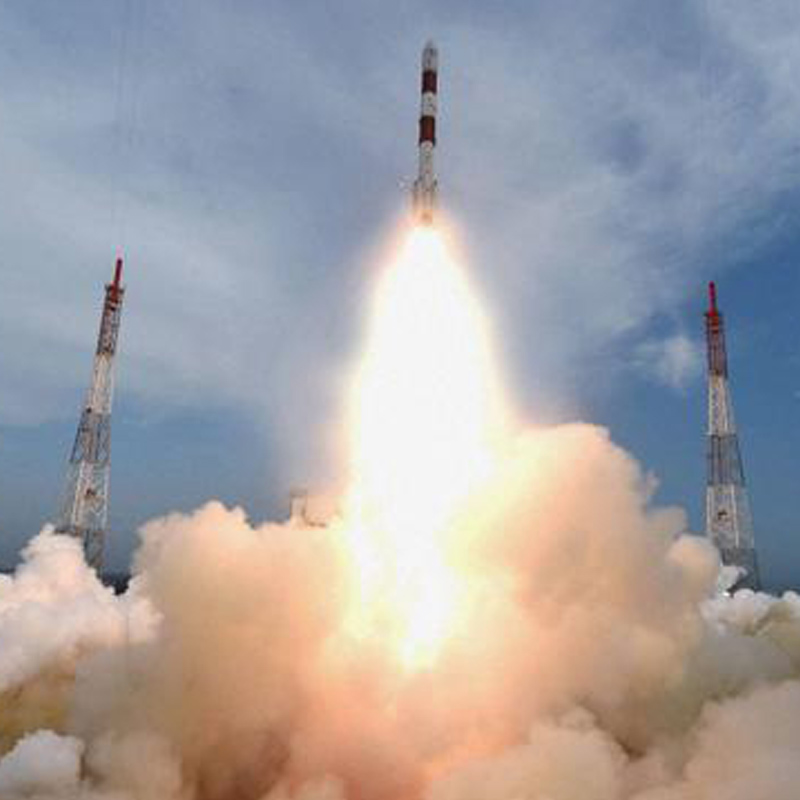
    BENGALURU: The Indian Space Research Organisation‘s (Isro) Polar Satellite Launch Vehicle PSLV-C20 Monday successfully launched the joint Indo-French satellite Saral, along with six other satellites in its 23rd flight from Satish Dhawan Space Centre (SDSC), Sriharikota.

    Other satellites that launched with Saral include Unibrite (NLS 8.1) and Brite (NLS 8.2) from Austria, Sapphire and Neossat from Canada, Aaausat-3 (NLS 8.3) from Denmark and STRaND-1 from the United Kingdom.

    The satellite was launched in the presence of President of India Pranab Mukherjee along with the Governor of Andhra Pradesh, E. S. L. Narasimhan, Andhra Pradesh (AP) CM N Kiran Kumar Reddy, Minister of State (Prime Minister‘s Office) V Narayanasamy, and other dignitaries from the Government of AP.

    At the completion of the countdown, PSLV-C20 lifted off from the First Launch Pad at SDSC SHAR, at 1801 hrs (IST) with the ignition of the first stage of the launch vehicle. The important flight events, namely, stage ignitions, heat-shield separation, stage separations and satellite injections took place exactly as planned.

    After a flight of 17 minutes 55 seconds, the main payload, Saral, weighing 407 kg was injected to an orbit very close to the intended orbit. Following this, the six auxiliary satellites were also successfully injected.

  • KXIP signs Prayag Polymers as official team partners

    KXIP signs Prayag Polymers as official team partners

    MUMBAI: IPL franchise Kings XI Punjab has announced Prayag Polymers as their official team partner for the season 5 of the tournament.

    Kings XI Punjab COO Arvinder Singh said, “We are delighted to have Prayag Polymers as our official team partner for this season. With the support of our partners, we are hopeful of reaching a step closer to our goal of being the champions of the IPL Season 5. We hope this association fortifies over the coming years.”

    Prayag Group owner Virender Aggarwal said, “We are happy to be associated with Kings XI Punjab, a team that has become synonymous with youth and its vibrant spirit. We wish the lions all the best and hope to watch them lift the cup this season.”

    Prayag Polymers, a bathroom and kitchen fittings manufacturer, supplies in bulk to organisations like the Indian Railways, Bharat Heavy Electricals Limited (BHEL), The National Thermal Power Corporation (NTPC), Oil and Natural Gas Corporation (ONGC), Indian Space Research Organisation (ISRO) and Steel Authority of India (SAIL).

    The company is also closely associated with Indian football through Prayag United Football Club, which competes in the I League.

  • Isro being approached for more transponders for DD Direct

    Isro being approached for more transponders for DD Direct

    NEW DELHI: Doordarshan is expected to switch over to an Indian satellite Insat 4B by early May for its direct-to-home DD Direct service, but it is unlikely to get more than five transponders. The satellite is being launched 10 March from Kourou in French Guiana.

    Prasar Bharati sources tell indiantelevision.com that though the Indian Space Research Organisation (Isro) had been requested to give first priority to the public broadcaster in the matter of leasing transponders, it was learnt that the Sun Group owned by Kalanithi Maran may get six transponders for its Sun Direct DTH and one for digital satellite news gathering.

    The sources said Isro had been approached to clarify the air on the number of channels it could give to Doordarshan, particularly in view of the efforts by the public broadcaster to switch over to an Indian satellite and not spend money in foreign currency for the American-owned NSS-6 satellite.

    The switchover is expected to result in a saving of around $5 million and Prasar Bharati chief executive officer BS Lalli confirmed that he had turned down the reminder by the American satellite for a renewal of contract.

    (It is learnt that Isro agreed to the demand for Sun for transponders after the failure of the Insat-4C last year. However, Isro has given the option to Sun to take transponders on a foreign satellite with the help of the space agency, since Insat 4B was meant for DD Direct.)

    Switching over to the new satellite will mean rotating the dish antennas slightly from the existing 95 degrees to 93.5 degrees. Lalli does not think any re-programming of
    set-top boxes will be required but said that this could be done easily if needed.

    The Insat-4B, the second satellite in the Insat-4 series, will be carrying 12 Ku band and as many C band transponders for communication and broadcasting services. Airtel is understood to have booked transponders for its services.

  • Insat-4B launch set for early March

    Insat-4B launch set for early March

     MUMBAI: The Indian Space Research Organisation’s (Isro) Insat-4B satellite is scheduled to be launched from Kourou in French Guiana in the first week of March.

    This was confirmed by Isro chief G Madhavan Nair on Monday. Speaking in Thiruvananthapuram in the southern state of Kerala, Nair was quoted in media reports as saying: “Final tests are being conducted on the satellite and it will be moved to French Guiana by the end of this month.”

    The Insat-4B, the second satellite in the Insat-4 series, will be carrying 12 KU band and as many C band transponders for communication and broadcasting services.

    One likely customer for the KU band transponders is Kalanithi Maran’s Sun Group, which had booked space last year on the failed Insat-4C for its DTH venture Sun Direct.

    Sun TV had booked six transponders for DTH and one for DSNG (digital satellite news gathering) on the Insat-4C.

    Speaking to Indiantelevision last August after the failure of the Insat-4C launch mission, Isro contract management and legal services director SB Iyer had said: “We have the flexibility to accommodate Sun. If there is an early requirement, we can give them space on an Indian or foreign satellite.”

    Current indications are that Insat-4B, which was originally meant for Doordarshan’s DTH service DD Direct Plus will likely be used to accommodate Sun as well.

    When asked about it today, Iyer was noncommital though, stating, “We are still deciding we will be accommodating one or two DTH providers.”

  • Liquid propellant strap-on failure primary cause for Insat 4C crash

    BANGALORE:The Failure Analysis Committee (FAC), constituted for investigating the failure of ISRO’s Geosynchronous Satellite Launch Vehicle, GSLV-F02 mission from Satish Dhawan Space Centre (SDSC SHAR) Sriharikota, on 10 July, 2006 has submitted its report.

    The 49 metre tall and 414 tonne GSLV comprises three stages. The first stage consists of a solid propellant motor and four liquid propellant strap-ons. The second stage is also a liquid propellant stage and the third is a cryogenic stage.

    GSLV-F02 launch was the fourth in the series. All the three earlier missions (GSLV-D1, D2 and F01) were completely successful. The mission objective of GSLV-F02 was to place Insat-4C, an operational satellite into Geo-synchronous Transfer Orbit (GTO). About 55 sec into the flight, GSLV-F02 started deviating significantly from its nominal flight path resulting in the vehicle breaking up at 62 sec after lift-off. The debris fell into Bay of Bengal.

    The 15 member FAC chaired by K Narayana, former Director of SDSC SHAR, with the participation of experts from academic and research institutions besides ISRO, has reviewed the performance of GSLV-F02 from lift-off to the end of flight. FAC had detailed deliberations for over 100 hours in several sittings and was assisted by eight specialist sub-committees examining the flight data of vehicle subsystems, manufacturing documents, inspection, calibration and test results, etc. Especially, the details related to the realisation of liquid propulsion stage of GSLV were closely scrutinized. Several tests simulating possible failure modes were also conducted to identify the exact cause.

    FAC has concluded that the performance of all vehicle subsystems, except one strap-on stage was normal until 56.4 sec. The primary cause for the failure was the sudden loss of thrust in one out of the four liquid propellant strap-on stages (S4) immediately after lift-off at 0.2 sec. With only three strap-on stages working, there was significant reduction in the control capability. However the vehicle attitude could be controlled till about 50 sec. At the same time the vehicle reached the transonic regime of flight and the vehicle attitude errors built up to large values, resulting in aerodynamic loads exceeding the design limits thus leading to break up of the vehicle.

    The thrust of the liquid engines used in the strap-on stages is precisely controlled by a set of regulators. Detailed analyses have indicated that in S4 engine the thrust control was not effective. Instead of stabilizing at 5.85 MPa (Mega Pascal) chamber pressure, it reached 7.11 MPa at 2.8 sec. This was much beyond the design limits and the engine failed at 0.2 sec after lift-off, that is 5 sec after its ignition.

    Simulations and analyses of flight data and verification through calibration tests have led to the conclusion that the propellant regulator in the failed engine had much higher discharge coefficient in its closed condition. The reason for this could be an inadvertent error in manufacturing, which escaped the subsequent inspection, and acceptance test procedures. This regulator has functioned satisfactorily in all the previous 50 engines manufactured and tested so far, states an official release.

    The larger flow of propellant led to higher operating pressure in the gas generator (4.7 MPa against design specification of 3.6 MPa). Due to this higher operating pressure of the gas generator, the water flow rate into it got reduced. The combined effect of larger flow of propellants and reduced flow of water led to a very high gas temperature of 1823 K against design specification of 900 K and pressure of 4.7 MPa against the design specification of 3.6 MPa. The very high operating pressure and temperature resulted in the structural failure of the gas generator. The consequent abrupt stopping of the turbo pumps that feed propellants at very high pressures to the engines led to loss of thrust of S4 engine. The water calibration tests conducted simulating the malfunction of the propellant regulator hardware could closely reproduce the flight phenomenon thereby confirming the larger flow area.

    FAC has concluded that the design of GSLV is robust and recommended implementation of strict control on fabrication, inspection and acceptance procedures. Among others, FAC has recommended fabrication processes to be critically reviewed and updated. It has recommended for independent inspection of all critical dimensions of components and subassemblies by in-house agencies. Further, long duration hot test on one out of every 20 engines fabricated has been recommended to ensure that production process is under control. In addition, FAC has recommended strengthening the process of clearance of launch during Automatic Launch Sequence (ALS) phase.

    FAC conclusions and recommendations have been accepted and necessary action has been initiated to implement all of them, the release adds.

  • UTV, ISRO & Vigyan Prasar co-produce quiz show Chamatkar, to premiere on DD1

    UTV, ISRO & Vigyan Prasar co-produce quiz show Chamatkar, to premiere on DD1

    MUMBAI: UTV has tied up with the Indian Space Research Organization (ISRO) and Vigyan Prasar to produce a quiz show, Chamatkar. Slated to kick off on 3 September at 9 am on Doordarshan 1 (DD1), the 26 episode series aims to introduce science in a fun, non-intimidating way. Sachin Khedekar will anchor the show.

    UTV COO Ronald D’Mello said, ”Through Chamatkar we plan to provide a refreshers course on the fundamentals in Science all over again through an interesting and exciting format of a quiz show, which will appeal to a larger target audience, not like the usual quiz shows that usually just has straight forward questions and answers.”

    The show adopts a simplistic approach with an aim to explain the basics of science to the layman. Questions will be related to things around us that will allow participants and viewers to explore the world of science in their daily lives and understand how it works. The principles of science will also be illustrated with experiments performed on the set by the anchor Sachin Khedekar.

    Sachin Khedekar adds, “Being an Environment Engineer myself, it gives me immense pleasure to be associated with Chamatkar, which aims at educating and entertaining simultaneously”.

    ISRO director of Development and Educational Communication Unit B. S. Bhatia says “We are happy to be associated with UTV through this quiz show and looking forward to making science easy and relatable for the viewers.”

    Vigyan Prasar director V. S. Kamble says, “Through Chamatkar, we hope to achieve our primary objective of popularising the subject of science. We are happy to constantly share information on scientific and technological developments taking place in India with the masses.”

    The series commences with the preliminary rounds of the West Zone and will be followed by the West Zonal finals. The pattern will be repeated for the other four zones i.e. South, North, East and Central zones. It will finally end with the zonal finalists competing in the National finals.

  • Isro renews MOU with Andhra Pradesh on Sat-Com applications

    Isro renews MOU with Andhra Pradesh on Sat-Com applications

    BANGALORE: Indian Space Research Organisation (Isro) and the Government of Andhra Pradesh have renewed their July-2000 Memorandum of Understanding (MOU) on the application of satellite based communication. A Bhaskaranarayana, director, Satellite Communication Programme of Isro and T V Parthasarathi, director, IT and Communication Department, Government of Andhra Pradesh, signed the renewal of MOU in Hyderabad.

    Chief Minister of Andhra Pradesh, Dr Y S Rajashekara Reddy and chairman, Isro Dr G Madhavan Nair were present during the signing ceremony.

    Under the renewed MOU, which also includes new applications, Andhra Pradesh will use Insat capacity for satellite based communication in the areas of distance education, telemedicine, agricultural extension, self-help groups, etc. While Isro provides the transponder capacity on board its Insat and the technical support, Andhra Pradesh Government operates the satellite communication network for these applications, states an official release.

    Soon after the signing of the original MOU in July 2000, experimental transmissions had started in November 2000 from Isro’s Master Control Facility at Hassan and subsequently, in April 2002, a satellite Hub station was established at Dr B R Ambedkar Open University, Hyderabad. Following this, a satellite based “Andhra Pradesh Net” was set up in March 2003. At present, a full-fledged Mana-TV is operational with a state-of-the-art studio. Mana-TV has over 2,000 terminals and has 5 television channels and one data channel catering to the requirements of educational institutions like schools and colleges (including engineering colleges). It is used for both formal and non-formal educational training.

    Mana TV is now being upgraded to include more interactive terminals as part of Edusat. In the recent years, under the Edusat programme, an exclusive network has been established connecting top fifty technical institutions/engineering colleges in India under Indo-US cooperation for transmitting lectures by invited US experts delivered from Amrita Viswa Vidyapeetam, Coimbatore. Four of these colleges are located in Andhra Pradesh, the release adds.

    In the field of telemedicine, the first pilot project was started in Andhra Pradesh in 2000 connecting Apollo Hospitals at Chennai and Aragonda village and Isro’s hospital at Satish Dhawan Space Centre, SHAR, Sriharikota, in Nellore District. The telemedicine network will now be extended to eight more hospitals.

    Andhra Pradesh is also one of the foremost in the utilisation of remote sensing technology for management of land and water resources and disaster management. For example, remote sensing technology is used for watershed management in drought prone districts of Adilabad, Ananthapur, Kurnool, Mahaboobnagar, Nizamabad and Ranga Reddy. Management plans for major irrigation projects like Srirama Sagara and Nagarjuna Sagara have been planned using remote sensing data. More than 35,000 bore wells have been drilled using remote sensing data with better than 90 percent success rate.

    As part of M S Swaminathan Research Foundation Network, a Village Resource Centre (VRC) has been set up at Adakkal, Moosapet with an Expert Centre located at International Crops Research Institute for the Semi-Arid Tropics (ICRISAT). Another 16 locations have been identified for setting up of VRCs to connect the Expert Centre through Byraju Foundation.

    Thus, Andhra Pradesh has been extensively using Isro satellites for societal applications and today’s renewal of MOU reiterates its commitment to extend these applications with Isro’s help.

  • Isro to launch Insat-4C replacement by July 2007

    Isro to launch Insat-4C replacement by July 2007

    MUMBAI: Soon after the failure of the GSLV-F02 launch rocket carrying the Insat-4C communication satellite, the Indian Space Research Organisation (Isro) has decided to act fast to meet the growing need for Ku-band transponders from the direct-to-home (DTH) sector.

    Isro will be replacing Insat-4C, where Kalanithi Maran’s Sun Direct had booked seven high-power Ku-band transponders, with the launch of an identical satellite by July 2007. The satellite, Insat-4C(R), will be launched at the Satish Dhawan Space Centre (SDSC) SHAR, Sriharikota.

    Maran will have the option to take transponder space on that satellite for his DTH venture. But if he decides to launch the service earlier, Isro will make provisions on an alternate satellite which could be foreign or Indian. Insat-4B, which is meant for Doordarshan’s DTH service DD Direct Plus, is being launched early next year.

    “We have the flexibility to accommodate Sun. If there is an early requirement, we can give them space on an Indian or foreign satellite,” says Isro contract management and legal services director SB Iyer. For DTH providers who want to operate from foreign satellites, Isro will have to provide the approval and lease it out for them.

    Will Insat-4C(R) disturb the scheduling of Isro’s other satellite launches? “We plan to launch Insat-4C(R) by July 2007 from Sriharikota. It will have the same number of transponders as Insat-4C. The other satellite launches will be on schedule,” says Iyer.

    Of the 12 Ku-band transponders Insat-4C would have carried, Sun TV had booked six for DTH and one for DSNG (digital satellite news gathering). While Isro plans to launch Insat-4D in 2006-07, Insat-4E is expected to go up by 2007-08.

    Isro had earlier said that the failure of Insat-4C was “a brief setback” which it would correct by recasting its programmes to accelerate the Ku-band capacity growth.